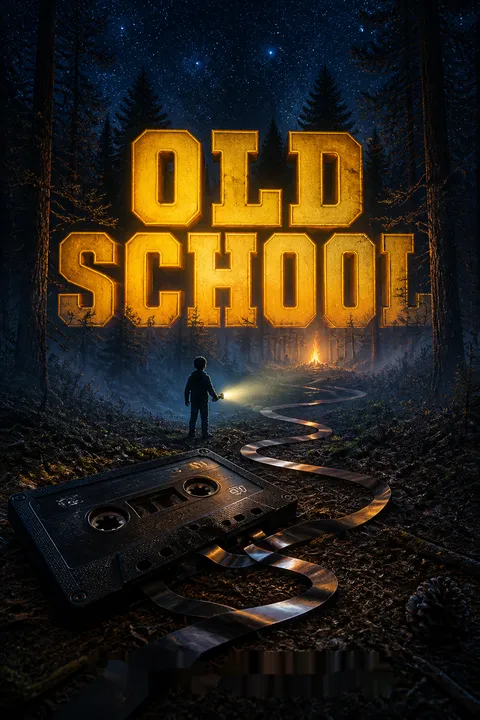


Plot Summary
Screens, Pigs, and Homework
Greg Heffley starts the school year convinced that modern comforts beat the tougher, less convenient past. His mother wants neighbors to put down their devices for a weekend and get to know one another, but Greg sees her petition as an assault on privacy. Home offers little refuge: the family pig walks upright, ignores its GPS collar, and commandeers the bathroom, so Greg has spent the summer hiding in an air-conditioned film camp.
At school, he signs up for Homework Buddies mainly to escape music class. His third-grade partner, Frew, turns out to be a prodigy who finishes Greg's assignments with ease. Greg accepts the help, then begins imagining he deserves credit for discovering Frew.
Greg's opening posture turns convenience into a moral argument: he treats comfort as progress and privacy as protection, while dismissing his mother's wish for community as meddling. His pig and Frew puncture that tidy worldview in opposite ways. The pig behaves like a person without respecting household rules; Frew supplies the labor Greg would rather avoid. Greg recognizes other people's abilities chiefly through their usefulness to him, yet his wish to claim credit for Frew hints at a more vulnerable ambition. He wants the benefits of competence without its demands, a contradiction that will become comic pressure throughout the story.
Grandpa Takes Greg's Room
When rising rent forces Grandpa out of Leisure Towers, Greg's mother invites him to stay, and Grandpa chooses Greg's bedroom. Greg moves onto an air bed in Manny's room, where long bedtime stories and Manny's after-dinner potty-training routine make privacy even scarcer.
Grandpa's presence also sharpens the strain between Greg's parents: Dad resents how much help Greg still receives, removes the morning checklist, and turns small mistakes into lessons about surviving without assistance. Meanwhile, Rodrick's habit of asking Mom for gas money draws Grandpa's notice.
Dad responds by insisting Rodrick get a job, and Rodrick lands work at the Old-Timey Ice Cream Parlour. Greg's schoolwork also earns higher grades through Frew's help, leaving him facing harder classes without Frew beside him during tests.
The bedroom change makes the family argument physical: Greg's private space disappears, while every available room exposes him to someone else's needs. Dad frames independence as preparation for danger, but his examples turn ordinary childhood errors into disasters, revealing that his concern is mixed with embarrassment and a desire for control. Grandpa's arrival intensifies this generational contest without making him a simple judge; he is both a dependent elder and a witness to how the parents raise their children. Greg's improved grades carry the same irony. Achievement raises expectations, but because Greg has outsourced the work, success threatens rather than reassures him.
A Party Goes Public
At the restaurant, Rodrick's supposed promotion means wearing the Old-Timey Tobias costume, where frightened children kick and pelt him. Later, trying to beat traffic to work, he uses the car-pool lane with the mascot head as his imaginary passenger.
A police officer catches the trick, fines him, and has his van towed, leaving Rodrick stranded until his family finds him. At home, Grandpa's attempt to invite one online date accidentally summons a crowd of women, and Dad sends the guests away before putting Grandpa in time-out.
Mom collects petition signatures from the departing partygoers. She submits the petition, and town leaders approve an electronics-free weekend. After the party, Dad installs a webcam to monitor Grandpa, while Greg becomes newly wary of cameras and of his mother's campaign.
The family comedy links two forms of performance. Rodrick hides inside a mascot costume, while Grandpa presents himself to online dates; both performances collapse when other people see what is underneath. The consequences are not equal, however. Rodrick's shortcut earns him a fine, while Grandpa's accidental mass invitation briefly gives him the lively company he misses, then subjects him to his son's authority. Mom turns the guests into petition signers, converting household chaos into civic momentum. The webcam makes that new public-mindedness uneasy: surveillance now serves parental control inside the home, giving Greg a concrete reason to distrust the very technology he otherwise defends.
Lemonade Turns to Flight
During the town's unplugged weekend, Greg and Rowley use Dad's seed money to sell lemonade, but buy limes, misjudge the recipe, and lose customers over the taste and their shared glass. Greg pivots to homemade fitness water, then takes the business to the park cleanup, where volunteers pour out his stock and Mom makes him join the work.
Girl Scouts organize the disordered cleanup, while adults overwhelm Frew with questions usually answered by phones. Greg slips away toward the creek; Frew follows, and they encounter Billy Rotner, a community-service worker who has run off.
When a Brownie spots them, the three flee through the woods. Mom locates Greg with the GPS chip attached to his shoelace and brings him back. Greg blames Billy for the escape, then learns his mother tracked him by phone.
Greg's entrepreneurial turn shows how readily he translates a shared civic event into a market to exploit. Each failed beverage scheme prompts a rebrand rather than reflection, until the volunteers' refusal to cooperate with his profit plan forces him into the cleanup itself. The Girl Scouts provide a sharp counterexample to Greg's assumption that boys can improvise their way through everything: their organization succeeds where the adults' loose gathering does not. Frew's escape is revealing too. The child Greg treats as a homework machine is also overburdened and capable of choosing his own exit. Greg's secret tracker turns maternal protection into an uncomfortable bargain between safety and privacy.
The Toothpaste Cap Disaster
After Dad leaves on a business trip, Greg drops a toothpaste cap down the bathroom drain and tries to retrieve it before Dad can discover his mistake. He dismantles the pipe without shutting off the water, flooding the bathroom and staining the kitchen ceiling below.
Grandpa promises to help hide the damage and drives Greg to buy paint, although he has lost his license. He clips a trash can and a mailbox, then takes the wrong highway ramp and ends up facing oncoming traffic. They escape a collision, but the car runs out of gas.
While Grandpa walks for fuel, Billy and the community-service crew stop beside the car; Greg hides, then accidentally shifts it into motion and steers it into a ditch to avoid hitting Grandpa. To delay Dad's anger, Greg changes his mind about Hardscrabble Farms and joins the class trip.
The toothpaste cap is a tiny mistake that grows because Greg's first priority is concealment, not repair. His attempt to prove he can manage alone instead reveals how little practical knowledge he has, while Grandpa's willingness to help exposes a parallel weakness: age and affection do not make him a safe driver. Greg's sudden danger with the car briefly eclipses his fear of Dad, and that shift motivates his reversal about camp. He does not choose Hardscrabble because he has embraced the outdoors; he chooses it as a weeklong buffer before facing the consequences at home. His decision is both understandable and evasive.
Hardscrabble's First Lessons
Greg packs Rodrick's old camping gear, three containers of baby wipes, and a practical book Grandpa gives him, then reaches Hardscrabble Farms already uneasy. Older students' warnings about Silas Scratch, a supposedly dispossessed farmer roaming the woods, turn the camp's rough cabins into a haunted landscape.
Greg shares a cabin with Rowley and Rowley's father, Mr. Jefferson. A trust exercise goes wrong when Gareth's tooth lodges in Rowley's forehead, and Rowley leaves for treatment. Team-building games spill water, knot students together, and accomplish little; meals include stew made from earlier leftovers.
The camp then sends the boys through farm chores, including moving hay and repairing property. When the boys find a scraped rock, they decide it may be Silas's grave, making the rumor more frightening just as they settle into the camp's punishing routine.
Hardscrabble makes nostalgia tangible and unpleasant. Instead of an abstract debate about whether earlier generations were tougher, Greg must sleep on stained mattresses, eat recycled stew, and perform labor whose purpose is often unclear. The camp's activities promise cooperation, but the tooth injury and failed exercises expose how quickly a group can become a source of danger. Silas Scratch gives the boys a story to organize their discomfort around. Their fear is not simply credulity; it offers an explanation for an environment adults have made harsh and opaque. Greg's book and baby wipes are small attempts to carry familiar competence into a place designed to deny it.
Letters, Stink, and Smoke
Greg's cabinmates catch a fish in the river and stash it in the toilet, then forget it while reading letters from home and sharing Graham's hidden snacks. Mr. Jefferson finds the dead fish and blames Greg, who misses the campfire gathering as punishment.
Homesickness spreads, and Julian leaves after eating deodorant in an effort to get sent home. Rowley returns after treatment for an infection caused by Gareth's tooth, but soon he and Mr. Jefferson are removed from camp after Rowley burns poison ivy and Mr. Jefferson breathes the fumes.
With their cabin short a chaperone, the boys struggle to prepare for a night outdoors. A cabin raid ruins their supplies and clogs their toilet with Greg's stolen wipes. Grandpa's handbook helps Greg start a fire with sunlight, though the boys crush Emilio's glasses in celebration.
The camp's rules turn ordinary longing into bodily improvisation: Julian eats deodorant, and Greg's group tries to manage fish, waste, smoke, and a missing adult with poor judgment. The letters matter because they make home emotionally present without making it immediately reachable. Rowley's return restores Greg's familiar companion, but the consequences of the earlier trust exercise continue to shape events. Grandpa's handbook shifts from sentimental gift to practical resource, suggesting that inherited knowledge can be useful when it is specific rather than idealized. Still, the fire's success is followed by Emilio's broken glasses, preserving the book's comic insistence that a solution can create its own problem.
The Deodorant Raid
The boys' flooded, foul-smelling cabin has no deodorant because the chaperones confiscated it to stop further attempts at self-induced illness. Mr. Nuzzi scatters baby powder around the cabin to expose anyone who sneaks out, but Greg uses Grandpa's handbook to have the boys follow one set of existing footprints.
They get through the powder and head into the woods, hoping to raid a girls' cabin for deodorant. Lost and frightened by the Silas Scratch rumors, they let Emilio guide them by smell.
Greg climbs through a window, only to discover the cabin belongs to Girl Scouts. The boys flee in panic, and Graham returns with a bag that belongs to Mrs. Graziano. She finds Emilio outside her cabin, catches the group, and calls for an emergency chaperone. Greg's father is summoned to supervise them.
This raid is an improvised response to a real discomfort, but the boys' plan quickly becomes a performance of borrowed toughness. Greg relies on a handbook's trick, Emilio's senses, and the group's momentum, while the forest legend magnifies every wrong turn. Their intended target is not even the right cabin, and the stolen bag makes their supposed stealth look like childish confusion. The episode also rearranges authority: once the boys lose Mr. Jefferson, they cannot simply manage themselves, and their attempt to evade adult oversight brings Greg's father directly into camp. Their appetite for independence is still bounded by dependence on adults to restore order.
Silas Has a Shower
On the final night, the class must sleep outdoors in shelters they build themselves. Greg's father, now chaperoning the cabin, leaves the boys to manage, and fear of Silas Scratch keeps them from gathering enough firewood.
Greg wanders off alone, follows a light, and enters the place everyone believes is Silas's shack. Inside, he finds a maintained work shed with a bathroom, toilet, and shower. His father appears and explains that, as a boy at Hardscrabble, he discovered the facility and invented the Silas story to keep other campers away from it.
Greg is angry that his father prolonged the legend, but understands the selfish ingenuity behind it. They return to find the fire out, the handbook burned, and the shelter dismantled. As rain falls, his father sneaks the group into their cabin.
The reveal replaces supernatural menace with a very human motive: Greg's father has used a frightening story to reserve a private comfort for himself. The myth survived because each generation repeated what it had heard, allowing a childhood lie to acquire institutional weight. Greg's response is mixed rather than purely outraged. He recognizes his own habits in his father's scheme, especially the instinct to protect convenience through deception. The storm and ruined shelter prevent the revelation from becoming a clean moral victory. The boys still need help, and the secret bathroom remains valuable enough that Greg must decide whether exposing the story would serve anyone.
One Last Warning
At the end of the trip, Greg's cabinmates credit their survival to having escaped Silas Scratch, unaware that the frightening farmer was a story his father created decades earlier.
Greg considers telling the class what he found, but realizes that his father may one day bring him back to Hardscrabble as a chaperone, when the hidden bathroom could be useful to him too. He keeps the discovery to himself and rides home with his father instead of squeezing onto the bus. As they leave, another bus arrives with new students.
Greg writes a warning about Silas Scratch for them, passing the old fear forward even though he now knows its source. The trip ends with Greg choosing secrecy not because he believes the legend, but because he sees a chance to benefit from it.
Greg's final choice is a small inheritance of the same selfish logic he has just discovered in his father. He now knows that the legend is false, yet he preserves it because knowledge offers a future advantage. His warning to the incoming campers works as a joke and as a portrait of how myths reproduce: not only through belief, but through people who find silence useful. Greg has gained practical experience at camp, but not a clean conversion to selflessness or independence. The ending keeps his development deliberately modest. He understands the mechanism of deception and immediately decides to participate in it.
Analysis
Old School builds its comedy from Greg's effort to keep the advantages of childhood while avoiding its obligations. He wants privacy, but expects his mother to organize his mornings. He claims a business identity, but tries to profit from other people's labor. At Hardscrabble, he wants to be left alone until danger makes adult help appealing. These contradictions do not make him a villain; they make him a recognizable adolescent narrator whose self-image is always a little more competent than his actions.
The book sets competing forms of nostalgia against each other. Mom remembers a connected town, Dad remembers children who learned through rough independence, and Grandpa carries habits from an earlier generation. Hardscrabble turns those memories into forced experiences: chores, primitive facilities, and food that seems to contain the camp's entire past. The result is not a simple endorsement of modern convenience. Technology enables surveillance and dependence, but the supposed old-school alternative is also badly organized, uncomfortable, and sometimes unsafe. Greg's practical handbook offers a quieter distinction: the past is useful when it supplies knowledge, not when it is romanticized as a cure for the present.
The Silas Scratch legend crystallizes this argument. A boy's private convenience becomes a story repeated by generations, until fear feels like part of the landscape. When Greg learns its source, he does not expose it. He recognizes that the secret might benefit him later and becomes a participant in the same small deception. His choice is funny, but it also completes the book's portrait of inheritance: children do not merely receive their elders' beliefs. They notice which habits serve them and decide what to preserve.
Review Summary
Old School receives mostly positive reviews, with an average rating of 4.30 out of 5. Readers appreciate the humor and relatable situations, though some find it less engaging than previous installments. Many enjoy Greg's camping adventure and the family dynamics. Some criticize the lack of character development and overuse of technology-related themes. Despite mixed opinions on the plot, fans continue to find the series entertaining and look forward to future books. The unique illustration style and quick-read format are praised by both young and adult readers.
People Also Read



Characters
Greg Heffley
Comfort-seeking schemerGreg narrates his school year through a sharp, self-protective sense of humor. He resists chores, embarrassment, and any loss of privacy, often treating other people's skills as tools he can borrow. His schemes are rarely cruel by design, but he tends to notice fairness most when it affects him. Family pressures and the rough camp trip repeatedly expose the gap between his confidence and his practical abilities. Greg is imaginative, observant, and capable of affection, though he often disguises both vulnerability and care as complaint. His central tension is not whether he can become fully self-reliant, but whether he can recognize when his shortcuts make other people carry the cost.
Mom
Community-minded motherGreg's mother believes neighbors should know one another and that children benefit from helping beyond their own households. Her petition for an electronics-free weekend turns that belief into a town project, while her attempts to manage the family often meet Greg's resistance. She is attentive to emotional leverage: she can persuade Greg to help by reminding him of the memories they share at the park. Her care is practical as well as idealistic, shown in how she brings Grandpa into the home and keeps watch over Greg. To him, her protectiveness can feel invasive, especially when technology makes that protection visible.
Dad
Self-reliance traditionalistGreg's father prizes self-sufficiency and measures childhood against his own memories of roaming outdoors with his friend Giles. He grows impatient when Greg depends on his mother for routine tasks and when Rodrick expects money without working. His lessons often arrive as exaggerated warnings about how small mistakes can become serious, revealing both genuine concern and a strong need to prepare his sons for a world he considers unforgiving. Dad's attachment to old-fashioned toughness is more complicated than Greg first assumes. He is capable of leaving his sons to manage, but he also steps in when their judgment fails.
Grandpa
Displaced family elderGreg's grandfather moves in after he can no longer afford his apartment. He is lonely after a breakup, enjoys the attention of online dating, and is less careful than Greg's parents about the rules of the household. His presence creates friction between generations, particularly between Grandpa and Dad, but he also offers Greg a link to family history through an old practical handbook. He is both a person in need of help and someone whose choices can create fresh trouble.
Rodrick Heffley
Greg's older brotherRodrick is Greg's older brother and a drummer who prefers his own plans to family obligations. When Dad insists that he earn his own gas money, Rodrick takes a job at an old-fashioned ice cream restaurant. He reacts to work with his usual impatience, but the job gives the family a new stage on which to tease and monitor him. Greg's judgments of Rodrick mix irritation with the recognition that his brother's embarrassments can become the household's entertainment.
Rowley Jefferson
Greg's loyal friendRowley is Greg's best friend, generous and trusting enough to join his schemes even when the plans are poorly thought out. He is less guarded than Greg and often follows his own instincts, whether helping with a business venture or choosing to work at the park. At camp, Rowley's father supervises Greg's cabin, placing friendship inside a more complicated social arrangement. Rowley's openness makes him an easy partner for Greg, but it also means he can be drawn into risks he did not create.
Frew
Gifted young tutorFrew is Greg's elementary-school Homework Buddy, a remarkably advanced student who enjoys difficult academic work. He quickly completes Greg's assignments and then invents harder challenges for himself. His intelligence attracts attention from adults, who begin asking him questions they might otherwise look up on their phones. Beneath his impressive competence, Frew is a child under demanding expectations, and his friendship with Greg gives him room to express frustration and make choices outside his studies.
Manny Heffley
Greg's youngest brotherManny is Greg's youngest brother, still being potty-trained and accustomed to considerable parental attention. He shares a room with Greg after Grandpa moves into Greg's bedroom. Manny's routines and the family pig's antics repeatedly disrupt Greg's wish for privacy.
Mr. Jefferson
Rowley's camp chaperoneRowley's father accompanies the class to Hardscrabble Farms and supervises Greg's cabin. He tries to lead team-building activities, but the boys' accidents and poor coordination make the work difficult. His presence complicates Greg's relationship with Rowley by placing a friend's parent in authority over him. Mr. Jefferson's own limitations become apparent in the demanding outdoor setting.
Mrs. Graziano
Strict camp organizerMrs. Graziano is the music teacher who organizes the Hardscrabble Farms trip and has years of experience enforcing its rules. She takes the no-electronics policy and cabin boundaries seriously, and she expects students to endure the camp's routines. Her authority is firm, but she also responds when a cabin loses its chaperone, showing the practical responsibility behind her strictness.
Billy Rotner
Runaway service workerBilly is a teenager serving community service after stealing candy from a convenience store. Greg knows him through Rodrick's band, and encounters him again during the park cleanup. Billy's impulsive decisions make him a risky companion for Greg and Frew, even as his account of the theft reveals an unusually tender grievance.
Emilio Mendoza
Cabinmate with sharp sensesEmilio is one of Greg's Hardscrabble cabinmates. He participates in the group's mishaps and proves able to identify scents with unusual accuracy. His glasses are important to his vision, making their loss a practical problem for the boys.
Julian Trimble
Homesick cabinmateJulian is a student who has difficulty separating from his mother at school. The week away at Hardscrabble pushes his homesickness into desperate attempts to leave, giving the other boys a vivid example of how far they might go to return home.
Mr. Nuzzi
Vigilant camp chaperoneMr. Nuzzi supervises a cabin group that includes several troublemakers and is presented as experienced at managing unruly boys. He tries to prevent Greg's group from sneaking out by marking the ground around their cabin, prompting Greg to consult Grandpa's handbook.
Cedric Cunningham
Competing lemonade sellerCedric is a boy who sets up a better-equipped lemonade stand near Greg and Rowley's. His competition forces Greg to rethink his business plan, illustrating how quickly an idea that seems original can meet a more prepared rival.
Plot Devices
The unplugged weekend
Townwide screen fastMom's petition turns her private criticism of constant phone use into an officially approved weekend without electronics. The event drives Greg and Rowley into a sidewalk business, brings residents to a park cleanup, and temporarily makes Frew's knowledge unusually valuable to adults. Its complications expose the difference between choosing to disconnect and simply losing access to convenient tools. The weekend also creates the circumstances for Greg to meet Billy during the cleanup and to discover that his own movements are being tracked through a device his mother installed.
The hidden GPS tracker
Unseen parental leashMom attaches a tracking chip to Greg's shoelace without telling him. When Greg disappears from the park cleanup with Frew and Billy, she uses her phone to locate him and bring him back. The device links two of the book's recurring concerns: Greg's fear of surveillance and his mother's fear that he is unsafe. It echoes the tracker on the family pig, which also fails to obey the household's preferred boundaries. In both cases, technology promises control over a creature or child that has other ideas.
Homework Buddies
Reciprocal homework shortcutGreg joins the school program to skip music class, but his partner Frew turns the arrangement into a source of academic advantage by completing Greg's assignments. The help raises Greg's grades enough to place him in harder classes, where Frew cannot take tests for him. Their partnership therefore creates both an immediate shortcut and a later problem: Greg's visible success exceeds his own preparation. Frew's role also reverses the expected direction of tutoring, since the younger student supplies the expertise and the older one claims to have discovered him.
The Silas Scratch legend
Camp folklore as coverStudents pass around stories of Silas Scratch, a dispossessed farmer supposedly living in the woods near Hardscrabble Farms. Each rumor grows more frightening, shaping how the campers interpret strange lights, old structures, and nighttime trips through the forest. The legend began as a way to keep other boys away from a useful secret, but later campers inherit it without knowing its origin. It makes ordinary camp discomfort feel haunted and gives Greg a reason to hesitate before investigating the place himself.
Grandpa's handbook
Old-fashioned field manualBefore Greg leaves for Hardscrabble Farms, Grandpa gives him a book filled with advice about outdoor survival and household improvisation. Greg initially regards it as outdated, but several of its instructions prove useful when the cabin lacks adult guidance. He uses its ideas to start a fire and evade Mr. Nuzzi's footprint trap. The handbook's practical value contrasts with the camp's vague celebration of old-fashioned hardship: knowledge matters when it can solve a concrete problem, not merely because it comes from the past.
FAQ
Synopsis & Basic Details
What is Old School about?
- Greg's Modern Predicament: Old School follows Greg Heffley, a middle schooler who cherishes modern conveniences and technology, clashing with his mother's nostalgic desire for a simpler, unplugged life. This generational conflict is exacerbated when his Grandpa moves in, disrupting the family's already chaotic household.
- Unplugging the Town: Greg's mom spearheads a town-wide initiative to go electronics-free for a weekend, forcing Greg and his family to confront a world without their digital crutches. This experiment highlights the challenges of modern dependence on technology and the idealized "good old days."
- Hardscrabble Farms Adventure: To escape mounting family tensions and a disastrous car incident, Greg reluctantly joins his class on a week-long trip to Hardscrabble Farms, a rustic camp emphasizing "old-fashioned values." Here, he faces unsanitary conditions, challenging chores, and the terrifying legend of Silas Scratch, pushing him to develop unexpected resourcefulness.
Why should I read Old School?
- Relatable Generational Conflict Humor: Readers will find humor in the universal struggle between parents' nostalgia for the past and kids' reliance on modern technology, making the
Old School themeshighly resonant. Greg's sarcastic observations and attempts to navigate this divide provide constant laughs. - Unexpected Character Growth: Despite his initial resistance to "old school" values, Greg is forced into situations that challenge his comfort-seeking nature, leading to subtle but significant personal development in
Greg Heffley's character arc. His journey offers insights into adaptability and self-reliance. - Clever Plot Twists & Symbolism: The narrative cleverly weaves in elements of mystery and revelation, particularly around the
Silas Scratch legend explained, which serves as a powerful symbol for the stories we tell ourselves and the secrets we keep. The book'sOld School analysisreveals deeper layers of meaning.
What is the background of Old School?
- Cultural Shift to Digital Dependence: The book is set against a contemporary backdrop where electronic devices are ubiquitous, reflecting a societal concern about screen time and its impact on human connection. Mom's "unplugging" petition directly addresses this
technology themes in Old Schoolcultural anxiety. - Nostalgia for Simpler Times: The narrative is steeped in the adult generation's longing for a perceived "good old days" where kids played outside and communities were tighter. This
Old School cultural contextprovides the central conflict, contrasting idealized pasts with the messy realities of the present. - Suburban Family Dynamics: The Heffley family's struggles with multi-generational living, sibling rivalry, and parental expectations are a relatable portrayal of modern suburban life. The chaos of Grandpa moving in and Rodrick's job woes ground the story in everyday family challenges.
What are the most memorable quotes in Old School?
- "I really don't understand why Mom thinks we need to go BACKWARD, anyway. From what I can tell, the old days weren't that much fun.": This quote, early in the book (page 4), perfectly encapsulates Greg's cynical and pragmatic view of nostalgia, setting up his resistance to his mother's "old school" ideals and the central
generational conflict in Old School. - "I'm all for technology, but not when it's used AGAINST me.": Greg's declaration (page 59) after discovering his dad's webcam highlights his self-serving relationship with technology, valuing convenience but resenting surveillance, and revealing his underlying paranoia about control and privacy.
- "I was pretty mad at Dad for causing everyone all this stress. But I have to admit that coming up with a crazy story to protect a secret bathroom is EXACTLY the kind of thing I'd do MYSELF.": This pivotal realization (page 213) at the end of the book shows Greg's newfound understanding and connection with his father, bridging their
Frank Heffley and Greg Heffley relationshipthrough shared cunning and a pragmatic approach to self-preservation.
What writing style, narrative choices, and literary techniques does Jeff Kinney use?
- First-Person Diary Narration: The entire story is told from Greg Heffley's perspective through his diary entries, offering an intimate, often biased, and humorous insight into his thoughts and experiences. This
Jeff Kinney writing styleallows readers to directly engage with Greg's unique voice and worldview. - Illustrative Storytelling: Kinney seamlessly integrates simple, cartoon-like illustrations with the text, enhancing the comedic timing and visual storytelling. These
Diary of a Wimpy Kid literary techniquesnot only break up the text but also provide visual gags and character expressions that deepen the narrative. - Satirical Humor and Ironic Tone: The narrative employs a consistently satirical tone, using exaggeration and irony to critique modern society's reliance on technology and the romanticization of the past. Greg's deadpan observations and the absurd situations he finds himself in contribute to the book's
Old School satirical humor.
Hidden Details & Subtle Connections
What are some minor details that add significant meaning?
- The Pig's Upright Walk: The pig learning to walk on its hind legs and wear Manny's shorts (page 12) is a subtle, absurd detail that symbolizes the Heffley family's chaotic home life and their inability to maintain order, foreshadowing the further disruption Grandpa's arrival will bring. It also subtly critiques human anthropomorphism of pets.
- Rodrick's Unpacked Duffel Bag: The fact that Rodrick's duffel bag from his own Hardscrabble Farms trip years ago is still unpacked in the garage (page 127) subtly hints at the traumatic or impactful nature of the camp experience, foreshadowing Greg's own challenging journey and the lasting impression the camp leaves.
- The Park's Decline and the "Cell Phone Only" Path: The detail that the town park became run-down because money was diverted to a failed "cell phone only" path (page 65) is a sharp, subtle critique of misplaced priorities in modern society, where technology-driven conveniences are prioritized over basic community infrastructure and maintenance.
What are some subtle foreshadowing and callbacks?
- Dad's Frontier Analogy: Dad's dramatic story about Greg starving on a desert island or the family being eaten by wolves due to a forgotten toothpaste cap (page 28) subtly foreshadows Greg's later real-world survival challenges at Hardscrabble Farms and his struggle with self-sufficiency.
- The Pig's GPS Chip: Mom's decision to put a GPS tracking chip on the pig (page 12) seems like a throwaway gag, but it's a crucial callback when Greg discovers he's been wearing a similar chip on his shoelace (page 108), revealing Mom's overprotective nature and how technology is used for surveillance.
- Rodrick's Hardscrabble Trauma: Rodrick's "traumatized" reaction to Hardscrabble Farms, crawling into bed for a weekend (page 46), subtly foreshadows the camp's harsh realities and the emotional toll it takes on the kids, building anticipation for Greg's own experience.
What are some unexpected character connections?
- Greg and Frew's Exploitative Symbiosis: The relationship between Greg and Frew, where Greg exploits Frew's genius for homework (page 17), is an unexpected connection that highlights Greg's resourcefulness and ethical ambiguity, while also showing Frew's unspoken desire for engagement and challenge beyond his elementary school curriculum.
- Grandpa's Online Dating Monster: Grandpa's rapid immersion into online dating (page 41), creating a "monster" of simultaneous relationships, unexpectedly connects him to the very technology Greg's mom is fighting against. It shows the older generation's surprising adaptability and the universal human need for connection, regardless of the medium.
- Dad's Shared Cunning with Greg: The ultimate revelation that Dad invented the Silas Scratch legend (page 212) creates an unexpected and profound connection between him and Greg. It reveals a shared trait of cunning and self-preservation, bridging their
Frank Heffley and Greg Heffley relationshipand offering Greg a new perspective on his father.
Who are the most significant supporting characters?
- Frew, the Child Prodigy: Frew is significant as Greg's "Homework Buddy" (page 16), serving as a foil to Greg's laziness and a catalyst for his academic success, albeit through exploitation. His intelligence and later emotional outburst in the woods highlight the pressures on gifted children and the
Frew Old School analysisof his character. - Grandpa, the Catalyst for Chaos: Grandpa's move into the Heffley household (page 20) is a major plot driver, displacing Greg, creating family tension, and leading to the disastrous party and car incident. He embodies the "old school" values and challenges the family's modern routines, forcing them to adapt.
- The Girl Scouts, Agents of Order: The sudden arrival of the Girl Scouts at the park cleanup (page 89) is a pivotal moment, as they efficiently organize the chaotic volunteers. They represent competence, teamwork, and a pragmatic approach to "old school" values, contrasting sharply with the boys' ineptitude and highlighting the
Old School themesof effective community action.
Psychological, Emotional, & Relational Analysis
What are some unspoken motivations of the characters?
- Mom's Quest for Connection: Susan's relentless "unplugging" crusade (page 2) is driven by an unspoken longing for genuine community and family connection, a reaction to the perceived isolation caused by technology. Her
Susan Heffley motivationsstem from a deep-seated idealism and a desire to recreate a nostalgic past. - Dad's Fear of Softness: Frank's constant criticism of his children's dependence and his emphasis on self-sufficiency (page 25) are rooted in an unspoken fear that his kids are becoming "soft" and unprepared for the "real world." His
Frank Heffley psychologyreveals an anxiety about his legacy and the perceived decline of traditional toughness. - Greg's Avoidance of Responsibility: Greg's primary unspoken motivation is to avoid discomfort and responsibility at all costs, whether it's skipping music class (page 16), exploiting Frew (page 18), or trying to escape the Hardscrabble Farms trip (page 45). This
Greg Heffley motivationsdrives much of the plot and his comedic misadventures.
What psychological complexities do the characters exhibit?
- Greg's Self-Preservation vs. Guilt: Greg constantly grapples with his desire for self-preservation, often at the expense of others (e.g., blaming Billy for the Thin Mints, page 107), yet he experiences moments of guilt or discomfort, such as feeling "a little bad" about Frew doing his homework (page 17). This
Greg Heffley psychologyshowcases his developing moral compass. - Dad's Hypocrisy and Hidden Past: Frank exhibits psychological complexity through his outward demands for self-reliance from his children while secretly maintaining his own "old school" comfort (the hidden bathroom, page 212). This
Frank Heffley psychologyreveals a human tendency to project ideals while harboring personal exceptions, making him more relatable. - Grandpa's Vulnerability and Adaptability: Despite his "old school" persona, Grandpa's vulnerability is evident after his breakup with Darlene (page 40), leading him to embrace online dating. This
Grandpa Old School analysisshows his psychological need for companionship and his surprising adaptability to modern methods, challenging stereotypes of the elderly.
What are the major emotional turning points?
- Grandpa's Party and Dad's Punishment: The chaotic party Grandpa throws (page 54) and Dad's subsequent "time-out" punishment (page 56) mark a significant emotional turning point, highlighting the escalating family tensions and Dad's struggle to assert authority over his own father. It underscores the
Old School family dynamicsunder pressure. - The Car Incident and Greg's Panic: Greg's terrifying experience driving with Grandpa and the subsequent car crash (page 118-124) is a major emotional turning point, forcing him to confront real danger and the consequences of his actions. This
Old School emotional momentsdirectly leads to his decision to go to Hardscrabble Farms as an escape. - The Silas Scratch Revelation: The discovery of Dad in the "haunted" shack (page 211) and his confession about inventing Silas Scratch is a profound emotional turning point for Greg. It shifts his perception of his father, demystifies a source of fear, and creates a moment of unexpected
Greg Heffley character developmentand connection.
How do relationship dynamics evolve?
- Greg and Dad's Shifting Respect: Initially strained by Dad's demands for self-sufficiency and Greg's perceived failures, their
Greg Heffley and Frank Heffley relationshipevolves through shared adversity and the Silas Scratch revelation. Greg gains a grudging respect for his dad's cunning, and Dad, in turn, offers Greg a ride home, signifying a subtle bond. - The Heffley Family's Resilience: The family unit, initially fractured by Grandpa's arrival and Mom's crusade, demonstrates resilience through shared experiences like Rodrick's job woes and the car incident. Despite the chaos, they ultimately stick together, highlighting the enduring, if messy, nature of
Old School family dynamics. - Greg and Rowley's Tested Friendship: Rowley's unwavering loyalty is tested by Greg's self-serving actions, such as exploiting him for the lemonade stand (page 70) and leaving him behind during the raid (page 197). Despite these challenges, their
Greg Heffley and Rowley Jefferson friendshipendures, showcasing Rowley's forgiving nature and Greg's reliance on his best friend.
Interpretation & Debate
Which parts of the story remain ambiguous or open-ended?
- The Long-Term Impact of the Unplugged Weekend: While the town's electronics-free weekend is a central event, its lasting effects on the community's relationship with technology are left ambiguous. It's debatable whether it truly fostered deeper connections or was merely a temporary inconvenience, leaving
Old School open questionsabout societal change. - The Extent of Greg's True Growth: While Greg shows moments of resourcefulness and empathy, his decision to perpetuate the Silas Scratch myth (page 216) and his continued self-serving tendencies leave his ultimate character development open to interpretation. Readers might debate whether he truly learned "old school" values or simply adapted for convenience.
- The Future of Grandpa's Online Dating Life: Grandpa's prolific online dating (page 41) is presented humorously, but the long-term implications of his "send all" party and his continued digital relationships are left unresolved. It's ambiguous whether he finds genuine companionship or continues his chaotic digital escapades.
What are some debatable, controversial scenes or moments in Old School?
- Greg's Exploitation of Frew: Greg's consistent use of Frew to do his homework (page 18) is a debatable ethical moment. While presented comically, it raises questions about academic integrity and
Greg Heffley's motivationsfor taking shortcuts, prompting readers to consider the morality of his actions. - The Deodorant Raid on the Girls' Cabin: The boys' decision to raid the girls' cabin for deodorant (page 189) is a controversial scene, highlighting themes of desperation, gender dynamics, and invasion of privacy. It sparks debate about the boys' entitlement and the chaperones' failure to adequately address their needs.
- Greg Blaming Billy Rotner: Greg's choice to blame Billy Rotner for the Thin Mints and the escape attempt (page 107) is a morally ambiguous moment. While it saves Greg from trouble, it's a clear act of self-preservation at another's expense, inviting
Old School ethical dilemmasand discussion about personal responsibility.
Old School Ending Explained: How It Ends & What It Means
- The Silas Scratch Revelation: The story culminates with Greg discovering his dad, Frank, secretly using the "haunted" Silas Scratch shack as a private bathroom (page 211). Frank confesses he invented the legend as a child to keep others away from his secret comfort, demystifying the camp's central
Silas Scratch legend explained. - Greg's Shared Cunning and Choice: Greg, recognizing his dad's ingenuity and shared trait of self-preservation, chooses to perpetuate the Silas Scratch myth by leaving a warning for the next group of campers (page 217). This decision signifies his understanding of the power of stories and his own evolving, yet still self-serving, nature.
- Cyclical Nature of "Old School" Lessons: The ending suggests that "old school" lessons, whether about survival or cunning, are cyclical and passed down through generations, often in unexpected ways. Greg's experience at Hardscrabble Farms, initially dreaded, ultimately provides him with a new perspective on his family and the value of resourcefulness, even if his application of these lessons remains uniquely Heffley.
Diary of a Wimpy Kid Series


About the Author

Download PDF
Download EPUB
.epub digital book format is ideal for reading ebooks on phones, tablets, and e-readers.








