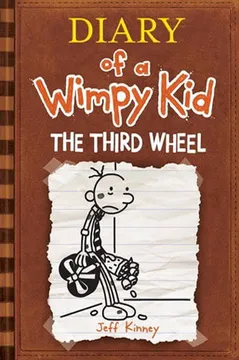


Plot Summary
Greg’s Unpromising Start
Greg Heffley begins his journal by claiming an unusually long memory, then recounts life before and after birth as if he had been taking notes all along. His mother plays classical music, reads to him, and tries educational videos, but Greg sleeps through the lessons and sabotages the television remote to change what he watches.
His older brother, Rodrick, supplies most of his early possessions, including a pacifier he apparently still wants back. When younger brother Manny arrives, Greg feels displaced by the family’s attention.
Greg also remembers trying to mislead preschool classmates, prompting his mother to move him ahead a grade. Kindergarten proves far beyond him, and he retreats to preschool the next day, already turning failure into a story about someone else’s bad decision.
Greg’s account makes self-importance both his defense and his comic instrument. He converts infancy into a record of deliberate choices, though the episodes he describes mostly expose how little control he had. That mismatch matters: he narrates dependency as strategy, and embarrassment as evidence that the world has treated him unfairly. His family history also establishes a household where attention and possessions are unevenly distributed. Greg notices every slight, but rarely asks what another person might be experiencing. The diary lets him shape events into a flattering case for himself, even when the facts keep puncturing it.
Manny’s Invisible Crowd
Manny’s language and social life worry their mother, especially because he avoids other children and insists on imaginary companions. When Manny breaks a plate, he blames one of those friends, and their mother punishes the imaginary culprit instead of Manny.
Hoping family activities will help Manny mingle, she takes everyone to Corny’s, a noisy restaurant with a ball pit. Manny hides in the play structure, then panics when his mother prevents him from retreating. Greg must crawl through the cramped tubes to retrieve him.
The maze reeks, children rush past, and Greg loses his way. A waiter eventually climbs in to rescue both brothers. Greg’s disgust lingers longer than the lesson: he has to throw away his favorite jeans because the smell will not wash out.
Manny’s imaginary friends and the ball pit turn a family’s concern into an awkward negotiation between protection and independence. Their mother tries to create opportunities for Manny, but each intervention risks making the child more fearful or more dependent. Greg recognizes the absurdity of treating imaginary friends as real, yet he also takes care not to sit on them. That caution shows how readily a family can organize itself around one person’s private rules. Greg’s rescue of Manny is a genuine act of responsibility, but his memory centers on ruined jeans. He helps, then immediately translates the cost into his own grievance.
Uncle Gary Moves In
After Greg’s mother secretly advances the family’s clocks for Manny’s pretend New Year, Greg’s sleep schedule shifts, and he is awake early doing chores when Uncle Gary arrives. Gary has borrowed money from Greg’s father for a T-shirt business, only to discover the shirts spell Boston incorrectly.
He needs somewhere to stay, and Greg’s mother welcomes him despite his father’s doubts. The garage fills with the unsellable stock; Gary even persuades Rodrick to buy one.
At home, Gary’s nightmares send him from Manny’s room to the family-room couch, displacing Rodrick from his preferred spot. Greg’s father presses Gary to find work, but Gary drifts between short-lived jobs, spends his allowance on scratch tickets, and offers Greg advice about dating instead.
Gary’s arrival makes family loyalty materially expensive. Greg’s father remembers the pattern of unpaid loans, while Greg’s mother treats kinship as an obligation that should override prediction. The house absorbs the consequences: shirts occupy the garage, Gary occupies the couch, and everyone else adjusts around his habits. Greg sees Gary as an entertaining source of advice, not as an adult whose choices have shifted the household’s balance. That narrow view foreshadows how Greg will borrow Gary’s dating tactics without examining their ethics. Gary’s restless reinvention is comic, but it also mirrors Greg’s wish to find shortcuts around effort.
Rowley Becomes Greg’s Proxy
At school, Greg is already wary of being chosen for a ballroom-dancing partner, especially after last year’s pairing left him embarrassed. Then Vice Principal Roy announces a new student-council election: candidates must attend meetings and have fewer than three detentions.
Greg has just reached that limit after selling a new student a fake elevator pass, so he cannot run. He recruits his best friend, Rowley Jefferson, who has a clean record, and offers to make the decisions while Rowley attends meetings.
Greg campaigns with T-shirts made from Gary’s stock, arranging students to spell out Rowley’s name. The plan is unnecessary: Rowley is the only candidate for Social Chairperson. Eugene Ellis wins President by promising better bathroom toilet paper, giving the council a promise its members cannot easily fulfill.
Greg’s campaign for Rowley reveals how he understands friendship when power is available: as a way to act through someone else. He sees Rowley’s eligibility as an instrument and imagines that the title will let him govern without sacrificing recess. Yet the election also exposes the limits of his control. His elaborate T-shirt stunt is wasted because Rowley wins unopposed, while Eugene’s simple promise attracts the school’s attention. The contrast is pointed. Greg invests in spectacle, but students respond to a concrete irritation they encounter every day. In this small political arena, legitimacy comes less from clever management than from naming what people want.
The Toilet Paper Revolt
Eugene’s promise runs into the school budget until a student discovers that teachers use the better toilet paper. The council secures permission for students to bring their own rolls, but overenthusiastic stockpiling and a lunchtime roll-throwing outbreak lead the principal to impose a five-square daily limit.
Greg has already hidden a large supply in a bathroom stall, using spare shoes to make it look occupied; classmates discover the stash, ending his private arrangement. The council then needs a fundraiser.
Its original ideas include wrestling and motocross, but the committee led by Vice President Hillary Pine quietly changes the plan into a Valentine’s Day dance. Candy Grams, sold as invitations, make the dance suddenly attractive to boys who had dismissed it. Greg, who has not received one, begins to worry about arriving alone.
The toilet-paper dispute is a miniature lesson in how scarcity produces both solidarity and hoarding. Students unite around an inequity, then reproduce it in private by carrying excessive supplies or hiding rolls. Greg’s secret stall is especially revealing: he responds to a shared shortage by trying to secure his own permanent advantage. The dance grows from the same institutional machinery, but its meaning changes when Candy Grams turn attendance into a public measure of desirability. A fundraiser meant to support school activities becomes a social sorting device. The transition links Greg’s practical self-interest to his deeper fear of being visibly unwanted.
Candy Grams Backfire
Gary advises Greg to appear popular by sending Candy Grams to himself. Greg spends his lunch money on several, but the trick costs more than he can sustain and attracts no genuine date. He then sends one to Adrianne Simpson, signing it with a misspelled version of his name and adding another girl as a fallback recipient.
Both girls react badly. A handwritten invitation to Leighann Marlow fares no better after a detention student adds a mocking reply to the desk. Greg considers Erika Hernandez, but worries about her recent boyfriend and begins mapping who in his grade has dated whom.
Gary finally tells him to ask someone face-to-face. Greg waits for Peyton Ellis at a water fountain, but she keeps drinking until the bell ends his chance. As a lab partner, Bethany Breen sees him flee rather than speak while they dissect frogs.
Greg approaches romance as a problem of information management. He buys evidence of popularity, tracks classmates’ relationships, and searches for an opening that will minimize the chance of direct rejection. Each tactic protects his pride briefly while making genuine contact less likely. His attempt to send one invitation to two girls shows the gap between wanting intimacy and wanting a guaranteed escape route. The chapter’s awkwardness is not simply social incompetence; it is a form of risk avoidance. Greg wants the status of being chosen without exposing himself to the vulnerability of asking. His increasingly elaborate planning only makes the straightforward act seem more dangerous.
The Wingman Disasters
Greg recruits Rowley as a wingman, expecting his easygoing friend to improve Greg’s image. When Rowley identifies popular student Alyssa Grove as newly available, Greg calls her house and leaves a string of messages while trying to perfect his approach.
He mistakenly believes he has erased them, and Alyssa’s father arrives to complain. Greg then borrows his father’s old leather jacket to look more confident. His mother takes it away at school and sends him home in her own winter coat, making him a bigger spectacle.
Hoping church school might offer a fresh audience, Greg meets Laurel Stringer, but volunteering to babysit her younger brother Wesley backfires. Wesley locks Greg in the laundry room, rides his bike down the stairs, and leaves Greg to escape through a window into Laurel’s bedroom just as her parents return.
These failures expose the cost of treating confidence as a costume. Greg changes his clothes, rehearses his image, and tries to use Rowley as social equipment, but each maneuver creates a new audience for his embarrassment. The leather jacket briefly makes him feel transformed; his mother’s intervention turns that private fantasy into public humiliation. Babysitting Wesley offers a more substantial chance to be useful, yet Greg approaches it partly as a route to Laurel. When Wesley takes control of the situation, Greg has no prepared strategy beyond escape. The sequence suggests that Greg’s worst moments come when he tries to manage how others see him instead of responding to what they need.
Abigail Needs a Date
With the dance only days away, Greg expects to stay home until Rowley reports that Abigail Brown’s date, Michael Sampson, has withdrawn because of a supposed family obligation. Abigail has already bought a dress and still wants to attend.
Greg persuades Rowley to invite her as part of a three-person outing, hoping he can impress her before the dance and gradually turn the group into a couple. He arranges for Rowley’s father to drive them, while pretending the man is a professional chauffeur, and asks Gary what to wear.
Gary recommends a suit, so Greg borrows one from Rodrick and buys chocolates for Abigail. He also chooses cologne from a deceased great-uncle’s belongings. On the evening itself, Rowley develops red spots, and Greg recognizes them as possible chicken pox but convinces him to hide them.
Abigail’s sudden availability gives Greg exactly what he has been trying to manufacture: a chance to appear helpful and desirable at the same time. His plan depends on several disguises, from the supposed chauffeur to the polished outfit and concealed illness. That structure makes the date feel less like a meeting between people than a stage set Greg hopes to control. Rowley’s role is more generous: he shares the information and agrees to include Greg, even though Greg continues to treat him as support staff. The chicken-pox problem introduces a sharper ethical test. Greg’s fear of losing the evening outweighs the risk he may be imposing on others.
Dinner Goes Sideways
Rowley hides his spots beneath makeup, a scarf, and a hat, and his father drives the group to collect Abigail. Greg cannot remove the booster seat from the back, so he squeezes into the rear with Rowley and Abigail while the car radio plays financial news and Rowley’s father makes an errand stop.
Greg’s expensive restaurant reservation fails when grease stains his suit and the staff require jackets. A borrowed jacket smells so strongly that Greg gives up and leads everyone to Corny’s instead.
He tries to prevent Rowley from spreading chicken pox, pushing chips toward him with a straw and holding his breath during a long story. Abigail and Rowley order costly meals, and Greg spends nearly all his money. When he returns from borrowing cash, the two are sitting closer together than before.
The outing steadily strips away Greg’s performance. He wants to be mistaken for someone sophisticated, but the booster seat, family errands, stained suit, and borrowed jacket keep revealing the ordinary circumstances he is trying to conceal. His response to Rowley’s possible illness is equally revealing: he recognizes a danger, yet focuses on managing appearances and preserving the date. The bill turns generosity into another performance, one that Greg cannot afford and cannot gracefully stop. His glimpse of Abigail and Rowley sitting close unsettles him because it suggests that connection may be forming without his direction. He has planned the evening, but he has not secured its emotional meaning.
The Dance Splits in Two
At the school gym, Greg arrives with Abigail and Rowley, then discovers his Uncle Gary has been hired as the DJ and is selling his misspelled shirts to students. The planned Paris setting loses its glow when senior citizens arrive with a reservation for the same gym.
Teachers divide the room with a partition, but the seniors need the lights on, and complaints force Gary to turn the music down. The boys abandon their careful manners, the Mad Pantser strikes again, and the seniors soon take over the music and refreshments.
Then Michael Sampson arrives with another girl, revealing that his excuse for canceling on Abigail was false. Abigail cries while Greg tries to comfort her from the edge of the crowd. Near the final song, Ruby Bird approaches Greg, and he grabs Abigail’s hand to escape her.
The dance’s physical division mirrors the social divisions Greg has spent the book trying to cross. The school party is split by scheduling errors, age, gender, and competing ideas of what a celebration should be. Greg has imagined himself as Abigail’s rescuer, but Michael’s arrival reveals that her pain is not a puzzle he can solve with a clever entrance. His attempt to comfort her is sincere, if limited by his self-consciousness. The final hand-grab begins as an escape from Ruby, not a romantic gesture. That accidental motive matters: Greg’s closest moment of intimacy begins when he stops trying to stage one.
A Pimple Ends the Dance
After Michael leaves with his date, Abigail remains at the dance, shaken by the discovery that he lied. Greg takes her onto the floor for the final slow song. Neither seems sure how to position their hands, and they settle into an awkward arrangement that lets them keep dancing. Greg notices a red mark on Abigail’s chin and assumes it is chicken pox, remembering Rowley’s spots and fearing infection.
He reacts with such alarm that the dance is over for them. The mark is only a pimple, likely made visible when Abigail cried and her makeup came away, but Greg understands this too late. On the ride home, Abigail is quiet. Rowley walks her to her door while Greg stays behind to finish the chocolates he bought for her.
For a moment, Greg offers Abigail something less calculated than his earlier dating schemes: companionship after a public humiliation. But the moment cannot survive his fixation on contamination and self-protection. His panic transforms a small mark into a threat, and the abrupt retreat makes his care conditional on his own comfort. The scene is comic because the misunderstanding is so disproportionate, but its emotional consequence is real: Abigail is left with another awkward ending after an already painful night. Greg’s attention to the chocolates on the ride home underscores the retreat into familiar pleasures. He can explain his reaction, but explanation does not restore the moment.
Everyone Gets the Pox
A few days later, Gary buys scratch tickets with the money he earned selling shirts, wins forty thousand dollars, repays Greg’s father, and moves out. Greg also develops a full case of chicken pox and stays home from school, though he cannot be sure where he caught it.
He suspects Rowley, but then sees Rowley walking to school with what looks like makeup still covering his chin. Greg hears that Rowley and Abigail are now a couple, and decides his wingman plan has made Rowley the real success.
At home, Greg enjoys long baths without anyone interrupting, then discovers that a towel beside the tub has vanished. Since he has spent the year treating Manny’s imaginary friends as possible household nuisances, he entertains the possibility that one of them took it.
The ending distributes consequences without giving Greg the victory he wanted. Gary’s sudden windfall resolves the family’s loan problem, but it comes through the same lottery habit that had made him seem unreliable. Rowley’s connection with Abigail exposes the limits of Greg’s belief that he can direct friendship from the sidelines. Greg gets the illness he feared, although the source remains uncertain, and is left alone with the private comforts he has long preferred. The missing towel brings the diary back to its opening preoccupation with control: Greg wants quiet, warmth, and certainty, but his family keeps exceeding the boundaries he imagines. Even solitude cannot entirely silence the household.
Analysis
The novel builds its comedy from a mismatch between Greg’s strategic self-image and the ordinary consequences of his choices. He thinks in campaigns, shortcuts, disguises, and contingency plans. Yet the world keeps answering those plans with details he cannot control: his mother confiscates the jacket, a restaurant refuses his stained suit, Wesley locks him in, and a pimple becomes a catastrophe because Greg mistakes it for chicken pox. His diary makes these mishaps entertaining without making him wholly reliable. Greg tells the truth about what he does, but his explanations repeatedly center his own embarrassment and advantage.
The book’s social world is organized around visible signs of status. Candy Grams, clothes, dance partners, and even the quality of school toilet paper become measures of who matters and who gets what. The students’ campaign for better supplies begins as a collective demand for fairness, then turns into hoarding and restriction. Greg’s romantic efforts follow a similar pattern: he wants to be chosen, but tries to purchase or stage the proof. The result is not simply that his schemes fail. They make his need for approval more obvious than it would have been if he had acted plainly.
Rowley provides the novel’s quiet counterpoint. He is not a model of perfect judgment, but he approaches people with less calculation than Greg does. Greg repeatedly casts him as a campaign asset or wingman, while Rowley’s genuine ease creates connections Greg cannot engineer. The dance’s accidents, including the shared gym, the broken date, and Greg’s panicked retreat, strip away the fantasy that social success can be controlled like a school election. Greg’s final solitude is comic rather than tragic, but it leaves him with a small lesson he has not quite learned: other people are not props in his story, even when he writes them that way.
Review Summary
The Third Wheel receives mostly positive reviews, with readers praising its humor and relatable storyline. Many enjoy Greg's misadventures in finding a date for the Valentine's Day dance, as well as the book's exploration of middle school social dynamics. Some readers find it less engaging than previous entries in the series, but most appreciate the familiar characters and Kinney's comedic writing style. The book appeals to both children and adults, with many considering it a quick, entertaining read.
People Also Read




Characters
Greg Heffley
Self-appointed strategistGreg is a middle-school student who records family and school life as though he is the only person noticing how things work. He wants popularity, comfort, and influence, but usually seeks them through shortcuts: a borrowed jacket, a staged reputation, or Rowley acting on his behalf. His confidence is both comic armor and a blind spot. He can be observant about other people’s habits, yet he often interprets their feelings through the question of what those feelings mean for him. The diary gives him a private stage on which to justify his choices, while the events themselves repeatedly expose the distance between his self-image and his impact.
Rowley Jefferson
Loyal, easygoing friendRowley is Greg’s best friend, a good-natured student whose openness contrasts with Greg’s constant calculation. He is willing to join Greg’s schemes, run for student council, and help with the dance, often without grasping the hidden social rules Greg is trying to manipulate. Rowley’s sincerity can make him seem naive to Greg, but it also lets him connect with people without the elaborate strategies Greg relies on. Their friendship is affectionate but uneven: Greg frequently casts Rowley as an assistant, while Rowley tends to approach their plans as shared adventures. His presence quietly tests whether Greg values him as a person or as useful company.
Uncle Gary
Restless family guestGary is Greg’s father’s younger brother, an energetic but unreliable adult who moves from one ill-conceived opportunity to another. A failed T-shirt venture brings him into the Heffley home, where his habits disrupt the family’s routines. He is generous with advice, especially about dating, and Greg treats him as an expert because Gary appears confident about relationships. Yet Gary’s confidence is not the same as sound judgment. He wants quick money, novelty, and freedom from ordinary work, making him both a comic presence and a warning about the shortcuts Greg admires.
Manny Heffley
Sheltered youngest brotherManny is Greg’s much younger brother, whose language, play, and imaginary friends concern their mother. He is accustomed to close adult attention and can withdraw from other children when he feels uneasy. Greg sees Manny’s habits as absurd, but he also knows the family changes its routines to accommodate them. Manny’s imaginary companions become part of the household’s daily negotiations, creating comic confusion while showing how adults may protect a child from distress in ways that reinforce his isolation.
Rodrick Heffley
Older brother and rivalRodrick is Greg’s older brother, whose hand-me-downs and shared home shape Greg’s sense of being second in line. He is protective of his comforts and can make Greg feel like an inconvenience, though their relationship is built into the ordinary competition of brothers. Greg borrows Rodrick’s clothes when he wants to reinvent himself, revealing how much he depends on the very person he resents. Rodrick represents an older, more established version of the household hierarchy Greg is still trying to navigate.
Greg’s mother
Family’s earnest organizerGreg’s mother tries to guide her sons through reading, school, social development, and family activities. Her interventions are often well meant but sometimes misjudged, as when she advances the household clocks for Manny or pushes Greg into academic challenges he cannot manage. She believes that family members should help one another, which leads her to welcome Gary despite her husband’s reservations. Greg often sees her rules as obstacles, but her efforts give the family much of its structure.
Greg’s father
Skeptical household providerGreg’s father values steady work and is wary of Gary’s repeated requests for help. He supports his family through an office job, a routine Greg finds dull, and expects other adults to take responsibility for themselves. His frustration with Gary creates tension at home, though he ultimately participates in the family’s decision to offer help. Greg notices his father’s habits mostly as comic inconveniences, but the contrast between their outlooks makes the father a model of the stability Greg both resists and depends on.
Abigail Brown
Unexpected dance companionAbigail is a student preparing to attend the Valentine’s Day dance. She enters Greg’s plans through Rowley, but she has her own friendships, expectations, and reasons for going. Greg imagines that he can win her over by arranging the evening, while Abigail’s experience of the dance is shaped by events beyond his control. Her presence exposes the difference between being someone’s intended date and being truly attentive to that person.
Eugene Ellis
Practical student-council presidentEugene is a student-council candidate who wins support by focusing on a basic school complaint: the poor quality of the students’ bathroom toilet paper. His campaign gives the council a concrete goal and sets off the dispute over who deserves better supplies.
Wesley Stringer
Unruly babysitting chargeWesley is a young church-school student whose fearsome reputation has made Manny wary of him. During Greg’s babysitting attempt, Wesley proves difficult to supervise and turns the evening into a test of Greg’s patience and judgment.
Laurel Stringer
Greg’s church-school crushLaurel is a student in Greg’s grade and the daughter of a family her mother hopes to befriend. Greg sees her as a possible date and volunteers to babysit partly to impress her. Her presence gives that awkward evening its social stakes.
Michael Sampson
Abigail’s absent dateMichael is the boy Abigail expects to attend the dance with. His plans affect Greg’s chance to accompany her, and his choices become a source of pain for Abigail on the night itself.
Ruby Bird
Intimidating classmateRuby is a student Greg fears because of her history of biting and fighting. Greg tries to avoid provoking her, and his anxiety around her shapes one of his decisions during the final dance.
Hillary Pine
Fundraising committee leaderHillary is the student-council vice president who leads the committee responsible for raising money. Her group changes the council’s ambitious event plan into a Valentine’s Day dance.
Plot Devices
Greg’s journal
A comic self-portraitGreg’s diary frames the novel as his personal record of family and school life. Its first-person perspective gives readers his explanations, plans, and suspicions, while the events he reports often reveal more than he intends. The journal supports the book’s episodic structure: childhood memories, household mishaps, student politics, and the dance can sit together as entries in Greg’s ongoing account. It also creates a productive gap between narrator and reader. Greg is candid about his ambitions, but his interpretations are shaped by self-interest, so readers must notice when his version of events differs from the consequences he describes.
Candy Grams
Popularity made visibleThe school sells small Valentine’s invitations that students can send to one another. Because each message is public evidence of who has been remembered or chosen, the Candy Grams quickly become more than a fundraiser. Greg first tries to manufacture popularity by sending them to himself, then uses them to test whether girls might attend the dance with him. Their low price makes them accessible, but their social meaning gives each one more weight than its cost suggests. The device turns private insecurity into a visible schoolwide competition and helps drive Greg toward riskier attempts at finding a date.
The toilet-paper campaign
Scarcity sparks student politicsThe school’s inferior bathroom supplies give Eugene a specific campaign promise and the student council a cause students immediately understand. The eventual compromise, allowing students to bring their own rolls, exposes the difference between winning a promise and managing its consequences. Students hoard supplies, a roll-throwing incident prompts restrictions, and Greg hides a stash of his own. The device brings institutional fairness into the novel at a child-sized scale. It also leads to the council’s fundraising effort, which is redirected into the Valentine’s dance and links school politics to Greg’s personal hopes.
Gary’s T-shirts and tickets
A comic engine of reversalsGary’s misprinted shirts begin as the visible consequence of a failed business scheme. They occupy the Heffley garage, become part of Greg’s student-council campaign, and later reappear as merchandise at the dance. His habit of buying scratch tickets adds a second recurring gamble: Greg’s family sees it as wasteful, but Gary continues to hope for a sudden change in fortune. Together, the shirts and tickets make Gary’s repeated reinventions tangible. They also keep his storyline connected to Greg’s, since Gary supplies advice and objects that Greg turns into tools for his own plans.
The wingman plan
Friendship used as leverageGreg asks Rowley to help him secure a date, treating their friendship as a strategy for gaining access and improving his reputation. The plan borrows language from sports and campaigning, making social life seem like a contest that can be won through preparation. Rowley does provide useful information and company, but Greg’s assumption that he can direct Rowley’s role creates comic friction. The device also clarifies their contrasting temperaments: Greg calculates outcomes, while Rowley is more open to the people around him. Its consequences emerge through the dance, where Greg’s carefully planned position proves less secure than Rowley’s unforced connections.
Diary of a Wimpy Kid Series







About the Author

Download PDF
Download EPUB
.epub digital book format is ideal for reading ebooks on phones, tablets, and e-readers.








