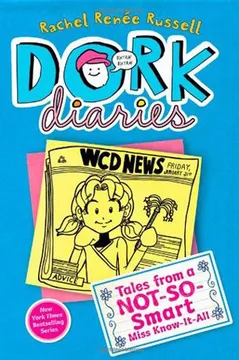


Plot Summary
The New Year's Toilet-Paper Caper
On a New Year's Eve sleepover, Nikki Maxwell and her best friends, Chloe and Zoey, trade their usual games for a dare aimed at MacKenzie Hollister, the classmate who has repeatedly humiliated them and once trapped them before an ice show. The girls sneak through the snow and drape toilet paper over MacKenzie's trees.
Her poodle discovers them in the bushes, and MacKenzie catches them before they can escape. Nikki admits what they did, while Chloe and Zoey each try to take the blame. MacKenzie refuses their offer to clean up and decides the prank must have been a romantic gesture from Brandon, Nikki's crush. The girls return home shaken, then laugh at how completely their revenge has misfired.
The prank begins as an attempt to reverse the social roles that MacKenzie has imposed: for once, the girls want her to be the target of embarrassment. But Nikki's honesty, and MacKenzie's self-absorption, prevent the prank from delivering the satisfaction she expected. The scene also establishes Nikki's central tension. She wants to act boldly, yet she is uneasy with cruelty and quick to take responsibility. Her laughter afterward does not erase the mistake; it shows how friendship lets the girls acknowledge foolishness without turning on one another.
MacKenzie's Secret Admirer Story
A few days later, Nikki receives an invitation to Brandon's birthday party, while MacKenzie is left off the guest list. MacKenzie turns the toilet paper into evidence of a supposed secret admirer, telling classmates that Brandon decorated her yard and left gifts.
Nikki's friends know the truth, but the gossip threatens to distort Brandon's friendship with Nikki. At home, Nikki's father, who runs a small pest-control business, meets MacKenzie's father, Marshall Hollister, about temporary work.
The arrangement brings new equipment and income, but Nikki fears her father will give up his business and the bug-extermination scholarship that pays for her place at Westchester Country Day. A producer also asks Nikki's band to record a song, a bright prospect against the growing family anxiety.
MacKenzie's lie succeeds because it fits the story she wants others to believe: that she is the center of every romantic possibility. Nikki's anxiety grows when that social fiction meets material dependence. Her scholarship is tied to her father's livelihood, so a schoolyard conflict suddenly feels capable of changing where she belongs. The band opportunity offers a counterweight, but Nikki cannot enjoy it without imagining consequences. The novel links adolescent status to real vulnerability: rumors wound, while the family's finances make those wounds feel dangerous.
Nikki Joins the Newspaper
When school resumes, MacKenzie's version of the prank spreads, complete with a photograph of her toilet-papered yard. Nikki worries that the rumor will damage Brandon's trust in her.
Then MacKenzie raises the stakes: she claims eggs were thrown too and threatens to report the girls unless Nikki gets her and Jessica invitations to Brandon's party. Nikki knows no one egged the house, but the false accusation could also put Brandon under suspicion.
Rather than pressure him to invite the girls, Nikki decides to join the school newspaper so she can watch MacKenzie's articles and alert the adviser if she prints more lies. Brandon helps her locate an open photo-layout position, and Nikki heads to the recruitment meeting hoping the plan will protect her friends.
Nikki's decision is a shift from reactive embarrassment to strategic action. She refuses to use her friendship with Brandon as currency, even though doing so might end the immediate threat. Instead, she looks for access to the institution MacKenzie is exploiting: the school newspaper. That choice is partly principled and partly self-protective. Nikki wants to defend her friends, but she also hopes proximity to Brandon will deepen their bond. The mixed motives make her feel recognizable, not heroic by design.
Crossed Off the Staff List
At the newspaper meeting, adviser Mr. Zimmerman assigns the photo-layout role to another student, then leaves Nikki without a position. Nikki later finds the sign-up sheet in the trash and sees that her name has been crossed out. MacKenzie has quietly removed it. Too embarrassed to challenge Zimmerman alone, Nikki initially retreats; Chloe and Zoey insist she return and ask for a place.
Nikki explains the mistake, but every staff position is filled. Zimmerman finally offers her the revived advice column, provided she writes under a pen name. He gives her a locked box for the work and lets the rest of the staff believe she is an assistant. Nikki becomes Miss Know-It-All, with no mentor and no experience to guide her.
The crossed-out name makes sabotage visible, but Nikki's first response is still to blame herself and withdraw. Chloe and Zoey counter that reflex by treating her disappointment as worth confronting. Zimmerman's offer is an imperfect rescue: he opens a door, but gives Nikki responsibility without instruction. The pen name creates both freedom and pressure. It lets her write without immediate exposure, while separating her public authority from her private uncertainty. Her new role begins not with expertise, but with the risk of being useful before she feels qualified.
Trash Becomes a Mailbox
Nikki arrives early for her first day and finds only a broken pencil, gum, and other rubbish in the advice mailbox. Chloe and Zoey refuse to let her give up; they make colorful help boxes and posters that draw attention across school. Letters begin arriving, and Nikki answers questions about crushes, siblings, homework, and fitting in at a new school.
One boy asks how to tell his girlfriend that he loves baking. Nikki advises him to be honest, and he fills the girl's locker with cupcakes and roses, making a public confession that appears to delight her. A later letter leaves Nikki worried that the advice has backfired. Meanwhile, Brandon tells Nikki he values her honesty, which makes her fear he has mistaken her insecurity for confidence.
The advice column gives Nikki a public role she has not yet learned how to inhabit. Her first obstacle is not a lack of ideas but the possibility that nobody wants to hear them; Chloe and Zoey answer that fear with practical labor rather than reassurance alone. The baking letter shows the power and limits of advice: a small suggestion can prompt a courageous gesture, but Nikki cannot control how it lands. Brandon's praise sharpens the same issue. Nikki longs to be seen, yet fears that being seen means being judged against an ideal version of herself.
Brianna's Newspaper Has a Scoop
While shopping for Brandon's birthday, Nikki brings along her younger sister, Brianna, whose impulse to try store makeup leaves Nikki paying for products she has opened and most of Nikki's saved gift money gone.
Back home, Brianna, annoyed that Nikki will not let her help with newspaper work, creates a crayon family paper called the Some Times. Its sensational drawing of a bear in Nikki's clothes is embarrassing, but the paper becomes more important than either sister expects.
By the end of the month, Miss Know-It-All's boxes overflow with 216 letters. Chloe and Zoey help Nikki sort them, and Zimmerman announces that her column has sharply increased readership. He names Nikki the staff's monthly standout and limits her workload to a manageable number of letters.
Brianna's comic disorder complicates Nikki's sense of being the responsible older sister. Nikki tries to control both the shopping trip and the work she guards as her own, but Brianna's improvisation produces an unexpected artifact with a life beyond their argument. Meanwhile, success changes the advice column from a private hope into a genuine obligation. The growing mail brings recognition, but also a workload Nikki cannot manage alone. Chloe and Zoey's practical help and Zimmerman's limit on submissions show that competence is not the same as solitary endurance.
MacKenzie Names Her Leverage
As Nikki collects letters from a hallway help box, MacKenzie catches her and begins to suspect she is Miss Know-It-All. Soon afterward, MacKenzie confronts Nikki at her locker and reveals that she knew Nikki, Chloe, and Zoey had toilet-papered her yard from the start. She had let the prank happen so she could use it against them.
MacKenzie also admits she blamed Brandon because she expected him to protect Nikki by spending time with her and inviting her to his party. Now that the manipulation has failed, she plans to tell Principal Winston about the prank and push for the girls' expulsion. Nikki is exhausted by the threat and fears that her friends may pay for MacKenzie's desire to control her.
This confession changes the prank from an unfortunate misunderstanding into a trap MacKenzie deliberately kept open. She uses other people's concern for one another as leverage: Brandon's decency becomes a tool, and Nikki's loyalty makes her vulnerable to pressure. Her tactics are driven by entitlement as much as jealousy; she treats attention and access as things she can secure through manipulation. Nikki's fear is not merely punishment. She recognizes that her choices have exposed Chloe and Zoey to consequences, which makes her feel responsible even when MacKenzie is the one engineering the danger.
Marcy Takes the Interview
The next day, Principal Winston summons Nikki, Chloe, and Zoey alongside MacKenzie. Before the meeting begins, Marcy, a shy new student assigned to investigative reporting, arrives with a recorder.
Brianna's Some Times has reached Marcy's younger brother, giving Marcy a lead about MacKenzie stealing the girls' ice-show costumes and locking them in a storage room. Faced with a recorded question about that incident, MacKenzie abandons her complaint and turns the meeting into a request for more apple dishes in the cafeteria.
The girls avoid immediate discipline. Marcy then shares what she overheard: MacKenzie plans to get Nikki's father transferred across the state through Marshall Hollister, which could force the family to move or leave him without work.
The resolution of the school threat comes through an unlikely chain of attention. Brianna's homemade paper, dismissed as childish, circulates far enough to give Marcy evidence; Marcy's reporting turns that evidence into public accountability. MacKenzie's power depends on controlling what others know, so a recorded question disrupts her ability to dictate the story. Yet the escape is incomplete. Marcy's information reveals that the conflict has expanded from school gossip to the family's livelihood. The scene grants Nikki relief and immediately replaces it with a more intimate fear.
The Roachmobile at the Door
On the morning of Brandon's party, Nikki's father brings back his old pest-control van, choosing to grow his own business rather than work full time for Hollister Holdings. Nikki's scholarship is no longer in immediate danger, but she still fears Brandon seeing the van. She gives her father a false address, hoping he will wait out of sight.
At Theo's party, the directions fail and her father arrives at the house. Nikki secretly guides him back to the van, then leaves before Brandon can ask too much. On the ride home, her father thinks the confusing street numbers caused the mishap. A text from Brandon changes Nikki's shame: he already knows about the van and wants to ride in it with her. He invites her to lunch, and Nikki accepts.
Nikki's father resolves the material danger by choosing independence, but Nikki's emotional conflict remains: she has treated her family's circumstances as a secret that would make her less lovable. Her false directions create the party's last embarrassment, and Brandon's presence makes the deception feel consequential. His response does not demand a polished explanation; he shows curiosity about the part of Nikki's life she has tried to hide. The ending turns acceptance into an ordinary invitation to share a meal and a ride, not a grand romantic promise. Nikki can be excited without pretending the uncertainty is gone.
Analysis
The novel builds its plot from small acts of exposure. A prank makes Nikki visible to MacKenzie; a false rumor makes her visible to the school; a newspaper column makes her visible as a writer; and the roach van represents a family truth she has tried to keep from Brandon. Each exposure tests a different form of control. MacKenzie tries to control the story other students tell, Nikki tries to control how her family appears, and the school paper offers a public structure that can either spread rumor or correct it.
Nikki's diary complicates the reader's view without making her dishonest. She is candid about her motives, but her anxious interpretations often outrun the evidence. That mismatch creates comedy and shows how social fear distorts judgment: a delayed answer from Brandon can feel like rejection, and a temporary job can seem like the end of her school life. Her growth is not a sudden transformation into a perfectly confident person. It comes through repeated decisions to accept responsibility, ask for help, and act despite embarrassment.
The book also contrasts two kinds of influence. MacKenzie relies on status, selective information, and threats. Nikki's growing influence comes from attention to other people's problems, even when her advice is imperfect. Chloe and Zoey help turn that attention into collective work, while Marcy's reporting shows that information becomes consequential when someone checks its source. Brianna's messy paper adds a further counterpoint: creativity does not need polish or permission to matter.
The ending keeps romance modest. Brandon's interest matters because Nikki has mistaken concealment for protection, not because a lunch invitation resolves every insecurity. His willingness to know the van reframes the object Nikki dreads as part of the life she can share. The book's reassurance is practical: belonging grows when people can tell the truth, rely on friends, and let others respond for themselves.
Review Summary
Tales from a Not-So-Smart Miss Know-It-All receives overwhelmingly positive reviews, with readers praising its humor, relatable characters, and engaging storyline. Many appreciate Nikki's growth and the realistic portrayal of middle school life. The book's illustrations and Nikki's diary entries are highlighted as particularly enjoyable. Some readers note the series' consistency in quality and eagerly anticipate future installments. The book appeals to its target audience of young girls, offering a mix of drama, comedy, and relatable experiences.
Characters
Nikki Maxwell
Diary-writing truth seekerNikki is a middle-school student who records social disasters, crushes, and family worries in her diary, often turning her embarrassment into humor before she can face it directly. She loves her friends and wants to be fair, but fear of rejection makes her hide parts of her life and overestimate how disastrous other people's judgments will be. Her attraction to Brandon and her resentment of MacKenzie can tug her in different directions. Nikki's instinct to tell the truth coexists with a habit of panicking, avoiding difficult conversations, and trying to manage everyone else's reactions. She is most resourceful when loyalty pushes her to act for someone besides herself.
Chloe
Romance-loving loyal friendChloe is one of Nikki's two closest friends. She is an enthusiastic reader of romantic stories, quick to turn an idea into a playful scheme, and generous with her affection. Her optimism sometimes leads her toward impulsive plans, including the prank that begins the January troubles, but she does not abandon Nikki when those plans go wrong. Chloe helps create the advice column's schoolwide displays and backs Nikki when she is too intimidated to advocate for herself. Her warmth is not simply cheerleading; she makes friendship visible through concrete effort, shared risks, and an eagerness to include others.
Zoey
Practical, inventive confidanteZoey is Nikki's other best friend, observant and inventive, with a steadier manner than Chloe's exuberance. She joins the prank and accepts her part in it, but she is also quick to defend Nikki when MacKenzie twists events. When Nikki doubts her abilities, Zoey helps turn encouragement into action, especially by designing ways to attract letters to the advice column. Zoey's loyalty is active rather than sentimental: she helps Nikki confront problems, shares the consequences of their choices, and keeps the friendship grounded when embarrassment threatens to isolate them.
MacKenzie Hollister
Status-guarding school rivalMacKenzie is a wealthy, fashion-conscious student who expects to command attention and treats popularity as a form of control. She is Nikki's persistent rival, and her contempt often appears through gossip, social exclusion, or efforts to put Nikki on the defensive. Beneath her polished confidence is a strong need to be admired, especially by boys she wants to impress. MacKenzie is skilled at reading what other people fear and using it to pressure them, but her self-absorption can make her misread situations and other people's motives. She wants influence without having to earn trust, a contrast to the loyalty Nikki builds with her friends.
Brandon
Gentle, private crushBrandon is Nikki's crush and a fellow student who contributes photographs to the school newspaper. He is quiet, thoughtful, and more comfortable sharing personal feelings in a trusted friendship than performing for the school's social scene. His interest in photography gives him a creative focus, while his kindness makes him a source of both comfort and nervousness for Nikki. He does not fit MacKenzie's preferred image of a prize to be won, and his independence from her expectations matters to Nikki. Brandon's reserve can leave Nikki guessing, but his considerate actions show that he pays attention to people beyond their popularity.
Brianna
Unfiltered younger sisterBrianna is Nikki's younger sister, imaginative, impulsive, and often unaware of the social damage her blunt observations can cause. She is interested in toys, dress-up, and making her own rules, while Nikki often experiences her as an exhausting responsibility. Their arguments reveal that Nikki wants both independence and control over her sister, a difficult combination for an older sibling. Brianna's childish inventions and willingness to speak without calculating the response can frustrate Nikki, but they also bring unexpected consequences. She is not a miniature version of Nikki: she moves through embarrassment with far less self-consciousness.
Nikki's father
Proud small-business ownerNikki's father runs Maxwell's Bug Extermination and has arranged the scholarship that allows Nikki to attend Westchester Country Day. He is warm, earnest, and proud of his work, though his enthusiasm for business can outpace his practical polish. A new opportunity with Marshall Hollister appeals to his ambition and desire to provide for his family. Nikki worries about what his choices could mean for her school and home life, while he tends to reassure her that he can manage. His relationship with Nikki carries affection, comic misunderstandings, and a genuine wish to make the family secure.
Marcy
Newcomer with a reporter's eyeMarcy is a new student who is assigned to work on the school newspaper and hopes to find a place among her classmates. She begins as an anxious, eager participant, especially when MacKenzie becomes her fashion-section mentor. Her interest in reporting gives her a reason to ask questions others might avoid. Marcy is attentive to what people say and to the sources behind a story, though she is still learning the school's social landscape. She wants both meaningful work and genuine friends.
Mr. Zimmerman
Chaotic newspaper adviserMr. Zimmerman advises the WCD newspaper and has a reputation for disorganization, odd habits, and a short supply of patience. He can be difficult for new students to approach, particularly when his attention is divided by deadlines, coffee, and the clutter of his office. Yet he recognizes promise in Nikki and is willing to create an unconventional assignment when standard positions are filled. His guidance is rough around the edges, but he gives students room to take responsibility and surprise him.
Lauren Walsh
Capable journalism internLauren is a senior journalism intern who helps run the school newspaper and smooths over Mr. Zimmerman's disorganization. She welcomes prospective staff members, handles practical tasks, and gives the students a more reliable point of contact. Lauren is competent without being showy, and her work keeps the paper functioning while its adviser follows his own distracted rhythms. She provides a glimpse of responsible journalism as everyday labor.
Marshall Hollister
Powerful property ownerMarshall Hollister is MacKenzie's father and the owner of a property-management company with numerous buildings. He offers Nikki's father pest-control work, creating a business connection between the two families. Marshall represents the financial power and professional opportunity that make Nikki uneasy about her father's future. He is mostly seen through the effects of his decisions on the Maxwells, rather than through a close personal relationship with Nikki.
Jessica
MacKenzie's gossip-minded allyJessica is MacKenzie's close friend and works as a student assistant in the school office. Her access to the office places her near school information, while her loyalty to MacKenzie makes her part of the social circle Nikki distrusts. Jessica tends to reinforce MacKenzie's version of events rather than question it. She is a small but useful example of how gossip travels through informal school networks.
Principal Winston
School authority figurePrincipal Winston oversees discipline at Westchester Country Day. Nikki and her friends fear that he may punish them for the prank, which gives MacKenzie's threat institutional force. He is an authority figure in the background of their school lives.
Theo
Game-room party hostTheo is Brandon's friend and hosts the birthday gathering at his family's house, whose game room makes it a popular place to celebrate. His family also owns the Queasy Cheesy restaurant chain, which supplies food for the party. Theo provides the setting for Nikki's final social dilemma.
Plot Devices
Nikki's diary
Private comic recordNikki's diary is the frame through which the story unfolds, giving readers access to her fears and judgments as she makes them. Her account is emotionally candid but often exaggerated by panic, jealousy, and comic self-dramatization. That gap between what she fears and what is actually happening creates humor while letting readers see how she interprets social pressure. The diary also makes private shame legible: Nikki can admit worries there that she cannot yet share with Brandon, her parents, or classmates. It turns ordinary school events into a record of how she is learning to describe herself.
The toilet-paper prank
A mistake turned leverageThe prank begins as a retaliatory dare, but its consequences are shaped by MacKenzie's decision to misrepresent what happened. Nikki and her friends admit their role and offer to clean up, yet MacKenzie turns the scene into a story about a secret admirer, then uses false claims about eggs to threaten them. The prank links the novel's comic opening to its central conflict: Nikki's small act gives MacKenzie leverage, but MacKenzie's manipulation, not the prank itself, keeps escalating the danger. It also forces Nikki to reckon with the difference between owning a mistake and accepting blame for something she did not do.
The scholarship and Hollister job
Family stakes behind schoolNikki's place at Westchester Country Day depends on the scholarship her father arranged through his pest-control work. When Marshall Hollister offers her father a job, a private business decision begins to feel like a threat to Nikki's school life and friendships. The possible move from independent work to employment for the Hollisters connects MacKenzie's social power to adult economic power. Nikki's fears are more extreme than the known facts, but they are not baseless: her father's work affects where the family can live and what opportunities she can keep. The device grounds middle-school status anxiety in material dependence.
Miss Know-It-All
A hidden public voiceThe advice column gives Nikki a place on the newspaper staff after MacKenzie removes her name from the photo-layout list. Writing under a pseudonym protects Nikki from immediate exposure while allowing her to answer students who are uncertain about crushes, family, and school. The column first seems likely to fail, but Chloe and Zoey's handmade boxes bring in real letters. As responses accumulate, Nikki must move beyond jokes and face the limits of advice: she can suggest an action, but cannot guarantee its result. The column becomes both a creative outlet and a test of whether Nikki can offer others the compassion she struggles to give herself.
Brianna's Some Times
Childish paper, serious clueBrianna's homemade family newspaper begins as a burst of imaginative competition with Nikki. Written and illustrated without concern for polish, it embarrasses Nikki by turning private family moments into public news. Its circulation beyond the house gives it an unexpected function: details in the paper reach Marcy's brother and help Marcy pursue a school story. The Some Times works because Brianna does not understand how carefully Nikki and MacKenzie manage reputation. Her lack of social strategy makes her paper clumsy, funny, and unexpectedly informative. The device lets an overlooked child's creation influence the adult-like machinery of school journalism.
Dork Diaries Series


About the Author
Download PDF
Download EPUB
.epub digital book format is ideal for reading ebooks on phones, tablets, and e-readers.








