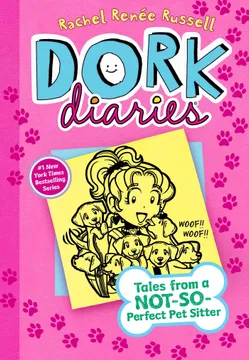


Plot Summary
The Cupcake Ambush
A week after MacKenzie Hollister leaves Westchester Country Day, Nikki Maxwell expects relief. Instead, MacKenzie interrupts Nikki's almost-kiss with her longtime crush, Brandon, then tells visiting classmates that Nikki's friends, achievements, and even relationship with Brandon belong to her.
MacKenzie has sold her new school as a paradise for celebrities' children, but her classmates expose a different story: she has also invented a band, a record deal, and charitable deeds. When Nikki challenges her, MacKenzie threatens to use Nikki's stolen diary and private information against her friends.
The encounter turns Nikki's satisfaction at MacKenzie's departure into suspicion. MacKenzie seems less like a former bully who has moved away than someone still reaching into Nikki's life to control what others believe.
Nikki's narration first frames MacKenzie's absence as liberation, but the CupCakery scene shows how completely MacKenzie still occupies her attention. The identity theft is social rather than literal: MacKenzie borrows Nikki's history and virtues to build a more appealing self for strangers. That performance unsettles Nikki because it makes truth depend on who gets to tell the story. Brandon's defense offers Nikki some reassurance, while MacKenzie's threat exposes the cost of their old conflict: Nikki's private diary remains a weapon in someone else's hands.
Eight Dogs, No Space
Outside Fuzzy Friends, Nikki and Brandon find Holly, a gentle golden retriever, abandoned with seven puppies and a note from an owner who can no longer keep them. Brandon explains that the no-kill shelter is already full and cannot officially accept the family until Sunday.
He and Nikki agree to hide the animals there temporarily rather than risk sending them somewhere unsafe. MacKenzie, who has followed them, overhears the plan and threatens to report the shelter for breaking its occupancy rules.
Nikki realizes that MacKenzie can hurt both the animals and Brandon's dream of helping them. Instead of trying to seize her phone or force her to stay quiet, Nikki threatens to tell MacKenzie's new classmates the truth about her invented stories. MacKenzie abandons the call, buying the dogs a little time.
The abandoned litter transforms Nikki's feud with MacKenzie into an ethical problem with consequences beyond school status. Brandon's attachment to Fuzzy Friends makes the shelter's rules emotionally difficult, but its capacity limit is real: caring intentions do not erase legal and practical constraints. Nikki's counterthreat works because MacKenzie's new identity is fragile, built on claims that cannot withstand witnesses. The maneuver is clever but not a moral victory; Nikki has answered coercion with leverage. The temporary truce leaves the animals' safety dependent on cooperation and improvisation.
A Promise Against Permission
Nikki and Brandon arrange a four-night rotation: Brandon takes the first shift, Nikki the next, then Chloe and Zoey. Theodore Swagmire secures a pizza van to move the animals. Nikki's mother refuses to let her keep Holly overnight, so Nikki hides the refusal from Brandon rather than admit she cannot do her part.
That night, while finishing a biology assignment, Nikki turns her father's long underwear into a painted anatomy model. Her teacher praises it the next day and asks her to wear it for class, leaving Nikki mortified but earning her a place in the city science fair.
Embarrassment does not loosen her promise. Nikki decides to keep the dogs anyway, cleans her room, clears space in her closet, and prepares to conceal all eight animals from her parents.
Nikki's best intentions are already entangled with dishonesty. She wants to be dependable to Brandon, but instead of renegotiating the plan, she conceals the obstacle and makes a larger risk unavoidable. The biology project provides comic counterpoint: Nikki's improvised creativity succeeds in public, even as her private plan grows less sensible. Her embarrassment before classmates is survivable; disappointing Brandon feels harder. That distinction reveals how strongly she measures herself through friendship and approval. The decision to hide the dogs turns a temporary favor into an increasingly complicated test of responsibility.
The Peanut Butter Disaster
When Holly and the puppies arrive, Nikki's friends bring a baby monitor and movie tickets to keep the parents away. Nikki also lets her little sister Brianna help, hoping that will make hiding eight dogs easier. Instead, Brianna releases them, scatters pillow stuffing, and transforms her bedroom into a pretend pet spa.
Calling herself Miss Bri-Bri, she covers the dogs in peanut butter, then prepares a foul mud bath using dirt from Mrs. Wallabanger's garden compost. During the cleanup, Brianna's teddy bear assistant lands in the toilet, and Nikki breaks down on the bathroom floor.
Brandon arrives after Brianna answers Nikki's phone and describes the disaster. He brings his friend Max, whose science-fair project needs dirty water and compost. Nikki gives them the mess, and Max helps bathe the dogs outdoors.
Brianna's make-believe spa converts Nikki's carefully hidden responsibility into a public, material mess. The comedy depends on the gap between the sisters' intentions: Nikki treats secrecy as control, while Brianna treats the animals as willing customers in a game. Nikki's collapse marks the point where confidence gives way to the scale of what she has taken on. Brandon and Max's arrival turns embarrassment into practical cooperation. The ruined compost and bathwater also connect the household subplot to Max's science project, making the mess consequential rather than merely decorative.
Eight Dogs at School
Nikki expects her parents to take Brianna's class to the zoo, leaving the house empty while she is at school. When a storm cancels the trip and her mother stays home, Nikki has nowhere safe to leave Holly and the puppies.
She disguises their cage as a load of library books, and her father unknowingly drives them to school. Chloe and Zoey help wheel the animals into the janitor's closet and use the baby monitor to keep watch. But Chloe leaves the cage unsecured.
The puppies tear through detergent, toilet paper, and mop water, while their racket spills into homeroom through Nikki's backpack. Nikki, Chloe, and Zoey fake stomach trouble until the teacher sends them out, then rush to the closet. The dogs are unharmed, but the hiding place is ruined.
The canceled trip is a small change in schedule with enormous consequences because Nikki has built her plan around nobody being home. Her solution exports the risk from her family to the school, involving friends and staff who have not agreed to take responsibility. The baby monitor, introduced as a safeguard, becomes the means by which the secret threatens to expose itself. The girls' fake illness is an improvised rescue, but it also shows how quickly deception compounds: every escape creates another person who must be misled. The wrecked closet makes their next decision urgent.
The Principal's Office Kennel
With the janitor's closet unusable, Nikki proposes moving the dogs into Principal Winston's office while he is away. Chloe, Zoey, and Marcy, the student office assistant, help slip the sleeping litter inside; Marcy believes the girls are delivering library donations until she discovers the puppies and chooses to help.
The group cleans the closet at lunch and waits for the school day to end. When Marcy opens the cage to refill the water, the dogs escape and wreck the office.
Principal Winston finds them, but before Nikki can take full responsibility, Max arrives and explains his science project with Brandon. The dogs recognize him, and the principal, impressed by the project, lets Max take them away. The friends help gather the litter and leave before the principal can call their parents.
The office episode brings Nikki's escalating concealment into direct contact with adult authority. Marcy's choice to help is not a casual plot convenience: she understands the risk to her own position but is moved by the animals and the girls' urgency. The cage opening, intended as care, triggers the exact exposure everyone feared. Max's science project gives him a credible reason to be present and shifts the scene from a disciplinary confrontation to a practical solution. Nikki's friends share responsibility, but the episode also makes clear that their goodwill cannot make rule-breaking harmless.
A Sleepover at MacKenzie's
After the school escape, Nikki takes the dogs to Chloe's house, expecting Chloe to begin her turn. Chloe's uncle Carlos is staying there, however, and his intense fear of germs makes him unwilling to have the animals inside.
Nikki prepares to hide the litter at home again, but Chloe's mother finds a better option: her sister, a Daisy Girl Scout leader, can host the dogs during a pet-care sleepover. The troop's chosen house belongs to MacKenzie's family.
Nikki and Chloe recognize it as they arrive, and Brianna turns the dogs' visit into another Paw Spa, this time in MacKenzie's bedroom. The girls settle in for the night, while Nikki, exhausted by the day's disasters, is relieved that the animals are finally with an experienced adult and a whole troop of eager helpers.
The failed handoff reminds Nikki that affection does not automatically create a workable home for animals. Chloe's uncle is comic in his extremity, yet his presence imposes a real limit that the friends must respect. Mrs. Garcia's sister supplies adult supervision and turns the foster crisis into a chance for the scouts to practice pet care. The coincidence of MacKenzie's house makes the arrangement socially charged, especially after her recent return. Brianna's spa game echoes the earlier disaster, but now it occurs under adult oversight, suggesting that responsibility depends less on suppressing play than on providing boundaries.
The Bug Video Returns
The day after the sleepover, Nikki learns from MacKenzie's younger sister, Amanda, what happened at North Hampton Hills. MacKenzie's first day went well, but on the second she overheard popular students laughing at the circulating video of her panicking over a bug in her hair.
Humiliated, MacKenzie stayed hidden in a bathroom stall for hours, missed class, and earned detention. Amanda also explains that MacKenzie had embellished her life to win approval, which helps Nikki understand why she presented Nikki's history as her own at the CupCakery.
Nikki recognizes the cruelty of MacKenzie being treated as an outsider, though she does not excuse how MacKenzie treated her. MacKenzie interrupts Amanda, pulls her away, and refuses to acknowledge Nikki, leaving the old rivalry unresolved but newly legible.
Amanda's account revises Nikki's understanding without erasing the harm MacKenzie caused. MacKenzie is not exposed as secretly kind; rather, the same social mechanism she used against Nikki has turned on her. Her invented persona appears less like effortless confidence than a defense against anticipated rejection. Nikki's near-sympathy matters because it interrupts the easy satisfaction of seeing a bully punished, yet her caution preserves the reality of their history. The scene also complicates the book's concern with popularity: status can change quickly, while the impulse to manufacture a safer identity persists.
Daisy and the Exchange
By Sunday, Fuzzy Friends has room again, but Holly and all seven puppies have already found homes. The troop leader adopts Holly, four girls take puppies, Marcy adopts one, and two go to families on the shelter's waiting list.
Nikki feels the loss sharply after caring for the litter, while Brianna's near-confession at dinner makes their parents realize how much the girls want a dog. Their parents surprise them with the smallest puppy, whom the sisters name Daisy.
Just as Nikki begins to imagine a drama-free week, Principal Winston's notice arrives: Westchester Country Day's eighth graders will spend an exchange week at North Hampton Hills. The news returns MacKenzie to the center of Nikki's near future. Nikki now suspects she may be able to help someone who knows what exclusion feels like.
The litter's adoption gives Nikki a genuine success and a genuine loss at once. Her care does not entitle her to keep the animals, a useful distinction between loving something and possessing it. Daisy's adoption answers the family's long-standing wish, and her parents' decision suggests they have noticed more than Nikki thought they had. The exchange-week notice then unsettles the tidy ending: MacKenzie will again be present, but Nikki's new knowledge changes the terms of that prospect. The story closes not with reconciliation, but with a possibility of empathy grounded in an uncomfortable recognition.
Analysis
The novel turns a familiar middle-school rivalry into a study of how social identity is made and defended. Nikki and MacKenzie are opposites in style, but both are acutely aware of being watched. Nikki narrates her awkwardness with comic exaggeration, while MacKenzie tries to preempt judgment by controlling her image. The CupCakery encounter makes that conflict concrete when MacKenzie appropriates Nikki's experiences to impress classmates. Later, Amanda's account of MacKenzie's humiliation over the bug video complicates the rivalry without erasing its injuries. Nikki can recognize the pain of exclusion and still remember that MacKenzie deliberately hurt her.
The dog-rescue plot supplies a second, more practical measure of character. Brandon's compassion is sincere, but the full shelter cannot accept animals simply because they need help. Nikki responds by promising more than she can manage, concealing her mother's refusal, and moving the litter through increasingly unsuitable hiding places. Her friends' assistance keeps the puppies safe, yet every improvised fix transfers risk to another person or institution. The book's comedy does not make those consequences disappear. The muddy bathroom, ruined school closet, and principal's office expose the distance between loving animals and being prepared to care for them.
Nikki's development is therefore modest but meaningful. She does not become an expert pet sitter or resolve her conflict with MacKenzie. She learns through the very messes she creates that responsibility is collective, imperfect, and dependent on honest coordination. The dogs eventually find homes, while the smallest puppy joins Nikki's family, giving her a personal reward that does not undo the larger lesson. The exchange-week notice then keeps the ending open. Nikki may meet MacKenzie again with a more complicated understanding of what it means to be an outsider, but the story offers the possibility of empathy rather than a promise of instant friendship.
Review Summary
Tales from a Not-So-Perfect Pet Sitter receives mostly positive reviews, with readers praising its humor and relatable storyline. Many enjoy Nikki's adventures hiding puppies and dealing with her nemesis Mackenzie. Some find the series repetitive but appreciate its lighthearted tone. Readers connect with Nikki's "dorkiness" and relate to her middle school experiences. The book is recommended for young readers seeking laughter and fun. Critics note the series can be cliché, but fans find it entertaining and engaging, particularly enjoying Nikki's interactions with friends and family.
People Also Read





Characters
Nikki Maxwell
The anxious animal rescuerNikki is a middle-schooler who records social disasters, crushes, and family mishaps in her diary. She is imaginative and loyal, especially toward Brandon and her friends, but her fear of disappointing people can push her into elaborate lies. Her comic self-dramatizing often masks a sincere wish to be useful and accepted. When she becomes attached to Holly and the puppies, she accepts more responsibility than she can safely manage, then relies on friends and improvisation to repair the consequences. Nikki's growth is less about becoming perfectly competent than learning, through embarrassment, that care requires help, honesty, and limits.
MacKenzie Hollister
The status-conscious rivalMacKenzie is Nikki's former neighbor at school, a polished and socially ambitious girl who uses confidence, image, and sharp insults to control how others see her. She can be calculating and cruel, particularly when she feels challenged, and she treats personal information as a tool of leverage. Her attention to status suggests a deep dependence on outside approval: she is invested in appearing flawless, even when her claims become difficult to maintain. MacKenzie is not simply a foil to Nikki's awkwardness. Her performance of superiority hints at a more vulnerable fear of being laughed at or excluded, though that vulnerability does not cancel the harm she causes.
Brandon
Nikki's animal-loving crushBrandon is Nikki's thoughtful friend and romantic crush, as well as a devoted volunteer at Fuzzy Friends. He takes the shelter's no-kill mission seriously and feels the emotional weight of animals turned away for lack of space. His concern can make him vulnerable to guilt, but it also gives him a clear moral center: he wants practical help to match good intentions. Brandon trusts Nikki with the animals, and her efforts strengthen their friendship even when she hides important details. His bond with the dogs reflects a tenderness that is quieter and more consistent than Nikki's dramatic inner narration.
Chloe
Nikki's impulsive best friendChloe is one of Nikki's closest friends, quick to join a scheme and equally quick to get swept up in its complications. She contributes the baby monitor that lets the girls listen for the hidden dogs, but her small lapse with the cage helps unleash the janitor's-closet chaos. Chloe's loyalty is warm and energetic, though not always accompanied by foresight. At home, she must navigate her uncle's extreme fear of germs, which limits her ability to foster the litter. Her presence adds both practical help and the unpredictability of a friend who acts before every risk has been considered.
Zoey
Nikki's steady best friendZoey is Nikki's other close friend, a supportive planner who helps with the secret fostering effort and keeps the group moving when panic threatens to take over. She supplies the movie tickets that clear Nikki's house of its parents for a few hours and joins the school rescue. Zoey's steadiness is not solemn; she shares the girls' humor and can become exasperated when their plans grow reckless. Her friendship gives Nikki a dependable source of collaboration, while the escalating dog caper shows that even sensible friends can be drawn into risks once loyalty and urgency combine.
Brianna
Nikki's unpredictable little sisterBrianna is Nikki's younger sister, excitable, imaginative, and difficult to keep out of trouble. Her enthusiasm for Holly and the puppies quickly becomes a pretend pet spa, complete with elaborate make-believe and disastrously poor judgment about peanut butter and mud. Brianna is also capable of affection and real participation in caring for the animals. She tests Nikki's patience because she blunders without recognizing how much cleanup her games create, but her openness about loving the puppies eventually helps her family understand what matters to her. Her playfulness and impulsiveness are inseparable.
Max Crumbly
Brandon's science-fair partnerMax is Brandon's friend from South Ridge Middle School and his partner on a science-fair project about turning dirty water into clean drinking water. Nikki meets him when he comes to help after the pet-spa disaster. He is practical, friendly, and comfortable working with both an unpleasant mess and a difficult problem. Max's project connects the dogs' chaotic care to a constructive purpose, and his presence later helps explain the animals' situation to Principal Winston. He functions as a bridge between Nikki's improvised rescue and a wider community beyond her own school.
Marcy
The helpful office assistantMarcy is a student office assistant who becomes involved when Nikki, Chloe, and Zoey try to hide the dogs at school. She initially misunderstands their covered wagon, then agrees to help once she learns the animals need shelter. Marcy understands that assisting the girls could cost her a position she enjoys, but her affection for the puppies outweighs that concern. Her willingness to check on them is essential to the plan, even though an attempt to refill their water leads to their escape. Marcy's character shows how a sympathetic bystander can become an active participant in a risky act of care.
Holly
The puppies' gentle motherHolly is a well-groomed golden retriever abandoned outside Fuzzy Friends with her seven puppies. She is friendly with Nikki and Brandon, attentive to her litter, and calm even as the puppies turn every temporary hiding place into a mess. Her presence makes the shelter shortage immediate: she is not an abstract case but a trusting mother whose safety depends on people finding a workable solution. Holly's steady, affectionate behavior deepens Brandon's attachment and helps the girls see the puppies as individual animals rather than a cute group.
Amanda
MacKenzie's candid younger sisterAmanda is MacKenzie's younger sister and Brianna's friend. She is warm and talkative, and her willingness to share what she has seen gives Nikki a clearer view of MacKenzie's new school. Amanda's openness is repeatedly interrupted by Brianna's demands and MacKenzie's protectiveness, placing her between the older girls' rivalries. She is not presented as an investigator or judge; she simply offers a younger sibling's account, which complicates Nikki's certainty about the person she has long disliked.
Nikki's parents
The cautious family anchorsNikki's mother and father try to keep the household manageable while balancing work, Brianna's activities, and Nikki's requests. Nikki sees her mother's refusal to host a dog as unfair, but the parents' concerns about timing, furniture, and responsibility are grounded in ordinary family limits. Her father is trusting enough to help transport what he believes are library books, while both parents notice their daughters' growing interest in animals. Their parenting is affectionate but not omniscient, which leaves Nikki room to make mistakes and eventually gives the family a chance to respond to what the girls genuinely want.
Principal Winston
The rule-bound principalPrincipal Winston is the authority figure at Westchester Country Day whose office becomes the girls' last hiding place for the dogs. He expects students to follow school rules, but he can be persuaded by an honest explanation and a worthwhile project. His role gives Nikki's increasingly reckless plan a clear institutional boundary.
Uncle Carlos
Chloe's germ-fearing uncleUncle Carlos is Chloe's visiting uncle, a dramatic germophobe who reacts to ordinary contact with disproportionate alarm. His fear makes Chloe's home unavailable for the foster rotation, forcing Nikki and her friends to find another caretaker. His comic fussiness also establishes a real household limit.
Mrs. Garcia
The practical rescue organizerMrs. Garcia is Chloe's mother. When Chloe cannot keep the dogs, she connects the girls with her sister, a Daisy troop leader willing to care for the animals. Her intervention supplies adult supervision at the moment the children's improvised foster plan is wearing thin.
Mrs. Wallabanger
The prizewinning flower gardenerMrs. Wallabanger is Max's grandmother and a local flower-show competitor. Her garden compost becomes part of the household chaos around Brianna's spa, and its absence initially threatens Max and Brandon's science project. Her rivalry with the Hollister family is mentioned as neighborhood history.
Ms. Kincaid
Nikki's biology teacherMs. Kincaid teaches Nikki's biology class and appreciates the unusual anatomy project Nikki makes from her father's long underwear. By asking Nikki to model it, she turns a private assignment into a public embarrassment, while also recognizing the creativity behind it.
Presli, Sol, and Evan
MacKenzie's new classmatesPresli, Sol, and Evan are students from MacKenzie's new school who meet Nikki and Brandon at the CupCakery. They repeat MacKenzie's stories about her accomplishments and her supposed connection to Nikki, unwittingly revealing how thoroughly she has invented a life for herself.
Plot Devices
Nikki's diary
Comic first-person filterThe dated diary entries let Nikki narrate school, family, romance, and animal-rescue events from inside her own anxious imagination. Her account is emotionally candid but not always proportionate: a humiliating class presentation can feel catastrophic, and an improvised plan can seem brilliant until it goes wrong. This gap between what Nikki thinks she is managing and what her actions cause supplies much of the humor. The diary also matters within the plot because MacKenzie has read Nikki's private writing and uses that knowledge to threaten her. It is both Nikki's outlet and a vulnerability.
The shelter capacity limit
A rescue with a deadlineFuzzy Friends has a no-kill policy, but local rules limit how many animals it can keep at once. Because the shelter is full, Brandon cannot officially take Holly and her seven puppies until space opens on Sunday. This practical constraint drives the central chain of events: the friends must find temporary care, MacKenzie gains leverage by threatening to report the violation, and Nikki's attempts to protect the litter become increasingly risky. The limit prevents an easy solution and forces the children to learn that compassion needs logistics as well as good intentions.
The foster rotation
Shared care under pressureBrandon, Nikki, Chloe, and Zoey plan to take turns caring for Holly and the puppies until Fuzzy Friends can accept them. A pizza delivery van offers transportation, while friends and adults step in when a household cannot manage the animals. In practice, the arrangement keeps changing as Nikki hides her mother's refusal, the school becomes a refuge, and Chloe's uncle rules out his home. The rotation demonstrates both the strength and fragility of informal mutual aid: shared effort can protect vulnerable animals, but only when people communicate honestly and each location is safe.
The baby monitor
A safeguard turned signalChloe gives Nikki an old baby monitor so she can hear what the hidden dogs are doing while she is elsewhere in the house. Nikki and her friends later use it at school, hoping to keep watch from homeroom. Instead, the monitor broadcasts the puppies' racket through Nikki's backpack and nearly exposes them. Its second use intensifies the same problem: a tool meant to create distance and control carries the secret into public. The monitor makes the girls' concealment audible, turning their own attempt at caution into an alarm.
MacKenzie's invented persona
A borrowed social identityMacKenzie tells her new classmates stories about achievements and relationships that do not belong to her, even presenting Nikki's history as her own. The fabricated persona explains why the students at the CupCakery praise MacKenzie for qualities Nikki recognizes as hers. It also creates pressure: MacKenzie must preserve the image she has constructed, so she tries to keep Nikki from correcting the record. As Nikki later learns more about MacKenzie's reception at North Hampton Hills, the device gains psychological weight. The lies are not only a scheme for status; they are also an attempt to secure acceptance by becoming someone else.
Dork Diaries Series



About the Author
Download PDF
Download EPUB
.epub digital book format is ideal for reading ebooks on phones, tablets, and e-readers.








