

Plot Summary
Prologue
In 1891, Mary1 slips into a locked storage room behind the ranch barn and finds a blue bottle of strychnine among the remnants of her trading days. She empties it into whiskey meant for Sam Stiller,11 the powerful man who has threatened her family.
Fear nearly buckles her, but memories of what Stiller11 did to Song Woman,14 and what he could do to Ella,20 harden her resolve. She goes out to meet him carrying the poisoned bottle and the knowledge that she may not survive the encounter.
The prologue frames Mary’s courage as a practical, frightening decision rather than a fearless pose. She trembles, calculates the danger, and then acts because the threat is directed at someone more vulnerable than herself. The poison also binds the novel’s private and public histories: a trade that once brought wealth to Farwell’s fort becomes a weapon in Mary’s hands. By withholding the outcome, the opening makes the reader confront the moral cost of survival before the story explains how Mary came to this threshold.
Arrow Creek's Living Lesson
At about seven, Goes First1 watches a Crow defense at Arrow Creek collapse into smoke, gunfire, and panic. She disobeys her grandmother Káale’s10 order to stay hidden, runs toward her, and sees Káale10 shot while trying to reach her. The Crow survive after scouts use smoke and dust to make the enemy believe reinforcements are coming, but Goes First1 blames herself for Káale’s10 death and for fleeing instead of helping.
A year later, Red Fox,3 Káale’s younger brother,3 arrives wounded and bereaved. The child coaxes him to eat, then walks with him as he recovers. When she finally confesses her guilt, Red Fox3 separates her frightened choice from the enemy’s violence and teaches her that courage means acting despite fear.
Mary’s first wound is not only bereavement but a child’s mistaken belief that obedience could have controlled the battlefield. Red Fox does not erase her memory or demand that she stop grieving. Instead, his patient questions let her revise the story she tells herself: Káale was killed by an enemy bullet, not by Mary’s disobedience. This distinction becomes psychologically foundational. Mary’s later bravery does not arise from believing she is invulnerable; it grows from learning that fear and responsibility can coexist without making her guilty for what she could not control.
A Knife, A Horse, A Brother
As Red Fox3 regains his strength, Goes First1 becomes the one person who can draw him back toward life. He teaches her to read horses, ride without a saddle, and use a rifle and the deer-bone knife he makes for her. His lessons answer her wish to be a warrior without pretending that only men can be brave.
In 1865, her mother9 gives birth to Strong Bull,4 and Mary’s1 initial jealousy gives way to fierce affection. Red Fox3 teaches the boy to run and gives him a small bow, while Mary1 treasures their closeness. These skills and relationships give her confidence, but they also root her in a Crow world where care, practical knowledge, and family obligation are forms of strength.
This apprenticeship widens the meaning of competence. Red Fox equips Mary with weapons, yet he also teaches attention: how to read a horse’s ears, notice danger, and persist through fear. His model differs from the public spectacle of male warriorhood without diminishing women’s courage. Strong Bull’s birth adds a second bond that Mary experiences as both sisterly affection and caretaking. Together, these scenes establish that her later independence is not an escape from community. It is made possible by skills and affection transmitted through it.
Big Cloud's Winning Ride
At the Crow summer gathering, Mary’s1 old irritation with Big Cloud7 turns into attraction as she grows older and he begins to see her as a young woman. She steadies his nervous racehorse, watches him win a dangerous relay, and takes Red Fox’s3 advice to make him work for her attention by smiling at his rival. Big Cloud7 and his family later ask Horse Guard8 for her hand.
Because Mary1 is still fifteen and Big Cloud7 has not yet earned the standing required for marriage, they agree to wait. Mary1 also protects their future by confronting White Wood,22 who hopes to claim Big Cloud.7 She makes the rival carry a heavy bundle of firewood and explains that marriage to Big Cloud7 would mean labor, not the easy conquest White Wood22 imagines.
Mary’s courtship unfolds through agency rather than passive selection. She tests Big Cloud’s attention, protects her place in a social system whose marriage customs can expose women to being claimed, and uses humor to turn a rival’s assumptions against her. Yet her confidence is not a rejection of Crow tradition. She seeks a future within it, with a partner whose ambition and public standing matter to her. The promised marriage gives her a horizon just as the story has taught her to imagine a life beyond childhood grief.
The Buffalo Takes Big Cloud
Big Cloud7 earns the coup that would allow him to marry Mary,1 and she gives him a small medicine vial of black root before he rides out again. During a later buffalo hunt, his newly won buckskin bolts and he is caught in a stampede. His companions return his mangled body, and Mary1 rejects their explanation until she sees him for herself.
She flees to a mountain cave, cuts her arms with Red Fox’s3 knife, and begs the spirit to take her too. In a dream, Big Cloud7 gives her a white dog and directs her toward a new life. Red Fox3 finds her and brings her home. When Abe Farwell2 arrives months later with a white puppy, Mary1 reads the animal as a sign that she can leave her grief behind.
Big Cloud’s death breaks the future Mary had actively chosen, and her self-injury gives grief a physical form she can control when death itself cannot be negotiated. The dream of the white dog does not replace Big Cloud or cancel mourning. It offers a symbolic permission to continue living. Mary’s interpretation of Farwell’s puppy as that promised animal shows how she makes meaning through spiritual relationship, even as the decision to leave is also shaped by loneliness and the pain of returning to familiar celebrations without Big Cloud.
Abe Farwell's Proposal
Abe Farwell,2 a white fur trader who hopes to marry a Crow woman, notices Mary1 riding and shooting at her village. He offers her a puppy, then proposes marriage and explains that he needs a partner who can help him trade with Indigenous communities. Mary1 asks Red Fox3 for counsel.
She does not love Farwell2 as she loved Big Cloud,7 but she believes a new beginning may help her live beyond mourning and that the marriage could benefit her people. At Fort Benton, she refuses to bathe, dress, or marry according to the white town’s customs. Farwell2 accepts her conditions, and she marries him in her Crow clothes. The next day, she leaves her family, taking her own lodge, horses, weapons, and food stores.
Mary’s choice is neither a simple love match nor a forced sale. Her father values Farwell’s guns and status, but Mary retains the Crow right to choose and consults Red Fox before agreeing. The tension lies in how limited her choices feel: staying means returning to memories that have become unbearable, while leaving means entering a world she barely understands. Her insistence on her own clothing and possessions matters because it preserves a material basis for independence. She departs as a wife, but not as property without an exit.
A Lodge Among the Métis
Farwell2 takes Mary1 to a Métis settlement rather than forcing her into Fort Benton, but their first night together leaves her ready to escape. Her packhorse has injured its leg, so she must wait.
Jeannie,6 René’s wife,6 recognizes Mary’s1 homesickness, helps her erect her own tipi, and teaches her English, French, and the routines of the settlement. Mary1 and Farwell2 grow close; she learns to cook unfamiliar foods and discovers pleasure in their marriage. She also learns that Farwell2 sells whiskey, despite his refusal to drink it himself.
The revelation unsettles her, but he argues that northern trade depends on liquor and promises to leave the business after earning enough for a ranch. Mary’s1 affection deepens, though her trust now has a question attached.
Jeannie’s friendship supplies what the marriage alone cannot: a peer who understands that adaptation is exhausting and that practical help can restore agency. The tipi is especially important. It makes the settlement inhabitable on Mary’s terms rather than requiring her to accept Farwell’s canvas shelter as home. Meanwhile, the whiskey trade exposes the difference between personal restraint and commercial responsibility. Farwell can refuse a bottle and still profit from selling it. Mary’s growing love does not dissolve that contradiction; it teaches her to watch how private kindness coexists with public harm.
The Fort in Cypress Hills
Mary1 and Farwell2 travel north toward the Cypress Hills, where Farwell2 plans to build a trading post in the region known for whiskey commerce. On the journey, Mary1 sees buffalo carcasses wasted by wolfers, who take only tongues and ribs, and recognizes a sharp difference between their use of animals and the Crow practice of using every part.
At the hills, Farwell2 hires Métis workers to build a fortified post with a store, sleeping quarters, and a horse yard. He names George Hammond17 as his manager and brings in Alexis Lebombarde15 as interpreter. Mary1 helps establish the trading store, but the high walls and Farwell’s2 explanation that traders need protection from customers who drink leave her uneasy about the business taking shape.
The fort makes Farwell’s ambition visible in wood and earth. Its walls promise order, but they also anticipate conflict with the very communities whose trade sustains it. Mary’s response to the wasted buffalo gives the novel a concrete measure of cultural difference: not abstract reverence, but what people do with an animal after killing it. She can admire Farwell’s industry while recognizing that his commercial world consumes land and relationships differently. The unease she feels is not a mystical prediction alone; it is an ethical reading of the structures he is building.
Whiskey, Poison, and Pierre
Mary1 hears that wolfers use strychnine on carcasses to kill predators for their pelts, and one such poisoned bait kills Pierre, her white dog. She blames the wolfers, including Sam Stiller,11 who has already visited her camp, propositioned her, and left a note demanding ammunition.
In the trading store, Mary1 catches Hammond17 adding strychnine to whiskey. Farwell2 admits that traders use small quantities because customers expect the numbness it causes, then insists the practice is safe.
Mary1 cannot verify his claim, and his confidence does not reassure her. When Stiller11 later joins Farwell2 on the trail, he speaks contemptuously of Indigenous people and boasts of their shared violent past. Mary’s1 trust in the trade, and in Farwell’s2 judgment, thins further.
Poison moves through this section as both literal substance and moral method. Wolfers use it to make animals disappear without a fair hunt; traders use it to shape customers’ bodily expectations while calling the dose harmless. Farwell’s explanation asks Mary to substitute his authority for evidence, a pattern that later becomes consequential in their marriage. Pierre’s death gives the trade a personal cost, while Stiller’s presence shows that the violence surrounding it is not confined to business. Mary begins to understand that a seemingly controlled system can still leave others exposed to irreversible harm.
The Nakoda Arrive Hungry
In spring 1873, a Nakoda community reaches the Cypress Hills after a brutal winter and a three-hundred-mile journey. They have lost people to starvation, eaten their horses and dogs, and left the sick and dead along the route.
Farwell2 and Mary1 bring them meat and pemmican after Moses Solomon’s competing post refuses help. Mary1 returns to assist the women, especially the bereaved Song Woman,14 who applies bear grease to frostbitten people despite losing her own newborn.
She befriends the chief’s13 family and gives Little Hawk beads for her doll. When Farwell2 lends two horses to the survivors so they can hunt, Stiller’s11 associates accuse them of theft and demand punishment. The fragile welcome becomes a contest over who is allowed to trust whom.
The Nakoda arrive not as an abstract group but as people carrying the bodily evidence of policy, weather, and hunger: lost relatives, weakened horses, and a mother whose milk has failed. Mary’s care is reciprocal rather than charitable theater. She recognizes grief and scarcity because she has lived through both, and the women return her attention with kinship. Farwell’s loan of horses briefly makes his trading post a place of refuge. The accusation that follows reveals how quickly that refuge can be recoded as a threat when white traders treat Indigenous need as criminal intent.
The Coulee Opens Fire
A drunken dispute over a missing horse draws armed wolfers into a coulee above the Nakoda camp. Farwell2 tries to calm both sides, but Hardwick’s18 men open fire, killing people who have little chance against their repeating rifles. Mary1 shelters along the riverbank and watches the attackers seize five women after the shooting.
When Farwell2 says he cannot risk another assault by going to Solomon’s fort, Mary1 refuses to accept the women’s captivity. Before dawn, she enters the fort armed with two revolvers. She knocks Stiller11 unconscious as he assaults Song Woman,14 then threatens the men guarding the others. With help from the Métis worker Louis, she gets the women to safety, though Paw has already escaped with her baby and Little Hawk.
The massacre exposes the gap between Farwell’s wish to mediate and the power imbalance that makes neutrality impossible. His fear is understandable, but Mary sees that doing nothing leaves the women at the mercy of men already using violence as entertainment. Her rescue is not a victory without cost: she can free survivors, but she cannot undo the killings or the assault. The moment also joins Mary’s inherited skills to a new moral obligation. Red Fox’s lessons, her weapons, and her knowledge of how fear works become tools used for other women’s survival.
Helena Rejects the Case
Farwell2 reports the massacre, and the couple eventually reach Helena after Major Irvine arrests five suspected participants. Mary1 and Farwell2 face a hostile extradition hearing. Farwell2 testifies that the men fired first, but the defendants and local witnesses portray him as a traitor.
The court refuses to send them to Canada. Irvine learns that three other suspects are in Canadian custody and asks Farwell2 to testify there. Mary1 agrees to go as well.
Before they leave, she meets Jeannie,6 who has lost the baby she carried during the trip north. Mary1 comforts her with the belief that the child is cared for by the grandmothers in the Other Side Camp. The two friends part again, now carrying separate griefs and an uncertain promise of justice.
Helena’s ruling shows how law can preserve the appearance of procedure while allowing a community’s loyalties to decide whose testimony counts. Farwell’s moral isolation becomes public, and Mary sees the justice he trusts fail before the accused have even faced the Canadian court. Her support for the next trial is not naïve confidence; she has already learned to distrust easy assurances. The meeting with Jeannie places grief beside legal failure. Their spiritual language gives Jeannie a way to endure loss, while their friendship offers Mary a witness who understands the costs of leaving home.
Susie Is Born in Exile
At Fort Macleod, Mary1 refuses to let a white doctor attend her birth and persuades two Blackfoot women to help instead. On March 15, 1876, they deliver her daughter5 safely. Farwell2 names the baby5 Susan Elizabeth,5 or Susie,5 honoring his own mother, while Mary1 intends to preserve the Crow naming custom as well.
When the Canadian trial date arrives, Major Irvine worries that the baby5 will slow a month-long ride to Winnipeg and suggests leaving her with another family. Mary1 refuses, making clear that she will not travel without her child. Farwell2 supports her decision. Susie5 travels in Mary’s1 arms and cradleboard, and the men gradually grow comfortable holding her, including Irvine, whose reserve gives way to tenderness.
Susie’s birth is a small but decisive assertion of Mary’s authority over her own body and family. She chooses the birth attendants, protects the cultural practices she can maintain, and refuses a legal mission that would require separation from her infant. Farwell’s support matters because their marriage can still function as partnership when he listens. Irvine’s gradual attachment to Susie complicates his official role: the men who arrive as agents of law and testimony are also capable of care, though that care does not guarantee justice for the people the court will judge.
Winnipeg Frees the Accused
In Winnipeg, Farwell2 testifies against James Hughes, Philander Vogel, and George Bell, while interpreter Alexis Lebombarde15 gives a hesitant account that weakens the prosecution. Mary1 also takes the stand.
She describes the attack and the women’s captivity, but she admits she did not see those three defendants firing or assaulting anyone. A Métis government official then condemns the Nakoda as inherently criminal, and the jury acquits all three men. Farwell2 is devastated; afterward, he drinks heavily for the first time since their marriage.
On the journey back, he accuses Mary1 of failing to support his case, then apologizes when she reminds him she told the truth. His faith in the courts is broken, and his confidence in himself begins to erode.
Mary’s testimony is ethically clear and legally damaging. She refuses to exchange truth for a verdict, even when the men she saw commit violence remain beyond the court’s reach. The acquittal therefore cannot be reduced to her failure; the system has already narrowed justice to proof against particular defendants while permitting racial prejudice to contaminate the jury’s understanding. Farwell experiences this as both political defeat and personal shame. His first return to alcohol links the novel’s public injustice to private collapse, without suggesting that his later drinking is inevitable or excused.
Crow Land, Changed Home
After the trial, Mary1 and Farwell2 remain in Canada until Red Fox’s3 letter brings news that Crow land has been assigned for farming and ranching. They travel south in 1877, and Mary1 reaches her family after five years away, only to learn that her mother9 died weeks earlier. Her father, Horse Guard,8 has married Strikes the Hat and speaks bitterly of reservation boundaries, scarce game, and government rules that restrict Crow life.
Farwell2 claims a tract in Mary’s name and begins building a ranch along Elk River. Mary1 sees its practical promise but also understands that her people are being pushed toward a way of life they did not choose. She resolves to teach Susie5 Crow knowledge as well as the skills Farwell2 values.
The return home refuses the comfort of a simple restoration. Mary reaches Crow territory, but the mother whose counsel she longed for is gone, and the land itself has been transformed by imposed boundaries. The ranch offers material security while embodying pressure to settle and assimilate. Mary’s decision to teach Susie both traditions is an attempt to resist the false choice between survival and cultural continuity. Her identity is not restored by geography alone; it must be actively taught and practiced in a household shaped by competing expectations.
A Ranch Divides the Family
Farwell2 develops the ranch, and Mary1 gives birth to Bud21 and later Ella20 while raising Susie5 close to Crow family and language. Strong Bull4 visits with horses won in a raid, intending one for Susie.5 Farwell2 refuses the gift because he fears the agents will punish the family for taking horses outside reservation rules.
Strong Bull4 leaves angry, and the disagreement sharpens the difference between Farwell’s2 fear of government retaliation and the Crow belief that hunting and raiding remain rights. Farwell’s2 drinking grows more frequent.
When Strong Bull4 later fights government troops after a retaliatory horse raid, he is killed. Mary1 grieves by cutting her arm, and Farwell2 condemns the practice instead of understanding her mourning. Their shared home becomes a place of increasing distance.
The rejected horse condenses a political conflict into an intimate family gesture. Strong Bull offers a gift that affirms kinship and Crow achievement; Farwell sees evidence that can expose the family to state punishment. Neither meaning cancels the other, but Farwell’s refusal wounds Susie and Mary because it treats the imposed rule as more legitimate than the relationship. Strong Bull’s death then makes the cost of that imbalance bodily and immediate. Mary’s grief ritual and Farwell’s response reveal how love can persist while cultural misunderstanding turns each person’s attempt to protect the family into an injury.
Stiller Takes the Children
Sam Stiller11 returns as an Indian agent and presses Farwell2 to send the children to Carlisle, a distant school meant to replace Indigenous language and customs. Mary1 refuses, but Farwell2 eventually believes the school will prepare them for the white world. In 1889, he allows Stiller11 and two men to take Susie5 and Bud21 while Mary1 stays behind with Ella.20
Susie5 kicks at her captor, Bud21 is bound, and their dog Rex is shot when he attacks. Ella20 escapes by swimming across the river and reaches Mary1 with the news. Mary1 rushes to Farwell,2 only to learn he signed permission for the removal. He claims the law gives him authority and says Ella20 can remain. Mary1 leaves him knowing her older children are already beyond her reach.
The abduction is the novel’s most intimate form of colonial power: it enters a family through a father’s signature and turns legal authority into forced separation. Farwell believes education can protect the children, but his consent overrides Mary’s refusal and the children’s own attachments. Ella’s swim makes her survival an act of courage, yet it also forces her to carry the news of her siblings’ loss. Mary’s anger is sharpened by betrayal from within her marriage. The violence is not only Stiller’s physical seizure; it is the conversion of parental disagreement into an unequal legal decision.
Red Fox Beats Her to It
Mary1 keeps Ella20 close and waits for Red Fox3 while Farwell’s2 health and judgment deteriorate. When she learns Stiller11 may return for Ella,20 Mary1 plans to poison him with strychnine from the old trading-store stock. She mixes the poison into whiskey and goes to her lodge expecting Stiller.11 Instead, Red Fox3 arrives from a hunt and explains that he and Strong Bull’s4 surviving companions heard Stiller’s11 plans.
Red Fox3 killed him with an arrow in Sioux territory, then left his horse there so the death would not be blamed on the Crow. Mary’s1 intended attack becomes unnecessary. She sets the bottle aside and lets herself accept Red Fox’s3 protection, while the old warrior takes pride in having defended his granddaughter.1
The reversal does not make Mary’s plan harmless or trivial. She has reached the point where she believes lethal action is the only defense against a man who has threatened her child and abused Song Woman. Red Fox’s intervention changes the immediate danger, but it also restores a form of kin protection that Mary has feared losing. His care is not passive rescue: he reads the threat, acts with tactical knowledge, and limits the chance of retaliation. The arrow and the poisoned bottle represent two responses to danger, one communal and deliberate, the other born of isolation.
Farwell's Last Collapse
Farwell’s2 drinking worsens after the children are taken, and Mary1 finds him in the bunkhouse vomiting blood and unable to recover. She stays beside him as his body weakens, then watches him die. His newspaper obituary blames him for betraying former associates and calls the massacre allegations false.
Burt,12 who had cared for Farwell2 through repeated bouts of illness, argues that the public account ignores the shame and despair that fed his drinking. Mary1 agrees that Farwell2 chose whiskey, but she also recognizes how the trial and his failed attempts at sobriety shaped his decline. She keeps the ranch rather than selling it, preserves horses and cattle, and waits for her children to come home.
Farwell’s death ends neither the harm he caused nor the affection Mary once felt. The novel avoids a clean moral verdict: he was generous, loving, and capable of recognizing injustice, yet he also enabled the whiskey trade, relapsed, and consented to his children’s removal. His obituary flattens that complexity into public resentment, while Burt’s compassion insists on the difference between explanation and absolution. Mary’s decision to retain the ranch is less a tribute to Farwell than a commitment to the children whose return remains uncertain.
Home Is Crow Land
In 1892, Red Fox3 brings Bud21 home from Carlisle. Bud21 has walked much of the eighteen-hundred-mile route west with a Cheyenne boy, using the railroad tracks to guide them. Susie5 helped them escape by starting a fire, but she chose to remain at school and train as a nurse so she can help Indigenous children.
Mary1 reads Susie’s5 letter with Bud21 and accepts that her daughter’s path differs from his. She sells the ranch to Red-Eye Smith on terms that protect her family, then secures Crow land for herself and the children. Mary,1 Bud,21 Ella,20 Burt,12 and Red Fox3 travel toward East Pryor Creek, where she can raise horses and teach the old ways while waiting for Susie’s5 return.
The ending offers homecoming without pretending that the family has been made whole. Bud returns through his own resourcefulness and the knowledge Red Fox taught him; Susie remains away by choice, turning an imposed education into a vocation she hopes to use for her people. Mary can love both children without demanding the same response from each. Her move to Crow land is a material act of self-determination, though reservation boundaries still constrain it. Home becomes not untouched territory but a practice of kinship, memory, and teaching carried forward together.
Analysis
Crow Mary1 follows a woman whose life repeatedly crosses boundaries that others treat as fixed: between Crow and white communities, wife and independent person, grief and continued life, cultural inheritance and adaptation. The novel makes these crossings concrete. Mary1 carries her own lodge away from home, learns English without surrendering Crow speech, refuses to leave her baby behind for a trial, and insists that her children deserve both security and cultural memory. Her decisions are shaped by relationships rather than abstract defiance. Red Fox3 teaches her that courage is action under fear; Jeannie6 gives her companionship across cultural difference; Farwell2 offers love and material stability, but his participation in whiskey trading and his dependence on alcohol undermine the trust he asks of her.
The book’s treatment of justice is deliberately unsentimental. Farwell2 believes courts can hold the Cypress Hills killers accountable, but the Helena hearing and Winnipeg trial reveal how procedure can be overwhelmed by racial prejudice and local loyalty. Mary’s1 truthful testimony does not produce convictions, yet the novel refuses to make her honesty a mistake. It distinguishes the moral value of witness from the state’s willingness to act on what a witness says. The Nakoda massacre also shows the consequences of treating Indigenous need as criminality: hunger is met with suspicion, suspicion with armed force, and violence with impunity.
Alcohol is both economic system and intimate affliction. Farwell’s2 business profits from a trade he knows can destroy lives, and his own addiction exposes the limits of his claim that individual restraint makes the trade fair. The novel neither excuses him nor reduces him to his worst choices. Mary1 can remember his tenderness while recognizing his betrayal. Her final return to Crow land does not restore an untouched past or erase the children’s separation. Instead, it offers a future built from what remains: kinship, land, language, practical knowledge, and the hope that Susie5 will return. Home is something Mary1 makes and teaches, not something history leaves unchanged.
Review Summary
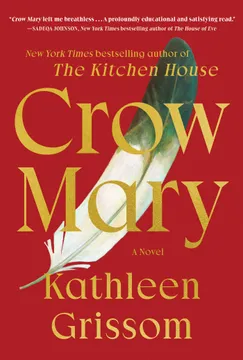
Crow Mary by Kathleen Grissom is a highly acclaimed historical fiction novel based on the true story of an indigenous Crow woman. Readers praise the impeccable research, compelling narrative, and powerful portrayal of Mary's strength and resilience. The book explores themes of cultural conflict, injustice, and identity as Mary navigates life between two worlds. While some found the pacing slow at times, most were deeply moved by the story and its depiction of Native American experiences in the late 19th century. Many readers consider it a must-read, praising Grissom's sensitive and insightful writing.
People Also Read








Characters
Mary, Goes First, Crow Mary
Crow woman and fierce protectorMary grows up among the Crow with a strong sense of kinship, practical skill, and spiritual attention to the land. As a child she is outspoken and athletic, but the death of her grandmother10 leaves her convinced that fear makes her responsible for loss. Red Fox3 teaches her to distinguish courage from fearlessness. Mary later marries Abe Farwell2 and learns his world without surrendering her own judgment. Her stubbornness can make adjustment difficult, yet it also helps her defend her autonomy, care for other women, and protect her children. She is most herself when she turns observation into action, whether reading a horse, managing a household, or deciding when a rule must be resisted.
Abe Farwell
Trader with a troubled conscienceFarwell is a capable white fur trader whose ambition is shaped by an early loss of money and a desire to own a ranch. He values competence and is drawn to Mary’s1 riding, marksmanship, and independence. His kindness is real: he respects her preferences, supports her work, and wants to build a secure family life. Yet he also trusts commercial and legal systems that Mary1 sees harming Indigenous people. His participation in whiskey trading and his struggle with alcohol complicate his self-image as a fair man. Farwell can recognize wrongdoing, but recognition does not always lead him to change his conduct. His deepest conflict is between conscience and the economic world that rewards him.
Red Fox
Mary's steadfast Crow elderRed Fox is Mary’s1 maternal grand-uncle, though she calls him Grandfather. He is a skilled scout, hunter, and maker of useful tools, but his most important gift is the patience with which he guides her. He lets Mary1 speak her guilt about Káale’s10 death and answers without shaming her. He teaches her to ride, shoot, and read signs in the natural world, while insisting that courage belongs to women as much as men. Red Fox’s reserved manner carries warmth beneath it. He treats knowledge as something to pass on through relationship, and his loyalty to Mary1 gives her a continuing connection to Crow family and memory even when she lives far away.
Strong Bull
Mary's beloved younger brotherStrong Bull is born when Mary1 is a child and becomes one of the deepest attachments in her early life. Red Fox3 teaches him to run and practice with a bow, while Mary1 delights in watching him grow from a dependent boy into a proud young Crow man. He is generous with gifts and committed to the practices that shaped his family. His relationship with Mary1 is affectionate but governed by Crow customs about how adult siblings interact. Strong Bull’s courage and loyalty are inseparable from his resistance to restrictions that limit Crow movement, hunting, and ceremony. He stands for the younger generation’s struggle to inherit a culture under increasing pressure.
Susie
Mary's perceptive first childSusie is Mary1 and Farwell’s2 first child. From early childhood she is observant, serious, and closely attached to both parents, while also developing a strong bond with her Crow relatives. She loves horses and learns readily from the adults around her. Susie’s questions often expose tensions that the grown-ups would rather soften, especially when their competing ideas of family and belonging affect her. She is a child capable of loyalty without being unthinking, and her curiosity makes her attentive to the needs of others. Mary1 hopes to raise her with both Crow and white knowledge, but Susie’s own convictions remain central to how she understands her future.
Jeannie
Mary's Métis confidanteJeannie is a Métis woman who becomes Mary’s1 closest friend after Mary1 leaves the Crow village. Raised in an orphanage by Grey Nuns, she speaks several languages and has learned to navigate institutions that once tried to define her future. Her humor is generous and often arrives through food, teasing, or practical help. She recognizes Mary’s1 homesickness because she also struggled when she first joined her husband’s19 family. Jeannie teaches Mary1 English and everyday skills for the trading settlement, but their friendship is reciprocal: Mary1 offers her a trusted companion and a different spiritual understanding of grief. Jeannie shows how intimacy can cross cultural boundaries without requiring either woman to become less herself.
Big Cloud
Mary's first great loveBig Cloud is Sees Much’s grandson, a confident young Crow brave known for athletic skill and horse racing. As a child, he once has to retrieve a doll’s stolen tipi cover for Mary1, an encounter that becomes part of their later courtship. His public success attracts attention, but Mary1 sees the affectionate and ambitious young man beneath his swagger. He hopes to become a chief and wants a wife who will speak her mind. His relationship with Mary1 gives her a glimpse of the adult life she wants within her community, while his warrior commitments make danger an accepted part of their future.
Horse Guard
Mary's Crow father and chiefHorse Guard is Mary’s father1, a respected Crow chief known for fairness and for protecting his village. His Métis ancestry connects him to a white father, but he was raised Crow and understands himself through that community. He values alliances with white traders because he believes weapons may help protect the Crow from rival nations. That pragmatism shapes his support for Mary’s1 marriage to Farwell2, even when she feels that gifts of rifles and blankets are influencing the decision. As a father, he can be affectionate and proud, though he sometimes wishes Mary1 had been a son and does not always understand her needs.
Mary's mother
Crow teacher and protectorMary’s mother teaches through care, work, and clear boundaries. She makes medicine, tends the injured, raises Strong Bull4, and helps Mary1 prepare for marriage while reminding her that a Crow woman can leave a marriage if she is mistreated. Her relationship with Horse Guard8 includes affection and honest disagreement, giving Mary1 an early model of both partnership and female self-respect. She worries about Mary1 traveling far from home but does not reduce that fear to a command. Her lessons in food, family, and practical care remain present in Mary’s1 choices long after Mary1 leaves the village.
Káale
Mary's beloved grandmotherKáale is Mary’s grandmother1 and a close friend of Sees Much. She teaches Mary1 beading, hide work, songs, and the practices of Crow family life. Her teasing humor makes difficult lessons feel intimate rather than severe. Káale’s death in battle becomes the first great grief Mary1 struggles to understand, and the memory of her remains tied to both guilt and love. The stories and skills she passes down become part of Mary’s1 way of caring for her own children and of recognizing what a home can hold.
Sam Stiller
Threatening agent and wolferStiller is a huge, volatile white man whose work shifts between wolfing and government service. He speaks of Indigenous people with contempt and treats other people’s boundaries as obstacles to be pushed aside. His history with Farwell2 gives him access to the family, while his appetite for power makes that access dangerous. Stiller often hides menace beneath teasing or claims of friendship, which makes him difficult to read until he reveals what he wants. He represents a form of authority that can move between private violence, commercial profit, and the state.
Burt
A steady hand at homeBurt is an older ranch worker with sore hips, a gentle manner, and a firm dislike of whiskey. He cooks, reads, cares for the children, and becomes a dependable presence in a household increasingly unsettled by Farwell’s2 drinking. His own son’s death from alcohol leaves him alert to the damage addiction can cause, though he does not pretend that concern alone can cure it. Burt treats Mary1 and the children with practical kindness rather than pity. His quiet loyalty gives them a measure of stability when other forms of support fail.
Little Soldier
Nakoda leader and fatherLittle Soldier leads the Nakoda community that reaches the Cypress Hills after a catastrophic winter. He carries the burden of guiding survivors through hunger, disease, and the loss of relatives. His authority is visible in the care his people show one another, but he is also vulnerable to traders who mistake need for weakness and to men who treat Indigenous leadership as a threat. His family’s suffering gives Mary1 a personal connection to the community she tries to protect.
Song Woman
A grieving Nakoda healerSong Woman is Little Soldier’s sister-in-law13 and a young mother who loses her newborn during the Nakoda journey south. Even while grieving, she applies bear grease to frostbitten survivors and helps care for her community. Her tenderness toward others does not mean she is untouched by trauma; it reveals the strength required to keep acting while wounded. Mary1 recognizes her grief and feels a kinship that deepens her determination to help the Nakoda women.
Alexis Lebombarde
Prairie guide and interpreterLebombarde is a Métis guide and interpreter who knows the prairie and speaks several Indigenous languages. Farwell2 hires him to help at the Cypress Hills post, and Major Irvine later relies on him as a guide and witness. His knowledge gives him unusual mobility between communities, but his cautious testimony shows that expertise does not make a person immune to pressure or fear. Lebombarde’s choices affect how much the courts can learn about the massacre.
M'sieu Dubois
A bitter Métis traderDubois is an older Métis trader with a damaged leg, a hostile manner, and a deep hatred of the Crow after losing family in an earlier conflict. His attachment to his dog reveals a tenderness he rarely extends to people. Though he initially insults Mary1, he later assists her when she needs to move the Nakoda women to safety. His character shows how grief can harden into prejudice while still leaving room for practical decency.
George Hammond
Farwell's compromised managerHammond is Farwell’s2 store manager and a man Mary1 distrusts after she catches him putting strychnine into whiskey. He is ambitious and willing to treat both customers and workers as instruments of profit. His willingness to inflame the conflict with the Nakoda places him within the network of men whose choices turn suspicion into violence. He serves as a contrast to Farwell’s2 claim that fair trading can make the whiskey business acceptable.
Hardwick
A violent wolfer leaderHardwick is a young, notorious wolfer who arrives in the Cypress Hills with an armed group and a reputation for cruelty. He carries old injuries from conflict with Indigenous people and channels them into a blanket hostility toward the Nakoda. His confidence grows in a lawless environment where other men follow his lead. Hardwick embodies the danger of treating grievance as permission to retaliate against an entire community.
René
Jeannie's devoted husbandRené is Jeannie’s Métis husband6 and a skilled freighter. His love for her is open and affectionate, and he helps make the settlement a place where Mary1 can find friendship. He is also connected to the networks of workers and relatives that carry supplies across the prairie.
Ella
Mary's gentle youngest childElla is Mary1 and Farwell’s2 youngest child. She is small, gentle, and deeply attached to her mother and siblings. Her kindness makes the family protective of her, but she also shows courage when danger arrives. Ella’s sensitivity allows her to notice tensions adults try to hide, and she brings tenderness into a household strained by conflict.
Bud
Mary's quiet, resourceful sonBud is Mary1 and Farwell’s2 son, a thoughtful child who resembles his father but takes after Red Fox3 in his quiet observation. He learns practical skills from his Crow relatives and is especially close to his sisters. Bud’s steadiness conceals a strong capacity for independent action. He absorbs what adults teach him about reading, survival, and the land, then makes his own judgments about where he belongs.
White Wood
A rival in Mary's courtshipWhite Wood is a confident young woman rumored to be pursuing Big Cloud7. Mary1 invites her to gather wood, then exposes the labor and social realities behind the rival’s fantasies of marriage. White Wood functions as a foil to Mary’s1 frankness and practical understanding of partnership.
Plot Devices
Crow teachings and animal medicine
Courage carried through kinshipCrow knowledge shapes how Mary1 interprets fear, loss, work, and the natural world. Red Fox3 teaches her to read horses and use weapons, while Káale10 passes on songs and practical skills. Mary’s1 dreams and relationship to animal spirits help her survive grief and later call on the bear’s strength when she faces danger. These practices are not decorative symbols: they guide specific choices and preserve connection to family across distance. They also challenge Farwell’s2 assumption that survival requires replacing Crow ways with white ones.
The white puppy Pierre
A bridge between livesFarwell’s2 puppy appears to Mary1 soon after Big Cloud’s7 death, and she interprets him as a sign that she can begin again. The dog becomes a source of comfort during Farwell’s2 absences and a shared point of connection with the Métis community. Jeannie6 gives him the name Pierre, linking him to their friendship. Later, his death by poisoned bait makes the costs of wolfing personal to Mary1 and intensifies her anger at the traders who treat animal life as disposable.
Guns and repeating rifles
Unequal force made visibleMary1 learns to ride and shoot from Red Fox3, and Farwell2 later gives her modern firearms. Her skill allows her to defend herself and rescue the Nakoda women, but the weapons also reveal a profound imbalance: Hardwick’s18 group has repeating rifles, while the Nakoda defenders rely largely on older guns and bows. Firearms therefore serve both as tools of agency and instruments of colonial violence. Mary’s1 ability to use them does not erase the systems that place her community and the Nakoda at a disadvantage.
Whiskey and strychnine
Profit disguised as fair tradeWhiskey sustains Farwell’s2 business in Whoop-Up country, damages trading communities, and becomes a recurring test of his conscience and self-control. Mary1 discovers that Hammond17 adds strychnine to the liquor because customers expect the physical numbness it causes. Separately, wolfers use poison on carcasses to kill predators for their pelts. These practices connect commerce to concealed bodily harm. The blue poison bottles return as a means of self-defense when Mary1 believes Stiller11 threatens her and Ella20, turning a tool of extraction into a desperate personal weapon.
Land papers and school orders
Law enters the familyFarwell’s2 marriage certificate, the land assigned in Mary’s1 name, and the permission he signs for the children’s removal show how documents can confer security while also concentrating power. The ranch gives the family a livelihood, but government restrictions narrow Crow movement and encourage assimilation. The school order turns Farwell’s2 legal authority into a means of separating Mary1 from Susie5 and Bud21. In the ending, Mary1 uses the same administrative system to claim Crow land for her children, making law neither wholly protective nor wholly futile.

Download PDF
Download EPUB
.epub digital book format is ideal for reading ebooks on phones, tablets, and e-readers.








