

Plot Summary
Scarlata Refuses the East
Two years after Scarlata's founding, Rummy, a fae advisor who feels like an unwanted outsider, drifts through drink and casual sex to quiet her loneliness. At a council meeting, a letter from King Cornelius of Pericius asks Scarlata to help suppress a rebellion.
Jessiah, the kingdom's angelic army commander, argues that sending aid could protect neighboring innocents and build an alliance. Rummy warns that Scarlata cannot risk its fragile recovery for a conflict whose facts remain unclear.
Queen Huntyr and King Wolf, Rummy's closest friend and Jessiah's brother, decide not to send troops yet. Their refusal leaves Jessiah convinced that waiting is dangerous, while Rummy reads his urgency as another sign that he values his own heroic purpose over their safety.
The opening frames political caution and personal mistrust as versions of the same problem: how to act when certainty is unavailable. Rummy's resistance is not indifference to suffering; she recognizes how easily a new kingdom can lose what it has rebuilt. Jessiah, meanwhile, treats preparation as a moral obligation, partly because inaction resembles the failures he carries from his past. Their clash matters because each sees a real danger, but neither can yet hear the fear underneath the other's position.
A Secret Army Forms
After Huntyr and Wolf refuse to commit troops, Jessiah secretly flies to the Golden City with his second-in-command, Xavier, and asks Nathan, an old ally overseeing the city, to lend soldiers. Nathan agrees to consider the request.
At a feast, Xavier tells Rummy what Jessiah has done, fearing that the deception will destroy Jessiah's trust with Wolf and Huntyr. Before Rummy can confront him, a battered fae refugee named Matthias arrives from Pericius.
He reports that the new king is starving his people and that the unrest may threaten Scarlata next. Huntyr changes course, but requires Jessiah, Xavier, and Rummy to investigate before any army follows. Rummy accepts the assignment because Huntyr trusts her to keep the men from acting recklessly.
Jessiah's unauthorized recruitment turns a debate into a breach of trust, even though his motive is defensive. Xavier's disclosure shows that loyalty here is not simple obedience: he risks his commander's anger to protect him from a worse rupture with family and crown. Matthias's arrival supplies the evidence the council lacked, but it also changes Rummy's role. Huntyr does not send her as a fighter; she sends her as a stabilizing witness, placing Rummy's judgment at the center of a mission she believes she cannot handle.
The Forest Takes Its Due
The four travelers set out on horseback, with Matthias guiding them through dangerous woods toward Pericius. On the first night, Rummy leaves camp to spite Jessiah's restrictions, and a forest oryx charges her, goring her abdomen. Jessiah carries her back, while Xavier cleans and binds the wound.
The injury worsens during the ride, and the Whispering Caves deepen the group's fear: unseen voices repeat a riddle that seems directed at Rummy and Jessiah. At a remote inn, a healer closes Rummy's wound with magic but warns that a separate darkness inside her cannot be treated physically. She recognizes the same strange verse from the caves. Rummy wakes with the message still haunting her, yet denies that it means anything.
The journey strips away the travelers' comfortable roles. Jessiah's command cannot prevent harm, and Rummy's insistence on self-sufficiency leaves her dependent on the very man she resists. The cave voices and the healer's warning make bodily danger only the visible layer of the crisis. Rummy's denial is psychologically legible: naming the darkness would mean revisiting a childhood catastrophe she has survived by refusing to remember. Her silence protects her in the short term, but leaves the group without knowledge it will soon need.
Pericius Behind Marble
Matthias leads Jessiah, Rummy, and Xavier through Pericius, where hungry families beg along streets beneath the castle's immaculate walls. King Cornelius greets the visitors with courtly warmth, then hosts them in a palace whose luxury sharply contradicts the poverty outside.
He evades Jessiah's questions about the rebellion and claims his army has lost many soldiers to desertion. That night, Jessiah and Rummy slip past the castle guards and find the healer working among the poor.
She confirms that the suffering is only the beginning and warns that Cornelius intends to raise the dead. The warning turns their mission from fact-finding into a search for a hidden catastrophe. Back inside the palace, Rummy agrees to get closer to the king, hoping his attention will reveal what he is concealing.
The contrast between the starving streets and the spotless court is political evidence before it is an explanation. Cornelius's hospitality attempts to make the visitors feel honored, while the city outside shows what his rule costs. Rummy's decision to cultivate him is tactical, but it also draws on her familiar habit of performing desirability to gain access and control. Jessiah sees danger in that performance; Rummy sees a tool. Their disagreement repeats the opening conflict in intimate form: both want to protect others, but trust neither the other's method nor motive.
Cornelius Names Her Gift
Cornelius invites Rummy to a private dinner and probes her history, her life among Scarlata's vampyres, and her refusal to study magic. He explains that his father searched for chaos magic, a rare force linked to death, and claims he can sense the same gift in Rummy.
She conceals what she knows about her power, but Cornelius says he has been waiting for someone like her. The next evening, at a lavish ball, Cornelius presents chained fae as willing contributors to the kingdom. Rummy watches him drain a captive's magic while the court applauds.
Rebels attack the ballroom, breaking the ceremony into panic. Jessiah and Xavier get Rummy out through a hidden escape route, and the three flee the palace with proof that the king's supposed rebellion is a struggle against his own abuses.
Cornelius's attention answers Rummy's hunger to be recognized, which makes his manipulation effective without making her foolish. He offers a language for her hidden difference just as she is desperate to believe it can be understood. The ball then exposes the price of his vision: magic becomes property, and coerced people are recast as patriotic donors. The rebels' attack interrupts the spectacle but does not resolve its politics. Rummy and Jessiah now know the king is dangerous, yet she remains emotionally drawn to the one person who seems able to name her secret.
Astraea Speaks in Caves
After escaping Pericius, Rummy and Jessiah return through the Whispering Caves, where an apparition identifies herself as Astraea, Goddess of the East. She confirms Cornelius's plan to raise the dead and shows them Rummy as a child beside her mother's body.
Rummy's uncontrolled power killed her mother when the girl tried to help her after a vampyre attack. Astraea insists that Rummy's force contains both darkness and light and that she must stop Cornelius. The revelation breaks open the hostility between Rummy and Jessiah.
He admits he wants to help, but she resists, convinced her power makes her dangerous. They kiss in the cave, briefly surrendering to their old affection, then Rummy pulls away and insists they return to Scarlata without becoming more vulnerable to each other.
Astraea's vision changes the meaning of Rummy's self-image. What she has treated as proof of inherent evil is also a response to an unbearable childhood event: a child's attempt to save her mother ended in death, and guilt hardened into identity. The goddess offers purpose, not absolution, so Rummy still has to choose how to live with her power. The cave kiss exposes a parallel wound in the romance. Jessiah offers care, but Rummy experiences intimacy as the risk of repeating her past harm.
The Bond Reveals Why
Back in Scarlata, Rummy tells Huntyr and Wolf that Cornelius is stealing magic and intends to exploit her. She volunteers to return as an inside agent, but Huntyr will not send her without a magical bond to stabilize the power she must carry.
Jessiah agrees to bond with her. Their joined magic lets Jessiah experience a buried memory: two years earlier, Rummy's power flared during a playful moment between them, and she pushed him away because she feared killing him as she had her mother.
The memory corrects the story Jessiah has told himself about her contempt. He tells her he does not consider her a monster, and they finally acknowledge their love. Their bond makes that trust literal, joining their emotions and magic as well as their lives.
The bond functions as an intimate technology of truth, but it does not create the truth from nothing. It reveals the fear beneath Rummy's cruelty and the grief beneath Jessiah's resentment. His earlier interpretation of her rejection protected him from uncertainty by turning pain into anger; her secrecy protected him by denying him the chance to choose. Their renewed closeness begins when both defenses become visible. Yet the bond also raises the stakes: emotional access is not automatically consent or understanding, so trust must still be practiced rather than assumed.
Scarlata Lends Its Magic
To give Rummy a chance against Cornelius, Huntyr, Wolf, and a line of Scarlata's fae and vampyres each lend her part of their magic through an ancient ritual. She receives light, healing, strength, truth, fire, endurance, and other gifts. Jessiah offers his own hidden power, the ability to sense and share emotional force.
The influx overwhelms Rummy at first, but she learns to steady herself with his guidance and accepts that the kingdom believes in her. She and Jessiah then ride back toward Pericius with Xavier. They plan for Rummy to claim that Jessiah and Xavier forced her to leave, while Jessiah waits outside the castle. Cornelius's belief that she is uniquely important should make him welcome her back.
The ritual reverses Rummy's lifelong assumption that she is a burden tolerated by more gifted people. Scarlata's citizens do not simply empower a weapon; they make a communal wager on her capacity to choose. Jessiah's emotional gift is especially consequential because it is both a power and a form of vulnerability he once concealed as useless. Rummy's strength is therefore not solitary. Her return plan depends on other people trusting her, while her own fear asks whether she can accept help without losing agency.
Rummy Walks Back In
Rummy enters Pericius alone and persuades Cornelius that she has returned willingly. During a garden walk, he reveals that he wants her as a mate and partner in ruling, arguing that the people's magic belongs to him.
Rummy recognizes that his interest in her does not make him safe; he wants power and dominion, not mutual understanding. She attacks with her gathered magic, but Cornelius survives. Matthias, the refugee who guided them on their first journey, reveals that he has been working with the king and throws a dagger into Rummy.
Cornelius blocks her access to her magic, and Matthias admits he controlled the oryx that injured her. Jessiah arrives to defend her, but Cornelius surrounds them with fire and summons gifted allies hidden by veil magic.
Rummy's confrontation turns recognition into a test of discernment. Cornelius has genuinely identified her power, but he mistakes that recognition for entitlement and destiny for permission. Matthias's betrayal retroactively changes the journey's apparent accidents into deliberate probing, revealing how much danger the group misread. The confrontation also dismantles Rummy's tactical advantage: her borrowed magic is present but inaccessible. Cornelius's hidden allies make clear that personal power alone cannot guarantee control, especially when an authoritarian has built institutions and accomplices around himself.
Death Breaks the Bond
Cornelius traps Rummy and Jessiah inside a ring of fire while his hidden fae prepare to overwhelm them. Jessiah realizes the only opening is to distract Cornelius, so he attacks and then drives a dagger into his own chest to break the king's hold on Rummy's power.
As Jessiah's life and their bond fade, Rummy releases her death magic without restraint, killing Cornelius, Matthias, and the gathered fae. She then encounters her dead mother in a vision that becomes the presence of Astraea, who urges her to stop defining herself as evil.
Back in the garden, Rummy finds the others dead and Jessiah lifeless. Xavier and Scarlata's army arrive too late to prevent the massacre, but Rummy channels her power and Jessiah's heart force into his body, making him breathe again.
The climax forces Rummy to act at the exact point where her old fear seems confirmed: her power kills indiscriminately, and Jessiah appears to die because he trusted her. But the story distinguishes capacity from moral identity. Her mother's presence and Astraea's counsel confront guilt without denying the bodies around her. Jessiah's sacrifice is loving, yet it also places the burden of survival on Rummy. Her resurrection of him turns the same force associated with death toward restoration, making the book's dark and light distinction an ethical choice rather than a simple division of powers.
Scarlata Becomes Home
With Cornelius and his allies dead, Jessiah heals and Scarlata's army can help restore order in Pericius. Rummy returns to Scarlata with Jessiah and Xavier, where Huntyr welcomes her and listens as the group explains the mission. Wolf and Huntyr do not condemn Rummy for hiding her magic; they understand why she feared it.
In the weeks that follow, Rummy notices that people treat her as part of the community, but Huntyr reminds her that belonging does not depend on her power. Rummy and Jessiah live openly in the bond they once feared, and she stops hiding her feelings from him. The final scene finds them flying together above Scarlata, where Rummy can accept the kingdom as home without pretending she is unbreakable.
Resolution does not erase the damage in Pericius or the deaths Rummy caused. Instead, it establishes a different relation to responsibility: she can return to community without being reduced to either her power or her worst fear. Huntyr's reassurance redirects belonging away from usefulness, an important correction for someone who has long equated worth with being needed. Flight, once uncomfortable for Rummy, becomes an image of chosen closeness. She does not become fearless; she accepts support while remaining herself.
Analysis
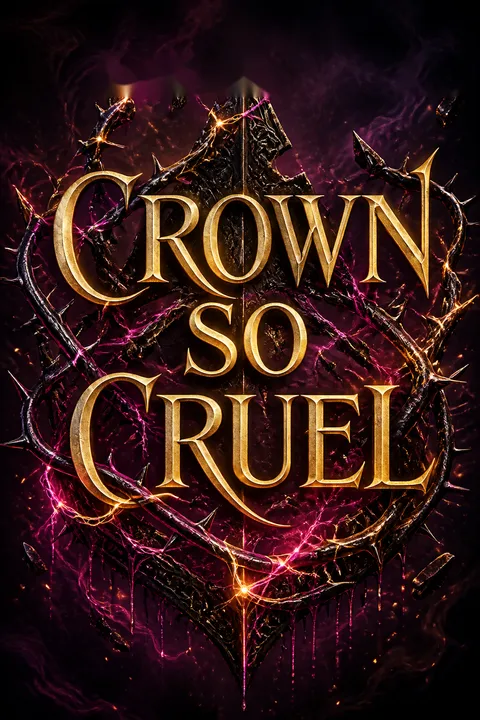
Crown So Cruel makes power inseparable from the question of who gets to define another person's worth. Cornelius calls stolen magic a ruler's entitlement, while Rummy has absorbed the opposite verdict about herself: that her own power makes her unfit for love or community. Their conflict is therefore not simply between benevolent and destructive magic. Both characters possess a force associated with death, but only Cornelius treats capability as permission to dominate. Rummy's struggle is to act without accepting his moral logic or her own inherited shame.
The romance develops through competing interpretations of care. Jessiah's protectiveness can resemble control, particularly when he assumes he knows what Rummy needs. Rummy's independence can resemble indifference, especially when she conceals the reason she is afraid. Their bond makes hidden feelings legible, but it cannot repair the relationship by itself. Repair begins when the truth of Rummy's past is understood and Jessiah stops treating her defenses as proof that she does not care.
The book also distinguishes survival from belonging. Rummy knows how to endure danger by using alcohol, sex, humor, and emotional distance, yet these strategies leave her feeling more isolated. Scarlata becomes home not because she gains extraordinary magic, but because her friends trust her before and after they know what she can do. The community's gift-sharing ritual enacts a countermodel to Cornelius's theft: power can circulate through consent rather than seizure.
The ending offers restoration without pretending that violence has no cost. Rummy kills Cornelius and his allies, then uses her power to bring Jessiah back. Her ability to create life does not cancel the deaths around her, but it rejects the belief that death is the only truth her magic can express. Her final flight with Jessiah closes the emotional arc with a modest, earned change: she can be carried without surrendering herself.
Characters
Rummy
The guarded fae advisorA fae from impoverished Midgrave, Rummy serves as advisor to her childhood friend Huntyr in Scarlata. She is sharp-witted, fiercely self-reliant, and skilled at using flirtation or sarcasm to control how much others can see. Her loneliness comes partly from living in a kingdom where most people possess magic, while she believes she has none and has no rightful place there. Rummy's loyalty to Huntyr is deep, though she often disguises tenderness as irritation. She is drawn to Jessiah's steadiness even as his concern feels dangerously close to pity. Beneath her bravado is a person who expects to be abandoned and fears that intimacy will expose something unforgivable.
Jessiah
The duty-bound angelJessiah is Scarlata's army commander, an angel with a soldier's discipline and a strong belief that power should protect people. He is loyal to his brother Wolf and Queen Huntyr, but his sense of duty can become impatience when leaders hesitate. His years under his father's rule left him wary of becoming complicit in another person's cruelty. With Rummy, he is both protective and easily provoked, and he mistakes her defenses for contempt because he cannot see the fear behind them. His attraction makes him vulnerable in a way military command does not, forcing him to distinguish care from control and courage from certainty.
Huntyr
The hard-won queenQueen of Scarlata and Rummy's closest friend since childhood, Huntyr carries the burden of rebuilding a kingdom while trying not to turn leadership into isolation. She weighs the safety of her people against obligations beyond the border, and she is willing to change course when new evidence demands it. Her friendship with Rummy is affectionate but not indulgent: she trusts Rummy with responsibility even when Rummy doubts her own worth. Huntyr's strength is measured less by command than by her ability to make room for others to act. She understands the cost of survival and does not confuse a guarded exterior with a lack of feeling.
Wolf
The protective kingWolf is King of Scarlata, Huntyr's husband, and Jessiah's brother. His golden wings and healing ability mark his unusual power, but his first instinct is to protect the people who depend on him. That instinct sometimes makes him cautious about sending troops beyond the kingdom's borders. He respects Jessiah's military judgment while insisting that the consequences belong to the whole community, not just the army. As a ruler, Wolf balances personal loyalty with the need to keep Scarlata secure, and his willingness to reconsider a decision shows that caution need not become denial.
Xavier
The candid second-in-commandXavier is Jessiah's second-in-command, a capable vampyre soldier with a practical streak and a talent for reading tensions between people. He supports Jessiah's concern for Pericius but is willing to challenge his methods, including by warning Rummy about the secret recruitment. His teasing manner helps ease difficult moments, yet he knows when to stop joking and insist that the group act as a team. Xavier offers Rummy friendship without demanding that she soften on command. In dangerous situations, he thinks ahead, prepares escape routes, and helps keep the others focused on what can still be saved.
Matthias
The desperate refugeeMatthias arrives in Scarlata battered and claiming to seek help for the people of Pericius. He presents himself as a devoted brother and a guide who knows the dangers between the kingdoms. His urgency appears to come from the suffering he has witnessed and his desire to return to his family. Matthias is observant and guarded, and the travelers have little reason at first to doubt that his knowledge will keep them safe. His place in the group reflects the mission's central uncertainty: a request for help can be genuine, but the person carrying it may not be offering the whole truth.
Cornelius
The charming Perician kingThe young King of Pericius greets Scarlata's envoys with polished manners, lavish hospitality, and a practiced interest in Rummy. He wants his kingdom to become powerful, and he frames his political choices as necessary protection for its future. Cornelius is perceptive enough to recognize unusual magic and skilled at making that recognition feel like acceptance. His courtly charm conceals a deep need for control, while his position lets him present personal ambition as public duty. He is most dangerous when he sounds reasonable, because his warmth invites others to overlook the people suffering outside his palace.
Nathan
The Golden City allyNathan oversees the renewed Golden City and shares history with Jessiah. He has helped rebuild the city into a refuge after its former order collapsed. Jessiah seeks him out because the city has an army of its own, but Nathan is careful not to undermine Scarlata's rulers. His response reflects a leader's caution: aid can be offered, but it should not become an excuse for secret rebellion.
Astraea
The eastern goddessAstraea is the Goddess of the East, encountered through the strange manifestations surrounding the Whispering Caves. She communicates through riddles, visions, and brief appearances rather than ordinary conversation. Her attention falls on Rummy and Jessiah, whose choices have become entangled with the crisis in Pericius. Astraea does not offer simple comfort or remove the consequences of their actions. Instead, she frames their power as something that can be used in more than one way, leaving them responsible for what they choose to do with it.
Sophia
The tavern's steady hostSophia runs the tavern Rummy helped establish in Scarlata. She offers drinks, workaday warmth, and company without pressing Rummy to explain her moods. Her presence reflects the community the survivors are trying to build: not merely a refuge from war, but a place where ordinary pleasure can return.
The healer
The cryptic village healerAn elderly healer in Pericius treats Rummy's physical injury and recognizes that another force is troubling her. She speaks in fragments and warnings, frustrating Jessiah's desire for direct answers. Her work places her among the kingdom's poor, where practical care continues despite the king's neglect. She is a source of information, but not an easy interpreter of it.
Plot Devices
The Whispering Caves
A prophecy in the passageThe caves between Scarlata and Pericius amplify fear through voices that seem to enter the travelers' thoughts. Their repeated verse first unsettles Rummy and Jessiah, then gives them a reason to return and seek answers. The caves connect their private history to the political danger they are investigating, and their supernatural presence eventually leads to Astraea. The device works as both a threshold and a pressure chamber: the travelers cannot cross without confronting what they have tried to suppress. Its meaning becomes clearer only after Rummy's hidden power is exposed.
Chaos Magic
Power over death and lifeChaos magic is an exceptionally rare force connected to death and the possibility of raising the dead. Cornelius recognizes it in Rummy and wants her power for his plans. Rummy has spent her life suppressing it because its first uncontrolled eruption killed her mother. The story initially encourages both Rummy and the other characters to treat the magic as a curse, then tests that assumption through the choices she makes under pressure. It does not erase danger or guilt; it makes the wielder's intention and ability to accept help crucial to how the power is used.
The Magical Bond
A shared emotional tetherA ritual joins Rummy's and Jessiah's magic so she can carry power safely into the confrontation with Cornelius. The bond lets them sense one another's emotions and share strength, but it also makes concealment more difficult. Through it, Jessiah experiences Rummy's memory of the moment she pushed him away years earlier, learning that her rejection grew from fear of harming him. The bond therefore serves both tactical and relational purposes. It enables cooperation while exposing the cost of intimacy, reminding both characters that magical closeness cannot substitute for the deliberate work of trust.
Lent Magic
A community arms one personScarlata's gifted fae and vampyres lend Rummy portions of their abilities through a ritual, including light, healing, strength, truth, fire, and endurance. Jessiah contributes his emotional power. This shared resource prepares her to face Cornelius, who has accumulated stolen gifts from the people of Pericius. The exchange makes the conflict more than a contest between two unusually powerful individuals. Rummy's capacity depends on a community choosing to trust her, while Cornelius's power is built through coercion. The contrast gives the magic system a political meaning without reducing its personal costs.
Stolen Gifts
A king's power built on theftCornelius searches for powerful fae and siphons magic from people he has imprisoned, claiming their gifts belong to the ruler. At first, Scarlata receives only his vague request for help against a rebellion. The starving city, the healer's warning, and the ball's public demonstration gradually reveal what his appeal conceals. This device links political oppression to bodily violation: the people are not merely denied food and safety, they are stripped of the abilities that might let them resist. It also explains why a small group cannot assume the king will be easy to defeat.
Golden City Series



Download PDF
Download EPUB
.epub digital book format is ideal for reading ebooks on phones, tablets, and e-readers.








