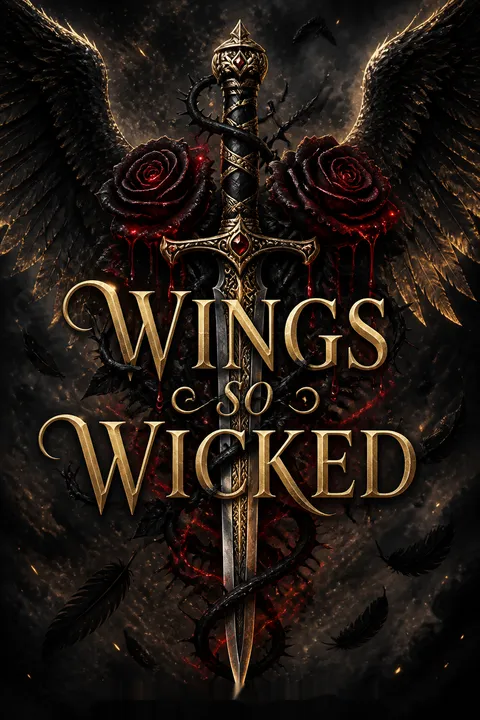


Plot Summary
Prologue
As Scarlata Empire burns, Queen Claudia watches vampyres lost to bloodlust attack the fae invading her kingdom. She knows her people include both innocent citizens and those consumed by hunger, but the fae see only monsters.
Removing her crown, she leaves the hilltop and flies into the battle rather than abandon her subjects. The empire falls, and the queen’s final choice establishes the cost of a world that mistakes fear for justice.
Claudia’s last stand gives the novel’s conflict a history more complicated than a simple war between good fae and evil vampyres. She can name the danger within her own people without reducing every vampyre to that danger, while the invading fae cannot make the same distinction. Her refusal to flee is both a ruler’s responsibility and a final defense of her kingdom’s meaning. This beginning also plants a crucial question: when does a person become a monster, and who has the authority to decide?
The Weapon and the Assignment
Huntyr Gwenevive, a young fae trained to kill vampyres, wins a brutal practice fight but earns Lord’s disappointment rather than praise. He later whips her for falling short, then tends her wounds and reminds her that he rescued and raised her after her parents died. Huntyr treats his violence as the price of belonging to the only family she knows.
When she recovers, Lord gives her a new assignment: survive Moira Seminary and enter the secretive Golden City. He supplies his jeweled dagger, Venom, but keeps the purpose of the mission to himself. Huntyr accepts because she believes she owes him her life, even as her friend Rummy urges her to escape his control.
Lord’s care and cruelty arrive in the same sequence, making Huntyr’s loyalty psychologically credible rather than simply naïve. He hurts her, then applies ointment and food; she interprets the relief as proof of love because dependence has made his approval a survival need. The assignment extends that pattern beyond Midgrave: Huntyr sees a dangerous demand as an opportunity to repay a debt. Venom becomes both a practical weapon and a portable token of the bond she cannot yet question.
A City Under Fangs
On the eve of her departure, Huntyr senses a vampyre near the river and returns to Midgrave to find the city under attack. She kills several attackers and reaches Rummy in time to help her stab the vampyre threatening her. Leaving Rummy barricaded inside, Huntyr continues through the streets to protect the remaining residents.
In an alley, a huge stranger with black feathered wings restrains her to keep the approaching vampyres from hearing her. Huntyr rejects his intervention, then fights beside him when more creatures appear. He kills one with a thrown blade before disappearing when Lord arrives. Huntyr leaves for Moira the next day, carrying the memory of an angel who knows her strength and draws her attention against her will.
The attack turns Huntyr’s abstract hatred of vampyres into immediate responsibility: she risks her life for Rummy and then returns to the streets instead of retreating to safety. Her first encounter with Wolf complicates her identity as a self-sufficient weapon. He has the strength to restrain her, but he also recognizes the danger she faces and fights beside her. Their attraction begins in conflict, where rescue feels like both protection and an insult to her hard-won autonomy.
The Blessing Drowns
At Moira Seminary, Headmistress Katherine warns the recruits that survival is the first requirement, then assigns Huntyr to share a room with the same black-winged stranger. He gives his name as Wolf Jasper, and their immediate hostility draws the attention of the other students.
During the first night’s Blessing, water floods the courtyard and traps the recruits in a violent current. Huntyr cannot swim; when she is dragged underwater, Wolf pulls her out and carries her to a ledge.
Several recruits die, including Nathaniel, the young baker’s son from Midgrave whom Huntyr met in the courtyard. The headmistress declares the survivors eligible to continue. Huntyr has reached the academy, but the first test has already made survival feel less like a promise than a wager.
The flood makes Moira’s rules bodily real before the recruits have learned the curriculum. Huntyr’s lack of swimming skill, a consequence of deprivation rather than carelessness, nearly kills her in a test designed to treat unequal starting points as personal weakness. Wolf saves her again, creating an unwanted debt between them. Nathaniel’s death also removes the possibility that shared origins automatically make people a family; the academy sorts recruits by who survives, not by who deserves a chance.
The First Academy Corpse
Huntyr hides her real combat ability because Lord ordered her to avoid drawing attention. She deliberately loses sparring matches, even when Ryder, a powerful and contemptuous recruit, knocks her into the dirt.
In class, Headmistress Katherine explains natural and blood magic, the history of the vampyre fall, and the possibility of sharing power through a bond. Huntyr struggles to summon even a blade of grass, while Voiler quietly helps her practice. Then Ryder pins Maekus, a shy recruit hoping to reunite with his sister in the Golden City.
Ryder uses wind magic to suffocate him and cuts his throat in front of the dining hall, warning Huntyr that weakness will not be tolerated. The school’s ban on killing outside training offers no immediate protection.
Huntyr’s concealment is an adaptation to Lord’s mission, but at Moira it makes her appear vulnerable to people who equate visible dominance with worth. Ryder’s killing of Maekus exposes the academy’s moral contradiction: it officially limits violence while its culture rewards intimidation and leaves enforcement uncertain. Maekus’s family letter makes the cost specific. He is not a faceless casualty in a competition, but a son whose hope of reunion is extinguished by another recruit’s ambition.
Venom Settles the Score
After Ryder threatens her in the woods and mocks her inability to use magic, Huntyr refuses to remain his easy target. She drives a knee into him, wounds him with Venom, and fights back when he tackles her and closes his hands around her throat. Finding her dagger, she stabs him repeatedly and kills him before he can finish strangling her.
The violence leaves her shaken, though she also feels an alarming release from the pressure of hiding. She returns to her room covered in Ryder’s blood. Wolf listens to what happened, then removes the body so the academy will not discover Huntyr’s role. He tells her that Ryder deserved the outcome, but his help binds them more closely to a secret neither can safely expose.
This is Huntyr’s first decisive break from the performance of weakness, but it is not a clean liberation. She survives because the assassin Lord made her can act faster than the frightened recruit she has been pretending to be. The killing also repeats the academy’s central ambiguity: Ryder is guilty of murder, yet Huntyr’s answer is another murder, hidden rather than judged. Wolf’s concealment offers care while deepening their shared risk, so trust grows through complicity as much as tenderness.
The Date Turns Bloody
Lanson, a gentle recruit trying to earn his estranged father’s approval, asks Huntyr to attend the apprentice ball and later offers to bond with her for the final test. Huntyr accepts the invitation, hoping his steadiness might make partnership feel safe. At the ball, Wolf’s jealousy unsettles her, but she returns to Lanson and dances with him.
Outside, Espek accuses Huntyr of killing Ryder and attacks her. Huntyr admits the truth only after Espek has disarmed her, then takes his dagger in the torso as he breaks Venom with magic. Lanson watches her bleed and runs, afraid the academy will learn what she has done. Wolf carries Huntyr back and uses blood magic to close the wound.
The ball places Huntyr between two incompatible forms of intimacy: Lanson promises safety through partnership, while Wolf exposes the desire she tries to deny. Espek’s attack strips away the social performance and makes her secret a matter of life and death. Lanson’s flight is especially damaging because he had asked her to trust him before he knew what she was capable of. Wolf’s healing does not erase betrayal, but it gives Huntyr a direct experience of care that does not demand she pretend to be harmless.
A Partner, Not Forgiven
Huntyr wakes to Wolf guarding her and allows Lanson to enter, hoping he will explain why he left her to die. He apologizes, but his fear of being implicated overwhelms his remorse, and Huntyr rejects both him and the bond he had offered. With her original partner gone, Wolf agrees to fight beside her in the Transcendent, though he insists that partnership is not the same as bonding.
At training, Lanson threatens to expose Huntyr’s concealed past; Wolf knocks him down before he can reveal it. Huntyr realizes Wolf is protecting her even when she has not asked. She follows him away from the courtyard, carrying a new dependence she cannot yet call trust.
Huntyr’s rejection of Lanson marks a change in how she understands safety. She had mistaken his softness for reliability, but when the consequences become real, he protects himself. Wolf offers no such uncomplicated reassurance; his help is blunt, possessive, and entangled with desire. Yet he acts when Lanson threatens her, while Huntyr’s choice to follow him shows that trust is beginning to form through repeated behavior, not through promises alone.
Voiler's Ice Kills
During a sparring match, Espek pins Voiler by the throat. Voiler cuts her own hand, spills blood onto the ground, and summons ice shards that pierce Espek’s heart. Her sudden control reveals a power she has concealed beneath her quiet manner, and the other recruits see that Moira’s strongest threats are not always the loudest.
Afterward, Wolf trains Huntyr privately in a neglected courtyard, where she can fight without exposing her skill to the class. He also returns Venom, which he has had repaired after Espek broke it. Huntyr receives the dagger as a reminder of Lord and home, while Wolf’s practical attention draws them closer. Her growing reliance on him now has its own emotional weight.
Voiler’s action overturns the academy’s easy hierarchy between conspicuous strength and actual capacity. Her silence has hidden neither weakness nor passivity; under pressure, she can convert a small cut into lethal force. Huntyr’s restored dagger offers a different kind of continuity. Venom carries her history with Lord, but Wolf’s repair makes the object part of a new relationship too. The section binds power to trust: both women reveal more through what they do in danger than through what they disclose.
Blood Magic Bites Back
Huntyr cannot make blood magic answer her, despite repeated attempts and the growing success of her classmates. Remembering Lord’s instruction to endure pain, she cuts herself again and again until magic finally surges through her.
Fire races across the abandoned courtyard, spreading beyond her control before Voiler intervenes. Huntyr collapses from blood loss, and Wolf carries her back, heals the deeper cuts, and washes the blood from her skin. He sees the scars on her back and understands that someone has hurt her, but she is too exhausted to explain.
She lets him stay beside her overnight. Their closeness shifts from charged teasing toward tenderness, while Huntyr’s new power makes clear that strength can injure its wielder as readily as an enemy.
Huntyr reaches magic by repeating the logic Lord taught her: suffering proves devotion, and more blood should purchase more power. The result is not mastery but near self-destruction. Her success therefore exposes the danger of confusing endurance with control. Wolf’s care interrupts that familiar cycle; he does not praise her for bleeding or demand another attempt. When Huntyr accepts his help and lets him see her scars, vulnerability becomes an action she chooses, not merely a weakness others exploit.
Moira's Open Gates
A wave of vampyres breaks into Moira Seminary, and Huntyr fights through the corridors while the other recruits scramble to arm themselves. Wolf eventually finds her badly wounded and carries her away from the attackers. When she wakes, she overhears him arguing with a visitor about the assault and realizes Wolf knew it had been arranged.
Confronted in the forest, he reveals that his father used dark magic to turn him into a vampyre, leaving him with black angel wings and an appetite he has learned to control. Wolf says the attack was not meant to become a massacre, but Huntyr cannot separate that explanation from his concealment. She walks away without killing him, though she no longer knows what his protection means.
The assault converts Wolf’s private evasions into an ethical crisis. Until now, he has protected Huntyr from dangers he did not fully explain; now she learns that he was connected to the danger itself. His revelation does not cancel his responsibility, but it complicates the category through which Huntyr has understood her enemy. The controlled, feeling Wolf and the blood-seeking creature are not separate beings. Her choice not to strike him is not forgiveness; it is the beginning of a harder judgment.
The Forest Eats Friends
Huntyr enters the Transcendent after drinking from the academy’s cauldron, then wakes in a burning forest beside Wolf. Recruits attack one another in the confusion, and vampyres move among them. Huntyr finds Ashlani with a fatal dagger wound in her abdomen. Ashlani insists Huntyr must continue, then pulls the blade from herself and dies as Wolf drags Huntyr away from the flames.
The escape leaves them without the friends and protections they had at Moira. Huntyr and Wolf follow a stream uphill, searching for shelter and any route forward. The academy’s final test has erased its old rules: recruits are scattered, their perceptions uncertain, and survival now depends on choices no instructor can supervise.
The Transcendent turns Moira’s competitive structure into a literal landscape of misrecognition and consequence. The recruits have been trained to treat one another as rivals; under fire, that lesson accelerates panic rather than cooperation. Ashlani’s death devastates Huntyr because their friendship had grown beyond the guarded alliances of the academy. Her insistence that Huntyr continue offers no comfort that can undo the loss. It instead makes survival carry a burden: the living must keep moving with the dead still present in memory.
The Test Makes Monsters
As Huntyr and Wolf search the forest, the Transcendent feeds each of them frightening visions. Huntyr follows an apparition of Rummy to a wounded Lord, then realizes neither is real when Wolf pulls her from the hallucination. Wolf, in turn, fights an unseen threat until Huntyr tackles him and brings him back to the present. Their noise attracts two enormous, decaying beasts.
Wolf holds them off with wind while Huntyr cuts her arm and finally summons fire, burning both creatures to ash. The effort leaves Wolf bleeding from a deep claw wound, and more attackers approach. Huntyr has proved she can wield her magic, but the test has forced the discovery through terror and imminent death rather than instruction.
The hallucinations target the attachments each character most fears losing. Huntyr’s imagined Lord and Rummy pull her toward the familiar obligation of home; Wolf’s unseen persecutor triggers the trauma of his exile. Each must use the other as an anchor to distinguish memory from present danger. Huntyr’s fire emerges only after the old strategy of self-punishment is redirected into immediate action. The magic is powerful, but the cost remains visible in her bleeding arm and Wolf’s wounded body.
A Bond Made in Blood
With Wolf bleeding and creatures closing in, Huntyr agrees to the bond they had both resisted. They combine their blood and recite the words that link their magic, allowing Huntyr’s power to heal his abdomen. The bond gives them access to each other’s strength, but it also carries emotion and sensation: Huntyr experiences Wolf’s numbness, despair, and overwhelming need for blood.
Together, they survive another rush of vampyres, fighting until the forest falls quiet. In the aftermath, Wolf explains that he must feed to live and has controlled his hunger by taking small amounts from fae. Huntyr understands the danger more intimately now, because the bond has made his need part of what she feels.
The bond turns intimacy into an involuntary form of knowledge. Huntyr cannot keep Wolf’s hunger at the safe distance of a lesson from Moira; she feels it from inside the connection she has chosen to make. At the same time, her magic sustains him, so their partnership is materially reciprocal rather than a simple rescue. The bond raises the stakes of emotional withholding: each can conceal information, but neither can fully hide the bodily truth of what the other experiences.
Blood at the Wall
Wolf’s hunger grows after the fight, and Huntyr offers him her blood rather than leave him to search for a stranger. He feeds carefully, stopping after taking enough to steady himself, and their desire deepens without erasing her fear of what he is. To find the Golden City, Wolf flies above the trees and spots its white walls.
As they approach, Lanson appears, badly injured and convinced the recruits cannot survive the crossing. He reveals that he has been killing to stay alive, then uses fire magic against Huntyr and Wolf. Vampyres close around them, and Wolf’s burned wing prevents him from flying. Rather than abandon him, Huntyr stays to fight, even as their route to the city becomes a trap.
Huntyr’s offer of blood is a deliberate negotiation with the fear she inherited from a world that treats all vampyres as irredeemable. It does not make Wolf harmless; it tests whether his restraint can coexist with his need. The approach to the wall then forces her to choose between the mission and the person she has come to love. Lanson’s appearance completes his transformation from potential refuge into a desperate survivor, while Wolf’s injury removes the easy escape and leaves Huntyr’s loyalty exposed.
Death Opens the Gate
Huntyr and Wolf fight the surrounding vampyres with the last of their strength. Huntyr unleashes her blood magic, and the attack ends in fire and ash, but both collapse among the bodies. Huntyr wakes in a dark void and meets Era, goddess of Vaehatis. Era confirms that Huntyr died protecting Wolf and asks why she chose him over the chance to enter alone.
Huntyr says she could not leave him. The goddess tells her that Wolf has also died and that their worthiness is hers to decide. She recognizes Huntyr’s love and warns her to trust her own heart when she wakes. Huntyr opens her eyes beside a restored, living Wolf on the far side of the wall: they have entered the Golden City.
The test’s answer is not victory by strength but the willingness to refuse a survival strategy built on abandoning others. Huntyr chooses Wolf when he offers himself as a sacrifice, and the goddess treats that decision as evidence about who she has become. The apparent deaths give emotional consequence to the choice without making it a simple reward: Huntyr and Wolf awaken in a place that does not match their hopes. The Golden City’s threshold is crossed, but the meaning of their success remains unsettled.
The Queen in Chains
Inside the Golden City, Huntyr and Wolf find ruined streets rather than the promised paradise. They take shelter in an abandoned home, share a vulnerable reunion, and begin to imagine a future together before angels seize them. Their leader, the archangel Asmodeus, says Huntyr is the daughter of Queen Claudia and heir to Scarlata’s vampyre throne.
Wolf then admits he was sent to bring Huntyr to the archangels so they could use her power to rebuild the kingdom. In the final scene, Asmodeus demands that Huntyr demonstrate her magic and threatens to have Luseyar cut off Wolf’s wings. Huntyr refuses to cooperate until the blade rises; her scream ends the story before the consequence is shown.
The city’s ruined exterior overturns the promise that entry would resolve Huntyr’s deprivation. Instead, its hidden authority turns her into a political resource, claiming her birth and power as property. Wolf’s mission recasts his protection as both sincere attachment and an instrument of his father’s plan; the novel refuses to let either truth cancel the other. The final threat makes Huntyr’s care for Wolf a weapon against her. Her scream, suspended before we learn whether she acts, leaves love and coercion locked in the same unresolved moment.
Analysis
Wings So Wicked builds its central conflict around the difference between being dangerous and being beyond moral choice. Huntyr is trained to see vampyres as creatures whose hunger will inevitably erase their judgment. The prologue complicates that lesson with Claudia’s account of a kingdom containing both controlled citizens and bloodlust-driven attackers. Wolf complicates it further: he needs blood, has concealed what he is, and still repeatedly chooses to protect Huntyr. The novel does not make that concealment harmless. His involvement in the attack on Moira and his mission for Asmodeus remain betrayals, even when his love is genuine.
Huntyr’s relationships are shaped by competing versions of care. Lord’s rescue and provision are real, but so are his punishments; Huntyr has learned to treat pain as evidence that she has disappointed someone she needs. Lanson offers gentleness, yet his fear of exposure leads him to abandon her. Wolf’s care is more complicated still, because it comes from someone she has been trained to kill. Huntyr’s development therefore is not a simple rejection of her past. She begins to distinguish loyalty from obedience and protection from possession, while learning that trusting someone does not require denying the harm they have caused.
The story’s tests make these questions physical. Moira’s flood kills recruits before training begins. Ryder’s murder of Maekus shows how institutional rules fail under a culture that rewards domination. The Transcendent then removes reliable reality itself, forcing Huntyr and Wolf to depend on one another rather than on the academy’s promises. Their bond makes that dependence literal, sharing power and emotional pain. When Huntyr chooses to stay with Wolf rather than pursue the Golden City alone, the goddess recognizes a moral decision rather than a combat score.
That recognition does not deliver the promised sanctuary. The city is ruined, and its archangels treat Huntyr as a means to restore a kingdom. The cliffhanger turns the language of destiny into coercion: her ancestry and magic are now claimed by those who want control. The book ends not with Huntyr safely arrived, but with her confronting the most consequential choice yet, whether to submit to a powerful authority or use her own judgment to resist it.
Review Summary
Wings So Wicked receives mixed reviews, with ratings ranging from 1 to 5 stars. Positive reviews praise its addictive plot, romantic elements, and fast-paced storytelling. Critics cite lack of originality, poor world-building, and underdeveloped characters as major flaws. Many readers compare it to popular fantasy novels like Fourth Wing and Serpent and the Wings of Night. The book features vampires, angels, and a magical academy setting. While some readers found it entertaining, others felt it lacked depth and relied too heavily on genre cliches.
People Also Read




Characters
Huntyr Gwenevive
Midgrave's hidden bladeHuntyr is a fae raised in the ruined city of Midgrave and trained from childhood to fight vampyres. She is disciplined, observant, and fiercely loyal, but she has learned to treat pain as proof that she deserves care. Her bond with Lord makes obedience feel like gratitude, while her friendship with Rummy offers a less conditional kind of belonging. At Moira, she conceals her skill to fulfill Lord’s mission, even as that choice leaves her exposed to other recruits. Huntyr’s central struggle is not whether she can fight; it is whether she can trust her own judgment about whom to protect, what she owes, and what she is allowed to want.
Wolf Jasper
Black-winged outsiderWolf is a powerful, sharp-tongued fallen angel whose black wings make him conspicuous in a school where he would rather control the terms of every encounter. He masks vulnerability with arrogance and uses teasing to test how close people will let him come. His physical strength gives him the ability to rescue Huntyr, but his emotional restraint complicates her efforts to understand his motives. He is shaped by exile, family conflict, and a desire to return to a place he once called home. His connection with Huntyr develops through repeated acts of protection and conflict, forcing both to reckon with the difference between being strong and being willing to depend on someone.
Lord
Huntyr's brutal guardianLord rescued Huntyr as a baby and raised her into a highly capable fighter, leading the Phantom organization he created to defend Midgrave from vampyres. He is controlled, exacting, and convinced that discipline is necessary for survival. His attachment to Huntyr is real, but he expresses it through a mixture of instruction, provision, and violence that leaves her unsure where care ends and control begins. Huntyr’s need for his approval shapes her decisions long after she leaves Midgrave. As a mentor and father figure, Lord represents the world that taught her to survive while also defining what she believes she owes.
Rummy
Huntyr's loyal friendRummy is Huntyr’s closest friend in Midgrave, a sharp-witted and independent fae who sees the cost of Lord’s influence more clearly than Huntyr does. She does not mistake bluntness for cruelty; her arguments come from wanting Huntyr to choose a life beyond obedience. Their friendship is built on familiar routines, shared loss, and the comfort of being together without needing to explain every silence. Rummy gives Huntyr a model of affection that does not depend on performance or punishment.
Ashlani
The open-hearted recruitAshlani is a cheerful, sociable recruit whose warmth initially makes Huntyr suspicious. As the two grow closer, Huntyr learns that Ashlani has taught herself to fight and carries her own history of neglect. Her friendliness is not ignorance of danger; it is a way of reaching for connection despite it. Ashlani helps make Moira feel less isolating and draws Huntyr into a circle of people she did not expect to trust.
Lanson
The hopeful recruitLanson is a warm, attentive fae who wants admission to the Golden City partly to earn his estranged father’s forgiveness. His kindness appeals to Huntyr because it seems to offer safety without the harshness she associates with Lord. Beneath that gentleness, however, lies a powerful need to be accepted and a fear of consequences. His relationships with Huntyr and Wolf expose how insecurity can turn affection into competition and how a desire for approval can override courage.
Voiler
The quiet strategistVoiler is a reserved recruit who watches more than she says. She helps Huntyr practice natural magic and shows early concern when other students are in danger. Her quietness should not be confused with passivity: she is observant, disciplined, and capable of decisive action under pressure. As she becomes part of Huntyr’s small circle, Voiler represents a form of strength that does not need to announce itself.
Ryder
Moira's bullyRyder is a physically imposing recruit who treats admission as a contest of dominance. He uses his size and natural magic to intimidate those he considers weaker, and he sees restraint as evidence that others do not deserve a place in the Golden City. His confidence depends on being feared and obeyed, making any challenge to that control a threat.
Espek
Ryder's ruthless allyEspek is a strong recruit aligned with Ryder, and he shares the belief that power grants the right to decide who belongs. He uses physical force and natural magic to pressure others, especially those he believes stand in his way. His loyalty is bound up with rivalry and resentment, not mutual care, making him a dangerous presence in Moira’s competitive culture.
Headmistress Katherine
Moira's severe leaderHeadmistress Katherine runs Moira Seminary with a strict, unsentimental command of its recruits. She presents the academy as preparation for defending the Golden City, while treating danger and death as expected parts of training. Her lessons give Huntyr and the others a framework for understanding magic, history, and the bond. She embodies the institution’s belief that only those who survive its tests are ready for what lies beyond.
Commander Macanthos
Moira's combat trainerCommander Macanthos trains the recruits in physical combat and judges their abilities with a soldier’s severity. He notices that Huntyr hides her real skill and warns her that concealment can become dangerous. Though he is part of Moira’s unforgiving system, his attention suggests he understands that students may have reasons to mask their strength.
Claudia Fullmall Gawerula
The fallen vampyre queenClaudia is the queen of Scarlata Empire, a ruler who believes vampyres can live peacefully if they control their bloodlust. As her kingdom falls to a fae invasion, she grieves for both innocent citizens and those consumed by hunger. Rather than flee, she returns to the battlefield. Her choices frame the novel’s conflict over whether a people should be judged by their worst members.
Asmodeus
The commanding archangelAsmodeus is an archangel whose authority is accompanied by extraordinary magical power and a strong appetite for control. He views the future of the Golden City and its inhabitants through the lens of political necessity. His presence brings the novel’s hidden power structures into the open, making him a figure whose decisions can shape the fates of both angels and fae.
Luseyar
The archangel's enforcerLuseyar serves Asmodeus and carries a sword capable of inflicting terrible harm. He is a quiet instrument of the archangel’s authority, using force when ordered.
Nathaniel
The baker's sonNathaniel is a young recruit from Midgrave and the son of the local baker. He hopes Moira will offer a way beyond the limits of his home city, but he enters the academy without the experience or protection that might help him survive.
Maekus
The hopeful studentMaekus is a quiet recruit who wants to enter the Golden City and reunite with his sister. His reserved manner contrasts with the academy’s culture of public bravado, and his family’s hopes make the cost of Moira’s violence personal.
Plot Devices
The Transcendent
The final survival trialThe Transcendent is the final test for Moira’s recruits, introduced as a challenge whose details the mentors refuse to reveal. Students drink from a cauldron and awaken in a burning wilderness where perception fails, rivals may become threats, and vampyres attack. The trial strips away Moira’s controlled routines and forces Huntyr and Wolf to make choices without instructors or reliable information. Its apparent goal is admission to the Golden City, but its decisive measure becomes whether the candidates will sacrifice one another or remain loyal under pressure.
The magical bond
Shared power and feelingMoira teaches that a bond lets two people share magical strength when one cannot manage alone. It is a risky choice because partners also experience each other’s thoughts and emotions, and an incompatible match can drain or overwhelm them. Huntyr first considers bonding with Lanson, then rejects that plan after he abandons her. She and Wolf complete the bond when he is badly wounded during the Transcendent. Their connection helps heal him and gives Huntyr greater access to magic, while making Wolf’s hunger and emotional pain impossible for her to ignore.
Venom
A blade tied to homeVenom is the jeweled dagger Lord gives Huntyr before she leaves Midgrave. It is a practical weapon, but its importance reaches beyond combat: it carries Lord’s authority, Huntyr’s sense of duty, and her connection to the home she has left. When Espek breaks it, Huntyr loses both a weapon and a symbol of continuity. Wolf later has it repaired, making the dagger a link between Huntyr’s past and the new trust she is struggling to build.
Blood magic
Power drawn through bloodBlood magic allows the recruits to summon extraordinary power by offering blood on the lands blessed by the archangels. The academy presents it as more potent than natural magic but warns that it has limits and can exhaust or endanger its user. Huntyr initially cannot access it, then discovers an immense force that she struggles to control. Her fire magic nearly consumes her when she bleeds herself too freely; later, in the Transcendent, she uses it to destroy the enormous beasts pursuing her and Wolf.
Vampyre bloodlust
The danger of losing controlThe story distinguishes vampyres capable of restraint from those who surrender to an overwhelming hunger for blood. Headmistress Katherine explains that feeding can trigger a loss of control, after which vampyres become violent, incoherent attackers. This history shapes Huntyr’s training and her assumptions about every creature she fights. It also gives the book’s conflict its moral tension: bloodlust is a real danger, but it does not prove that every vampyre is beyond conscience or capable only of violence.
Golden City Series


About the Author



Download PDF
Download EPUB
.epub digital book format is ideal for reading ebooks on phones, tablets, and e-readers.








