



Plot Summary
Beyond the Radiation Lie
Khalani Kanes1 has escaped Apollo, an underground city that taught its citizens the surface was lethal. Now she treks toward Hermes with her friends, among them the prickly Captain Takeshi Steele,2 who has turned cold since killing Apollo’s Governor.18 The group’s guide,5 Brock,5 knows the Death-Zone, but their supplies are limited and Winnie,3 the older woman Khalani loves as family,3 still carries a bullet wound from their prison escape.
The truth they discovered about the Governor,18 that he was a machine,18 shadows every mile. So does the larger discovery that the radiation may be gone. Khalani1 cuts her own palm each night to test whether she is human. Blood answers, but not the emptiness she feels.
The open desert overturns the story’s basic geography: what Apollo framed as a boundary between life and death becomes a path the fugitives can walk. But physical freedom does not immediately produce inner freedom. Khalani tests her body as if humanity were a measurable property, while Takeshi’s withdrawal turns intimacy into another uncertainty she cannot solve. The wounded Winnie makes escape costly from the start. Every step toward a new world is also a responsibility Khalani chose for others, so hope arrives burdened with the possibility that she has led her found family into danger.
Blood That Proves Humanity
The punishing hike brings mountains, abandoned shops, and a buried diary from a child whose family never reached safety. Khalani1 keeps the diary and its unfinished drawing, unwilling to leave another life unremembered. Yet she cannot picture the green landscapes she once imagined from Winnie3’s books.
When the dead Governor18 appears in the heat, his wounded body exposed as wires and blood, Khalani1 fears that Apollo’s machine was not the only thing inhuman.
Winnie3 listens as Khalani1 confesses that she feels detached even while bleeding, then reminds her that fear and tears belong to living people. That reassurance steadies Khalani,1 but her arguments with Takeshi2 deepen. She punches him after he insists their relationship is over, and neither can make the other’s hurt disappear.
The abandoned child’s diary gives Khalani a model of memory as an ethical act: she cannot rescue the dead, but she can refuse to let them vanish without witness. Her private blood tests expose a different problem. She is not merely unsure whether she is human; she has learned to distrust her own feelings as evidence. Winnie answers with relational proof, treating Khalani’s fear as human rather than defective. Meanwhile, the fight with Takeshi shows how easily emotional self-protection becomes mutual injury. Khalani tries to reclaim control by striking first, but the gesture cannot settle what she wants from him.
Sandstorm Turns Them Back
A sandstorm surges across the highway before the group can reach shelter. Winnie3 falls and injures her ankle; Khalani1 refuses to leave her, even as the wind buries the road and strips away every landmark. Takeshi2 turns back, lifts Winnie,3 and drags Khalani1 through the storm to an abandoned building.
Once inside, Khalani1 learns that he risked himself to bring her too, then thanks him despite their mutual resentment. The storm passes, but Winnie3’s fever and infected shoulder worsen.
When Brock5 says Hermes is still days away and medicine is needed sooner, Takeshi2 carries Winnie3 and the exhausted group pushes on. During a brief night respite, he brings Khalani1 up into an old truck bed to watch the moon. Their closeness grows, but raiders attack and take all of them.
The storm makes care physical and urgent. Khalani’s refusal to abandon Winnie echoes her own fear of being left, while Takeshi’s return for both women contradicts the emotional distance he has tried to enforce. The moonlit pause offers a fragile form of refuge, but it cannot suspend the conditions around them: infection, exhaustion, and the risk of violence remain. Their capture follows not because the group lacks courage, but because survival in this landscape depends on forces they cannot control. Intimacy here is less an escape from danger than a brief recognition of what each person is trying to protect.
Pastel Walls, Armed Watchers
The attackers bring the captives before Penn,13 the red-haired Chief of a guarded settlement called Desert Spring.13 She assumes they belong to the rival Sinners and questions them about their leader, Ansel.
Khalani1 insists they came from Apollo and offers to fetch weapons from Hermes in exchange for their release and Winnie3’s safety. Penn13 refuses to trust the bargain, but assigns the group two yellow houses inside the town’s high wall and forbids them from leaving. The settlement’s tidy lawns, colorful homes, and wary residents make it feel both welcoming and staged.
Khalani1’s immediate concern is Winnie,3 who is treated for her infection and slowly recovers. The captives are given jobs: Khalani1 and Serene4 wash clothes, Derek6 and Adan7 haul water, Brock5 cooks, and Takeshi2 trains the warriors.
Desert Spring makes captivity difficult to recognize because it wears the appearance of domestic order. Its fences, gardens, and family homes promise the ordinary life the fugitives have never known, while the wall and guards reveal the cost of that peace. Penn’s suspicion is not irrational: the settlement faces a real external threat. Still, her demand for obedience recreates the coercive structure the group escaped. Khalani’s willingness to trade weapons for Winnie’s care shows how compassion can become leverage. Her companions’ assignments make survival conditional on usefulness, turning labor into a test of whether strangers can be admitted into a community.
Training Becomes Punishment
As the settlement settles into its work routines, Khalani1 and Serene4 endure the residents’ distrust and Marissa’s hostility. At the training ground, a warrior named Garret slaps Khalani1’s backside.
Khalani1 knocks him down, and Takeshi2 seizes Garret, demands that he apologize, then continues beating him even after Khalani1 accepts the apology. Patreus,16 the training commander, levels a gun at Takeshi,2 and Khalani1 orders him to stop. Takeshi2 leaves furious, making his protectiveness feel as dangerous as the assault itself.
Winnie3 eventually wakes, and her recovery brings the group relief. But a storm soon drives Khalani1 outside after Takeshi,2 who has withdrawn again. She presses him to explain his rejection; he admits his violent past and warns that he sees himself as dangerous to her.
The assault at the training ground puts the story’s competing ideas of protection into direct conflict. Khalani asserts her own ability to answer violence, while Takeshi treats the same harm as permission to retaliate without limit. His intervention shields her, but it also threatens to replace her agency with his judgment. Her demand that he explain himself during the storm is an attempt to refuse that substitution. Takeshi’s confession makes his distance legible as shame and fear, not indifference. Yet self-knowledge is not absolution: he can name his brutality and still use it to decide what Khalani should risk.
Rain Brings the Sinners
Khalani1 tells Takeshi2 that her choices belong to her, even when he believes he is protecting her. Before he can answer, an arrow hits his back armor and the Sinners attack Desert Spring in the rain. Takeshi2 gets Khalani1 to their house, but she insists they must reach Winnie3 and the others. They fight two intruders who have entered the house; Khalani1 stabs one with Takeshi2’s knife, and Takeshi2 kills both.
The assault leaves buildings burning and dozens of townspeople dead, including families. Penn13’s survivors are divided over revenge and defense. Khalani1 offers to travel to Hermes for weapons, and Penn13 agrees only if Derek6 stays behind as collateral. Derek6 accepts so his friends can go, and the others leave promising to return for him.
The attack transforms the wall from a symbol of security into a failed promise. The Sinners breach it, and the settlement’s violence is no longer abstract or distant: children and families die while the fugitives are forced to fight inside a home. Khalani’s decision to return for Winnie and her use of the knife show that courage now includes acting under uncertainty, not simply enduring. The bargain over Derek repeats the story’s central moral pressure. To save a larger group, someone must be left exposed. His choice is generous, but it also shows how often this world makes solidarity depend on accepting separation.
Derek Becomes Their Bond
Brock5 guides Khalani,1 Takeshi,2 Winnie,3 Serene,4 and Adan7 toward Las Vegas, where Hermes lies beneath the ruins. At the Gateway Arch, Brock5 contacts Spade,8 a resistance operative who cannot use the watched entrance and directs them through the sewers instead.
He explains how he joined Hermes’s underground rebellion after intervening when casino security targeted a desperate woman. Spade8 warns that Hermes punishes dissent and that trust must be earned. The group follows him below the ruined city and enters a hidden gate into a cavern lit by neon signs, crowded bars, and casinos.
Its abundance and public indulgence are a shock after Apollo’s rules. For Khalani,1 the new city is not simply freedom: it is another society where powerful people profit from others’ desperation.
The journey to Hermes trades one landscape of scarcity for one of conspicuous appetite. The city’s neon life seems liberating, but its casinos turn desperation into entertainment and profit, extending the book’s suspicion of systems that call control a public good. Brock’s history gives the resistance a human motive rather than a merely tactical one: he was drawn to a person treated as disposable. Yet the group arrives owing a debt to people they barely know. Their passage into Hermes therefore repeats the same precarious bargain that defined Desert Spring, with survival dependent on whether strangers believe one another.
The Casino's Married Bait
Spade8 introduces the fugitives to the Aces, Hermes’s allied gangs, and asks them to help rescue Jack,9 the resistance leader held in a hidden labor camp. A Dealer scheduled to capture a married couple will accept Khalani1 and Takeshi2 in their place.
The two pose as the Davenhues, a young couple sympathetic to rebellion. At the casino, Khalani1 is dazzled by its scale but unsettled by the people wagering money they need for food and housing. She briefly sees the Governor18’s blue eyes in a machine’s flashing symbols.
In the Seven Diamonds Lounge, Raziel10 tells them to act convincingly married. Takeshi2’s touch and kiss feel real to Khalani,1 but Raziel10’s approval reveals that part of the display was planned. Dealers seize them, inject them, and take them to the camp.
The undercover plan turns romantic performance into a trap with emotional consequences. Khalani enters the role already vulnerable to Takeshi, so the staged intimacy does not remain safely theatrical. When she learns Raziel expected the performance, the mission’s success feels like a personal betrayal. The casino’s gambling imagery sharpens the choice: the group wagers two lives on a rescue that may secure weapons and allies for others. Khalani’s vision of the Governor suggests that trauma travels with her into every new environment. The city may have changed, but its lights cannot prevent the old machinery of fear from appearing in her mind.
Jack Beneath the Mine
Khalani1 wakes in a numbered cell with Takeshi,2 both wearing shock cuffs, and learns they have been sent to a cavern where prisoners mine rock under Dealer guard. Dr. Strauss14 inspects the lines each morning and selects someone to enter a sealed black building; the chosen prisoners never return.
Elise,11 a prisoner who first warned Khalani1 about inspection, shares her cell’s grim rules and cares for her confused father, Clyde.12 During the camp’s brutal work shifts, Khalani1 and Takeshi2 locate Jack9 in the fighting ring.
Jack9 confirms they are the outsiders Spade8 sent and explains that the resistance will act when the Aces arrive. But an escape requires disabling the cuffs with a captured Dealer’s control pad. Each day brings more prisoners into the camp and another person taken by Strauss.14
The camp’s routine is designed to make resistance feel futile: forced labor drains the body, electrical cuffs punish hesitation, and the inspection makes disappearance public but unexplained. The fighting ring offers prisoners a controlled outlet for rage, turning violence into a tool of management. Jack’s presence changes the group’s situation from isolated endurance to coordinated possibility, yet his plan depends on access to the very technology used to dominate them. Elise and Clyde make the camp’s injustice intimate. The prisoners are not interchangeable labor; each has a history and a person who may be left waiting for them.
Prometheus on a Ring
Khalani1 recognizes the words Prometheus Inc. engraved inside the ring Clyde12 constantly rubs and murmurs about. The name connects to Timothy Talbot’s journal and its cryptic promise that Project Helix begins at Prometheus.
Before she can investigate further, a prisoner corners her in the showers, steals her clothes, and attacks her. Khalani1 fights back, but the man knocks her into the wall. Takeshi2 arrives and kills the attacker with terrible force, then is shocked by the Dealers for refusing to stop.
He returns to the cell and stays beside Khalani1 as she recovers. Jack9’s group prepares to exploit the Aces’ coming raid. In their cramped cell, Khalani1 and Takeshi2 admit the pain beneath their mutual accusations, then choose closeness rather than another goodbye.
The ring makes an obscure historical mystery suddenly tangible, but its discovery arrives in the middle of immediate bodily danger. Khalani’s attempt to uncover the past cannot protect her from the camp’s present violence. Her resistance matters: she fights the attacker before Takeshi arrives, refusing to become only the object of his protection. Takeshi’s retaliation, however, exposes how readily care and vengeance collapse into one another for him. Their renewed intimacy follows this rupture, not as a cure for his violence or her fear, but as a decision to be emotionally honest while the future remains uncertain.
A Chip for Obedience
The next morning, Dr. Strauss14 selects Khalani1 and has guards drag her into the black building. In a laboratory, she sees earlier captives suspended in pods of blue liquid. Strauss14 explains that he intends to implant a transmitter chip in her brain, damaging parts of the limbic system so she will accept it.
His goal is to create compliant subjects and eventually distribute the technology to underground cities, beginning with Apollo. As he cuts into her leg, Khalani1 stalls him with questions, trying to buy time for the Aces’ rescue.
Across the cavern, Takeshi2 is chained and watched, unable to reach her. He learns that the Aces have begun their attack only when an explosive decoy detonates in the prison and the resistance prisoners move against the Dealers.
Strauss’s project converts political obedience into an assault on the body itself. His language of guidance and improvement conceals a plan to injure the very capacities that make consent and dissent possible. The revelation recasts Apollo’s rule as part of a larger effort to engineer submission, though the connection to its mechanical Governor remains unresolved. Khalani’s questions become a form of resistance because physical force is unavailable to her. Takeshi’s chains make his habitual role as protector impossible; the rescue depends on collective planning rather than individual strength. The approaching rebellion is therefore both a tactical event and a test of whether people can act together against an engineered system.
Explosive Escape, Final Shot
A bomb hidden in a teddy bear blasts open the camp’s routine, allowing Jack9’s allies and the Aces to attack. Takeshi2 breaks free, kills a guard for his control pad, and runs to the laboratory. He cuts Khalani1 loose while Strauss14 activates the pod prisoners as weapons.
Khalani1 shoots the computer, disrupting their advance, and she and Takeshi2 escape into the battle. They reunite with Brock,5 Spade,8 and the surviving prisoners, then race for transport as Dealers fire after them.
A bullet strikes Takeshi2’s back; he falls, still urging Khalani1 to continue. Brock5 carries her away despite her struggles, and the rebels seal the tunnel with explosives. From the departing transport, Khalani1 sees Dealers surrounding Takeshi2 and hears a final gunshot.
The escape pays off the camp’s established technologies and relationships: the control pad disables the cuffs, the explosive diversion draws guards away, and Khalani’s intervention with the computer buys time against the pod subjects. Yet victory is deliberately incomplete. The group can save many prisoners only by abandoning the person Khalani most wants to rescue. Brock’s choice to carry her honors Takeshi’s apparent sacrifice while violating Khalani’s immediate wish. The ending denies the comfort of a clear death or survival. Its final sound becomes an injury to memory, fixing Khalani’s love to an unanswered question.
Prometheus and the Stranger
Back in Hermes, Khalani1 withdraws for three days, unable to eat or sleep as she replays the gunshot. Winnie3 stays with her and reports that Adan7 found Prometheus Inc. in old records: it operated in California, where the group must go after retrieving Derek6 from Desert Spring. Khalani1 hides her plan to return for Takeshi,2 unwilling to put her friends in danger again.
Before she can act, Dealers raid the Black Heart while searching for escaped prisoners. The Aces fight their way into an alley, where Khalani1 sees Takeshi2 alive and runs to him. He does not embrace her. Instead, he knocks her down and holds a knife to her throat, demanding to know how she knows his name. The reunion becomes a new mystery.
The ring’s inscription becomes a concrete route toward Project Helix, but Khalani’s grief leaves her unable to move toward that future without first resolving the loss she believes she has suffered. Winnie’s care gives her room to mourn rather than demanding immediate recovery. Khalani nevertheless begins planning another dangerous rescue in secret, repeating the pattern of taking responsibility alone. The raid interrupts both grief and planning with an impossible return. Takeshi’s survival does not restore their relationship; his failure to recognize Khalani turns the hoped-for reunion into a fresh rupture. The book ends by making memory, not physical distance, the next barrier between them.
Analysis
The novel’s central conflict is not simply between captors and captives. It concerns who gets to define a person’s needs, risks, and future. Apollo uses fear of radiation to limit movement; Desert Spring protects its people by restricting newcomers; the camp claims to improve prisoners by altering their brains. Each system turns care or safety into a justification for control. Against them, Khalani1’s most consequential choices are acts of recognition: preserving a child’s diary, trusting Winnie3’s account of her humanity, and insisting that her own decisions remain hers.
The story also refuses to equate love with gentleness. Takeshi2’s devotion is real, but it repeatedly becomes violence on Khalani1’s behalf. His brutality can protect her from immediate harm while threatening the agency he claims to defend. Khalani1’s development lies partly in seeing both truths at once. She does not ask him to become harmless; she asks him to stop treating his darkness as the only possible identity. Their romance is therefore bound to accountability, not merely attraction.
Memory is the novel’s other form of resistance. Winnie3 records history, Khalani1 keeps the abandoned child’s writing, Clyde12 guards a ring he cannot explain, and the old documents in Hermes point toward Prometheus. These fragments resist the social habit of making the vulnerable disappear without a record. Yet knowledge alone cannot undo harm. The camp’s chip project shows how easily information and technology can serve domination when people are treated as problems to be optimized.
The final encounter with Takeshi2 makes the book’s emotional resolution deliberately unstable. Khalani1 survives the apparent loss of the person who helped her feel most fully seen,2 only to meet him again as a stranger. The reunion does not repair grief; it turns recognition itself into the next crisis. By ending there, the novel links personal memory to political mystery: in a world built on manipulated histories, even love may have to prove who it is.
Review Summary
Us Deadly Few has received overwhelmingly positive reviews, with readers praising the intense dystopian world-building, character development, and the gripping relationship between Khalani and Takeshi. Many found the book captivating, with a perfect balance of action, emotion, and tension. The ending left readers shocked and eager for the next installment. While some criticized predictability and overused tropes, most reviewers were deeply invested in the characters and story. The book's exploration of human connection, found family, and personal growth resonated strongly with readers.
People Also Read







Characters
Khalani Kanes
The stubborn witnessKhalani is an Apollo fugitive whose curiosity about the surface helped expose the lies governing her city. She notices people others dismiss, preserves a dead child’s diary, and feels responsible for every friend who follows her. Her humor and defiance often mask a deep fear of abandonment and a habit of treating her own pain as unimportant. She has learned to fight, but her strength is not simply physical: she keeps choosing connection after loss has taught her to expect separation. Her relationship with Takeshi2 forces her to distinguish protection from control, while Winnie3 helps her question the belief that feeling empty makes her less human.
Takeshi Steele
The lethal protectorTakeshi is a former Braderhelm Captain shaped by discipline, violence, and a guarded sense of duty. He reads danger quickly and acts decisively, but often mistakes control for care, especially when Khalani1 is at risk. His tenderness appears in practical acts: keeping watch, carrying the injured, and teaching Khalani1 to defend herself. Beneath his formidable self-command lies shame about the harm he has done and a longing for a life that might have included art. Khalani1 challenges both his belief that he is irredeemable and his assumption that he can decide what is best for her.
Winnie
The keeper of hopeWinnie is an older historian and former Keeper of the Ordinances in Braderhelm. She remembers lost knowledge, shares stories of the old surface, and insists that history should guide people toward better choices. Her warmth is playful rather than naïve; she understands grief and scarcity because she has endured both. She treats Khalani1 as family and encourages her to recognize fear as evidence of attachment, not weakness. Winnie’s habit of speaking about herself by name gives her a distinctive, gently comic presence, but her deepest role is to preserve memory and help the group imagine a future beyond survival.
Serene
The fearless sisterSerene is Khalani1’s closest friend, a quick-witted thief with blue hair and an instinct for puncturing tension. She treats the group like a family she can tease into staying together, but her jokes do not make her careless. She is alert to danger and willing to put herself at risk for Khalani1. Her loyalty is direct, affectionate, and sometimes fiercely protective. Serene’s humor gives the fugitives moments of ordinary companionship in a world designed to isolate them.
Brock
The hard-edged guideBrock is a Death-Zoner who knows the routes, wells, and hazards between the underground cities. Blunt and pragmatic, he distrusts plans that depend on luck and often clashes with Khalani1’s willingness to risk herself for others. His roughness conceals a strong moral response to cruelty, especially when the powerless are treated as expendable. His experience smuggling supplies gives the group a path across the desert and later connects them to Hermes’s resistance.
Derek
The steady scientistDerek is a scientist from Apollo and one of Khalani1’s earliest friends in Braderhelm. Observant, gentle, and practical, he supplies medical knowledge and steadies the group when fear overwhelms them. He is close to Adan7 and becomes part of Khalani1’s chosen family. His habit of offering help without demanding attention makes him a quiet source of stability among people more inclined to argue or act.
Adan
The resourceful engineerAdan is Serene’s older brother4 and an engineer from Apollo. He uses humor to ease tension, though his jokes can land badly when danger is near. His technical knowledge and curiosity help the group navigate unfamiliar systems, and his affection for Serene4 is clear even when they bicker. Adan is willing to take on difficult work without needing to dominate the group, making him a practical counterweight to its more volatile personalities.
Spade
The resistance brokerSpade is a well-connected Hermes resistance operative who arranges passage through the sewers and brings the fugitives into contact with the Aces. He moves comfortably between criminal factions and political organizers, using caution and influence to keep the resistance alive. His polished appearance contrasts with his readiness to use force. Spade is not a simple rescuer: he asks the newcomers to take serious risks in exchange for the help they need.
Jack
The imprisoned organizerJack is the resistance leader held in the labor camp. He maintains authority through composure rather than spectacle, even when other prisoners challenge him. He understands that secrecy keeps people alive and organizes allies around practical opportunities rather than grand promises. His judgments can be severe, but he treats survival as a collective problem that requires planning and discipline.
Raziel
The masked enforcerRaziel is an Enforcer of the Aces, recognizable by his mask and the caution it inspires. He handles the dangerous logistics of the prison-camp infiltration and speaks openly about the violence his organization uses. His dry humor makes him seem relaxed, but his authority is real. Raziel regards trust as conditional and expects the newcomers to accept that rebellion in Hermes requires compromise.
Elise
The guarded caregiverElise is a prisoner who helps Khalani1 and Takeshi2 understand the camp’s rules. Fiercely devoted to her father, Clyde12, she has learned to ration trust and defend herself with sharp words. Her practical knowledge comes from months of watching people disappear into Dr. Strauss14’s building. Elise is suspicious of outsiders, but her willingness to help reveals a capacity for solidarity that survives even under coercion.
Clyde
Elise’s troubled fatherClyde is Elise’s father11, a prisoner whose stroke left him with limited speech and a fixation on his silver ring. He depends on Elise11’s care and reacts with fear when separated from it. Though he cannot explain the object’s importance, he keeps it close, making it an inheritance of memory that he cannot readily put into words.
Penn
Desert Spring’s ChiefPenn leads Desert Spring, a fortified community threatened by the Sinners. She is disciplined, suspicious, and committed to preserving her people, even when that means imposing harsh rules on newcomers. Her language of peace coexists with a willingness to use force, reflecting the settlement’s precarious position. Penn evaluates outsiders by what they can contribute and by the danger they may bring through the wall.
Dr. Strauss
The camp’s experimenterDr. Strauss oversees the prison camp and its secret laboratory. He presents coercion as improvement, treating prisoners as material to be altered in pursuit of social order. His cheerful manner makes his authority more disturbing, because he does not see cruelty as a departure from his purpose. Strauss embodies the danger of a system that defines people’s resistance as evidence that they need to be controlled.
Ryder
The volatile fighterRyder is a tattooed Hermes prisoner and Jack’s brother9. He meets outsiders with suspicion and answers insults with threats, but he respects Jack9’s authority and understands the camp’s brutal social rules. His willingness to fight makes him dangerous, while his loyalty gives that aggression a communal purpose.
Patreus
The wary trainerPatreus commands Desert Spring’s warrior training. He is muscular, distrustful of outsiders, and quick to enforce discipline. His concern for the settlement often takes the form of rigid authority, particularly when Takeshi2’s methods threaten to exceed his control.
Ari
The camp healerAri is a healer in Desert Spring who treats Winnie3’s infected wound. She is direct, competent, and more compassionate than the settlement’s guarded atmosphere suggests. Her medical knowledge gives the group a reason to trust the community, even while its leaders keep them confined.
Alexander Huxley
Apollo’s absent GovernorAlexander Huxley is the former Governor of Apollo, whose image continues to haunt Khalani1 after their escape. He represents the authority that shaped her understanding of safety and the surface. His appearances in her visions leave her uncertain about how much of her fear comes from present danger and how much from what Apollo taught her.
Plot Devices
The Radiation Deception
The forbidden surfaceApollo taught its citizens that radiation made the surface uninhabitable. The fugitives’ journey without radiation suits challenges that claim and exposes how official fear can keep a population contained. The lie also gives the characters a reason to cross the Death-Zone, while the evidence they find beyond Apollo suggests that both underground cities may be hiding more than one truth.
Timothy’s Journal
A map to the pastWinnie3 shares a journal by Timothy Talbot that refers to Project Helix and says its path begins at Prometheus. The note gives Khalani1 and Winnie3 a purpose beyond reaching Hermes, but it offers no complete explanation. A child’s diary found on the road deepens the book’s concern with preserving lives through written records, while Timothy’s clues turn memory into a practical search for humanity’s buried history.
Clyde’s Silver Ring
A clue hidden in plain sightClyde12 repeatedly handles a ring that Elise11 has never been able to explain. Its inscription identifies Prometheus Inc., linking her father’s12 personal keepsake to Timothy’s reference to Project Helix. The ring joins family memory to the larger conspiracy and gives the group a possible location to investigate. Its meaning is not fully resolved within this book.
The Brain Transmitter
Obedience by designDr. Strauss14 reveals a small chip intended for implantation in prisoners’ brains. His stated plan is to impair areas associated with emotion and resistance, producing subjects more obedient to authority. The technology makes political control literal and bodily, connecting the prison camp to the broader question of who built Apollo’s mechanical Governor18. The revelation exposes Strauss14’s ambitions, but the larger origin of the technology remains unsettled.
Shock Cuffs and Control Pad
Captivity with an exitThe prisoners’ wrist cuffs can deliver painful electric shocks at a guard’s command. They enforce labor and punish disobedience, making the camp’s control visible on every captive’s body. Jack9 identifies a possible way to disable them: use a Dealer’s facial-recognition control pad. The device gives the breakout a specific objective and forces the rebels to gain access to the machinery used against them.
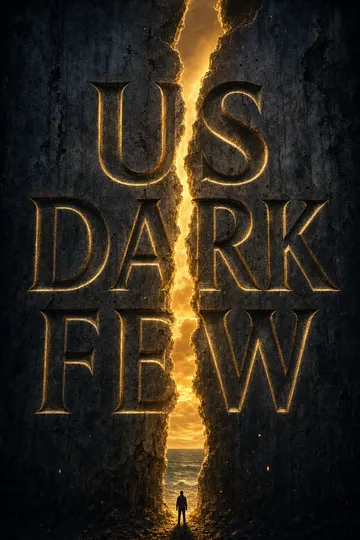
Us Dark Few Series

Download PDF
Download EPUB
.epub digital book format is ideal for reading ebooks on phones, tablets, and e-readers.








