

Plot Summary
The Mine Burns
After seven months of forced labor in Faery, Vietnamese-American Quyen Anh sees a fire consume the mine outpost where the opals and her chance of buying freedom are kept. She breaks into the burning building, but abandons her attempt to steal the lockbox when she hears an injured fae woman trapped beneath a beam.
Quyen carries her outside, then returns upstairs for the money and gems. As she climbs down the slick outer wall, the roof collapses and a burning beam knocks her loose. She falls toward the rocks below. Instead of dying, she feels the land awaken around her, and Faery pours into her awareness with the force of a living world opening its eyes.
Quyen's first decisive act is neither escape nor revenge. She turns back for an enemy whose suffering resembles the vulnerability she knows firsthand. The choice complicates the novel's power fantasy from its opening: Quyen is not made queen because she is untouched by violence, but because she can act without reducing people to their usefulness. The fire also joins the book's central oppositions at once. The mine treats land and labor as extractable resources, while the awakening Court makes both the ground and its people impossible to separate from one another.
A Forest Opens
The ground convulses around the mine, swallowing buildings and driving trees through the settlement. Quyen's body heals, and the awakened Court seems to guide her as she pulls people from shifting earth and coaxes a tree to release Gina, her former bunkmate. She spends the day rescuing survivors, but the frightened workers and fae overseers keep their distance.
That night, Gina delivers food and water with a request that Quyen leave before the others force her out. Alone, Quyen recovers coins and opals from the shattered lockbox, then follows a persistent pull north and west. The living forest keeps drawing her attention into its creatures and rhythms, but a distant heartbeat gives her a direction and a reason to keep moving.
The rescue does not purchase Quyen acceptance. Her former companions treat her new power as evidence of danger, even after it saved them, exposing how communities often make the person who survives a catastrophe responsible for its meaning. Quyen's departure is therefore both practical exile and emotional reversal: the woman who once needed rescue becomes the only person capable of rescuing others. The forest's seduction threatens to absorb her identity, while the distant heartbeat provides a counterweight. Her journey begins as an attempt to return home, but its first reliable compass is another person's life.
The Deathless Road
Quyen crosses weeks of mountain wilderness without ordinary hunger or fatigue, though she sometimes loses time when the Court's sensations overwhelm her. She begins to feel the sleeping man at the heart of the land through his exertion, fear, and sexual pleasure, and realizes that her body is linked to him.
When she reaches a paved road, four human bandits stab her while trying to rob her. The wound does not kill her; instead, the Court rusts their iron knives and swiftly rots the men after Quyen asks for protection.
She buries their remains, then runs through scattered settlements toward the distant city and mountain palace. At the gates, guards mistake her for a pilgrim until Danica, a powerful duchess, recognizes her as the new King's soulmate and lets her enter.
The road marks Quyen's transition from endurance to agency. The bandits discover that violence no longer works on her, but her first use of power is frighteningly imprecise: the Court answers her anger with deaths she did not fully intend. Her decision to bury the men rather than celebrate their destruction preserves her moral imagination without denying their threat. The journey also turns involuntary intimacy into plot. Quyen is not merely sensing an abstract magic source; she is following the body of the man whose moods have accompanied her through isolation, making arrival feel less like rescue than the meeting of two lives already entangled.
The Crown Requires Consent
Danica explains that Xarcassah Marys, called Cass, became King of Mercy six weeks earlier, and that Quyen is expected at his coronation as Queen. In a formal room, Cass and Quyen recognize each other, but his horror at learning she has felt his private bodily sensations for weeks makes him recoil from touch.
The coronation proceeds on a mountain spire with twin thrones. The priestess leaves Quyen's iron crown for Cass to place himself, giving her a real choice: accepting it will bind her to Mercy and to him.
Quyen agrees. Afterward, she tells Cass she has a poor family in Long Beach and needs them provided for, not transported into Faery. Cass promises to arrange their future support, and Quyen accepts that remaining means separation from them.
The coronation distinguishes consent from freedom. Quyen cannot undo the circumstances that brought her to Faery, but Cass refuses to turn those circumstances into an unquestioned claim on her. His request gives her agency within a profoundly unequal situation, while her decision is not presented as uncomplicated romance: it includes the loss of her family and former life. Their first conflict is therefore ethical rather than merely emotional. Cass fears that his power has harmed her; Quyen needs him to recognize that protecting her does not mean deciding what she can bear.
Gifts With Teeth
At the presentation of fealty gifts, the Sagebrush Duke, Aeskanai Vaylir, struggles up the palace stairs on a cane. Quyen asks Cass to ease his pain, making mercy a public gesture rather than a bargaining chip. The Misted Duke, Kettekh Alair, brings a sword, while Talien Shamais, Duke of Flies, offers Cass black-opal gloves.
Quyen recognizes the stones as possibly coming from the mine where people died, and Cass reacts with contained distress. After the ceremony, he offers to smooth Quyen's path back to her family, but she insists he respect her choice to stay and provide money instead. Their uneasy exchange softens only when Quyen apologizes for her anger and suggests they begin again as partners rather than adversaries.
The gifts make politics tactile. A cane measures the bodily cost of conquest, a sword announces the possibility of force, and opals turn an ornamental offering into a reminder of exploitation and Cass's past. Quyen reads social gestures through their human consequences, while Cass has been trained to see kindness as a transaction that must be balanced. Their emerging partnership depends on neither framework winning outright. Quyen learns that his restraint has roots in fear, and Cass begins to discover that intimacy can be negotiated through honest conversation without becoming a formal debt.
The Palace Learns Her
When Quyen tells Cass that people remain trapped beneath the mine, he agrees to use their link to locate them. Sitting between his legs with their hands joined, Quyen focuses on the remembered landscape and reaches through Mercy's network of stone, roots, and living bodies. She finds the unconscious miners and discovers she has built a vast stone barrow around the man whose hand she found earlier.
Cass can map the location and send breakers to extract them. The exercise also reveals how easily Quyen can lose herself in the Court, so Cass teaches her to return to her own memories and body. Meanwhile, Quyen arranges money and a final letter for her family, preserving their future even as she accepts she may never see them again.
The scene turns intimacy into a discipline of attention. Quyen's connection to the land is powerful, but power alone cannot keep her from being absorbed by it; Cass helps her maintain a boundary between shared perception and self-erasure. Their bond becomes reciprocal, not simply a channel through which he affects her. The family letter gives that reciprocity an emotional cost. Quyen can materially improve the lives of the people she loves, but no magical solution restores ordinary presence. Her choice is not to stop grieving. It is to make a life without pretending that grief has disappeared.
Fire at the Coronation
During the coronation celebrations, the Serpent Court presents a trained war-dragon as a gift. The creature suddenly breathes blue fire at Cass. He throws the courtyard away from the blast and turns the dragon into a mass of torn flesh with stone blades, saving many courtiers but killing the two handlers beside it. Cass heals the burned survivors, then flies off, leaving Quyen to face the bloody aftermath.
Kettekh warns her that someone likely tampered with the dragon shortly before its presentation, which means the attack came from inside the palace's political circle. Quyen refuses to treat Cass as a monster for defending them, but she recognizes the danger of power that can reshape a Court faster than its wielder can explain it.
Cass's violence is simultaneously rescue and catastrophe. He acts with extraordinary precision, yet the dead handlers prevent the scene from becoming a clean demonstration of heroic strength. Quyen's loyalty is tested by collateral damage, not by an abstract fear of monsters. Kettekh's warning also converts spectacle into evidence: the dragon is not just a threat, but a political instrument designed to provoke a new King's loss of control. Cass's shame and the courtiers' fear can therefore be exploited by anyone who wants to make his necessary power look like proof that he should never have ruled.
Ithronel Demands Her Share
Claims that Cass can abolish death draw worshippers to the palace, and High Priestess Paloma warns that the goddess Ithronel is being starved of the power she draws from Mercy. At the Feast of Willows, Ithronel arrives in a winter forest and accuses Cass of taking the Court's magic without feeding her.
Quyen shields the courtiers while Cass fights the goddess, using the palace to raise walls, roughen his footing, and cut her feet. Cass seizes Ithronel by the throat and reduces her body to leaves, though he knows she will return. The winter god Faerqen appears and offers them protection in exchange for sheltering several of his allies. Quyen and Cass accept, buying time while making enemies of a goddess.
The confrontation exposes the material structure beneath religious language. Ithronel's claim is not only faith or sovereignty; she feeds on the Court's power, while Cass's existence redirects that resource. Quyen's defense of the palace and Cass's defeat of the goddess transform a private conflict into a constitutional one: who controls a living landscape, and who is entitled to consume it? Faerqen's bargain offers a temporary answer rather than a moral resolution. Protection has a price, and the list of people they must shelter hints that divine politics will keep entering their household through obligations they barely understand.
A Sentry Finds Her Voice
After the goddess's attack, Quyen retreats to the throne spire, shaken by her own destructive capacity and by the possibility that Cass could lose control. Her swordmistress teaches her to see the pair as a team: Cass brings overwhelming force, while Quyen notices danger and calls the response. When she returns, Cass admits how much he fears hurting those he loves.
Quyen's attention to his pain leads him to reveal that opals were fastened to his hands as a child, driving him to master control while his parents ignored his suffering. Later, Ithronel's star-iron wound leaves Cass unable to heal himself. Quyen rusts the embedded iron without damaging him, and Cass repairs the severed nerves and broken bones with her help.
The sentry and mastiff image gives Quyen a role that is neither subordinate nor interchangeable with Cass. Her strength lies in noticing, deciding, and summoning force at the right moment; his lies in meeting what she cannot handle alone. The opal history explains why his control is not simple stoicism. It is a survival technique learned under neglect, one that once protected others but now strains his relationship with his own emotions. Quyen's healing reverses the childhood injury's logic: an intimate partner attends to what his parents dismissed, without asking him to become less powerful first.
A Courtship Takes Shape
As the coronation ends, Quyen and Cass share a room, negotiate boundaries around their empathy link, and begin practicing Court magic together. Quyen helps house refugees and gives Cass's displaced worshippers a settlement, while Cass spends long hours healing people whose bodies changed during his ascension. Their work makes Quyen more visible as a governing Queen, but Cass remains reluctant to rule.
She clears a day for him and takes him to hot springs, where he admits he wants to court her rather than assume their bond settles every question. Quyen welcomes a gradual romance. They begin kissing and touching by mutual choice, and Cass learns that affection can be pleasurable without requiring him to suppress every bodily response.
Courtship becomes a counter-practice to the novel's many imposed bonds. Quyen and Cass are already magically linked, yet they treat romantic closeness as something that still requires choice, pacing, and renewed permission. Quyen's practical care for refugees contrasts with Cass's instinct to retreat from public responsibility, but their differences become complementary when she makes room for rest without excusing his duties. His first experience of chosen, nonsexual affection is especially significant: it separates touch from both danger and performance, allowing a body trained as a weapon to become a source of comfort.
The Marys Family Arrives
Raven Court's crown prince Pelleas arrives with Cass's mother Yllana and sister Tarra, while a promise to provide hospitality prevents Cass from refusing them entry. At dinner, Yllana criticizes Cass's control and appearance, and Tarra treats his authority as a joke. Quyen challenges Yllana's right to dictate Cass's behavior.
Cass then names the cost of his childhood: his mother pushed him into becoming a Fury because the role brought status and income, and her approval followed only when he surrendered himself to war. Quyen shares that her own mother abandoned her after her father died, while her aunt and grandmother raised her. Their mutual disclosures turn family pain into trust, though the visit leaves old wounds active.
The family dinner makes inherited harm visible without simplifying it into a single villain and victim. Cass's mother appears through both present cruelty and the pressure of a household that valued his usefulness more than his safety. Quyen's account of abandonment does not equate their histories; it shows how differently two people can learn to expect rejection. Cass's public defense of himself matters because he has spent centuries managing other people's fear. Quyen's intervention does not speak for him indefinitely. It creates enough room for him to name what happened in his own voice.
A Battle Becomes a Date
Quyen trains with a swordmistress using the star-iron rapier Cass commissioned, and Cass gradually lets her share his fear, pleasure, and private thoughts. Talien's gift of a necklace of rare black opals briefly cuts Quyen off from Cass, revealing that the stones can disrupt their connection.
At a planned mock battle, Cass uses his wings and the Court's power to overwhelm Kettekh's opposing army, thrilling the crowd and rediscovering the joy of fighting when no one is meant to die.
Afterward, he and Quyen stop treating their desire as an accidental consequence of magic. They choose physical intimacy together. Cass's vulnerability surfaces in the aftermath, and Quyen reassures him that their bond is not a performance she will abandon once the pleasure ends.
The battle and the romance share a question of controlled force. Cass's mock victory lets him use the skills formed in war without reproducing its human cost, while Quyen's sword training gives her a way to participate rather than merely watch. The opal necklace foreshadows a danger that is both political and bodily: a material object can interrupt the bond on which they have come to rely. Their intimacy does not solve the imbalance between them, but it becomes chosen rather than imposed. Cass's fear after sex reveals that the deeper risk is not desire itself, but being loved while fully visible.
The Walk Turns Ambush
On a winter walk, disguised attackers strike with poisoned arrows and a weapon designed to block Cass's magic. He shields Quyen, kills several assailants, and is badly wounded. When Tarra joins the attack, the Court's protection of its royal bloodline makes Cass's counterstrike dangerous to himself; Quyen steps between them and is cut by his wing.
Tarra's sword then threatens her, and Mercy kills the princess for attacking Cass's kin. To save Cass from bleeding out, Quyen uses her own power to accelerate time through their joined blood, healing both bodies but aging them several years and burning out Cass's magical source. A healer named Liyn confirms Cass's channels are damaged, though they may recover with treatment.
The ambush transforms Quyen's power from an extension of Cass into an independent capacity with a devastating cost. She can keep him alive, but the intervention alters both bodies and temporarily removes the magic that defines his identity. The royal bloodline rule makes the family conflict physically consequential: Cass cannot simply strike Tarra without the Court retaliating against him. Quyen's choice is therefore not a triumphant display of mastery. It is emergency care undertaken without certainty, followed by a new form of vulnerability in which she must support a healer who can no longer heal himself.
The Thrones Hide Siphons
While Cass recovers, Quyen climbs to the thrones and discovers that opals and a toothed limestone device have been fixed to siphon Mercy's power. She destroys the array on her own throne, restoring her access to the Court but leaving Cass's source trapped until his healing is stronger. Before she can free him, Kettekh and Aeskanai enter their suite with Yllana as a hostage.
Kettekh has killed Quyen's guards and bound Kat; Aeskanai places opals around Quyen's neck to block her magic. Quyen submits so Yllana will live and is forced to open a door to the Buzzing Palace in the Duchy of Flies. There Kettekh explains that the dukes have spent centuries building border arrays to detach their former Courts from Mercy.
The throne array literalizes the extraction that has shaped the whole story. Quyen's power is not merely stolen; it is redirected through a device designed to feed a goddess and weaken the people who govern the land. Her first victory is incomplete because Cass's healing still depends on leaving his siphon in place. The hostage scene tests whether Quyen's new authority can become coercive. She has enough power to resist, but chooses submission to protect Yllana, showing that rule does not erase the ethical pressure of another person's life.
The Court Is Torn
In the Buzzing Palace, Yllana turns on Kettekh and stabs him, dying from his counterattack after admitting she acted to protect Cass. With the Misted King dead, Mists returns to Mercy, but the severing of Flies leaves Quyen physically wrecked. She escapes on a horse Aeskanai provides, then Ithronel intercepts her with a hand-cannon loaded with magic-blocking poison and iron.
Cass arrives despite Quyen's warning and is shot. Quyen drives the siphon into the soil, temporarily stripping the land around them of ownership so Mercy can reclaim it. Faerqen answers their bargain and kills Ithronel, but the gun's iron filings tear Cass's lungs. He dies in Quyen's arms, leaving her with his blood, his Court, and no living King.
The climax refuses a clean victory. Yllana's act restores Mists but costs her life; Quyen's escape protects no one for long; Faerqen's intervention defeats Ithronel without repairing Cass's body. The hand-cannon combines mundane technology with faery vulnerabilities, showing that no magical hierarchy is invulnerable to material ingenuity. Most devastatingly, Quyen's power can preserve a Court more readily than a person. Cass's death forces her to confront the limit of rescue: love can motivate the attempt, but it cannot guarantee that the beloved survives.
Mercy Calls Him Back
With Cass's body gone, Quyen turns her grief into command. She accelerates time across the opal arrays, destroying them and the forces maintaining them, then leads Mercy's animals into the Buzzing Palace. Talien holds a small protected circle around the throne, but Quyen asks him to request his Court rather than seize it by force.
When he refuses, Mercy restrains him instead of killing him. The Court's power gathers around Cass's blood and remakes him from soil and salt, restoring his body and their bond. Cass shatters the throne of Flies and takes control without executing Talien. He and Quyen fly home together, where they tell Danica and Vaduin what happened and begin rebuilding their family and kingdom.
Quyen's final act of rule is defined by restraint. She could let Mercy's appetite kill Talien, but she refuses to make Cass's legacy another conquest written in blood. Her invitation gives Talien a chance to yield, even though he rejects it; the Court then contains him rather than erasing him. Cass's return is not a denial of death so much as the consequence of a bond that links body, blood, and landscape. Quyen has become more than the person Cass protects: she can hold the Court steady long enough for him to return.
Epilogue
After the coup, Quyen and Cass bury the dead, investigate the surviving plotters, resettle people displaced by the ruined Buzzing Palace, and manage the exodus of worshippers who reject their opposition to Ithronel. They later visit Aeskanai, still governing Sagebrush, and offer him a sovereign position administering Mercy's western territories for three centuries.
He asks for time to consider. Quyen and Cass then retreat to his coastal hunting lodge for their honeymoon, where they turn their hard-won survival into renewed play and intimacy. Their kingdom remains politically complicated, but they face its work as a pair, with Danica and Vaduin as chosen family.
The epilogue measures victory through administration rather than spectacle. The dead are given burial, refugees need homes, and religious disagreement reshapes the population; survival does not make these obligations vanish. The offer to Aeskanai is especially important because it converts the old logic of conquest into a negotiated role for someone who once stood against the Crown. The ending does not claim that generosity guarantees reconciliation. It gives him time to choose. The honeymoon then restores the lovers' private scale after a climax that made their bodies instruments of political survival, while leaving the wider kingdom's unfinished labor in view.
Analysis
Crowned by the Fae King treats power as a relationship that must be made accountable. Quyen's growth is not simply the acquisition of magic; it is learning that the Court responds to her feelings and that good intentions do not erase consequences. Her compassion saves people, but it can also become lethal when the land obeys too quickly. Cass faces the inverse problem. He has spent centuries controlling his body because his healing can harm others, yet the Court magnifies what he tries to suppress. Their partnership develops when each stops treating the other's vulnerability as something to manage alone.
The novel also makes extraction literal. Quyen begins among enslaved workers digging opals from dangerous tunnels, and those same stones later restrain Cass, sever Quyen's bond, and siphon a kingdom's life. Political conquest follows the same pattern: a Court can be treated as territory to possess, or as a living community whose history demands repair. Quyen and Cass do not undo every inherited injury, but their decisions about refugees, the conquered dukes, and the dead challenge the assumption that rule must reproduce the violence that established it.
Romance is the book's counterweight to both coercion and isolation. Quyen and Cass begin with an involuntary connection that could easily be mistaken for destiny's permission. Instead, their intimacy becomes more trustworthy as they ask, refuse, apologize, and renegotiate. Cass's need for affection is not cured by a soulmate; Quyen's losses are not erased by a crown. Their bond works because each learns to remain present when the other is frightened, powerful, or difficult. The ending's strongest promise is not eternal safety, but shared responsibility: neither lover has to be the sole guardian of the other or the kingdom.
Review Summary
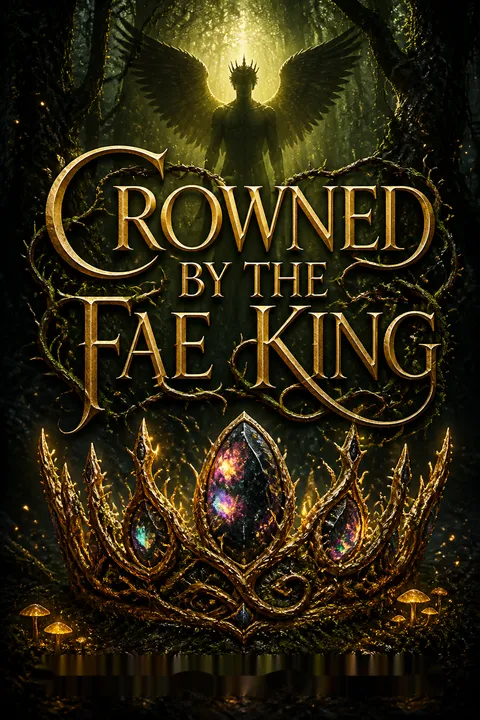
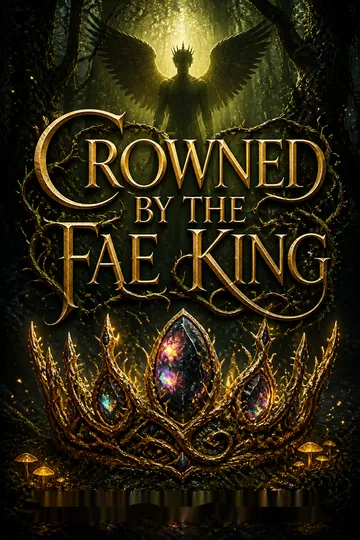
Crowned by the Fae King receives mixed reviews averaging 4.18/5 stars. Readers praise the slow-burn romance between Cass, a traumatized cinnamon roll king, and Quyen, a feisty Vietnamese FMC. Fans appreciate the emotional depth, world-building, empathy link between soulmates, and Vietnamese representation. Common criticisms include confusing world-building for new readers despite standalone claims, purple prose, lagging middle sections, controversial consensual non-monogamy elements, nickname hypocrisy, and the FMC's quick adaptation to royalty. The spice level earns 3-4/5 peppers, with extensive trigger warnings noted.
Characters
Quyen Anh
The mortal storm-centerQuyen is a Vietnamese-American bartender from Long Beach whose practical instincts were sharpened by family responsibility and months of forced labor in Faery. She is ambitious, quick to adapt, irreverent under pressure, and more compassionate than her defensive humor initially suggests. Her first impulse is often to act, then reckon with the consequences, a pattern that becomes dangerous when the living Court answers her emotions literally. She misses the family who raised her, especially her aunt and grandmother, but refuses to let longing erase the life she chooses with Cass. Her courage is not fearlessness; it is the willingness to enter frightening situations while remaining answerable to the people affected by her decisions.
Xarcassah Marys, Cass
The healer KingCass is a battle-trained healer with bronze stymphalian wings, immense physical strength, and a frightening command of living bodies. He grew up poor, learned early that his magic could injure people, and spent centuries practicing enough control to make ordinary touch seem dangerous. Beneath his disciplined manner is a warm, flirtatious man who craves affection but expects others to fear or use him. The new responsibilities of kingship intensify his old habit of hiding emotion rather than asking for help. Quyen's directness unsettles him, but also gives him a partner who can meet his power without mistaking restraint for virtue or danger for his whole self.
Danica
The pragmatic ArchangelDanica is the Duchess of Mirage, a powerful breaker, and one of Cass's closest allies. She helps Quyen navigate Faery's customs and the demands of the coronation, often with brisk humor that keeps panic from taking over. Her own soulmate relationship gives her practical insight into the awkward work of building trust, though she does not pretend every pair will love in the same way. Danica is politically capable and protective of Cass, but she also recognizes when Quyen needs space to make her own decisions.
Vaduin Khellair
The loyal FuryVaduin is Danica's soulmate, Cass's oldest friend, and a Fury with basilisk traits. His wings, tail, and dangerous gaze make him visibly monstrous, but his habitual affection reveals how freely he gives trust to people he accepts as his own. He understands the political court and has enough history with Cass to challenge him without abandoning him. Vaduin's loyalty is active rather than ceremonial: he offers advice, helps with the palace, and shows up when Cass and Quyen are in danger.
Aeskanai Vaylir
The wounded Sagebrush DukeAeskanai, often called Ace, is the last surviving heir of Sagebrush Court and a duke living with an old, painful leg injury. His polished manners conceal a history shaped by conquest, bereavement, and political calculation. He warns Quyen not to mistake courtesy for friendship, yet responds to her kindness with a guarded openness. His cane and careful movements make the bodily cost of Mercy's imperial history visible. Ace values his lost homeland, but his choices are complicated by obligations that began long before Quyen arrived.
Talien Shamais
The charming Duke of FliesTalien is the Duke of Flies, a handsome, socially agile ruler who knows how to turn charm into influence. He presents himself with easy humor and watches how people respond to gifts, attention, and rivalry. His courtly confidence contrasts with Cass's discomfort at being observed, and Quyen quickly understands that Talien's flirtation carries political meaning. He is ambitious and adept at reading weakness, which makes him a consequential presence in a court where affection and power are rarely separate.
Kettekh Alair
The formidable Misted DukeKettekh, called Tech by Quyen, is the Duke of Mists, a scarred and disciplined swordsman with experience in court politics. His directness makes him more approachable than his military bearing suggests, and he can treat Quyen as a student and peer rather than only as a Queen. He respects competence, studies the risks surrounding Cass's power, and understands how fear can destabilize a ruler's court. His public loyalty to the Crown is mixed with the inherited history of a conquered royal line.
Ithronel
The hungry goddessIthronel is Mercy's patron goddess, associated with the sacred obligations of the Court and dependent on its power. Her presence is beautiful, frightening, and inseparable from the religious institutions that serve her. She regards the Court as something with a proper order and a rightful claim, making Cass's unusual kingship a direct challenge to her place in that order. Ithronel embodies a divine authority that can shelter a community while also treating its strength as sustenance.
Faerqen
The winter godFaerqen is a god of death, glamor, winter, and the northern wilds, usually appearing as an immense black wolf. He regards political conflict as part of a much older game and offers protection through exacting bargains rather than generosity. His immense power makes him dangerous, but his attention to terms gives Quyen and Cass room to negotiate. Faerqen's alliances are shaped by rivalries among gods, not by the ordinary loyalties of a Court.
Pelleas Xirangyl
The Prince of ShadowsPelleas is the crown prince of Raven Court and one of the Western Continent's most accomplished glamor-mages. He is an artist who designs clothing and delights in the technical craft of illusion, but he moves through politics with the caution of someone raised among dangerous rulers. His wit and controlled presentation let him deflect insult without appearing vulnerable. Pelleas becomes a useful diplomatic presence in Mercy, though his deepest loyalties and the risks facing his home Court remain his own.
Yllana Kovaiy
Cass's distant motherYllana is Cass's mother, a seamstress whose skill with cloth and eye for design provide a rare avenue of warmth in her tense relationship with him. She is proud, reserved, and accustomed to speaking from a position of authority. Her concern for Cass is tangled with years of choices that left him feeling valued for what his power could provide. Quyen sees both the harm in her manner and the possibility that Yllana's history is more complicated than her coldness allows.
Tarra Marys
Cass's imperious sisterTarra is Cass's older sister, beautiful, socially confident, and accustomed to being indulged. She treats courtship and attention as games, often failing to notice how her casual insults land on Cass. Her ease in formal settings contrasts with his discomfort, and she benefits from the family status he has spent much of his life carrying. Tarra's presence brings old sibling patterns into a kingdom where every private slight can acquire political weight.
Liyn
The wary healerLiyn is a healer with a past connection to Cass and a long memory of the relationships that once shaped them both. He is sharp-tongued, perceptive, and professionally committed even when personal resentment makes his help difficult. His knowledge of magical burnout gives Quyen and Cass a way to understand the crisis after the ambush. Liyn's willingness to confront the past makes him more than a medical resource; he is someone who must decide whether old rivalry will outweigh present care.
Katerina
Quyen's steadfast attendantKaterina, whom Quyen calls Kat, is a mortal body-servant who helps her navigate clothing, schedules, and palace life. She is practical and attentive without treating Quyen as a curiosity. Her age and experience give her a steadiness that contrasts with the court's elaborate rituals. Kat's discretion matters because serving royalty brings her close to private danger, yet she remains committed to protecting the trust Quyen places in her.
Paloma
The hardline SeneschalPaloma is Mercy's Royal Seneschal and a committed servant of Ithronel's religious order. She is formal, politically capable, and suspicious of Cass's sudden authority over a traditionally theocratic Court. Her concern is not simply personal dislike: she believes the goddess's position and the Court's continuity are at stake. Paloma's composure makes her difficult to read, while her religious conviction gives institutional form to the conflict between divine patronage and royal rule.
The Swordmistress
Quyen's exacting teacherQuyen's unnamed swordmistress is a renowned duelist who teaches through precision rather than praise. She expects Quyen to master her stance, emotions, and attention before attempting to master an opponent. Her austere manner can feel dismissive, but she notices Quyen's potential and understands that skill includes knowing when to rely on a partner. She treats Quyen as a student first, which gives the Queen a space where rank cannot substitute for practice.
Gina
The frightened former bunkmateGina is Quyen's bunkmate at the mine, a young woman who survives the disaster after Quyen frees her from a tree. Frightened by Quyen's connection to the Court, she becomes the spokesperson for the workers who send Quyen away. Her response shows how fear can turn gratitude into distance when a community has no framework for understanding the person who saved it.
Quyen's Aunt and Bà
Her Long Beach anchorsQuyen's aunt and grandmother, Bà, helped raise her after her father died and her mother left. They taught her practical care, persistence, and a spiritual respect for ancestors and unseen forces. Quyen's memories of their crowded home explain both her fierce responsibility toward family and her discomfort with being separated from them. Their influence remains present in the way she approaches strangers, grief, and the obligations of power.
King Omahice
The dying former KingOmahice was the former King of Mercy, a ruler whose long decline left the Court's bureaucracy preparing for political collapse. Cass attempted to save him from a near-incurable illness, and their magical connection changed the succession. Omahice's reign also left a legacy of conquest that still shapes the duchies, their rulers, and Mercy's understanding of justice.
Plot Devices
The Soulmate Bond
Intimacy with consequencesThe bond between Quyen and Cass carries physical sensation, emotional states, and eventually communication, so separation and closeness have immediate bodily effects. At first Quyen experiences Cass without knowing who he is, and Cass does not realize his private sensations reach her. Their relationship therefore has to develop around consent, boundaries, and the difference between magical connection and chosen affection. The bond also links their souls and bodies to Mercy, making their partnership politically consequential as well as romantic.
The Living Court
Landscape as royal bodyA faery Court is a living landscape ruled by a Monarch who can direct its power. Cass's healing and command magic interact with Mercy as if the land were part of his body; Quyen gradually gains access to the same network through her own unusual connection. Trees, stone, animals, weather, and palace architecture respond to their emotions and choices. This device makes governance material: a ruler's fear can damage a building, while a decision about who belongs in the land can reshape an entire territory.
Opals and Siphons
Power cut into fragmentsOpals refract magical power and can restrain or disrupt a mage's connection. Cass associates them with the painful restraints imposed on him as a child, while Quyen associates them with the mined wealth extracted through human suffering. The story expands their function from personal trauma to political weapon: opal arrays can cut a Monarch off from a Court or siphon power away from the land. Their beauty is therefore inseparable from extraction, restraint, and control.
Blood Unity and Time
A body shared across distanceCass's blood-unity makes his living blood part of him wherever it travels, while Quyen's power can accelerate time through living matter. The combination lets them preserve a connection when ordinary magic is blocked, but it also makes healing, aging, and bodily change carry enormous stakes. Blood is not a metaphorical token here; it is a physical route through which identity, magic, and care can pass. The device supports both the emergency survival plot and the deeper question of what makes a person remain themselves after the body changes.
The Comet Alignment
Celestial pressure on magicFaery's magic responds to celestial events, and the three major comets are expected to align during the Silver Coronation. Their approach amplifies unusual and potentially violent magic, making the present political upheaval part of a larger cosmic timetable. Meteor showers also strengthen combat magic, which gives the staged battle and the later attacks additional danger. The alignment functions as both a deadline and a warning: the Monarchs have limited time to understand their powers before divine and political conflict intensifies.
Monsters of Faery Series



About the Author
Download PDF
Download EPUB
.epub digital book format is ideal for reading ebooks on phones, tablets, and e-readers.








