

Key Takeaways
Curiosity is a human drive, not a decorative hobby
A missing question. Kanzi, a bonobo, learned to use symbols and understand spoken instructions, yet showed no interest in asking why things worked or what other people knew. The contrast is not between intelligence and stupidity, but between using information and seeking understanding. Human curiosity can push beyond immediate needs toward questions with no obvious practical payoff.
Success can starve wonder. British television producer John Lloyd had awards and hit shows, but little time for learning. After career setbacks and depression, he began reading widely, following his interest from painting to the history of varnish. That appetite became the idea for QI, a television show about the surprising interest hidden in ordinary subjects. Curiosity restored color to his world and helped him make something new.
The book makes a persuasive case that curiosity is not merely a tool for achievement. Lloyd’s story shows how learning can renew attention when status and professional success no longer provide direction. The distinction between asking for information and wanting to understand also gives curiosity a richer role than simple novelty-seeking. Still, Kanzi’s lack of human-style questions should not be treated as proof that other animals have no curiosity. The broader point is more compelling: human beings can build shared knowledge across generations, then deliberately pursue questions that survival alone would never require.
Turn novelty into sustained learning before the next distraction takes over
Two kinds of curiosity. Diversive curiosity is the pull of novelty: opening a cupboard, clicking a headline, or seeking the next sensation. Epistemic curiosity is the more sustained desire to understand a subject, built through effort and growing knowledge. The first gets exploration started; the second makes it useful and rewarding.
From impulse to expertise. As a child, Brian Smith found his father’s loaded gun and nearly shot someone while playing. As an adult, he became a police officer and trained others to use firearms safely. Alexander Arguelles began learning languages because they fascinated him, then studied them for hours a day and used each new language to understand others. In both stories, a desire to explore deepened into a serious pursuit. Novelty is a beginning, not a learning plan.
This distinction helps explain why a person can consume endless information and still feel mentally undernourished. Novelty supplies discovery, but continued attention is what lets facts connect and turn into skill. The gun story also makes clear that curiosity is not automatically wise: exploration without knowledge can be dangerous. A useful test is whether an interesting encounter leads to a second question, then a third. If attention repeatedly resets to the next stimulus, curiosity is being stimulated but not developed.
Learn enough to notice the gap that makes a subject matter
The useful middle. Psychologist George Loewenstein’s information-gap theory describes curiosity as the desire to close a perceived gap between what someone knows and what they want to know. A subject can seem dull when it is entirely unfamiliar, or finished when someone believes they understand it completely. Interest often grows in between, where a little knowledge makes the next unknown visible. The book calls this productive middle the curiosity zone.
Knowledge makes questions sharper. Someone who knows three American state capitals may feel reasonably informed. Someone who knows forty-seven may be more eager to discover the final three, because the missing pieces are now clear. Curiosity also depends on confidence: people who assume they already have the answers overlook alternatives, while people overwhelmed by fear may have little attention left for exploration. A manageable gap invites inquiry.
The information-gap model explains why simply presenting more facts does not always produce interest. A learner needs enough structure to recognize what is missing, but not so much certainty that further learning feels pointless. This also suggests a practical response to apparent apathy: build an accessible foothold before demanding enthusiasm. The model is not a universal explanation for every interest, since emotion, identity, and social belonging also shape what people want to know. But it is a useful account of how knowledge can create its own appetite.
Treat a child's question as an invitation to think together
Curiosity is social. Babies point and babble before they can ask questions in words. In experiments described in the book, infants pointed less when an adult mislabeled familiar objects or seemed unable to help. When a caregiver responded to a point with useful information, the child was more likely to keep seeking information rather than simply asking for the object.
Questions become a habit. Psychologist Michelle Chouinard found that young children asked more than a hundred questions an hour in recorded interactions, with many seeking explanations. Between ages two and five, children may ask tens of thousands of explanatory questions. Yet question-asking skills are unevenly encouraged. Studies found that middle-class children were more likely to ask how and why questions, partly because their parents asked questions and made conversation a tool for exploring ideas. Ignored inquiries can teach children to stop asking.
The important insight is that curiosity is not only an individual trait. It is also a pattern of interaction: one person signals interest, another responds, and the exchange makes further inquiry more likely. This places real value on small responses, such as naming what a child points toward or asking what they think is happening. The account also connects conversational habits to inequality, without suggesting that working-class families care less. Time, stress, and access to institutional confidence all shape how much room a household has for open-ended discussion.
Give curiosity a knowledge base, not just room to roam
Facts support thinking. The book argues that long-term memory is not a passive storehouse. It lets the mind recognize patterns, connect ideas, and use working memory more effectively. A chess expert can rapidly read a familiar board because years of stored positions make its structure recognizable. Without that background, both learning and problem-solving take more effort.
Opportunity needs instruction. James Black became a chess master, but despite determined tutoring, he could not pass the entrance exam for an elite New York high school. He lacked basic knowledge in geography, vocabulary, and mathematics that the test assumed. The example challenges the idea that grit or curiosity alone can erase an educational head start. The book argues that teachers should provide knowledge directly, especially to novices, so students can build the foundation that allows independent questions and creative thought to grow.
The case for knowledge-rich teaching is strongest when treated as an equity argument. Students with abundant background knowledge can learn independently more easily, while those without it pay a higher cognitive cost for every new topic. Direct instruction can make access to later exploration less dependent on family resources. The caution is that memorization alone does not guarantee understanding or curiosity. Knowledge needs explanation, practice, and chances to connect ideas. The useful opposition is not facts versus freedom, but instruction that opens intellectual doors versus instruction that stops at reciting facts.
Use the internet to widen your questions, not just finish searches
Access is not inquiry. The Internet makes knowledge remarkably easy to reach, but convenience can close a question before it develops into an interest. Ben Greenman describes his son instantly searching for the second-largest snake after learning which snake was the largest. Earlier, an unanswered question might have lingered and led a child to a library book or a deeper interest. Instant answers can replace that productive frustration.
Easy paths can narrow discovery. Sociologist James Evans examined 34 million scholarly articles and found that online access was associated with researchers citing fewer articles, not a broader range. Search tools tend to direct attention toward familiar, popular material, while print browsing often exposes readers to unexpected subjects. The Web can support deep exploration, but it can also deliver an answer without context. Use it as a starting point for following connections, not as a machine for ending thought.
The book’s argument is not that digital tools make people incurious by themselves. The same network can support a serious course of study or a quick diversion, depending on the user’s habits and the design of the path through information. That distinction matters because it shifts the question from whether technology is good or bad to what kinds of attention it rewards. Search efficiency is valuable when a task has a defined answer. For open-ended learning, deliberate browsing and exposure to unfamiliar sources can help counter the narrowing effect of relevance rankings.
Ask why the other side needs its position, not only what it demands
Positions conceal needs. In one business negotiation, a supplier refused to grant a buyer exclusive access to an ingredient. The buyer’s team had offered more money without success. When a negotiator asked why exclusivity was impossible, the supplier explained that a cousin depended on a small annual supply. The parties made an exception for the cousin and reached agreement. The question revealed a solvable concern hidden beneath a rigid demand.
Listen for what matters underneath. In Northern Ireland peace talks, disputes over disarming became deadlocked. The Unionists wanted a public signal that violence was over; the IRA did not want to appear forced into surrender. Inspectable weapons storage offered a symbolic step that addressed both concerns. Curiosity about another party’s motives can reveal solutions that a simple exchange of concessions misses. It also requires listening, not merely asking questions as a tactic.
This approach connects curiosity with negotiation, medicine, and conflict resolution: understanding another person’s perspective often requires more than collecting their stated preferences. It asks what those preferences protect, such as dignity, security, or belonging. Material incentives can fail when a conflict concerns sacred values or identity, and may even intensify resentment. A curious question can expose a new option, but it does not guarantee agreement. The skill lies in combining open inquiry with respect, careful listening, and recognition that some disagreements cannot be reduced to a tidy bargain.
Pair deep expertise with broad knowledge to make original connections
Ideas need raw material. Advertising writer James Webb Young argued that original ideas combine detailed knowledge of a specific problem with broad knowledge of the world. Facts gathered over time become material for connections that are hard to produce on demand. Darwin had deep knowledge of natural history, while reading economist Thomas Malthus helped him frame a wider explanation of competition and change.
Be a foxhog. A foxhog combines the hedgehog’s depth in one or two fields with the fox’s range across many perspectives. The term captures a practical balance: expertise gives a person something valuable to contribute, while breadth helps them connect their work to other disciplines. Benjamin Franklin’s experiments with oil on water show another version of the approach. He noticed a small physical effect, investigated it repeatedly, and followed its implications rather than treating it as a passing curiosity.
Breadth and depth are often presented as competing career strategies, but the book’s examples show how they can reinforce each other. Expertise helps distinguish a meaningful anomaly from noise; broad knowledge supplies analogies and alternative explanations. This combination is especially useful when problems cross disciplinary boundaries. The balance will differ by field, and general knowledge without mastery can become shallow name-dropping. The stronger prescription is to build a real base in one domain, then use curiosity to learn enough elsewhere to ask better questions and collaborate intelligently.
Study ordinary things until they reveal a larger mystery
Attention changes the subject. The Boring Conference invited people to speak about things such as self-checkout machines, mailboxes, toast, and parking-garage roofs. The apparent joke carried a serious idea: close attention can uncover design, history, and human meaning in things usually ignored. Writer Georges Perec practiced this by repeatedly describing an ordinary Paris street, asking what could be seen when nothing dramatic happened.
Move from answer to inquiry. A puzzle has a definite solution, such as identifying a hidden code or a murderer. A mystery is broader and does not end with one answer, because its causes and meanings remain open to interpretation. William Friedman began with cryptographic puzzles, then became fascinated by the deeper question of how symbols create meaning. Treat a solved problem as a possible doorway: ask what larger process, history, or human motive it belongs to.
This final practice offers a counterweight to the demand that every activity justify itself through novelty or productivity. Attention can make familiar surroundings intellectually rich, while a mystery sustains inquiry beyond the satisfaction of finding one answer. The distinction also helps match methods to problems: puzzles reward precision and closure, while mysteries require interpretation and tolerance for uncertainty. Neither mode is superior in every situation. A medical diagnosis or a cipher may need a correct solution; social life and history often demand the longer view.
Analysis
The book’s central argument is that curiosity depends on an active relationship between knowledge and uncertainty. Novelty opens attention, but accumulated knowledge gives the mind enough structure to recognize what it does not know. That creates a cycle: learning makes more questions imaginable, and questions motivate further learning. The account is strongest when it treats curiosity as situational and social rather than as a fixed personality trait. Caregivers, teachers, colleagues, and institutions can all make inquiry easier or more costly.
This perspective also clarifies the book’s apparent tension between exploration and instruction. Children need room to investigate, but they also need adults to transmit knowledge that makes investigation intelligible. The same is true of technology. A search engine can accelerate study, yet its convenience can make learning feel complete before context has formed. The important distinction is not old tools against new ones, but whether a tool helps people build understanding or merely supplies a result.
The historical account of curiosity, from religious suspicion through Enlightenment inquiry, gives the argument scale, though broad explanations of national innovation inevitably simplify political, economic, and geographic causes. Likewise, evidence linking curiosity with educational and professional success does not mean curiosity can compensate for poverty, unsafe conditions, or unequal access to instruction. The book is most useful when read as a case for cultivating opportunity, not as a demand that individuals overcome structural barriers through enthusiasm alone.
Its practical implication is unusually concrete: preserve the conditions that make questions possible. Learn enough to notice gaps, ask people what their positions protect, follow an interest beyond the first answer, and build a store of knowledge that lets ideas meet. Curiosity is not endless browsing. It is the willingness to stay with a question long enough for it to change what can be seen.
Review Summary
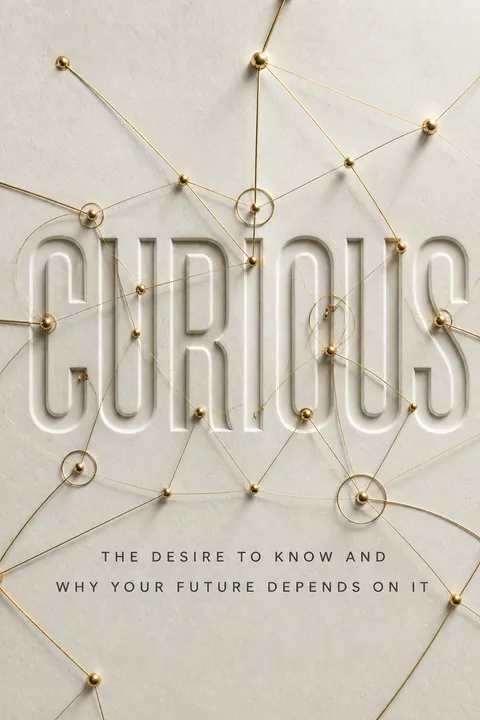
Curious explores the importance of curiosity in human development and success. Readers appreciate Leslie's insights on different types of curiosity, its evolutionary advantages, and its role in education and technology. Many found the book informative and thought-provoking, praising its accessible writing style and practical advice for cultivating curiosity. Some critics felt it lacked depth or relied too heavily on anecdotes. Overall, the book received positive reviews for its engaging exploration of curiosity's significance in personal growth and societal progress.
Glossary
Diversive curiosity
Appetite for noveltyA restless desire for new sensations, information, experiences, or challenges. It helps people notice unfamiliar possibilities and begin exploring, but it can also shift attention rapidly without producing lasting understanding. The book treats it as the starting point for deeper inquiry, not as a substitute for sustained learning.
Epistemic curiosity
Desire for understandingA sustained, effortful desire to gain knowledge and understand a subject. It can begin with a new experience but develops through learning, attention, and the recognition of unanswered questions. The book uses the term broadly, covering intellectual and cultural subjects, not only scientific investigation.
Empathic curiosity
Interest in other mindsA genuine effort to understand another person’s thoughts, feelings, and perspective. It goes beyond collecting personal details or expressing sympathy. In the book, empathic curiosity involves listening closely and asking what motivates someone, particularly when their choices or demands seem difficult to understand.
Information-gap theory
Curiosity from missing knowledgeA theory associated with psychologist George Loewenstein that explains curiosity as a response to a perceived gap between what someone knows and what they want to know. A little knowledge can make missing information visible and compelling. Complete ignorance or a sense of already knowing everything may produce less curiosity.
Curiosity zone
Manageable knowledge gapThe range between knowing too little to engage with a subject and knowing so much that further information seems unnecessary. In this zone, a learner has enough background to recognize what remains unknown, but still sees room to make progress. The book uses it to explain why context affects interest.
Need for cognition
Enjoyment of mental effortA psychological measure of how much a person tends to seek out and enjoy effortful thinking. People higher in need for cognition are more likely to welcome complex problems and reflect on information. The book presents it as a scientific proxy for intellectual curiosity, while emphasizing that curiosity also responds to circumstances.
Desirable difficulties
Effort that strengthens learningA term coined by cognitive scientist Robert Bjork for learning conditions that make initial study more challenging but improve durable memory or deeper understanding. Examples discussed in the book include spacing study sessions and encountering information in a less straightforward order. Difficulty is beneficial when it encourages useful mental work, not when it overwhelms the learner.
Foxhog
Depth joined with breadthA learner or thinker who combines the hedgehog’s deep expertise in a field with the fox’s broad knowledge across different areas. The book uses the term for people who can contribute specialist skill while making connections beyond their specialty. Darwin’s natural history expertise and engagement with economics illustrate the combination.
Thinkering
Thinking through practical inquiryA style of investigation that joins hands-on experimentation with abstract thought. A thinkerer moves between details and larger explanations, using concrete observations to develop broader ideas and returning to details to test them. Benjamin Franklin’s repeated experiments with oil on water serve as the book’s central example.
T-shaped knowledge
Specialist depth plus rangeA model of expertise in which the vertical stroke of the T represents deep skill in one area, while the horizontal stroke represents enough knowledge of other areas to understand context and collaborate. The book presents this combination as valuable in work where problems cross disciplinary boundaries.
Matthew Effect
Knowledge compounds unevenlyA pattern in which people who begin with more knowledge often acquire further knowledge more easily, while those with less background can fall further behind. Existing knowledge helps new information stick and connect. The book applies the idea to education and argues that early, effective teaching can interrupt the widening gap.
FAQ
What's Curious: The Desire to Know and Why Your Future Depends on It about?
- Exploration of Curiosity: The book examines the nature of curiosity, its role in human development, and its impact on personal and professional growth.
- Human vs. Animal Curiosity: It contrasts human curiosity with that of animals, emphasizing humans' unique ability to ask "why" and seek deeper understanding.
- Cultural and Historical Context: Ian Leslie discusses how societal views on curiosity have evolved, from being seen as a vice to a celebrated virtue.
Why should I read Curious: The Desire to Know and Why Your Future Depends on It?
- Relevance to Modern Life: In an era of abundant information, understanding and nurturing curiosity is crucial for success.
- Practical Guidance: The book provides actionable advice on fostering curiosity, useful for parents, educators, and professionals.
- Engaging Narratives: Leslie uses compelling stories and research to illustrate his points, making the book both informative and enjoyable.
What are the key takeaways of Curious: The Desire to Know and Why Your Future Depends on It?
- Curiosity as a Drive: Curiosity is a fundamental human drive, essential for learning and innovation.
- Curiosity Divide: The book discusses the gap between those who thrive on inquiry and those who become complacent.
- Importance of Questions: Asking questions is a powerful tool for learning and understanding, encouraging readers to cultivate this skill.
How does Ian Leslie define curiosity in Curious: The Desire to Know and Why Your Future Depends on It?
- Two Types of Curiosity: Leslie distinguishes between diversive curiosity (desire for novelty) and epistemic curiosity (desire for knowledge).
- Curiosity as a Drive: He describes it as a fundamental human drive that compels exploration and learning.
- Curiosity's Role in Learning: Curiosity is essential for effective learning, motivating individuals to seek information and engage deeply.
What is the "curiosity divide" mentioned in Curious: The Desire to Know and Why Your Future Depends on It?
- Definition of Curiosity Divide: It refers to the gap between those who actively seek knowledge and those who do not.
- Impact on Success: High curiosity individuals are more likely to succeed, while incurious ones may struggle in a changing world.
- Cultural Influences: The divide is influenced by cultural attitudes towards learning and inquiry.
What are some practical ways to cultivate curiosity according to Curious: The Desire to Know and Why Your Future Depends on It?
- Stay Foolish: Embrace openness and willingness to explore the unknown, asking questions without fear.
- Ask the Big Why: Challenge yourself to ask deeper questions about the world, moving beyond surface-level understanding.
- Build the Database: Create a personal repository of knowledge by reading widely and engaging with diverse subjects.
How does Curious: The Desire to Know and Why Your Future Depends on It address the role of technology in fostering or hindering curiosity?
- Digital Distraction: The Internet can lead to superficial engagement, reducing depth of inquiry and critical thinking.
- Information Overload: Abundant information can overwhelm, making it harder to focus on meaningful learning.
- Need for Balance: The book advocates for balanced technology use, seeking deeper, enriching experiences over quick answers.
How does Curious: The Desire to Know and Why Your Future Depends on It relate to education?
- Critique of Traditional Methods: The book critiques rote memorization, advocating for inquiry-based learning.
- Role of Teachers: Educators should create engaging environments that nurture curiosity and a love of learning.
- Impact on Student Success: Curious students are more likely to excel academically and personally.
What are the barriers to curiosity discussed in Curious: The Desire to Know and Why Your Future Depends on It?
- Fear of Judgment: Fear of looking foolish can prevent individuals from asking questions and exploring new ideas.
- Cultural Norms: Authoritarian environments may discourage questioning, stifling curiosity and innovation.
- Busy Lifestyles: Modern life often prioritizes action over reflection, leaving little time for curiosity to flourish.
How does curiosity impact creativity according to Curious: The Desire to Know and Why Your Future Depends on It?
- Connection to Knowledge: Curiosity drives individuals to seek new information, leading to innovative ideas.
- Encouraging Exploration: Fostering curiosity creates an environment where exploration and experimentation are encouraged.
- Diverse Perspectives: Curiosity allows consideration of multiple perspectives, essential for creative thinking.
What methods does Curious: The Desire to Know and Why Your Future Depends on It suggest for cultivating curiosity?
- Encouraging Questions: Create environments where questioning is encouraged and valued.
- Exploration and Play: Engage in new experiences to discover interests and deepen understanding.
- Learning from Others: Enhance curiosity through social interactions and shared experiences.
What are the best quotes from Curious: The Desire to Know and Why Your Future Depends on It and what do they mean?
- “I have no special talents. I am only passionately curious.” - Albert Einstein: Curiosity is a significant driver of success.
- “Curiosity is insubordination in its purest form.” - Vladimir Nabokov: Curiosity challenges norms, driving progress.
- “Knowing is obsolete.”: In the Internet age, accessing information is more important than memorizing facts.
About the Author
Other books by Ian Leslie
Download PDF
Download EPUB
.epub digital book format is ideal for reading ebooks on phones, tablets, and e-readers.








