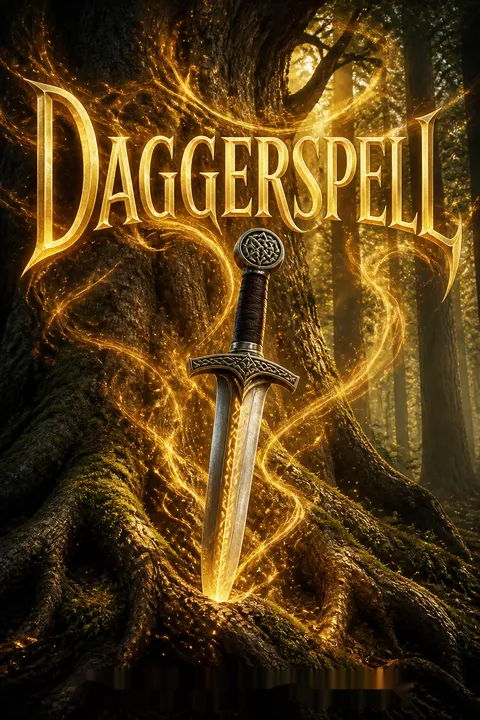


Plot Summary
Prologue
In the realm beyond death, a young soul is charged to remember the Light and return to a difficult task. Drawn back into mortal life by desire, she is born again in Deverry.
The ancient dweomermaster Nevyn sees her as a newborn and recognizes the sign of a destiny tangled with his own. He has searched for her across many years and many lives; this time, he hopes to find her while she is still young enough to choose her path.
The prologue establishes reincarnation not as a comforting cycle but as a demanding continuity: the soul carries obligations that the new person cannot yet understand. Its movement from an immense spiritual realm into bodily need makes the coming conflict intimate. Destiny may persist, but memory does not arrive intact. Nevyn’s sight of the infant therefore offers hope and danger at once. He can recognize the pattern, yet cannot simply restore what has been lost. The story begins with an asymmetry of knowledge, asking whether guidance can help a person choose freely or merely steer her toward an inherited burden.
A Mother Dies, A Road Opens
Seven-year-old Jill has spent her life serving at Macyn’s tavern, with only her sick mother and the occasional visit from her father, Cullyn of Cerrmor, to anchor her. When fever kills her mother, Jill clings to the promise that Cullyn may return.
He arrives months later, learns what happened, and mourns at the grave before the villagers who despise him for being a silver dagger. Rather than leave Jill in the village, he takes her on the road that very day. He buries the bronze bracelet he had brought for her mother, then rides away with Jill behind him. Her grief now shares the saddle with a new, frightening freedom.
The departure is both rescue and rupture. Cullyn gives Jill what she most wants, a father beside her, but his grief leaves little room to explain the life he is choosing for her. His act of burying the bracelet makes love visible through a small, concrete ritual, while his abrupt departure turns mourning into motion. Jill’s new freedom is not a cure for loss; it is a way of carrying loss into a larger world. The scene also introduces the novel’s moral tension: care can be sincere and still be rough, especially when adults treat survival as more urgent than a child’s emotional readiness.
The Dagger and the Dun
On the road, Cullyn cuts Jill’s hair, buys her boys’ clothes, and teaches her the customs of silver daggers, exiles who hire out their swords but keep a strict code against theft and murder. Jill sees how men react to her father’s reputation, then watches him disarm a young rider who challenges him.
When Cullyn accepts work from Tieryn Braedd, Jill meets the councillor Glyn and his son Abryn, who mocks her name and her father. Jill knocks Abryn down; the next morning, they apologize and become friends. Braedd later permits her to join patrols despite Cullyn’s objections. Jill wants not merely to follow her father, but to earn a warrior’s place in his world.
Jill’s boy’s clothing is practical camouflage, but it also gives form to an identity she already feels: she belongs to the road more than to the village’s narrow expectations. Her fight with Abryn turns exclusion into a test she can answer physically, and their reconciliation shows that courage need not prevent friendship. Cullyn’s teaching offers a code to replace the social respectability denied to a silver dagger, yet he also tries to control which dangers Jill may face. The tension between his protection and her ambition becomes a family pattern: he loves her fiercely, but she experiences love as a reason she is repeatedly told to wait.
Pigs, Blood, and a Dream
Braedd’s ancient quarrel with Lord Ynydd has narrowed to competing claims over acorns for their pigs. When Ynydd brings armed men and a herd into the disputed wood, Cullyn turns the confrontation into farce by driving the swine away with his sword. Ynydd attacks him, and the feud becomes a real battle. Cullyn fights through the melee and kills a young rider before Ynydd retreats.
Jill sees the body, vomits, and recoils from the father she had imagined as a songbook hero. Cullyn admits that he regrets the men he has killed, though he believes every warrior accepts death as part of his bargain with fate. That night Jill dreams of the warrior Aiva and a full moon, a vision she knows matters.
The battle strips honor of its clean, ceremonial surface. The quarrel begins over livestock, yet its participants convert property into a question of dignity and then blood. Jill’s nausea marks a genuine moral education: she cannot yet reconcile the tenderness of her father’s hands with their capacity to kill. Cullyn does not excuse the death, but frames it through Wyrd, a belief that grants order to violence while also risking resignation to it. Jill’s dream complicates that lesson. Aiva, the legendary woman warrior, offers Jill an image of strength that does not depend on becoming her father, even as the moon suggests an unseen force moving through her life.
Nevyn Finds a Familiar Soul
For seven years, Nevyn has crossed Deverry searching for the girl he saw in a vision after her previous death. On the Cantrae road, he meets young Lord Rhodry Maelwaedd, who has just learned that his brother Aedry was killed. Rhodry shows unexpected courtesy to the old herbman and speaks openly of his family grief.
Looking into the boy’s eyes, Nevyn recognizes the soul he once knew as Blaen, a man bound to the same tangled history as the reborn girl. He does not yet know where Jill is, but Rhodry gives him a path into the pattern. Nevyn turns toward the past, recalling how his own choices first bound their lives together.
This encounter widens the story from Jill’s coming-of-age into a history of recurring relationships. Rhodry’s simple courtesy matters because recognition arrives through character rather than spectacle: the soul is familiar, but the boy is still himself. Nevyn’s long search has trained him to read lives as patterns, while his isolation makes each clue emotionally costly. His knowledge can reveal connections, not undo them. The shift into the past also changes the reader’s understanding of fate. The present crisis is not arbitrary misfortune; it is the latest consequence of choices whose emotional logic survives even when their names and circumstances change.
The Prince Leaves His Name
In the year 643, Prince Galrion is one of the High King’s many sons and expects to leave court to study with the dweomermaster Rhegor. His hunger for magical knowledge has begun to eclipse his love for Brangwen, the woman he has pledged to marry. He means to ask her to join him, but first he must face his father, King Adoryc.
The king forbids the training, imprisons Galrion, and summons Brangwen to help change his mind. Galrion escapes by drugging a maid, disguising himself in her clothes, and slipping through the city by the river. He reaches Brangwen’s camp, but the king’s men capture him before they can flee together.
Galrion’s desire for dweomer is not yet wisdom; it is an appetite intensified by privilege and impatience. He treats Brangwen as someone who can be fitted into the life he has chosen, only recognizing the depth of his love when the king makes her captivity part of the threat. His escape shows ingenuity but also the costs of acting without trust: he deceives others because he has delayed an honest reckoning. The episode presents power as a double temptation. Royal authority can confine him, while magic promises escape, but neither guarantees that he will treat the people he loves as agents in their own right.
A Vow Beneath the Cairn
Galrion’s father strips him of rank and names him Nevyn, meaning nobody. Brangwen’s brother Gerraent then blocks her from joining the exile, insisting he must protect her from poverty. After their father dies, Gerraent’s grief and forbidden desire turn into an incestuous relationship. When his blood-sworn friend Blaen discovers the truth, Gerraent kills him.
Nevyn arrives and takes Brangwen away, but she cannot abandon her vow to die with her brother. After Gerraent is killed in the avenging attack, Brangwen drowns herself. Nevyn carries her body to Rhegor’s cabin and learns that she will be reborn. He swears to repay the debt he owes her; thunder answers, binding him to the vow.
The tragedy grows from people using honorable language to disguise control. Gerraent’s protection deprives Brangwen of choice, then his shame makes her responsible for keeping his secret and sustaining his life. Her eventual vow offers agency only inside a lethal frame. Nevyn’s rescue comes too late because he assumes that love and good intentions can compensate for leaving her behind. His oath transforms guilt into lifelong responsibility, but it also risks turning Brangwen into an obligation rather than a person. The thunder confirms that vows have force in this world; it does not promise that fulfilling them will be simple or that the next life will erase the harm.
Otho's Silver Gift
By thirteen, Jill has grown up riding with Cullyn, still seeing the Wildfolk and still resisting the future of marriage expected for girls. In Dun Mannanan, she meets Otho, the dwarf silversmith who once made Cullyn’s distinctive dagger. For her birthday, she asks not for a dress or jewelry but for a silver dagger of her own.
Otho engraves Cullyn’s falcon mark on a finished blade and recognizes that Jill can see the Wildfolk, as he can. He hints that her mother’s family may carry an unusual heritage, then gives her a riddle about finding no one and learning what craft to follow. Jill leaves with a weapon and a question she cannot yet answer.
The dagger makes Jill’s self-conception material. She does not ask to be accepted into a role; she asks for the tool that would let her claim one. Otho’s recognition gives her a glimpse that her strange perceptions are not isolated, although his teasing refusal to explain them preserves her uncertainty. His riddle is especially apt because Jill has been defined by absences: an absent father, a dead mother, and a future nobody around her can imagine for her. The gift therefore works on two levels, as practical equipment and as an invitation to discover a vocation beyond the social scripts that have narrowed her choices.
The Healer Saves Rhodry
After learning of Jill from Otho, Nevyn delays following her and instead rides to Belglaedd, where he finds sixteen-year-old Rhodry dangerously ill at a hunting lodge. Rhodry resists treatment, but Nevyn moves him to a warm chamber and uses herbs to clear his lungs. During the fever, Rhodry recalls a friend from another life, deepening Nevyn’s certainty that the old ties remain active.
Rhodry’s mother, Lady Lovyan, arrives and recognizes the dweomer in Nevyn’s fire-working. He warns her that Rhodry’s fate is bound to Eldidd’s, then asks to keep watch over him. Lovyan agrees, allowing Nevyn to remain near the young lord while he waits for Jill’s path to cross his again.
Nevyn’s healing work is a modest expression of power, in sharp contrast to the grander claims of sorcery. He saves Rhodry by attending to the body’s concrete needs, while the fever briefly opens a channel to memory that neither can fully control. Lovyan’s response is equally important: she neither mistakes magic for nonsense nor surrenders judgment to it. Her consent gives Nevyn a place in the political world without exposing his full identity. The section suggests that long-term care, not command, is the most ethical form of influence available to the dweomer. Nevyn must protect Rhodry without deciding his choices for him.
A Bard's Cruel Ballad
In 698, drought threatens the lands ruled by Lord Maroic, and the bard Gweran performs a dangerous rite to ask the past whether a curse lies behind it. He sees the murdered lord Blaen and learns that the killing was avenged. Meanwhile, the new rider Tanyc pursues Gweran’s wife, Lyssa, while pretending to court her maid Cadda.
Gweran warns him away, then uses songs about adulterers to shame him before the warband. When Tanyc finally draws his sword in the hall, Lord Maroic orders him hanged for threatening the bard. Gweran has turned song into a weapon, but Nevyn recognizes the old souls and warns that the bloodshed will matter again.
Gweran’s art is both a public memory system and an instrument of private retaliation. His songs can discipline a warrior without a sword, but he chooses escalation over a quieter remedy, allowing law to finish the revenge he has prepared. That choice sits uneasily beside the bard’s duty to preserve the past: he understands the power of story, yet uses it to provoke a death. The reincarnated identities intensify the irony. These characters repeat emotional positions before they can recognize the pattern, and Nevyn’s awareness does not grant him permission to intervene freely. The episode asks whether insight creates responsibility even when action might only reproduce the harm.
West Beyond the Map
In 1062, Jill and Cullyn guard merchant Dregydd’s caravan westward to trade iron goods for the Westfolk’s prized horses. In Cannobaen, Lovyan is already trying to hold her lands together as nobles gather around a rebellion; Rhodry, her chosen war leader, has also fathered a child with a townsman’s daughter.
The caravan crosses ancient forest and a finely carved bridge, then meets the Westfolk, whose catlike eyes and ease with the Wildfolk unsettle the human traders. Jill recognizes Councillor Loddlaen, a suspected murderer serving Lord Corbyn. Aderyn, an old human among the Westfolk, identifies Jill as someone he has known before. At dawn, he detects armed men waiting in ambush, and Cullyn sends Jill to fetch help.
The journey west turns geography into a test of perception. The caravan’s route crosses territory that human history has forgotten, while the bridge and its carvings show that the Westfolk are not a rumor but a society with its own past. Jill sees what the traders dismiss, and her sensitivity becomes practically useful when danger arrives. The parallel political trouble at Cannobaen locates the personal journey within a wider struggle over authority and land. Aderyn’s recognition hints that Jill’s identity extends beyond this life, but it does not erase her present loyalties. She must act as Cullyn’s daughter and a capable rider before she can understand the larger design.
The Ruined Dun Holds
Cullyn leads the caravan to a deserted fort, where he prepares the outnumbered traders and Westfolk for a siege. Jennantar and Calonderiel bring longbows, while Aderyn scouts the attackers by transforming into a great owl. Jill rides for help and reaches Rhodry, who brings his warband back to the fort.
The first attack breaks under the Westfolk arrows, but the armed men regroup and storm the narrow gate. Cullyn and Albaral hold the entrance until Rhodry’s force strikes from outside and scatters them. Albaral dies in the fighting, and Jennantar vows vengeance. Rhodry recognizes Corbyn’s device among the attackers, revealing that the supposed bandits belong to the rebellion.
The ruined fort becomes a temporary political community: merchant, silver dagger, lord, and Westfolk must defend one another before their suspicions can be resolved. Cullyn’s practical command and the elves’ archery keep the attackers from exploiting their numbers, while Jill’s ride makes Rhodry’s intervention possible. Yet victory is not clean. Albaral’s death gives the Westfolk a personal stake in a human feud, and his loss changes Jennantar’s purpose. The battle also exposes the rebellion as something more dangerous than a dispute among lords. Corbyn’s forces are willing to disguise political violence as banditry, making truth itself a contested resource.
A Prophecy Finds Jill
The next clash traps Rhodry inside a knot of Corbyn’s riders. Cullyn cuts through to him, helps him escape, and is badly wounded in the fighting; Jill, far away with Lovyan’s guard, sees the battle in a vision and rides to the camp with reinforcements. A prisoner reveals Loddlaen’s prophecy: Corbyn can be killed by a sword in battle, but never by a man’s hand.
The news makes Rhodry prepare to die rather than retreat. Jill refuses that conclusion and accepts his silver coin as a hired fighter who will guard him. Her agreement gives the army a possible answer to the prophecy, though she has never fought in a real battle and must learn to bear mail.
The prophecy converts fear into a puzzle, but its language also tempts Rhodry toward self-sacrifice. His sense of honor makes him interpret the prediction as a sentence he should accept, rather than a warning that might be outmaneuvered. Jill’s hire changes the emotional balance: she is no longer merely the daughter sent away for safety, but a participant who chooses risk on her own terms. Her vision makes her gift undeniable to herself, yet she uses it first for loyalty rather than ambition. The scene’s ethical tension lies in consent: Rhodry is reluctant to let her fight for him, while Jill insists that protection cannot mean denying her agency.
An Enemy Behind Loddlaen
While Cullyn lies near death, Nevyn discovers that an unseen practitioner is attacking his life through the etheric bond between body and soul. He stabilizes Cullyn and realizes the enemy is not Loddlaen, but a darker dweomermaster operating behind him. Earlier, Nevyn had also confronted this hidden influence through a deformed Wildfolk messenger and later encounters its apprentice in the etheric realm.
The apprentice refuses to abandon the dark path, and his own master kills him rather than let Nevyn trace the source. Nevyn therefore understands that Loddlaen is only one piece of a larger threat. He cannot yet identify the master, but he knows that Rhodry’s danger has roots beyond Corbyn’s rebellion.
The magical conflict expands from political manipulation into a struggle over the conditions of life itself. The attack on Cullyn’s etheric bond makes the body’s vulnerability literal, while Nevyn’s rescue shows that his power depends on attention, discipline, and a willingness to enter danger. The unknown master’s willingness to kill an apprentice reveals an instrumental psychology: other people are fuel or disposable evidence. Loddlaen’s instability is therefore not the whole explanation, only the visible symptom. The section preserves uncertainty rather than offering a convenient villain reveal. Nevyn can recognize the structure of evil before he can name its source, a form of knowledge that demands vigilance without promising control.
The Hawk Falls to Silver
During the siege of Dun Bruddlyn, Aderyn tries to reach Loddlaen, his son and former pupil, and urges him to surrender before more men die. Loddlaen rejects him, clinging to the power and revenge promised by the voice in the darkness. Aderyn then lures him into the air as a hawk, taking owl form himself.
Jennantar waits with silver-tipped arrows, and Jill carries Otho’s enchanted dagger. When the birds grapple low over the meadow, Jill wounds Loddlaen and Jennantar’s arrow kills him. The three thunderclaps that follow mark the Great Ones’ judgment. Aderyn mourns despite the victory, while Corbyn loses the sorcerer who had sustained his rebellion.
Aderyn’s final appeal is not a tactical feint; it is a genuine attempt to preserve the relationship beneath the conflict. Loddlaen’s refusal shows how resentment can become self-sealing: every offered path back to accountability feels to him like another humiliation. The fight’s tools are carefully prepared, silver dagger and silver arrows, but the emotional climax belongs to the father who must defeat his child. Aderyn’s grief prevents the victory from becoming triumphal. The judgment of the Great Ones confirms that choices carry consequences beyond political defeat, while the death of Loddlaen removes Corbyn’s magical protection without resolving the deeper darkness that exploited him.
The Woman Who Kills Corbyn
Corbyn’s remaining allies sally from Dun Bruddlyn, and Rhodry’s army meets them in the open field. Rhodry’s squad cuts a path toward Corbyn, but Jill sees the rebel lord break through toward him and charges across the battle. She drives Corbyn from the saddle, then faces him on foot. Faster and less exhausted, she wears him down until her sword pierces his mail and kills him.
The prophecy has failed through its own wording: Jill is not a man. In the battle’s aftermath, she sees Corbyn’s bewildered shade above his body, an image no one else can see. The army celebrates her as a god-touched champion, but she retreats to wash away blood and confront what she has witnessed.
Jill’s victory is not simply a clever loophole. The prophecy assumes that battle, sword, and agency belong to men, and Jill’s presence exposes that assumption as a limitation in the prediction itself. Her success depends on skill, nerve, and the horse Sunrise, not on magic replacing human effort. Yet the aftermath complicates glory. Seeing Corbyn’s shade strips death of the abstraction that battle songs usually impose; the enemy remains a conscious being, frightened and confused. Jill’s wish to wash herself clean cannot erase the event, but it lets her recover enough control to return to the community that has turned her into a symbol.
A Captain's Second Honor
After the victory, Jill spends the night with Rhodry, and the attraction they had restrained becomes an intimate bond. Back at Dun Gwerbyn, Rhodry offers Cullyn command of his warband, restoring a place and status Cullyn believed he had lost. Cullyn accepts, though he recognizes that he loves Jill too possessively and that she cannot remain his child forever.
He tells Nevyn how he became a silver dagger: years earlier he killed a rival who drew on him over Seryan, Jill’s mother, and was expelled from his lord’s warband. His old vow never to kill over a woman helps him resist violence now. He chooses not to prevent Jill from loving Rhodry, even though doing so costs him.
Cullyn’s change is measured not by a dramatic declaration but by what he refuses to do. He once lost his standing through violence over a woman; now he faces jealousy without reaching for his sword. Accepting the captaincy gives him a future beyond the shame that has defined his identity, while allowing Jill to choose Rhodry separates love from possession. His account of Seryan makes the pattern explicit without making the present identical to the past. He does not become free of pain; he becomes capable of bearing it without transferring it to his daughter. That restraint is a form of honor more difficult than winning a fight.
Rhys Turns Honor to Exile
At Aberwyn, Gwerbret Rhys questions the war’s witnesses but doubts their account of dweomer until Nevyn demonstrates his power in the court. Rhys accepts the testimony, yet later needles Rhodry about Jill and provokes him into drawing his sword. Rhodry refuses to beg forgiveness, so Rhys strips him of rank and land and banishes him rather than hang him.
Cullyn invokes Rhys’s sworn promise to spare Rhodry’s life, then helps him leave with his sword and a silver dagger. During the hearing, Nevyn also learns that the hidden dark master has escaped by ship to Bardek. Political judgment closes one crisis, but the deeper magical threat remains beyond reach.
Rhys turns law into a private instrument of humiliation. His sentence is technically merciful, but it achieves the exclusion he wants while making Rhodry bear the cost of refusing to submit. Rhodry’s refusal preserves his self-respect and destroys his social position, exposing the danger of a culture where honor can be both ethical commitment and political trap. Cullyn’s appeal to the sworn word shows that law still offers leverage when people honor its obligations. Meanwhile, the dark master’s escape prevents the courtroom resolution from feeling complete. The visible conflict has an ending; the system of manipulation behind it does not.
The Long Road Reopens
Cullyn arranges for Rhodry’s sword to be smuggled out, and Jill disguises herself as a young silver dagger to carry it. Rhodry rides east alone, pursued by Rhys’s men, until Wildfolk mislead the riders and loose their horses. At the Gray Goat, Jill finds him and chooses exile with him rather than the protected place Lovyan offers.
Nevyn follows to say farewell, accepting that he cannot force Jill toward dweomer, and promises they will meet again. Cullyn remains with Lovyan, trusting his daughter to her own decision. As Jill and Rhodry begin life on the road, her latent talents remain uncertain, but the court that might have caged her is behind her.
The ending resolves the opening’s central question in an unexpected way. Jill does not accept the destiny Nevyn sees for her, but neither does she surrender her capacity to choose: she selects the dangerous road because it is the life she wants now. Rhodry’s exile makes them socially vulnerable, while also freeing them from the courtly arrangements that would have reduced Jill to a hidden possession. Cullyn’s painful consent completes his own movement from protection through control to protection through trust. Nevyn’s promise preserves hope without coercion. The novel closes not with Wyrd mastered, but with a chosen journey and the possibility that freedom may keep the future open.
Analysis
Daggerspell treats destiny as a real force without treating it as a substitute for choice. The recurring souls carry unfinished consequences, but each incarnation meets them through a different social position and a different set of constraints. Nevyn’s long memory lets him see the pattern, yet the novel repeatedly shows that seeing a pattern does not confer ownership over another person’s life. His vow to repair the harm done to Brangwen risks becoming another way of deciding what Jill should become. Jill’s refusal to be directed, first by village custom, then by her father, and finally by Nevyn’s hopes, makes self-determination a central moral test rather than a simple celebration of independence.
The book also interrogates honor, a public code that can sustain trust but can just as easily become a weapon. Cullyn’s identity as a silver dagger is built from disgrace, yet he practices a private honor more humane than the prestige claimed by many noble warriors. Rhodry’s attachment to honor initially threatens to make him accept death rather than compromise his status. Cullyn’s restraint and Jill’s intervention reveal alternatives: honor can mean protecting others, honoring a promise, or accepting a painful choice without turning it into violence.
Magic sharpens these questions. Dweomer amplifies perception and action, but its moral value depends on how it is used. Nevyn heals and protects; Loddlaen manipulates; the hidden dark master treats people as instruments. The contrast keeps power from becoming inherently virtuous or evil. Even prophecy has limits, because its language carries assumptions that can be challenged by people excluded from the world it describes.
Finally, the novel links private life to political structures. Marriage, inheritance, class, and gender determine who can travel, command, or survive. Jill’s sword opens a role forbidden to her, but her final freedom comes not from winning approval at court. It comes from choosing a life whose hardships she accepts as her own. Daggerspell ends with major debts unresolved, but its clearest promise is that an inherited past need not dictate every next act.
Review Summary
Daggerspell received mixed reviews, with an overall positive reception. Many praised its unique Celtic-inspired world, complex reincarnation-based plot, and well-developed characters. Readers appreciated the innovative storytelling and rich worldbuilding. Some found the multiple timelines and character names confusing, while others criticized outdated gender roles. The magic system and spiritual elements were highlights for many. Several reviewers noted it as a classic fantasy that has aged well, though some found the pacing slow. Most agreed it was a solid start to an epic series.
People Also Read
Characters
Jill
Road-raised swordfighterCullyn’s daughter, Jill grows up outside the protections and expectations given to noble-born girls. Her bluntness, physical confidence, and stubborn appetite for adventure make her easy to underestimate, while her ability to see the Wildfolk and receive vivid visions sets her apart in ways she does not fully understand. She loves her father, but resists being treated as fragile or as a future wife whose choices belong to others. Her development centers on the difference between being protected and being permitted to act. Jill wants a life with room to move, fight, and decide for herself, even when the freedom she claims brings grief as well as exhilaration.
Nevyn
The tireless herbmanA shabby traveling healer whose apparent age conceals centuries of experience, Nevyn is one of Deverry’s greatest dweomermasters. He studies the world through care for ordinary people as much as through magic, treating illness, learning local histories, and remaining alert to forces others cannot perceive. A deep personal debt shapes his long search for a girl whose soul he recognizes, but he knows his vows restrict what he may tell or demand of her. Nevyn’s greatest strength is patience; his greatest weakness is the temptation to mistake knowledge of another person’s destiny for authority over it. He keeps watch, offers help, and struggles to leave the final choice with the person he hopes to guide.
Rhodry
The second-heir warriorThe younger son of a powerful Eldidd family, Rhodry is handsome, skilled in battle, and accustomed to being liked. His ease with women can conceal a carelessness about the consequences he leaves behind, while his strong sense of clan honor makes him capable of surprising tenderness and equally surprising rigidity. Rhodry wants recognition from his family and a place worthy of his abilities, though he is often unsure whether he wants the burdens attached to that place. His relationship with Jill unsettles his assumptions about rank, desire, and protection. He is courageous in combat, but his deeper tests arise when pride makes survival feel like dishonor.
Cullyn
The silver dagger fatherCullyn is a celebrated swordsman who lives as a hired warrior after being expelled from a lord’s warband. He takes pride in the silver dagger’s private code, even while accepting the contempt that follows its members. His love for Jill is practical, fierce, and sometimes controlling: he teaches her to survive but fears the consequences of letting her face the dangers he knows too well. He has little patience for self-pity and few words for tenderness, yet his actions reveal a man who mourns the lives violence consumes. Cullyn’s past has taught him that honor can be lost in a moment, and he tries to pass that lesson to his daughter without fully understanding her need to make her own mistakes.
Aderyn
Westfolk dweomer guideAn elderly human who lives among the Westfolk, Aderyn is a powerful dweomermaster and a practiced shapeshifter. His calm judgment helps the caravan survive danger and gives Rhodry’s allies a way to understand movements they cannot observe. He is also a father and teacher, which makes his dealings with a troubled former pupil painfully personal. Aderyn believes knowledge should serve balance and responsibility, not self-aggrandizement. He offers counsel rather than easy answers, but he can be stern when people endanger others through pride. His bond with the Wildfolk and the Westfolk gives him a perspective that crosses cultural boundaries without pretending those boundaries have disappeared.
Loddlaen
The isolated councillorA councillor of mixed human and Westfolk ancestry, Loddlaen is intelligent, magically gifted, and deeply sensitive to the contempt he imagines in others. His years of feeling out of place harden into resentment, while his desire for recognition makes him vulnerable to anyone who promises mastery and revenge. Loddlaen’s talents are real, but they outstrip his emotional stability and judgment. He uses power to manipulate those around him, mistaking submission for respect. His character exposes the danger of an ability pursued without humility or ethical restraint, and the way genuine injury can be converted into an excuse to injure others.
Lovyan
The ruling dowagerLovyan is a formidable noblewoman who governs Cannobaen and holds authority through both inheritance and careful political judgment. She understands that law, money, marriage, and military loyalty are intertwined, especially for women whose security depends on clan arrangements. Her affection for her sons does not prevent her from challenging them, and she expects responsibility from those who hold power. Lovyan is neither a sentimental ruler nor a cold one; she can show mercy while making clear that generosity has political consequences. Her friendship with Nevyn rests on a willingness to acknowledge realities others dismiss, including the existence of dweomer.
Rhys
The jealous gwerbretRhodry’s elder brother and the powerful Gwerbret of Aberwyn, Rhys is accustomed to command and conscious of the political value of land and succession. He can be just and capable in public matters, yet his rivalry with Rhodry distorts his judgment. Rhys resents the admiration his younger brother receives and often treats their relationship as a contest he must win. His legal authority gives personal anger a dangerous reach, making his choices consequential far beyond the family.
Gerraent
Heir of the Falcon clanGerraent is a proud young clan leader whose fierce attachment to his sister Brangwen is bound up with grief, secrecy, and an intense fear of dishonor. He is brave in battle and deeply loyal to his friend Blaen, but his emotional life becomes governed by what he cannot admit. Gerraent’s need to preserve the Falcon clan and his own standing collides with his inability to release Brangwen from his control. He shows how an honorable public identity can coexist with destructive private choices.
Brangwen
The promised brideBrangwen is the beautiful daughter of the Falcon clan, raised among courtly expectations and protected by a brother who loves her possessively. She is trusting, affectionate, and more perceptive than others assume, with a strong capacity to commit herself wholly to the people she loves. Her life is shaped by choices made around her, yet she is not merely passive: she holds fast to her own sense of loyalty, even when that loyalty becomes costly. Her story gives emotional weight to Nevyn’s long concern with the consequences of past decisions.
Galrion
The exiled princeA younger son of the High King, Galrion is intelligent and privileged, with a genuine hunger for learning that sets him against his father’s warrior ideals. His attraction to dweomer begins as an almost consuming desire for power and knowledge. He can be tender with Brangwen, but initially assumes that she will fit into the future he chooses. Galrion’s struggle is to distinguish vocation from appetite and to accept that commitment carries responsibilities beyond his own ambition.
Gweran
The Wolf clan's bardGweran is a respected bard whose songs preserve the names and deeds of his lord’s household. He loves his wife and children, and his craft gives him a public role with considerable influence. He is thoughtful and observant, but also capable of turning his artistic authority toward private revenge when he feels his family threatened. Gweran’s choices reveal that cultural memory is not neutral: the storyteller can uphold communal values while also manipulating an audience.
Lyssa
The bard's devoted wifeLyssa is Gweran’s wife and the mother of their children. Warm and attentive, she values the safety and stability of her family, yet she is not unaware of the limits imposed on women in her society. Her discomfort with Tanyc grows from a clear instinct for danger, even when she fears that speaking plainly may damage her marriage. Lyssa’s private longing for greater power anticipates a deeper life beyond the role she has been given.
Tanyc
The dangerous new riderTanyc is a capable but unsettling newcomer to Lord Maroic’s warband. He is withdrawn, proud, and accustomed to treating other people’s boundaries as obstacles to be tested. His interest in Lyssa and his contempt for Gweran expose the entitlement beneath his self-control. Tanyc is a warrior who understands force more readily than reciprocal obligation.
Dregydd
The western merchantDregydd is an experienced merchant who knows how to trade beyond the settled borders of Eldidd. He is cautious with danger and practical about profit, but his dealings with the Westfolk reveal a more open-minded side. Hiring Cullyn and Jill gives the caravan a capable guard, while his familiarity with distant routes makes him a bridge between worlds his fellow traders barely understand.
Gerraent
Falcon clan heirGerraent is a skilled warrior and the head of the Falcon clan, conscious of the duties attached to inheritance. His pride and grief make him difficult to reach, even for the sister he loves. He is loyal to Blaen and committed to his family’s survival, but his inner conflicts strain those loyalties.
Blaen
The Boar clan lordBlaen is a cultivated lord, a generous host, and Gerraent’s blood-sworn friend. He values songs and friendship as much as the martial role expected of him. His patience and decency make him a counterpoint to the more rigid forms of masculine honor practiced around him.
Seryan
Jill's absent motherSeryan is Jill’s mother, a serving woman who loved Cullyn and raised their daughter in difficult circumstances. Her final instruction to Jill is to trust Macyn, showing her concern for the child’s survival even as she is dying.
Abryn
Jill's first young allyAbryn is Glyn’s son and a boy growing up in Tieryn Braedd’s battered dun. He initially repeats the class prejudice he hears around him, but responds to Jill’s courage and becomes her friend.
Otho
The dwarf silversmithOtho is a blunt, observant craftsman who makes the distinctive blades used by silver daggers. His knowledge of Jill’s unusual perception and his cryptic advice suggest that he sees more in her than she does in herself.
Jennantar
Westfolk archerJennantar is a skilled Westfolk archer and translator who helps Dregydd trade with his people. He is courteous to Jill, but the death of a friend gives him a fierce sense of responsibility and vengeance.
Calonderiel
The blunt Westfolk fighterCalonderiel is a Westfolk warrior and archer whose pride in his people often clashes with human authority. His sharp tongue conceals loyalty to his companions, and he is willing to fight alongside people he distrusts.
Plot Devices
Wyrd and reincarnation
Carries old debts forwardIn Deverry, souls are born again, but they do not retain a clear memory of their earlier lives. Their relationships and unresolved obligations can nevertheless draw them back toward one another. Nevyn recognizes repeating souls, while the people he knows must make choices without his full explanation. The device connects Jill, Rhodry, and Nevyn’s present story to earlier tragedies and allows the novel to treat consequence as longer than a single lifetime. Its ethical force is double-edged: it makes repair possible, but it can also encourage Nevyn to see present people as answers to past failures.
Dweomer and the planes
Makes hidden forces legibleDweomer is a disciplined magical craft that works through the mind and through linked planes of existence. Practitioners can see distant events, command elemental Wildfolk, create bodies of light, and sometimes alter physical events. The craft demands patience, ethical intent, and mental stability; raw ability alone can become dangerous. Its rules make the magic consequential rather than limitless. It helps the heroes detect ambushes and protect Rhodry, but it also allows manipulation, false memories, and attacks on a person’s etheric life. The same knowledge can serve healing or control depending on the practitioner’s choices.
Silver dagger
Marks exile and agencyA silver dagger identifies a hired warrior who has been excluded from a lord’s honor-sworn warband. The weapon carries social shame, but the silver daggers maintain their own code and can still earn a living through combat. Cullyn’s blade bears a falcon mark, and Jill receives one of her own from Otho. The dagger becomes more than a weapon: it offers Jill a practical claim to a role denied to her by custom. Its enchanted properties also connect her to the Westfolk and help make her an unexpected answer to Corbyn’s prophecy.
The death prophecy
Hides a loophole in languageLoddlaen predicts that Corbyn can be killed in battle by a sword but never by any man’s hand. The wording terrifies Rhodry and unsettles his allies, who assume it makes Corbyn invulnerable. The prophecy is not defeated by greater force or a stronger spell. Jill’s presence exposes the unexamined assumption inside the phrase: the prophecy speaks of a man’s hand, but its killer is a woman. The device turns language into both a trap and an opening, while showing how a prediction can shape behavior even before its meaning is understood.
The Wildfolk
Connects people to nature's magicThe Wildfolk are elemental beings who appear and vanish in the physical world. Jill sees them from childhood, while many adults dismiss them or fear that their presence marks witchcraft. They can warn, mislead pursuers, help dweomermasters, and react to disturbances that humans cannot detect. Their behavior makes the natural world an active participant in the plot rather than a passive setting. They also provide a bridge to the Westfolk, who recognize them as kin and treat them with familiarity. Jill’s companionship with the Wildfolk gives her a private source of comfort before she understands the wider magical world.
Deverry Cycle Series
Download PDF
Download EPUB
.epub digital book format is ideal for reading ebooks on phones, tablets, and e-readers.








