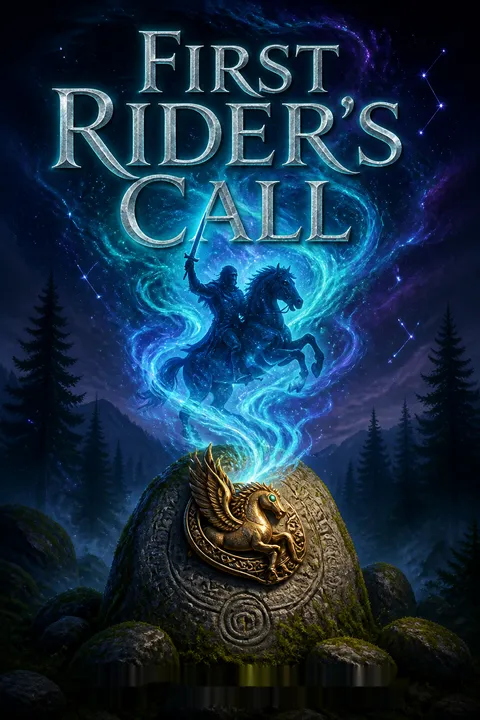


Plot Summary
Prologue
In his journal, Hadriax el Fex records an imperial voyage across the sea to lands rich in timber, fish, and magic. The expedition is led by Alessandros, heir to a failing empire, who hopes to win his father’s approval by finding resources that might save their homeland.
Hadriax, Alessandros’s loyal friend, watches the young prince grow vigorous and eager in the open air. Their arrival will bring them into contact with the Sacor Clans and the Eletians, though Hadriax does not yet understand what their expedition will unleash.
The journal begins with discovery framed as a remedy: the empire seeks new resources because its own lands are failing. That practical motive already contains the danger. Alessandros wants to serve his people, but he also wants to prove himself to an absent father, making ambition and need difficult to separate. Hadriax’s affectionate account gives the expedition a human center while quietly establishing its vulnerability: devotion to a leader can make complicity feel like loyalty. The journal’s confident description of the New Lands also prepares the reader to notice the distance between imperial self-image and the harm the newcomers will cause.
The Cairn in the Clearing
A year after finally answering the Rider call, Karigan Galadheon rides north with a royal delegation seeking contact with the elusive Eletians. She scouts ahead with senior Rider Ty Newland, and their route ends at an ancient cairn ringed by carved obelisks.
Karigan feels the place’s hostility and recognizes that its ward is weakening. She wonders whether the stones keep something inside, but Lady-Governor Penburn chooses the clearing for camp despite the bounder Brogan’s warning.
Karigan keeps her own tent away from the cairn, though the unease follows her into the night. The expedition has entered a borderland where old protections are wearing thin, and the people responsible for protecting the travelers do not yet know what the ward contains.
The cairn turns intuition into a test of authority. Karigan’s warning is not backed by evidence that a court or military hierarchy can readily accept, so her knowledge is discounted as nerves and superstition. The scene also reverses the usual meaning of a boundary: the obelisks may not be keeping danger out but containing it. By making the ward visibly ancient and measurably weak, the story grounds its supernatural threat in neglected maintenance. The delegation’s decision is therefore not simple foolishness. It reflects a political world that trusts rank and procedure more readily than embodied, uncertain knowledge.
The Ward Breaks
Karigan finds a murdered sentry beyond the picket line and races back with the warning. Groundmites overwhelm the sleeping camp, killing Lady Penburn, Bard Martin, Rider Ereal M’Farthon, and many others. Karigan’s fading ability fails against one attacker, but she kills it with her saber and fights through the chaos. Then the cairn ruptures.
The ward stones flare and shatter as a corpse-like figure in a crown of branches emerges, calls Karigan a betrayer, and vanishes. An Eletian archer drives it away, then Telagioth leads Karigan beneath the cairn. There she sees chains, broken seals, and a shattered soul-stealing sword: the cairn was a prison for a servant of Mornhavon the Black. Its escape has released an ancient danger.
The attack makes the cost of ignored warning immediate, but the disaster is larger than a tactical mistake. The ward’s failure kills defenders and attackers alike, revealing that the old magic does not distinguish between those who understand it and those who merely stand nearby. Karigan’s survival depends on improvisation after her own power fails, shifting her from messenger to combatant. The wraith’s recognition of her turns a public catastrophe into a personal mystery. Its accusation suggests that history has not ended cleanly; it has preserved grievances that the living do not remember.
The Cost of Returning
Telagioth explains that the encampment weakened the already failing wards, then warns that the breach in the distant D’Yer Wall is stirring powers on both sides. Karigan returns with the few survivors, walking much of the way because Condor is injured and the remaining horses carry wounded people. In Sacor City, she reports the wraith, the prison, and the Eletians’ warning to King Zachary.
She returns Ereal’s brooch and the melted remains of Bard’s, making their deaths tangible to Rider Captain Laren Mapstone. Grief breaks through only after Estora Coutre listens to her privately. The king, meanwhile, faces complaints from Lord-Governor D’lvary about northern refugees, unaware that the dispute will expose a deeper failure of trust.
The journey home refuses the easy shape of victory. Karigan survives, but the evidence she carries is a wounded horse, damaged relics, and news that a colleague’s magic could not save her. Her long walk also makes duty physical: she carries herself and her injuries because the living have greater immediate need of the mounts. Estora’s listening gives grief a place to emerge without turning it into weakness. Meanwhile, the refugee dispute echoes the northern disaster on a civic scale. The kingdom’s central problem is not only an enemy beyond its borders, but the difficulty of believing those who perceive danger before institutions can verify it.
Alton at the Wall
Alton D’Yer, a Green Rider and heir to the clan that built the ancient wall, travels to the breach because his family’s lost craft may be needed to repair it. The repair stones do not carry the wall’s protective magic, and cracks spread beyond them. Alton senses voices within the granite and briefly sees runes respond to his touch.
His cousin Pendric resents his inheritance and blames him for the dangers around the wall. Sergeant Westly Uxton, secretly loyal to an imperial society, sees Alton’s promise as a threat. He knocks Alton from the wall, then tells the encampment that Blackveil took him. A black vine drags the unconscious Alton into the forest, where an unseen intelligence keeps predators away and begins studying him.
Alton’s inheritance is both a resource and a burden. His clan built the wall, yet generations of lost knowledge leave him responsible for a structure he cannot simply understand through lineage. Uxton exploits that gap, recognizing that Alton’s rare capacity to communicate with stone could undo the society’s plans. Pendric’s jealousy adds a more intimate distortion: family history becomes a story in which Alton’s gifts automatically count as theft. The wall therefore gathers three kinds of inheritance, technical, political, and emotional. Each has been neglected or misread, leaving Alton exposed precisely because he is trying to repair what others have abandoned.
The Castle Remembers
Strange events spread across Sacoridia: a grove turns to stone, rainbows appear in impossible abundance, and some Riders lose control of their abilities. Captain Mapstone’s gift for detecting truth begins contradicting itself, leaving her unable to trust her own judgment.
While running errands through the castle, Karigan follows a light into abandoned corridors and witnesses scenes from the past: young Laren comforting the future King Zachary, the funeral of King Agates Sealender, and the First Rider, Lil Ambrioth, beside King Jonaeus.
The visions make the castle’s buried history seem present rather than safely concluded. Karigan returns exhausted and tells Laren what she saw. Together, the Riders begin to suspect that the failures among them belong to a larger disturbance in magic.
Karigan’s journeys make history a space she can enter, not an archive she can consult at a safe distance. The past appears in fragments, forcing her to interpret rather than master it. That uncertainty parallels Laren’s failing ability: knowledge that once seemed dependable has become intrusive and contradictory. The castle itself functions as a memory structure, its abandoned corridors preserving scenes the official record has flattened or omitted. By linking private memory, institutional history, and unstable magic, the novel suggests that the present is not insulated from what it has forgotten. Old decisions remain active when their consequences have not been understood.
A Circle of Riders
After the green light in the castle leads Karigan through visions of earlier Riders and the beginning of the Clan Wars, she returns with more questions than answers. Captain Mapstone becomes too overwhelmed by her failing ability to perform her duties, and Acting Chief Rider Mara Brennyn takes on the burden.
When Karigan tells Mara that Lil has been contacting her, Mara helps call the Riders together. Tegan admits she can no longer predict the weather; another Rider has lost his ability to pass through solid objects, while still others report changes.
Karigan explains the Eletian warning and the strange manifestations across the country. She urges the Riders to treat the disturbance as a shared problem rather than private failure. Their meeting restores solidarity, though it does not reveal how to stop the magic from changing.
The meeting changes the Riders’ response from concealment to collective observation. Their abilities are private, embodied, and tied to identity, so a failure can feel like personal inadequacy. Karigan’s intervention reframes those symptoms as evidence that belongs to everyone. Her authority here is not formal; she earns it by listening, connecting reports, and accepting responsibility for what she cannot explain. The scene also establishes a key distinction between being powerful and being useful. The Riders cannot repair the wall in this meeting, but by sharing information they make coordinated action possible. Their circle becomes a practical defense against isolation.
Lil’s Lost Battle
On a message run near Watch Hill, Karigan is pulled through time to the First Rider’s era. She witnesses Lil Ambrioth meeting Hadriax el Fex, the imperial officer who claims he wants to defect from Mornhavon. When an ambush springs, Karigan recognizes the captive Hadriax and helps him escape, using a weapon from that age.
Lil sounds the Rider call and leads her surviving companions away from the battlefield, carrying wounded and dead rather than leaving them for the enemy. Karigan remains with Lil through the retreat and sees the cost of command at close range. When the journey returns her to her own time, Eletian hunters surround her and take her from the roadside, making clear that the past has not been her only destination.
The historical episode complicates the heroic image of Lil by showing leadership as logistics, grief, and risk rather than legend alone. Karigan does not change the past through grand strategy; she makes a small intervention that helps one prisoner survive the ambush. Yet even that act makes her a participant rather than a viewer. The Riders’ care for their fallen contrasts with the empire’s willingness to treat people as expendable instruments. Karigan’s involuntary passage between eras also raises a question of responsibility: witnessing history may create obligations, even when the witness cannot know what consequences a small act will carry.
The Moon’s Reflection
The Eletians bring Karigan before Prince Jametari, whose son Shawdell she killed during an earlier conflict. Rather than seek revenge, Jametari tells her that the magic spilling through the D’Yer Wall is upsetting the balance of the world.
The Eletians depend on magic to survive, and they disagree over whether the wall’s failure would destroy the world or restore their former power. Jametari reveals that tainted wild magic from Shawdell’s attack remains inside Karigan and amplifies her ability to travel through time.
He warns that she could affect the wall’s fate and offers the Mirror of the Moon. Its visions show her father, the suffering Alton, Zachary with Estora, and a wounded future version of Karigan. She leaves with warnings, not certainty.
Jametari’s account refuses to make the Eletians a unified moral authority. Their dependence on magic gives them a legitimate fear of extinction, but some would accept mortal deaths as the price of their restoration. Karigan’s own body becomes part of that political conflict: the wound she thought healed has left her carrying the force everyone is debating. The Mirror does not solve this problem. It makes Karigan see her fear, attachment, and vulnerability as factors in her choices. The scene’s psychological pressure comes from being told that agency matters without being granted the knowledge needed to guarantee a safe decision.
The Wraith Reaches Home
While Karigan is away, the wraith reaches Rider barracks seeking the Galadheon. Mara confronts it with her fire ability, but its magic absorbs her flames. She uses the moonstone fragments Karigan kept from an Eletian gift to distract it, then sets the old wooden barracks alight to block its route. Mara escapes through a window badly burned; Rider Ephram Neddick dies in the fire.
Captain Mapstone, still incapacitated by her own gift, finds Mara outside and smothers the flames with her cloak. Gwyer Warhein, a legendary Rider, later helps Laren regain control of her ability. The fire destroys the Riders’ historic home, while the wraith’s search confirms that Karigan’s family name connects her to an enemy reaching back into the Long War.
Mara’s defense is a costly exercise of agency. When her magic fails to harm the wraith directly, she changes the conditions around it by using fire as a barrier. The choice protects the attacker’s target but destroys the place that held two centuries of Rider life. Laren’s recovery also depends on relation rather than mastery: Gwyer helps her understand her gift instead of simply suppressing it. The scene links the magical crisis to the Riders’ institutional fragility. Their home, numbers, and leadership are all under pressure, so preserving the service requires more than surviving a single attack.
The King’s Difficult Choice
King Zachary initially believes Lord-Governor D’lvary’s promise not to harm northern refugees because Laren’s truth-sensing ability confirms it. The reading is wrong: D’lvary has hired mercenaries dressed as royal soldiers to expel the families, and women and children have been abducted or abused.
When refugee Durgan Atkins brings his account to court, Laren’s ability again gives contradictory answers, and Zachary turns against her before learning her gift is failing. Meanwhile, Karigan’s return to court puts her beside the king as uncanny complaints multiply.
She helps him separate magical disturbances from ordinary grievances, including a tidal stream mistaken for sorcery. The refugee case grows into a test of whether the king can protect people his provincial rulers would rather dismiss.
The D’lvary crisis turns the novel’s concern with unreliable perception into a political emergency. Laren’s power has been treated as a shortcut to truth, so its failure damages not only her confidence but the king’s ability to govern. D’lvary’s deception is effective because it borrows the authority of the crown, making abuse look like lawful action. Zachary must therefore distinguish justice from the appearance of strength. Karigan’s practical advice during the public audience shows a complementary form of judgment: she listens for the human need beneath an impossible claim, rather than pretending every magical event has an immediate remedy.
A Rider Takes the Lead
With Laren unable to work and Chief Rider Connly away, Karigan handles schedules, supplies, and the daily needs of a depleted service. She sees how much hidden labor keeps a messenger ready to ride, while Mara struggles against military officers who treat the Riders as privileged and expendable.
Karigan convenes the Riders, gathers reports of failing or altered abilities, and urges them to support one another. Her new responsibilities draw her into the king’s meetings, where she exposes the consequences of a proposed trade monopoly that would cripple textile merchants, including her father’s business.
Zachary trusts her judgment, but she also discovers that his attention stirs feelings she has kept at a distance. The demands of leadership give her purpose while making her emotional life harder to ignore.
Karigan’s authority develops through administrative attention, not a sudden transformation into a commanding hero. She learns that the Riders’ freedom on the road depends on provisioning, scheduling, and institutional work that usually remains invisible. Her defense of the textile trade also shows how her merchant upbringing remains useful rather than something she must erase to be a Rider. At the same time, her closeness to Zachary places personal desire beside public duty. The section’s tension is not that she must choose one identity over another, but that each identity exposes her to obligations she did not freely select.
The Empire’s Hidden Hands
The strange incidents intensify, from stone figures and ruined crops to moving suits of armor inside the castle. Sergeant Uxton and chief administrator Weldon Spurlock are revealed as members of Second Empire, a secret society descended from the Arcosian forces that once served Mornhavon.
Uxton admits he pushed Alton into Blackveil and joins Spurlock in planning to seize Karigan for the force they believe is awakening. A wraith attacks the Riders’ grounds, and Spurlock recognizes its imperial sigil before treating it as a commander.
When Uxton’s accomplices lure Karigan into the abandoned Rider wing, ghosts help her escape through a snowbound corridor. Uxton and Spurlock are arrested, but fellow conspirators poison them before they can be questioned fully.
Second Empire is the human mechanism through which the ancient threat gains present-day access. Its members do not need to conquer the kingdom openly; they have survived by embedding themselves in ordinary trades and offices. Spurlock’s bureaucratic cruelty and Uxton’s military position reveal how institutions can shelter radical loyalties when oversight is weak. Their plan to deliver Karigan is especially revealing: the society sees her not as a person but as a useful object in an imperial restoration. The ghosts’ intervention reverses that logic, making the dead protect the living against a history that refuses to stay buried.
The Wall’s Great Rupture
The wall camp suffers a catastrophic surge: trees splinter, soldiers die, and the repaired section collapses again. Across Sacoridia, people and whole places vanish or turn to stone, while rivers and weather behave impossibly.
Alton remains inside the wall’s magic, believing Karigan has taught him a song that will restore it. In truth, Mornhavon has used Alton’s fever and affection to make him sing against the guardians, widening the damage. King Zachary sends Laren and a group of Riders to assess the breach.
As they approach, Karigan is increasingly trapped in Mornhavon’s influence, haunted by visions of him harming everyone she loves. At the wall, a figure wearing Alton’s face appears, and she recognizes the wraith’s deception just before the other Riders do.
The rupture makes private magical disorder a public catastrophe. The kingdom’s ordinary measures, from military patrols to royal audiences, cannot contain a force that alters geography and bodies without warning. Alton’s manipulation is especially cruel because it uses care as a tool: his love for Karigan makes the false instructions persuasive. Karigan’s recognition of the illusion is not a triumph of certainty but a fragile act of attention under psychological assault. The section moves the crisis from mystery toward confrontation, while keeping the central danger unresolved: the wall has not been repaired, and its defenders do not yet know what the enemy wants from Karigan.
Karigan Carries the Enemy
Karigan breaks from her companions and runs through the breach, drawing Mornhavon’s attention away from the camp. Lil Ambrioth links herself to Karigan’s brooch and pulls her through time, but the enemy follows inside her mind.
Realizing that Mornhavon will not leave voluntarily, Lil takes control of Karigan’s body and drives a knife into her side. Mornhavon releases his hold rather than risk losing his host. Lil then carries him farther into the future, beyond the immediate present, buying Sacoridia time.
Back in the forest, she fights and kills Varadgrim, whose body crumbles when its bond to Mornhavon ends. Karigan is left gravely wounded and freezing, while Lil struggles to get her to safety and the Riders fight the groundmites at the breach.
Lil’s plan makes the body a contested boundary. Mornhavon has treated Karigan’s memories as territory he can occupy; Lil counters by using the same shared body as a means of transport. The knife wound is not a gesture of self-sacrifice alone, but a calculated interruption of the enemy’s control. Yet the strategy places Karigan at extreme risk, and Lil’s dependence on her brooch shows that even a legendary Rider cannot act without limits. The episode reframes courage as a willingness to become the site of danger, while refusing to make that choice feel clean or costless.
The Guardians’ True Song
At the Tower of the Heavens, Karigan wakes long enough to find Alton unconscious and Pendric consumed by the wall’s voices. Pendric strikes her and collapses as the guardians claim his soul into the wall.
An Eletian hunter tries to kill Karigan, convinced she endangers the barrier, but she slips through time and survives the arrow. Inside the tower, Merdigen reveals that Alton’s song has worsened the breach. When the illusion controlling Alton breaks, he understands he has been deceived and stops singing the false melody.
He tries to find the guardians’ true rhythm, while the others bring both Riders out of the passage and keep them alive. The wall remains damaged, but the truth of Alton’s failure gives its defenders a real path toward repair.
The tower turns the conflict from physical defense to interpretation. Alton’s skill is real, but skill directed by false information becomes an instrument of destruction. His recovery begins when he can acknowledge that his actions have caused harm, rather than defending his intention as proof of innocence. Pendric’s fate provides a darker counterpart: unable to live with jealousy and the voices in his mind, he yields himself to the wall. The Eletian hunter’s attack further complicates the idea of protection, since fear of contamination can make a would-be guardian destructive. The wall’s future depends on learning to distinguish the living harmony from its counterfeit.
A Name Beneath the Brooch
Back in Sacor City, the witnesses of D’lvary’s crimes persuade the lord-governors to strip him of title and wealth and exile him to the northern border. Zachary agrees to a marriage contract with Estora, subject to her consent, and Karigan realizes her feelings for him cannot alter the political bargain.
A manuscript from Selium then identifies Hadriax el Fex as Hadriax Galadheon, the founder of her family line. Karigan fears his imperial crimes define her, but Lil reminds her that his later choices also belong to his history.
With the Riders, Karigan commemorates their fallen and displays rediscovered artifacts, including Lil’s banner and horn. When mender Ben answers the Rider call, the diminished service gains a new member and a renewed link to its past.
The ending resolves immediate questions without pretending that history or grief has been settled. D’lvary faces consequences, but the northern danger remains; Zachary chooses political stability, while Karigan must accept that love cannot override rank and public obligation. The Galadheon revelation makes ancestry another inheritance she has to interpret rather than simply accept. The Rider ceremony offers a response grounded in practice: remembering the dead, restoring artifacts, and welcoming a new member. Ben’s arrival does not replace those lost, but it prevents loss from becoming extinction. The book closes on continuity as work, not reassurance.
Analysis
First Rider’s Call treats memory as a form of infrastructure. The D’Yer Wall is not simply a barrier; it is a public good whose protection depends on knowledge being transmitted across generations. When that knowledge decays, the cost is borne by people who never chose to inherit the danger. The same pattern appears in the Green Riders, whose history survives through brooches, songs, artifacts, and relationships rather than reliable archives. Karigan’s temporal journeys expose what official memory leaves out, but seeing the past does not make her omniscient. She must still interpret it, and the novel repeatedly shows how easily love, fear, and inherited loyalties can distort interpretation.
The book also challenges the idea that duty is freely chosen. Karigan resisted becoming a Rider, Alton is pulled between clan and crown, Estora is treated as a political asset, and Zachary must weigh private feeling against the stability of the realm. Their different constraints prevent a simple division between freedom and obligation. What matters is how each person responds to the obligations they cannot evade. Karigan’s growth is not a rejection of fear or attachment; it is her gradual willingness to act while admitting both.
Magic makes this ethical problem literal. Abilities are intimate and useful, but they are not reliable guarantees of truth or control. Laren’s truth-sensing fails at the moment the kingdom most needs it. Alton’s stone-working becomes dangerous when he follows a false song. Karigan’s wild magic lets an enemy enter her memories, yet also provides the means to remove him from the present. Power is therefore neither pure gift nor simple corruption. It depends on knowledge, judgment, and the relationships that help people recognize when they have been deceived.
The closing Rider ceremony offers no promise that the danger is over. Instead, it restores continuity through mourning and the arrival of a new Rider. The past is neither erased nor allowed to rule unchallenged. It becomes a responsibility the living must keep revising together.
Review Summary
First Rider's Call receives a 4.22 average rating from readers who praise the improved writing and deeper world-building compared to the first book. Many appreciate the time-travel elements, darker tone, and character development, particularly the historical insights into the Green Riders. Common criticisms include slow pacing, excessive length, fantasy clichés reminiscent of Tolkien, and protagonist Karigan's stubborn personality. Some reviewers note the romance feels melodramatic while others find it compelling. Despite mixed opinions on characterization and plotting, most readers enjoyed the story enough to continue the series.
People Also Read
Characters
Karigan Galadheon
The reluctant Green RiderKarigan is the daughter of a successful merchant family who once resisted the magical call to become a Green Rider. Practical, candid, and often impatient with ceremony, she has a strong instinct for danger and a harder time trusting her own judgment when others dismiss it. Her loyalty is expressed through action: she scouts, carries messages, protects companions, and notices needs that rank can overlook. She remains connected to her family’s commercial world even as Rider duty reshapes her life. Her capacity for courage coexists with fear, grief, and a desire for ordinary affection, giving her a more human measure of responsibility than the legends surrounding the Riders.
Alton D’Yer
The wall’s reluctant heirAlton is a Green Rider and heir to Clan D’Yer, whose ancestors built the great wall around Blackveil. His family expects him to carry clan responsibilities, while his Rider vocation places him in the king’s service. Thoughtful and technically minded, he is drawn to the wall both by duty and by a sense that it is calling him personally. He wants to restore his clan’s lost knowledge and protect Sacoridia, but his confidence in disciplined effort can make him vulnerable to anyone who appears to offer instruction. His relationships with Karigan and his family are shaped by affection, inherited expectations, and the strain of being absent when others believe he should be present.
Laren Mapstone
The burdened Rider captainLaren leads the Green Riders and serves as one of King Zachary’s closest advisers. Her truth-sensing ability has made her a trusted interpreter of people, but it also makes her responsible for judgments with political consequences. She is disciplined, protective, and accustomed to carrying the service’s burdens without complaint. Her long relationship with Zachary gives her unusual access to the king’s private concerns, while her responsibility to the Riders limits how freely she can act as his friend. Laren’s reserve is not coldness; it is a practiced means of containing grief and keeping decisions possible under pressure.
King Zachary Hillander
The listening monarchZachary is a young king trying to preserve a unified kingdom whose provincial rulers possess considerable independent power. He believes the crown must protect people who have no lord to speak for them, even when that position risks angering wealthy governors. Publicly measured and privately compassionate, he uses patience as a governing tool, though it does not spare him from difficult choices. Laren is his trusted counselor, and Karigan’s directness gives him a different kind of perspective. His personal hopes remain entangled with questions of succession, political stability, and the duties attached to the throne.
Lil Ambriodhe
The First RiderLil is the legendary First Rider, a commander whose stories have been repeated so often that history has made her seem larger than life. In her own time she is a practical leader, quick to assess danger and unwilling to abandon wounded companions. She carries the costs of war without mistaking endurance for invulnerability. Her bond with the Riders is both personal and institutional: she knows their names, leads them in mourning, and treats their shared service as something that must survive individual loss. Her connection to Karigan spans time and is expressed through a distinctive Rider brooch.
Mornhavon the Black
The buried imperial powerMornhavon is the ancient enemy whose forces once tried to conquer the Sacor Clans and the Eletians. His ambitions combine political domination with a conviction that power gives him the right to remake life. Though associated with the past, his influence can act through magic, memory, and those who serve his cause. He is most dangerous when he understands what people love and uses that knowledge to manipulate them. His long presence in the story makes historical evil more than a matter of old battles: it remains active wherever institutions preserve its ideals or individuals mistake control for care.
Hadriax el Fex
The imperial chroniclerHadriax begins as a soldier and adviser in the service of Alessandros, the heir to the Arcosian Empire. His journal offers a personal record of the expedition that brings the empire into contact with Sacoridia and the Eletians. Loyal by temperament and deeply attached to Alessandros, Hadriax is also capable of observing the harm that loyalty allows. His account is valuable because it records events from inside the imperial camp, where public justifications and private doubts do not always match. He is a reminder that history is often preserved by people who were implicated in what they describe.
Mara Brennyn
The flame-wielding RiderMara is a capable Green Rider whose fire ability makes her unusually powerful in a crisis. She often supports Laren’s work and takes on additional administrative responsibility when the service is short-handed. Her practical humor helps the Riders endure pressure, but she can underestimate how much she is carrying. Mara’s loyalty is shown through work and protection rather than grand speeches, and she is willing to put herself between a threat and the people in her care.
Estora Coutre
The observant provincial heirEstora is the heir to Coutre Province, raised to understand court etiquette, political alliances, and the expectations attached to her rank. Her beauty draws attention, but she is more perceptive than the men who treat her as a prize for marriage. She listens carefully and reads the feelings people try to conceal, making her a rare confidante for Karigan. Her past relationship with Rider F’ryan Coblebay has taught her that affection and social permission do not always coincide. She wants to be treated as a person, even while her family’s plans make her future a matter of state.
Ty Newland
Karigan’s exacting mentorTy is a senior Green Rider known for precision, discipline, and a careful approach to fieldwork. He mentors Karigan while respecting her growing competence, though his confidence in established procedure can make him slow to trust impressions that cannot be verified. His bond with his messenger horse, Flicker, reflects the intimacy and dependence built into Rider life. Ty rarely wears his feelings openly, but his actions show how deeply he values colleagues and the responsibilities they share.
Ereal M’Farthon
The steadfast Rider lieutenantEreal is a senior Rider and officer who watches over younger colleagues, including Karigan. She possesses a practical command style and a talent for moving objects with her mind. Her partnership with the fast messenger horse Crane is admired among the Riders, and their competitive races have become part of the service’s informal lore. Ereal’s care is direct rather than sentimental: she expects Riders to report what they observe and supports them when doing so is difficult.
Bard Martin
The Riders’ singing storytellerBard is a Green Rider who makes songs and tales out of the service’s daily hardships. His humor softens tense moments, and his reports are shaped by a wish to give the absent Laren something of the road. He once worked as a cooper and still hopes to study music at Selium. Bard is an attentive friend, ready to make light of his own shortcomings while noticing when another Rider needs company.
Telagioth
The Eletian hunterTelagioth is an Eletian hunter and leader of the tiendan, a people who serve their king. His first duty is observation and protection, not diplomacy, which helps explain his reserve toward Sacoridia. He speaks carefully and reveals information only when he considers it necessary. Telagioth’s manner is neither openly hostile nor warmly reassuring; he approaches Karigan as someone whose significance may exceed her own understanding.
Jametari
The prescient Eletian princeJametari is an Eletian prince whose people’s declining numbers and dependence on magic shape his view of the crisis. He carries a long perspective unavailable to short-lived mortals, yet his knowledge does not grant certainty about the future. He speaks of Eletian history, the loss of Argenthyne, and the possible consequences of the wall’s failure. His reserve reflects both political caution and grief for a people whose survival may depend on choices made by outsiders.
Garth Bowen
The generous Rider giantGarth is a large, warm-hearted Green Rider known for his broad humor and quick temper when provoked. He often acts as a source of physical help and morale among the Riders, and his horse Chickadee is a familiar presence in the service. Under his joking manner is a dependable colleague who takes friendship seriously. Garth’s practical kindness shows in his readiness to help with difficult work and make a place more welcoming for others.
Tegan Oldbrine
The weather-reading RiderTegan is a Green Rider whose ability lets her sense coming weather, a useful gift for messengers who must travel in all conditions. She is playful and known for elaborate practical jokes, especially at Garth’s expense. Her humor is a form of fellowship, not malice, and she is close enough to her fellow Riders to tease them without diminishing their trust. Tegan’s self-image is bound partly to a gift that makes her useful, which leaves her vulnerable when that ability becomes unreliable.
Pendric D’Yer
The resentful D’Yer cousinPendric is Alton’s cousin, a capable member of Clan D’Yer who lives close to the province’s daily responsibilities. He feels overlooked beside an heir whose Rider service keeps him away from home. Pendric’s resentment is fed by social comparison and by a painful sense that others receive affection and admiration more easily. He is not simply jealous of Alton’s rank; he is struggling to imagine a self-worth that does not depend on being chosen over someone else.
Weldon Spurlock
The petty chief administratorSpurlock is the chief administrator, a small official who uses his position to intimidate clerks and indulge a sense of superiority. He considers himself more capable than the people who command him and resents being treated as a minor bureaucrat. His ambition is strengthened by an inherited political identity that gives his private grievances a larger cause. Spurlock’s ordinary cruelty is important to his character: he practices domination in small offices before imagining it on a national scale.
Westly Uxton
The double-loyalty sergeantUxton serves among the soldiers guarding the D’Yer Wall and presents himself as a blunt, dependable sergeant. Beneath that role he holds loyalties that conflict with his uniform and position. He is practical enough to keep his explanations close to observable facts, but ambitious enough to treat other people as obstacles to a cause. His betrayal grows from a willingness to make private allegiance more important than public responsibility.
Merdigen
The tower’s old guardianMerdigen is a magical projection in the Tower of the Heavens, charged with assisting those who maintain the wall. Cantankerous, talkative, and fond of his unfinished game of Intrigue, he has remained isolated for centuries. His knowledge is considerable but specialized, and his personality makes it clear that a guardian is more than a store of instructions. Merdigen represents the expertise preserved by old systems, along with the difficulty of recovering it after the people meant to use it have forgotten how.
Stevic G’ladheon
Karigan’s merchant fatherStevic is a successful merchant whose trade supplies the Green Riders with cloth and equipment. He loves Karigan and struggles to accept that her life has taken a path far from the family business he hoped she would inherit. His concern can become protective, but beneath it is grief shaped by earlier family loss. Stevic’s correspondence shows a man trying to reconcile pride in his daughter’s service with the fear of losing her to a dangerous vocation.
Condor
Karigan’s steadfast horseCondor is Karigan’s scarred chestnut messenger horse, ungainly by ordinary standards but intelligent and deeply bonded to his Rider. He offers her comfort without asking her to explain herself, and he responds to dangers she cannot yet identify. His stubbornness and appetite give him a comic everyday presence, while his loyalty represents the trust at the heart of a Rider’s partnership with a horse.
Fastion
The watchful WeaponFastion is a Weapon assigned to protect the king. He is alert, composed, and skilled at moving through the castle unnoticed. His knowledge of abandoned corridors makes him a useful guide, and his curiosity about unusual discoveries occasionally shows through his disciplined reserve.
Estral Andovian
Karigan’s minstrel friendEstral is a journeyman minstrel at Selium and one of Karigan’s friends. She is curious about history and works among the archives, where she helps uncover an old manuscript. Her letters connect Karigan to the scholarly world beyond the castle and show her habit of sharing discoveries with friends.
Ben
The mender called to rideBen is a newly appointed mender who works under Master Mender Destarion. He is conscientious, cautious, and not especially comfortable with sudden changes to his life. His medical training and practical concern for patients make him a useful presence in the castle’s healing wing.
Plot Devices
The Rider brooch
Call, bond, and inheritanceThe golden winged horse brooch marks a Green Rider and binds the wearer to the messenger service. It helps awaken each Rider’s distinctive ability and can connect its bearer to Riders across time. Karigan’s brooch is also linked to Lil Ambriodhe, making their contact possible and giving Karigan access to the Rider past. The brooch is not merely a badge: it makes the service’s history physically present, passing from one generation to another while the number of living Riders dwindles.
The D’Yer Wall
Containment and failing memoryThe magical wall was built by Clan D’Yer to hold back Blackveil Forest. Its visible stonework is only part of the structure, which also depends on an ancient magical system and guardians whose knowledge has been lost. When a breach weakens the barrier, wild magic spills into Sacoridia and disturbs nature, people, and Rider abilities. Alton’s attempt to repair it becomes central to the crisis, but the wall cannot be fixed by stonework alone. It represents both a defense and the cost of generations forgetting how that defense works.
The Mirror of the Moon
A vision without certaintyThe Eletians preserve a small amount of water from the lost lake Indura Luin, called the Mirror of the Moon. Prince Jametari uses it to show Karigan images of her father, Alton, Zachary, Estora, and a possible future in which she is wounded. The water can also reveal the one who looks into it, exposing Karigan’s fears beneath her sense of duty. Its visions are meaningful but not definitive, because the future remains changeable and the mirror’s images may not be safely one-way.
Hadriax’s journal
History from inside the empireThe journal of Hadriax el Fex appears between the main narrative’s events, recording the Arcosian expedition and its transformation into a violent campaign. It complicates the history told by the Sacor Clans because Hadriax writes as an imperial officer who loves Alessandros even while witnessing the harm he causes. The manuscript eventually connects the ancient conflict to Karigan’s family line. It makes history intimate and compromised: the record is not written by an innocent observer, but by someone who must decide what loyalty means.
The temporal journey
Memory made traversableKarigan’s Rider ability, augmented by tainted wild magic, allows her to pass through layers of time. She witnesses scenes involving Lil, King Jonaeus, and the beginnings of the Clan Wars, and can sometimes affect events with objects from the era she visits. The journeys give her access to history that ordinary records have lost, but they are physically draining and difficult to control. The same mechanism becomes strategically important when Lil uses Karigan’s connection to the brooch to move Mornhavon away from the immediate present.
Green Rider Series
About the Author
Other books by Kristen Britain
Download PDF
Download EPUB
.epub digital book format is ideal for reading ebooks on phones, tablets, and e-readers.








