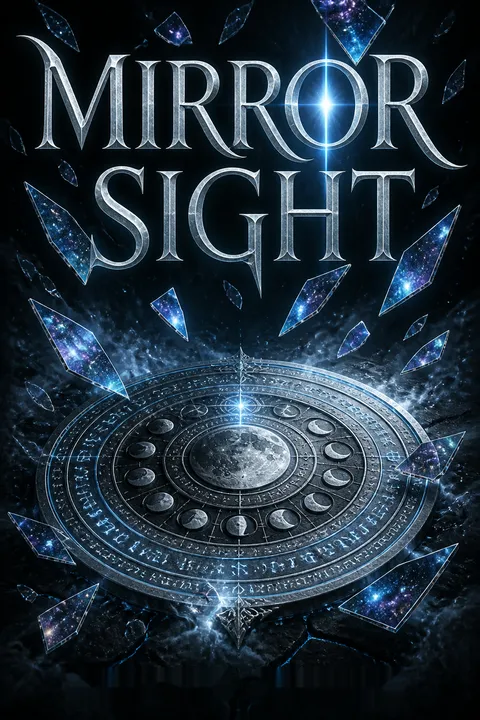


Plot Summary
The Sarcophagus Circus
After shattering the looking mask in Blackveil, Green Rider Karigan G’ladheon wakes inside a stone coffin, suffocating and badly injured. Circus workers pry it open before a startled audience, then drag her backstage as a supposed trick. When the ringmaster threatens her, Karigan uses her bonewood staff to fend him off and escapes into the night.
The streets outside are strange, smoky, and unnervingly orderly. Her magic will not work, and a gang corners her in an alley. A hooded stranger drives them away, then knocks her unconscious with a drugged cloth. She wakes in the house of Professor Bryce Lowell Josston, who has arranged medical care and calls himself her uncle, though she does not trust him.
The novel makes dislocation physical before it makes it historical. Karigan first experiences the future as a sealed coffin, a public spectacle, and a body she cannot command through magic. Her instinctive resistance keeps her alive, but the rescue that follows replaces one form of confinement with another. The circus turns her survival into entertainment, while the professor’s household wraps control in care. That tension becomes the story’s central pressure: Karigan needs protection, yet any shelter that denies her agency threatens to become another tomb.
A Name for the Future
The professor identifies himself as Bryce Lowell Josston, an archeologist who studies objects from the past. He claims Karigan as his niece, Kari Goodgrave, and warns her that the empire forbids the history she remembers.
When she names King Zachary and his betrothed, Josston tells her they lived nearly two centuries ago. The former Sacoridia is now the Imperial Seat of the Serpentine Empire. Karigan suspects Mornhavon conquered her homeland, but Josston has only fragments of the truth.
He hides her under a false asylum history, for an Inspector’s mechanical patrols the streets and the empire punishes dissent. Injured, stripped of her belongings, and far from any familiar authority, Karigan accepts the professor’s protection while searching for a way home.
A false identity offers Karigan safety by making the truth socially unbelievable. The professor’s lie is protective, but it also establishes the unequal bargain that will keep recurring: he controls what others know, while she depends on his knowledge of the present. Her name is more than a personal marker here. It belongs to a forbidden history, so suppressing it means suppressing the political possibility that the empire is not eternal.
The City Underfoot
As she recovers, Karigan explores the professor’s house, studies its strange plumbing and phosphorene lamps, and learns that mill bells schedule enslaved workers. A ghostly figure appears to write in her room, while a pale cat watches from the window. One night she follows Cade Harlowe, Josston’s guarded student, through a bookcase hidden behind a dragon sculpture.
Beneath the house lies a preserved street from Sacor City, including the Cock and Hen and the shops Karigan once knew. The old city is entombed beneath Mill City, and a stairway leads from its ruins into an abandoned mill. Josston keeps a secret archive there, preserving forbidden objects and organizing a cautious opposition to the empire.
Karigan’s first real contact with home is not a living person but a buried street. The physical layering of Mill City over Sacor City makes imperial power visible: the new order has not merely replaced the old one, it has built its daily life on top of it. Josston’s archive resists erasure, yet it also reveals the limits of preservation. Objects can survive underground while the people and institutions that gave them meaning disappear.
Raven Chooses Karigan
On her first outing, Karigan sees branded slaves and learns that the empire’s rules control women’s dress, movement, and public appearance. At a crowded horse market, a black bay stallion bucks against his handler as an Inspector prepares to shoot him. Karigan steps forward, calms the horse, and recognizes a bond beyond ordinary horsemanship.
She names him Raven, though his owner, Dr. Ezra Silk, calls him Samson and says he has killed a hostler. Josston buys the stallion rather than let him go to slaughter, and Karigan begins secretly exercising him in a boy’s clothes. Raven becomes a living link to her Rider life, while his fear of whips reveals what Silk’s servants have done to him.
Raven gives Karigan a relationship that does not depend on shared language, social rank, or historical knowledge. His response to her revives the Rider identity the empire’s world cannot recognize. At the same time, the horse exposes how this society converts living beings into property: Silk sees an unmanageable animal, while Karigan sees fear shaped by abuse. Her care for Raven is not a detour from the political story. It is the first concrete refusal of the empire’s habit of treating life as replaceable.
The Fallen Kingdom
Josston shows Karigan the ruins of Sacor City and explains that King Zachary died leading his troops against the Second Empire. A diary describes unknown weapons destroying the city and its defenses, while the professor’s research points to a lost artifact called the dragonfly device. His atlas names the emperor as Xandis Pierce Amberhill, the Sacoridian noble Karigan once knew.
On Yolandhe’s island, the shipwrecked servant Yap returns stolen treasure by vomiting it up at the sea witch’s command. Amberhill, washed ashore, discovers an ancient ring and a ship king’s hoard; Yolandhe identifies him as the sea king reborn. The ring returns to his finger after he tries to refuse it, joining his fate to a power he does not understand.
The revelation destabilizes Karigan’s moral map. Amberhill was once irritating and ambitious, but the ruins make him responsible for a catastrophe beyond anything she imagined. The parallel island story supplies an origin for his imperial symbol and a possible source of the conqueror’s power, while Amberhill’s refusal of the ring suggests that identity may be imposed as much as chosen. The dragonfly device becomes the counterweight to that power, but nobody yet knows whether it is real or how it works.
The Heir and the Weapon
Karigan’s ghostly visions begin connecting her to the past. She sees Yates Cardell, her dead companion from Blackveil, sketching in her room, and later glimpses her horse Condor through a shard of the looking mask. Meanwhile, Arhys, the professor’s spoiled young ward, lashes Raven with a whip and nearly gets crushed beneath his hooves.
Karigan pulls the child clear, prompting Josston to reveal that Arhys descends from King Zachary and Queen Estora and may inherit the old throne. Karigan promises to guard her. She also confronts Cade about his clumsy sword training. He accepts her instruction, and their lessons expose how thoroughly the empire has taught him to doubt women’s abilities and his own inherited traditions.
The episode changes Karigan’s relation to the future: it is no longer only a ruined homeland but a child who carries its political continuity. Arhys’s recklessness shows how protection without boundaries can damage the person it intends to preserve. Karigan’s intervention also makes her more than a rescued guest in Josston’s house. Through training, she gives Cade a practical experience of a history that his education has deliberately diminished, and he begins to trust what he can see over what he has been taught.
Silk’s Circus of Power
At Dr. Silk’s lavish circus party, Karigan sees her own saber displayed among relics taken from Blackveil. Silk then exhibits a stuffed p’ehdrose, a blood-feeding hummingbird swarm, and, as his final attraction, Lhean, the Eletian companion who vanished when the looking mask shattered. Lhean recognizes Karigan through the cage, but Cade pulls her away before Silk connects them.
The image trapper’s portrait of Karigan comes out nearly transparent, with a ghostly hand across her shoulder, while Yates’s apparition briefly appears in the camera’s view. The next morning, reports say Silk will move the Eletian to the capital. Karigan now has a living companion to rescue, but the professor fears an attempt will expose his entire opposition.
Silk’s entertainment makes imperial power a performance: ancient bodies and living captives become possessions displayed for the pleasure of the favored. Karigan’s saber, removed from its original context, is treated as evidence of a vanished civilization rather than a weapon that still belongs to her. The failed portrait introduces a different kind of resistance. The camera cannot fully fix Karigan in the present, and Yates’s presence suggests that memory itself can interfere with the empire’s effort to classify and own what it captures.
The Heroes Portal
A cat named Scruffy brings Karigan a note bearing Captain Mapstone’s handwriting and directing her to the hidden Heroes Portal. She rides Raven through the night, only to be challenged at the tomb entrance by armed Weapons who mistake Cade, following her, for a threat. Chief caretaker Chelsa verifies Karigan’s identity with a drawing Yates made long ago.
Inside, Chelsa passes on a second message: a riddle about a captive crescent moon, a forgotten prison, and a shadow’s blade. Cade earns the Weapons’ trust by opening the Portal, a test that marks him as a potential Black Shield. Karigan leaves with no direct route home, but the tombs confirm that her past has survived in secret.
The tombs contrast with Josston’s archive because they preserve not just objects but a living practice of memory. The caretakers’ customs have allowed a hidden community to continue under the empire’s gaze, while the Portal tests whether Cade can be trusted with that inheritance. The message does not provide comfort in the form of instructions. It gives Karigan a task she must interpret, making memory an active responsibility rather than a storehouse of answers.
The Professor’s Last Secret
Karigan discovers that the professor’s opposition is planning to sabotage Silk’s drill, which is boring toward the royal tombs in search of the dragonfly device. Josston refuses to help rescue Lhean, fearing the empire’s retaliation, and Karigan decides to act without him.
When she slips into the archive to reclaim her belongings, Josston catches her and injects her with morphia to prevent her leaving. Cade finds her unconscious and confronts his mentor. Inspectors then batter into the mill, forcing Cade to carry Karigan through an abandoned tailrace tunnel toward the river.
Josston floods the mill with phosphorene and detonates stored black powder, destroying his artifacts and himself rather than let the empire seize them. The fire also gives the rebels a brief opening to move.
Josston’s betrayal grows out of the same fear that once made his protection valuable. He has spent years defending fragile remnants from change, and when Karigan threatens to alter his carefully managed resistance, he tries to control her body rather than persuade her. Cade’s rejection of that choice marks a break from paternal authority. The professor’s final act is both resistance and self-punishment: he destroys the archive he loved, unable to imagine a future that does not depend on preserving the past.
The Witch Beneath Gossham
As Karigan and Cade escape the burning mill, a separate thread reveals that the sea witch Yolandhe has been imprisoned beneath the imperial palace for more than a century. Webster Silk visits her after she announces that her beloved will rise before the expected ten-year interval. The warning unsettles the Adherents, including his son Ezra, who hopes to win the emperor’s favor by presenting Lhean.
On Yolandhe’s island, Amberhill’s ring awakens memories of the ancient sea king Akarion, and Yolandhe leads him to a presence beneath the water. When he focuses on the ruby, vast hidden creatures open their eyes. The empire’s strength rests on powers older than its machinery, and the ruler may be a vessel for more than one will.
These interludes widen the story’s sense of history beyond a simple contest between past and future. The empire’s machines are not merely technological progress; they are built over older forces that have been captured, drained, and repurposed. Amberhill’s divided memory makes sovereignty unstable even inside the emperor himself. Yolandhe’s imprisonment mirrors Karigan’s confinement, but unlike Karigan, she has been systematically stripped of sight, voice, and bodily autonomy. Her warning foreshadows a power the state has not actually mastered.
Mill City Rises
Cade and Karigan travel toward Gossham disguised as servants to vintner Stanton Mayforte, with Luke driving the wagon and Raven following. In roadside rooms, Karigan fights the lingering effects of Josston’s morphia, while she and Cade acknowledge their attraction and eventually become lovers.
Cade has organized a Mill City uprising: workers plan to free slaves and seize key imperial sites, creating a diversion for their arrival at the capital. The empire withholds the bells that signal the mills’ return to work, exposing the plan.
Mirriam and Jax are arrested, and enslaved workers who attack their overseers are met by gunfire. Cade’s attempt to buy time has brought real people into danger, and he carries the responsibility with him toward Gossham.
Cade’s leadership begins when he stops treating resistance as a circle of careful conversations and accepts the risk of action. Yet the failed uprising reveals the asymmetry between a clandestine network and a state that controls time, labor, and communication. Karigan’s intimacy with Cade offers relief from exile, but it also deepens her fear of losing him. Their shared purpose is not romantic rescue alone: each has begun to imagine a future that might be made livable for others.
The Palace Trap
The travelers reach Gossham and enter the palace under Luke’s forged identity, but the invitation is a trap. In Webster Silk’s chambers, Inquisitor Starling reveals that Luke has been forced to cooperate to protect his family.
Cade resists arrest, knocks down two guards, and is shot in the shoulder. Starling takes him for interrogation. Karigan remains in the courtyard with Raven, where Amberhill recognizes her as the vanishing messenger from his past, though his shifting manner suggests other personalities within him.
When Webster exposes her disguise, Karigan confronts the emperor over Sacoridia’s destruction. She is struck by the Eternal Guardian and imprisoned. Luke is killed after Starling shows him his son’s severed head, then threatens the rest of his family.
The palace reveals how the empire turns private attachments into instruments of control. Luke’s betrayal is not an absence of loyalty but the result of a regime that makes family safety conditional on collaboration. Cade’s wound and Karigan’s capture expose the cost of their plan, while Amberhill’s recognition complicates the image of a single, self-possessed tyrant. Memory surfaces in him, but not as moral repair. Recognition alone cannot undo the violence he commands.
A Door Beneath the Palace
Dr. Silk questions Karigan and learns her identity, then takes her to the laboratory where Lhean is caged. She bargains to see Cade and uses the meeting to assess how badly he has been hurt. Meanwhile, Starling tries to break Cade by threatening Karigan and showing him Yolandhe, tortured and chained beneath the palace.
Cade refuses to name his allies. When he later returns with Fastion, the Eternal Guardian’s loyalty shifts openly to the old realm. Fastion kills the Scarlet Guards as Cade unlocks Yolandhe’s restraints.
She regains her voice and power at once, healing Fastion after Starling shoots him. Water surges through the palace’s hidden turbines and corridors. Cade leaves to find Karigan, while the freed goddess turns the empire’s own water system against it.
The prison scene makes the empire’s violence intimate rather than abstract. Starling uses Yolandhe as a forecast of what could happen to Karigan, hoping fear will make Cade surrender others. Instead, the sight clarifies what Cade’s new allegiance demands. Fastion’s choice also resolves the contradiction in his role: he has served the emperor’s household to limit greater harm, but the old oath remains alive. Their rescue does not tame Yolandhe. It releases an ancient power whose justice will be as dangerous as the system she opposes.
The Moon’s Hidden Door
Using her fading ability, Karigan slips through palace corridors with Dr. Silk as her unwilling guide. She reaches the Imperial Museum and discovers that its deepest hall contains the Eletian moondial removed from Castle Argenthyne, along with her old companions’ equipment and a case of moonstones.
A vision from Yates shows Laurelyn carrying a crescent moon called the ice-glazed moon, and Karigan realizes the moondial may provide the path home promised by Captain Mapstone’s riddle. Cade escapes Starling and reaches her with Lhean, while Fastion goes to free Arhys and Lorine. When guards break into the museum, Karigan and Cade fight their way toward the moondial. Yolandhe’s rising power shakes the palace as Lhean prepares the crossing.
The museum is both a prison of objects and a map of what the empire has taken. The moondial’s presence turns the museum from a static collection into a possible exit, but only because Karigan can connect its symbols to memories the empire cannot interpret. Yates’s drawings act as a bridge between the dead and the living, offering guidance without explanation. The rescue remains collective: Karigan has the threshold-crossing ability, but Lhean supplies knowledge and Cade supplies the will to stay beside her.
The Sea Kings Awaken
Yolandhe reaches Amberhill in the throne room as her release destabilizes the palace’s water-powered machinery. She confronts the force inside him, while storms and floods spread through Gossham and the wider empire. The hidden sea creatures awakened by Amberhill’s ring rise from harbor, lake, and earth, attacking mills, towns, and imperial defenses.
At the same time, Lhean positions Karigan as the moondial’s gnomon, and the three prepare to cross into her own time. The threshold opens, but Cade cannot pass with her. He lets go rather than hold Karigan back. As she and Lhean reach the familiar streets of Corsa, Westrion seizes Karigan again and hurls her through the heavens, leaving her fate uncertain.
The climax overturns the empire through the very resources it has concentrated and controlled: water, etherea, and the sleeping creatures beneath its territory. Yolandhe’s revenge is not clean liberation; it threatens lives across the empire, including people who never chose its rule. Karigan’s return is similarly costly. She reaches home only by losing Cade, and the gods’ intervention makes clear that survival does not equal control. Every victory in this book carries a remainder that the victor cannot simply set down.
Home in Winter
Karigan crashes into the castle during the winter solstice feast, carrying mirror shards in her body and unable at first to remember the future clearly. Captain Mapstone and the king recognize her, while menders treat her wounds and discover that one eye has become silver, a mirror that can show distant images. Karigan’s return has changed events: Estora is carrying twins, and Lhean arrived ahead of her with the bonewood.
As Karigan’s memories begin to fade because the future she experienced may no longer exist, she covers her room in notes. Yates’s journal reaches her, including portraits of the people she left behind. His drawing of Cade restores the memory of their shared life, letting her mourn him without losing him to forgetfulness.
The ending resists a simple homecoming. Karigan is physically returned to the place she longed for, but her altered eye and fading memories make her arrival another threshold rather than a restoration of the old self. The changed pregnancy hints that her actions have already reshaped the present, though the consequences remain unknown. Yates’s portrait gives memory a material form: it cannot bring Cade back, but it keeps him from becoming an erased possibility. The novel closes on survival joined to grief, with Karigan carrying evidence of a future that may no longer be.
Analysis
Mirror Sight treats history as something people fight over materially. The empire does not merely tell false stories about the past; it buries the old city, confiscates relics, enslaves descendants, and turns captured beings into exhibits. Josston’s archive and the caretakers’ tombs resist this erasure, but the novel also questions whether preservation alone can change political conditions. Josston protects artifacts so fiercely that he eventually tries to control Karigan herself. Cade’s break with him marks the difference between guarding evidence and acting on what it proves.
Karigan’s displacement makes historical knowledge intimate. She sees the destruction of her own city, the death of the king she loves, and a future where the descendants of her people live under laws she could scarcely imagine. Her task is not simply to learn what happened, but to decide what responsibility follows from knowing. That responsibility is complicated by time: her return changes events, and the future she experienced begins to dissolve from memory. Yates’s drawings become a fragile countermeasure, preserving people whom history might otherwise erase twice.
The book also links power to bodily control. The empire regulates women’s clothing and movement, turns slaves into labor, and treats Karigan, Lhean, and Yolandhe as valuable specimens. Against that system, care becomes a political act: Karigan protects Raven, Cade refuses to surrender his companions, and Lorine chooses to help despite the risks. Yet the ending refuses an easy moral victory. Yolandhe’s liberation unleashes forces that threaten the innocent as well as the guilty, while Karigan’s journey home costs her Cade and nearly costs her memory. The central question is therefore not whether the past can be recovered intact, but whether people can use what survives to choose a less brutal future.
Review Summary
Mirror Sight received polarized reviews, averaging 3.9 stars. Many longtime fans were disappointed, calling it a "filler book" that deviates from the beloved Green Rider series into steampunk territory. Critics felt the 200-year time jump made 700+ pages irrelevant since events get erased. Common complaints included Karigan acting out-of-character, forced romance with Cade, lack of series progression, and minimal appearance of established characters. However, some readers appreciated the world-building, character development, and focus on Karigan herself, rating it highly as a standalone work despite acknowledging disappointment regarding unanswered questions.
People Also Read
Characters
Karigan G’ladheon
The displaced Green RiderA king’s messenger and swordmaster initiate, Karigan is resourceful, impatient with confinement, and inclined to act when others are still weighing risks. Her loyalty to Sacoridia is practical rather than ceremonial: she rides dangerous errands, protects people in immediate danger, and treats animals as partners rather than tools. She is also emotionally guarded, often setting aside private longing so she can perform her duty. Her ability to cross thresholds makes her an unusual witness to history, but not an all-powerful one. She can be frightened, injured, lonely, and mistaken. What drives her is the conviction that care and responsibility require action, even when the cost falls on her.
Cade Harlowe
The professor’s guarded studentCade is a poor student of archeology who has survived by discipline, concealment, and careful observation. He is quiet and skeptical, but his reserve hides a deep need for belonging and purpose. Josston has offered him education and a substitute family, while the old traditions of the Black Shields give him a role larger than survival. Cade initially accepts the gender rules and historical limits of the empire because they are all he has known. Karigan’s example makes those limits newly visible. His emerging courage comes less from sudden fearlessness than from choosing responsibility even when he is uncertain and personally vulnerable.
Bryce Lowell Josston
The keeper of forbidden relicsJosston is an eccentric archeologist and former mill owner whose curiosity about the past has become a form of opposition. He preserves artifacts that the empire would destroy or claim, and he shelters people whom the system has discarded. His generosity is real, but so is his need to manage danger on his own terms. He is most comfortable protecting secrets and objects, less comfortable trusting others to choose their own risks. His bond with Cade combines teacher, patron, and father figure, while Karigan unsettles his carefully maintained balance by reminding him that the past is not merely something to preserve.
Lhean
The stranded EletianLhean is an Eletian companion of Karigan’s, shaped by a culture whose relationship to time differs from that of mortals. He is observant and reserved, often more attuned to the health of the land than to human institutions. His sense of home is inseparable from Eletia and the etherea that sustains his people. In a world stripped of natural magic and saturated with machinery, he becomes physically vulnerable, but he retains knowledge that others lack. His alliance with Karigan rests on shared hardship and the belief that neither should be abandoned simply because the way home is uncertain.
Xandis Pierce Amberhill
The vanished courtierAmberhill is a Sacoridian noble Karigan knew as vain, socially agile, and more complicated than she cared to investigate. His love of status and appetite for attention make him difficult to read, especially because flashes of humor or vulnerability can coexist with ambition. He is also connected to old sea-king traditions and to a ruby ring whose history exceeds his own understanding. The contrast between the man Karigan remembers and the figure presented in imperial history is central to her uncertainty about character and responsibility. He represents the danger of mistaking charm, grievance, or inherited identity for a reliable moral compass.
Yolandhe
The imprisoned sea goddessYolandhe is an ancient being associated with the sea, weather, and the power of song. Her manner is oblique, and she rarely explains herself in the orderly terms mortals prefer. She can be tender with those she chooses, but her sense of justice is older and more elemental than human law. The empire’s attempt to reduce her to a witch and contain her power reveals how political systems rename what they cannot control. Yolandhe’s story links the sea kings, Amberhill, and the palace’s hidden machinery, while her presence forces characters to consider whether freedom can be safely separated from vengeance.
Yap
The sea king’s old servantYap is a small, practical former pirate who survives by caution, improvisation, and an enduring loyalty to Lord Amberhill. He fears Yolandhe because he remembers the punishment she inflicted on his crew, yet he also understands the danger of taking what does not belong to him. His humor and appetite keep him grounded amid events that others treat as legend. Through Yap, the ancient treasure story is given a human scale: the sea king’s inheritance is not an abstract crown, but a hoard that can tempt a poor man and carry a curse.
Fastion
The scarred Black ShieldFastion is a Weapon whose severe bearing and scarred face conceal a long history of service. He is disciplined, economical in speech, and accustomed to carrying burdens without explaining them. His loyalty is rooted in the old realm and in the protection of its people, not simply in obedience to whoever holds power. That distinction makes him a difficult figure to judge from appearances alone. He embodies the endurance of an oath through political collapse, while his physical survival carries visible evidence of the violence that shaped the empire.
Arhys
The professor’s difficult wardArhys is a sharp, impulsive child accustomed to being indulged by Josston and frustrated when his attention shifts elsewhere. She wants fine clothes, freedom, and recognition, but has little understanding of the danger surrounding her. Her jealousy of Karigan reflects a child’s fear of losing a secure place in an adult’s affection, sharpened by the class rules she is expected to accept. She can be cruel and reckless, yet she is also observant and capable of noticing what adults think they have hidden. Her importance lies in the future other people are trying to protect, not in any wisdom she has yet earned.
Lorine
The freed housekeeperLorine is a quiet, capable former mill slave who has learned to survive by attending closely to other people’s needs. Her headscarf conceals an injury caused by factory machinery, and her reserve reflects the lifelong risk of making a mistake under an overseer’s eye. Josston gives her freedom, wages, and literacy, but she remains aware that kindness does not erase the system that enslaved her. Her gentleness should not be mistaken for passivity. She observes more than she says and gradually finds the courage to act beyond the narrow duties her society assigns her.
Mirriam
The house’s iron housekeeperMirriam governs Josston’s household with strict routines, blunt judgments, and a deep sense of responsibility. She initially treats Karigan as an unruly patient, but her severity is not simple cruelty. She believes order protects people in a dangerous world and is slow to reveal how much she knows or whom she trusts. Her position as a servant gives her a close view of the household’s secrets while leaving her formally subordinate to its master. Underneath the scolding manner is a practical woman who can recognize injustice and act decisively when someone is at risk.
Luke
The professor’s trusted driverLuke is a stableman and carriage driver whose easy humor disguises sharp judgment and deep ties to family. He knows how to move between social worlds, presenting himself with whatever confidence a situation demands. His skill with horses and his steady presence help Karigan adapt to the present. He is not an abstract revolutionary; his choices are shaped by the people who depend on him and by the immediate cost of resisting authority. That mixture of loyalty and fear makes him more than a convenient guide through Mill City.
Ezra Stirling Silk
The empire’s ambitious antiquarianDr. Silk is an archeologist and imperial official whose fascination with relics is inseparable from ambition. He wants recognition from his father and the emperor, and he treats discoveries as a route to influence rather than as evidence of lives once lived. His altered sight allows him to perceive auras and mechanical energy, making him unusually perceptive but not necessarily wise. Silk can be charming, patient, and socially exacting, then ruthless when his plans are obstructed. His interest in Karigan combines intellectual curiosity with the desire to possess whatever makes her exceptional.
Webster Silk
The power behind the throneWebster Silk is Ezra’s father and a senior Adherent who exercises authority through policy, surveillance, and access to the emperor. His apparent youth hides an unnaturally long life, and he has learned to value control more than affection. Unlike his son, he is not driven chiefly by the promise of advancement; he already occupies a powerful position and wants to preserve the system that sustains it. His careful manners make his cruelty more unsettling, because violence appears to him as administration rather than passion.
Mr. Starling
The empire’s patient interrogatorStarling is a senior Inquisitor who treats coercion as a practiced craft. He can behave like a genial, well-fed gentleman, but the warmth is a tool for making his targets underestimate him. He prefers to study people’s attachments and use them as leverage, believing that every person has a pressure point. His confidence comes from experience and from the state’s power to make threats real. He is not merely a violent man; he represents a bureaucracy that has learned to turn cruelty into procedure.
King Zachary
Karigan’s beloved sovereignZachary is a conscientious king who takes personal responsibility for the safety of his realm and its people. He values Karigan’s courage and judgment, though their bond is constrained by the duties of monarchy and the political necessity of his marriage to Estora. He is not untouched by fear or grief; rather, he often tries to master both through action. His tendency to lead from the front expresses genuine solidarity with his soldiers, but also a private need to prove that injury and loss have not diminished him.
Captain Laren Mapstone
The Riders’ steady captainMapstone is a seasoned leader who balances institutional duty with personal care for the Riders under her command. She makes difficult assignments without pretending they are painless, and she understands the emotional cost of sending people into danger. Her relationship with Karigan is mentorly, built on respect rather than indulgence. Mapstone is also attentive to the past, searching records and symbols for knowledge that may help the realm meet future threats. Her steadiness is not emotional distance; it is the discipline required to remain useful when others are grieving.
Estral Andovian
Karigan’s musician friendEstral is a gifted singer and musician whose art is closely bound to her sense of self. She is also Karigan’s close friend and a source of warmth within the Riders’ wider circle. When Karigan glimpses her through the mirror shard, Estral’s distress and written concern for her missing father reveal a life continuing beyond Karigan’s reach. Estral’s importance comes from how music links people across distance and from the emotional cost when a person is separated from the ability that once gave her voice and purpose.
Alton D’Yer
The stoneworker and loyal friendAlton is a skilled stoneworker and a member of Karigan’s circle, committed both to his work and to the people he loves. He is protective without being emotionally simple; his care for Estral and concern for her missing father coexist with his worry for Karigan. His physical strength contrasts with his helplessness when confronted by suffering he cannot repair. The brief glimpse of him in the present thread shows how Karigan’s absence leaves ripples among those who have not yet learned what happened to her.
Condor
Karigan’s bonded horseCondor is an intelligent Rider horse who shares an unusually deep bond with Karigan. When she disappears, other Riders exercise him and watch his health, but his subdued condition reflects the uncertainty surrounding her fate. The mirror shard lets Karigan see him across time, offering one of her few direct connections to home. Condor is not merely transportation. He is a partner in her work and a living measure of the attachments that survive even when distance and history separate people.
Chelsa
The tombs’ chief caretakerChelsa leads the hidden community of caretakers and inherits both its records and its dangerous responsibilities. She is curious about the old realm, respectful of its traditions, and frank about the strain placed on her people by the empire’s excavation. Her scholarship is rooted in daily care for the dead rather than in the detached collection practiced by imperial archeologists. She recognizes Karigan through preserved records and the community’s own traditions, showing how an isolated society can maintain historical knowledge that the empire has tried to erase.
Scruffy
The tombs’ roaming messengerScruffy is a pale cat who moves between Karigan and the hidden tomb community. He carries a message that brings her to the Heroes Portal and appears to judge people by instincts no one else can read. His quiet certainty contrasts with the human characters’ elaborate plans.
Yates Cardell
The absent Rider artistYates was Karigan’s companion in Blackveil, a careful observer who drew the people and places around him. His journal and sketches outlast his travels, and his ghostly appearances suggest a continuing connection to those he left behind. Yates’s art is not decoration: it records details that official histories omit and provides recognition when memory falters. Through his drawings, he remains a quiet witness between the living and the dead.
Plot Devices
The looking mask
A mirror across timeThe looking mask is an ancient object of extraordinary power that Karigan smashes to keep it from Mornhavon. Its fragments carry her into a distant future and later let her see people in her own time. The shards also resist ordinary image capture, and one embeds itself in Karigan’s eye, altering her sight. The mask connects travel, memory, and the danger of possessing knowledge without understanding its cost. Its remaining power helps Karigan find her way back, but the return does not restore everything unchanged.
The Eletian moondial
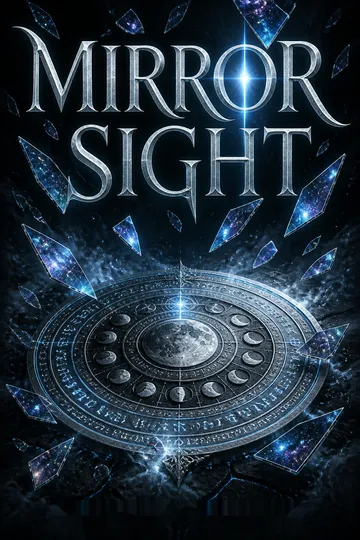
A threshold to preserved timeThe moondial is a floor map of the heavens, with moon phases and carved Eletian symbols arranged beneath a glass roof. Properly aligned moonlight can open a passage to a preserved piece of time. Karigan used a similar device in Blackveil, but the one in the Imperial Museum has been removed from its original setting and may not function normally. Lhean’s knowledge and Karigan’s ability to cross thresholds are both needed to attempt a return. The device makes the museum’s collection a potential route out rather than a dead display of conquered history.
The dragonfly device
A rumored answer to empireStories preserved by Josston connect an ancient weapon, called the dragonfly device, to Anschilde’s expulsion of the sea kings. The professor believes it may have been buried with the first Sealender king and might counter the weapon Amberhill used to destroy Sacor City. Dr. Silk’s enormous steam drill is designed to reach the royal tombs before the opposition can. No one has confirmed what the device is or whether the legends describe literal magic. Its pursuit makes the tombs a battlefield between two groups who both claim to be defending the future.
The hidden tombs
A refuge for outlawed historyThe royal tombs survive beneath the ruined city, protected by the Heroes Portal, the Weapons, and a community of caretakers. Their laws preserve bodies, records, and objects that the empire has tried to erase. A drawing by Yates helps identify Karigan, while messages kept by successive caretakers guide her toward the moondial. The tombs also have their own limits: secrecy protects them but leaves them vulnerable when Silk’s drill breaks through. They embody memory as a living institution, not merely a cache of artifacts.
Water and etherea
The empire’s hidden power gridMill City’s canals drive turbines and factory machinery, while the capital’s water system circulates concentrated etherea through fountains and palace mechanisms. The same infrastructure that sustains the empire becomes vulnerable when Yolandhe commands water and weather. Karigan’s minor fading ability returns near Gossham, but the tainted etherea makes its use painful and disorienting. This device ties imperial control to environmental extraction: power appears clean and orderly to the privileged, while its costs are displaced onto slaves, damaged landscapes, and captured magical beings.
Green Rider Series

About the Author
Other books by Kristen Britain
Download PDF
Download EPUB
.epub digital book format is ideal for reading ebooks on phones, tablets, and e-readers.








