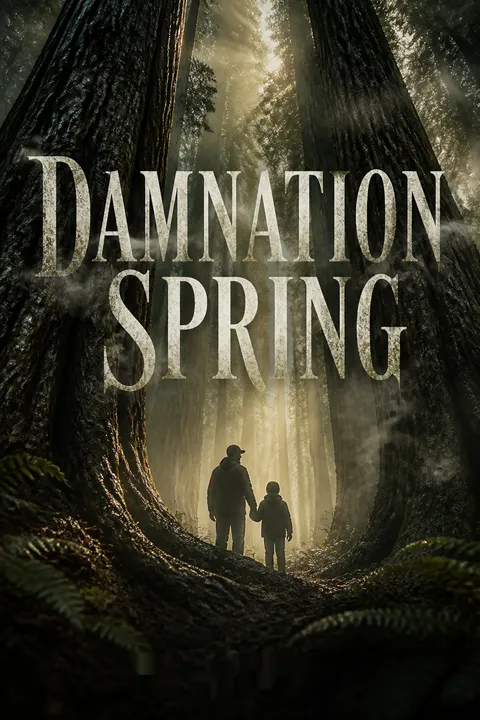


Plot Summary
Twenty-Four Seven Comes Up for Sale
At the One and Only Tavern, Rich Gundersen hears that Jim Mueller will sell 720 acres on 24-7 Ridge, including the enormous redwood his family has dreamed of owning for generations. Sanderson Timber is about to cut neighboring Damnation Grove, which could finally open roads to the ridge. Rich is fifty-three, his body worn by dangerous work, and the company may soon have no use for an expert tree-topper.
His friend Lark argues that buying the land could let Rich work for himself and leave something for his wife, Colleen, and their son, Chub. Mueller needs a fast sale, so he offers the property for $250,000. Rich has savings, but not nearly enough, and the chance begins to feel like a dare.
The ridge is not merely a business opportunity. It concentrates inheritance, identity, and the limits of a life organized around work for someone else. Rich imagines ownership as a way to break the chain that has carried Gundersen men from one timber boss to the next. Yet the same dream depends on the destructive conditions that made the land accessible: Sanderson must cut the old-growth beside it. The novel makes Rich's ambition emotionally legible without making it innocent. His hope is both an act of self-determination and a wager on the disappearance of the forest that formed him.
Eight Losses Behind the Door
Colleen is still mourning the daughter she delivered stillborn at twenty-two weeks. She wants another child, but Rich has withdrawn from intimacy, afraid she will suffer another loss. On a walk with Chub, Rich shows his family the 24-7 tree and the spring that supplies their home, while Colleen glimpses the stripped slopes beyond the grove.
He does not tell her what the walk means. On August 12, Rich signs the $250,000 loan using nearly all their savings, despite having no collateral in the house, which the park service effectively controls. He rents a private post-office box and hides the papers in his truck. The family’s future now rests on a purchase Colleen does not know exists.
Rich and Colleen each try to protect the other by withholding what matters most. He hides a debt because he imagines that success will justify the risk; she conceals the full measure of her grief because she fears being judged as incapable of motherhood. Their silence is not indifference. It is an imperfect form of care shaped by different fears: Rich dreads another hospital loss, while Colleen dreads a life in which the loss is treated as finished. The secret purchase intensifies this mismatch, making their shared future depend on a decision made by one spouse alone.
Daniel Bywater Comes Home
At a drugstore, Colleen encounters Daniel Bywater, the Yurok classmate she once loved before leaving Arcata and returning home. He is now a fisheries researcher studying declining salmon and damage to local waterways. His warnings about warm, silted creeks trouble her, though she is also drawn to the attention he gives her.
After Chub starts kindergarten, Colleen feels the empty house and the absence of the baby she expected to be caring for. She meets Daniel near the abandoned radar station and sleeps with him. The encounter grows from grief and loneliness, but it does not restore their old relationship: Daniel admits he returned partly because his mother is ill. When Colleen later takes a pregnancy test, it is negative.
Daniel represents a road not taken, but his return does not simply revive romance. He offers Colleen a kind of recognition she has missed: attention to her mind, her history, and the losses she has struggled to name. Her affair is neither a cure for grief nor an uncomplicated rejection of Rich. It exposes how loneliness has entered a marriage in which both partners mistake silence for protection. Daniel's scientific work also gives private distress a public frame. The same woman who feels uncertain of her own worth becomes a witness whose lived knowledge may matter to the whole community.
Skulls Halt the Grove
While Rich trains Quentin Feeley, the son of a logger killed at work, the crew discovers a child’s skull in a root-ball crater in Lower Damnation Grove. The find sends the remains to investigators and forces Sanderson to suspend its harvest plans. A second skull soon appears, intensifying protests and anger among loggers who fear losing wages.
Meanwhile, Colleen sees clear-cuts, spray crews, dead bees, nosebleeds, and animals born deformed. Joanna Roesch shows her chicks with crossed beaks and a calf that cannot stand. These are separate warnings, not yet proof of a cause, but their accumulation changes what Colleen can dismiss as bad luck. Rich worries that every delay will strand his planned harvest on the other side of the grove.
The skulls make history physically present in a place where timbermen and preservationists are already fighting over who gets to define the land. Their discovery can halt machinery, but it also exposes how readily human remains become instruments in a political contest. Alongside them, the novel places signs of harm that are easy to minimize one by one: a dead hive, a bleeding nose, a malformed chick. The accumulation matters because rural knowledge often begins as repeated observation before institutions recognize it as evidence. Colleen sees patterns through care work, while Rich experiences delay as an immediate threat to livelihood.
Water Samples in Secret
Daniel visits the Gundersen home and warns that herbicides used by Sanderson, the county, and the Forest Service may be reaching creeks. Rich rejects the warning and insists the company’s chemicals are government-approved. He also claims that 24-7 Ridge belongs to his family, then admits to Colleen that he bought it in August and concealed the $250,000 loan.
He expects Sanderson’s roads to make the timber valuable enough to repay the debt. Colleen is stunned by the secret and by Rich’s dismissal of Daniel’s concerns. Afterward, she quietly begins filling Daniel’s sample jars from their tap, sometimes taking water before and after using a filter. Rich does not know she is gathering evidence from the same supply his plans depend on.
The competing secrets now mirror one another. Rich has turned the family’s savings into a private bet on timber; Colleen turns their tap into a private experiment. Both are acting on incomplete knowledge, and both believe disclosure would provoke a reaction they cannot manage. Yet the asymmetry is important: Rich’s silence controls the household’s financial exposure, while Colleen’s samples could challenge the company that employs him. Their marriage becomes a small version of the town’s larger epistemic conflict. What counts as trustworthy knowledge, a bank contract, a clear spring, or a researcher’s warning, depends partly on who bears the consequences.
Burls Beneath Blue Tarps
On a visit to Fort Eugene, Chub follows his cousin Wyatt into the woods and finds his uncle Eugene cutting a huge burl from a redwood with help from Owen, Merle Sanderson’s young relative. Eugene explains that the polished wood can be sold to wealthy buyers, then hides it beneath a tarp in his truck.
The theft helps explain the sudden piles of firewood and new appliances at Eugene’s home. Colleen has already noticed that the grove is producing unexpected money, while Rich has not yet connected the changes. Merle visits the DeWitt property and asks about the burls, suggesting he knows more than he lets on. Chub has witnessed a crime, but Wyatt warns him not to tell anyone.
The burl theft reveals a second economy inside the official timber operation. The company’s public case rests on jobs and lawful harvesting, yet valuable pieces of the forest are being removed through secrecy and private connections. For Chub, the scene is not an abstract violation. It is adults using machines, tarps, and threats to make an ancient tree disappear. His childhood perspective gives the episode a particular moral clarity: he can see the taking before he can understand its politics. The secret also links family livelihood to corporate corruption, complicating the boundary between ordinary workers and the people directing the damage.
Trees Fall Before the Hearing
On January 31, Rich and Colleen hike into Lower Damnation Grove after Eugene summons them before dawn. They find dozens of old-growth redwoods felled recklessly, their trunks shattered and the hillside gouged by heavy machinery. The destruction has already dammed Damnation Creek and threatens the couple’s water intake.
Eugene presents the wreckage as a reason the state must approve Sanderson’s harvest plans before more timber is lost. Colleen sees the damage as an outrage, while Rich fears the slope will collapse and bury the roads his own timber needs. When she asks whether the company workers simply obey orders, Eugene turns the accusation back on her. Their fight over the ruined forest has become a fight over loyalty.
The deliberate wreckage turns an environmental argument into a fait accompli. Once the trees are down, the company can describe salvage as practical necessity, even though the destruction itself has created the emergency. This is a politics of irreversible facts: the bulldozer acts faster than public review, and damaged land becomes leverage. Rich is caught in the mechanism because the same road system that threatens the creek might make his private timber accessible. Colleen sees the moral trap more clearly, but she cannot yet persuade him that economic dependence is itself being used as a tool of control.
Colleen Takes the Microphone
At the February 27 forestry hearing, loggers, preservationists, and Yurok residents crowd the room to argue over Damnation Grove. Helen Yancy describes losing a baby born without the top of its skull; Yurok elder George Bywater speaks about the river and the people whose lives depend on salmon. Rich tells officials that logging sustains the town and that he has drunk from local creeks for decades.
Daniel then reveals that Colleen’s tap water tested positive for herbicides and dioxin, and publicly links her miscarriages to the pattern of birth defects. Colleen feels exposed when he names her without permission. She leaves with Rich, who is angry that Daniel used her private grief to make his case.
The hearing stages competing forms of testimony, but it does not give them equal power. Rich speaks as a respected worker whose experience can reassure officials; Helen and George speak from bodily and cultural losses that the timber economy has long treated as peripheral. Daniel’s evidence gives those losses scientific language, yet his public use of Colleen’s story repeats the very violation he hopes to challenge. The scene refuses a simple opposition between truth and denial. Evidence can be necessary and still be mishandled. Colleen must decide whether being a witness means surrendering control over her own history.
Jars Shatter Between Them
After the hearing, Rich learns that Colleen has been filling Daniel’s jars and asks whether she slept with him. She admits she did, explaining that she felt abandoned while Rich refused intimacy after their daughter’s death. The jars reveal the second secret: Colleen has been gathering samples for months. Rich smashes them against the kitchen wall, frightening Chub, then spends the night away.
In the morning, Colleen tells Rich how deeply she has relied on his love, and he admits that fear of another miscarriage has made him withdraw. He assures her that he never wished he had not married her. Their reconciliation does not erase the betrayal; it gives them a way to speak about what each had been trying to endure alone.
The broken jars convert disputed evidence into a domestic rupture. Rich destroys the containers because they hold both a feared environmental truth and proof that Colleen acted without him. His anger is not only jealousy; it is terror that he cannot protect his family from forces he cannot see or control. Colleen’s confession likewise refuses to make her affair purely romantic. She names a need that her marriage had failed to meet. Their reconciliation begins when they stop treating grief as a problem that one spouse must privately solve for the other.
Enid's House of Impossible Choices
Colleen drives her fifteen-year-old niece Marla to June Millhauser, who performs abortions, after Enid decides her daughter cannot be forced into motherhood. Enid has secured money from Merle and kept the pregnancy from Eugene. On the return trip, she reveals that baby Alsea has only part of her brain, though doctors say she may live.
Enid has been hiding the diagnosis while caring for six children and managing her husband’s anger. Colleen recognizes that her sister’s crowded household has not spared her from fear or loss. Their argument over responsibility gives way to shared care: Colleen comforts Marla, and Enid trusts her with the truth about Alsea. The family’s different reproductive choices meet without becoming the same experience.
Enid and Colleen have often measured themselves against one another through motherhood, one surrounded by children, the other grieving pregnancies. This episode breaks that comparison open. Enid’s apparent fertility does not protect her from a child’s serious diagnosis, while Marla’s abortion is an act of protection rather than a rejection of family. Colleen’s compassion for her niece grows from her own longing, but she does not make Marla responsible for healing it. The sisters discover an intimacy more durable than envy: the ability to carry knowledge the other cannot yet bear alone.
One Last Season
On March 25, the state approves Sanderson’s harvest plans, and Rich sees the road to his timber finally within reach. Lark lends him money to survive the lean months, though he does not explain the full extent of his help. Lark has spent years urging Rich to take risks and preserve enough forest for future generations; now he supports the very gamble that could secure Rich’s independence.
Soon afterward, Lark’s cancer worsens and he dies. Rich attends the funeral as the closest thing Lark has to a son, carrying the loss of a friend who had also raised him after his father died. The approval looks like a beginning, but Rich’s new season opens under the weight of a goodbye.
Lark’s support gathers several kinds of inheritance into one gesture: money, practical knowledge, and a fatherly faith Rich has never quite trusted himself to accept. His death makes the purchase feel less like an entrepreneurial adventure than a responsibility passed from one generation to another. Yet Lark’s forestry ethic differs from Sanderson’s appetite for immediate return. He believes a working forest must survive the people who earn from it. Rich is left to decide whether ownership will reproduce the old extraction or become something more enduring.
Merle Sells the Grove
In April, Rich learns that Damnation Grove has been sold into a park expansion, despite Sanderson’s public campaign for approval. The company will salvage timber already down, but private trees on 24-7 Ridge are now blocked behind park land, with no practical right-of-way. Rich punches Merle, who admits the company used the skull controversy and public outcry while arranging the deal.
He also reveals that Eugene stole the burls under Merle’s direction. Later, Eugene confesses that Merle sent him to burn Helen and Carl’s home, claiming the family was away. The revelation shows how disposable the workers were to Merle: Eugene did the dirty work, Rich took on the debt, and the company protected its own escape.
Merle’s betrayal is more than a reversal of Rich’s business prospects. He has manufactured solidarity long enough to extract labor, then abandoned the workers once the park deal served corporate interests better. Eugene’s complicity makes the damage intimate: corruption is not confined to a distant office but enters marriages, homes, and kinship. The burned house makes the cost of opposition concrete, even though the evidence does not identify every act of intimidation. Rich’s punch releases anger, but it cannot undo the transaction or restore the future he built around access to the grove.
Salvage Below the Ridge
Rich, Don, Pete, and Lew win a contract to haul the fallen trees out of the damaged lower grove. The work can provide a short-lived income, but it does not solve the road problem on 24-7 Ridge. While the crew is salvaging logs, Eugene catches Daniel near the creek and repeatedly forces him underwater. Quentin intervenes, and Rich pulls Daniel away, gives him dry clothes, and tells him Eugene may come after him again.
Daniel says his research funding is ending and he plans to leave. Rich acknowledges that Colleen needs to believe someone will keep pursuing the evidence. Soon afterward, a congressman offers Rich a costly federal right-of-way or a low-price sale to conservation interests, leaving him with no easy route forward.
The salvage contract offers income without restoring the old promise. Rich can still work, but the work is now extraction from a wound the company helped create. His rescue of Daniel marks an ethical shift: he protects the man whose evidence threatened his plans, not because their interests have become identical, but because he recognizes the danger Daniel faces. The congressman’s proposal then translates land, law, and conscience into a price. Rich’s decision is constrained by debt and geography, so any choice carries a material cost rather than the comfort of a clean moral victory.
The Ridge Has a Price
After Rich and Colleen begin finding their way back to one another, Colleen takes a pregnancy test and learns she is six or seven weeks along. She is frightened by her history of miscarriages, but happiness arrives before certainty. Rich asks the congressman whether the stranded timber can be reached; the proposed right-of-way would require expensive federal approvals, while conservation buyers might offer only a fraction of the land’s value.
Rich does not accept either option. On Chub’s birthday, he takes his son to the beach, gives him the family lockback knife, and tells him to treat it as a tool. The gifts connect a possible new child, the son he already has, and a future Rich has not yet been able to secure.
The pregnancy does not resolve the couple’s grief; it makes hope newly dangerous. Colleen knows how quickly a body can turn promise into loss, while Rich has to confront the consequences of having treated family security as a calculation he could control. His gift of the knife is a form of inheritance unlike the old family legacy of dangerous work. He gives Chub a tool and a rule for using it, not a command to follow him into the woods. The unresolved land offer keeps the future open, but not safely so.
Chub Falls into the Cut
While visiting with Wyatt, Chub takes his new knife after Wyatt finds it in his parents’ bedroom. The boys run through the forest, and Chub loses his familiar creek routes in the altered landscape of cut slopes and mud. Wyatt catches up near a steep drop, and Chub falls, striking his head. Rich and Colleen search through rain and failing light until Rich spots Chub’s boots below a stump.
Chub lies pale and still, but blinks when Rich checks him. Rich carries him through the wreckage to Colleen, and doctors close the long gash with staples. Chub survives, though the accident leaves Colleen watchful and Rich newly aware that the damaged grove has made even a familiar childhood landscape dangerous.
Chub’s fall brings the environmental conflict into the most intimate possible scale. The cut ground is no longer a political map or a source of timber revenue; it is a maze a child cannot read. Rich’s inherited skill at finding routes home becomes crucial, but it cannot prevent the injury. For Colleen, the near-loss echoes every pregnancy and the daughter they buried. For Rich, it punctures the fantasy that land ownership can guarantee safety. Their son survives, but the family must learn to live with a landscape changed beneath their feet.
A Fish and a Pearl
On June 19, Rich visits the savings and loan expecting to negotiate after missing mortgage payments. Instead, the loan officer shows him a cashier’s check from Lark that paid the entire debt in March. Rich understands that Lark’s help was far greater than the cash he had offered. Relieved, Rich buys Chub a goldfish and a pearl pendant for Colleen, whose name list includes Pearl.
On the drive home, the bowl slides from the seat as a vehicle approaches around a blind curve. Rich reaches to save the fish, loses control, and his truck plunges down the coastal slope. He dies before he can bring the gifts home. The ridge is no longer mortgaged, but the man who meant to make it a family inheritance is gone.
The payoff arrives at the precise moment when Rich can no longer use it to plan. Lark’s concealed generosity frees the land from debt, but it cannot free Rich from the hazards that have shaped his working life. The goldfish and pearl are small, tender purchases, chosen for the son and wife whose future he has spent so much of the novel trying to secure. His reflex to save the fish echoes a lifetime of quick physical decisions, yet this time instinct cannot save him. The scene refuses to make sacrifice redemptive: love is present, and loss remains.
What Remains in the Box
After Rich’s funeral, Colleen tries to care for Chub, the house, and the old dog while neighbors bring food and help with chores. She is twelve weeks pregnant and cannot yet imagine raising another child without Rich. On July 30, she searches his dresser and opens the carved box Marsha returned from Lark’s cabin.
Inside are photographs of Lark’s lost family, clippings of Rich’s early logging victories, and a deed showing the 24-7 is paid off. Colleen takes Chub to Diving Board Rock, where he looks through his binoculars at the ocean. She sees Rich’s face in their son’s eyes, not as a replacement for him but as a living bond. The future remains uncertain, yet Colleen can now make room for it.
The box does not restore Rich; it changes what his absence means. The deed turns Lark’s hidden act of care into a tangible inheritance, while the photographs place Rich inside a longer family history than his work alone. Colleen’s final movement is not toward certainty but toward capacity: she can grieve, carry a child, and recognize Rich in Chub without confusing the boy with the dead man. The ridge remains both an ecological and financial legacy, burdened by the decisions that shaped it. Its value now depends on what Colleen chooses to do with what she has inherited.
Analysis
Damnation Spring makes ecological conflict inseparable from ordinary dependence. Sanderson’s workers need wages; families need roads, clinics, and clean water; Yurok people depend on a river whose salmon are food, livelihood, and identity. These needs are not equivalent in power. Merle can shift company plans, influence employment, and leave others to absorb the cost. Colleen, Joanna, and Helen must build a case from bodies, births, animals, and household water before institutions will treat their observations as evidence.
The novel’s central uncertainty is not whether the chemicals are present. Daniel’s tests find them. The harder question is what those findings can prove about a pattern of miscarriages and birth defects, and how long people can wait for certainty while continuing to drink, work, and live in the affected watershed. The narrative resists both easy denial and easy diagnosis. It shows how scientific evidence arrives inside relationships already strained by loss, economic dependence, and mistrust. Rich’s purchase gives that conflict its sharpest personal form. He wants to stop working for a company that treats labor and old-growth as expendable, but the independence he imagines depends on cutting the grove next door. Colleen’s insistence on listening to Daniel is therefore not simply opposition to her husband. She is asking him to recognize that providing for a family is meaningless if the means of provision may endanger it. Rich’s eventual acts of care, protecting Daniel, accepting Colleen’s knowledge, and preparing a future for Chub, do not resolve the contradiction, but they change how he inhabits it.
The book’s deepest measure of inheritance is not the acreage a family owns. It is the knowledge, obligations, and losses passed to children. Chub learns the creeks from Rich, yet the altered forest defeats his map. The final deed offers Colleen security, not an answer about what should be done with the land. The novel leaves that decision open because repair, like responsibility, belongs to the living.
Review Summary
Damnation Spring receives mostly positive reviews for its vivid portrayal of a logging community in 1970s California. Readers praise Davidson's nuanced exploration of environmental issues, complex characters, and immersive writing. Some find the pacing slow and the logging jargon overwhelming. The novel is lauded for its emotional depth, tackling themes of family, livelihood, and ecological destruction. While a few criticize the ending, many consider it a powerful debut and an important contribution to environmental literature.
People Also Read







Characters
Rich Gundersen
Logger betting on landA fourth-generation logger and expert high-climber, Rich is physically imposing but emotionally reticent. He understands trees, machinery, weather, and risk more readily than he understands how to speak about fear. His loyalty to Colleen and Chub is expressed through practical acts: building, repairing, bringing food, and preparing for dangers he cannot prevent. He wants to escape dependence on Sanderson Timber by buying 24-7 Ridge, yet his ambition is entangled with the same extraction that has shaped his family. Rich’s central tension is between inheritance and choice. He is proud of his work, wary of change, and increasingly forced to decide what responsibility to his family and community requires.
Colleen Gundersen
Midwife and witnessRich’s wife and Chub’s mother, Colleen is observant, careful, and often underestimated because she speaks softly. She helps women deliver babies without formal training, remembers each loss, and notices patterns others dismiss as misfortune. Her competence in caring for others coexists with deep uncertainty about her own body and desires. Colleen’s marriage is a source of tenderness, but also a place where silence has accumulated. She wants another child, wants Rich to see her grief, and gradually claims authority over what she knows. Her role as a midwife makes private suffering public, while her life as a wife and mother keeps the cost of that public role intensely personal.
Chub Gundersen
Curious boy with a mapRich and Colleen’s young son, Chub is curious, affectionate, and eager to master the creeks and ridges his father teaches him. His binoculars, pocketknife, and palm-map give him a child’s version of adult tools, while his misunderstandings reveal what the grown-ups hide from him. He is gentle with animals and with children who are isolated, including Luke. Chub’s imagination turns ordinary objects into possibilities, but he also learns that the forest can be dangerous and changed. His bond with both parents is expressed through small routines, teasing, games, and the reassurance of being guided home.
Daniel Bywater
Yurok fisheries researcherColleen’s former schoolmate and first love, Daniel is a Yurok fisheries biologist studying salmon, water quality, and logging practices. He is intellectually driven and deeply concerned that environmental damage threatens both river life and Yurok identity. His confidence can become presumption: he presses Colleen to help and later uses her history publicly without first asking her. Daniel is not a simple outsider to the town. His mother and uncle live there, and his own return is shaped by family ties as well as research. He represents both a path Colleen once imagined and a scientific challenge to the economic assumptions that govern Klamath.
Lark
Cranky logger and mentorRich’s longtime friend and surrogate father, Lark lives alone in a rough cabin beside the river, carving Sasquatches and running a roadside stop for travelers. A logging injury left him disabled, but it did not blunt his humor, memory, or appetite for meddling in other people’s choices. He once argued for cutting timber slowly enough for forests to recover, a position that cost him standing with Sanderson. Lark sees both Rich’s talent and his habit of waiting too long to act. His affection rarely takes a sentimental form; it arrives as blunt advice, food, tools, and practical help.
Enid DeWitt
Colleen's unruly sisterColleen’s younger sister, Enid is outspoken, impulsive, and fiercely protective of her six children. She has an abrasive sense of humor and a talent for creating trouble, but her bravado often conceals exhaustion and fear. Enid and Colleen have spent years measuring their lives against each other, especially their different experiences of pregnancy and motherhood. Beneath their rivalry is a deep dependence: Enid trusts Colleen with her children, and Colleen repeatedly comes when Enid needs help. Enid’s choices are shaped by poverty, limited options, and a desire to shield her daughters from consequences she knows too well.
Eugene DeWitt
Logger under pressureEnid’s husband and Rich’s brother-in-law, Eugene is a hardworking, impulsive logger supporting a large family on unstable wages. He is funny and sociable when circumstances are good, but financial anxiety and loyalty to Sanderson can make him reckless and cruel. Eugene measures care through provision, often treating money and employment as proof that he is doing his duty. His dependence on the company leaves him vulnerable to manipulation, but it does not erase his responsibility for his own actions. His relationship with Rich combines affection, rivalry, and resentment, with each man recognizing the other’s weaknesses too clearly.
Merle Sanderson
Company boss and operatorThe owner and public face of Sanderson Timber, Merle is an ambitious businessman skilled at making his interests sound like the town’s interests. He presents himself as a protector of workers, but his loyalties shift with corporate advantage. He understands the emotional force of timber jobs and uses it to keep people invested in plans that benefit the company. Merle is charming when he needs cooperation, dismissive when challenged, and rarely transparent about what he already knows. His power comes not only from ownership, but from his ability to control access to roads, work, and the local mill.
Don Porter
Crew boss with rulesRich’s crew boss, Don is disciplined, practical, and respected because he takes safety and the welfare of his workers seriously. He is caught between Sanderson’s demands and a crew whose jobs depend on timber harvests. Don’s strictness can look like mere authority, but it comes from knowing how easily a mistake in the woods becomes a death. His wife, Gail, shares his concern for the community, though she is more willing to question the company.
Helen Yancy
Mother speaking from lossA Yurok mother and friend of Colleen, Helen is practical, proud, and deeply attached to her family. She has relied on cultural knowledge and family support in childbirth, while also navigating the clinic and the pressures of a predominantly white town. Helen’s experience makes her an important voice in the debate over herbicides and birth defects. She resists being reduced to a case or a symbol, even when public attention turns toward her family’s suffering.
Joanna Roesch
Farm mother observing changeA young mother living on the land where Colleen grew up, Joanna tends her children, chickens, and animals while her husband works away from home. Resourceful and self-reliant, she knows the condition of her spring, fields, and livestock through daily attention. Joanna is not quick to trust institutions, especially those connected to the timber company, but she speaks plainly about what she sees. Her household gives Colleen a close view of how environmental changes register in ordinary domestic life.
Quentin Feeley
Young logger learning riskThe eighteen-year-old son of a logger killed at work, Quentin joins Rich’s crew as a choker setter. He is quiet, watchful, and determined to prove himself, though the dangers of the job quickly exceed his experience. Rich recognizes his own younger self in Quentin and takes time to teach him how the operation works. Quentin’s presence links the old culture of logging to a generation that has inherited its risks without inheriting the same abundance of timber.
George Bywater
Yurok elder and fishermanDaniel’s uncle, George is a lifelong Yurok fisherman who understands the river as a source of food, identity, and responsibility. He has faced legal punishment for fishing and carries the knowledge of a community that has survived dispossession without abandoning its relationship to the Klamath. George speaks from a history that predates the timber industry and challenges the assumption that the river is merely a resource. His presence gives Daniel’s research a family and cultural context.
Marla DeWitt
Enid's watchful eldest daughterEnid and Eugene’s eldest daughter, Marla is a bright teenager expected to help care for her younger siblings. She wants a life beyond the family’s crowded home, but has limited privacy and little room to make mistakes. Colleen remembers her as a small child and remains attentive to the young woman she is becoming. Marla’s choices expose the pressures placed on girls in a community where adulthood often arrives before independence.
Pete Peterson
Gifted old-growth fallerA veteran logger and exceptionally skilled faller, Pete can bring enormous redwoods down with remarkable precision. He is guarded, physically worn, and more comfortable with machines than with people. His sharp insults conceal loneliness and a fierce pride in the craft he has spent his life mastering. Pete respects skill wherever he sees it, but he distrusts the changes that threaten to make his expertise obsolete.
Astrid
Rich's unfinished first loveRich’s former girlfriend from his youth, Astrid is now married and living away from Klamath. Their brief relationship left Rich with a private grief and a question he never found a way to ask. She represents an earlier version of his life, one he has kept separate from his marriage to Colleen.
Plot Devices
The 24-7 Ridge
Inheritance and impossible accessThe 720-acre inholding gives Rich a chance to own valuable redwoods and escape dependence on Sanderson Timber. Its largest tree carries his family’s history, making the purchase personal rather than merely commercial. The ridge’s value, however, depends on roads through neighboring Damnation Grove. When that grove is damaged and then transferred into a park, the access problem traps Rich’s investment. The land therefore acts as both a material asset and a test of what inheritance means: whether Rich will repeat the family’s logging life, or imagine a different relation to the forest. Its final meaning depends on who holds the deed and what they choose to protect or use.
Creeks and Palm Maps
Knowledge passed between generationsRich teaches Chub to navigate by tracing local watersheds in the creases of his palm and memorizing rhymes that connect creeks to roads and home. The method turns landscape into a learned relationship rather than a set of coordinates. It helps Chub develop confidence and gives Rich a way to pass on knowledge that his own father gave him. As logging alters familiar slopes, the maps become less reliable, showing how environmental damage can unsettle even intimate knowledge. The creek rhymes also link the family’s survival to the water they depend on, making navigation, memory, and ecological health inseparable.
Daniel's Water Jars
Private evidence made publicDaniel gives Colleen jars for water samples, asking her to collect from the Gundersen tap. The jars turn a household routine into an informal record of potential contamination. Colleen’s secret collection is initially an act of curiosity and later becomes part of a public case against spraying. The samples matter because the water looks clear and tastes ordinary, while laboratory testing detects chemicals that cannot be seen. Their secrecy also gives them a second function: they reveal the lack of trust between Colleen and Rich. When Rich discovers the jars, scientific evidence and marital betrayal become physically entangled.
Lark's Wooden Box
A legacy hidden in plain sightThe carved box holds photographs, newspaper clippings, and legal papers that Rich never shared with Colleen. Its contents assemble a family history beyond logging: Lark’s lost family, Rich’s youthful achievements, and the ownership of 24-7 Ridge. The box turns private keepsakes into evidence of care that Rich was unable to express directly. It also makes inheritance concrete, connecting a deed to the people who helped Rich become himself. Colleen’s discovery does not undo grief, but it changes the resources and memories with which she faces the future.
Download PDF
Download EPUB
.epub digital book format is ideal for reading ebooks on phones, tablets, and e-readers.








