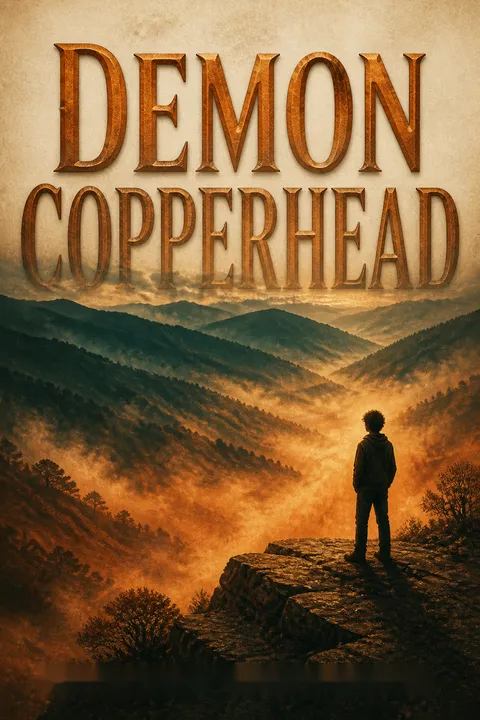


Plot Summary
Born Under a Blue Promise
Damon Fields arrives inside his birth membrane in a Lee County trailer, where his eighteen-year-old mother is unconscious among liquor and pills. Their neighbors, Nance and Mr. Peggot, get him to safety, then let him grow up beside their grandson Matt Peggot, nicknamed Maggot. The boys roam creeks and coal camps, while Mrs. Peggot feeds and disciplines Damon as if he belongs to her.
His father, Copperhead, died before Damon was born, leaving behind only red hair, green eyes, and a forbidden place-name: Devil’s Bathtub. Damon clings to a local belief that babies born this way cannot drown. Around him, adults mistake poverty for a character flaw, while the Peggots quietly give him the closest thing he has to a family.
The birth superstition gives Damon a fragile promise of survival before he can understand the dangers surrounding him. His sense of belonging is assembled from neighbors rather than inherited kinship, making the Peggots’ ordinary acts of care structurally important. The town’s judgment of poverty begins early, but so does Damon’s habit of reading people and places for evidence that he might still be claimed.
Stoner Takes the House
After years of relapses and brief rehabs, Damon’s mother grows sober and takes a steady job at Walmart. Then Murrell Stone, called Stoner, arrives with a motorcycle, a truck, and the promise of security. During Damon’s first trip away with the Peggots, his mother marries him and rearranges their home. Stoner soon treats Damon as a rival, striking him, humiliating him, and forbidding him to see Maggot.
When Damon fights back and bites Stoner, his mother cannot protect him. She later relapses, mixing alcohol and pills until Damon finds her unconscious and calls an ambulance. Social services removes him from the home. The call saves his mother’s life that night, but leaves Damon in state custody, with Stoner still controlling the house.
Stoner’s appeal rests on material stability, but the household he builds is governed by surveillance and force. Damon learns that an adult’s legal authority can outweigh a child’s accurate account of danger. His mother’s relapse is not simply a private failure: it makes the boy who has spent years managing her daily life the person who must finally summon outside help.
Farmhouse of Borrowed Boys
Social services places Damon with Mr. Crickson, a widowed farmer who uses foster boys as laborers and threatens to file down Damon’s teeth for biting Stoner. At the farm, Damon meets Tommy Waddles, the small, gentle reader who draws skeletons, Swap-Out, and Sterling Ford, the magnetic older boy everyone calls Fast Forward.
Fast Forward gives Damon a place in his Hillbilly Squadron, but also introduces the boys to cigarettes and pills. The farm’s haying and tobacco work leave Damon sick with nicotine poisoning. While he is away, his mother dies of an oxycodone overdose on his eleventh birthday. At her funeral he discovers that his unborn sibling died with her, turning his anger at her into grief he cannot yet understand.
The farm converts children into labor while offering them a makeshift brotherhood that can feel safer than the adults meant to protect them. Fast Forward’s attention gives Damon recognition, but the initiation into drugs blurs care and harm. His mother’s death compounds abandonment with guilt: Damon interprets her addiction as a choice against him before he can grasp how dependency narrows choice.
The Road to Betsy
Damon’s next foster home is the McCobb household, where the family’s money schemes leave him sleeping in a laundry annex and hungry despite a refrigerator full of snacks. He takes a job at Golly’s Market, sorting trash and draining batteries, and saves his wages in a peanut butter jar. When the McCobbs take his money to pay rent, Damon recovers what remains and decides to find his father’s family.
At a truck stop, a woman who solicits him falsely claims his savings, and the cashier hands the jar to her. Damon leaves with no money and keeps hitchhiking to Murder Valley. There he finds Betsy Woodall, the grandmother he was told might not exist. She recognizes his father in his face, feeds him, and introduces him to Uncle Dick.
Damon’s journey to Betsy is an act of self-rescue undertaken with the only resource he can accumulate: wages. The truck-stop theft repeats the older pattern of adults taking what he has, but this time he continues toward a relative rather than returning to familiar neglect. Finding Betsy does not erase his losses. It revises his belief that he has no roots.
Coach’s New Tight End
Betsy will not raise a boy, so she uses her network of girls to find Damon a Virginia home. Her choice is Coach Winfield, the celebrated Lee High football coach, whose daughter Angus first lets Damon mistake her for a boy.
Angus becomes his sharp-tongued ally, while her father gives him a bedroom, meals, and a place on the team. Damon’s size and speed earn him a chance at football, and counselor Lewis Armstrong recognizes his unusual visual intelligence.
Art teacher Annie Amato helps him develop his drawings; Damon also learns that his Melungeon ancestry links him to a people repeatedly pushed off their land. For the first time, adults notice abilities beyond his labor. He begins to imagine a future built from football and art, not merely survival.
Coach’s home gives Damon a provisional version of family, but the acceptance is initially tied to his usefulness as an athlete. Angus and the art teachers offer different forms of recognition: they respond to his perception, wit, and questions. Learning his ancestry also changes his understanding of shame. What outsiders label as a defect becomes a history of people who persisted.
Number Eighty-Eight
As a high school player, Damon becomes a local star in jersey 88 and finally feels admired for something he can do. He has already met Dori Spencer, a magnetic girl who works around her ailing father, Vester, and whose company makes Damon feel wanted. Then a tackle badly damages Damon’s knee. Team doctor Doc Watts prescribes powerful painkillers, and Coach urges him to follow the regimen so he can return to football.
Damon takes the pills as directed, but withdrawal symptoms appear whenever he tries to cut back. Dori introduces him to fentanyl, presenting the drug as an intimate gift. Football, which once gave Damon a body and a place, now supplies the injury and the medication that begin to remake his life around opioids.
The transition from legitimate treatment to compulsive use is made difficult to see because each step has a respectable explanation: injury, prescription, athletic duty, then intimacy. Damon’s identity depends on proving he can endure pain, so medication feels less like surrender than another tool for staying on the field. Dori’s affection offers comfort, but also binds emotional closeness to chemical relief.
The Price of Pain
Dori’s father, Vester, is dying from illnesses linked to years of mine work, and she becomes his nurse, driver, and only steady companion. Damon spends more time in their house, where prescribed opioids and patches are always near. Dori sells Vester’s excess medication at a pain clinic, then uses part of the supply herself. Damon learns that Doc Watts, the doctor who treated his knee, runs the clinic.
June Peggot, now a nurse practitioner, opposes the drug companies and the representatives who promise pain relief without addiction. When Vester dies during a power outage, Dori loses her caregiving purpose and her legal access to his prescriptions. Grief and drug dependence close around her, while Damon’s own pill use deepens.
Vester’s illness exposes how medical care, economic precarity, and drug marketing converge in Lee County. Dori’s role as caregiver gives her discipline and purpose, but also places narcotics within reach and makes their loss feel like losing both a parent and a livelihood. June recognizes the system’s violence, yet her knowledge cannot immediately undo the intimate dependence already formed in Vester’s home.
The Trip Ends in Richmond
Damon, Maggot, Emmy, and Fast Forward set out for Virginia Beach, hoping to reach the ocean Damon has imagined since childhood. They stop at a muddy lake called Hungry Mother, then detour to Richmond so Fast Forward can make a drug deal. He cuts the trip short, and the group returns without seeing the sea.
Back home, assistant coach U-Haul Pyles corners Angus with threats, exposing his theft of Coach’s and Betsy’s money and trying to coerce her sexually. Damon helps Angus lock U-Haul out of the house. As his football future collapses and Emmy grows closer to Fast Forward, Damon moves in with Dori, mistaking their drug-fueled attachment for a life he can build. Emmy soon disappears with Fast Forward, leaving June searching for her.
The failed trip turns Damon’s longing for the ocean into another deferred promise, while revealing the costs of treating Fast Forward’s charisma as proof of goodness. U-Haul’s blackmail shows a second kind of predation, one protected by access to institutions and family trust. Damon chooses Dori partly from love, partly from exhaustion, and partly because an adult life of his own seems easier than remaining a conditional member of Coach’s household.
Emmy Found in Atlanta
After months without news, June tracks Emmy to an Atlanta drug house and brings Damon and her brother Everett along. They find Emmy barely conscious beside another young woman, with two small children in the house. June carries Emmy out and examines her on the roadside.
During the drive home, she finally tells Damon how his father died: at Devil’s Bathtub, he dived into deep water while trying to reach Damon’s mother, who could not swim. Damon returns to Dori’s house after the rescue and finds her bleeding, confused, and distraught.
She believes she has lost the baby she had recently told him about. Damon holds her through the crisis, but neither of them can turn pregnancy into a reason to stop using. Their drug-bound life continues, now with another grief neither can clearly name.
June’s rescue is an act of care that refuses to confuse a person’s worst condition with her permanent identity. The revelation about Damon’s father recasts the feared swimming hole as the site of an attempted rescue, not simply a source of inherited doom. Yet information and love cannot instantly repair addiction. Dori’s pregnancy loss intensifies the couple’s dependence on each other without giving them the capacity to protect one another.
The House Goes Quiet
Damon and Dori’s home deteriorates into unpaid bills, spoiled food, broken appliances, and drug paraphernalia. Damon takes unstable work and tries to keep their supply of pills and heroin moving, while Dori grows weaker and more dependent on him. Their arguments give way to a fragile routine of using, sleeping, and trying again.
One day Damon comes home and finds Dori dead after an overdose. He cleans her body and the room before calling for help, then watches her aunt take control of the funeral and clear the house as if their life together were refuse. Damon buries Jip, Dori’s little dog, himself. With Dori gone, he has no home, no job, and no person left who depends on him.
Damon’s devotion has become indistinguishable from enabling because he mistakes constant rescue for mutual care. His preparation of Dori’s body and the house repeats the childhood labor of managing his mother, but this time there is no living person to return to. The aunt’s disposal of their belongings compounds the erasure. Burying Jip himself becomes the one mourning ritual Damon can control.
Devil’s Bathtub
After weeks of using with Maggot, Damon follows Rose Dartell to Fast Forward’s hideout. They encounter Hammer Kelly, drunk and high, and end up at Devil’s Bathtub during a storm. Hammer confronts Fast Forward, who has climbed naked onto the cliff above the flood-swollen pool. When Big Bear shouts a warning, Fast Forward turns, loses his footing, and dives badly onto the rocks.
Hammer rushes into the water to save him and drowns. Damon drags Hammer’s body ashore, then carries both men to safety for the rescuers. To spare the Peggots another loss, he tells them Hammer died heroically trying to save Fast Forward, concealing the drugs and the confrontation. Rose later accuses Damon of causing the deaths, but cannot change what happened.
The climax brings Damon’s origin story into direct contact with the place he has feared, but the danger is human rather than supernatural. Fast Forward’s practiced confidence fails him; Hammer’s instinct to save another man becomes fatal. Damon’s lie protects the Peggots from a harsher account, yet it also traps him in private guilt. The episode exposes how loyalty can become self-destruction when a community has few other scripts for care.
The Cave Above the Cliffs
June tells Damon she can arrange Medicaid, detox, Suboxone, and a sober-living placement in Knoxville. He is furious at the thought of leaving Lee County and the people who have already died there. Instead of accepting, he packs his things and drives toward the cliffs where he once imagined jumping.
On foot, without food or water, he climbs until exhaustion forces him to notice the woods: a hummingbird feeding, moss under his hands, and the changing light across the mountains. He spends the night in Sand Cave, still frightened and sick, but no longer numb to everything around him. By morning, he decides to return to June and accept treatment. Choosing to live is not a sudden cure; it is his first deliberate step toward one.
Damon’s walk is not a clean conversion but a physical confrontation with the limits of self-punishment. The landscape restores sensation before it restores hope: thirst, pain, color, and small animal life interrupt his plan to disappear. June’s offer gives him a route into care, but he must choose it himself. The chapter shifts survival from an inherited superstition into an active, repeated decision.
Drawing His Way Back
In Knoxville, Damon completes detox and begins taking Suboxone in a sober-living house. He works stocking produce at Walmart and studies for his GED, while learning to manage cravings without returning to Lee County’s drug routes.
His housemates, including Viking, Gizmo, and Chartrain, show him that recovery is not a private triumph but a daily practice among people carrying different injuries. Damon reconnects with Tommy, who moves to Pennsylvania to marry Sophie, and resumes their comic strip, Red Neck.
With librarian Lyra’s help, he creates a website for his drawings and develops High Ground, a graphic history of Appalachian land struggles. The work earns readers because it gives shape to experiences that local caricature has flattened. Damon begins to make a life from his own perspective.
Recovery does not restore Damon to the person he might have been before trauma. It gives him routines, witnesses, and a medium through which he can interpret what happened. The comics transform observation into authorship: rather than accepting the town’s assigned image of the hillbilly, he draws its labor, history, humor, and losses. His friendships also become less about rescue and more about reciprocal attention.
The Ocean Still Waits
Years into recovery, Damon returns to Lee County to visit June, Betsy, and Uncle Dick. He sees Coach, now sober and living in a modest apartment, and apologizes for the years when football and pills carried him away. At the old Winfield mansion, he finds Angus sorting the last of the household belongings before she leaves again for school.
Their friendship has survived distance, though neither can return to the children they once were. Angus offers Damon the ocean for Christmas and starts driving east with him in his blue Beretta. They have not reached the coast by the novel’s end. For once, the journey itself is enough: Damon is no longer walking toward the water alone, and the sea remains ahead rather than beyond his reach.
The ending resolves the opening’s promise without pretending that grief or addiction has vanished. Damon returns to the place that shaped him, but now he can visit without surrendering his future to it. Angus’s invitation answers his lifelong ocean-longing through companionship rather than rescue. The final movement is deliberately unfinished: healing is not arrival at a perfect destination, but the ability to keep traveling with someone beside you.
Analysis
Demon Copperhead traces addiction not as a sudden moral collapse but as a chain of adaptations to danger. Damon learns early to make himself useful: he cares for his mother, labors on farms, performs for football, and later manages Dori’s needs. Each strategy earns short-term belonging while postponing the question of what he wants when nobody needs his labor. The novel’s most painful relationships arise where love and rescue become indistinguishable, making self-sacrifice feel like proof of loyalty.
The story also refuses to isolate personal suffering from its economic setting. Coal, tobacco, foster care, underfunded schools, and opioid marketing shape the choices available to Lee County families. Damon’s account shows how regional stereotypes help conceal those conditions. His comic art counters that erasure by turning local experience into a form that can travel beyond the county without flattening it into ridicule.
Care is neither a perfect solution nor an empty gesture. The Peggots, June, Angus, Coach, Tommy, Annie, and Lewis offer different kinds of help, each limited by age, law, fear, or personal failure. Damon’s recovery begins when he accepts assistance without treating it as a debt he must repay through performance. The closing journey toward the ocean matters because it is not a cure or a completed destination. It is a shared movement into uncertainty, made possible by a life that has become more than mere endurance.
Review Summary
Demon Copperhead receives mixed reviews, with many praising its powerful storytelling, complex characters, and social commentary on Appalachian life and the opioid crisis. Readers appreciate Kingsolver's vivid writing and the protagonist's engaging voice. However, some find the book overly long, repetitive, and reliant on stereotypes. Critics note its faithfulness to the original David Copperfield while updating it for a modern setting. Despite divided opinions, many consider it a deeply affecting and important work that addresses crucial social issues.
People Also Read









Characters
Damon Fields
Holler-born survivor and artistKnown as Demon Copperhead, Damon narrates the story from the vantage of a young man trying to understand how a childhood became a life of loss and addiction. He is observant, funny, proud, and unusually skilled at drawing, but his need to be useful often masquerades as self-worth. He wants to be chosen and protected, yet distrusts help because adults have repeatedly made care conditional. Football, work, romance, and comics each offer him a way to belong. His central struggle is not simply resisting drugs; it is learning that survival does not require him to earn every kindness through labor, talent, or loyalty.
Demon’s mother
Loving mother in recoveryDamon’s young mother loves him fiercely and tries repeatedly to build a sober, stable life after a childhood spent in foster care. She is charming, messy, impulsive, and vulnerable to men who promise security. Her efforts to be a good parent are real, but they coexist with addiction and an inability to protect Damon consistently. She makes him her reason to recover, burdening him with responsibility that belongs to adults. Damon’s memories of her are divided between tenderness, anger, and grief, and the book resists reducing her to either a failed mother or a saint.
Matt Peggot, Maggot
Damon’s cousin and blood brotherMaggot is raised by his grandparents while his mother is absent, and becomes Damon’s closest companion in childhood. He is quick-witted, restless, and willing to experiment with identities, though his body and development make other people underestimate him. His loyalty to Damon is deep, but it does not prevent him from making reckless choices or struggling to imagine a future. His shifting clothes, makeup, and friendships challenge the narrow rules of masculinity around him. The boys share jokes and childhood rituals that remain meaningful even when distance, drugs, and grief pull their lives in different directions.
Nance Peggot
The boys’ fierce shared grandmotherCalled Mrs. Peggot or Mammaw, Nance is Maggot’s grandmother and the steady center of the Peggot household. Practical, blunt, and deeply generous, she feeds children, mends clothes, keeps watch, and makes room for relatives in trouble. Her care for Damon is sincere, but age, health, and family obligations limit what she can promise him permanently. She believes in responsibility and prayer, while knowing that love cannot repair every wound. Her house represents the communal life Damon cherishes: food shared without calculation, doors left open, and people expected to help one another.
Mr. Peggot
A patient guide to the woodsMr. Peggot, whom the boys call Peg, is Nance’s husband and Maggot’s grandfather. A former miner with a damaged leg, he teaches Damon practical knowledge about hunting, fishing, plants, birds, and the rhythms of rural life. His affection is rarely sentimental; he shows it by taking the boys along and teaching them what he knows. He offers Damon a model of competence grounded in patience rather than domination, and his attention helps make the Peggot home feel like a place Damon can belong.
Mariah Peggot
Maggot’s fiercely proud motherMariah is the youngest Peggot daughter and Maggot’s mother. Her fierce independence and hunger for affection draw her into a dangerous relationship with Romeo Blevins. Her story forms a painful parallel to Damon’s mother: both are young women trying to raise children with too little support, and both are judged harshly by a community that often notices suffering only after it becomes public. Mariah’s absence shapes Maggot’s childhood and the Peggots’ household, while her complicated bond with her family shows how love and resentment can persist together.
Romeo Blevins
Mariah’s charismatic dangerous partnerRomeo is a handsome, persuasive mechanic whose charm masks a controlling and violent nature. He understands how to make others doubt what they have seen, especially when his reputation and resources are at stake. His relationship with Mariah leaves lasting consequences for her and for Maggot, demonstrating how charisma can function as cover for cruelty. Romeo is part of the history Damon hears rather than a regular presence in his life, but his influence helps shape the Peggot family’s grief and guardedness.
Betsy Woodall
A formidable family matriarchBetsy is a tall, formidable woman who has raised and educated girls in her home, resisting the expectations that once constrained her own family. She is proud, exacting, and skeptical of institutions that fail children. Her rules can feel severe, but her insistence on education and self-respect comes from hard experience rather than indifference. She is connected to Damon’s paternal history and helps him understand the people and ancestry he was denied. Her love tends to arrive as practical intervention, even when she cannot offer the permanent home he wants.
Dick Woodall
A bookish uncle and kite makerDick is Betsy’s disabled brother, a quiet reader whose mind is far more expansive than others assume. He communicates with patience, humor, and carefully chosen words, often drawing on books to understand the world. His homemade kites carry passages he values, turning reading into a form of gratitude and connection. Damon recognizes in him a fellow person whom others have underestimated. Dick’s gentleness is not passivity; it is a way of remaining intellectually and emotionally alive despite a body and childhood shaped by exclusion.
Coach Winfield
A football mentor and guardianCoach Winfield is Lee County’s celebrated football leader and Angus’s father. At home he can seem distracted and emotionally withdrawn, but on the field he sees each player with intense precision. He recognizes Damon’s size, speed, and potential, offering him a role and a structure that Damon desperately wants. Coach’s investment in football is genuine, though his focus on performance can make care feel tied to achievement. He is a flawed adult whose actions matter enormously to Damon, representing both the possibility of a chosen family and the limits of a life organized around winning.
Angus Winfield
Damon’s sharp-eyed closest friendAngus is Coach’s daughter, a brilliant and fiercely independent young woman who chooses a name and style that refuse conventional expectations. She is funny, impatient with self-pity, and perceptive about the hidden rules governing school, gender, class, and power. Her friendship gives Damon room to be ridiculous and honest without requiring him to perform gratitude. She supports his art and challenges his self-destructive beliefs, even when he resists her advice. Angus wants a life beyond Lee County, but her attachment to home and family remains complicated. She is one of the few people who sees Damon clearly without trying to own him.
Sterling Ford, Fast Forward
A magnetic foster-house leaderFast Forward is the charismatic older foster boy who commands attention at Creaky’s farm and later becomes a star of Lee County football. He gives younger boys nicknames, rituals, and a sense of belonging, and he recognizes Damon’s talent for drawing. His confidence seems to offer a route out of their limited circumstances. Yet his need to dominate a room and control how others see him makes his warmth difficult to separate from his power. For Damon, Fast Forward embodies both the intoxicating promise of being chosen and the danger of confusing charisma with integrity.
Dori Spencer
A tender, troubled first loveDori is the daughter of Vester Spencer, a lively, beautiful young woman who has spent much of her life caring for her sick father. She is generous and emotionally open, with a childlike delight in small gifts and pleasures. Her devotion to others can shade into dependence, and she has little preparation for ordinary adult responsibilities. Damon is drawn to her warmth and sees himself as her protector. Their relationship offers intimacy, but it also becomes entangled with drugs, grief, and the belief that love means never leaving, even when staying harms them both.
Emmy Peggot
A guarded childhood friendEmmy is the daughter of Maggot’s late uncle and the niece raised by June Peggot. As a child she is guarded, imaginative, and fascinated by danger; later she becomes socially confident and popular. Her early friendship with Damon includes both teasing and moments of unusual tenderness. Emmy is observant about other people’s pain, though she struggles to acknowledge her own needs and limits. She wants independence from the family that has protected her, while remaining emotionally tied to June and the Peggots. Her changing identity reflects the difficulty of growing up when adults’ care can feel like both shelter and confinement.
June Peggot
A nurse who refuses indifferenceJune is Nance and Mr. Peggot’s gifted daughter, a nurse practitioner who moves between city medicine and the rural community that raised her. She is disciplined, blunt, and capable of extraordinary practical kindness, from tending patients to taking in children. June understands the structural failures behind addiction more clearly than most people around her, but she cannot simply rescue everyone she loves. Her fierce attachment to Emmy, Damon, and Maggot can become controlling when fear takes over. She embodies a form of care that is informed, persistent, and imperfect.
Tommy Waddles
A gentle foster brother and artistTommy is a thoughtful, overweight boy who has spent much of his life in foster care. He reads constantly, draws tiny skeletons when distressed, and treats other children with a kindness that is almost startling in the places they inhabit. He becomes Damon’s close friend at Creaky’s farm and later shares his work in the newspaper office. Tommy’s gentleness is not weakness; it is a deliberate response to the harshness around him. He wants a home, meaningful work, and someone to share his thoughts with, and he keeps trying to build those things even when life gives him few advantages.
Stoner
A controlling stepfather figureMurrell Stone, known as Stoner, is Damon’s mother’s husband. He is physically imposing and initially presents himself as a dependable provider, but his need for authority quickly becomes humiliating and violent. He treats Damon as an obstacle to his control over the household and isolates the boy from the Peggots. Stoner’s job and possessions give him local status, which helps explain why others hesitate to challenge him. He shows how respectability can disguise abuse and how economic security can be used to excuse cruelty.
Ryan Pyles, U-Haul
A resentful coach’s assistantRyan Pyles, called U-Haul, is a restless assistant and errand runner in Coach Winfield’s orbit. He resents his subordinate position and watches the family for opportunities to gain leverage. His self-presentation as a useful insider conceals a hunger for power and recognition. U-Haul is skilled at making others feel exposed, and his proximity to Coach’s finances and household gives his resentment practical force. He represents the danger of an institution trusting someone simply because he has remained around for years.
Lewis Armstrong
A teacher who names potentialLewis Armstrong is a Black teacher and counselor from Chicago who stays in Lee County with his wife and plays banjo in a bluegrass band. He treats students as thinking people and challenges local stereotypes about race, class, and regional identity. Rather than labeling Damon a problem, he recognizes resilience and visual intelligence. His teaching makes history feel connected to the students’ lives, even when they initially resist the implications. Lewis is thoughtful without being soft, and his presence gives Damon an example of an adult who questions the conditions that shape young people.
Annie Amato
An artist and patient teacherAnnie is an art teacher, choir director, and musician married to Lewis Armstrong. She gives Damon time, supplies, and serious attention to his drawings, helping him develop skills without forcing him into someone else’s idea of art. Her warmth is practical rather than sentimental; she sees talent as work that deserves respect and compensation. Annie and Lewis model a partnership grounded in mutual support, while their openness makes them a rare safe place for Damon to ask difficult questions. She recognizes that his images can carry a story larger than his own.
Hammer Kelly
A loyal Peggot cousinHammer is a polite, strong young man connected to the Peggot family through marriage. He hunts with Mr. Peggot and is trusted by the family because he is steady, helpful, and careful with others. His gentleness contrasts with the rough masculinity celebrated around football and drugs. Hammer’s loyalty can make him slow to give up on people, even when they do not return his devotion. Damon sees him as one of the decent men who might have built a peaceful life, which makes his presence in the family feel grounding.
Rose Dartell
Fast Forward’s scarred allyRose is a sharp, guarded young woman with a scar across her mouth and a long history near Fast Forward. She is suspicious of charm because she has witnessed what it can conceal, yet she remains emotionally attached to the person who hurt her. Rose knows the drug economy and the people moving through it, and she is willing to expose painful truths when she believes others are being deceived. Her anger is often mistaken for cruelty, but it grows from humiliation, loyalty, and a desire not to be discarded without consequence.
Vester Spencer
Dori’s ailing fatherVester is Dori’s father and the former owner of the farm supply business where Damon works. A mine-related illness leaves him increasingly dependent on Dori, who becomes his principal caregiver. He is warm with Damon and enjoys telling stories about cars, work, and the life he has lived. Vester’s decline brings the realities of illness and medical dependence into the center of Damon and Dori’s relationship. He is both a beloved parent and a reminder that care can become an exhausting full-time job when community services are scarce.
Mr. Crickson
A farmer who exploits foster boysMr. Crickson is a widowed farmer who takes emergency foster placements while expecting the boys to work his land. He is miserly, neglectful, and openly contemptuous of children he considers burdens. His farm provides food and a roof, but little safety or affection. Damon’s time there exposes the gap between official care and actual protection, while the boys create their own small systems of loyalty inside the farm’s harsh routine.
Swap-Out
A vulnerable farm brotherSwap-Out is a small, developmentally disabled foster boy who works alongside Damon and Tommy at Creaky’s farm. He speaks and remembers unevenly, but has moments of skill and mischief that the other boys learn to recognize. Fast Forward gives him a place in the squadron, though the hierarchy there can also frighten him. As an older teen, he crosses paths with Damon again in the precarious world of scrap work and drugs. He is one of the children whom systems repeatedly fail to understand or protect.
Plot Devices
The caul birth
A promise against drowningDamon is born inside the membrane around a baby, and the Peggots attach a superstition to the event: he will not drown. The belief gives him a private way to imagine safety, especially because his father died at Devil’s Bathtub and Damon has never seen the ocean he longs for. Water therefore carries several meanings at once: fear, origin, memory, and a possible freedom. The story uses the belief not as literal magic, but as a child's framework for surviving uncertainty. Its meaning shifts as Damon learns what happened to his father and eventually moves toward the ocean.
Football and number 88
Belonging through performanceFootball gives Damon a public identity, a place among teammates, and Coach Winfield’s attention. His height and speed make him valuable to the Generals, and the number 88 becomes shorthand for the version of himself that is admired. The sport also teaches him discipline and collective responsibility. That structure has a cost: when a knee injury threatens his place, Damon believes he must play through pain and obey the medical regimen that enables his return. Football thus links recognition to bodily risk, preparing the way for prescribed opioids to become part of his identity.
The opioid pipeline
Relief becomes dependencyPain prescriptions, drug representatives, pill mills, and local resale networks connect Damon’s injury to the wider damage in Lee County. The story tracks how legitimate treatment, economic desperation, corporate marketing, and personal grief feed one another. Dori first encounters opioids through her father’s care, while Damon receives them after his football injury. Their uses become entwined with intimacy and survival, obscuring the point at which relief becomes compulsion. The device insists that addiction is both personal and manufactured by systems that profit from vulnerable patients, then leave families and communities to manage the consequences.
Comics and Red Neck
Drawing against erasureDamon’s drawings begin as superhero fantasies and a way to impress Fast Forward. Over time, they become a language for recording foster care, rural labor, and the history of people dismissed as backward. His newspaper strip Red Neck gives him an audience, while the later project High Ground lets him challenge the caricatures imposed on Appalachia. Drawing also links Damon to Tommy, Annie, and Lewis, who treat his visual imagination as serious work. The comics are not an escape from reality; they are Damon’s method of making reality visible and reclaiming the right to tell it.
Land and money economies
A map of unequal survivalThe novel contrasts the land-based exchange of rural life with the money-based economy of cities. Damon’s home community relies on gardens, hunting, shared labor, favors, and informal care, even as industry and mining companies strip resources away. City life offers jobs and services, but makes survival depend almost entirely on cash. Tommy helps Damon see that contempt for rural people is not accidental: it supports a history of dispossession and economic extraction. This framework connects individual poverty to regional history without treating either rural or urban life as simple or morally superior.
FAQ
Basic Details
What is Demon Copperhead about?
- A life of struggle: The novel follows Damon "Demon" Copperhead from his chaotic birth to his tumultuous adolescence in rural Appalachia, marked by poverty, addiction, and the foster care system.
- A coming-of-age story: It explores Demon's journey as he navigates complex relationships, seeks belonging, and grapples with his identity amidst a challenging environment.
- A modern retelling: It's a reimagining of David Copperfield, set in contemporary America, highlighting the systemic issues that perpetuate cycles of poverty and addiction.
Why should I read Demon Copperhead?
- Compelling character: Demon is a memorable and resilient protagonist whose voice draws readers into his world, making his struggles and triumphs deeply affecting.
- Social commentary: The novel offers a powerful critique of societal issues, including the foster care system, the opioid crisis, and the challenges faced by marginalized communities in Appalachia.
- Emotional depth: It explores complex themes of love, loss, identity, and redemption with nuance and empathy, creating a story that is both heartbreaking and hopeful.
What is the background of Demon Copperhead?
- Appalachian setting: The story is set in the heart of rural Appalachia, specifically Lee County, Virginia, a region grappling with poverty, addiction, and the decline of traditional industries.
- Opioid crisis: The novel is deeply rooted in the context of the opioid crisis, exploring its devastating impact on individuals, families, and communities in the region.
- Foster care system: The narrative exposes the systemic failures and challenges within the foster care system, highlighting the vulnerability of children caught within its web.
What are the most memorable quotes in Demon Copperhead?
- "First, I got myself born.": This opening line immediately establishes Demon's agency and resilience, setting the tone for his life story.
- "Save or be saved, these are questions.": This quote encapsulates Demon's internal struggle and his desire for a superhero rescue, reflecting his yearning for a better life.
- "You want to think it's not over till the last page.": This line speaks to the novel's themes of hope and perseverance, suggesting that even in the face of adversity, there is always a chance for change.
What writing style, narrative choices, and literary techniques does Barbara Kingsolver use?
- First-person narration: The story is told from Demon's perspective, creating an intimate and authentic voice that draws readers into his world and experiences.
- Colloquial language: Kingsolver uses a distinctive Appalachian dialect and slang, enhancing the novel's realism and grounding it in its specific cultural context.
- Intertextuality: The novel is a modern adaptation of David Copperfield, drawing parallels and contrasts between the two stories to explore timeless themes of poverty, childhood, and social injustice.
Hidden Details & Subtle Connections
What are some minor details that add significant meaning?
- The birdhouse: The Peggots' birdhouse, built by a deceased uncle, symbolizes the family's history and the unspoken grief surrounding his death, highlighting the weight of the past.
- The empty dog pen: The empty dog pen between Demon's trailer and the Peggots' house represents the absence of stability and security in Demon's life, a void that he tries to fill with his relationships.
- The name "Copperhead": Demon's nickname, derived from his father, becomes a symbol of his inherited burdens and the dangerous path he must navigate, linking him to a past he never knew.
What are some subtle foreshadowing and callbacks?
- Mrs. Peggot's warning: Mrs. Peggot's warning about Stoner not caring if Demon falls off his motorcycle foreshadows the danger and neglect Demon experiences in his relationship with his stepfather.
- The Lazarus story: Demon's fixation on the Lazarus story foreshadows his own "resurrection" from the depths of addiction and despair, highlighting the theme of hope and transformation.
- The ocean obsession: Demon's recurring fascination with the ocean, despite never having seen it, foreshadows his eventual journey towards a new life and a sense of freedom.
What are some unexpected character connections?
- Emmy and Humvee: Emmy's connection to Humvee, the deceased uncle, reveals a hidden family history and adds another layer to the Peggots' complex relationships, highlighting the impact of the past on the present.
- Stoner and the drug world: Stoner's connection to the drug world through his friends at Pro's Pizza foreshadows his role in Demon's descent into addiction, revealing the insidious nature of the opioid crisis.
- Miss Barks and the Peggots: Miss Barks's past relationship with a Peggot cousin highlights the interconnectedness of the community and the challenges of navigating personal and professional boundaries.
Who are the most significant supporting characters?
- Mrs. Peggot: She provides Demon with a sense of stability and love, acting as a surrogate grandmother and offering him a glimpse of a better life.
- Aunt June: She represents the possibility of escape and success, offering Demon a vision of a life beyond the confines of Lee County.
- Fast Forward: He embodies the allure and danger of living on the edge, serving as both a mentor and a negative influence on Demon's life.
Psychological, Emotional, & Relational Analysis
What are some unspoken motivations of the characters?
- Mrs. Peggot's guilt: Mrs. Peggot's actions are often driven by her guilt over her daughter Mariah's imprisonment, leading her to try and protect Demon from similar hardships.
- Stoner's insecurity: Stoner's abusive behavior stems from his deep-seated insecurities and his need to control those around him, particularly his wife and stepson.
- Fast Forward's need for validation: Fast Forward's actions are often motivated by his need for validation and admiration, leading him to seek attention and power through his athletic prowess and social influence.
What psychological complexities do the characters exhibit?
- Demon's trauma: Demon exhibits symptoms of trauma, including hypervigilance, emotional detachment, and a tendency towards self-destructive behavior, stemming from his chaotic childhood and experiences in the foster care system.
- Dori's codependency: Dori's codependency on Demon is rooted in her own trauma and her need for love and acceptance, leading her to prioritize his needs over her own.
- June's savior complex: June's desire to help others, particularly those in her family, stems from a deep-seated need to protect and rescue, often at the expense of her own well-being.
What are the major emotional turning points?
- Mom's death: Mom's death is a major emotional turning point for Demon, forcing him to confront his grief and navigate a world without her, leading to a period of intense anger and self-destruction.
- The knee injury: Demon's knee injury marks a turning point in his life, forcing him to confront his physical limitations and the fragility of his dreams, leading to a reliance on painkillers.
- The loss of Dori: Dori's death is a devastating emotional blow for Demon, forcing him to confront the consequences of his choices and the depth of his dependency, leading to a period of intense grief and self-reflection.
How do relationship dynamics evolve?
- Demon and Mrs. Peggot: Their relationship evolves from a surrogate grandmother-grandson bond to a more complex dynamic, as Demon grapples with his need for independence and her desire to protect him.
- Demon and Maggot: Their friendship is tested by time and circumstance, as they navigate different paths and grapple with their own demons, highlighting the challenges of maintaining childhood bonds in adulthood.
- Demon and Dori: Their relationship evolves from a passionate infatuation to a codependent and destructive cycle, as they both struggle with addiction and loss, highlighting the complexities of love and dependency.
Interpretation & Debate
Which parts of the story remain ambiguous or open-ended?
- The nature of Demon's father: The true nature of Demon's father and the circumstances surrounding his death remain somewhat ambiguous, leaving readers to question the reliability of the stories he's been told.
- The possibility of redemption: While Demon finds a path to sobriety, the extent of his redemption and the long-term impact of his trauma remain open-ended, leaving readers to ponder the complexities of healing and recovery.
- The future of Lee County: The novel leaves the future of Lee County and its inhabitants uncertain, highlighting the ongoing challenges and systemic issues that continue to plague the region.
What are some debatable, controversial scenes or moments in Demon Copperhead?
- Demon's relationship with Dori: The intensity and codependency of Demon's relationship with Dori, particularly their shared drug use, may be seen as both a tragic love story and a cautionary tale.
- The portrayal of addiction: The novel's depiction of addiction, while realistic, may be seen as both a powerful commentary on the opioid crisis and a potentially triggering portrayal of substance abuse.
- The ending: The novel's ending, while hopeful, may be seen as both a satisfying conclusion and a somewhat ambiguous resolution, leaving readers to ponder the long-term implications of Demon's choices.
Demon Copperhead Ending Explained: How It Ends & What It Means
- A return to roots: Demon returns to Lee County, seeking to reconcile with his past and find a path to healing, suggesting that redemption often involves confronting one's origins.
- A focus on community: The ending emphasizes the importance of community and connection in the healing process, highlighting the power of human relationships to provide support and encouragement.
- An open-ended future: While Demon has made progress, the ending leaves his future somewhat open-ended, suggesting that the journey of recovery is ongoing and that challenges will continue to arise.
About the Author
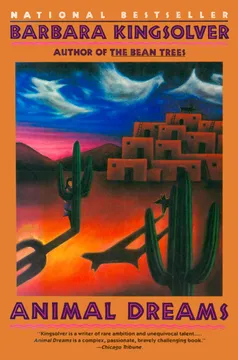
Other books by Barbara Kingsolver




Download PDF
Download EPUB
.epub digital book format is ideal for reading ebooks on phones, tablets, and e-readers.








