

Plot Summary
A Boy Between Worlds
In 1929, twelve-year-old Harrison Shepherd arrives on Isla Pixol with Salomé, his Mexican mother, who has left his American father for the wealthy oilman Enrique. The hacienda is no storybook refuge: Enrique keeps mother and son dependent on him, while Salomé tries to win the place of a wife and Harrison tries to stay out of the adults’ way.
Cook Leandro gives the isolated boy a diving goggle, opening the reef to his first vivid world beyond the house. He teaches Harrison to make bread and to notice the difference between a sound and an attempt to communicate. Salomé, who once asks him to record their troubles, gives him a notebook. Reading and writing become his private forms of escape.
Harrison’s early life makes belonging feel conditional. Enrique’s wealth determines where the family lives, while Salomé’s shifting identities teach her son that affection and security can be traded for a more advantageous future. Leandro offers a different model: shared work, food, and attention create a relationship without ownership. The boy’s fascination with fish and books is not simply escapism. Both teach him to observe systems whose inhabitants communicate, cooperate, and exclude one another, while he remains unsure where he fits.
The Island's Hidden Mouth
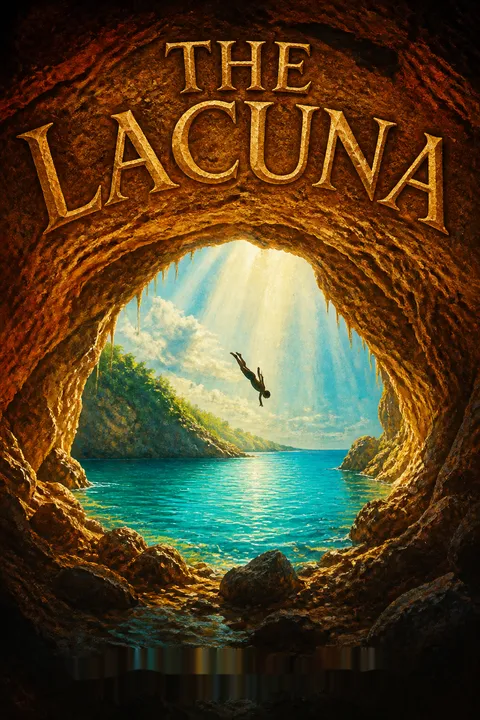
While exploring the shore, Harrison discovers a submerged passage that appears and disappears with the tide. Leandro names such openings lacunas and warns that they can drown anyone who mistakes curiosity for control. Harrison studies the currents until he reaches a hidden pool in the jungle, where he finds temple ruins and human bones.
The discovery binds his childhood world to a buried history the adults around him rarely explain. Before he can explore further, Salomé announces their departure from Enrique. She takes Harrison to Mexico City, leaving Leandro without warning; Harrison slips a gold pocket watch into a jar as a belated gift for his friend. The boy loses the island, but carries its underwater passage into his imagination.
The lacuna first acts as a literal danger and then as a model for how history is encountered: through gaps, partial evidence, and uncertain passage. Harrison discovers human remains without gaining a complete account of the people who left them. His departure from Isla Pixol repeats that uncertainty in personal form. Salomé does not explain her decision, and Leandro receives no farewell. Harrison’s impulse to observe and preserve what others leave unsaid begins here, as does his habit of imagining escape as a route through rather than away from the past.
Rivera's Unfinished Wall
In Mexico City, Salomé places Harrison in a school that treats him as a misfit, so he slips away to explore the markets and the National Palace. There he sees Diego Rivera’s vast mural, a public history that gives Indigenous people a place the official story often denies them. When Rivera returns to finish the work, Harrison offers to mix plaster, using the patient method Leandro taught him for bread dough.
Rivera hires him, first as a plaster boy and later as a household worker. At the Melchor market, Harrison also notices Frida Kahlo, Rivera’s striking, sharp-eyed wife, before he knows who she is. The boy who once saw imagination as an embarrassment finds that practical skill can bring him close to artists.
The mural changes Harrison’s sense of what art can do. Unlike the locked books at Enrique’s hacienda, Rivera’s painting occupies a public staircase and makes a contested past unavoidable. Harrison’s entry into this world is not a sudden artistic revelation but the result of material knowledge: a method learned in Leandro’s kitchen proves useful on a monumental wall. The episode links domestic labor to public culture and gives Harrison a durable insight into how art is made, maintained, and seen.
The Bonus Army Burns
In 1932, Salomé sends Harrison north to live with his American father and attend Potomac Academy. His father provides food and tuition but little intimacy, and the school’s rigid discipline leaves Harrison lonely.
Billy Boorzai, an older-looking student who works in the kitchen, becomes his first close friend in Washington and takes him on errands through the city. Those trips expose Harrison to the Bonus Army encampment, where veterans and their families demand the pay promised for their service.
When federal troops, cavalry, and tanks drive them out, Billy and Harrison struggle through the violence and tear gas. The camp is burned, and the boys learn that the newspapers can recast suffering as disorder. After Harrison’s schooling collapses, he returns to Mexico, carrying both his father’s rejection and Billy’s friendship.
Washington offers Harrison citizenship without a sense of home. His father’s practical provision cannot repair the emotional distance between them, while Potomac Academy turns education into another system of enforced conformity. Billy supplies what the institution does not: companionship grounded in shared marginality. The attack on the Bonus Army sharpens Harrison’s suspicion of official accounts, because he sees the violence firsthand before reading its sanitized version. His political awareness grows less from doctrine than from watching people with little power become a problem the state solves by force.
Frida's Odd Egg
Back in Mexico, Harrison returns to Rivera’s circle and moves from plaster work into the cramped kitchen of the Riveras’ modern San Angel house. Frida, who has returned after separating from Diego, first treats him as an odd, barely pronounceable servant, then recognizes his intelligence and gives him the nickname Insólito.
She invites his opinions on art and politics, and he sees how her fierce public style conceals pain, artistic doubt, and a need to be taken seriously. Harrison writes at night, though Diego worries that private notes could endanger the household.
In 1937, Diego brings the exiled Leon Trotsky and his wife, Natalya, into the Blue House. Harrison becomes Trotsky’s typist and assistant, joining a household where political work, domestic service, and danger share the same rooms.
Frida’s attention gives Harrison a new kind of recognition. She does not mistake his reserve for stupidity, and her questions make his private writing harder to dismiss as childish. Their bond is neither simple mentorship nor easy friendship: both know how public identities can obscure bodily vulnerability and private desire. The transition from Rivera’s kitchen to Trotsky’s office extends that tension. Harrison’s labor supports men whose ideas reach across continents, yet his own political understanding remains skeptical and provisional.
A Fortress of Paper
As Stalin’s show trials label Trotsky a traitor, the Blue House tightens its defenses and prepares to let him answer the charges publicly. Harrison translates Spanish testimony during the Dewey Commission hearings, and a newspaper prints his description of Trotsky’s concentration, making the quiet typist briefly visible.
The commission later clears Trotsky, though the verdict does not end the threat. Inside the household, Frida’s affair with Trotsky strains her marriage to Diego, while Harrison’s unspoken attachment to the secretary Van deepens.
Frida also learns that Harrison writes fiction and presses him to treat his work seriously. The household’s diaries and reports, intended as security records, become places where desire and private grief surface despite the rules against writing.
The hearings stage a conflict over who gets to define truth. Trotsky’s defense depends on evidence and public scrutiny, while Stalin’s accusations rely on repetition and coerced agreement. Harrison’s accurate translation briefly enters that contest, showing how seemingly modest labor can shape the public record. Yet the household cannot keep politics outside private life. Its surveillance measures expose the residents to one another even as they try to protect themselves, and Harrison’s diary becomes a fragile counterarchive of feelings that official documents exclude.
The Pickaxe in the Office
A letter Diego intends for the French poet André Breton is left on Trotsky’s desk. Trotsky reads Diego’s private complaints, and the two former allies break apart. In May 1940, muralist David Alfaro Siqueiros leads an armed assault on Trotsky’s home; the guards survive, but Sheldon Harte disappears and is later found murdered.
Months afterward, Jacson, a visitor welcomed into the household, enters Trotsky’s study carrying a concealed ice axe and strikes him. Trotsky orders the others not to kill the attacker, hoping the truth can be established. He dies the next day. Harrison’s notebooks are seized by police, and, grieving his mother’s earlier death and now another lost home, he leaves Mexico carrying Frida’s paintings north to New York.
The attack grows out of the book’s central vulnerability: trust must be extended for a household to function, but each extension can be exploited. Diego’s unguarded letter damages an alliance; Jacson turns the ordinary hospitality of visitors into a path to murder. Trotsky’s insistence on keeping his attacker alive is also a demand that violence not determine its own story. For Harrison, the loss is doubled: the friend and employer is gone, and the notebooks that preserved his life are taken away. The witness is left without his record.
The Manuscript in the Crate
Harrison reaches Asheville in 1940, finds his father dead, and settles in a boardinghouse after driving into the Blue Ridge Mountains. During the war, his experience moving Frida’s paintings helps him secure civilian work safeguarding art.
He cooks for his fellow boarders and meets Violet Brown, a reserved, capable typist who later becomes his secretary. In 1943, he opens the crate Frida sent with him and discovers that she concealed his confiscated notebooks and manuscript pages between the shipping cases.
The recovered writing becomes Vassals of Majesty, his novel about Cortés and the conquest of Mexico. Its success brings readers, money, and unwanted attention. Violet manages his correspondence, while Harrison, still wary of exposure, finds himself publicly known for a book he had nearly abandoned.
The crate reverses the meaning of Harrison’s departure. What looked like a container for paintings also shelters the record of a self he believed destroyed. Frida’s intervention is an act of faith in his capacity to make art, while Violet’s clerical work gives that art a public life. Yet publication does not cure his fear of being seen. Success intensifies the conflict between the writer’s need for readers and the private person’s wish to remain unobserved.
The Name on the List
Harrison publishes a second historical novel and travels with Violet to Yucatán, where Mayan ruins and living village life unsettle his romantic ideas about vanished civilizations. At home, an FBI inquiry and a paid loyalty outfit begin assembling distortions from his years in Mexico, his work for Trotsky, and his friendship with Frida.
His lawyer, Arthur Gold, warns that the campaign is less interested in what Harrison believes than in making association itself look incriminating. Newspapers invent a romance with Violet, then portray Harrison as a Communist.
His third novel, The Unforetold, draws on the collapse of an ancient society, but a reviewer takes a character’s criticism of a ruler as Harrison’s own threat. As the falsehood spreads, his publisher hesitates and friends retreat.
The loyalty campaign converts ambiguity into guilt by stripping context from relationships, sentences, and images. Harrison’s childhood in Mexico and employment as a cook and typist are recoded as evidence of conspiracy; a fictional character’s words are treated as confession. This is not merely censorship of ideas but a seizure of interpretive authority. The Yucatán journey offers a counterweight: living people persist beyond the monuments through which outsiders define their past. Harrison’s own public identity is being reduced to a monument assembled by strangers.
The Hearing and the Sea
By 1950, Harrison has lost the security of government work, his publisher’s confidence, and much of his faith that books can protect their authors. The House Committee on Un-American Activities summons him to Washington, where investigators press him to reduce a complicated life to yes-or-no answers.
With Arthur Gold and Violet beside him, Harrison admits that he worked for Trotsky and Rivera, helped prepare documents, and wrote books read by people abroad.
He refuses to claim that these facts prove a plan to overthrow the United States, and explains that he brought art to readers because it gives people another view of the world. The hearing ends without resolving the campaign against him. Soon he returns with Violet to Isla Pixol, where his boyhood cave offers a perilous alternative.
The hearing forces Harrison to choose between self-protection through denial and honesty that can be weaponized against him. His testimony does not make him politically simple; it makes him accountable for what he did while refusing the committee’s false equivalence between association and treason. His defense of art returns the story to its earliest concern, the need for a view beyond one’s immediate confinement. The return to Isla Pixol is not a triumphant escape but a final test of whether he can pass through uncertainty without surrendering to it.
Epilogue
In 1951, newspapers report that Harrison drowned near Mexico City and died by suicide. Violet never accepts the account as certain. Years later, after Frida’s death, a trunk reaches her with Harrison’s old clothes and the missing childhood diary.
Its careful notes about tides and the underwater passage suggest that Harrison may have used the lacuna to disappear and begin again. Violet preserves his journals rather than burn them, then assembles his life into the book the reader has finished. Whether Harrison survived remains unproved; the record survives where the man’s fate does not.
The ending refuses to convert uncertainty into a comforting fact. Violet’s reconstruction gives Harrison a possible route beyond the official obituary, but she cannot verify what happened after he entered the water. That restraint matters: the book has shown how institutions turn incomplete evidence into confident stories, so Violet’s account preserves the distinction between inference and knowledge. Her decision to publish the journals also reverses Harrison’s wish for silence. She risks violating his privacy because she believes the public falsehood has already buried him, and the surviving pages can restore the complexity that the headlines erased.
Analysis
The Lacuna examines who gets to tell history and what happens when institutions claim authority over the record. Harrison begins as a child whose life is repeatedly decided by adults, employers, and borders. His notebooks offer a modest counterpower: they preserve the texture of people whom official narratives reduce to servants, traitors, victims, or heroes. Yet the novel refuses to treat private writing as a transparent truth. Harrison’s records are incomplete, Violet edits and arranges them, and the lost diary changes the meaning of his disappearance. Memory itself is a form of interpretation, not a perfect archive.
The novel’s politics emerge through concrete acts of representation. Rivera paints Indigenous history across state walls; newspapers turn the Bonus Army into a menace and Harrison into a public enemy; a congressional committee tries to compress his life into yes-or-no answers. These systems differ in purpose and power, but all struggle to control what can be seen. Art offers no guaranteed escape from propaganda. It creates another vantage point, where an ordinary soldier, a cook, or a village family can matter as much as a ruler.
Harrison’s divided identity is not resolved by choosing one country over another. His Mexican and American inheritances remain in tension, but that tension becomes a method of attention. He notices the distance between a nation’s ideals and the labor or violence that sustains them. His caution is both a survival strategy and a limit; he often withdraws precisely when public speech might matter. Violet’s decision to preserve his papers challenges that retreat without pretending that exposure is harmless. The book’s final uncertainty is therefore ethical as well as narrative. It asks whether telling a life can rescue someone from falsehood, while admitting that even a careful witness cannot close every gap.
Review Summary
The Lacuna receives mixed but largely positive reviews (3.83/5). Readers praise Kingsolver's beautiful prose and ambitious scope, spanning 1930s Mexico to 1950s McCarthyism. The novel follows Harrison Shepherd through his work with Diego Rivera, Frida Kahlo, and Leon Trotsky, then his persecution during America's Red Scare. Many appreciate the historical depth and compelling second half, though some find the protagonist passive and the first section overlong. Critics note the fragmented diary/journal format works well but occasionally drags. Several readers highlight themes of political persecution's relevance today and praise secretary Violet Brown's character.
People Also Read





Characters
Harrison Shepherd
Exile turned novelistBorn in Virginia to an American father and Mexican mother, Harrison grows up crossing borders without feeling fully claimed by either country. Quiet, observant, and often more comfortable serving food or typing another person’s words than explaining his own, he uses books and notebooks to make sense of lives others dismiss. He is skilled with dough, plaster, languages, and detail, but distrusts political certainty and recoils from publicity. His close attention to ordinary people gives his historical fiction its human scale. Beneath his self-effacement is a stubborn artistic impulse: he keeps writing even when family, employers, authorities, and finally his own fear give him reasons to stop.
Violet Brown
The steady witnessA practical, self-educated widow from the North Carolina mountains, Violet becomes Harrison’s secretary after first knowing him as a fellow boarder. Her unusual speech and fierce respect for privacy mark her as someone who has survived by noticing more than she says. She can manage correspondence, household disorder, and social pressure with the same measured competence. Violet believes writing has consequences, but she also understands that silence can let other people define the record. Her loyalty to Harrison grows from respect rather than pity. She challenges his retreat from life while recognizing that no amount of steadiness can remove the danger surrounding him.
Salomé Shepherd
The restless motherHarrison’s Mexican mother is resourceful, theatrical, and hungry for romance, money, and a life that feels larger than the room she occupies. She adopts American manners and slang when it suits her, but her reinventions do not erase the insecurity beneath them. Salomé loves Harrison fiercely, yet often treats his presence as a complication in her pursuit of a new husband or a fresh beginning. Her shifting loyalties teach him both how people use stories to survive and how children can be left to bear the cost of adult desire.
Leandro
The island's first guideLeandro is the cook on Isla Pixol and Harrison’s first genuine friend. A former diver who knows the reefs and tides firsthand, he teaches the boy how to cook, observe, and respect dangers that books cannot remove. His warmth does not depend on Harrison being useful or impressive. Leandro’s responsibilities to his wife and children reveal the unequal arrangement of the hacienda, where he feeds wealthy guests while his own family has little. He gives Harrison a practical education in friendship, grief, and the value of ordinary work.
Frida Kahlo
The fierce artistFrida Kahlo is a painter whose vivid clothes and sharp wit make her impossible to overlook, though she knows attention can reduce a woman to spectacle. She lives with chronic pain, artistic uncertainty, and a marriage to Diego Rivera marked by deep attachment and repeated injury. Frida takes Harrison seriously before he can do so himself, recognizing his writing and his ability to understand how art carries private truth into public space. She is generous but not gentle, and her affection often arrives through teasing, demands, and practical acts. Her independence is as carefully made as her paintings.
Diego Rivera
The mural-making giantDiego Rivera is a celebrated muralist whose enormous public paintings join Indigenous history, revolution, and the lives of workers. His appetite, confidence, and political convictions fill every room he enters, while his carelessness with intimacy complicates life for Frida and those around them. Diego recognizes Harrison’s talent for plaster work and later gives him access to a world of artists and political exiles. He believes art can help make a people visible, yet his own relationships show that visionary commitments do not prevent personal selfishness or error.
Leon Trotsky
The hunted revolutionaryLeon Trotsky arrives in Mexico as an exiled revolutionary whose political arguments have made him a target of Stalin. Tireless, disciplined, and unexpectedly affectionate with the people around him, he combines strategic certainty with a sincere belief in human solidarity. He takes an interest in Harrison beyond the young man’s work as a cook and typist, encouraging his reading and writing. Trotsky’s confidence in reason and historical change contrasts with Harrison’s caution, while his personal losses show the human cost of political struggle. He expects his household to serve both daily life and a worldwide movement.
Natalya Sedova
Trotsky's steadfast partnerNatalya is Trotsky’s wife, companion in exile, and keeper of the household that shelters him. She lives with the constant fear that Stalin’s reach will find her family, after years of losing children and comrades to political violence. Her care for Trotsky is practical and watchful, expressed through food, routines, and attention to his health. She can seem reserved beside Frida’s flamboyance, but her restraint holds its own force. Natalya understands that security measures protect bodies while narrowing the lives of everyone required to live behind the walls.
Van Heijenoort
Trotsky's devoted secretaryVan is Trotsky’s tall, multilingual secretary, fiercely protective of his employer and accustomed to being the indispensable interpreter between Trotsky and the world. His loyalty is shaped by years of shared exile, but he also longs for ordinary intimacy and a life beyond political service. Harrison’s attraction to him remains entangled with admiration, loneliness, and the difficulty of speaking openly. Van’s presence exposes the emotional costs of devotion: the closer he stands to a cause, the harder it is to imagine a self outside it.
Billy Boorzai
Harrison's first American friendKnown at school as Bull’s Eye, Billy is a sharp-tongued student whose family has been battered by the Depression. He works in the Potomac Academy kitchen and takes Harrison along on errands, introducing him to Washington beyond the school grounds. Billy’s bravado conceals a serious concern for the homeless veterans and families of the Bonus Army. His friendship gives Harrison a rare experience of being chosen and included, even as their unequal ways of expressing affection leave the relationship difficult to name.
Harrison's father
The distant providerAn American government accountant who offers Harrison a place at school but little warmth, his father represents the stable home Salomé could not preserve. He is proud of his country and resentful of Mexico, and his emotional reserve leaves Harrison searching for a relationship that never quite begins.
Tom Cuddy
The dazzling museum manTom Cuddy is Harrison’s lively colleague from the wartime art service, a fast-talking museum worker who dreams of entering advertising. He understands the machinery of public attention better than Harrison does, and his charm can conceal insecurity about where he belongs. Their friendship offers Harrison intimacy and humor, but Tom’s need to adapt to changing professional and political expectations puts pressure on their bond.
Arthur Gold
The clear-eyed lawyerArthur Gold is Harrison’s New York lawyer, a humane, skeptical man who recognizes how fear can be organized into a profitable business. He explains the legal and political traps surrounding loyalty investigations without pretending he can make them disappear. Gold’s advice is grounded in experience rather than ideology, and he respects Harrison’s independence even when urging caution. He offers the practical protection that Harrison’s more idealistic friends cannot.
Sheldon Harte
A young household guardSheldon is one of the young guards protecting Trotsky’s household. He befriends Seva and brings an ordinary boy’s humor and warmth into a home governed by security drills. His presence makes the political danger tangible to the youngest people in the compound.
Jacson
The welcome visitorJacson enters the Trotsky circle as a helpful, personable acquaintance who offers rides and small kindnesses. His careful ease makes him difficult to distinguish from the many visitors drawn to the household, where trust is necessary even when it is dangerous.
Seva
The endangered grandsonSeva is Trotsky and Natalya’s grandson, brought to Mexico after losing much of his family to political upheaval. Curious and energetic, he forms a close friendship with Sheldon and brings childhood concerns into the guarded adult world. His presence makes the household’s political risks impossible to treat as abstract.
Plot Devices
The notebooks and archive
A life in fragmentsThe story is assembled from Harrison’s journals, letters, newspaper clippings, official documents, and Violet Brown’s archival notes. Each form offers a different kind of evidence: private diaries preserve unguarded feeling, newspapers distort events for public use, and Violet’s comments reveal how an editor can shape a life after its subject can no longer object. The missing childhood diary becomes especially important because it changes what Violet believes happened at Isla Pixol. The archive is not neutral storage. Its gaps, rescued pages, and conflicting accounts determine whether Harrison appears as a writer, a suspect, or a man whose fate remains uncertain.
The lacuna
A passage through uncertaintyThe tidal cave first draws Harrison into the hidden world beneath Isla Pixol, where he finds a jungle pool, ancient ruins, and human bones. Its shifting entrance depends on tides and timing, so entering it requires patience rather than force. Over the years, the cave becomes a private measure of how history and identity can contain unmarked routes. Violet later reads Harrison’s boyhood notes about the passage and sees a possible meaning in his final return to the island. Whether he used it to escape remains an inference rather than a confirmed fact.
Murals and paintings
History made visibleRivera’s murals turn public walls into arguments about Mexico’s past, while Frida’s paintings give private pain a visible form. Harrison’s work moving crates and mixing plaster brings him into contact with both the physical making of art and the institutions that display or suppress it. Paintings travel across borders, governments use them to represent national identity, and viewers disagree about what they mean. Art repeatedly gives Harrison a way to understand people without reducing them to political labels. His own books later perform a related task by giving ordinary figures room inside histories dominated by leaders.
Newspapers and headlines
Rumor becomes public factNewspaper excerpts and fictional reports punctuate the narrative, making the press part of the action rather than a neutral backdrop. Reports about Trotsky, the Bonus Army, the loyalty investigations, and Harrison himself reveal how repetition can transform accusation into apparent consensus. The same machinery that misrepresents the vulnerable also gives readers a chance to compare competing accounts. Headlines compress complicated lives into memorable labels, while the diaries restore details that do not fit those labels. The novel asks readers to judge not only what is reported, but who benefits when a story is made simple.
Food and domestic labor
Care made tangibleCooking connects the novel’s political households to daily survival. Harrison learns from Leandro, feeds Rivera’s circle, prepares meals for Trotsky’s guarded household, and later cooks for Violet and the Asheville boarders. Food makes class relations visible: servants nourish people who command movements and ideas, while their own needs can remain unattended. The kitchen also becomes a place where trust grows through shared routines, recipes, and unshowy competence. Harrison’s identity as a cook is never merely an obstacle to becoming a writer. His attentiveness to labor and appetite becomes one of the foundations of his fiction.
About the Author
Other books by Barbara Kingsolver


Download PDF
Download EPUB
.epub digital book format is ideal for reading ebooks on phones, tablets, and e-readers.








