

Key Takeaways
See old age as a new social condition, not a single personality
Age changes its meaning. At eighty, Penelope Lively finds that people much younger than her once seemed old, while today many in their sixties look simply mature. The label shifts with the observer and the era. In the West, longer lives have also turned older people into a large social group, bringing public debate about pensions, care, and work. Yet millions of older adults do not share one character or capacity. Lively resists being treated as a stereotype, whether helpless grandparent or wise elder.
Experience varies sharply. Some older people remain healthy and eager to contribute; others face pain, disability, or financial insecurity. Lively argues that policy should not confuse a demographic category with a uniform population. Her own relative security gives her room to choose how she spends her time, a privilege she explicitly recognizes.
What's valuable here is the separation of two questions that public debate often blurs: how many older people need support, and what any particular older person can do. Demography can guide budgets, but it is a poor substitute for knowing individuals. Lively's account also makes clear that independence is partly produced by resources, not just attitude or character. The limitation is that one reflective, comparatively secure writer cannot represent every experience of aging. Her strongest contribution is not a universal portrait, but a warning against mistaking a population trend for a personal identity.
Let the body set limits without letting it define the whole life
Capacity can change desire. Lively once traveled frequently and gardened intensively. Arthritis and other ailments narrowed what her body could manage, and she found that some old ambitions had faded with those capacities. She no longer wanted airports or strenuous gardening, though she still enjoyed reading, small outings, flowers, and the pleasures of a garden in miniature. This is not a simple victory of positive thinking. She describes serious pain, cancer treatment, and the frustration of needing help, while noting that optimism cannot cure illness.
Pleasure can be recalibrated. Rather than pretending every loss is easily accepted, Lively describes adapting to a different life and taking pleasure in what remains. Reading becomes essential; a sunny morning, a visit with family, or new flowers can make a day feel vivid. Her example is personal, not a prescription to stop grieving abilities that matter.
This account resists two familiar traps: treating disability as personal failure, and demanding that people convert every loss into inspiration. Its more useful idea is that well-being can change shape without erasing grief. That distinction is important in conversations about resilience, where praise for a positive outlook can quietly become blame for suffering. Lively also highlights how choice depends on circumstance: leisure, family support, and financial security can make adaptation easier. The insight is therefore both psychological and social. Acceptance may help someone live with a condition, but it should never excuse preventable pain or inadequate care.
Use the long view to recognize continuity inside changing selves
A life contains many versions. Looking back, Lively recognizes her younger selves as familiar but not identical. She remembers reading Sir Thomas Browne decades earlier, then encountering his writing again in old age and finding that the same interests still connect the two moments. The body may become an unfamiliar burden, while habits of attention and thought retain a recognizable signature. A person changes, but does not simply become someone unrelated.
Time changes direction. In youth, the future seems like a long expanse ahead. In old age, much of that expanse has become memory, while the time still ahead feels shorter. Lively calls attention to the strange coexistence of continuity and alteration: earlier selves remain present in memory, dreams, relationships, and the work they made. Grief, including widowhood after a long marriage, can make that altered present especially stark.
Lively's picture of identity is more convincing than either extreme: the self is not a fixed core untouched by experience, nor a succession of strangers with no continuity. It resembles a developing archive, where old material remains available but acquires new meanings. That model helps explain why revisiting a book, place, or relationship can make a former self feel near. It also leaves room for change that memory cannot neatly integrate. Continuity is not proof that a person remains unchanged; it is the felt relationship between the present person and the lives that came before.
Read public history against what it felt like to live through it
Events become personal context. Lively's childhood in Cairo unfolded during the Second World War. As a child, she absorbed the war through place names, adult conversation, and the possibility of evacuation, without understanding its larger stakes. Later, historical accounts of the Battle of El Alamein showed how close the fighting came to threatening her family's home and her father's safety. The child experienced a condition of life; the older writer can see its geopolitical consequences.
Suez awakened attention. In 1956, Britain and France attacked Egypt after President Nasser took control of the Suez Canal. Lively, who still felt a connection to Egypt, experienced the intervention as both a political crisis and a personal betrayal. She describes it as the moment she began paying attention to government and public affairs. The Cold War and the Cuban missile crisis later made global events feel directly connected to her family's future.
The memoir's method joins two kinds of evidence without treating them as interchangeable. Historical scholarship can reconstruct decisions, alliances, and consequences; personal memory can reveal how those events felt to someone living inside their atmosphere. The child's view of wartime Cairo is necessarily incomplete, but its incompleteness is informative: major events do not arrive in ordinary life as finished historical narratives. The approach also guards against nostalgia, since later knowledge can expose what a contemporary observer could not see. Personal testimony adds texture to history, while historical context helps prevent memory from becoming the whole explanation.
Treat memory as a selective map, not a recording
Memory has different jobs. Procedural memory stores how to perform an action; Lively's fingers remember changing a typewriter ribbon. Semantic memory retains facts and meanings, such as what a typewriter is. Autobiographical memory places experience in a personal setting, such as the baby who once squeezed tomatoes in a pram. These systems do not preserve life as one complete, orderly film.
The gaps matter too. Lively's memories surface as fragments: a smell of rosemary brings back a hillside near Jerusalem, while an image of an orange recalls a question asked during Christmas dinner. Psychologists call smell-triggered recollection the Proust phenomenon. Memories can be vivid without being complete or perfectly reliable. They help a person feel oriented in time, but they also select, omit, and sometimes distort. Lively's point is not to distrust every recollection, but to treat it as evidence shaped by the mind that remembers.
This distinction is useful because it replaces the idea of memory as a single mental faculty with a set of different forms of knowing. Remembering how to do something can survive even when a person's account of when they learned it has vanished. The sensory examples also show how recall is often prompted rather than deliberately summoned. At the same time, vividness should not be confused with accuracy. A powerful memory may be emotionally true while details remain uncertain. Lively's account invites respect for memory as part of identity, alongside caution when using it as a precise record of past events.
Read beyond your life to enlarge what you can imagine
Books open other lives. Reading has been central to Lively since childhood. Growing up in Egypt without ordinary schooling, she encountered Homer, Dickens, poetry, and other works through lessons and private reading. Books offered imagined worlds beyond her immediate surroundings. As an adult, fiction let her encounter lives unlike her own, while history, archaeology, and accounts of distant landscapes expanded her sense of what people have experienced.
Reading also feeds writing. W. G. Hoskins's work on the English landscape taught Lively to see fields as layers of history, a way of seeing that later informed her fiction. Other chance discoveries prompted novels, though the finished stories grew beyond their sources. Lively values unplanned reading because an unexpected book can redirect attention. In old age, books also provide a form of travel when physical travel has lost its appeal.
The distinctive claim is not merely that reading provides information, but that it can alter what a reader notices. A landscape becomes a historical record; an unfamiliar life becomes imaginable; a stray fact can become the seed of creative work. This is a strong account of intellectual influence as indirect and cumulative rather than a simple transfer of ideas. Still, exposure to books does not automatically produce empathy or insight. Readers can use literature to confirm what they already believe. The benefit depends on meeting works that resist easy agreement and on allowing their perspectives to unsettle familiar assumptions.
Let fiction give shape without mistaking shape for truth
Stories organize disorder. Novels move toward endings and invite readers to see events as connected. Real lives are less tidy. Lively describes a lifetime as a mixture of choices and contingencies, with outcomes that could not have been planned in advance. Looking back, people still search for a thread through what happened, but a polished narrative can leave out accidents, contradictions, and other people's versions of the same events.
Life writing can help. Lively values memoir as a way to step back, notice recurring patterns, and consider paths not taken. Yet a life cannot supply its own final chapter while it is still being lived. Her book therefore resists a conventional cradle-to-present account, moving instead among aging, public history, memory, reading, and possessions. The form reflects the mind's associative returns rather than imposing a single explanation on everything.
Narrative is both a tool for understanding and a source of distortion. A coherent account can make experience communicable, but coherence may imply that events were inevitable or that every setback served a purpose. Lively's distinction between fictional closure and lived contingency helps readers use life stories without demanding a moral that the evidence cannot support. Memoir can still be valuable when it admits its limits: it offers a situated interpretation, not a definitive ruling on the past. That humility makes personal narrative more persuasive, not less.
Let ordinary objects connect one life to deep historical time
Things carry layered histories. Lively's home contains objects that act as prompts: a Bible bought during a wartime evacuation to Palestine, a replica of an ancient Egyptian cat, a sampler made in 1788, and American duck designs given by a friend. Each links a present room to people, places, and customs that might otherwise feel remote.
Fragments make time tangible. Two ammonites, fossilized in blue lias, point to ancient seas more than 190 million years ago. A broken pottery fragment from Fustat, an early Egyptian capital destroyed in 1168, bears two painted fish. The maker is unknown, yet the surviving shard confirms that someone made and used the dish. These things do not restore the past in full. They give imagination a material foothold, joining private memory to the much larger record of human and natural time.
The objects work because they are neither grand monuments nor mere decoration. Their scale invites close attention, while their survival opens onto histories much larger than their owners. This is a form of material thinking: an artifact can prompt questions about labor, trade, belief, ecology, and loss, even when its original setting is gone. The evidence remains partial, so imaginative connection must not be mistaken for certainty about an object's maker or meaning. Lively's method is at its best when it preserves both responses: wonder at what survives, and honesty about what cannot be recovered.
Analysis
This memoir is less a chronological account than a study of how a life becomes legible from within old age. Its organizing movement is associative: the present body recalls former selves; a political event revives a childhood landscape; a book alters how a place is seen; an object opens onto a past far beyond personal experience. The form enacts its argument. Memory does not deliver a complete autobiography in sequence, so the book assembles meaning through returns, contrasts, and physical prompts.
Lively's strongest insight is the combination of scales. Aging is intimate, felt through pain, changing appetite, and the shrinking horizon of time. It is also demographic and political, shaped by care systems and public assumptions. Historical events similarly enter private life unevenly. The Second World War is first a child's ordinary environment, while Suez becomes a political awakening because it touches the country Lively still experiences as home. Her memoir shows how historical consciousness is acquired, not simply possessed.
The book also refuses to confuse narrative coherence with truth. Fiction needs shaped endings; lived experience includes chance, partial knowledge, and conflicting accounts. That distinction makes Lively's reflections on memoir especially useful: a personal story can reveal patterns without claiming to explain every event. Memory gives identity continuity, but its selectivity means it cannot serve as a flawless archive.
The perspective has limits that the book itself helps readers notice. Lively's literary career, education, home, and financial security provide resources unavailable to many older people. Her capacity to choose reading over travel, or to adapt her garden, is not universal. This does not weaken her observations, but it locates them. The memoir is not a general theory of aging. It is a finely observed case study in what one life can reveal about age, history, memory, and the objects that keep the past within reach.
Review Summary
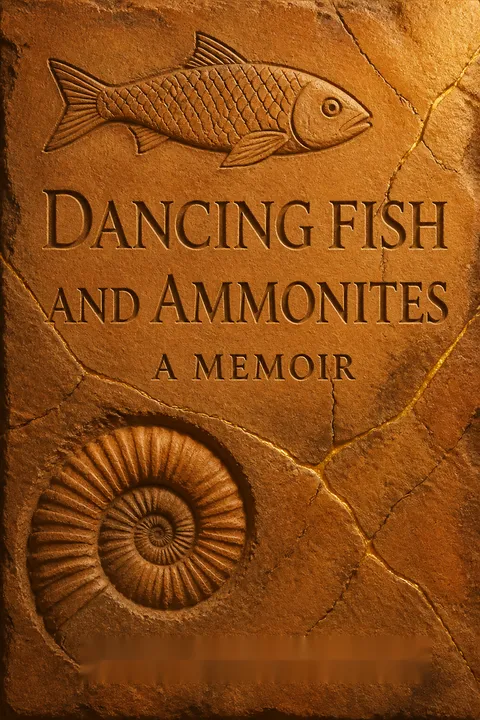
Dancing Fish and Ammonites is a reflective memoir by Penelope Lively, written at age 80. Readers appreciate Lively's insights on aging, memory, and the joy of reading. The book's structure, divided into sections on old age, life experiences, and cherished objects, resonates with many. Some find it meandering but enjoy Lively's elegant prose and wit. While not a traditional memoir, it offers a unique perspective on a life well-lived. Critics praise its thoughtful exploration of memory and the past, though some desire more cohesion or depth in certain sections.
People Also Read


Glossary
procedural memory
memory for learned actionsA form of memory for how to carry out a learned activity, often expressed through performance rather than conscious recollection. Lively's example is her fingers remembering how to replace a typewriter ribbon, even though she could not initially explain how she knew what to do.
semantic memory
memory for facts and meaningsMemory that stores general knowledge, words, and meanings without requiring recall of the original occasion on which the information was learned. In Lively's account, knowing that an object is a typewriter is semantic memory, distinct from remembering how to use it or the personal events associated with it.
autobiographical memory
memory for personal experienceMemory for events in one's own life and the contexts in which they occurred. Lively describes it as uneven and associative rather than chronological. It helps a person understand who they are, while remaining incomplete and shaped by what is recalled, what is forgotten, and how events are interpreted.
childhood amnesia
loss of earliest memoriesThe common difficulty adults have recalling much of their earliest childhood, despite evidence that young children form memories. Lively considers why some early experiences remain as vivid sensory fragments while others disappear, and presents childhood memory as especially visual, tactile, and tied to novelty.
Proust phenomenon
smell-triggered personal recallThe experience of a smell or taste unexpectedly bringing back a memory of a particular time or place. The term refers to the literary example of a taste reviving an earlier world. Lively describes rosemary prompting a memory of a hillside near Jerusalem, while noting that the phenomenon and its workings have been debated.
disposable soma theory
evolutionary account of agingAn evolutionary explanation for aging discussed by Lively through gerontologist Tom Kirkwood. It proposes that organisms allocate limited resources between reproduction and maintaining the body's cells. Over time, natural selection may favor investment in growth and reproduction over indefinite repair, leaving the body vulnerable to age-related decline.
presence of the past
past surviving in present lifeLively's recurring idea that earlier times remain active in present landscapes, objects, memories, and people. A field may preserve traces of former settlement; a pottery fragment may connect a modern home to an ancient city. The past cannot be fully recovered, but surviving evidence makes it available to historical understanding and imagination.

Download PDF
Download EPUB
.epub digital book format is ideal for reading ebooks on phones, tablets, and e-readers.








