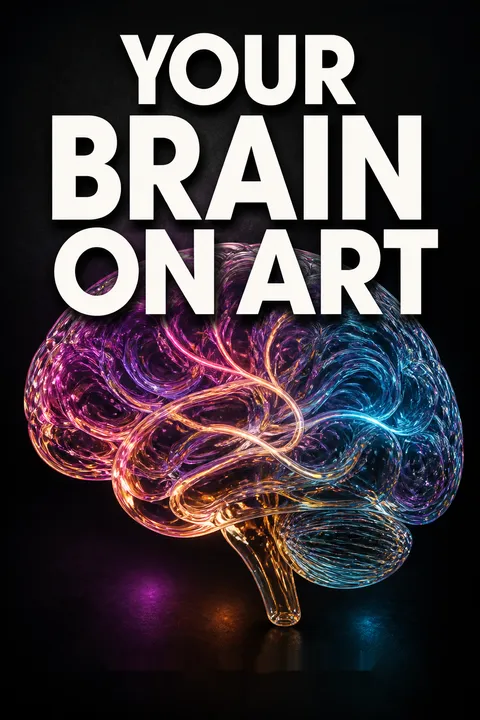


Key Takeaways
Treat art as a biological input, not a decorative extra
Art reaches the body. The book’s central claim is that art is not merely entertainment or ornament. Seeing, hearing, touching, making, and moving through art engage sensory, emotional, and reward systems, changing how the body and brain respond. Neuroplasticity is the brain’s ability to strengthen, weaken, and reorganize neural connections through experience. Salient experiences, the ones that matter emotionally or practically, are especially likely to shape learning and memory.
Many routes work together. A 2021 review discussed in the book mapped more than 600 ways leisure arts may affect health, from psychological and biological effects to social and behavioral ones. Art’s strength, the authors argue, lies in engaging many mechanisms at once, rather than acting like a drug with one active ingredient.
The useful shift is from asking whether art is valuable to asking what kind of experience changes what, for whom, and under which conditions. That framing connects naturally to systems biology, where outcomes emerge from interacting pathways rather than a single cause. It also resists treating creativity as a luxury reserved for people with spare time. Still, a large catalogue of possible mechanisms is not the same as proof that every arts activity reliably improves health. The book is most convincing when it pairs broad claims with specific interventions and measurable outcomes.
Choose surroundings by how your body responds, not by status
Aesthetic response is personal. The aesthetic triad is a model in which sensory input, the brain’s reward system, and personal meaning combine to shape an aesthetic experience. Culture, memory, and context help explain why one person finds a room calming while another feels uneasy in it.
Notice the mismatch. In Google’s A Space for Being installation, visitors wore wristbands that measured signals including heart rate, breathing, and temperature as they explored three designed rooms. Some people’s physiological responses did not match the room they consciously expected to prefer. One visitor felt most at ease in a room she had initially dismissed, prompting her to recognize how ideas about belonging had influenced her judgment. The practical lesson is to observe how light, sound, color, texture, and place affect you.
This is a quietly radical design principle: comfort cannot be inferred from taste, prestige, or a designer’s intention alone. It also echoes interoception, the capacity to notice internal bodily signals, which can reveal reactions that a person has learned to ignore. Biometrics can enrich that awareness, but they do not deliver an unquestionable verdict about what someone feels. A pulse or breathing pattern needs interpretation, especially across different bodies and cultural contexts. The strongest use of measurement is as a prompt for inquiry, not as a replacement for a person’s account.
Use brief, low-pressure creative acts to help stress move through
Process beats polish. In a study described in the book, participants made art for 45 minutes and showed reduced cortisol, regardless of skill or experience. The conditions mattered: an art therapist offered support, and participants were encouraged to focus on making rather than judging the result. Coloring, doodling, knitting, gardening, humming, and time in nature offer accessible ways to bring sensory attention into an ordinary day. One study cited in the book found that 20 minutes in nature significantly lowered cortisol.
Choose what fits. Stress is the body’s response to a perceived demand. It can settle when the body returns toward balance, but persistent stress can drain energy and disrupt well-being. Arts-based social prescribing matches people with activities such as singing, museum visits, or nature walks for support.
The low-pressure element is more than a kindness. It changes the task from performance, which invites evaluation, into exploration, which can support attention and emotional regulation. This resembles the distinction in behavioral science between intrinsic motivation and externally imposed reward: an activity is easier to sustain when it feels chosen and absorbing. The evidence here supports trying accessible practices, not assuming they can resolve chronic stress or replace care. Their practical value may be precisely that they are repeatable, inexpensive, and adaptable to a person’s preferences.
When trauma blocks speech, let image, movement, and sound lead
Expression can come first. Trauma can leave a person reliving an event or carrying intense bodily reactions without a coherent story. The book describes research showing reduced activity in Broca’s area, which supports speech, during some flashbacks. Creative approaches can offer another starting point. Firefighter Aaron Miller began drawing detailed trucks through Ashes2Art, a creative wellness program for first responders. Making art helped him focus and gradually access experiences he had kept locked away.
Give experience a form. At a military arts program, veterans made masks to represent experiences they struggled to describe. Drawing, movement, mask-making, and expressive writing can help people externalize feelings and build meaning. The book reports that early drawing interventions in one program reduced PTSD diagnoses by 80 percent or more. These are supports for healing, not promises of a cure.
The insight aligns with a broader principle in trauma-informed care: safety, agency, and pacing matter as much as the technique. A mask or drawing can create enough distance to approach painful material without demanding an immediate verbal account. But creative work can also stir distress, particularly when difficult memories surface without support. The book’s examples therefore point toward choice and skilled facilitation, not a do-it-yourself substitute for clinical treatment. Art is most helpful when it expands a person’s options for expression rather than imposing a preferred story of recovery.
Add arts to care as complements, not substitutes for treatment
Art can alter symptoms. Pain is shaped not only by physical signals but also by attention, expectation, memory, and emotion. In SnowWorld, a virtual reality program for burn patients undergoing wound care, patients reported 35 to 50 percent less pain while immersed in a snowy virtual environment than with usual treatment. The authors suggest that the experience engages attention and sensory pathways that might otherwise be occupied by pain.
Match the intervention. Dance classes for people with Parkinson’s can train balance, rhythm, and coordinated movement. Familiar songs can help people with dementia reconnect with music and memories. These examples show why arts can be useful alongside standard care: they may support function, comfort, or connection through different routes. The book also stresses that people respond differently, so an intervention should fit the person and situation.
Pain science increasingly treats pain as an experience shaped by the brain’s interpretation of threat, not as a simple readout of tissue damage. That makes distraction, movement, and meaningful sensory input plausible partners to medication and rehabilitation. The key word is partners. A striking result in a small or specialized setting does not establish equal benefit across conditions, patients, or everyday use. Arts-based care earns trust when it is evaluated against clear outcomes, coordinated with clinicians, and offered without implying that persistent symptoms reflect a failure to engage creatively.
Teach through making, play, and emotion, not information alone
Learning needs engagement. Learning changes neural connections, and salient experiences are more likely to hold attention and support memory. The book describes El Sistema-inspired music programs in which students showed gains in social and emotional measures over a school year. In research on Youth Orchestra Los Angeles, musical training was associated with changes in brain regions involved in sound processing and decision-making.
Build for transfer. The authors distinguish learning that can be used beyond a lesson from information briefly retained for a test. Play, theatre, music, and hands-on making can exercise executive function, the ability to manage attention, thoughts, actions, and emotions toward a goal. An Arizona State University virtual reality biology course reported 18 percent higher knowledge retention after a one-day session than traditional teaching methods. The authors emphasize agency, curiosity, and active participation.
The strongest educational claim is not that art automatically raises every test score. It is that making, performing, and playing give learners more ways to attend, experiment, receive feedback, and connect ideas to action. Those conditions are compatible with active learning and embodied cognition, where understanding is built through interaction rather than passive exposure. Transfer remains the hard test: a student’s enthusiasm or success inside an activity does not guarantee lasting use elsewhere. Schools should assess both, while avoiding the mistake of defending arts only when they improve conventional academic metrics.
Practice wonder and novelty to keep possibility cognitively alive
Flourishing is broader than happiness. The book draws on a model that measures flourishing across five areas: life satisfaction, mental and physical health, meaning and purpose, character, and close relationships. Curiosity, awe, novelty, and creativity can help people engage with these areas. In Visual Thinking Strategy, participants study an artwork without being told what it means, then build interpretations from what they actually observe. The exercise invites curiosity rather than testing for a correct answer.
Seek manageable surprise. The authors describe awe as an experience that can widen perspective and make people feel less self-focused. Novelty captures attention because the brain adapts to repeated stimuli. A new route, a poem, a performance, or an unfamiliar artwork can interrupt routine and invite fresh noticing. The book’s aesthetic mindset combines curiosity, playful exploration, sensory awareness, and making or appreciating art.
This account treats flourishing as a set of capacities to cultivate, not a permanent mood or a life without hardship. That distinction is psychologically useful: curiosity can coexist with uncertainty, and awe can interrupt habitual self-preoccupation without denying real problems. Novelty also needs calibration. Constant stimulation can exhaust attention, while familiar rituals provide stability and belonging. A sustainable practice alternates the two: enough repetition to feel grounded, enough new experience to keep perception flexible. The aim is not to chase peak experiences, but to become more available to them.
Build belonging through shared creative rituals and local culture
Making together creates ties. The book traces communal art-making to early human gatherings around fire, where stories, music, and dance helped people share knowledge and emotion. Contemporary research discussed in the book finds that storytelling can align activity in speakers’ and listeners’ brains, while synchronized movement and singing can strengthen feelings of connection.
Let communities author themselves. Sweet Water, a resident-led garden and learning center in Chicago’s Englewood neighborhood, combines growing food, cooking, building, art, and classes. It provides a place for neighbors to make things together and shape a shared vision. The book calls such generative spaces cultural kitchens. This model shifts art from something consumed in isolation to a practice through which people express identity, exchange skills, and participate in community life.
A community art project is not merely an entertaining activity; it can create repeated encounters, shared symbols, and opportunities to contribute. Those are the raw materials of social trust. The distinction between participation and consumption is especially important in neighborhoods whose cultural resources have been dismissed or displaced. Outside institutions can help, but they can also reproduce power imbalances if they define a community’s needs for it. The more durable model gives residents control over the questions, forms, and stories, while connecting creative work to material needs such as safe space, food, and access.
Use technology to tailor sensory learning and care to individual needs
Design can respond in real time. The book describes NeuroRacer, an adaptive video game designed to challenge attention as a player’s performance changes. Its later development, EndeavorRx, was approved by the FDA in 2020 as a Class 2 medical device for children with ADHD. Other examples include wearable glasses that provide social cues for some autistic children and immersive virtual reality used in learning and rehabilitation.
Keep the person central. The authors envision digital experiences that adjust sound, images, movement, or other sensory features to suit individual needs. Their broader case is that technology can create enriched environments and make arts-based support easier to access. The potential is substantial, but personalization requires attention to preference, context, and whether an intervention actually helps beyond the device or session.
Adaptive technology gives a concrete form to personalized care: the system can change its challenge or sensory input in response to the user, rather than treating every learner as identical. That design principle is promising for rehabilitation and accessibility. Yet a measurable signal is not the same as a meaningful outcome. Designers need to ask whether gains persist in daily life, whether users retain control, and who is excluded by cost or access. Technology should widen a person’s agency and creative options, not turn human variation into a defect to be optimized away.
Analysis
Your Brain on Art is a science-informed argument for bringing artistic experience into everyday life, healthcare, education, design, and community-building. Its structure moves from sensory biology to applications: first establishing that the body responds to aesthetic input, then showing what that response may offer in stress, trauma, pain, learning, flourishing, and social connection. Personal stories keep a large and sometimes technical subject grounded, from a firefighter drawing after traumatic calls to neighbors rebuilding a garden together.
The book’s most useful contribution is its insistence that making and experiencing art are not elite skills. A person need not produce a masterpiece to benefit from doodling, singing, gardening, movement, or close attention to a painting. It also offers an important corrective to purely verbal models of care: images, rhythm, touch, and movement can give people routes into experience that ordinary conversation may not provide.
The scientific case is compelling in direction but uneven in certainty. The evidence ranges from large observational studies and reviews to small trials, individual stories, animal research, and promising early interventions. These forms of evidence answer different questions. An association between arts participation and longer life, for instance, cannot by itself show that art caused the difference. People with more resources may also have better access to arts and healthcare. Likewise, biological measurements can reveal a response without proving that it translates into durable well-being.
The book is strongest when it treats art as a flexible complement to care and invites personal experimentation. It is less persuasive when enthusiasm for biological mechanisms risks making a complex human response sound precisely predictable. Its practical standard should be modest and humane: offer choice, attend to the person’s response, evaluate real outcomes, and preserve clinical care where needed. That approach respects both the evidence and the irreducible variety of aesthetic experience.
Review Summary
Your Brain on Art receives mixed reviews, with ratings ranging from 1 to 5 stars. Readers appreciate the book's exploration of how art affects the brain and its potential for healing and learning. Some find it fascinating and revolutionary, praising its scientific approach and broad definition of art. However, others criticize it for being overly obvious, lacking depth, or presenting information in a disjointed manner. Critics also note that the book can be dry at times and may not offer much new insight for those already familiar with the subject.
People Also Read








Glossary
neuroarts
arts and brain scienceAn interdisciplinary field examining how the arts and aesthetic experiences affect the brain, body, and behavior. It brings together neuroscience, psychology, medicine, the arts, design, and related disciplines to study how creative activity and sensory experience may support health, learning, well-being, and social connection.
aesthetic mindset
intentional sensory awarenessA way of noticing and purposefully engaging with arts and aesthetics in everyday life. The book describes four qualities: curiosity, playful open-ended exploration, sensory awareness, and participation in creative activity as a maker or observer. It is presented as a practice, not a measure of artistic talent.
neuroplasticity
the brain’s capacity to reorganizeThe brain’s ability to form, strengthen, weaken, and reorganize connections between neurons in response to experience. Learning and memory involve changes in these connections. The book argues that salient experiences, including arts experiences, can help shape neural pathways, while connections that are used less may weaken or be removed.
enriched environments
stimulating, varied surroundingsEnvironments offering opportunities for sensory engagement, exploration, novelty, and interaction. In Marian Diamond’s rat experiments, animals in changing cages with objects to explore developed thicker cerebral cortexes than animals in impoverished surroundings. The book applies the idea to human spaces, including homes, schools, hospitals, workplaces, and nature.
aesthetic triad
three sources of aesthetic responseA model describing an aesthetic experience as an interaction among three systems: sensory and motor responses, the brain’s reward system, and cognitive processes that interpret meaning. Personal history, culture, and context shape the meaning assigned to an experience, helping explain why the same artwork or environment can affect different people differently.
default mode network
network for inward reflectionA network of connected brain regions that is active during internally focused thought, including mind wandering, remembering, imagining the future, and reflecting on oneself. The book describes it as part of how people make personal meaning from art and develop individual preferences about what feels beautiful, important, or memorable.
social prescribing
referrals to community activitiesAn approach in which health and social-care professionals connect people with nonmedical community activities that may support health and well-being. Examples in the book include singing groups, museum visits, creative workshops, and nature walks. Activities are selected to suit a person’s needs and interests and may serve preventive or supportive roles.
HIPP
categories of traumaAn acronym used by somatic therapist Resmaa Menakem to describe trauma as historical, intergenerational, persistent and institutional, and personal. It emphasizes that trauma may arise through individual experiences and broader inherited or ongoing conditions. The framework broadens attention beyond single dramatic events to include continuing and collective sources of harm.
cognitive reserve
resilience against cognitive declineThe idea that varied life experiences may help the brain maintain function despite age-related or disease-related changes. The book identifies arts engagement as one possible contributor because it can involve learning, social interaction, novelty, emotional expression, and skill development. These associations do not mean arts participation prevents every form of cognitive decline.
palliative aesthetics
aesthetic support in serious illnessA term used by physician BJ Miller for incorporating aesthetic experiences into palliative care. It includes attention to art, music, imagery, bodily sensation, and moments of comfort or beauty. The purpose is not only to reduce symptoms, but also to help people notice what supports meaning, connection, and a sense of being more fully themselves.
cultural kitchens
community spaces for cultural creationA term used by Maria Rosario Jackson for places where people can create, share, and renew culture together. Such spaces support individual and collective expression, community reflection, and the development of shared traditions. They may take many forms, but the people involved should have agency in deciding what the space means and what work happens there.
FAQ
1. What is Your Brain on Art: How the Arts Transform Us by Susan Magsamen about?
- Explores neuroarts science: The book introduces the field of neuroaesthetics (neuroarts), examining how arts and aesthetics impact human biology, brain function, and well-being.
- Arts as essential tools: It demonstrates that art is not just entertainment but a vital part of survival, healing, and community building.
- Interdisciplinary approach: Co-authored by Susan Magsamen and Ivy Ross, it blends neuroscience, personal stories, and practical advice to show how art transforms individuals and societies.
2. Why should I read Your Brain on Art by Susan Magsamen?
- Evidence-based benefits: The book provides scientific proof that engaging with the arts improves mental and physical health, learning, and social connection.
- Practical applications: Readers gain actionable strategies, such as simple “acts of art” and creative rituals, to integrate arts into daily life for stress relief and flourishing.
- Broad relevance: Its insights are valuable for individuals, educators, healthcare providers, artists, and policymakers interested in personal growth and community well-being.
3. What are the key takeaways and core concepts from Your Brain on Art by Susan Magsamen?
- Neuroplasticity and saliency: The arts enhance learning and memory by making experiences emotionally charged and novel, strengthening neural connections.
- Arts as healing tools: Creative arts therapies, music, dance, and visual arts can alleviate stress, trauma, pain, and mental illness by engaging emotion and reward centers in the brain.
- Flourishing and community: The book shows how arts foster curiosity, awe, empathy, and social bonds, which are essential for human flourishing and cultural development.
4. What is the “aesthetic mindset” in Your Brain on Art and how can it be developed?
- Definition and attributes: An aesthetic mindset is the conscious awareness and purposeful engagement with arts and aesthetics in daily life, marked by curiosity and sensory exploration.
- Connection to presence: It involves being present and attuned to your environment, fostering ongoing sensory connection and appreciation.
- Assessment tool: The book introduces the Aesthetic Mindset Index, adapted from the Aesthetic Responsiveness Assessment, to help readers evaluate and track their aesthetic engagement.
5. How does Your Brain on Art explain neuroplasticity and the brain’s response to the arts?
- Brain rewiring through art: Neuroplasticity is the brain’s ability to form and reorganize synaptic connections, with arts acting as a “secret sauce” to create strong neural pathways.
- Enriched environments: Sensory-rich environments, including nature and art, promote brain growth and health, while impoverished settings can cause decline.
- Aesthetic triad and DMN: The book details the “aesthetic triad”—sensorimotor input, reward, and meaning-making—and the Default Mode Network, which filters what we find beautiful or meaningful.
6. How do the arts, according to Your Brain on Art, support well-being and relieve stress?
- Physiological stress reduction: Making art for as little as 45 minutes can lower cortisol levels and improve emotional regulation, immune function, and cardiovascular health.
- Sound and color therapy: Practices like sound therapy, tuning forks, and coloring mandalas have measurable effects on relaxation and anxiety reduction.
- Imagery and embodiment: Techniques such as eidetic imagery therapy and body-centered arts practices help access and process emotions, fostering resilience.
7. What does Your Brain on Art reveal about the role of arts in trauma recovery and mental health?
- Nonverbal trauma processing: Creative arts offer symbolic, nonverbal ways to express and externalize trauma, aiding emotional regulation and healing.
- Neurobiological mechanisms: Art activates brain regions beyond language, enabling communication and recovery even when verbal expression is impaired.
- Somatic and early interventions: Body-centered therapies and childhood arts programs build resilience, emotional regulation, and social skills in trauma-affected individuals.
8. How does Your Brain on Art describe the impact of the arts on physical health and pain management?
- Biological mechanisms: Arts engagement activates numerous psychological, biological, and behavioral pathways that improve immune, respiratory, and cardiovascular function.
- Pain management: Arts help communicate and reduce pain, with tools like virtual reality art programs significantly lowering pain perception during medical procedures.
- Preventative and rehabilitative benefits: Regular arts participation is linked to lower mortality risk, slower cognitive decline, and improved recovery from chronic illnesses and neurological conditions.
9. How do the arts enhance learning and brain development in Your Brain on Art?
- Boosting neuroplasticity: Arts build synaptic connections in key brain areas, improving memory, decision-making, and cognitive flexibility.
- Saliency and motivation: Emotionally engaging arts experiences increase attention and motivation, making learning more effective.
- Skill transfer: Arts education fosters problem-solving, empathy, and critical thinking, with programs like El Sistema showing measurable academic and social benefits.
10. What does Your Brain on Art say about supporting neurodivergent brains and using technology in arts-based interventions?
- Neurodiversity recognition: The book acknowledges that neurodivergent individuals process information uniquely and benefit from tailored, arts-integrated approaches.
- Tech innovations: Tools like Brain Power’s Google Glass and Stanford’s Superpower Glass use visual cues and gamification to support social skills in autism.
- Video games for ADHD: Arts-infused video games such as NeuroRacer and EndeavorRx improve attention and executive function, offering non-drug therapies grounded in neuroscience.
11. How does Your Brain on Art connect arts, community, and culture for human flourishing?
- Art as cultural foundation: The book traces the role of arts in human evolution, from early storytelling and music to modern community-building initiatives.
- Indigenous and modern examples: It highlights how rituals, art, and connection to nature sustain identity and well-being in cultures like the Hopi and Māori, and how arts programs revitalize marginalized communities.
- Combating loneliness: Social prescribing and community arts initiatives foster belonging, empathy, and shared purpose, essential for societal health.
12. What future directions, technologies, and daily practices does Your Brain on Art recommend for living an aesthetic life?
- Sensory expansion and tech: Advances in wearable tech and mixed reality will enable personalized, real-time arts-based interventions for health and learning.
- Daily sensory curation: The book encourages consciously shaping environments with sensory-rich elements—light, sound, scent, and touch—to support well-being.
- Art as process: Regular creative practices, from drawing to gardening, foster flow, reduce stress, and connect mind, body, and spirit, integrating the aesthetic mindset into all aspects of life.
Bonus:
What are the best quotes from Your Brain on Art by Susan Magsamen and what do they mean?
- “Art is our one true global language….It speaks to our need to reveal, heal, and transform.” — Highlights art’s universal power to connect and change us.
- “Art is the essence of awareness.” — Emphasizes that engaging with art heightens presence and sensory connection.
- “Cells that fire together, wire together.” — Explains neuroplasticity and how repeated artistic experiences strengthen brain connections.
- “The body is a sacred garment.” — Reminds us of the holistic engagement of arts with physical health.
- “Dance, when you’re broken open. Dance, if you’ve torn the bandage off.” — Encourages embracing vulnerability and healing through movement and expression.
Download PDF
Download EPUB
.epub digital book format is ideal for reading ebooks on phones, tablets, and e-readers.








