

Key Takeaways
Use art to interrupt the autopilot that makes a vivid world look ordinary.
A forgotten inheritance. Bosker begins with her grandmother’s watercolor of three dancing carrots. During the war, her grandmother had taught art to children in a displaced-persons camp, then kept painting long after settling in the United States. The carrots revive Bosker’s own childhood love of art and make her question why something that cannot feed or shelter anyone might still feel essential. The book points out that humans made images long before writing, and that a known Indonesian cave painting depicts a pig from about 45,500 years ago.
Attention as adventure. Bosker’s inquiry begins as a search for art’s purpose and becomes a search for a more expansive way to experience life. Looking closely can make the familiar strange again, whether the subject is a painting, a city street, or a supermarket aisle.
The opening gives the book a powerful scale shift: a family memory leads into the deep history of image-making, then back to the ordinary conditions of one person’s life. Art’s importance here is not measured by usefulness in the narrow sense, but by its capacity to renew attention and widen experience. That claim resonates with the idea that attention is a limited resource: whatever receives sustained notice becomes more vivid and consequential. The argument does not require every viewer to feel transformed by every artwork. Its more modest, persuasive proposition is that looking can be practiced, and practiced attention can change what a day contains.
Treat seeing as prediction, then practice noticing what expectation edits out.
The brain fills gaps. At a conference on visual science, Bosker learns that sight is not a camera recording the world. The brain receives incomplete information and uses past experience to predict what is probably there. The book calls this the filter of expectation: prior knowledge helps the brain identify objects quickly, but can also hide details that do not fit its predictions. A viewer may register a building’s familiar beige stone while missing the blues and oranges created by changing light.
Artists resist the default. Monet’s paintings of Rouen Cathedral show how the same structure can appear in strikingly different colors at different hours. Bosker sees a parallel when painter Julie Curtiss spends half an hour mixing a gray that captures the many hues reflected by a metal door. Looking like an artist means being willing to question the first impression.
The discussion connects aesthetic practice to predictive processing, the broad idea that perception combines incoming signals with expectations. This helps explain why careful looking can feel effortful: attention is not simply receiving the scene, but testing the brain’s quick interpretation against what is actually present. The account also has a useful limit. Perception is shaped by expectation, but that does not make the external world imaginary or all interpretations equally sound. Artists’ advantage is better understood as flexible attention, a capacity to notice when a familiar label such as gray is too blunt for the evidence.
Look at the artwork before accepting the gallery’s story about it.
The room speaks too. Working for gallerist Jack Barrett, Bosker discovers that art is surrounded by a system of signals: the gallery’s reputation, the artist’s biography, the collector’s network, and the language used to describe a sale. Even a sparse white gallery can steer judgment. Known as the white cube, this exhibition style presents art in a seemingly neutral, uncluttered room. Its history and conventions, however, shape what visitors treat as art and how they behave around it.
Context has real power. Bosker sees a site-specific wall painting covered with white paint, even though a collector may own the work as instructions for recreating it elsewhere. The episode reveals how the art object and its context can be hard to separate. Yet an artwork’s social history can enrich it. The practical caution is to notice the object first, before letting status or explanation make the judgment on your behalf.
This section is strongest when it avoids the easy conclusion that the art world’s rituals are merely a scam. Context can reveal histories, intentions, and social meanings that a viewer could not infer from appearance alone. The trouble begins when context becomes a substitute for looking, or when insider fluency is treated as proof of superior perception. The white cube illustrates how institutions quietly teach people what to value, much as a courtroom or laboratory signals which forms of speech count as authoritative. Seeing that influence does not erase expertise. It makes expertise more accountable.
Study an artwork’s material choices to glimpse the thinking that made it.
A painting is constructed. In Julie Curtiss’s studio, Bosker watches an idea become an object through sketches, revisions, canvas preparation, paint, and repeated decisions. Curtiss may change a sky’s blue after realizing that an earlier color looks artificial, or alter a figure’s pose until the scene feels more unsettling. Each choice affects what the viewer can see and feel. The process is physical as well as conceptual: canvas resists stretching, paint behaves differently depending on its medium, and a brushstroke records a hand’s movement.
Follow the evidence. Watching the work develop gives Bosker a practical way into art that previously seemed opaque. Instead of demanding a single explanation, a viewer can ask what the artist did, what materials were used, and how one alteration changes the effect. This does not reveal every intention, but it grounds interpretation in visible decisions rather than vague claims about meaning.
Attending to materials offers a bridge between abstract interpretation and embodied knowledge. A viewer who notices texture, scale, or the trace of a brush is doing a version of close reading, but with sensory evidence rather than sentences. This is also a useful corrective to the myth of effortless inspiration: creative work often consists of testing possibilities, revising, and accepting constraints. Still, knowing how something was made does not automatically establish its quality. Process is a route into attention, not a certificate of merit, and the same technique can serve very different artistic ends.
Let beauty draw you into complexity instead of dismissing it as decoration.
Pleasure can invite inquiry. At an art fair, Bosker pauses in front of Erin O’Keefe’s photographs of painted wooden shapes. Their colors and curves are pleasurable, but close looking reveals a more unsettled question: the images look like paintings, yet are photographs, making the viewer wonder what is real and how a picture frames its subject. Bosker had absorbed the art world’s suspicion of beauty, where attractive work was often dismissed as shallow or easy to sell.
Beauty is not one formula. The book notes research suggesting that people in varied cultures often respond to features such as curves, symmetry, and familiar colors, while also showing how ideas of beauty differ across history and individuals. O’Keefe’s images matter to Bosker both because they feel good to look at and because they reward scrutiny. Beauty can be an invitation to stay with a work, not a reason to stop thinking.
The argument usefully separates beauty from prettiness. A pleasing surface may hold ambiguity, technical ingenuity, or a question about perception, rather than functioning as visual wallpaper. In this sense, pleasure is not the enemy of thought; it can sustain the attention that thought requires. Research into aesthetic preference supports the possibility of shared tendencies, but those tendencies should not be mistaken for universal rules. Aesthetic response is also shaped by culture, experience, and access. The book’s strongest point is not that all beauty is profound, but that dismissing beauty in advance narrows the range of experiences available.
Keep your definition of art open, but make your response attentive.
The category has a history. Bosker struggles to decide whether Amanda Alfieri’s persona as AllFIRE, an Instagram butt influencer who performed face-sitting at a gallery, counts as art. Art theorists offer competing definitions, and none settles the question. The category of fine art itself took shape in Europe only a few centuries ago, separating supposedly elevated creative work from practical crafts. Anthropologist Ellen Dissanayake offers another lens: making special, the transformation of ordinary materials or actions into heightened experiences through repetition, exaggeration, and formal choices.
The viewer participates. AllFIRE’s performance makes Bosker consider questions about sexuality, social media, and the boundary between art and daily life. She comes to see art less as a fixed class of objects than as an encounter between a maker and an attentive audience. This openness is not a rule that anything is automatically good. It is permission to engage first, then decide what the experience offers.
The uncertainty around AllFIRE is productive because it exposes how much the label art depends on institutions, intention, and audience response. Dissanayake’s approach makes the category more inclusive by focusing on human behavior rather than museum-approved objects. That shift also raises a fair question: if art is any act of making special, does the term become too broad to distinguish anything? The book does not resolve the problem, and that is a strength. It redirects the viewer from policing boundaries toward asking what an encounter actually does, while leaving room to judge whether it succeeds.
Give one artwork five minutes before deciding it has nothing to offer.
Time changes the encounter. At the Guggenheim, Bosker works as a guard and spends repeated shifts near a Brancusi sculpture. At first it seems pleasant but forgettable. As she moves around it and returns to it, the marble suggests different forms, and small details emerge: a shifting contour, a patch of gray, the way the sculpture rests on its base. The work becomes less an object to decode than a companion whose qualities unfold through attention.
Try a simple exercise. Museum visitors in a study spent a median of seventeen seconds with an artwork, including time reading its label. Bosker proposes choosing one piece and naming five things noticed in it before consulting its explanatory text. Slow looking, sustained attention to a single work, has also been used in medical education to help students observe patients more carefully. Duration alone is not a guarantee, but it gives perception room to develop.
Slow looking is a practical response to both museum overload and habitual distraction. It asks for a small change in behavior rather than specialist knowledge: stay, move, compare, and notice. The medical education example is especially compelling because it links visual attention to a consequential skill beyond the gallery. But prolonged viewing should not become another performance standard. Fatigue, disability, time pressure, and personal preference shape how long someone can comfortably attend. The useful principle is not that every work deserves an hour. It is that a brief, deliberate pause can reveal more than a reflexive glance.
Read art-world prestige as a social system, not a neutral quality score.
Recognition shapes opportunity. Bosker sees how galleries, collectors, critics, and museums influence which artists gain attention. In Miami, she watches galleries price work by comparing similar artists and responding to demand, while visibility and museum connections can lift both reputation and prices. Yet small galleries carry substantial costs: Denny Dimin estimated that its art-fair booth and related expenses would total about $39,000, while needing roughly $70,000 in sales to break even. Artists may receive only half of a gallery sale, and that income can still fall short of basic living costs.
Access is unequal. The book describes how unpaid or underpaid arts work favors people with financial support, and how privilege shapes who can remain in the field. Museum collections and major galleries have historically underrepresented women and artists of color. Artistic judgment matters, but it operates inside economic and social structures that do not distribute attention evenly.
The art market is not merely a contest in which the best work naturally rises. It is a network that allocates attention, money, and legitimacy, and its judgments can become self-reinforcing when institutional recognition raises demand. This resembles other winner-take-all fields, where early visibility can be mistaken for proof of inherent superiority. The book also resists a simple villain story: galleries can enable artists’ work while relying on opaque pricing and wealthy patrons. A sound reading holds both facts together. Critiquing exclusion does not require dismissing every institution, but it does require asking who has the resources to participate and who gets to define quality.
Buy, share, or simply attend to art as ways of sustaining artists.
Collecting can be reciprocal. Rob and Eric, a couple in Minot, North Dakota, begin collecting after discovering a contemporary painting they love. Their purchases grow into a collection that supports emerging artists and gives local visitors unfamiliar experiences. They do not treat ownership only as a trophy: they share images online, open their home to visitors, and use their collection to bring different perspectives into their community. Their enthusiasm also shows that serious engagement with contemporary art is not limited to New York or wealthy insiders.
Attention has value too. Buying art can help an artist keep working, but the book’s closing argument is broader than purchasing. Visiting a small gallery, talking about a work, or looking carefully can help art circulate beyond its market price. Bosker’s own journey ends with everyday scenes, from city lights to frozen-food packaging, becoming newly vivid. The point is not to call everything a masterpiece, but to make room for surprise and keep looking.
The Icy Gays offer a model of collecting as relationship: money sustains makers, while the work gives collectors and visitors new ways to interpret experience. Their example challenges the assumption that art ownership must be private, prestigious, or geographically concentrated. It also complicates the idea that appreciation is purely individual, since sharing a collection changes what a community can encounter. Purchasing is not equally available to everyone, so the book wisely leaves room for noncommercial forms of support. Attention cannot replace artists’ need for fair pay, but it can resist the scarcity mindset that treats meaningful art as the property of a small elite.
Analysis
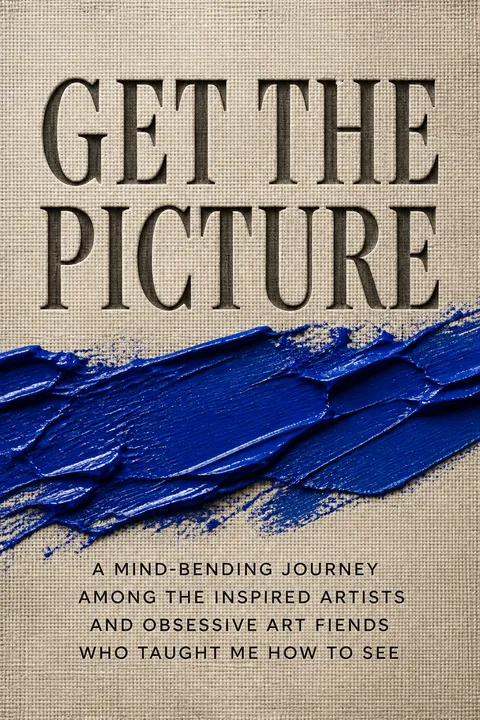
Get the Picture is a reported memoir about learning to see, but its deeper subject is the authority to decide what deserves attention. Bosker’s journey through galleries, studios, art fairs, and museum guard posts continually tests two explanations for artistic judgment. One says trained observers perceive qualities that novices miss. The other says prestige systems teach observers what to admire. The book’s best answer is that both can be true: practice changes perception, while institutions shape which practices are rewarded.
The narrative structure makes this tension legible rather than resolving it prematurely. Jack Barrett teaches Bosker how context and reputation operate, but his controlling behavior reveals the human cost of a closed system. Elizabeth Denny and Rob Dimin demonstrate that galleries can support artists while remaining financially precarious. Julie Curtiss shows how close attention to process can unlock an image without requiring a credentialed interpretation. Amanda Alfieri tests the boundaries of art, while the Icy Gays show how collecting can become community participation rather than mere status display.
The book’s most useful conceptual move is to connect visual perception with social power. The brain filters sensory information for efficiency; the art world filters artists and objects through networks of money, education, taste, and institutional approval. These are not identical processes, but the analogy clarifies why looking carefully is both perceptual and ethical. A viewer can question the first impression and the official account without pretending that all judgments are equally informed.
There is a productive tension in Bosker’s final confidence in personal taste. Trusting one’s eyes is liberating after exposure to gatekeeping, but taste is never formed in isolation. The book itself demonstrates that new encounters, teachers, museums, and relationships reshape what seems worth seeing. Its conclusion is therefore less individualist than it first appears: autonomy comes not from escaping influence, but from noticing influence and remaining open to revision. Art’s value lies partly in that repeated interruption of certainty, which can make both images and ordinary life newly available to attention.
Review Summary
People Also Read









Glossary
Eye
trained visual judgmentIn the art world, an Eye is a cultivated way of seeing that helps a person notice qualities, relationships, and significance in artworks. It is often treated as an innate gift, but Bosker finds it develops through repeated looking, learning, and exposure. The term can also conceal social privilege when insiders present their preferences as natural authority.
white cube
standard gallery displayThe white cube is the familiar exhibition space of plain white walls, sparse displays, and controlled lighting. It can make an artwork appear isolated from everyday life and seemingly neutral, while its design and conventions shape how viewers interpret the work. The book traces the form historically and questions the authority its apparent neutrality gives it.
filter of expectation
prediction shaping perceptionThe filter of expectation is Bosker’s term for the brain’s use of prior knowledge to organize incomplete visual information. It helps people recognize objects quickly, but can also cause them to overlook details that do not match what they expect. Artists may learn to loosen this default process and attend to colors, forms, or relationships that ordinary perception smooths over.
making special
transforming ordinary experienceMaking special is anthropologist Ellen Dissanayake’s account of art as a human behavior rather than a fixed category of objects. People transform ordinary materials, actions, or experiences through operations such as repetition, exaggeration, formalization, elaboration, and the manipulation of expectations. The idea can include practices that fall outside the conventional fine-art world.
slow looking
sustained attention to artSlow looking is the practice of spending extended, focused time with an artwork instead of moving quickly through an exhibition. A viewer may change position, describe visible details, and return to features that were initially overlooked. In Bosker’s account, sustained observation can deepen engagement with art and can also train skills of visual description used in fields such as medicine.
International Art English
specialized art-world languageInternational Art English is a style of art writing and speech marked by abstract vocabulary, dense constructions, and language influenced by translated French theory. Researchers Alix Rule and David Levine describe it as a code that often signals membership in the art world more than it communicates clearly. Bosker uses it to show how language can make art seem inaccessible to outsiders.
context
social frame around artIn the art world, context includes the network of information surrounding an artwork and its maker: education, galleries, exhibitions, reviews, collectors, and institutional recognition. This information can help explain a work’s history or intention, but it also affects how people judge its importance and value. Bosker’s account shows context functioning both as a source of understanding and as a gatekeeping mechanism.
Download PDF
Download EPUB
.epub digital book format is ideal for reading ebooks on phones, tablets, and e-readers.








