

Key Takeaways
Fear of the next panic can keep the first panic alive.
The first alarm. McDonagh traces his own anxiety to a panic attack in a Dublin church. A pounding heart and tight breathing made him fear a medical emergency. After the attack passed, he hid at home, then spent roughly 500 days highly anxious and vulnerable to more panic. His turning point came when he noticed that his reaction to sensations was adding fuel to the alarm.
The loop takes hold. The book calls this pattern the anxiety loop: a sensation triggers a frightening interpretation, which prompts more fear, body-scanning, and escape. Those responses can make the sensation feel more threatening and strengthen the expectation of danger. The first surge may be involuntary; the additional struggle is where the cycle can grow.
The useful distinction is between an alarm and the story attached to it. A racing heart can be real while the conclusion that catastrophe is imminent remains uncertain. That distinction can restore choice without blaming someone for having panic in the first place. The loop model is especially helpful because it identifies small points for intervention, such as reducing repeated checking or returning attention to a task. It should not be mistaken for a universal explanation: anxiety can have multiple causes, and the initial symptoms deserve appropriate medical consideration.
Stop trying to erase anxiety; practice responding without feeding it.
A new response. McDonagh names his approach the DARE Response. Rather than make calmness the immediate goal, the person notices the alarm, permits uncomfortable sensations to be present, reinterprets the surge as energy rather than automatic proof of danger, and returns attention to an absorbing activity. For example, someone who feels anxious during a meeting can acknowledge the pounding heart, stop mentally arguing with it, and continue listening or speaking.
Acceptance is not a trick. The approach is meant to change the relationship with anxiety, not force symptoms to disappear on command. If a person silently accepts sensations only to make them stop, that effort can become another form of control. The book suggests practicing even when the result is not instant relief.
This method's strength is its shift from symptom control to psychological flexibility: discomfort may be present while a person still chooses what to do. That is a practical alternative to waiting for perfect confidence before living. The subtle trap is turning acceptance into a covert calming ritual, then judging every sensation to see whether the technique worked. The more useful test is behavioral: did attention return to something valued, even briefly? That measure preserves the method's core without making symptom reduction a new performance demand.
Check real health concerns, then stop treating every sensation as proof.
The body sounds alarms. The book explains that fight-or-flight activation can bring a faster heartbeat, altered breathing, muscle tension, sweating, tingling, nausea, or dizziness. These sensations can occur during anxiety, and fear about them may intensify attention to them. A person who notices a skipped beat, for instance, may freeze and repeatedly check their pulse, keeping the sensation central in mind.
Use judgment, not blanket reassurance. McDonagh advises readers to seek medical assessment for symptoms that concern them, then trust appropriate results rather than repeatedly reopening the same fear. That is different from assuming every new or severe symptom is anxiety. Once a concern has been assessed, the practical task is to reduce unnecessary monitoring and return to ordinary activity as safely appropriate.
This is a valuable distinction between taking symptoms seriously and treating every ambiguous bodily signal as an emergency. Attention can magnify sensations, but that does not make medical evaluation unnecessary. The safest version of the advice is conditional: seek qualified care when symptoms are new, severe, changing, or otherwise concerning, and follow a clinician's guidance. Reassurance can help, yet repeated tests or pulse checks may become part of the anxiety ritual when no new evidence appears. Good care balances both risks rather than choosing either alarm or dismissal.
Shrink avoidance with planned steps, not sudden tests of courage.
Relief can reinforce retreat. After panic in a particular setting, someone may start avoiding it. Leaving a crowded shop or refusing to drive can bring immediate relief, but the book argues that this relief teaches the person to treat the situation as dangerous. Over time, the safe area may contract from a neighborhood to a home. McDonagh describes fears tied to driving, haircuts, flights, restaurants, and other situations where escape seems difficult.
Practice with a ladder. Choose a manageable step that brings some anxiety, such as driving around the block or entering a shop to buy one item. Repeat and gradually extend the challenge. A support person can help at first, but the book recommends reducing reliance on that person as confidence grows. The goal is to participate with anxiety present, not to guarantee a perfectly calm outing.
This is exposure learning in everyday language. Avoidance is powerful partly because it works quickly, so a gradual plan gives the person a safer way to collect new experience. The most useful learning is not necessarily that anxiety vanishes, but that the feared situation can be handled while it is present. A rigid demand to remain until calm, however, can turn practice into another test of success. Steps should be proportionate, safe, and adapted to the individual, ideally with professional help when avoidance is severe.
Reframe a panic surge as arousal, not a prediction of disaster.
Same energy, new meaning. The book describes anxiety as heightened bodily arousal that the mind may interpret as danger. It cites a 1960s experiment in which participants given adrenaline responded differently depending partly on how an actor around them behaved. McDonagh uses this to illustrate that the meaning assigned to arousal can shape the emotional experience. His approach invites a person to treat the surge more like excitement than a warning.
A paradoxical exercise. For intense panic, the author proposes asking the feared sensations to intensify, thereby challenging the expectation that they must be escaped. This is a demanding technique, not a universal instruction. It should not be attempted while driving or in other situations requiring full concentration, and it is not a substitute for medical assessment or clinician-guided treatment.
Reappraisal can create a pause between bodily activation and catastrophic interpretation. It need not convince someone that panic feels pleasant; it simply offers another possible account of the same arousal. The adrenaline experiment supports the general point that context matters, but it does not prove that every panic sensation can be safely reinterpreted or that asking for more works for everyone. A flexible stance is more credible than forced positivity: acknowledge the discomfort, consider a less catastrophic meaning, and choose a safe next action.
Let intrusive thoughts pass without turning them into a verdict on character.
Thoughts are not deeds. McDonagh describes unwanted thoughts about harm, sexuality, or loss of control as especially frightening because people may mistake their presence for evidence of who they are. He argues that trying to force such thoughts away can make them feel more prominent. His alternative is to notice the thought, allow it to exist without endorsing it, and return attention to the task at hand. A disturbing thought while preparing dinner, for example, need not become a reason to abandon the activity.
Respond without shame. The book links these thoughts to anxiety and mental strain, and emphasizes that they are common. That reassurance should not replace help when thoughts come with intent, plans, impaired control, or immediate safety concerns. In those cases, professional support is important.
Separating a thought from identity can loosen shame and reduce the urge to conduct endless internal checks about what a thought means. The approach is particularly relevant when people confuse mental content with intention. Yet reassurance alone is not a full assessment of risk, and intrusive thoughts can arise in different conditions. The careful principle is neither to panic over thought content nor to dismiss genuine danger signals. A clinician can help distinguish unwanted mental events from situations that require a specific safety plan.
Track recovery by reclaimed activities, not by perfect calm.
Progress moves unevenly. McDonagh describes recovery as a changing process: panic may become less frequent, general anxiety may take longer to ease, and setbacks can appear after progress. Someone might resume driving for several days, then feel a strong surge of anxiety and assume all progress has vanished. The book argues that this return of symptoms does not automatically mean a return to the beginning.
Count what you can do. A more useful measure is whether anxiety increasingly stops dictating choices. A success diary can record activities completed, avoided situations approached, or moments when attention returned to the present. This fits the book's view that recovery does not require never feeling anxious again. It means being less governed by the sensations and less preoccupied with checking whether they have disappeared.
The shift in measurement matters: symptom-free days are unstable evidence, while repeated acts of participation document growing capacity. A setback can then become information about stress, context, or the next step, rather than a verdict on the entire effort. The book's staged account may help normalize fluctuation, but it should not be read as a promised timetable. People differ in symptoms, circumstances, and treatment needs. Progress is real even when it does not follow a tidy sequence.
Build recovery on self-kindness and habits that lower avoidable strain.
Reduce extra burdens. The book asks anxious readers to notice self-criticism and practice treating themselves as they would a close friend. It also recommends attention to sleep, exercise, and stimulants such as caffeine and alcohol, which McDonagh says can worsen jitteriness or disrupt recovery. A person who drinks heavily and wakes anxious, for example, can consider whether the hangover is adding to an already sensitized state.
Keep health claims in proportion. McDonagh also discusses hydration, diet, supplements, laughter, and guided relaxation. These are presented as supports, not replacements for care, but some of the book's confident claims about supplements and rapid anxiety reduction exceed what its own summary establishes. Medication should not be stopped or changed without a prescriber. The practical core is to choose sustainable routines and seek qualified guidance for health decisions.
Self-compassion is more than a comforting slogan here: it reduces the second layer of suffering created by judging oneself for being anxious. Basic routines can also lower avoidable strain, making it easier to practice new responses. The distinction between supportive habits and cures is essential. Exercise, sleep, or less caffeine may help some people, but no single routine explains or resolves every anxiety problem. The book's useful invitation is to experiment modestly and observe; its supplement prescriptions deserve more caution than its encouragement to be kinder to oneself.
Analysis
McDonagh's strongest contribution is a clear account of how fear of bodily sensations can become self-reinforcing. His church panic story gives the idea a human starting point: the initial surge was frightening, but the prolonged problem grew around anticipation, monitoring, and retreat. The DARE approach turns that insight into a repeatable practice: notice the alarm, allow discomfort, reconsider its meaning, and return attention to life. Its language is memorable because it asks for a counterintuitive move, not a more elaborate attempt to control every sensation.
The book's approach has meaningful overlap with acceptance-based and mindfulness-oriented therapies, as its appendix acknowledges. The distinction between allowing discomfort and disputing every thought can be valuable for people who find constant cognitive correction exhausting. Re-entering avoided situations also makes the advice behavioral rather than purely reassuring. Readers are invited to test their expectations in manageable steps and build confidence from lived experience.
The principal limitation is the gap between a compelling framework and broad claims of cure. The appendix discusses evidence for related therapies, but that does not by itself establish the DARE method as a proven treatment through rigorous trials of the method itself. Anxiety also varies: symptoms may relate to medical conditions, trauma, depression, obsessive-compulsive patterns, or other factors. A single explanation centered on worry and resistance cannot cover every case. The book's dismissive attitude toward medication and diagnostic labels may also discourage readers from care that is useful to them.
The safest reading preserves the method's practical insight while rejecting all-or-nothing promises. Acceptance is not medical neglect, and courage is not a requirement to face every fear alone. Appropriate assessment, therapy, medication when indicated, and gradual practice can coexist. The most durable measure of progress is not whether a person can force anxiety away, but whether anxiety has less authority over the choices that matter.
Review Summary
Dare receives mostly positive reviews for its practical approach to managing anxiety. Readers appreciate the DARE method's simplicity and effectiveness, though some find the book repetitive. Many praise the author's understanding and empathetic tone. Critics point out the book's focus on physical symptoms and simplified view of anxiety disorders. Some readers disagree with the author's stance on medication and clinical labels. Overall, most find the book helpful, but some suggest it may not be suitable for all types of anxiety.
People Also Read





Glossary
The DARE Response
A response to anxietyMcDonagh's named method for changing how a person responds to anxiety. It combines noticing and defusing fearful interpretations, allowing sensations without fighting them, reframing intense arousal, and returning attention to a meaningful activity. Its stated aim is to reduce fear of anxiety rather than demand immediate calm. The book presents it as a self-help approach, not a replacement for appropriate medical or mental health care.
anxiety loop
Fear that amplifies fearThe cycle in which an anxious sensation prompts a catastrophic interpretation, which increases fear and bodily arousal. The person may then scan for symptoms, seek reassurance, or avoid a situation. Those actions can bring short-term relief while strengthening the expectation that the sensation or setting is dangerous, making another cycle more likely.
anxious contraction
A sudden surge of anxietyMcDonagh's term for an intense episode of anxious arousal, sometimes experienced as a spontaneous panic attack or a sudden feeling of being on edge. He compares it to a bodily contraction that may follow prolonged stress or exhaustion. In his account, the episode becomes more entrenched when a person responds with escalating fear and resistance.
flash fear and response fear
Initial alarm and reactionThe book's distinction between a sudden, largely involuntary jolt of fear and the fearful interpretation that follows it. A flash fear may be a bodily sensation or abrupt thought. Response fear adds predictions such as expecting illness, loss of control, or another panic attack. McDonagh argues that the second response is where the anxiety cycle can intensify.
safe zone
A place treated as safeA location, familiar radius, or situation in which an anxious person feels more protected, sometimes because a trusted companion or quick exit is available. McDonagh argues that relying on this boundary can gradually restrict daily life. He recommends expanding it through manageable practice, while recognizing that real-world safety and appropriate support still matter.
crutches
Reassurance-based supportsMcDonagh's term for people or objects someone feels they must rely on to manage anxiety, such as a companion, phone, or medication carried for reassurance. The book suggests these supports can be useful at first but may maintain a sense of vulnerability if treated as indispensable. Any change to prescribed medication should be discussed with the prescribing clinician.
FAQ
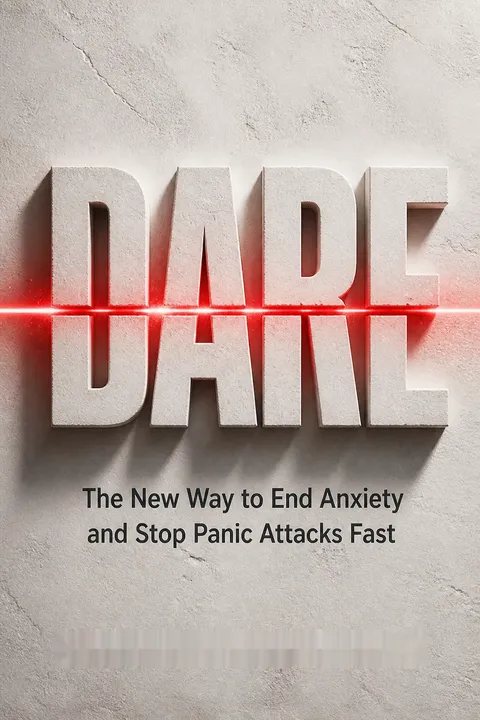
What's "Dare: The New Way to End Anxiety and Stop Panic Attacks Fast" about?
- Overview: The book by Barry McDonagh introduces a method called "The DARE Response" to help individuals overcome anxiety and panic attacks.
- Personal Experience: The author shares his own journey from suffering anxiety to recovery, using the techniques he developed.
- Practical Approach: It emphasizes a practical, step-by-step approach to managing and eventually eliminating anxiety.
- Empowerment: The book aims to empower readers to regain control over their lives by changing their response to anxiety.
Why should I read "Dare: The New Way to End Anxiety and Stop Panic Attacks Fast"?
- Proven Techniques: The book offers techniques that have helped many people overcome anxiety, as evidenced by numerous testimonials.
- Comprehensive Guidance: It provides a comprehensive guide to understanding and dealing with anxiety, from the physiological aspects to the psychological.
- Empathy and Support: Written by someone who has experienced anxiety firsthand, it offers empathy and understanding, making it relatable.
- Practical Tools: Readers gain practical tools and exercises that can be applied immediately to start seeing improvements.
What are the key takeaways of "Dare: The New Way to End Anxiety and Stop Panic Attacks Fast"?
- DARE Response: The core method involves four steps: Defuse, Allow, Run Toward, and Engage, which help in managing anxiety.
- Acceptance: Emphasizes the importance of accepting anxiety rather than resisting it, which can lead to faster recovery.
- Empowerment: Encourages readers to take control of their anxiety by changing their response to it, rather than letting it control them.
- Holistic Approach: Combines psychological insights with practical exercises, lifestyle changes, and self-compassion to address anxiety.
How does the DARE Response work in "Dare: The New Way to End Anxiety and Stop Panic Attacks Fast"?
- Defuse: Quickly address and neutralize anxious "what if" thoughts with a dismissive attitude.
- Allow: Accept the presence of anxiety without resistance, which helps in reducing its intensity.
- Run Toward: Embrace the sensations of anxiety, reframing them as excitement to diminish their power.
- Engage: Redirect focus to engaging activities to prevent rumination and reduce anxiety.
What are some of the best quotes from "Dare: The New Way to End Anxiety and Stop Panic Attacks Fast" and what do they mean?
- "The only way out is through." This emphasizes facing anxiety head-on rather than avoiding it, which is crucial for overcoming it.
- "You are not your anxiety." Highlights the separation between one's identity and their anxiety, encouraging self-compassion.
- "Fear is finite, hope is infinite." Suggests that while fear may feel overwhelming, hope and recovery are always possible.
- "Love heals fear." Indicates that self-compassion and acceptance are powerful tools in reducing anxiety.
How does Barry McDonagh's personal experience influence "Dare: The New Way to End Anxiety and Stop Panic Attacks Fast"?
- Personal Journey: McDonagh shares his own struggles with anxiety, making the book relatable and authentic.
- Empathy: His experience allows him to empathize with readers, offering support and understanding.
- Validation: His recovery journey validates the effectiveness of the DARE Response, providing hope to readers.
- Motivation: His transformation from anxiety sufferer to coach inspires readers to believe in their own potential for recovery.
What is the role of acceptance in "Dare: The New Way to End Anxiety and Stop Panic Attacks Fast"?
- Core Principle: Acceptance is a key component of the DARE Response, helping to reduce resistance to anxiety.
- Reduces Fear: By accepting anxiety, individuals can reduce the fear and tension that exacerbate it.
- Facilitates Recovery: Acceptance allows for a more natural and less stressful recovery process.
- Mindfulness: Encourages a mindful approach to anxiety, observing it without judgment or fear.
How does "Dare: The New Way to End Anxiety and Stop Panic Attacks Fast" address the fear of anxious sensations?
- Normalization: The book normalizes anxious sensations, explaining them as natural bodily responses.
- Education: Provides detailed explanations of common sensations, reducing fear through understanding.
- DARE Application: Teaches how to apply the DARE Response to specific sensations, reducing their impact.
- Empowerment: Empowers readers to face and manage sensations without fear, leading to reduced anxiety.
What lifestyle changes does "Dare: The New Way to End Anxiety and Stop Panic Attacks Fast" recommend for reducing anxiety?
- Hydration: Emphasizes the importance of staying hydrated to reduce anxiety symptoms.
- Diet: Recommends a low glycemic diet and eliminating caffeine, alcohol, and excess sugar.
- Exercise: Encourages regular physical activity to boost mood and reduce anxiety.
- Laughter and Relaxation: Suggests incorporating laughter and guided relaxation into daily routines for stress relief.
How does "Dare: The New Way to End Anxiety and Stop Panic Attacks Fast" suggest dealing with setbacks?
- Expect Setbacks: Acknowledges that setbacks are a normal part of the recovery process.
- DARE Response: Encourages using the DARE Response to manage setbacks effectively.
- Self-Compassion: Stresses the importance of being kind to oneself during setbacks.
- Persistence: Motivates readers to keep moving forward despite setbacks, as they are temporary.
What is the significance of the "safe zone" in "Dare: The New Way to End Anxiety and Stop Panic Attacks Fast"?
- Illusion of Safety: The book describes the safe zone as an illusion that limits freedom and growth.
- Challenge: Encourages readers to gradually push beyond their safe zones to build confidence.
- Empowerment: By stepping outside the safe zone, individuals can reclaim their independence from anxiety.
- Growth: Emphasizes that real progress and recovery occur outside the comfort of the safe zone.
How does "Dare: The New Way to End Anxiety and Stop Panic Attacks Fast" redefine the perception of anxiety?
- Not a Curse: The book suggests viewing anxiety as a teacher rather than a curse.
- Growth Opportunity: Encourages finding meaning and personal growth through the experience of anxiety.
- Forgiveness and Gratitude: Promotes forgiveness of oneself and gratitude for the lessons anxiety brings.
- Transformative Power: Highlights the potential for anxiety to lead to a more compassionate and resilient self.
Download PDF
Download EPUB
.epub digital book format is ideal for reading ebooks on phones, tablets, and e-readers.








