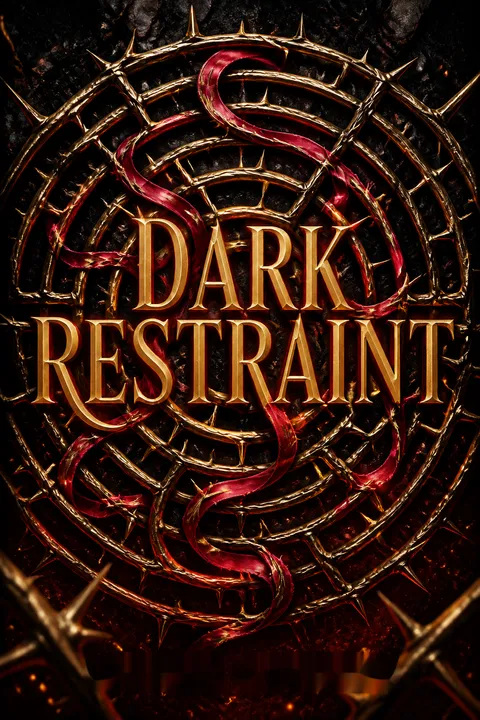


Plot Summary
A Promise in the Maze
Ten weeks earlier, while Minos’s party gathers around a political killing, Ariadne slips away to the garden maze. She has already passed information about her father’s plot to Apollo and Cassandra, hoping they can limit the bloodshed. Asterion, the feared killer Minos calls the Minotaur, finds her there.
He reveals that he spared his assigned target for her, even as Theseus carries out another part of their plan. Ariadne and Asterion have wanted each other for years, but her father would never permit them to choose one another. She chooses him anyway. They have sex in the open maze, bite and mark each other, and make their forbidden attachment impossible to dismiss as a passing attraction.
The maze turns a political trap into the first place Ariadne claims as her own: she has planted flowers there, and now she chooses what happens in it. Yet choice arrives tangled with danger. Asterion’s violence is not suspended by his desire; his bite makes their intimacy both pleasurable and a reminder of the world that owns them. Ariadne’s decision is neither simple liberation nor passive surrender. It is a rare act of agency made under brutal constraints, one that binds her emotionally to the very weapon her father trained.
Two Lines, One Escape
Two weeks before the present, Ariadne discovers she is pregnant and fears Minos will turn a child into another instrument of control. She also suspects Asterion would protect her by shutting her away, a different kind of captivity.
Rather than confide in him or her brother, Icarus, she crosses to the Olympians and bargains information for sanctuary and an abortion. Medusa and Calypso accompany her through the procedure in the lower city.
Ariadne leaves Asterion a note explaining that she cannot stay while Minos’s plans bring more deaths, and that she has ended the pregnancy. She asks for mercy if they meet again. Her flight saves her from her father’s immediate reach, but it turns love into a question of loyalty and leaves Asterion to learn the truth alone.
Ariadne’s decision is grounded in bodily autonomy, but it is not presented as emotionally costless or uncomplicated. She chooses an abortion because she cannot accept a future in which Minos controls her child, not because she lacks feeling. Her note shows how fear narrows her imagination: she assumes Asterion’s protection would erase her freedom, so she chooses separation without giving him a chance to respond. The escape is both a moral refusal of her father’s political violence and a painful repetition of the isolation that his household has taught her.
A Wedding as Shelter
Back in Olympus, Ariadne waits while Hera and Aphrodite argue over her future. Aphrodite had promised Hades a quiet countryside marriage for the enemy’s daughter, but Hera wants a public match that will display Olympus’s strength.
She chooses Dionysus, the popular bachelor, and makes Aphrodite arrange the union in exchange for an open-ended favor. Dionysus arrives exhausted and accepts a contract designed to protect them both: they will have separate homes, neither will demand sex, and either may end the marriage if the terms are broken.
Ariadne signs because she has few alternatives and needs sanctuary. Meanwhile, Minos discovers that she is gone and that she intends to marry an Olympian. He orders Asterion to kill her, and Asterion outwardly accepts the command.
Marriage is treated here as political infrastructure rather than a private ideal. Hera understands that a public union can turn Ariadne’s defection into a signal of Olympus’s control, while Dionysus uses contractual detail to limit the harm of a forced arrangement. Ariadne’s signature is not a free choice among appealing futures, but the contract gives her specific protections inside a coercive system. Minos’s order reveals the opposite logic: for him, family is another possession, and a daughter’s disobedience is a threat to be erased.
The Minotaur Comes Calling
Asterion finds Ariadne’s empty room, reads her note, and learns that she was pregnant. Furious that she left without trusting him, he goes to Dionysus’s building and kills two guards outside the penthouse to prove he can reach her.
Ariadne, shaken by the bodies, meets him the next morning. He demands blueprints for Dodona Tower, the upper city’s political center, and gives her a deadline. Hera then offers Ariadne a bargain: she will not obstruct the transfer of the plans if Minos’s people spare everyone in the tower except Zeus.
Ariadne accepts because she wants to prevent a mass casualty attack and protect her brother. Her hacking attempt initially fails, leaving her caught between Asterion’s threat, Hera’s conditions, and the marriage that is supposed to keep her safe.
Asterion uses violence as a language he trusts, but the guards’ deaths make Ariadne pay its cost. His claim that she is responsible for what he does is manipulative, even as his actions also show that Minos’s order to kill her is not the whole truth of his intentions. Hera’s offer repeats the same transactional structure in a more polished form: safety is conditional, and Ariadne is valuable because she can provide access. Her effort to limit casualties is sincere, but it also keeps her inside other people’s plans.
Dionysus Reads the Room
Dionysus notices Asterion following him and drugs his beer to draw out what Minos’s killer is planning. Asterion admits that Minos ordered Ariadne’s death and that Circe’s attack on Olympus is close; Dionysus answers that he will protect his fiancée and warns Asterion away from harming her. At brunch, Dionysus brings Ariadne into a second plot.
Hera and Poseidon join them and reveal that they intend to kill Zeus, install Hera’s unborn child as heir, and unite the legacy powers before Circe arrives. Ariadne has already agreed to help Asterion obtain the tower plans, so her task now serves both the Aeaean attack and Hera’s coup. She cannot tell where one side’s plan ends and the other’s begins.
Dionysus’s apparent indulgence conceals a precise political intelligence: he knows that substances can expose people as readily as they can numb them. His drugging of Asterion is ethically dubious, yet it produces a frank account unavailable through ordinary negotiation. The brunch then reveals that Olympus is not a stable refuge from Minos’s violence. Hera’s plan answers institutional paralysis with another succession plot, making the city’s resistance to Circe depend on a killing of its own. Ariadne’s usefulness grows, but so does her entanglement in rival schemes.
A Brother’s Hidden Price
As Ariadne’s attempts to obtain the tower plans stall, Asterion keeps drawing her back into an intimacy she cannot reconcile with his orders. She tells herself he may still kill her, yet she repeatedly chooses his touch. Then Icarus visits the penthouse looking gaunt and depleted.
Ariadne cooks his favorite blueberry pancakes and urges him to accept Hera’s protection, but he refuses to be rescued as her dependent. He reveals that he has secretly slept with powerful Aeaeans, including people who hid their affairs, and gathered compromising information he can use to buy their cooperation and fund an escape.
The confession frightens Ariadne. When he leaves, she calls Asterion, who takes her to his apartment, lends her his clothes, and holds her while she grieves the pregnancy, the violence, and the choices all three have made.
Icarus’s secret archive complicates the family’s familiar roles. Minos condemns him as weak, yet Icarus has found a form of leverage that does not depend on physical force. Its cost is intimate: he has turned his own body into a means of survival, echoing the way his father treats everyone as an asset. Ariadne’s response exposes her reflex to take responsibility for her brother, while Asterion’s quiet care gives her a rare space to feel without having to make her pain useful to anyone.
The Boy with Gloves
At a political dinner, Ariadne cannot eat, so Asterion persuades the Dryad’s chef to make her a private plate and brings it to the chef’s office. His attention to a small, familiar need makes her question whether he ever meant to kill her.
The next morning, she brings him the tower blueprints and asks about the first time they slept together. Asterion admits that before Minos took him in, he endured sexual exploitation to survive; the maze was his first freely chosen sexual experience.
Ariadne remembers meeting him as a homeless boy and giving him money and her late mother’s knitted gloves. He has remembered that kindness ever since. Their shared history finally becomes explicit, and Ariadne stops treating their bond as lust alone. Dionysus later encourages her to risk wanting a future with Asterion.
The gloves offer a counter-memory to Asterion’s life as a weapon. Ariadne’s childhood kindness did not rescue him from the systems that exploited him, but he preserved it as proof that tenderness existed before Minos assigned him a purpose. His disclosure reframes their first sexual encounter without making the past harmless: the difference lies in consent and choice, not in a magical erasure of trauma. Ariadne’s recognition allows her to see his desire as more than possession, while Dionysus’s counsel helps her imagine choosing love without surrendering judgment.
A Future Without Blood
After Ariadne and Asterion openly choose one another, the plan to attack Dodona Tower grows harder to control. Hera wants Zeus killed without civilian casualties, while Minos demands a rapid strike and does not care how many workers die. Dionysus offers to send Ariadne, Asterion, and Icarus to one of his country houses, but Asterion believes they must stay near the city until Hermes can bring down the outer barrier.
He and Ariadne decide to escape by boat when it falls. Ariadne tells him she wants a life beyond murder and secrecy, not a future funded by his old work. Asterion agrees to leave that life behind. She tells him she loves him, and he promises they will survive and build a family only when they are ready.
The couple’s promise does not make their escape ethically clean. Ariadne asks Asterion to stop dealing in violence while also relying on him to prevent a massacre at the tower; survival keeps forcing her to negotiate with the very methods she wants to leave behind. Her insistence on an ordinary future is therefore not naïveté so much as a boundary: wealth and safety are insufficient if they reproduce Minos’s coercive world. Asterion’s promise matters because he accepts that her desired future must shape his skills, not merely benefit from them.
Minos Turns His Gun
Minos changes the locks at his apartment and waits for Asterion, who realizes too late that he has been exposed. Icarus has summoned him, but Minos raises a gun and fires. Asterion takes a bullet in the shoulder while shielding Icarus, then drags him out through the stairwell and calls Ariadne.
At the same time, Minos’s assassin Phaedra reaches Dionysus’s penthouse. Ariadne spots Phaedra on the security cameras, escapes through a private stairwell, and warns Dionysus before making her way to the Dryad.
She reunites with Asterion and Icarus at a back-room refuge; Icarus confirms that their father shot Asterion. The siblings and Asterion are no longer navigating separate dangers. They have to flee together before Minos or the Olympians can close in.
The danger becomes immediate and bodily: Minos’s authority is no longer an order delivered through Asterion but a gun aimed at the people he claims to own. Asterion’s choice to shield Icarus contradicts the family hierarchy that made them rivals and gives his loyalty a concrete cost. Ariadne, meanwhile, uses the surveillance system and her knowledge of the building to escape Phaedra without waiting for rescue. The sequence lets each character act, but their survival depends on cooperation rather than any single person’s strength.
Hermes Opens the Barrier
Hermes meets the injured Asterion and explains that she has found the hidden machinery controlling Olympus’s barrier. She sends Ariadne and Icarus to a concealed house, then takes Asterion to a disguised Hephaestus facility.
Hermes hacks the entrance and uses him as a distraction while she reaches the machinery through an underground tunnel. Asterion fights the responding guards, restraining several and killing one when the numbers turn against him. Hermes plants a bomb and escapes with him, leaving the structure to collapse and the barrier to fall on her timetable.
Meanwhile, Athena’s fighter Atalanta searches the house where Ariadne and Icarus are hiding. The siblings evade her by slipping into the overgrown courtyard and staying concealed, but their refuge is compromised and their time is running out.
The barrier’s apparently supernatural power is revealed as machinery, a useful demystification in a city where inherited authority often disguises itself as inevitability. Hermes’s competence is not magic but preparation, secrecy, and risk management; she turns Asterion’s reputation and fighting ability into cover for her own work. The operation also exposes the price of their escape. Asterion can limit casualties, but he cannot make violence disappear, and Ariadne is again left waiting in danger while others act on her behalf.
The Last Crossing
Asterion reaches Ariadne and Icarus, and the three race to the marina as Hermes’s bomb brings down the barrier facility. Minos is waiting beside the boats with a gun. When he aims at Icarus, Ariadne takes Asterion’s weapon and shoots her father. Asterion knocks Icarus out of the line of fire, but Poseidon’s guards surround them before they can board Apollo’s sailboat.
Icarus seizes Poseidon and holds him at gunpoint, buying Ariadne and Asterion time to escape; Poseidon’s people capture him when he lets the couple go. The barrier collapses as their boat crosses the bay. They pass Circe’s approaching ships and sail into open water, carrying grief for Minos and fear for Icarus alongside their first chance at a life beyond Olympus.
Ariadne’s shot is not a clean victory over Minos; it is a desperate intervention that saves Icarus and leaves her with the fact of having killed her father. The escape also depends on Icarus choosing to stay behind, repeating the family’s history of sacrifice while finally making that choice himself. The barrier’s collapse opens a literal route outward, but freedom does not resolve guilt, danger, or the war approaching Olympus. The ending gives Ariadne and Asterion a direction rather than a guarantee, making their future a continuing act of mutual care.
Epilogue
Icarus wakes bruised on the dock, watching Ariadne and Asterion disappear beyond the fallen barrier. Poseidon’s people hold him while Athena considers killing him, but Poseidon intervenes and takes responsibility for keeping him locked away.
Icarus meets his captors’ contempt with flirtation, then recognizes that charm will not free him immediately. His sister is safe for now, his father is dead, and he has been left in the city facing Circe’s invasion. Numb and injured, he decides that tomorrow he will find a way to make Poseidon regret taking him captive.
The epilogue refuses to make escape synonymous with a happy ending. Ariadne and Asterion have crossed the boundary, but Icarus remains inside the political crisis, held by a man whose restraint is not affection. His survival depends on the same improvisational social intelligence that once helped him gather secrets, though here it has not yet secured freedom. The shift to his viewpoint also revises the departure: the couple’s escape is both an act of self-preservation and a separation that leaves a sibling behind. Icarus’s final resolve keeps the story’s central question open: what forms of agency remain when every available choice is constrained?
Analysis
Dark Restraint makes political power intimate. Minos treats children, lovers, and trained operatives as extensions of his will; Olympus repackages comparable control through marriage contracts, succession rules, and surveillance. Ariadne’s resistance therefore cannot consist of one clean defection. She repeatedly bargains with institutions she distrusts, trying to reduce the damage each choice causes while recognizing that her own safety is also a legitimate aim.
The romance turns on the difference between protection and possession. Asterion’s devotion is real, but his threats and insistence that Ariadne belongs to him echo the coercive logic that shaped them both. His attentive gestures, such as remembering her coffee order or arranging food when anxiety prevents her from eating, matter because they show an alternative practice of care: noticing what she needs without turning it into a debt. Ariadne’s growing trust does not erase the danger in his violence; it forces him to imagine a life in which love means changing what he does.
The siblings embody different responses to the same household. Ariadne gathers information and tries to limit casualties. Icarus seeks leverage through secrets and personal risk. Neither strategy makes them untouched by Minos’s values. Their escape remains incomplete when Icarus stays behind, so the novel refuses to confuse survival with repair. The open water gives Ariadne and Asterion a future to pursue, not proof that trauma or political violence has ended.
The city’s barriers make this argument visible. Olympus’s walls promise safety while preserving unequal power, and their collapse exposes the people inside to consequences they have postponed. Freedom is not simply crossing a boundary; it is the harder work of deciding which inherited tools to abandon once outside it.
Review Summary
Dark Restraint receives mixed reviews, with an average rating of 3.48/5. Readers appreciate the political intrigue and steamy scenes but criticize the toxic relationship dynamics and underdeveloped characters. Some find the plot engaging, while others feel it lacks depth. The book's darker themes and possessive male lead polarize opinions. Many reviewers express excitement for future installments in the series, particularly Hera and Zeus's story. Overall, the book is seen as a quick, engaging read for fans of dark romance, though it may not appeal to everyone.
People Also Read









Characters
Ariadne
The daughter who choosesAriadne is Minos’s daughter, Icarus’s sister, and a gifted computer user who has spent her life being treated as a political asset. She is observant, intellectually curious, and inclined to take responsibility for other people’s suffering, sometimes at the expense of her own needs. Gardening, travel plans, and fan fiction offer private forms of possibility in a household built around control. Her attraction to Asterion is inseparable from fear of what his violence represents, while her decision-making is shaped by the need to protect her body and preserve some room for choice. Ariadne’s story asks whether she can stop defining herself through service to powerful people and make a future that belongs to her.
Asterion
Minos’s weapon, Ariadne’s loveAsterion is the scarred assassin known across Olympus as the Minotaur. Minos took him in as a teenager and trained him to kill, giving him a function and a place while keeping him dependent on the household. He is physically formidable, disciplined, and more attentive than his reputation suggests, especially to Ariadne’s small habits and unspoken distress. His devotion can become possessive, and he often reaches for threats or force when he fears losing control. Beneath that certainty is a survivor who learned that tenderness could be rare and costly. His challenge is not simply to win Ariadne, but to imagine an identity and livelihood beyond violence.
Icarus
The overlooked brotherIcarus is Ariadne’s brother and Minos’s son, a charismatic man whose father sees him as a disappointment. He responds to that rejection with recklessness, charm, and a hunger for approval he struggles to outgrow. His loyalty to Ariadne is deep, though he resents being treated as someone she must save. Icarus learns to use secrecy and intimacy as tools in a world where he lacks the physical power and political standing granted to others. His choices reveal both resourcefulness and self-destructive vulnerability. He wants freedom for himself and his sister, but also wants to prove he can contribute without being reduced to a liability.
Dionysus
The guarded hostDionysus is one of Olympus’s ruling Thirteen, known for alcohol, drugs, and extravagant public behavior. His disheveled charm makes him easy to underestimate, but he reads people carefully and understands how pleasure can conceal pain or expose it. He accepts a marriage arranged for political purposes while writing protections into the contract, then tries to make Ariadne feel welcome without demanding emotional or sexual access. His guilt over Pan’s attack complicates his playfulness and exposes the costs of living among powerful people who treat harm as background noise. Dionysus is neither a simple rescuer nor a detached hedonist; he is a politically astute man trying to offer decency within a compromised system.
Minos
The controlling patriarchMinos is the head of Ariadne and Icarus’s household and the political architect behind the Aeaean plot against Olympus. He recruits vulnerable young people, including Asterion and Theseus, and turns their skills into instruments of his ambition. His authority rests on intimidation, conditional approval, and the assumption that family members belong to him. Minos can be strategic, but repeated setbacks expose how badly he mistakes fear for loyalty. He regards independence as betrayal and measures people by their usefulness, leaving little room for affection that is not also a form of control.
Hera
The ambitious queenmakerHera is a formidable member of the Thirteen and a strategist willing to use marriage, succession law, and private bargains to reshape Olympus. She is controlled in public and dangerous in conversation, offering protection only when it advances her plans. Her conflict with Zeus is political as well as intimate, and she believes the city needs a different kind of leadership. Hera can recognize Ariadne’s usefulness and even her intelligence, but she rarely reveals the full terms of what she is arranging.
Hermes
The hidden operatorHermes is an elusive Olympian who cultivates a flamboyant, unserious reputation while gathering secrets and preparing for danger. Her apparent ease is carefully constructed; she maintains hidden resources, emergency supplies, and knowledge of places most people do not know exist. She is irreverent, difficult to trust, and capable of swift violence when her plans require it. Hermes acts from a history and set of loyalties she does not readily explain, making her both a crucial ally and an unsettling wildcard.
Poseidon
The harbor powerPoseidon is a powerful legacy figure associated with the shipyards and harbor. He has largely kept out of Olympus politics, but the city’s instability draws him into decisions about its future. Broad, direct, and protective of the people who serve him, he is less interested in elegant political performance than in practical order. His loyalty to Olympus does not make him obedient to Zeus, and his sense of responsibility can put him in conflict with those trying to escape the city.
Circe
The approaching avengerCirce is the exiled former bearer of Hera’s title and the force gathering beyond Olympus. She is connected to Minos’s campaign and commands an approaching fleet, while her history with the city gives her reasons to seek revenge. Ariadne knows enough to fear her, but not enough to understand the full design. Circe’s presence turns local rivalries into a looming siege and makes clear that Olympus’s internal conflicts have consequences beyond its walls.
Theseus
Asterion’s former rivalTheseus grew up alongside Asterion as one of Minos’s trained operatives and shares his history of competition and coercion. He is capable, volatile, and more willing than Asterion to follow affection and personal loyalties away from Minos’s control. His break with their old household helps expose the weakness of Minos’s hold over the people he trained. Theseus remains committed to the people he has chosen, even when that decision keeps him inside a dangerous city.
Aphrodite
The reluctant matchmakerAphrodite is a recent holder of one of the Thirteen’s titles and an experienced arranger of marriages. They are ambitious and protective of their position, but they are also caught between Hera’s demands and an agreement made with Hades. Their frustration at losing control of Ariadne’s match shows how even a skilled political broker can be maneuvered by someone with greater power.
Athena
The hardline commanderAthena is a member of the Thirteen who relies on discipline, surveillance, and decisive force. She sends Atalanta to locate Ariadne and Icarus when their presence becomes a security concern. Her view of danger is sharply practical, and she is willing to treat suspected enemies as threats to be contained rather than people to be persuaded.
Atalanta
Athena’s field operativeAtalanta works closely with Athena and brings a trained fighter’s caution to the search for Ariadne and Icarus. She checks the hidden house and its exits rather than relying on assumptions, nearly finding the siblings in their hiding place. Her methodical presence makes Athena’s reach feel immediate even when Ariadne is away from the city center.
Phaedra
Minos’s chosen assassinPhaedra is a skilled operative sent by Minos to retrieve Ariadne. Calm and observant, Phaedra moves through Dionysus’s building while avoiding the security cameras, turning a supposedly protected home into another place Ariadne must escape. Their presence gives Minos’s threat a face and a method.
Hades
The lower city’s protectorHades is one of Olympus’s legacy powers and the authority behind the barrier along the River Styx. He offers Ariadne a route to sanctuary in exchange for information, though he does not control every decision made in her name. His leadership in the lower city stands in contrast to the fractured politics of the upper city.
Eurydice
Ariadne’s first allyEurydice helps Ariadne make contact with the Olympian side and gives her a route toward information and shelter. Her practical assistance gives Ariadne a chance to defect without requiring her to trust the entire ruling council.
Medusa
A quiet source of careMedusa accompanies Ariadne during the abortion in the lower city. Her presence offers limited but meaningful support at a moment when Ariadne is frightened, isolated, and uncertain whether the Olympians will honor their bargain.
Calypso
Ariadne’s cautious companionCalypso is present with Medusa when Ariadne undergoes the abortion. She treats Ariadne with basic care while maintaining the emotional distance of someone who knows Ariadne comes from the opposing household.
Zeus
Olympus’s faltering rulerZeus is the central authority Hera hopes to remove and a leader struggling to unite the Thirteen. His position is powerful, but the city’s repeated betrayals and recent political upheavals have weakened the trust he needs to govern effectively.
Psyche
The generous stylistPsyche is Hera’s sister and an influencer with a strong sense of style. She welcomes Ariadne into a boutique, helps her find clothes that fit, and offers unforced kindness during a period when Ariadne expects every favor to hide a demand.
Eros
Psyche’s watchful partnerEros is Psyche’s partner and a visible source of security around her. His presence adds to Ariadne’s awareness that even a shopping trip in Olympus can place her near armed protection and political danger.
Apollo
The recipient of secretsApollo receives information Ariadne has gathered about Minos’s plans and is linked to the effort to prepare Olympus for an attack. His sailboat later becomes a possible means of escape from the city.
Cassandra
Apollo’s informed partnerCassandra is Apollo’s partner and one of the people Ariadne trusts to receive intelligence about the Aeaean plot. Her role connects Ariadne’s quiet information gathering to the Olympians’ attempts to understand the threat.
Pan
Dionysus’s injured guestPan is Dionysus’s guest and is seriously injured when Icarus attacks him at Minos’s party. The assault haunts Dionysus and becomes one source of his guilt, while Pan continues to pass along information he considers important to Olympus.
Plot Devices
The River Styx barrier
The city’s locked boundaryA protective barrier divides the lower city from the upper city and seals Olympus off from the world beyond. Hades reinforces the inner boundary after attacks, while the outer barrier is controlled by hidden machinery that only Hermes can locate. It limits movement, makes escape a political and technical problem, and gives the Aeaean invasion its central obstacle. Its collapse creates a route out for Ariadne and Asterion, but also opens Olympus to Circe’s fleet.
The marriage contract
A shield made of termsAriadne and Dionysus sign a carefully limited agreement after Hera forces their betrothal. It provides separate residences, makes sex a forbidden expectation within the marriage, and allows the union to end if either party breaks the terms. The contract cannot free Ariadne from political use, but it gives her a measure of bodily and financial protection. It also establishes Dionysus as a possible ally without requiring him to become her lover.
Dodona Tower blueprints
Plans for a political targetThe plans for Dodona Tower are required to assess how Minos’s team might attack the center of Olympus’s power. Ariadne’s computer skills make her the person able to obtain them, so both Asterion and Hera put pressure on her to deliver. The blueprints also expose the competing aims behind the mission: Minos wants a destabilizing strike, while Hera wants Zeus removed without a wider slaughter. The planned attack is ultimately overtaken by the race to bring down the barrier.
Icarus’s private secrets
Leverage gathered through intimacyIcarus has secretly collected compromising information from powerful Aeaeans who hid their relationships with him. He believes the secrets can secure cooperation and finance a future beyond Minos’s control. The information parallels Ariadne’s computer intelligence while revealing a different survival method: Icarus uses intimacy where Ariadne uses research. His leverage gives him a possible route to freedom, but it also exposes the personal cost of adapting to a family that treats every human connection as a bargaining chip.
The hidden barrier machinery
A mechanical key to escapeHermes discovers that the barrier’s power depends on a concealed Hephaestus facility and machinery running through a tunnel beneath the city. The revelation turns an apparently magical wall into a vulnerable physical system. Hermes uses Asterion as a distraction while she reaches the mechanism and plants a bomb, timing its destruction to give him and Ariadne a chance to reach the marina. The device makes Hermes’s secret knowledge essential and converts the city’s internal infrastructure into the final route toward escape.
Dark Olympus Series Series



About the Author
Other books by Katee Robert






Download PDF
Download EPUB
.epub digital book format is ideal for reading ebooks on phones, tablets, and e-readers.








