

Plot Summary
A Life Under Jackal's Thumb
Samara lives in a decaying cottage with her three brothers, Jackal, Michal, and Hans, doing the cooking, cleaning, and labor they refuse to share. The brothers hunt in the Enchanted Forest, bringing food to their village while treating Samara as their servant. They threaten, humiliate, and strike her, and she accepts their cruelty as punishment for betraying a fae man seven years earlier.
Each night, a voice summons her in a recurring dream of blood on Daft Moor. Samara's tenderness survives in her friendships with Mouse, her black cat, and Rooster, the stallion her brothers mistreat. As winter approaches, she keeps the household running, but exhaustion and guilt have narrowed her imagined future to endurance or death.
Samara's sense of guilt does more than explain her grief: it gives her brothers a moral alibi that she has learned to repeat for them. Their public usefulness as hunters makes private abuse easier for the village to overlook, while Samara's domestic labor keeps their heroism materially possible. Her care for Mouse and Rooster is a small but crucial counterforce. It shows that her capacity to protect has not been erased, even as she has come to believe she deserves no protection herself. The opening frames her captivity as both physical and psychological.
A Prince Buys Her Freedom
After her brothers leave to hunt, Samara's buried anger breaks loose: she ruins a rug and part of the fence, then realizes the punishment will be severe. Instead of waiting for it, she walks to a cliff intending to jump. Prince Henry of Rook finds her there and persuades her to come back from the edge by offering her a life beyond Gnat.
At her cottage, her brothers mock his proposal, but Jackal sees an opportunity and agrees to give Samara in marriage for gold and silver. Henry accepts the terms and promises to return at sunrise. Before he leaves, Jackal accuses Samara of seducing him, beats her, and orders her to finish her chores. For the first time, her escape has a date, a price, and a witness.
Henry's arrival interrupts a moment when Samara has stopped imagining any future at all, but his rescue also exposes the limits of romantic benevolence. He sees her beauty and offers marriage before learning what she wants from life; Jackal immediately treats that offer as property to trade. Samara accepts the possibility of departure without mistaking it for trust. Her decision is less a declaration of love than a narrow opening in a life where nearly every choice has been made by someone else. The scene makes freedom tangible, but not yet secure.
A Fox Predicts the Ambush
On the moor, a talking fox heals Samara's bruised stomach and warns that thieves will attack her carriage; she must stay still until help arrives. At dawn, Henry returns with the treasure, and Samara leaves Mouse and Rooster behind, hoping to send for them later.
In the carriage, Henry explains that he must search for a missing brother and the golden apples of the Enchanted Forest. Then thieves halt them and kill Henry with an arrow. Samara remembers the fox's warning and does not move as the thieves debate killing her.
Lore, a powerful fae prince, arrives and slaughters them. The fox reveals that Samara's brothers hired the attackers so they could claim a reward for Henry's murder. Lore tells Samara she owes him a debt and that he has chosen her to break his curse.
The fox's warning saves Samara not by making her stronger than the attackers, but by giving her a precise action when panic would otherwise take over. Henry's death abruptly removes the future she had accepted, including the possibility of a safer home, and leaves her exposed to the same family she fled. The revelation that her brothers engineered the ambush turns their violence into an active pursuit of profit. Lore's rescue offers real protection, yet his language of debt immediately complicates it: Samara has escaped one arrangement in which others claim authority over her, only to enter another whose rules she does not yet understand.
The Seven-Day Debt
Lore leads Samara into the forest and explains that she must free him from a curse by making a wish. Believing wishes only bring harm, she runs. Pursuit gives way to a fae gathering at an elfin hill, where dryads dress her in a white gown and place a floral crown in her hair.
At the ball, a goblin king takes an interest in her, and the old elf king insists she must choose a suitor or remain inside the hill. Samara refuses to belong to either man. The fox claims she is in mourning for Henry, winning her a year's delay before she must choose.
Lore then explains that he needs her to find the wishing tree and take one bite of a golden apple. Samara agrees to travel with him, not because she trusts his account, but because she wants to leave the trap.
The ball turns courtship into a public rule that other people expect Samara to obey. Her white dress is mistaken for consent, and the men around her discuss her future as if her own preference were a technical obstacle. By rejecting the available suitors, she names a third possibility: belonging to herself. The fox's mourning fiction buys time, but it also shows how survival in Fairyland depends on navigating rules whose literal truth can still conceal coercion. Samara's agreement to travel with Lore is therefore provisional, an act of judgment rather than surrender.
Cardic Names the Curse
Lore takes Samara to his brother Cardic's palace in Larkspur so she can rest. Cardic serves her food, then explains that Lore believes himself cursed to love a woman who has not returned his feelings for seven years.
Samara learns that Lore has concealed the nature of his supposed curse, and Cardic adds that a raven guards the wishing tree. Through Cardic's magical mirror, they see Jackal, Michal, and Hans searching the forest. Samara fears they will punish her and destroy her parents' home if they cannot seize her.
Lore promises he will protect her, but she cannot accept the promise as certainty. The brothers leave Larkspur with the fox, carrying the knowledge that her pursuers are close and that the quest offers their only clear route forward.
Cardic gives Samara information Lore withheld, forcing her to reevaluate both the prince and the intimacy growing between them. The revelation does not simply create romantic jealousy; it makes her question whether Lore's attention is chosen or compelled. At the same time, the mirror shows that her brothers remain an immediate danger, not a memory she can leave behind. Her fear for her childhood home exposes the cost of escape: even people who failed to protect her can still be attached to places and memories she cannot easily abandon. Cardic's candor is useful, though his teasing manner keeps it from feeling entirely safe.
The Comb Becomes Spears
On the way from Larkspur, Samara and Lore find animals her brothers have hanged in the trees. Samara insists they lower the bodies and cover them with flowers, despite the danger of staying. Later, Lore and Samara fall into a river while arguing, and their first kiss draws them into desire.
Lore abruptly stops, convinced his feelings are only the curse Cardic described. Samara calls him a coward and sleeps apart from him. That night, an enchanting song lures her toward two nixies, who try to claim her as their own.
Lore kills one, but the other drags Samara underwater. The fox tells her to use the goblin king's comb. When she throws it, it transforms into a field of spears and kills the nixie. Samara cuts the creature's hair, which becomes gold.
The dead animals make the brothers' control visible in a form Samara cannot dismiss as ordinary household cruelty. Her insistence on honoring the bodies is an ethical choice made under threat, and Lore's decision to help marks a shift from guarding her to respecting what matters to her. The river kiss briefly offers mutual desire, but Lore's retreat turns intimacy into another uncertainty Samara must interpret. The comb, accepted at the ball as a gift she did not ask for, becomes the means of her survival. The sequence links agency to both practical tools and the willingness to use them.
The Knife's True Owner
After an icy storm drives them into a shelter, Samara sees Lore remove his prosthetic hand and recognizes him as the fae who gave her the impossibly sharp knife seven years earlier. Lore thought she had rejected him when she cut off his hand; Samara reveals Jackal seized her and forced her to wield the blade.
The revelation changes their old betrayal into a shared misunderstanding shaped by violence neither had fully seen. Samara admits she loved Lore then and still does. They kiss and, after acknowledging her inexperience and giving her room to choose, become lovers.
In the morning, Lore insists their intimacy cannot happen again because he believes his love is a curse. Samara refuses his explanation, but continues with the quest, determined to show him that what they feel is real.
The missing hand is the material evidence around which both characters built a false account of the past. Lore interpreted injury as rejection because he already believed himself unworthy of love; Samara mistook his disappearance for abandonment because she had learned to expect it. Jackal's coercion created the wound, but each lover's shame and fear helped preserve its meaning for seven years. Their reunion therefore requires more than attraction: it requires them to revise the story they have told themselves about what the other chose. Lore's return to the curse shows that physical closeness cannot by itself undo that belief.
Seven Threads Too Few
The fox leads them to a witch who will reveal the wishing tree's location if he completes a dangerous task. Before leaving, he tells Samara to refuse the witch's food and lay seven lengths of golden thread between the door and her bed.
Samara helps prepare the witch's meal, then goes to Lore in the stable. She tells him she will still love him after the wish and asks to experience his love before their time together ends. They make love, but Samara returns to the cottage and forgets to lay the thread.
Before dawn, the witch attacks her and tears open her leg. Samara finds the golden thread on the floor, wraps it around the witch's neck, and cuts her head from her body. Lore arrives to find Samara wounded but alive; the fox says the witch's eyes and claws are still needed for the quest.
Samara's choice to seek intimacy is not a cure for Lore's self-doubt; she acts because she wants love in the present, even if he cannot promise a future. The witch's cottage tests the difference between appearance and bodily knowledge: the room looks clean, but its smell, textures, and food warn Samara that it is dangerous. Forgetting the thread has a concrete cost, yet the thread still becomes her weapon. Her victory comes through improvisation rather than perfect obedience, complicating the fox's role as an authority whose instructions are useful but not sufficient.
Eyes in the Ashes
Lore removes the witch's eyes and claws, then burns the eyes as the fox directs. Their ashes point toward a valley beside the Glass Mountains, where the wishing tree will appear under the full moon. Lore's remorse over leaving Samara alone in the cottage makes him doubt that he deserves her love, but she meets him on a hill and insists he has not lost her trust.
They spend their final night together beneath the stars. At dawn, the fox leads them toward the mountains, and Lore explains that he grew up in the Elder Kingdom beyond them. The witch's iron claws are fastened to Samara's hands and feet so she can climb the glass. Lore tucks one spare claw into her hair, giving her a weapon for the danger ahead.
The witch's remains transform violence into navigation: the eyes disclose a destination, while the claws become equipment for reaching it. Yet Lore's attention is fixed less on the map than on his failure to keep Samara safe, revealing how easily his guilt turns protection into self-punishment. Samara's reassurance does not erase the harm; it allows them to continue without pretending that mistakes make love impossible. Their last night together carries particular weight because both know the wish may change their bond. Lore's spare claw is an act of care that anticipates danger rather than trying to control her response to it.
Claws on Glass
At the Glass Mountains, Samara, Lore, and the fox encounter Jackal, Michal, and Hans, who have brought Rooster and Lore's knife. Jackal threatens the stallion, forcing Samara to climb while Lore and the fox hold off the brothers. Samara uses the witch's claws to scale the sheer glass.
Hans knocks the fox down, but the fox survives and kills him; Lore kills Michal. Jackal pursues Samara up the mountain, insisting she owes him for the home and food she provided. Samara rejects his claim, kicks him from the glass, and watches him fall onto the corpses below.
Before Lore can reach her, a giant raven seizes Samara and carries her over the peak to the hidden green valley. She cuts the bird with the spare claw, falls among the wishing tree's branches, and bites a golden apple after wishing Lore free.
The mountain strips the family conflict down to its central claim: Jackal believes shelter and food give him ownership of Samara, while she recognizes that she supplied those things through coerced labor. Her rebuttal is physical as well as verbal; she stops climbing long enough to confront the brother who has defined her place. The fall does not make her escape painless, and the raven introduces a new threat just as she reaches the tree. Her wish centers Lore rather than herself, preserving the self-sacrificing habit she has struggled against even as she exercises decisive agency.
The Kiss After Death
Lore reaches the far side of the mountains and finds Samara motionless beneath the wishing tree. Believing she is dead, he holds her and finally admits aloud that his love is real, not a curse. He kisses her, and Samara awakens. Lore calls her a gift rather than a burden and asks her to marry him. Samara does not accept an immediate wedding.
She tells him she will marry him after he has lived with her for a year in her quiet cottage by the moor. Lore agrees to follow wherever she chooses. The ending returns them to the landscape of Samara's early misery, but the cottage now represents a home she can offer on her own terms, rather than a place where her brothers command her labor.
Lore's confession arrives only when he can no longer use the possibility of a wish as protection from emotional risk. His kiss does not reward a clever solution to the curse; it follows an admission that he has treated his own love as evidence of unworthiness. Samara's refusal to marry at once is not a refusal of him. It is a condition that makes shared life answerable to her pace and her home. Returning to the moor revises the opening image of captivity without erasing it: the same place can hold a different future when its terms are chosen rather than imposed.
Analysis
The novel makes coercion recognizable by showing how often it is dressed as care, duty, or romance. Samara's brothers call their control protection while relying on her unpaid labor; Henry offers rescue through marriage before he understands what she wants; Lore's debt turns survival into obligation. Fairyland makes these arrangements visible through literal bargains, but it does not monopolize deception. The human household is already governed by rules whose cost falls almost entirely on Samara.
The central emotional problem is not simply whether Lore loves Samara. It is whether either of them can interpret love without letting prior injury decide its meaning. Lore treats the severed hand as proof that he was rejected, while Samara reads his disappearance as abandonment. Jackal's coercion creates the original event, but shame and fear preserve its false explanation. Their reunion depends on disclosure: once Samara identifies who forced her hand, both can revise the past without pretending the harm did not happen.
Objects carry memory and possibility. The knife binds the lovers to a violent misunderstanding; the comb and witch's claws turn gifts and threats into tools Samara can wield. The golden apple brings the wish into the body, requiring Samara to act rather than merely hope. Yet the ending resists a simple fantasy of rescue. Lore's kiss matters because he finally names his love without calling it a curse, while Samara sets a yearlong condition before marriage. She does not need to reject intimacy to claim autonomy. Her chosen home and pace become the measure of whether love can be different from possession.
Review Summary
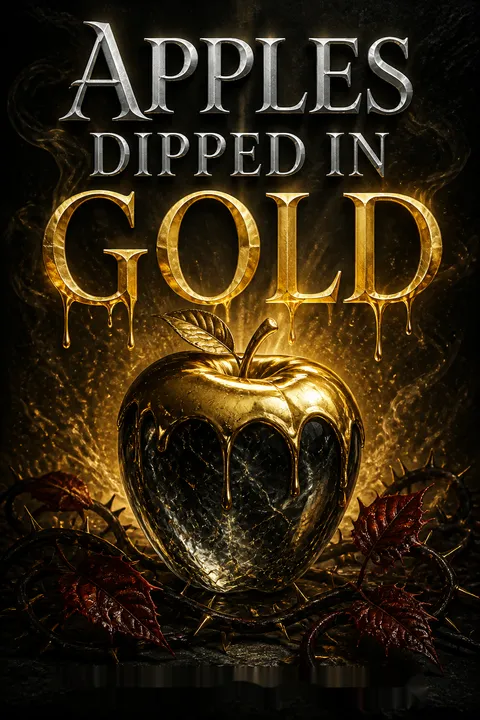
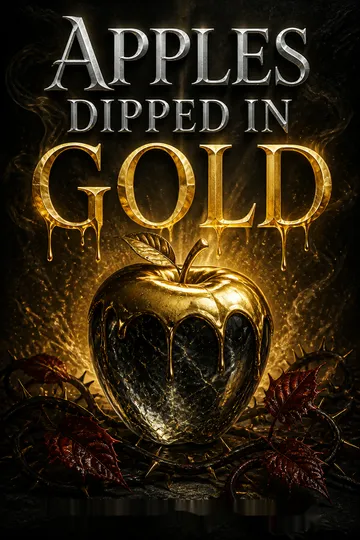
Apples Dipped in Gold receives mixed reviews with a 3.6 rating. Many praise the nostalgic fairytale elements, emotional depth, and the romance between Samara and Prince Lore. Readers appreciate the Cinderella-inspired story about breaking a curse. However, critics cite rushed pacing, convenient plot resolutions, and underdeveloped character moments. Some find the abuse themes uncomfortable and the dialogue stiff. Several note it's shorter and darker than the first book, with opinions split between those charmed by its whimsical nature and those disappointed by execution issues.
People Also Read

Characters
Samara
The battered hearthkeeperSamara is a young woman raised in Gnat, where she keeps house for her three brothers while they hunt in the Enchanted Forest. Years of abuse have taught her to apologize reflexively, hide her anger, and mistake endurance for what she deserves. Yet her compassion remains active: she protects her cat and stallion, mourns animals harmed by her brothers, and notices when others need care. Her sharp, questioning mind makes her wary of easy promises, especially when a bargain is presented as kindness. Samara wants safety, but her deeper struggle is learning that safety need not be purchased by surrendering her choices. Her courage is quiet at first, then increasingly direct.
Lore
The Prince of NightshadeLore is a fae prince whose beauty and power coexist with an abrasive temper, a history of conflict with his brothers, and a deep distrust of his own capacity to be loved. He interprets his lasting attachment to a mortal as a curse, partly because accepting love as real would require him to risk rejection. His prosthetic hand and phantom pain are reminders that he carries old wounds in both body and memory. Lore can protect Samara from immediate threats, but his instinct to decide what a relationship means for both of them often undercuts his tenderness. Beneath his arrogance is a man who wants intimacy while believing he is fundamentally unworthy of it.
Fox
The forest's strange guideThe talking fox appears at crucial moments with healing, warnings, and instructions for surviving Fairyland. He knows routes and rules that neither Samara nor Lore understands, but he rarely explains how he gained that knowledge. His advice is often practical and exact, though his dry humor and refusal to elaborate can make him seem more like a riddling taskmaster than a comforting companion. He helps move the quest forward without taking its choices away from Samara. His presence also unsettles Lore, who depends on him while resenting his commentary and closeness to Samara.
Henry
The rescuing Rook princeHenry is the handsome Prince of Rook who encounters Samara when she has nearly given up on life. He offers her escape, marriage, and a place at court, believing his generosity can undo the misery she has endured. His intentions appear sincere, but his aristocratic assumptions leave him inattentive to how little time Samara has had to choose him or imagine a future with him. Henry's story makes a useful contrast with Lore's: he treats attraction as a reason to offer a life, while Samara's needs require more than a grand offer. He is an important interruption in her story, not a complete answer to it.
Jackal
The controlling eldest brotherJackal is Samara's eldest brother and the most openly domineering of the three. He treats her labor as an entitlement, punishes resistance, and uses the village's reliance on his hunting to reinforce his authority at home. His cruelty is not merely temper: he is alert to opportunities for money and willing to turn other people's lives into leverage. He also carries unresolved grief connected to his parents, though it does not excuse his abuse. Jackal's control depends on making Samara believe she is indebted to him, even when she is the one who has kept his household functioning.
Michal
The swaggering middle brotherMichal is Samara's middle brother, a skilled hunter whose confidence becomes entitlement in the cottage. He takes lovers, treats Samara's presence as part of the household furniture, and follows Jackal's lead when violence or profit is at stake. Unlike Jackal, Michal can show flashes of calculation about practical consequences, but this does not make him compassionate. He helps sustain the family's abuse by treating Samara's work as a resource and her safety as secondary to what the brothers might gain.
Hans
The mocking youngest brotherHans is the youngest of Samara's three brothers, quieter than Michal but no less cruel. He favors tricks and humiliations that let him disguise deliberate harm as amusement, and his laughter pressures Samara to treat her pain as a joke. He also helps the brothers pursue their interests in the forest, following Jackal's lead rather than challenging their treatment of their sister. His playful manner makes his cruelty especially destabilizing: Samara cannot predict whether an ordinary task will end in injury, ridicule, or both.
Cardic
Lore's taunting second brotherCardic, the Prince of Larkspur, is Lore's second brother. He is sharp-tongued, amused by his siblings' weaknesses, and openly competitive with Lore. In his palace, however, he offers Samara food and gives her information Lore has withheld, showing a capacity for hospitality that does not soften his habit of needling others. Cardic reflects a family culture in which brothers are ranked and treated as rivals rather than allies. His candor helps Samara understand Lore's emotional situation, even as his teasing makes clear that the information is not offered without personal amusement.
Mouse
Samara's black-cat companionMouse is Samara's black cat, a small companion whose presence offers warmth in a house ruled by threats. She reacts sharply to danger and shares Samara's concern for Rooster. Samara's attachment to Mouse helps reveal how carefully she protects the few beings she can call her own.
Rooster
The mistreated old stallionRooster is the old stallion used by Samara's brothers on their hunts. They punish him for moving slowly, while Samara treats him with tenderness and promises to take him away from their cruelty. His bond with her makes leaving the cottage more painful.
Llywelyn
Michal's entangled loverLlywelyn is the chaplain's daughter and one of Michal's lovers, though she is engaged to the sheriff's son. Her confidence and flirtation initially conceal how precarious her position is once Jackal warns her about the consequences of broken promises. She briefly reflects the dangerous social bargains surrounding the cottage.
The Goblin King
The gracious rival suitorThe goblin king takes an interest in Samara at the elfin ball and offers her a beautiful gold-and-opal comb. He respects her refusal to choose him and speaks to her with more courtesy than the other figures trying to claim her. His restrained conduct provides a contrast to the old elf king's rigid rules and Lore's possessive jealousy. He is a suitor, but his gift also becomes an important sign that generosity can serve the recipient rather than purchase her.
Old Mother
The tree who dresses SamaraOld Mother is a tree-like dryad who gives Samara a beautiful gown for the elfin ball. She sees Samara's despair beneath her outward composure and insists on treating her as someone worthy of admiration. Her kindness has no stated price, a striking contrast to the bargains Samara encounters elsewhere.
The Dryad
The ball's bright guideA small dryad finds Samara asleep among healing poppies and invites her to the elfin ball. She guides her to Old Mother and helps her prepare for the festivities. Her welcoming manner brings Samara into a world of wonder, though the invitation carries rules the dryad does not fully explain.
The Witch
The cottage's false hostessThe witch lives in a cottage whose inviting appearance conceals decay and danger. She bargains with the fox for a difficult task, then assigns Samara domestic work and tries to draw her into accepting food and drink. Her menace depends on the gap between what the senses are shown and what Samara's body detects. She turns familiar household labor into a trap, making Samara's past skills useful in an environment designed to exploit her.
Plot Devices
The wishing tree
A wish with a priceThe wishing tree bears golden apples whose magic can grant a wish, but it appears only under the right full moon and is hidden beyond the Glass Mountains. Lore believes Samara must bite an apple to free him from his curse. The tree gives the journey its destination while forcing the central question into practical form: what will Samara ask for, and what might the wish cost? Its guarded valley and the dead piled below the mountains establish that desire alone cannot make the quest safe. The apple ultimately connects the tale's romantic resolution to Samara's willingness to risk herself for Lore.
The impossible knife
A wound across seven yearsSeven years before the main action, Lore gives Samara a knife powerful enough to cut through anything. Jackal seizes Samara's hand and forces her to use it against Lore, taking his hand. Each survivor interprets the injury as proof of rejection: Lore believes Samara chose to hurt him, while Samara believes he abandoned her afterward. The knife also comes into the brothers' possession and helps them survive the Enchanted Forest. Its function is therefore both practical and psychological. It gives the brothers power, but it also preserves the false story that keeps Samara and Lore apart.
Fae bargains and rules
Every gift has conditionsFairyland runs on debts, bargains, names, and rules that can be technically true while still misleading. Lore claims Samara owes him because he saved her; the elfin king treats her clothing as evidence that she must choose a husband; the witch offers refuge while preparing a trap. The fox warns Samara that fae cannot lie, but that honesty does not guarantee a complete account. These customs repeatedly test her ability to ask what an offer actually demands. They also contrast with the brothers' coercion: both worlds impose costs, but Samara gradually learns to recognize and resist the terms being placed on her.
The fox's warnings
A guide through dangerThe talking fox heals Samara, predicts the carriage attack, points her toward the ball, and gives instructions for surviving the witch and reaching the wishing tree. His knowledge moves the plot through a series of fairy-tale trials, while his clipped explanations leave Samara and Lore to act without understanding every consequence. Some instructions are essential, but Samara's survival also depends on judgment and improvisation when she forgets the golden thread. The fox is neither a simple rescuer nor an all-knowing solution. His role is to make dangers legible enough that the travelers can choose how to face them.
The comb and witch's claws
Gifts become survival toolsThe goblin king's comb seems at first to be a courtly ornament, but the fox later tells Samara to throw it at a nixie. It transforms into a mass of spears and saves her from being dragged underwater. The witch's claws serve a different purpose: after the witch's death, they become hooks that allow Samara and Lore to climb the Glass Mountains. The spare claw Lore places in Samara's hair helps her escape the raven. These objects turn gifts and remnants of danger into practical agency, paying off earlier introductions at the moments when ordinary strength is insufficient.
Fairy Tale Retelling Series
About the Author
Other books by Scarlett St. Clair


Download PDF
Download EPUB
.epub digital book format is ideal for reading ebooks on phones, tablets, and e-readers.








