

Plot Summary
A Dagger at Ritual
In Nineveh, Lilith Leviathan survives by using her inherited magic to manipulate men’s desire and steal valuables. She has fled Hiram, where her parents expect her to marry and surrender her power to a husband. At Ritual, she charms Ephraim, a wealthy visitor, into handing over a gemmed dagger. Her magic also forces him to admit he stole it from a church worker he killed.
Before Lilith can leave, Zahariev Zareth, Nineveh’s powerful family head and her longtime protector, catches her. He takes the weapon and warns her that her illegal magic could provoke the families, but Lilith secretly retrieves the dagger. For her, its worth is both rent money and one more small victory over rules designed to contain her.
The opening makes Lilith’s survival strategy inseparable from the social system that endangers her. Her magic gives her leverage over men, but it also makes her visible to authorities who insist women cannot use power without male supervision. The theft is therefore more than a practical hustle: she refuses to wait for permission to support herself. Zahariev embodies the contradiction she cannot resolve. He protects her from immediate harm, yet his protection still carries the weight of authority. Their friction begins as a struggle over who gets to define safety, not simply as flirtation.
The Relic Shop Falls Silent
Lilith brings the dagger to Raphael’s Relics, hoping its jewels will cover her overdue rent. The shopkeeper, Abram, offers far less than she knows it is worth. As he examines the weapon, his eyes fill with blood and he collapses dead. Lilith calls her friend Coco, then Zahariev, who arrives with men prepared to clean the shop and take the dagger.
He pays Lilith’s rent without asking, and, when she insists she needs work rather than charity, offers her a place dancing at Praise under strict rules. Meanwhile, Zahariev finds Ephraim dead in a canal, his eyes bloodied too. A disturbed local, Tori, identifies the deaths as a warning from the gods. Lilith’s nightmares begin, drawing her toward a desert and the same blade.
The dagger converts Lilith’s private economic problem into a threat she cannot bargain with. Her usual method depends on reading desire and calculating risk; Abram’s sudden death gives her no motive to interpret and no action to undo. Zahariev’s rent payment is caring, but it also exposes the limit of Lilith’s independence: she asked for a job and received rescue first. Tori’s warning complicates the city’s official account of reality. What the church labels disorder may be the first language available for describing a danger its authorities have reason to suppress.
The Dance Becomes a Test
At Praise, Lilith dances privately for Zahariev to prove she can earn a place onstage. He hires her to perform masked and clothed in a cage, forbidding private dances and magic. Their charged moment ends when church enforcers arrive to question them about Ephraim and the dagger. Later, a taxi takes Lilith home from a visit with Gabriel and his pregnant partner, Esther.
The driver hits Jonathan Koval, one of the enforcers, and Burke kills the driver before attacking Lilith. She shoots Burke twice when he turns on her, then touches the dagger and is swept into a desert vision filled with warnings. When she wakes, the weapon is missing. Zahariev finds her injured and takes her to Gabriel and Esther’s home to recover.
Lilith’s dance is a rare moment when she chooses to use her body as skill rather than bait. Zahariev’s rules make the job possible, yet they also reveal how quickly a workplace can reproduce the control she escaped at home. The attack turns that tension into literal danger: the enforcers are not neutral representatives of law, and Lilith’s gun becomes a necessary defense. Her visions begin to entwine personal trauma with a larger supernatural threat. The chapter’s key shift is from self-directed risk to a world in which hidden forces can seize control of events.
The Dissenter Is Silenced
After recovering, Lilith carries the dagger to the canal and drops it into the water, hoping to end the nightmares. On her way back, she finds Tori beaten in an alley. Four men shoot him, take Lilith’s gun and phone, and abduct her to Archbishop Alarich Lisk. The church leader has been abusing Lilith since she was a child; seeing him again leaves her unable to use her magic.
Lisk threatens to end her freedom unless she returns to her family, then orders his men to abandon her at Nineveh’s border. Zahariev finds her outside her apartment. Lilith tells him what happened and asks him to secure justice for Tori as well as herself. He promises the men responsible will not survive the week.
Tori’s murder gives the supernatural mystery a political cost. He is killed not because he can harm the church but because his speech might make others question it. Lisk’s power over Lilith works through an older injury, demonstrating how institutional authority can persist inside a victim even when she has escaped its physical reach. Her request for justice is also a departure from private survival: she insists that Tori’s life matters alongside her own. Zahariev’s promise offers protection, but the language of vengeance carries its own danger, especially when Lilith has begun to rely on his force.
Esther’s Last Call
Esther’s silent phone calls alarm Lilith, who runs to her apartment and finds shattered pottery, blood on the floor, and Esther unconscious in the bathroom. She calls an ambulance and stays beside her until paramedics take her to hospital.
Gabriel arrives, but doctors cannot save Esther; they deliver her baby, Liam, alive by emergency Caesarean section. A doctor later finds a dangerous concentration of myrrh in Esther’s system, enough to trigger premature labor. Lilith rejects the suggestion that Esther took it herself.
Zahariev helps her confront the scene and supports Gabriel through the first hours with his son. As grief overwhelms Lilith, Zahariev holds her, while she struggles with anger at him for having summoned Gabriel away from home.
Esther’s death breaks the circle of care that had made Nineveh feel livable to Lilith. The scene is constructed around ordinary evidence, a dropped cup, a phone, a trail of blood, but those details offer no explanation for how a beloved person became a crime scene. Her anger at Zahariev and Gabriel is psychologically intelligible: blame gives grief a target when helplessness has none. The newborn’s survival complicates mourning rather than cancelling it. Gabriel must become a father while losing his partner, and Lilith must remain present to a future that has arrived through a devastating loss.
Something in the Nursery
While helping Gabriel in Esther’s apartment, Lilith hears a noise in the nursery and finds a pulsing mass threaded with violet light. It shrieks when exposed to her phone’s light, then escapes through a window after Zahariev shoots it.
Its smaller pieces crawl through the grass, suggesting it can multiply. Lilith fears the creature caused Esther’s death and may have possessed Burke and Koval. She later visits Sons of Adam, where Abel tells her that stories of gods beneath the Seventh Gate have resurfaced before disasters.
Lilith buys a stun gun from Samuel and follows signs of the creature to an alley. A possessed rat attacks; a larger mass returns her gunfire, but the stun gun immobilizes it, allowing Lilith to destroy it with the dagger.
The creature changes Lilith’s grief from a question of culpability into an investigative problem, though that shift does not make the grief easier. Its escape through the nursery window links domestic vulnerability to a spreading public threat. Lilith’s decision to hunt it is partly an assertion of agency and partly an effort to convert unbearable loss into a task with an outcome. The rat encounter expands the threat from a single monster to an ecological problem: the city’s neglected infrastructure may be carrying the danger. Her improvised victory proves the dagger can destroy the creatures, but it does not reveal what they are or how many remain.
Six Bodies at Lisk’s Door
Zahariev identifies the men who abducted Lilith and killed Tori, then kills them one by one. He and Cassius carry their bodies to Lisk’s mansion and leave them on the archbishop’s steps, making clear that the victims were punished for harming someone under Zahariev’s protection. Zahariev also tells Lisk he knows the archbishop’s secrets and will kill him if he targets Lilith again.
Lilith does not witness the confrontation, but its consequences reshape the conflict: Lisk now knows Zahariev is willing to challenge him openly. In Nineveh, Lilith continues to pursue answers about the dagger. Her usual buyers refuse to deal with her after rumors link her to Zahariev, leaving one last contact in the dangerous Trenches.
Zahariev’s violence functions as both personal devotion and political messaging. By leaving the bodies at Lisk’s threshold, he claims the right to punish an authority that has operated beyond public accountability. Yet his protection is not an uncomplicated alternative to the church: it is another system backed by force. Lilith’s social isolation among her buyers shows how quickly reputation becomes a form of control. The information network that once allowed her to work now treats association with power as contamination. Her turn toward the Trenches follows from that exclusion, carrying her beyond familiar rules and into a competing source of knowledge.
The Sword Behind Seven Blades
In the Trenches, Lilith persuades Saira, a witch, to explain the dagger in exchange for jade. Saira reveals it is one piece of the Deliverer, a sacred sword broken into seven blades; the church has three, the Order of the Serpent has three, and Lilith’s is the seventh.
According to Saira, the Elohai descend from Eryx and Ashur, gods imprisoned beneath Mount Seine by the Messiah, who seized power and built the religion now used to rule Eden. The Deliverer could open the Seventh Gate if reforged. Before Saira can explain more, enforcers raid her shop. She helps Lilith escape through a tunnel, then sets a meeting with the Order. From a distance, Lilith sees Saira’s shop burning.
Saira’s account destabilizes the moral map Lilith inherited. It offers a history in which the church’s sacred objects are tools of political conquest and the women called witches preserve knowledge suppressed by male authority. But the revelation does not offer easy liberation. Saira expects Lilith to help free beings she has never met, on the strength of a promise made through visions. Lilith’s skepticism protects her from replacing one unquestioned faith with another. The raid demonstrates that the church fears this rival account enough to destroy its witnesses, making the question of truth inseparable from the question of who controls its transmission.
A Daughter Comes Home
Lilith attends her mother’s gala with Zahariev, wearing a red dress despite her father’s warning to dress appropriately. Her mother, Analisia, criticizes her arrival and appearance, then slaps her when Lilith exposes the hypocrisy beneath their family’s piety. At the gathering, Macarius Caiaphas is introduced as a possible successor to Lucius Leviathan and treats Lilith as his future wife.
In her father’s study, Lilith confronts Lucius and tells him why she fled: Lisk sexually abused her as a child, while Lucius failed to protect her and continued to prioritize the family’s public standing. The confession shatters their careful pretence. Before they can resolve it, Eden’s power goes out, and Lilith leaves the house with Zahariev.
The gala brings Lilith back into the social world she escaped, but this time she refuses to play the obedient daughter who makes its violence appear respectable. Her red dress and direct accusation make private resistance visible. The revelation to Lucius is not a neat reconciliation; it is an attempt to make him recognize the cost of his earlier disbelief and political caution. Macarius’s claim to her future exposes how marriage serves as succession policy, not intimacy. The scene’s emotional force comes from Lilith choosing truth even when the person she confronts is her father, whom she loves.
The House Explodes
As Lilith and Zahariev try to leave the gala, an explosion tears through Lucius’s study. Zahariev shields Lilith from flying debris, then pulls her down the hill toward the blocked district gate. They force their way through and reach Felix’s vehicle. Zahariev tells her the other family leaders had already left after Lisk warned them of the outage, making Lilith fear she was meant to die in the house.
At his compound, Zahariev arranges safety for Lilith, Coco, Cherub, Gabriel, and Liam. The blast appears to have killed Lucius and Analisia, though their bodies have not both been accounted for. Lilith mourns the father she confronted moments before the explosion and vows not to let Lisk take the truth from her.
The bombing converts a painful family confrontation into a literal severing of Lilith’s former life. She escapes the house, but survival does not feel like victory: it leaves her with no chance to discover whether Lucius could have changed after hearing her. The carefully timed power failure and evacuation make the attack look planned, while the empty mansion turns privilege into a target rather than a shield. Zahariev’s physical protection saves her in the moment, yet the emotional consequence is a deeper dependence on the person she has resisted needing. Safety now means joining a conflict she cannot leave.
Hiram Without Its Heir
At Zahariev’s compound, Lilith learns that Macarius has petitioned the commission to take control of Hiram, claiming Lucius chose him as heir. The commission delays its decision until the family funeral.
Zahariev also reveals that Analisia’s remains were not found, so Lilith’s mother may still be alive. Lilith and Zahariev investigate Lisk’s mansion during a power outage. In his study, they find a hidden journal describing the gates, the gods, and the Deliverer.
They overhear Lisk and the other family heads discussing how to divide Lucius’s territory, eliminate Lilith, and prepare for a coming fire and flood. The men consider Zahariev an obstacle and plan to bargain with or wage war against him. Lilith and Zahariev leave with proof of their conspiracy.
The succession dispute shows that the families treat catastrophe as an opportunity to redistribute power. Macarius’s claim reduces Lilith to a route by which a man can inherit Hiram, while the commission’s delay keeps her future negotiable. Analisia’s absence unsettles the assumption that Lilith has lost both parents, replacing closure with suspicion. The journal and overheard conversation join myth to political procedure: the leaders do not merely believe in an apocalypse, they are arranging their interests around it. Lilith’s discovery matters because it changes her from a threatened heir into a witness who can name the conspiracy.
A Choice, Not a Favor
As Lilith and Zahariev face the conspiracy, their guarded intimacy changes. He admits that avoiding a relationship was meant to spare him the pain of watching her marry someone else; Lilith makes clear that his restraint has denied her choice as well.
After she states that she wants him, they begin a consensual relationship. Lilith also visits Gabriel and meets Liam, while Gabriel grieves Esther and struggles to care for their newborn. She supports him and asks him to tell her if he ever feels unable to continue.
Zahariev remains close to both of them, but he does not demand that Lilith choose safety over action. Together, they decide to meet the Order of the Serpent, seeking its three blades while withholding any promise to open the gate.
The romance turns on a shift from protective assumption to explicit choice. Zahariev’s earlier refusal was framed as self-sacrifice, but it still decided what Lilith could bear without asking what she wanted. Her insistence corrects that imbalance. The relationship does not erase the structures around them; their names still carry political consequences, and the coming conflict remains dangerous. Meanwhile, Lilith’s care for Gabriel shows that her response to loss is becoming relational rather than purely defensive. She cannot undo Esther’s death, but she can help Gabriel remain present for Liam and honest about his own limits.
Cracks Beneath the Mountain
Lilith’s recurring dreams become more specific. She sees the Seventh Gate cracked, a violet spell broken along its surface, and pink substance called melam leaking through. She recognizes the creature that killed Esther as a form of this magic, not a demon in the church’s sense.
The revelation makes the Order’s goal more urgent and more troubling: the gates may already be failing, but opening them could release the very power that has killed people. Lilith and Zahariev agree they need the Order’s blades to understand how to repair or reforge the Deliverer.
At the same time, the other family heads are plotting against Zahariev, and he offers to surrender Hiram’s claim if Lilith freely chooses to be with him. She chooses him, but not at the cost of her autonomy.
The dreams function as an alternative archive: they supply information the official religion has erased, but they do so through images that are difficult to verify. Lilith’s discovery that melam causes the creatures connects intimate grief to a geological and political crisis. The danger is not simply whether gods exist; it is whether the act of freeing them would repeat the old transfer of power under a new name. Zahariev’s offer to trade territory for Lilith gives their relationship a public dimension, while her insistence on freedom prevents devotion from becoming another form of ownership.
The Seventh Gate Opens
At the meeting place, Lilith finds Saira dead and is seized by church enforcers. Zahariev, Cassius, and Gabriel intervene; Lilith then agrees to be taken to First Temple as a captive, hoping to reach Lisk and his three blades.
Inside the baptistery, she kills the enforcer guarding her and confronts Lisk, who admits to treating her abuse as punishment and describes the planned ritual as a cleansing. Lilith shoots him, but Analisia appears carrying six other blades.
She reveals she belonged to the Order and claims Lilith was conceived from her blood and the Invader’s to fulfill a prophecy. Lilith stabs her mother, who tears away Lilith’s protective necklace. Lilith’s body changes, growing wings as the ground shakes. Cassius reports that the city’s archangel statues have come alive.
The climax overturns every stable category the story has used: victim and weapon, mother and betrayer, angel and monster, sacred object and instrument of rule. Analisia’s revelation makes Lilith’s birth part of a prophecy, but Lilith’s decisive act is not obedience to that story. She stabs the person trying to reduce her to a sacrifice. The stolen necklace exposes the protection she has carried since childhood as a vulnerable point, while her transformation leaves the meaning of her power unresolved. The living statues confirm that the crisis has crossed from hidden myth into public reality, ending the book at the threshold of consequences.
Analysis
Terror at the Gates makes political authority intimate. Eden’s families and church do not govern only through laws; they enter private life through marriage plans, supervised magic, public shame, and the demand that victims protect an institution’s reputation. Lilith’s resistance begins as a practical refusal to be assigned a husband, but the plot steadily tests whether independence can survive without becoming isolation. Her closest relationships offer competing models of care: Coco and Esther provide affection without claiming ownership, while Zahariev must learn that protection is not the same as deciding for Lilith.
The supernatural conflict deepens this critique rather than replacing it. The Book of Splendor, Saira’s history, the prophetic dreams, and the living melam creatures all contest who has the authority to name the sacred. Yet the alternative story is not automatically trustworthy. The Order of the Serpent asks Lilith to free gods she does not know, while the church seeks to control the same gates for its own ends. Her skepticism is therefore an ethical skill, not a failure of belief. She must distinguish liberation from another promise of obedience.
Grief repeatedly interrupts the fantasy of self-sufficiency. Esther’s death and the destruction of Lilith’s family cannot be mastered through magic, money, or vengeance. They force her to accept care while still insisting on choice. The ending turns that tension into bodily transformation: Lilith’s new wings may mark power, danger, or both, but the book refuses to let prophecy settle her identity. The closing image of awakened archangels makes private rebellion public and leaves the central question unresolved: can Lilith use inherited power without surrendering herself to the story others have written for her?
Review Summary
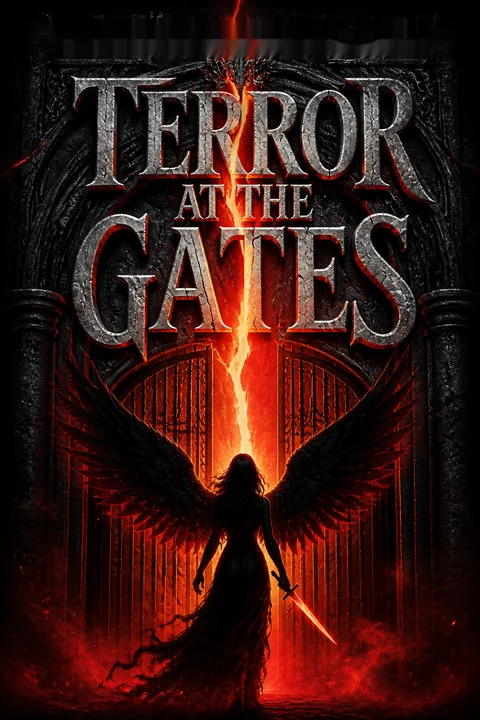
Terror at the Gates by Scarlett St. Clair receives divided reviews. Fans praise the gritty urban fantasy setting, Lilith's fierce determination, and Zahariev's protective devotion, calling their slow-burn romance compelling. Many appreciate the feminist themes addressing religious trauma and patriarchal control. However, critics cite slow pacing, underdeveloped world-building, and an inconsistent protagonist. Some find Lilith bratty and frustrating, while others celebrate her unapologetic rage. The magic system and political intrigue show promise but feel underexplored. Most agree the ending's revelations warrant continuation, though opinions on execution vary widely.
People Also Read






Characters
Lilith Leviathan
Defiant magic-bearerLilith is the only child of Lucius and Analisia Leviathan, raised to become a compliant wife and family asset. She rejects that future and builds a precarious life in Nineveh, where her magic lets her manipulate men’s desire and earn money. Her irreverence shields a more vulnerable fear: that accepting help will put her back under someone else’s control. She is resourceful, impulsive, and fiercely protective of people who have shown her unearned kindness. Her bond with Zahariev tests whether intimacy can coexist with autonomy, while the church’s abuse and the city’s unequal laws force her to decide what kind of power she is willing to use.
Zahariev Zareth
Nineveh’s guarded protectorZahariev leads the Zareth family and rules Nineveh through information, loyalty, and a reputation for decisive violence. He has known Lilith since childhood and promised her father that he would watch over her, but his attachment goes beyond that obligation. Controlled and difficult to read, he tends to turn care into practical action: shelter, protection, money, and consequences for anyone who harms her. His caution comes partly from political knowledge and partly from fear of what he might lose. Lilith challenges his habit of deciding on her behalf, forcing him to distinguish devotion from control and to acknowledge the choices he has avoided making.
Colette D’Arsay
Lilith’s chosen familyCoco is Lilith’s roommate and closest friend, a dancer at Praise who offers practical care without demanding explanations. She worries about Lilith’s risky schemes but does not confuse concern with ownership. Their friendship is built on ordinary acts: sharing a home, teaching dance routines, checking that the other gets back safely, and making room for a kitten. Coco gives Lilith a model of intimacy outside family obligation and romance. Her warmth also makes Lilith more conscious of the difference between being protected because of a powerful surname and being loved simply as herself.
Gabriel De Santis
Loyal friend and fatherGabriel is one of Zahariev’s trusted men and a steady, affectionate presence in Lilith’s life. He calls her family and treats her with a tenderness that contrasts with his violent work. His relationship with Esther and anticipation of their son show the domestic life he is trying to build beyond Nineveh’s criminal politics. Gabriel’s care is generous but not invulnerable; he can be exhausted, frightened, and unsure of himself. He wants Lilith safe and happy, yet he respects that her decisions belong to her.
Esther Pomeroy
Gentle center of homeEsther is Gabriel’s partner and a close friend to Lilith. Warm, nurturing, and attentive, she welcomes Lilith into her home without treating her family name as a reason for closeness. She is preparing for motherhood and creates comfort through food, hospitality, and small acts of care. Esther’s gentleness is not passivity; she makes room for people who have been denied belonging. Her home becomes one of the few places where Lilith can experience care without negotiation, giving their friendship a powerful emotional importance.
Lucius Leviathan
Powerful, compromised fatherLucius heads the Leviathan family and governs Hiram, yet his relationship with Lilith is more tender than the patriarchal order he upholds. He meets her regularly after she leaves home and tries to preserve the possibility that she will return. His affection is genuine, but it exists beside his investment in family reputation and succession. That contradiction makes him difficult for Lilith to trust: he can comfort her while still expecting her to accept a future chosen by others. He represents the painful difference between loving someone and protecting them when protection threatens one’s own authority.
Analisia Leviathan
Devout family matriarchAnalisia is Lilith’s mother and the architect of the Leviathan family’s public respectability. She is disciplined, socially powerful, and deeply committed to the Book of Splendor’s hierarchy, using its teachings to shape her daughter’s behavior. Her own authority within the family complicates her submission to a system that constrains women. To Lilith, Analisia’s approval has always seemed conditional on obedience and appearances. Her severity leaves Lilith uncertain whether she is loved as a daughter or valued as an heir, making their relationship a source of both anger and enduring emotional need.
Alarich Lisk
Abusive religious authorityArchbishop Lisk leads the church from First Temple in Hiram and exerts influence over the five ruling families. He presents himself as a guardian of morality, but his authority depends on fear, punishment, and the silencing of dissent. His past treatment of Lilith makes religious language personally dangerous to her, not merely abstractly oppressive. Lisk is most effective when he turns institutional power into private shame, teaching people to blame themselves for resisting him. He represents the corruption that flourishes when spiritual authority is shielded from scrutiny.
Cassius Zareth
Zahariev’s blunt secondCassius is Zahariev’s younger brother and second-in-command. More openly abrasive than Zahariev, he values family loyalty and is quick to challenge decisions he considers reckless. His teasing creates friction with Lilith, though his actions repeatedly place him beside her when danger rises. He is also one of the few people willing to question Zahariev directly, making him a practical counterweight to his brother’s guarded judgment.
Saira
Witch and forbidden historianSaira lives in the Trenches and practices learned magic outside the church’s control. Suspicious of strangers and blunt in conversation, she guards both her knowledge and the people who depend on it. She tells Lilith an alternative history of the gods, the church, and the Deliverer, but expects payment and commitment rather than offering easy reassurance. Her mistrust is shaped by the danger of speaking openly in a society that persecutes women whose power it cannot claim.
Tori
Dissenter in the streetKnown locally as Tori, Histori is a vulnerable man who preaches that gods are imprisoned beneath the mountain and that the gates are weakening. His speech sounds incoherent to many listeners, but he experiences it as a real warning. Lilith treats him with respect, offers him money, and regards him as a friend rather than a spectacle. His presence reveals how quickly the church labels inconvenient speech as a threat.
Macarius Caiaphas
Claimant to HiramMacarius is a wealthy and polished man introduced at the Leviathan gala. He presents himself as charming and attentive, but his interest in Lilith is entangled with a claim to her family’s future. His presence makes marriage visible as a political instrument: an arrangement that can transfer authority as well as determine a woman’s private life. He is socially adept enough to make a demand sound like a natural expectation.
Abel
Keeper of dangerous storiesA regular at Sons of Adam and brother to its owner, Abel speaks cautiously about earlier waves of religious persecution and rumors of the gods beneath the mountain. He has survived long enough to know the danger of speaking freely, but he still gives Lilith information when she asks. His warnings mix hard-earned prudence with a reluctant belief that worse events may be coming.
Samuel
Weapons-shop gatekeeperSamuel runs Sons of Adam and sells weapons through a careful process that includes instruction and background checks. He understands the harm firearms can cause in Nineveh, so he resists treating access as a casual transaction. His rules reveal a practical ethic in a district where formal law often serves the powerful rather than the vulnerable.
Hassenaah
Exacting club managerHassenaah manages and choreographs the dancers at Praise. She is disciplined and demanding, and she views Lilith’s direct appointment by Zahariev as an insult to her authority. Their conflict grows from more than personal dislike: Hassenaah believes Lilith has bypassed the labor and evaluation expected of the performers.
Plot Devices
Lilith’s desire magic
Power through attractionLilith can sense men’s desire and influence it, using that ability to extract information, defend herself, and procure goods. The magic gives her practical agency in a society that forbids women to use their inherited power without male oversight. It also makes her vulnerable to the same patriarchal logic she resists, because others treat her sexuality as evidence that she should be controlled. The ability works best when desire is present, so it cannot solve every threat. Its limitations become especially consequential when Lilith faces people whose lust is entangled with her trauma.
The seven blades
A sword dividedThe dagger Lilith takes from Ephraim is one fragment of the Deliverer, a sacred sword broken into seven blades to prevent anyone from using it to open the gates. Three pieces belong to the church, three to the Order of the Serpent, and Lilith carries the seventh. The weapon kills people who handle it without the required blood, returns to Lilith after she tries to discard it, and destroys the melam creatures when used against them. Its divided form is both a supernatural mystery and a political prize, since every faction wants the power to reassemble it.
The Seventh Gate
A failing supernatural sealThe Seventh Gate stands in the mountains outside Nineveh, sealed by a spell that the church describes as protection against evil. Lilith’s visions show cracks in the spell and pink melam leaking through. The substance can animate or possess creatures, including the violet-lit masses that kill Esther and attack people around Eden. The gate’s failing seal links Lilith’s personal losses to the broader crisis, while conflicting accounts leave open whether the beings behind it should be freed, contained, or feared. The gate is both a physical boundary and the center of a struggle over who controls religious truth.
The Book of Splendor
A law disguised as faithThe Book of Splendor supplies Eden’s official religious doctrine and the justification for male authority over women’s bodies and magic. Lisk uses it to discipline dissent, while Lilith’s childhood punishment and later discoveries make her question who selected its stories and whose power they protect. The book’s claims about sin, gates, angels, and the end of the world shape how characters interpret events, even when those claims conflict with what they witness. Its importance lies not only in what it says, but in the institutions that enforce its version of truth.
The Leviathan necklace
A keepsake and protectionLilith’s father gave her a gold pendant at sixteen, and she wears it as a cherished link to him. He describes it as protective, though Lilith has never known exactly what that protection means. The object anchors her memories of Lucius and travels with her through her flight from Hiram, the dagger’s visions, and the family’s crisis. Its significance grows from personal sentiment into something physically consequential when it is taken from her during the final confrontation. The necklace binds family love to the supernatural story without making the two meanings identical.
About the Author
Other books by Scarlett St. Clair




Download PDF
Download EPUB
.epub digital book format is ideal for reading ebooks on phones, tablets, and e-readers.








