

Plot Summary
Ashford’s Missing Past
Kane, a twenty-six-year-old drug dealer with a talent for avoiding responsibility, meets his father Beede at the French Connection while they wait for Anthony Shilling. Beede, a respected hospital laundry manager, seems more troubled by Anthony’s involvement in Kane’s business than by the business itself.
His reserve conceals an old wound: years earlier he campaigned to save villages from the Channel Tunnel’s roadworks, then helped dismantle and preserve Mill House after the rerouting sacrificed it. Eurotunnel destroyed the mill anyway, and its valuable roof tiles disappeared.
Beede has spent fifteen years quietly investigating the loss and assigning blame. As he and Kane circle each other’s differences, a strange horseman in a vivid yellow coat peers through the restaurant window, beckoning Kane outside.
Beede’s fixation begins with a genuine civic defeat, not an abstract nostalgia. He helped secure one compromise, then discovered that the compromise merely moved destruction elsewhere. His later secrecy and rigidity are the afterlife of that failure: a man who once trusted negotiation now believes judgment must be delayed until he can identify exactly who took what. Kane’s indifference is partly a counter-identity, a way to refuse the burden that has consumed his father. The horseman intrudes on this ordinary family standoff as if the past itself has found a way to enter the room.
The Horse Changes Riders
Elen arrives with her young son, Fleet, and calls Beede by the familiar name Danny. Outside, Kane sees the yellow-clad rider change into a different man, a fair-haired German who cannot initially remember his own identity. Beede recognises him as Isidore, or Dory, his friend and colleague, and calmly leads the stolen horse back toward its field.
Dory’s fear of horses, his confusion about his marriage, and his repeated loss of recent memory show that these episodes are not new. Beede invents a safer story to protect him when police find Dory’s car abandoned on a roundabout. Inside the restaurant, Elen explains that Beede has lost his old limp. Kane realizes she once treated his mother and that she remembers his childhood.
The shifting rider makes identity feel less like a stable possession than a role that can be temporarily displaced. Dory’s episodes are frightening partly because he is not simply forgetful: he reconstructs events around himself, sometimes casting Beede as the culprit. Beede answers with protective lies, a compassionate tactic that also deepens their mutual dependence. Kane, meanwhile, notices details his father never explains. The small physical change in Beede’s walk becomes a first crack in Kane’s assumption that his father is entirely knowable, even as he remains emotionally distant from him.
The Envelope at the Wall
Kelly Broad, an underweight young woman with a local reputation she both exploits and resents, waits outside the Elwick Road Villas for Beede. Winifred Shilling, Kane’s former girlfriend, asks her to deliver a brown envelope to Beede.
Their brittle conversation turns to Kelly’s brother Paul, whom Kelly says died after years of solvent abuse. Winifred admits that she and Paul began using together when they were young, a confession Kelly cannot absorb. She stuffs the envelope into her mouth, jumps down from the wall and leaves.
The package contains Winifred’s research into the sixteenth-century jester John Scogin and a note asking Beede to discuss what she found. Kelly’s encounter with the past is personal before she knows it is also historical.
Kelly’s bravado is a shield built from family gossip, sexual reputation and loyalty to the people who remain. Her lie about Paul’s death is not presented as simple manipulation; she is trying to control a story in which her brother’s suffering has become public property. Winifred’s admission complicates the easy division between the respectable former girlfriend and the notorious Broad girl. The envelope carries a second, parallel inheritance: a historical account whose uncertain authorship and vulgar jokes will later echo the characters’ own struggles over memory, blame and who gets to tell a life.
Coffee Turns to Blood
Kelly reaches Kane’s flat after falling from the wall and fracturing her leg badly. An entry-phone engineer, Gaffar Celik, is trying to massage her when Kane arrives, jealous and irritated. Gaffar pushes Kelly down when she tries to stand, so Kane grabs him; Gaffar answers with two precise punches that leave Kane winded.
Kane throws hot coffee in Gaffar’s face, damaging his shirt and Thermos. Only then does he see Kelly’s exposed bone and swelling leg. An ambulance takes her to hospital, while Kane accepts responsibility for her lurchers. Gaffar returns the lost envelope and a shoe, then accepts Kane’s invitation to stay. Their violent first encounter becomes the beginning of an uneasy household alliance.
The scene turns Kane’s habitual charm into a poor substitute for judgment. He reads Gaffar’s attention to Kelly as sexual competition and reacts physically before understanding the injury; the sight of her broken leg abruptly strips the comedy from his performance. Gaffar, by contrast, is dangerous but controlled, and his refusal to be treated as disposable makes him difficult for Kane to classify. Their connection begins not with trust but with reciprocal damage, hospitality and practical need. The book’s comedy does not cancel violence here; it exposes how quickly a joke can become a wound.
A Kurd at Beede’s Table
While Kane sleeps off drugs and tequila, Gaffar makes himself at home in Beede’s flat, cooking beans, borrowing a suit and gambling with Beede. Beede loses two hundred pounds and the Yves Saint Laurent suit, then leaves for work without learning how much his guest has unsettled the household. Kane wakes to find Gaffar wearing Beede’s suit and discovers the brown envelope Kelly delivered.
Winifred’s note describes her research into Scogin’s Jests and hints at information she wants to share in person. Kane also searches through Beede’s books, finding his father’s intense interest in medieval life, possession, death and word origins. A card for Petaborough Restorations gives him a new lead.
The dice game establishes Gaffar as more than a temporary outsider: he can read people’s risk-taking and use their assumptions against them. Beede loses, but his willingness to play grants Gaffar a place at the table that neither man has formally offered. Kane’s discovery of Beede’s books produces a different kind of intimacy. He begins looking for evidence of his father not through conversation but through what Beede underlines, collects and hides. The envelope’s scholarly content becomes a clue, while the restored rug, borrowed suit and displaced objects establish a world where surfaces are constantly being rearranged.
The Hospital Broadside
At the hospital, Kelly accuses Beede of stealing Kane’s tranquilizers and letting her take the blame. Beede denies that her brother Paul is dead, explaining that Paul is alive but profoundly incapacitated. Kelly’s anger shifts when Beede tells her that her mother, Dina, has come to visit.
Dina arrives in a commandeered wheelchair, berates Kelly, ignores Beede’s offered hand and turns even the visit into a demand for service. Kelly tries to protect herself by threatening to tell Kane about the drugs, but Beede refuses to be controlled.
He later arranges for the dog warden to collect the lurchers. At home, Gaffar repairs the rug by turning it around, while Kane finds a letter about a road-crossing campaign for a boy killed near a new development.
The hospital scene makes care look neither tender nor clean. Beede’s laundry work, Dina’s demands and Kelly’s broken body all belong to the same economy of dependence, but each person names the obligation differently. Kelly’s accusation rests on her belief that Beede betrayed her; Beede’s calm response refuses the emotional script she expects, leaving her more exposed than an argument would. Dina’s theatrical selfishness is also a form of power: she makes strangers serve her, yet Kelly still longs for uncomplicated maternal attention. The letter about a dead child quietly links private grief to public infrastructure.
Fleet Builds Albi
At school, Fleet’s teacher praises his memory and coordination but worries about his exhaustion, isolation and intense focus. Elen refuses the school’s suggestion of a psychologist.
At home, Fleet builds a miniature version of Albi from matchsticks, including its cathedral, bridge, palace and mill, though he insists some sections are not built yet because their real counterparts were unfinished. His parents had first encouraged him through model kits, but the project has grown beyond their understanding.
A classmate, Steven Bradley, begins singing an old-sounding song and speaking an unfamiliar tongue around Fleet, then retreats after Fleet dismisses him. Elen recognizes that the architecture is not an invented fantasy: Fleet has reproduced the layout of a real French town from a brochure.
Fleet’s construction is both a remarkable act of attention and a source of parental alarm. His model does not merely imitate architecture; it gives physical form to a world organized by exact relations, future work and unfinished edges. Elen’s discovery that the layout matches Albi changes the meaning of his play without explaining it. The school sees behavior to be managed, while his parents see a child whose needs they cannot confidently interpret. Steven’s strange language briefly suggests that Fleet’s private world may be contagious, but Fleet’s rejection of him restores the boundary. The family’s uncertainty is not whether Fleet is unusual, but how to care for him without making his difference a diagnosis.
Harvey’s Unfinished House
Elen and Dory hire Harvey Broad to repair their new-build house after the roof leaks into Fleet’s bedroom. Harvey promises a quick start, then leaves scaffolding half-built and sends an unreliable young worker, Lester, instead.
He tells Elen that Dory offended him by choosing another firm first, then pressures her to write a complaint about the phone directory’s placement of his rival, A Priori. Elen writes it despite her misgivings. Dory secretly pays Lester extra so the boy will keep working and conceal the arrangement.
Meanwhile, Dory’s memory failures worsen, and he becomes increasingly suspicious of what Elen and Beede are discussing. His paternity test returns an impossible result: Fleet is his son, but the genetic report seems to place the connection many generations in the past.
The house’s defects turn the family’s shelter into an active source of stress. Harvey controls access to repair through delay, charm and grievance, while Elen is pressured into serving his rivalry as though it were her own. Dory’s secret payment to Lester is a practical fix that also deepens his habit of hiding inconvenient truths. The paternity test makes that habit existential: science returns an answer that contradicts ordinary family time. Rather than clarifying his place as a father, the test gives Dory a new reason to distrust what he sees and feels, while the leaking house keeps the family’s private instability materially visible.
The Boy Is Not Ordinary
Dory’s childhood in Germany explains the fault lines beneath his adult life. His father demanded that he abandon English, and the language he suppressed later returned as laughter, confusion and lost time. He learned to manage these episodes with breathing, exercise and an inner observer called the Witness.
As an adult he secretly orders a paternity test for Fleet. The laboratory says the genetic pattern is neither ordinary nor clearly his, then cautiously suggests a link reaching ten or eleven generations back.
Dory also notices bruises on Elen’s arms that match the span of his own fingers, though she says she slipped on ice. He tells Beede he fears he may have hurt her without remembering. His yoga practice, meant to restore control, seems to intensify the episodes.
Dory’s history makes his uncertainty more than a medical symptom. His father’s language discipline separated him from his own past, leaving him with an inner life that feels both inherited and forbidden. The Witness gives him a method for observing himself, but it cannot guarantee that observation will produce control. The paternity test reproduces this problem in scientific form: evidence arrives, yet it cannot settle identity. His attention to Elen’s bruises is ethically serious, but his unreliable memory prevents certainty. The section refuses a simple opposition between illness and guilt. Dory may be frightened of harm because he senses it, or because he cannot trust the gaps in his own account.
Peta’s Workshop of Doubles
Kane follows the Petaborough Restorations card to Peta, an antiques dealer and restorer who has rebuilt a barn into a secretive workshop. She explains how she suspends flaking medieval paint in wax and honey, then shows Kane an authentic-looking pillory she made for a museum.
He locks himself into it, unaware that Peta once placed Beede inside for hours after suspecting him. Kane recognizes that Peta’s work concerns forgery, though she dislikes the word, and suspects that the business’s male proprietor may be another invention.
Their exchange becomes flirtatious, but Peta challenges Kane’s belief that he merely eliminates pain. She argues that he avoids moral questions by treating relief as an unquestioned good. He leaves both intrigued and physically unsettled.
Peta’s workshop turns restoration into a practical inquiry about authenticity: she saves paintings by removing what no longer supports them, yet her own business blurs the boundary between preservation and manufacture. The pillory makes this ambiguity bodily. Kane enters voluntarily, then discovers that the restraint is not complete, a fitting image for his belief that he can control every encounter. Peta’s challenge to his pain-relief ethic exposes a moral shortcut: he can treat suffering while avoiding questions about why it exists or what a person might owe another. Her attraction to him and her refusal to flatter him keep seduction and critique in the same room.
John Walks Into the House
Kane visits Elen’s home for his foot, though he has also come because he cannot stop thinking about her. There he meets Dory and Fleet, and sees the disabled spaniel Michelle, who belongs to Lester. Fleet handles the dog gently, but his father insists she is not theirs. When Fleet uses a lamp to cast the shadow of an old man riding a donkey, Kane sees the shadow as a separate presence.
The boy calls this figure John and tells stories about his tricks at court. Dory grows disoriented, while Elen tries to control Fleet without exposing the full extent of the family’s difficulties. Kane leaves with his foot still untreated, shaken by the smell, the moving shadow and the sense that the child knows a history no one taught him.
The domestic visit collapses the boundary between ordinary problems and uncanny experience. A dog’s urine, a child’s mischief and a father’s confusion are tangible; the smell that overwhelms Kane and the shadow that seems to act independently are not. Fleet’s stories connect his architectural model to a historical jester, but the connection remains unstable between imagination, inherited memory and supernatural intrusion. Elen’s restraint is not passivity: she is managing several competing risks at once, including Dory’s dignity, Fleet’s safety and Kane’s presence. Kane’s usual methods of deflection fail because his own senses become part of the evidence.
The Lighthouse Day Out
Elen takes Dory and Fleet to Dungeness, hoping a family outing will steady them. Dory argues about the route, the train timetable and Michelle, while Fleet insists that the dog should come too. At the empty lifeboat station, Elen tries to interest him in photographs and a possible tractor ride. Fleet instead speaks of John, a figure who seems to know the boy’s private thoughts.
Dory disappears to the top of the lighthouse, where Elen finds him soaked, sobbing and insisting the power station obscures an older landscape. After he returns to himself, he cannot explain his behavior. On the drive, Fleet takes Elen’s lighter and the old timetable from her pocket, then casually names the strange visitor John.
The outing reveals how exhausting ordinary family life has become: every practical choice can turn into a contest over control, and every effort to create pleasure risks exposing Dory’s fragility. The lighthouse heightens that strain by giving Dory a literal vantage point from which the present landscape feels wrong. Fleet’s casual naming of John links his private mythology to Dory’s episodes without forcing a diagnosis or supernatural explanation. Elen’s lighter and timetable become evidence of how little control she has over what the family carries, remembers or reveals. Her care is constant, but it cannot make the day coherent.
A House From Dory’s Past
On the way from Dungeness, Dory abruptly stops at a house for sale in Jury’s Gap and persuades the teenage occupant, Gaynor Thomas, to show them around. He recognizes the kitchen range and a mark carved into the chimney, insisting he once lived there with his aunt Mary.
Elen is alarmed by how readily Gaynor lets strangers inside, while Fleet asks whether her father is fat and studies her fishing trophies. Dory finds a second initial, one he identifies as his full name, Isidore; Fleet says it looks like a J. Elen hurries them away. Outside, she warns Gaynor to be more cautious, then discovers Fleet has stolen a small plastic daisy from the girl’s hat.
The house makes Dory’s disputed memories briefly concrete: the range, the carved mark and the old layout seem to confirm a past that he cannot reliably access. Yet the second initial remains ambiguous, and Elen’s urgency reflects a different kind of knowledge: she sees the risks of Dory’s confidence and Gaynor’s trust. Fleet’s small theft echoes his father’s secretive actions, but it is also a child’s impulsive claim on an encounter he cannot understand. The family leaves with no settled account of whether Dory remembered the house, invented it or recovered something real.
The Daughter Who Returned
In Winchelsea, Dory asks whether the town has been evacuated and then goes searching for an older harbour he remembers. Elen stays with Fleet until she spots Dory wandering in the mud at the beach. There she meets Charles Bartlett, a former teacher and father of Eva, a gifted young engineer he believes was kidnapped and killed in Darfur.
Charles offers books about gifted children after Fleet recounts elaborate stories about John Scogin, including the jester’s rooftop antics. In his cottage, Charles confesses that Eva is alive: she chose a new life in Sudan and faked her death, while his bestselling memoir and its film adaptation continued presenting her as dead. Elen is shaken by the secret, and Dory falls asleep in Charles’s bed.
Charles’s revelation turns a public tragedy into a private betrayal of narrative. He has profited from a story of Eva’s death while knowing that she rejected her former identity and chose a different life. His shame is real, but so is the possibility that his grief has become a form of possession: he wrote and circulated the version of Eva he could bear. Elen’s counsel urges him to honor her choices, yet she cannot remain outside the problem herself. Fleet’s stories about John and Dory’s confusion suggest that the past may be less a record than a force that keeps rewriting the present.
The Forest Guardian
Dory bolts from the car near Bixley after a disagreement with Elen over where they are and who he is. Elen searches with Fleet, then calls Beede when darkness and cold make the woods dangerous. Beede arrives on his Douglas motorcycle and follows Dory’s trail through rain and brambles, finding a torn pair of boxer shorts but no man.
A self-appointed woods guardian appears with a Jack Russell named Gringo, who is unexpectedly giving birth. The guardian panics and threatens Beede with a knife; Beede takes charge, warms the bitch and delivers two puppies, reviving the second with mouth-to-mouth. The guardian admits he has lost his red kite. Beede continues searching, carrying the feather he found.
Beede’s search brings his practical competence into direct contact with a life he cannot fully control. He does not solve Dory’s disappearance, but he stays when the guardian’s panic threatens Gringo and her pups. The birth is a counter-image to the book’s recurring losses: care is physical, immediate and imperfect, with no guarantee that every life will survive. The lost kite and the feather bind the scene to the novel’s larger system of birds, breath and mistaken signs. Beede’s habitual restraint gives way to action, yet his rescue work cannot settle the deeper question of what is happening to Dory.
Salad, Sinjar, and Paul
Gaffar’s fear of salad worsens at Tesco until he collapses among the cheeses, and Beede helps him recover. Beede later discovers that Gaffar’s father came from Sinjar and may have belonged to the secretive Yezidi, or Dawasin, community, whose traditions treat lettuce as dangerous. Gaffar refuses to accept Beede’s theory, but the possibility unsettles him.
Meanwhile Kelly’s brother Paul, long comatose, wakes in hospital, says a single profane word and dies. Kelly interprets the timing as a sign from God and decides to forgive people she has blamed, including Winifred and Gaffar. Gaffar fails to reach the hospital in time after gambling in a den, but Kelly’s new religious certainty softens her anger enough to let him return.
Gaffar’s bodily fear becomes a route into a history he may never have been told. Beede’s research offers a plausible cultural inheritance, but its very secrecy makes certainty impossible. The scene reflects the novel’s refusal to separate psychological symptoms from family, migration and political history. Kelly’s conversion is similarly unstable: grief over Paul’s death turns into a rapid act of forgiveness, but it does not erase her anger or her practical demands. Her faith gives her a way to reinterpret coincidence as connection. The novel leaves open whether that interpretation is consolation, delusion or a necessary form of survival.
The Unfinished Confession
While searching for Dory, Beede finds Elen and Fleet waiting in a hotel car park. Elen is soaked, exhausted and frightened, and Beede finally takes her into his arms. She admits that the day has left her feeling alone; he promises to help her and Dory through the crisis. Later, at Peta’s workshop, Beede explains that Kane’s mother planned her own suicide and that fifteen-year-old Kane helped her prepare.
Beede intervened when she began to die, calling an ambulance; she survived with catastrophic brain damage and died months later. Kane blamed him, and Beede admits he never found a way to speak openly with his son. Peta challenges Beede’s emotional distance, while he insists that action matters more than confession.
Beede’s intimacy with Elen is not simply romance; it grows from shared caretaking and exhaustion, while the marriage she is trying to preserve remains unresolved. His account of Kane’s mother exposes the original rupture between father and son: Beede saved her life, but the act violated the plan she and Kane had made together. Each man can plausibly experience the same event as love, betrayal or failure. Beede’s belief that conduct speaks more clearly than emotion protects him from further pain, but it also prevents repair. Peta’s challenge makes that defense visible without providing an easy alternative.
A House Full of Shadows
Kane returns to Elen’s house as Dory’s episodes deepen. He sees Fleet’s matchstick city, learns that Lester has been collecting fleas for the boy, and discovers the child can make his hands look marked by a strange invisible thread. Elen tries to keep Fleet calm while Dory’s identity shifts between himself and John.
At Beede’s flat, Beede finds the Siamese cat hanging from a light cord and the rooms violently disturbed; he frees it too late to save it. Dory arrives with a head wound and speaks of going to the roof. Kane later steals Dory’s diary from the Rover, reading its account of the Witness, the fly and the belief that Elen and Beede are conspiring against him. The diary’s certainty does not make its claims reliable.
The escalating disorder is expressed through ordinary objects made untrustworthy: a lamp, a cat collar, a diary, a child’s model. Dory’s writing turns ambiguous events into an organized persecution, while the visible damage around him makes dismissing his fear impossible. Kane’s theft of the diary mirrors his father’s secret investigations, suggesting that both men seek truth by violating another person’s privacy. The cat’s death is especially stark because Beede can rescue puppies in the woods but cannot undo the violence inside his own home. Care has limits, and its failure is not always evidence of indifference.
The Roof Comes Down
Dory climbs onto the unstable scaffolding outside his house and throws roof tiles while Harvey argues with him below. Kelly and Gaffar arrive on a scooter and call out just as the structure collapses around Harvey; he escapes, but his customised Toyota is badly damaged.
Dory then drives away with Beede, who is already hurt and disoriented. Elsewhere, Kelly’s brief reunion with Garry Spivey gives her a gentler source of belonging than her feuding family, while Kane follows the clues in Dory’s diary and tries to understand the bird, the fire and the word that keeps returning.
A fire engine racing through Ashford collides with Dory’s Rover, setting off a multi-vehicle crash. Beede and Dory are taken into an ambulance, both injured and confused.
The collapse makes Dory’s inner crisis physically consequential. His rooftop gesture echoes the jester stories Fleet has repeated, but this time the performance endangers Harvey, the household and the road beyond. The book never grants a clean causal explanation: Dory may be reenacting a remembered story, acting under an altered identity or responding to a presence others only intermittently perceive. Kelly’s arrival saves Harvey from the falling structure, briefly joining her volatile family world to the novel’s central crisis. The subsequent collision widens the cost beyond the household, turning private disorientation into public danger.
Gaffar Claims the Feather
Inside the ambulance, Beede hears Dory insist that the Darkmans is still near and struggles to understand whether Dory means a door, a height or something else entirely. As the vehicle jolts toward the hospital, Beede sees a small, dark man appear and moves toward the open doors, carrying the feather he has kept from the woods.
The novel then returns to Gaffar, stranded in the traffic after the crash. The Darkmans approaches the feather with pleading, theatrical gestures, but Gaffar refuses to surrender it.
He remembers displacement, his mother and the history his family concealed, then chooses to invite the strange figure into a game of dice. The story closes without explaining whether the Darkmans is supernatural, psychological or historical.
The ending does not solve the novel’s competing explanations. The Darkmans can be understood as a spirit, an inherited story, a dissociative presence or the shape that history takes when it presses through ordinary life. Gaffar’s refusal to hand over the feather is a small but consequential act of ownership: he will not let another force dictate what his past means. His offer of a dice game is neither victory nor surrender. It is a way to meet uncertainty on terms he understands. The final image preserves ambiguity while giving Gaffar, unlike the other characters, a deliberate choice about how to face it.
Analysis
Darkmans treats history less as a completed record than as pressure exerted on the present. Beede’s vanished tiles, Fleet’s reconstructed Albi, Dory’s fractured memories and the disputed Scogin text all show people trying to make the past materially legible. Yet every document, building and recollection is compromised: objects are copied, accounts are revised, and even scientific testing produces an answer that cannot settle a family’s identity.
The novel’s central psychological conflict is not simply between sanity and madness. Its characters depend on coping systems that sometimes protect them and sometimes deepen their distress. Beede turns restraint into a moral principle, then discovers that silence has helped estrange him from Kane. Kane treats pleasure and pain relief as freedoms, but his avoidance hides grief he has never metabolized. Dory uses the Witness to separate himself from his own thoughts, yet the discipline becomes another arena in which he fears being invaded. Elen’s care keeps the household functioning, while making her own exhaustion easy for others to overlook.
Humour is the book’s most unstable instrument. Jokes allow Kelly and Gaffar to survive humiliations that would otherwise be unbearable, and the medieval fool’s tricks give Fleet a language for disruption. But comedy can also conceal cruelty, as when a child’s apparent joke becomes a family’s enduring wound. The novel repeatedly asks whether a story liberates its teller or traps its subject. Charles’s account of Eva demonstrates the danger of turning another person’s life into a coherent narrative, while Peta’s restorations show how easily authenticity can be manufactured.
The ending refuses to diagnose the Darkmans or convert coincidence into proof. Instead, Gaffar chooses to meet uncertainty on his own terms. That modest decision is the book’s clearest form of agency: not mastery over history, memory or grief, but a willingness to face them without surrendering the self.
Review Summary
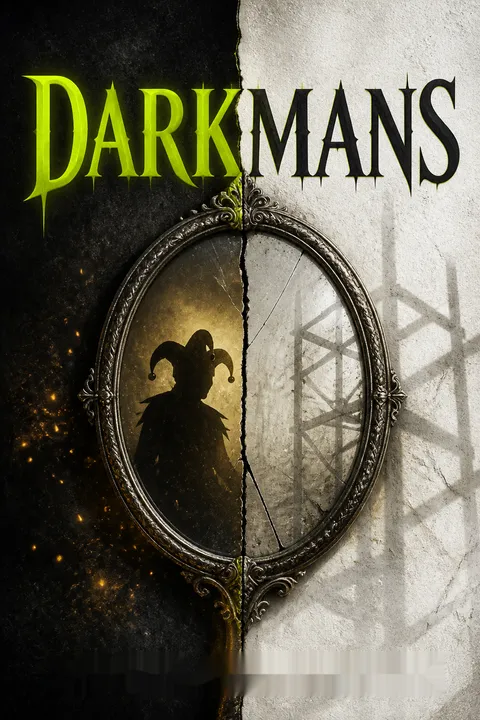
Darkmans by Nicola Barker received mixed reviews. Many praised its ambition, complex characters, and unique writing style, while others found it confusing and overly long. The 838-page novel follows a group of interconnected characters in Ashford, England, dealing with a medieval jester's spirit. Readers appreciated Barker's wit, inventive language, and exploration of history's influence on the present. However, some struggled with the book's length, lack of clear plot, and unconventional narrative techniques. Despite its divisive nature, many readers found it a compelling and thought-provoking experience.
People Also Read









Characters
Daniel Beede
The fastidious historianKnown as Beede, Daniel runs the Frances Fairfax hospital laundry and has spent much of his life serving his Ashford community. He is practical, exacting and deeply suspicious of modernity, yet his environmental campaigning shows that his conservatism is rooted in care for places and people rather than simple resistance to change. He and his son Kane are emotionally distant, partly because Beede mistakes restraint for respect and avoids difficult conversations. His friendship with Dory draws him into increasingly complicated acts of protection. He notices details others dismiss, but his habit of postponing judgment can become a way to postpone intimacy.
Kane Beede
The evasive pain dealerKane is Beede’s adult son, a drug dealer who describes his work as managing pain and treats self-interest as a defense against obligation. His easy charm, laziness and appetite for distraction conceal a childhood spent caring for his terminally ill mother. He has never resolved his anger at Beede’s decision to save her when she tried to die, and he avoids that history by keeping relationships shallow. Kane is observant and quick to connect details, yet he distrusts any conclusion that would make him responsible. His fascination with Elen and the strange events around Dory begins to expose the feelings he has spent years trying to blunt.
Isidore Dory
The divided GermanIsidore, usually called Dory, is a German-speaking security worker and Beede’s friend. He is physically vigorous, conscientious and proud of his reliability, but he suffers episodes of lost time, disordered memory and involuntary laughter. His father’s strict language rules left him divided between an English childhood and a German adult identity. Dory clings to exercise, breathing practices and the idea of an inner Witness because they promise self-command. He loves Elen and Fleet, yet his need to function can make him conceal symptoms and distrust anyone who questions his control. His tenderness and volatility coexist without easy reconciliation.
Elen
The careful chiropodistElen is Dory’s wife, Fleet’s mother and a chiropodist who regards physical symptoms as clues to a person’s wider life. She is observant, patient and practical, but the burdens of work, parenting and Dory’s condition leave her exhausted. Her birthmark has shaped how she reads other people’s attention, though she rarely allows it to dictate her behavior. Elen protects Dory’s dignity by keeping some truths from him, while also trying to protect Fleet from the instability at home. Her instinct to care can become self-erasure, especially when others rely on her calm without asking what it costs.
Fleet
The matchstick architectFleet is Elen and Dory’s young son, a quiet, intensely focused child with an extraordinary memory and a gift for constructing elaborate buildings from matchsticks. He prefers exact structures to ordinary play and can be distressed by new places, noise and changes in routine. His parents and teachers struggle to distinguish his abilities from the signs of strain he shows at school. Fleet speaks about John, the jester, as if the man were part of his immediate world, and his stories unsettle the adults around him. His apparent passivity often conceals strong preferences and a sharp ability to observe what others are trying not to see.
Gaffar Celik
The displaced boxerGaffar is a Kurdish boxer from Turkey who works as an entry-phone engineer and becomes Kane’s lodger. He is physically formidable, quick to fight and equally capable of generosity, humour and practical care. He has survived political violence, poverty and displacement by adapting his identity to the people and places around him. His fear of salad appears absurd until it opens onto the buried history of his father’s community. Gaffar’s fluency in performance is not mere deception; it is a survival skill developed in a world where visible truths could be dangerous. He wants freedom, but he also longs for family and belonging.
Kelly Broad
The defiant Broad girlKelly is a member of the notorious Broad family, Kane’s former girlfriend and a young woman whose sharp tongue keeps others from seeing how much she needs them. She is fiercely loyal to her siblings, especially Paul, and understands the damage that addiction can do. Her thinness, reputation and bravado all function as forms of control in a family where care is often mixed with manipulation. Kelly is funny, perceptive and capable of unexpected tenderness, though she tends to treat vulnerability as an invitation for others to hurt her. Her emerging interest in faith grows from personal grief and a search for a story in which her family is more than its failures.
Peta Borough
The antique restorerPeta is an antiques dealer and restorer who works among medieval objects, paintings and carefully constructed reproductions. She is sharp, flirtatious and difficult to impress, with a strong sense of the difference between an object’s price and its meaning. Her craft requires patience and close attention, but she also enjoys ambiguity and knows how easily people can be guided by a convincing story. Peta challenges Kane’s habit of defining himself through pain relief and Beede’s habit of hiding emotion behind practicality. She values beauty without assuming that beauty guarantees honesty.
Harvey Broad
The improvising builderHarvey is Kelly’s uncle and a builder who runs several businesses, carries an arsenal of tools and treats work as a matter of personal pride. He is boastful, competitive and capable of charm, but he uses grievance and delay to keep control of clients. Harvey’s rivalry with A Priori shapes his dealings with Elen and Dory, while his complicated loyalty to his son Lester complicates his rough public manner. He is not simply incompetent or dishonest: his craft can be good when he chooses to apply himself. His problem is that he often treats every demand as an affront to his independence.
Winifred Shilling
The scholar and exWinifred is Anthony Shilling’s daughter, a historian and Kane’s former girlfriend. She researches medieval jesters and communicates with Beede about the uncertain history of John Scogin. Intelligent, blunt and restless, she refuses to keep her past with Kane neatly closed. Her work depends on distinguishing evidence from legend, yet she is also drawn to the ways stories acquire meaning beyond their verifiable facts. Winifred’s habit of challenging Kane’s defenses reflects their old intimacy, but she has her own ambitions and complicated history rather than existing only as his former partner.
Dina Broad
The commanding matriarchDina is Kelly’s mother, a formidable woman who expects strangers and family alike to serve her needs. Her size, appetite and abrasive humour dominate a room, while her displays of vulnerability can draw Kelly back into caretaking. Dina’s demands are often comic, but the comedy reveals a household organized around her moods. She depends on her children while insisting that they owe her nothing less than total attention. Her relationship with Kelly combines affection, exploitation and habitual performance, making it difficult for Kelly to separate love from obligation.
Garry Spivey
The rival contractorGarry is a builder whose firm, A Priori, competes with Harvey Broad’s businesses. He is practical, warm and less showy than Harvey, with a long connection to the Broad family and a soft spot for Kelly. His work on buildings and his interest in solar energy show a more patient, forward-looking side than the local business rivalries suggest. Garry’s affection is expressed through ordinary acts of care, including helping Kelly when she was young. He is one of the few adults who treats her without either fear or condescension.
Laura Monkeith
The grieving committee memberLaura is the mother of Ryan, a boy killed while crossing a dangerous road, and the wife of Charlie Monkeith. She is grieving, isolated and caught in a marriage strained by loss and infidelity. Her support for a road-crossing campaign offers a way to make Ryan’s death matter publicly, while her husband resists the project because it cannot bring him back. Laura’s guilt makes her vulnerable to self-punishment, and she struggles to speak plainly about either her affair or her son. Her grief is both intensely private and tied to the built environment around Ashford.
Charles Bartlett
The father who wrote griefCharles is a former teacher and the father of Eva, a gifted young engineer who disappeared in Sudan. He wrote a successful book about her supposed death and is troubled by the way public acclaim has attached itself to his account of her life. Charles is intelligent, generous and deeply self-questioning, but writing has also offered him a refuge from direct confrontation with grief. His willingness to speak with Elen reveals how badly he needs to be heard, even as the truth he carries remains difficult to share with his family.
Geraldine Broad
The sewn-mouth cousinGeraldine is Kelly’s cousin, a Goth who has sewn her mouth partly shut as a deliberate form of self-presentation. She communicates through looks, gestures and writing, and her silence gives her a strange authority among people who assume she has little to say. Geraldine is sexually confident and observant, though others frequently reduce her to her appearance or her family name. Her relationship with Gaffar begins as a game of curiosity and performance. She embodies the novel’s recurring question of whether silence conceals a self or creates one.
Reverend Jacobs
The reluctant visionaryReverend Jacobs is a Canadian Anglican minister recovering in hospital after a series of strokes. He prefers doctrine, order and a respectable distance from the people he serves, and Kelly’s blunt insistence that they are connected unsettles him. His religious beliefs are sincere, but his confidence is weakened by visions he does not know how to interpret. Jacobs wants faith to be disciplined and intelligible; Kelly treats it as something immediate and personal. Their exchange exposes a tension between religious authority and the unpredictable experiences that give belief its force.
Paul Broad
Kelly’s absent brotherPaul is Kelly’s brother, whose long struggle with solvent abuse has left him profoundly disabled and dependent on hospital care. He remains central to Kelly’s loyalties even when he cannot participate in the family’s ordinary life. His history is entangled with Winifred’s, because they began using substances together as young people. Paul’s condition exposes how easily a family can turn pain into blame, particularly when relatives are trying to make sense of choices that began long before they understood their consequences.
Anthony Shilling
Kane’s quiet supplierAnthony is a hospital waste-management coordinator and Kane’s main supplier of prescription drugs. He is a quiet, respectable man with a long family history in Ashford, making his involvement more troubling to Beede than Kane’s own dealing. Anthony’s role links the private family story to the town’s wider networks of work, reputation and exchange.
Lester Broad
The unreliable young workerLester is Harvey’s young employee and a member of the Broad family. He is unreliable at work, easily distracted and resentful of the low wages he receives. Yet he becomes devoted to Fleet, helping the boy build his miniature world and collecting fleas for him. Lester’s contradictions make him difficult to dismiss as merely lazy or delinquent. He can be careless with adults and tender with a child, especially when the child offers him a role he can perform successfully.
Mrs Spivey
The dog’s devoted ownerMrs Spivey is Garry’s mother, a spirited woman who has long cared for a disabled spaniel named Molly. Her exuberant affection can overwhelm those around her, but it is also a direct expression of loyalty. The dog’s disappearance has become a family wound, and her reunion with Molly briefly makes a chaotic day tender.
The Woods Guardian
The anxious bird keeperThe man who calls himself guardian of Bixley Woods keeps a red kite and patrols the forest with his Jack Russell, Gringo. He is volatile, theatrical and frightened of losing control, especially when Gringo’s unexpected labour forces him to depend on Beede. His grand claims about the woods mask a more ordinary panic: he loves his animals but does not know how to care for them when events depart from his plan.
Gaynor Thomas
The young coastal fisherGaynor is a teenager living in Dory’s aunt’s former house at Jury’s Gap. She is a skilled fisher and has won awards for her work, though visitors are often surprised by her interests. Gaynor is friendly and open with the family, allowing Dory to explore the house and his memories. Her confidence contrasts with Elen’s wariness and Fleet’s intense scrutiny.
Steven Bradley
Fleet’s singing classmateSteven is a classmate with dyspraxia and speech difficulties who is paired with Fleet by their teacher. Around Fleet, he briefly sings and speaks with striking fluency in an unfamiliar language, then withdraws after Fleet rejects his attempts at connection. His presence complicates the school’s assumption that unusual behavior can be neatly managed through routine support.
Mrs Santa
Fleet’s concerned teacherMrs Santa teaches Fleet and notices both his extraordinary concentration and his difficulties with language, sleep and social interaction. She wants the school to help him, but her proposed psychological assessment alarms Elen. Mrs Santa is neither a simple antagonist nor an unquestionable authority; she represents an institution trying to classify a child whose abilities and needs do not fit its usual categories.
Dina and Laura’s circle
Ashford’s grieving neighboursThe Monkeiths, the hospital staff, and Ashford’s builders form a wider circle around the central family. Tom and Pat support the campaign for a safe crossing after Ryan’s death, while Charlie resists its emotional cost. Their committee connects private grief to public decisions about roads, development and responsibility. They are less a unified group than a set of competing responses to loss.
Plot Devices
Scogin’s Jests
History slips through languageWinifred’s research into the uncertainly attributed Scogin’s Jests connects a medieval court fool to the modern characters. Stories of pranks, arson, disguises and rooftop antics surface in Fleet’s speech and Dory’s altered states, while the book’s unstable spelling lets Kelly imagine a family link to its compiler, Andrew Board. The text never proves a supernatural inheritance, and its unreliable authorship prevents it from becoming a simple key. Instead, it supplies a vocabulary through which present-day characters interpret experiences they cannot otherwise explain. The jests make history active, but also warn that a compelling story can be mistaken for evidence.
The Unfinished Houses
Buildings expose hidden damageAshford’s new developments, Dory and Elen’s leaking house, Beede’s lost mill and Fleet’s model of Albi make architecture a recurring measure of how people handle the past. The physical structures are never neutral: roads divide villages, poor construction displaces families, and a matchstick city gives a child a way to arrange a bewildering world. Harvey’s scaffolding becomes both a failed repair and a literal hazard. The book repeatedly asks whether rebuilding repairs an injury or merely covers it. Its buildings preserve history imperfectly, like memories that have been patched, copied or altered to survive.
The Witness and the Fly
Control turns into a trapDory uses breathing exercises and the idea of an inner Witness to observe his thoughts without being ruled by them. The practice offers discipline, but his diary shows that it can also intensify his suspicion by encouraging him to treat each sensation as evidence. The recurring fly becomes the image of a thought that cannot be forced away, while the later bird and Darkmans give that disturbance a more tangible form. The device remains deliberately ambiguous: the narrative supports medical, psychological and supernatural readings without confirming one. What matters is that Dory’s effort to master experience sometimes brings the feared experience closer.
Objects with Two Lives
Everyday things become evidenceA bell on a cat, a swapped rug, a hidden diary, a feather, a red lighter, a coin and an old pair of keys repeatedly change meaning as characters discover them. Some are practical objects, some are clues, and some seem to carry a residue of memory or intention. Characters misread one another through these things: a bell becomes a suspected signal, a letter becomes proof of an affair, and a copy becomes an act of revenge. The objects keep the plot concrete even when motives are uncertain. They also reveal how quickly people turn material traces into stories about guilt, love or destiny.
Coincidence and Signs
Chance invites beliefKelly’s sudden faith, Gaffar’s fear of salad, the impossible paternity result, the bird and the peacock all tempt characters to see a directing intelligence at work. Beede and Peta offer skeptical explanations, while Kelly and Dory find meaning in signs that arrive at moments of grief or confusion. The novel refuses to settle the disagreement. Coincidence may be a pattern people construct, but it may also be the only language available to characters whose ordinary explanations have failed. The device keeps interpretation active: each revelation changes what the characters believe, without guaranteeing that any of them has understood correctly.
Download PDF
Download EPUB
.epub digital book format is ideal for reading ebooks on phones, tablets, and e-readers.








