

Key Takeaways
Write to make meaning, not merely to prove you can write.
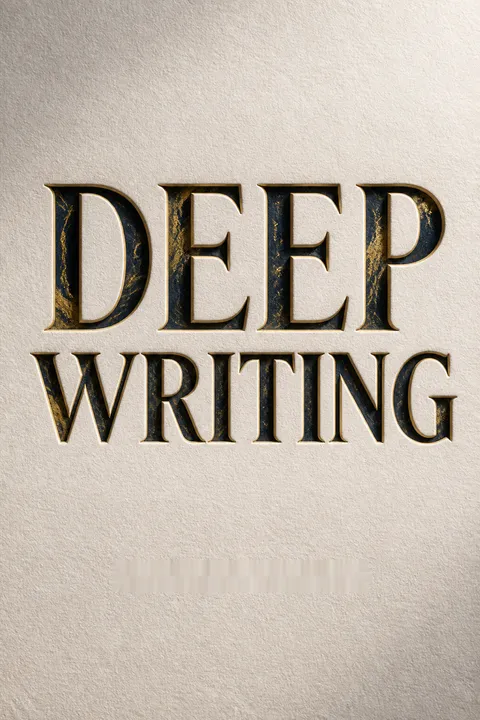
Beyond polished sentences. Maisel calls writing deeply the effort to write passionately and well about what matters. The goal is not simply to entertain, display skill, or earn applause. It is to bring the mind, emotions, memories, and questions to bear on a subject that feels worth understanding. A novel, play, or business dissertation can all do this: Sam, who initially sees himself as a practical problem-solver, finds a serious question in how workplaces treat employees.
Meaning is the motive. Maisel describes writers as meaning-makers, people who try to shape experience into something coherent enough to share. The work may not reach readers or succeed artistically. The commitment is to investigate honestly, not to guarantee a masterpiece.
The book's strongest claim is that craft serves inquiry. A writer's subject need not be grand or literary; Sam's workplace question gains depth because it connects to human needs and his own history. This makes the idea useful beyond fiction, including research and professional communication. It also guards against confusing seriousness with solemnity: popular forms can carry meaningful questions. The difficult part is deciding what counts as meaningful. Personal importance alone does not ensure insight, and readers may find value in work the writer considers modest.
Quiet the inner heckler, then give your mind a real problem.
Silence with purpose. Maisel's “hushing” means more than trying to stop thoughts. It is the practice of quieting self-criticism while actively orienting attention toward the work. His Bedlam Walk exercise pictures inner insults as patients shouting from beds in an asylum. The writer walks past them toward an imagined study, where the work can begin without needing to win an argument with every doubt.
Not every silence is safe. Amelia, one of the book's fictional writers, finds that the exercise brings painful memories and distress rather than calm. Her reaction matters: Maisel's technique is a practice, not a universal cure. When inward attention intensifies serious psychological pain, support from a qualified professional may be more appropriate than forcing silence.
The useful mechanism here is attention shifting, not magical eradication of doubt. Treating self-criticism as mental noise can create enough distance to act without first proving the critic wrong. That resembles cognitive defusion, the practice of noticing thoughts as thoughts rather than commands. Yet the same inward focus can expose material a person is not ready to face, as Amelia's example acknowledges. A robust writing ritual should therefore include permission to pause, change conditions, or seek help, not only an instruction to push through.
Turn a charged question into a plan with dates and steps.
From theme to action. Maisel's TIPS exercise moves a writer from Themes to Intention, Plan, and Steps. First, collect questions, images, and concerns that feel alive. Then select one, state an intention to explore it through writing, form a general plan, and schedule concrete tasks. The theme need not be perfectly explained before work begins; a rough question can be enough to start.
Sam finds a subject. Faced with a stalled business dissertation, Sam wonders whether employees benefit from emotional support. Instead of grabbing the first safe topic, he generates questions about what support means and whether respect affects organizations. He then plans research and writing time. Marjorie also turns anger toward her mother into the beginnings of a mystery. In both cases, personal charge becomes a workable inquiry.
The framework translates motivation into observable behavior without pretending that a plan solves the intellectual problem. A scheduled research session can create evidence and momentum, while the question itself remains open. That is a productive balance between structure and discovery. The danger is treating a plan as a contract that must never change. Maisel's examples are more useful when read as scaffolding: steps make engagement more likely, but new information can justify revising the question or the schedule.
Choose how much audience you want without disguising the trade-offs.
Integrity meets economics. Maisel rejects the comforting idea that writers can ignore the market and still expect a living. He gives his own modest figures: teaching one college class brought him about $3,000 per semester, while book advances varied widely. These are personal examples from the book's 1999 context, not current earning estimates. His point is that publication rarely guarantees financial security, and market choices affect both income and creative freedom.
Frame before you commit. A broad subject can become many different books depending on its angle. Maisel asks writers to test possible frames, such as simplifying a subject, focusing on a particular audience, or offering strategies. Anne, an established novelist, wants a larger readership but refuses to choose a project based on sales alone. The task is to find a form that reaches readers without making promises the work cannot honor.
This is a more honest account of artistic ambition than either romantic anti-commercialism or pure salesmanship. Audience is not an enemy of integrity; it is a design constraint that can clarify what a book offers. Still, the market described here is historically situated, and no framing exercise can reliably predict demand. A writer can make a thoughtful strategic choice and still miss the market. The durable lesson is transparency: distinguish a deliberate compromise from an unconscious one, and do not confuse a commercial title with proof of a commercial future.
Let a project incubate; the visible sprint may be only the final act.
Writing has a long prehistory. Maisel's novel about moving Israel began as an idea in 1991. He kept returning to it, abandoning and reshaping it amid other projects, before writing the manuscript in about sixty days in 1997. The fast draft was only the visible end of years of thought, reading, doubt, and preparation. A writing process can include false starts, rest, changing direction, and uncertainty without being wasted time.
Effort does not guarantee success. Maisel also recounts spending a year on a nonfiction book that was rejected and later seemed deeply flawed to him. Honest effort matters, but it cannot ensure that an idea, structure, or manuscript will work. The writer's task is to stay engaged and learn from what the process reveals, not to interpret every delay as failure or every completed draft as success.
The distinction between clock time and creative time is important. A project can mature through reading, observation, and unresolved thought, even when no pages are produced. Research on incubation in problem-solving offers a compatible idea: stepping away can sometimes help a person reorganize a problem, though it does not replace deliberate work. Maisel's account also avoids a common trap by admitting that deep commitment can produce an unsuccessful book. Incubation is not an excuse for indefinite postponement; the question is whether the idea is still being actively considered.
Befriend the draft before asking it to impress anyone.
Treat the work as a partner. Maisel asks writers to imagine their work as a friend with its own needs, not as a possession that must obey every impulse. When a scene serves the writer's ego but harms the book, this imagined partner can prompt a better question: what does the work need? He suggests using a small object, such as a smooth stone, as a physical reminder to approach the project with patience and care.
Kindness can redirect. Amelia has written a hundred pages of a psychiatric-ward novel that feels wrong. When she stops forcing the plot and takes the work with her on a working trip, a different story emerges, set among magazine colleagues and focused on rivalry and pain. Befriending the work does not mean indulging every draft. It means listening closely enough to recognize when it needs a change.
Personifying a draft can loosen the writer's grip on ownership and make revision feel less like self-condemnation. It gives intuition a conversational form: instead of asking whether the writer is talented, ask whether a scene serves the project. That shift supports both experimentation and self-compassion. The metaphor has limits, since a manuscript has no independent wishes; the writer supplies the imagined answer. Its value lies in making competing motives visible, not in treating intuition as infallible.
Judge the work against its intention, not against your self-worth.
Creation and judgment differ. Maisel argues that drafting and evaluating require different kinds of attention. A writer may need freedom to generate material, then a cooler perspective to test whether the work fulfills its purpose. His “funny mirrors” are imagined viewpoints for examining a manuscript: its central idea, structure, voice, intended reader, market fit, and other chosen features. Each mirror poses a different question rather than delivering one all-purpose verdict.
Evaluate the argument. For Maisel, every piece of writing makes an argument, even when it is fiction or reference material. Evaluation means asking what the work is trying to say, whether its parts support that purpose, and where the logic or structure breaks down. One novelist he counsels abandons a stalled design after recognizing that the crucial relationship between two characters cannot develop within it.
Separating the manuscript from the writer's identity is essential because revision requires admitting that something does not work. The mirror device also prevents vague reactions such as “bad” or “good” from ending the inquiry; a specific lens produces a more actionable diagnosis. Modern design practice uses a similar principle when a prototype is tested against explicit user needs. The caution is that evaluation criteria are not neutral: a market lens and an artistic lens may yield different judgments. The writer must decide which purpose governs the decision.
Finish the work, revise honestly, and risk letting readers see it.
Writing needs maintenance. Maisel's final checklist includes capturing ideas, choosing a project, making imperfect drafts, writing amid ordinary worries, keeping the work in mind, revising, and caring for the writer's mental health. The point is not to perform every ritual. It is to identify what repeatedly prevents the work from moving and to build practices that address it.
Completion is not publication. The book's five fictional writers finish very different projects. Sam completes a dissertation and eventually sends an article out; Anne writes a lively commercial novel; Henry produces a screenplay after a long period of research and uncertainty. Their manuscripts do not come with guaranteed sales. Maisel's closing image is the writer trying to make one truly worthwhile book, while accepting that many efforts may fall short. Honest work and exposure to readers are part of the job.
This ending shifts the measure of success from inspiration to a sequence of controllable acts: begin, persist, revise, and submit. That is psychologically useful because publication depends on gatekeepers and timing as well as quality. The checklist's emphasis on coping also recognizes that creative work is embedded in health, money, and relationships, not performed in a vacuum. Its scope remains individual, however. Writers often face structural barriers that no private ritual can remove, so perseverance should not be confused with control over outcomes.
Analysis
Deep Writing is a practical psychology of artistic work, organized around seven principles but better understood as a loop than a ladder. A writer quiets distraction, finds a live question, makes choices, drafts through uncertainty, develops a relationship with the work, evaluates it, and acts on what the evaluation reveals. Any stage can send the writer back to an earlier one. The book's recurring five fictional writers make that recursion concrete: Sam must recover a meaningful research question, Amelia must abandon a plot that is not alive, and Anne must negotiate audience without abandoning conviction.
Its most valuable contribution is the insistence that writing problems are not always craft problems. A weak opening may result from a structural choice, but a failure to begin may stem from fear, shame, financial pressure, or the writer's relationship with the project. The advice to observe inner speech and create distance from it anticipates contemporary approaches to metacognition and cognitive defusion. The idea of befriending a draft similarly makes self-compassion operational: care does not excuse weak work, it makes sustained attention possible.
The book also has limits. Its repeated call to hush the mind can imply that self-command is broadly available, although Amelia's reaction shows that inward attention can be destabilizing. Some writers need external support, treatment, or material security before a quiet workspace is realistic. The market analysis is candid but reflects publishing conditions in 1999, so its economic examples should not be treated as current benchmarks. Finally, the aspiration to unite depth and popularity is appealing but unresolved. A writer can make principled choices about readers, yet no formula can reconcile every conflict between complexity, accessibility, and sales.
The strongest reading is therefore neither a promise of easy creativity nor a demand to suffer for art. It is an account of deliberate participation: writers can shape conditions, clarify intentions, treat drafts with care, and revise honestly, while acknowledging that neither psychological effort nor good craft guarantees publication or success.
Review Summary
Deep Writing receives mixed reviews, with an average rating of 3.58/5. Some readers find it helpful for overcoming writer's block and accessing deeper emotions, praising its practical exercises and mindfulness approach. Others criticize its length, repetitive content, and focus on psychological aspects rather than technical writing advice. The book's use of fictional writer examples divides opinion, with some finding them illustrative and others unnecessary. Overall, readers appreciate Maisel's insights on the writing process, but suggest it may not suit everyone's needs.
People Also Read


Glossary
Deep writing
Meaningful, engaged writingMaisel's term for writing passionately and skillfully about matters the writer considers important. Deep writing brings the writer's thinking, experience, emotion, and attention to bear on an inquiry, rather than treating writing only as entertainment, display, or a route to approval. It can appear in fiction, nonfiction, research, or commercial forms, and it does not guarantee publication or success.
TIPS
Theme-to-action planningA planning exercise whose letters stand for Themes, Intention, Plan, and Steps. The writer first identifies questions or concerns with personal resonance, then states an intention to explore one through writing, makes a general plan, and specifies actions and times. The exercise turns a vague wish to write into manageable activity while allowing the central idea to remain provisional.
Bedlam Walk
Pass inner criticismA visualization exercise for moving toward writing despite self-attacking thoughts. The writer imagines hostile inner voices confined to an asylum ward and walks past them toward a safe study where the work can begin. The image is intended to make criticism less authoritative, not to prove the thoughts false or eliminate every source of distress.
Funny mirrors
Multiple manuscript lensesMaisel's metaphor for evaluating a manuscript through distinct imagined viewpoints. Each mirror focuses on one feature, such as the original idea, structure, voice, intended reader, or market appeal. Writers can also invent mirrors for specific concerns, such as a character or ending. The method replaces a vague overall verdict with focused questions about what works and what needs attention.
Meaning-maker
Person who shapes experienceMaisel's term for someone who tries to organize human experience into a form that can be understood and shared. For writers, meaning-making involves investigating questions, conflicts, and observations through a work, whether or not the finished piece reaches a large audience. The term frames writing as a way of engaging with life, rather than merely producing polished language.
About the Author
Other books by Eric Maisel


Download PDF
Download EPUB
.epub digital book format is ideal for reading ebooks on phones, tablets, and e-readers.








