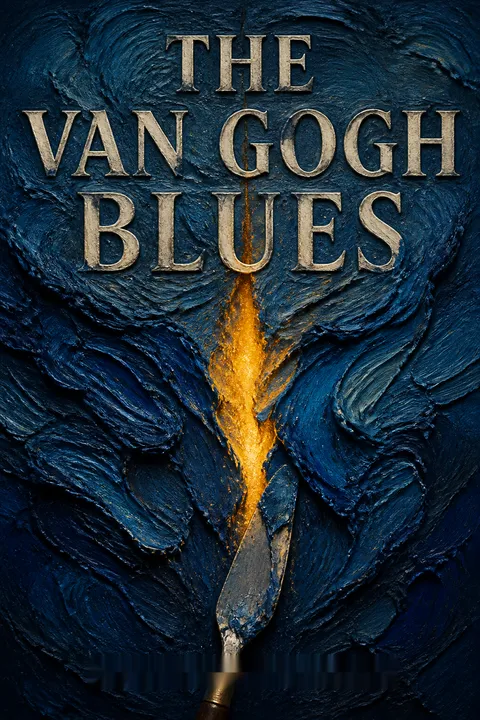


Key Takeaways
Treat creative depression as a meaning crisis, without ruling out illness.
A different starting point. Maisel argues that creative people may become depressed when the work, success, or beliefs that once made life feel meaningful stop doing so. His example is Barry, whose first novel becomes a bestseller. Instead of feeling secure, Barry faces pressure to produce a worthy sequel and discovers that success has not answered his deeper questions. The book also cites Arnold Ludwig’s study of 1,000 eminent people: significant depressive episodes appeared in 77 percent of poets, 54 percent of fiction writers, 50 percent of visual artists, and 46 percent of composers in that sample.
Not a medical diagnosis. Maisel’s interpretation is existential, not a substitute for clinical assessment. He explicitly says that medication and medical care can help, and that depression may have biological, psychological, social, and meaning-related contributors.
What's useful is the invitation to ask what changed in a person's sense of purpose, rather than treating a symptom list as the whole story. That question can reveal pressures hidden by apparent success, such as identity becoming dependent on the next achievement. The argument is strongest as one lens among several, not as a universal explanation. The historical study describes selected eminent figures, not all creators, and cannot establish that creativity causes depression. Severe depression can impair judgment and energy, so existential reflection should complement, not delay, professional care.
Track meaning across your life plan, your work, and your days.
Three separate tests. A life can sound meaningful in principle while feeling bleak in practice. Maisel distinguishes a life plan, the work a person considers worthy, and the ordinary time between creative efforts. These can support one another, but they can also clash. A writer may believe in the value of writing yet spend a year stuck on a project, isolated from friends, and unable to make the rest of the day feel worthwhile.
Look for the leak. The book calls a meaningful activity a meaning container: a place where someone invests purpose, such as painting, science, family life, or service. Barry's novel once held much of his meaning, but it could not carry all of it. The practical question is not only what matters, but which parts of life are carrying too much or too little of that weight.
This three-part view resembles a useful distinction in work design: values, tasks, and daily conditions are related, but satisfaction in one does not guarantee satisfaction in the others. It can prevent a common mistake, assuming that a worthwhile vocation automatically makes every working day fulfilling. The image of meaning as something distributed among activities also encourages flexibility. Still, not every hour needs to feel profound. Ordinary rest and routine can serve a meaningful life without being converted into another performance standard.
Write a personal creed that survives doubt and changing circumstances.
Choose your own reasons. Maisel urges readers to examine what they want their lives to mean, rather than waiting for a universal answer or adopting a belief system by habit. This reflective stance is what he calls becoming a meta-meaning expert: learning to notice how meaning changes, what sustains it, and what drains it. Barry begins by asking what principles could support a meaningful life. Betty, who holds spiritual beliefs, asks what she considers true while acknowledging that her beliefs need examination.
Keep the plan usable. Maisel recommends a brief life-plan sentence that includes ethics, personal potential, and relationships. It should guide choices without dictating every outcome. A plan based on being kind, developing one's abilities, and caring for others can survive a failed project better than a rigid promise to publish a hit novel every year.
The distinction between finding a cosmic answer and choosing a lived commitment is a practical strength of existential philosophy. It turns a question with no settled public answer into choices that can be examined and revised. A concise creed can function like a decision aid, particularly when ambition, obligations, and ethics compete. Its value depends on remaining revisable: a creed that cannot accommodate new evidence or changing needs can become another source of shame. The aim is orientation, not certainty.
Treat anxiety and self-criticism as clues, not commands.
Notice the hidden threat. Maisel sees anxiety as a frequent brake on creative work. A writer might say a project is too ambitious, while a painter blames the wrong paper. Those explanations may conceal fear of failure, exposure, or discovering that the work matters less than hoped. The book calls anxiety tied to threatened meaning primary existential anxiety. It also distinguishes anxiety arising from inner conflict, such as wanting artistic success while fearing what that success might do to a family relationship.
Listen before correcting. Maisel adapts a cognitive approach: identify a thought, challenge it, replace it with a more helpful one, and ask what the thought is really expressing. A statement like “I have no talent” may hide fear of embarrassment or reluctance to begin as a beginner. The aim is honest inquiry, not forced optimism.
This approach connects well with cognitive therapy, which helps people examine how interpretations shape emotion and behavior. The extra question, what a thought is protecting or expressing, can reveal conflicts that simple positive thinking misses. It also makes avoidance legible: the obstacle may be fear, not laziness. At the same time, anxiety is not always a mistaken alarm. It can signal genuine overload, unsafe conditions, or a project that no longer fits. The useful response is investigation, followed by a choice, rather than automatic obedience or automatic dismissal.
Take action before certainty; meaning emerges in the work.
Start where you are. Maisel argues that reflection alone cannot make life meaningful. Meaning becomes clearer through doing: writing a page, contacting a collaborator, practicing an instrument, or caring for someone. A creator may not know whether a project is worthwhile until engaging with it. One client found that a book idea felt lifeless until she changed its form and discovered a more fitting approach.
Make action proportionate. The book does not require constant productivity. It asks readers to distinguish chosen action from busywork and to plan flexibly. Composer Barbara Strozzi, living in a culture that restricted public performance by women, created an audience in her home and wrote chamber music. Her example shows adaptation: when one route is blocked, action can take another form without abandoning the central aim.
The emphasis on action has a close parallel in behavioral activation, a clinical approach that helps depressed people reengage with meaningful or rewarding activities instead of waiting for motivation to arrive first. Action can generate information as well as momentum: a trial draft teaches more than abstract speculation about whether a book should exist. But action is not a universal cure, and pushing harder can worsen exhaustion or illness. The important distinction is between a small, values-linked experiment and treating productivity as proof of personal worth.
Support yourself without making success depend on public approval.
Become your own ally. Maisel asks creators to respond to an ambition with encouragement, not an immediate list of reasons it cannot work. That support includes recognizing effort, calming self-attack, and treating the self as worthy even when a project disappoints. He argues that success is partly a feeling a person learns to recognize: a day can count as successful because the creator showed up, made progress, or acted in line with personal principles.
Accept help, too. The book describes Parker, a musician whose depression worsens after his band loses its record deal. In therapy, he addresses substance use, grief, relationships, and work. Over time he reconnects with his band, begins writing songs, and builds a life less dependent on music alone. Maisel also recommends medical assessment and notes that medication, psychotherapy, and other supports may help.
Self-support is not self-congratulation. It is a way of reducing the extra damage caused by interpreting every setback as evidence of personal failure. The distinction between process and public recognition is especially valuable in fields where audiences and markets are unpredictable. Yet a chosen feeling of success cannot erase material realities, such as income needs or discriminatory barriers. The most durable version combines internal recognition with practical support, honest feedback, and professional treatment when symptoms interfere with daily life.
Replace addictive meaning substitutes with safer sources of engagement.
Relief can become a trap. Maisel describes a meaning substitute as an activity or substance that offers quick relief when meaningful work or life feels out of reach. Alcohol, drugs, fantasies, sex, or compulsive pursuits may temporarily fill time and quiet distress. Repetition can turn that relief into dependence, leaving the person less free to choose how to live. In the book's account, addiction can become a substitute source of purpose: planning, obtaining, using, and recovering from the substance take over the space once occupied by creative work.
Treat addiction seriously. Maisel notes that musicians face many risks, including easy access to substances, performance stress, and cultural myths that romanticize excess. He does not present a single cause. Recognizing the role of meaning may help explain the appeal, but addiction can also require specialized medical and recovery support.
The idea of a substitute captures why harmful habits can feel useful before they become costly: they supply structure, relief, and anticipation. That functional view can reduce moralizing and help identify what a recovery plan must replace, not merely remove. But the book's existential account should not be mistaken for a complete model of addiction. Dependence has biological, psychological, and social dimensions, and abstinence, medication, therapy, peer support, or other treatments may be appropriate depending on the person. Meaningful activity can support recovery, but it is not a stand-alone treatment.
Make room for relationships, not only solitary creative work.
Talent does not excuse self-absorption. Maisel argues that creators can overinvest in their own ambitions and treat other people as interruptions or audiences. He calls the mixture of confidence and self-absorption mixed narcissism: self-belief can fuel work, while entitlement and disregard can damage intimacy. The book describes artists who idealize relationships but struggle to accept another person's needs, and partners whose creative lives are diminished by unequal compromises.
Practice the relationship itself. The goal is not to choose conventional domesticity over art. It is to build relationships marked by respect, empathy, mutual support, and room for each person's work. The unconventional partnership of painters Vanessa Bell and Duncan Grant is presented as supportive because each helped the other through uncertainty and self-doubt. Maisel suggests that friendship and intimacy can sustain meaning in ways achievement alone cannot.
This is a useful challenge to the romantic image of the isolated genius. Close relationships offer feedback, practical help, and a sense of being known beyond one's output. Research across wellbeing fields consistently treats social connection as important, though the quality of a relationship matters more than simply having one. Solitude can be essential to creative concentration, and some relationships are harmful; neither intimacy nor independence should be prescribed as a universal ideal. The task is to negotiate both needs without treating another person's reality as an obstacle.
Test creative dreams against your ethics, your craft, and reality.
Define worthy work for yourself. Maisel separates meaningful work from masterful work and commercial success. A project can be technically impressive yet feel empty, or personally important yet fail to find an audience. He encourages creators to notice whether their work feels soulful, deep, connected to good ideas, and consistent with their ethical purposes. A mural of pink flamingos, for example, may be meaningful because it expresses play and joy, even if it does not serve an obvious public cause.
Balance aspiration with facts. A writer in the book turns down a six-month assignment with a $7,000 advance after calculating that the work would pay about $6 an hour and divert attention from her own projects. She takes a less demanding job instead. This is not a rule against compromise. It is an example of evaluating the real cost of a choice.
The book resists two familiar traps: equating worth with market success, and treating artistic sincerity as a reason to ignore practical constraints. Its account of competing meanings is persuasive because creative life often involves real tradeoffs, not a single correct hierarchy. The calculation of time and income makes values concrete rather than purely aspirational. Still, market work can be meaningful, and paid work that seems uninspiring may protect health, family, or future creative capacity. Reality-testing should clarify tradeoffs, not shame people for survival choices.
Analysis
The book's most distinctive contribution is a vocabulary for the unstable relationship between creative identity and purpose. Instead of treating a stalled project as only a discipline problem, Maisel asks what the work has been expected to carry: self-worth, direction, belonging, income, and a reason to endure ordinary time. Barry's post-bestseller slump makes the point vividly. Recognition does not resolve uncertainty; it can raise the standard until creating becomes a test of whether life matters.
The framework is strongest when used as a supplement to clinical care. The book itself acknowledges medication and psychotherapy, but its rhetoric sometimes moves from a useful existential hypothesis to a sweeping claim that creative depression is fundamentally caused by meaning problems. Current clinical understanding treats depression as heterogeneous, with interacting biological, psychological, and social pathways. Meaning can be a major factor without being the primary cause in every case. Likewise, the sample of eminent creators cited in the introduction cannot establish the prevalence of depression among creators as a whole.
Its practical model is more robust than its causal certainty. The reader is asked to build a flexible life plan, identify worthy work, make ordinary time livable, notice anxiety and self-criticism, seek support, protect relationships, and take action. These tasks connect purpose to behavior rather than leaving it as an abstract philosophical debate. The approach also contains a productive tension: readers are asked to accept uncertainty while taking responsibility for choices, yet not every obstacle is under individual control. Trauma, illness, poverty, and unequal access to opportunity shape what choices are available.
The lasting value is therefore not a promise that meaning-making cures depression. It is a method for asking better questions when creative work stops sustaining a life: What has changed? What am I asking this project to provide? What support or treatment is needed? What small action fits my values now? Those questions preserve agency without confusing agency with blame.
Review Summary
The Van Gogh Blues receives mostly positive reviews, with readers praising its insights into the link between creativity and depression. Many find the book's focus on meaning-making helpful, though some criticize its lack of scientific evidence. Readers appreciate Maisel's compassionate approach and practical advice for managing depression through creative pursuits. While some find the language problematic or the solutions too vague, others consider it life-changing. The book resonates particularly well with artists and creative individuals seeking to understand their emotional struggles.
People Also Read



Glossary
Meaning crisis
A collapse in felt purposeA period when the activities, beliefs, or relationships that usually make life feel worthwhile lose their force. Maisel uses the term to describe a crisis that may accompany or contribute to depression, especially when a creator's work is blocked, disappointing, or no longer sufficient as a source of purpose. It is an existential description, not a medical diagnosis.
Meta-meaning expert
An observer of changing meaningMaisel's term for someone who studies how meaning shifts in their own life: what supports it, what drains it, and how it can be restored. The goal is not to adopt one permanent answer about life's ultimate purpose, but to become more aware of personal meaning patterns and respond deliberately when familiar sources stop working.
Meaning container
An activity invested with purposeA person, activity, role, or pursuit into which someone invests meaning. Creative work may be a central container for an artist, but family, service, friendship, or intellectual inquiry can also hold meaning. The term helps explain why one source may feel inadequate or fragile when it is expected to support an entire life.
Meaning substitute
Relief that imitates purposeAn activity or substance that offers temporary relief, stimulation, or structure when a person cannot find meaning through other parts of life. Maisel includes examples such as alcohol, drugs, fantasy, or compulsive pursuits. A substitute can become habitual and eventually restrict choice. The concept describes a possible function of a behavior, not a complete explanation or treatment for addiction.
Primary existential anxiety
Anxiety about threatened meaningMaisel's term for anxiety that arises when a person's beliefs, identity, creative work, or life plan feels threatened. A creator may feel it when presenting work to an editor or facing doubt about a theory. The threat may be to a source of personal meaning rather than to immediate physical safety, but the distress can still be intense.
Opting to matter
Choosing responsible significanceA commitment to treat one's life and actions as significant despite uncertainty about whether the universe supplies an ultimate purpose. In Maisel's framework, it includes self-understanding, ethical responsibility, deliberate choice, engagement with the present, and courage. It is not simply pursuing personal ambition or demanding recognition.
Meaning restoration
Rebuilding purpose after lossThe effort to recover a sense of purpose after a meaning crisis or setback. It may involve reassessing a project, investing in another area of life, seeking support, changing self-talk, or taking an action aligned with personal values. The term does not imply that distress can always be resolved quickly or without professional help.
Meaningful creating
Creative work experienced as worthwhileCreative activity that a person experiences as personally significant, not merely technically accomplished or commercially successful. Maisel associates it with qualities such as depth, ethical purpose, connection, compelling ideas, and a felt sense of engagement. The creator discovers whether a project has this quality through working on it, rather than by speculation alone.
Life plan sentence
A concise personal compassA single sentence summarizing how someone intends to live. Maisel recommends that it include ethical commitments, the use of personal abilities, and relationships. Its purpose is to guide choices and offer continuity when an individual project fails. It should remain broad enough to adapt as circumstances change, rather than becoming a rigid checklist of achievements.
About the Author
Other books by Eric Maisel


Download PDF
Download EPUB
.epub digital book format is ideal for reading ebooks on phones, tablets, and e-readers.








