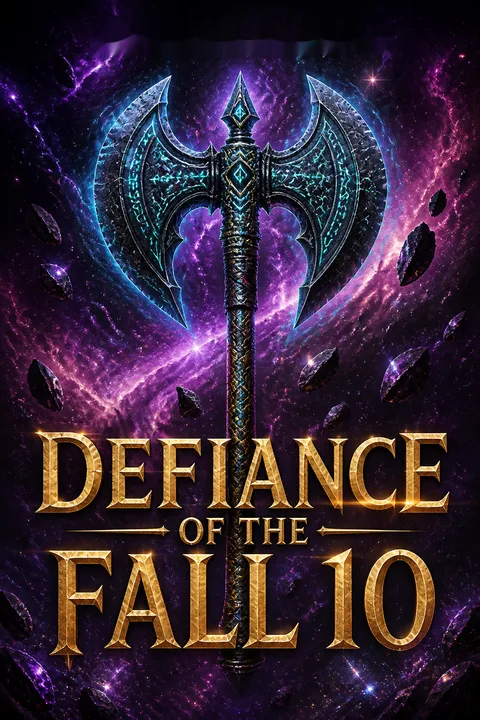


Plot Summary
The Return to Port Atwood
After escaping the sealed Orom World, Zac waits a month in hiding before risking a return to Earth. His compound is intact, but the storm gathering overhead is for Alea, the spirit bound to his coffin weapon. She has spent years absorbing blood, Oblivion, and other rare energies, and now faces a lightning tribulation.
When her enormous spirit avatar tries to absorb the final strike, it breaks apart, leaving Zac fearing a second loss. The coffin pulls her fragments back inside and seals itself in a dark cocoon. Triv then reports that Earth has survived, though Zac's followers remain occupied in the unfinished Ensolus Incursion. Seeing Thea's keepsakes in his courtyard also revives his guilt over the secrets that helped drive her away.
Zac's homecoming is not a return to safety so much as a test of what endured without him. Earth has remained standing, but Alea's apparent destruction and the objects Thea left behind make absence feel costly rather than heroic. The contrast exposes Zac's divided attachment: he wants to protect his people, yet he repeatedly disappears into dangers they cannot share. His instinct to stay hidden reflects accumulated trauma, while his decision to return shows that responsibility still draws him home.
A Summit on Cracking Ground
On Ensolus, Zac's deputy Vilari prepares to meet the leaders of the Mavai tribes and the Kingdom of Raun, whose world is shaking under the conflict between Life and Death. Port Atwood has conquered the central continent, but the System's reward choices could let it drain the entire world to strengthen Earth.
Vilari offers the natives a less destructive alternative: join the Atwood Empire, retain local authority, and help search for a way to stabilize the planet. The Mavai delegation arrives without its former war-chief, Hanuk. Their new leader, Ra'Klid, explains that he challenged and killed his father to prevent a war of annihilation. The Raun delegation arrives under King Eomid, who rejects Vilari's terms and declares war.
The summit turns political negotiation into a moral dilemma with physical consequences. Ensolus is literally coming apart, yet the System's reward structure encourages conquest rather than cooperation. Vilari attempts to build consent under conditions designed to make trust irrational. Ra'Klid's patricide complicates the usual heroic grammar of succession: his violence is presented as an effort to save his people, not simply seize power. Eomid's refusal shows how survival fears can make even a destructive choice feel safer than dependence on a stranger.
Eomid's War at Fort Atwood
The peace summit barely begins before disguised warriors reveal themselves. The Raun Spectrals have secretly worked with the Undead Empire, sacrificing their own to create false souls that pass Port Atwood's inspections.
Their signals disable the fort's defenses, and spectral troops flood the courtyard while Eomid tries to reach the Nexus Hub. Vilari and her commanders fight to contain the assault, but Eomid's allies pin her down. Zac arrives moments before the Ghost King can destroy the Hub.
He tears Eomid's body apart, captures the remaining leaders, and learns the infiltrated guards are still alive. Rather than exterminate the Raun people, Zac offers them a way to survive under his rule, provided they accept the price of joining his empire.
Zac's arrival restores military control, but the scene refuses to equate victory with justice. The false-soul scheme makes identity itself a weapon, while the sacrifices behind it reveal how desperate the Raun leadership has become. Zac's choice to spare the population is partly strategic, since he needs soldiers for the coming war, but it also reflects his memory of Earth as a once-conquered world. His strength lets him impose a settlement; it cannot instantly create trust. The distinction between submission and loyalty remains unresolved.
Two Worlds, One Empire
Zac offers the solution he carried from his travels: two Realm Spirits that can enter Ensolus's core and preserve its opposing Life and Death affinities. He first checks Earth's core and discovers that Earth already has its own spirit, so he risks the twins on Ensolus instead.
Their arrival unleashes catastrophic quakes and volcanic eruptions, but the tremors stop and the world's Incursion quest changes. The Mavai and Raun leaders sign surrender contracts, bringing their populations under the Atwood Empire.
Zac gains the titles and attributes attached to conquering a planet in E-grade. He also tells his commanders that Ogras may be alive in a Mystic Realm and that his sister Kenzie was taken, sharpening the reason he must enter the coming war.
The resolution is both a rescue and an act of imperial expansion. Zac prevents Ensolus from collapsing, but the Realm Spirits bind its people to his rule, making salvation inseparable from sovereignty. The catastrophe that follows the spirits' arrival also shows how little he truly understands the forces he handles. His new titles reward conquest even when his stated aim is preservation. At the same time, his confession about Kenzie and Ogras shifts the story's emotional center from governing a growing empire back toward the family and comrades he cannot accept losing.
Alea Walks Again
Back on Earth, Zac discovers that Port Atwood has become a prosperous capital, while the undead population is growing into towns of its own. He also learns that his business consortium is squeezed by powerful competitors and that a young beastmaster, Lily, may be losing control of her connection to the Ayn Hive. Before he can settle every problem, the dark shell around Alea's coffin breaks.
Alea returns as a translucent spirit, her soul healed but unable to remain outside the weapon for long. She has transformed the coffin into an axe chained to Zac's back, giving his Draugr form a weapon suited to its own path. Zac is relieved to see her, yet her inability to touch him reminds him that recovery is not the same as restoration.
Alea's return offers intimacy without undoing loss. She can speak and act, but her body remains absent, so relief arrives with a boundary built into it. Her new axe is a practical gift, yet it also gives form to a relationship that has always crossed the line between person and weapon. Meanwhile, the reports about Lily and the consortium show that a thriving empire generates risks Zac cannot solve by cutting down one enemy. His world has become larger than his personal attention can safely govern.
Yrial's Broken Blueprint
Zac returns to the Dao Repository to undergo his second inheritance trial with Yrial, the dead Lord of Cycles. The trial asks him to paint a cyclic path onto a spinning wheel, but his opposing Life and Death forces refuse to merge.
He attacks the wheel with both sides of his power, breaking it and surviving the descending elemental storm. Yrial then shows him memories of his own rise: years of dangerous travel, failed attempts, and relentless work before he formed a cycle of fire and ice.
The vision reveals that the wheel was also a blueprint for a Cosmic Core. Yrial cannot supply a solution for Zac's different path, but gives him the Book of Duality, an escape treasure, and the warning that his core must be designed rather than improvised.
Yrial's lesson is not that genius guarantees success, but that a path becomes real through repeated contact with failure. Zac's brute-force destruction of the trial wheel exposes the limits of copying another cultivator's model. The inheritance gives him a conceptual map without handing him a destination, an unusually honest form of mentorship. Yrial's own past also complicates the ideal of spiritual purity: his persistence coexists with selfishness and manipulation. The scene asks whether a flawed person can still possess an unwavering commitment to a craft, and answers through the work rather than the personality.
The Creator's Warship
With the Zecia war approaching, Zac visits the Creator shipyard to claim the vessel promised by a System quest. The shipyard can provide only an Early D-grade framework, but its foreman offers to build a specialized, upgradeable vessel if Zac supplies rare materials. Zac chooses not to settle on a design until he returns with a living Ferric Worldeater, whose core can power the ship.
Meanwhile, Vilari and Joanna return from Ensolus and help plan how to integrate its people with Earth's without forcing living and undead citizens into a dangerous shared environment. Zac tells them he will recruit a capable crew for the Million Gates Territory, where he intends to search for Ogras, Billy, and evidence that might lead him to Kenzie.
The ship represents a transition from planetary rule to mobility. Zac is no longer preparing merely to defend a home; he is building a means to carry his faction into a larger and less controllable arena. The Creator's restrictions make his wealth insufficient by itself, so progress depends on a living resource he must capture. At home, Vilari's proposed integration raises a different question: whether unity means shared space or merely parallel districts under one government. Both threads challenge Zac's assumption that power solves logistical problems. It opens doors, but each door carries new costs.
Gaun's Borrowed Name
To enter the Void Gate without exposing his identity, Zac adopts the face and history of Gaun Sorom, a Wandering Cultivator willing to sell his name for money and safe passage elsewhere. Zac sends Gaun to the Allbright Empire, then travels to Salosar and signs up for a dangerous mission inside the Void Star.
There he meets Vai Salas, a senior researcher with almost no recent combat experience, who asks to have him assigned as her guardian. Zac agrees and trains her through repeated sparring sessions, teaching her to remain conscious under killing intent and keep moving when an opponent breaks through her tricks. Their uneasy partnership begins with concealment, but Vai's persistence quickly earns Zac's respect.
The disguise is practical, but it also reveals Zac's growing distrust of information networks and reputations. He purchases another person's identity because his own has become a liability, then enters a mission where the most vulnerable companion is not a child but an accomplished researcher cut off from combat. Their training gives Vai a chance to recover an abandoned capacity, while Zac must exercise patience rather than simply overpowering an opponent. Their bond begins as a contract of protection and becomes a test of whether strength can teach without humiliating.
Into the Blue Star
The mission's first journey through the Void Star reveals a network of overlapping Mystic Realms held around a blue stellar gateway. Before the squad can reach its assigned realm, the star erupts with a blast powerful enough to destroy their transporter.
Zac and the others leap clear, then survive a spatial convergence filled with beasts appearing and vanishing through the clouds. Once they land, Captain Teo Kastella crushes a pack of wolves with a vast pressure technique, clearing a path for the party.
Zac watches the Templars coordinate their fighters and protect researchers rather than treating the hired cultivators as expendable. Yet the destruction of the vessel and early casualties show that the Void Gate's maps and safety estimates no longer match the danger inside its own domain.
The Void Star makes the mission's central contradiction visible: the Void Gate possesses extraordinary infrastructure, yet its command of the system is failing. The first disaster arrives before the party reaches its target, converting a planned expedition into emergency survival. Teo's battlefield control offers Zac a model for the leadership his own empire lacks, while the deaths warn that tactical competence cannot remove structural danger. The scene also begins Zac's shift from observer to participant. He studies the professional unit, but every new realm will demand that his own power carry more of the burden.
The First Seal in Hako
At Hako Lake, Zac senses an ancient presence beneath the water and dives into a fissure in the lakebed. A hidden chamber holds one dark fragment from the same substance as the palace in his vision. When scout Kuru Cera tries to seize it, the fragment reduces him to dust, then brands Zac with four white lines and floods his mind with knowledge.
Zac uses the revelation to deepen the Book of Duality and begin imagining a Body Tempering method based on the Void. The fragment's reaction destabilizes the region: an earthquake erupts, the lake breaks open, and swarms of insects pour into the next realm. The squad escapes the infestation, but Zac now knows that the palace's remnants can alter both his understanding and the surrounding worlds.
The first seal makes knowledge a dangerous material. Zac's insight is not earned by gradual study alone; it arrives through contact with an object that kills the unqualified and nearly overwhelms the person it accepts. That asymmetry challenges the meritocratic language of cultivation: survival depends on preparation, but also on being selected by forces no one can read. The resulting disaster links private advancement to collective cost. Zac gains a path toward solving his own body and core, while the world around him suffers a rupture he did not intend.
The Cortex Betrayal
After crossing a succession of hostile realms, Zac's squad reaches a Spatial Cortex, a living-looking structure that links the Void Star's many dimensions. During repairs, Hegemon Ilka, the newly ascended Uzu, and a disguised researcher attack the team, kill key experts, and sabotage the Cortex. The structure contracts into a single unstable sphere, then bursts, hurling survivors into a storm of broken space.
Zac survives by using his Void Zone and reaches a neighboring realm, where Vai and Uzu also emerge. Uzu admits that he works with the invaders, who want to destabilize the Void Star and create new entry routes into Zecia. The squad's mission has become a covert invasion inside the Void Gate's own territory.
The betrayal is effective because it turns the institution's infrastructure against itself. The Cortex is not simply a machine to repair; it is the connective tissue of the Void Gate's power, and destroying it converts hidden infiltration into a route for broader invasion. Uzu's defection is rooted in personal advantage, but its consequences scale far beyond his own survival. Zac's Void Zone again functions as a refusal of ordinary laws, yet it cannot protect the whole squad. His survival is therefore not triumph but isolation, accompanied by a clearer sense of the war's reach.
Uzu's Last Bargain
Uzu tries to recruit Zac by promising support from the invading Kan'Tanu and a safer path to Hegemony. He demands that Zac kill Vai to prove loyalty. Zac instead drives her clear and attacks, overcoming Uzu's techniques, concealed weapons, and a curse that tries to root inside his body after death. His Void Heart and purification ability destroy the parasite before it can take control.
Vai then reveals that she is related to Leyara Lioress, a powerful Void Gate figure who supplied her with a Monarch-made defensive sphere. She also recognizes the invaders' Blood Curses from research materials sent to her chapter. Zac's mission is now entangled with people who can help him, and with a threat capable of turning allies into weapons.
Uzu's offer tests Zac at the point where self-interest and loyalty could plausibly diverge. Zac refuses not because the promised power is unimpressive, but because his ambition has limits that betrayal cannot cross. The Blood Curse makes coercion bodily: disobedience becomes pain, and the curse itself survives its host in search of another. Vai's concealed connection to Leyara shifts her from an underpowered researcher into a potential bridge to the Void Gate's leadership. The revelation also complicates their trust, since both have been hiding consequential truths.
Worldeaters for the Ship
With the mission scattered, Zac and Vai travel through a dark, dangerous realm while Zac searches for Ferric Worldeaters needed to complete his ship. Vai uses a spatial lure to draw the beasts from their burrows, but several hunts produce ordinary specimens, forcing Zac to keep searching for one with spatial affinity.
When two Worldeaters arrive together, Zac kills the larger guardian and traps the rarer blue-shelled beast before it can escape into the Void. Vai's support makes the capture possible, though the effort exhausts her. The hunt also exposes how little Zac can rely on plans: each success comes from adapting mid-battle. Their partnership now rests on practical dependence, not merely his assigned duty to protect her.
The hunt ties an enormous strategic objective to a very intimate form of labor. Zac needs a living beast to turn the Creator's shipyard into a real vessel, and Vai's specialized knowledge supplies what his combat power cannot. His choice to keep searching after finding a usable specimen reflects the same risk appetite that drives his cultivation: adequate is not enough when an advantage may decide survival later. The episode also shows the cost of treating companions as capabilities. Vai's expertise matters, but she pays in exhaustion and danger, reminding Zac that every resource has a living source.
Two More Seek Ultom
Elsewhere in the Mystic Realm swallowed by the Dimensional Seed, Ogras has survived ten years of isolation, opened new nodes, and formed an illusory Dao Branch despite recurring gaps in his memory. A mysterious temple draws him through a valley filled with powerful humanoid beasts. Ogras crosses their ranks with shadows, decoys, and the spirits trapped in his flag, then enters the ruin and survives its annihilating pulse.
At the same time, Iz Tayn learns that Zac's actions have stirred the Left Imperial Palace and chooses to enter the contest without her family's full protection. Both stories point toward the same inheritance, though neither knows how the other has approached it. The search is no longer Zac's alone.
The parallel plot widens the inheritance from a personal discovery into a contested historical event. Ogras reaches it through prolonged deprivation and improvisation, while Iz approaches with elite lineage but chooses to risk losing its protections. Their routes embody different forms of agency: the survivor who has no safety net and the scion deciding whether to step outside one. By showing them before Zac reunites with Ogras, the narrative makes the eventual meeting feel less like coincidence than convergence. Ultom is drawing people whose motives and resources could reshape the struggle.
Ramsi Wall's Falling Stars
Zac and Vai cross a primal garden where a breach draws rival Beast Kings into battle, and Zac uproots several energy-rich Rafflesia before the disturbance exposes them. They later climb the Ramsi Wall, a vast cliff where a meteor shower carries rare spatial insights. Vai risks the dangerous ascent to gather Stargazer Camelias, while Zac keeps watch and studies the sky.
The experience finally restores her stalled cultivation: Vai forms her first Dao Branch in Spatial Dao after centuries at an impasse. Zac, meanwhile, senses the palace's signal strengthening and gains new ideas about the Void as an inversion of ordinary Dao. Their progress is uneven, but both return from the wall with something they had believed beyond reach.
The Ramsi Wall turns danger into an environment for renewed possibility. Vai's breakthrough is not a gift bestowed by Zac; it grows from centuries of groundwork, finally activated by a setting she had never been able to reach. Zac's contribution is companionship and protection, not ownership of her success. This distinction matters because he has begun to recognize how easily power can make others appear to be extensions of his plans. Their parallel gains also suggest that fate is not simply a fixed inheritance: movement, risk, and attention can reopen a path that seemed closed.
The Sea That Eats
In the Undrusian Sea, a poisonous wave spreads across the entire realm, driving Zac and Vai to follow fleeing fish toward a submerged refuge. The refuge is a chamber packed with hundreds of Beast Kings, all temporarily sharing a narrow space because the toxic tide would kill them outside. Zac and Vai must cross a living pool of quicksilver to reach the surface without provoking the dormant predators.
When they finally emerge, a hidden cultivator attacks them and draws the beasts' attention. Zac blocks the strike, but the commotion threatens to wake the whole basin. Their only shelter is a hidden Void Gate cloister nearby, and reaching it means surviving the first threat in a realm where even the environment is lethal.
The Undrusian Sea replaces a conventional battlefield with an ecology organized around temporary restraint. Predators do not become peaceful; they suppress their appetites because shared survival demands it. Zac and Vai must imitate that discipline, moving without ripples or displays of power. Their near-discovery shows how fragile the arrangement is: one attack can turn a shelter into a feeding frenzy. The realm's danger also changes their relationship, making trust a matter of coordinated silence and timing. Survival here depends less on defeating every threat than on understanding which disturbances the environment can tolerate.
The Curse in the Cloister
The attacker belongs to a mixed group of Void Gate soldiers and infiltrators, and Zac kills them before their Blood Curses can infect him. Vai identifies the curses and later helps him study a former Templar's notes, which reveal how the invaders use pain and stolen power to control converts.
The pair hides in a forgotten cloister while the Undrusian Spring strips poisons from the realm. Zac uses the enforced month of shelter to test the original Boundless Vajra Sublimation with a Void Gate resetter, discovering how its Buddhist chants alter perception and threaten his priorities.
He stops short of accepting that path, but the experiment teaches him what his own method must replace. Vai, shaken by killing her first enemy, begins turning guilt toward the work of countering the curses.
The cloister converts a tactical escape into a laboratory, but the research is ethically charged. The Blood Curses show power operating through both reward and pain, making consent unstable once the body has been altered. Vai's distress after killing a man is not dismissed as weakness; Zac gives her a reason to transform it into investigation. His own experiment with the Buddhist method exposes a subtler form of coercion, one that can make surrender feel like enlightenment. Both characters confront the danger of borrowed systems shaping the self while appearing to offer strength.
The Temple Behind the Yeti
After the toxic tide recedes, Zac and Vai evade another party of infiltrators and use a hidden spatial gate into a vast forest realm. There, humanoid beasts fill the mountains around an ancient temple.
Zac races through their ranks, breaks the yeti leaders' blockade, and enters the ruin before their destructive trap can close. A weathered figurine on the altar carries the second seal. Its rage nearly crushes him, but Zac touches it and receives another surge of knowledge from Ultom.
He uses the revelation to finish a Body Tempering method that replaces Buddhist surrender with the Void, preserving his own convictions while making a Life-attuned constitution possible. The temple's altar then begins to fail, and the ruin's hidden power turns the surrounding landscape into a threat.
The second seal rewards preparation rather than merely endurance. Zac's months of studying the Vajra method give the incoming revelation a structure to complete, allowing him to convert overwhelming information into a usable design. The altar's anger toward the Heavens remains unexplained, but Zac does not mistake access for allegiance; he takes the knowledge while resisting the inheritance's implied purpose. His method is therefore an act of selective inheritance. He accepts a technique's power without accepting the worldview embedded in its original form, a distinction that will matter as larger factions approach.
A New Void Method
The ruined altar briefly shields Zac from spatial collapse and accelerates upgrades across his skills. He reshapes Vanguard of Undeath into Arbiter of the Abyss, emphasizing chains and control rather than shielded frontline defense.
When the altar finally breaks, the temple's valley vanishes into a dark pillar marked by nine sigils, suggesting the seal has opened a passage to something larger. Zac escapes and searches for Vai, who has disappeared from their hiding place but left spatial traces for him to follow.
Beyond their immediate struggle, Catheya receives an order from the Undead Empire's highest authorities to bring Zac under their control, while other powerful factions begin positioning around Ultom. The two seals have made Zac visible to forces far beyond the Void Star.
The aftermath transforms private advancement into public danger. Zac's new skill strengthens his ability to govern space around a fight, while the pillar and sigils reveal that the inheritance is not a passive archive but part of an active system. At the same time, the empire's order reframes Zac as a strategic asset rather than an individual cultivator. His choices will increasingly be interpreted by institutions with their own agendas. The scene's central tension is not whether he can gain power, but whether he can remain a person while others attempt to assign him a role.
Ogras at Last
Following Vai's trail, Zac reaches the hidden valley where the final spatial disturbance has begun. Instead of finding her captors, he encounters an assassin whose shadow techniques feel unnervingly familiar. Zac's axe stops the attack, and the assassin demands to know where he found it.
The answer comes when the shadows part: Ogras stands before him, alive after years trapped in the Mystic Realm, but altered by a strange Dao and the same ancient corruption surrounding the temple.
Ogras initially mistakes Zac for an illusion, so Zac changes his face and recalls the words from their first meeting. Recognition finally breaks through Ogras's suspicion. The book ends with the two companions reunited, while Vai's location, the unstable realm, and the wider contest for Ultom remain unresolved.
The reunion gives emotional release without granting security. Ogras is alive, but the gap of years and his altered state make recognition a fragile achievement rather than an uncomplicated embrace. Zac must prove himself through a shared memory, a small piece of their past that survives where grand claims would fail. The ending returns the story to its earliest bond while enlarging the danger around it: the men who once built an empire together now face a conflict involving ancient ruins, rival claimants, and forces capable of rewriting their identities.
Analysis
Defiance of the Fall 10 makes advancement inseparable from the question of who gets to define a person's path. Zac's central problem is technical, how to build a core that can hold opposed forces, but the novel repeatedly gives that problem political and psychological forms. Ensolus must preserve two incompatible affinities; the Atwood Empire must govern living and undead populations; Vai must recover a purpose after a century of stalled cultivation; Zac must accept useful teachings without accepting the institutions that produced them. The book's most consequential innovation is his Void-based Body Tempering method. Rather than erase conflict or submit to a single doctrine, he seeks a structure that can hold his own convictions against outside pressure. That desire is sharpened by the Blood Curses, which turn advancement into literal coercion, and by the Buddhist method's hidden danger of replacing the practitioner's self. The Void becomes more than a combat advantage: it is Zac's imagined protection for moral and psychological autonomy.
The novel also complicates the fantasy of self-made power. Zac's victories depend on rare tools, inherited advantages, companions, and opportunities provided by the System, even as he insists on personal effort. His empire prospers because Vilari, Joanna, Triv, Calrin, and countless unnamed workers continue functioning while he is away. The Void Star mission makes that dependence unavoidable. Zac can kill a Hegemon or capture a Worldeater, but he cannot be everywhere, and he relies on Vai's research, judgment, and courage. Her renewed cultivation matters because it is hers, not another reward for his strength.
The ending refuses closure. Zac has gained a method, two seals, a powerful new skill, and the reunion he has wanted with Ogras, yet each success increases his visibility. Ultom attracts the Undead Empire, the Sangha, the Starbeast Alliance, and the invaders. The final question is therefore not whether Zac can keep growing. It is whether he can remain the author of his choices once entire civilizations decide that his body, his inheritance, and his future belong to them.
Review Summary
Defiance of the Fall 10 receives mixed reviews, with ratings ranging from 1 to 5 stars. Many readers find the book slower-paced compared to previous installments, with some describing it as filler content. Critics point out excessive focus on cultivation details and lack of significant plot progression. However, fans appreciate the world-building, character development, and overall series progression. Some readers express frustration with the cliffhanger ending, while others eagerly anticipate the next book. The series remains popular despite divided opinions on this particular installment.
Characters
Zachary Atwood
The Void-Touched EmperorZac is an E-grade cultivator, ruler of the Atwood Empire, and a fighter whose human and Draugr sides follow sharply different paths. He is driven by a need to protect Earth, recover his sister, and keep pace with dangers far beyond his original world. His strength comes not only from rare bloodlines and treasures, but from his willingness to study failure and enter fights whose odds are poor. That same impatience can make him treat people and worlds as problems to solve. He is learning that leadership requires more than personal power, especially as his empire expands and his discoveries attract attention from forces that view him as a tool or prize.
Alea
The Coffin's Living SpiritAlea is Zac's closest weapon-spirit and a former subordinate whose loyalty has grown into a deeply personal bond. Her coffin form is rooted in Death, and she carries a sharp humor that keeps Zac from turning every exchange into a solemn vow. Alea is protective of her independence; she wants to help in battle rather than remain safely stored away. Her relationship with Zac is intimate without being easily named, shaped by the fact that he once believed her spirit lost. She values motion, usefulness, and the chance to make choices for herself, even when her unusual existence limits what she can physically do.
Ogras
The Shadow-Road CompanionOgras is Zac's demon companion, a cunning survivor who prefers preparation, misdirection, and leverage to a direct contest of strength. He entered cultivation with a modest foundation and has spent years compensating through opportunism and relentless adaptation. His humor often masks a hard calculation: he expects betrayal and plans for it, even when dealing with friends. Ogras values freedom, treasure, and the rare relationships that have survived his suspicion. The long separation from Zac has forced him to cultivate alone in an alien realm, making his resourcefulness both a strength and a possible source of instability.
Vai Salas
The Reluctant Void ResearcherVai is a senior researcher of the Void Gate who has spent most of her life in monasteries and laboratories rather than battlefields. She is curious, academically rigorous, and prone to second-guessing herself when danger demands immediate action. Her age and long stalled cultivation have left her with knowledge but little confidence in her own power. Working beside Zac forces her to confront both capacities at once: she can reason through unfamiliar spatial systems, and she can choose to act even when afraid. Vai's warmth and loyalty make her an important companion, but her attachment to the Void Gate remains central to how she understands home and duty.
Vilari Blackwood
The Empire's Mentalist GeneralVilari is Zac's adopted daughter and a gifted Revenant whose mental abilities make her a formidable strategist. She led the Ensolus Incursion while Zac was missing, balancing military necessity with an effort to avoid repeating Earth's experience of invasion. Vilari is disciplined and politically perceptive, but her loyalty to Zac can blur the line between her own purpose and his ambitions. She wants to unify living and undead citizens without making either group a tolerated guest in the other's world. Her growing strength has not erased her deeper question: what does she want beyond serving the empire that gave her life?
Yrial
The Lord of CyclesYrial is a deceased Monarch whose inheritance preserves his teachings, memories, and vanity. He cultivates a cycle of opposing elements, but his value to Zac lies as much in his warnings as in his own example. His past shows a tireless seeker willing to lie, steal opportunities, and risk everything for a Dao he believed in. Yrial's theatrical self-regard can make him seem frivolous, yet he refuses to give Zac false certainty about a path he does not understand. As a teacher, he offers methods, perspective, and permission to change direction, while insisting that the final choice belongs to the disciple.
Joanna
The Spear-Wielding ValkyrieJoanna is one of Zac's most trusted fighters and a leading member of Port Atwood's Valkyries. She has pushed herself toward Dao advancement through hard work rather than exceptional birth talent, and her ambition is grounded in a sincere love of cultivation. Joanna helps administer the empire and offers Zac both practical counsel and emotional loyalty. She recognizes that a coming war will demand leaders beyond Zac himself, and she is willing to take risks to build that capacity. Her combination of discipline and openness makes her a counterweight to Zac's solitary, often improvised approach.
Kenzie Atwood
The Missing Younger SisterKenzie is Zac's younger sister, a brilliant and resourceful figure whose choices have repeatedly shaped his life from a distance. She understands technology and cultivation systems with an ease that contrasts with Zac's instinct for direct confrontation. Her absence is not a neutral gap in his story: it gives his pursuit of power a personal direction and prevents empire-building from becoming his only concern. Kenzie is independent, strategic, and accustomed to making difficult bargains, qualities that make Zac both proud of her and afraid for her. Their sibling bond persists across separation because he measures his strength partly by whether he can reach her again.
Thea
The Unresolved Human LossThea is a woman from Zac's earlier life whose keepsakes remain in his compound after she is gone. She represents the human relationships that cannot be repaired simply by accumulating power. Zac's memory of her is bound to guilt over secrets he kept and the consequences those secrets may have had. Thea's role is small in the present action but emotionally substantial: the telephone booth and other objects she left behind make the cost of Zac's choices visible inside the home he has rebuilt.
Catheya Sharva'Zi
The Draugr ScionCatheya is a young Draugr noble whose intelligence, ambition, and access to powerful clans make her an important connection between Zac and the wider Undead Empire. She is politically alert and careful about where she places her trust, qualities sharpened by the factional rivalries around her. Her relationship with Zac is useful to both of them, but it is never simple friendship: each has to weigh personal regard against the risks their affiliations create. Catheya is a reminder that access to elite institutions can open opportunities while also placing a person under obligations they did not choose.
Iz Tayn
The Sheltered Fire ScionIz is a young member of the powerful Tayn family, accustomed to protection and exceptional resources but not yet certain what she wants beyond the life chosen for her. She is curious, impulsive, and unusually interested in Zac, whom she calls Mr. Bug. Her elders treat her safety as a strategic concern, while she longs to test herself beyond their safeguards. The contest surrounding Ultom offers her a choice between remaining a protected heir and accepting danger as her own responsibility. Iz's inexperience does not mean she is passive; she has the nerve to choose uncertainty when safety begins to feel like confinement.
Three Virtues
The Buddhist StrategistThree Virtues is a Buddhist monk and an influential figure in Zac's earlier encounters with the Sangha. He presents advice in a calm, measured manner, but his actions are shaped by long-term calculations about karma, doctrine, and the fate of entire factions. He recognizes that Zac's unusual path may have consequences beyond the young cultivator's own goals. Three Virtues is neither a simple mentor nor a straightforward antagonist. His assistance carries obligations and uncertainties, forcing Zac to distinguish useful knowledge from the worldview and intentions attached to it.
Triv
The Loyal Ghost ButlerTriv is the spectral butler who maintains Zac's compound and helps manage Port Atwood while its ruler is away. He is earnest, deferential, and fond of elaborate praise, though his devotion is mixed with a practical interest in the resources and status surrounding his master. Triv's years of quiet work allow Zac to return to a functioning home rather than a ruined one. He also represents the empire's day-to-day labor, the people whose competence lets Zac pursue distant opportunities without personally overseeing every task.
Calrin
The Scheming MerchantCalrin is a Sky Gnome merchant who runs the Thayer Consortia, Zac's expanding business network. He is clever, acquisitive, and permanently alert to a possible advantage, but he has built a legitimate enterprise from precarious beginnings. His rivalry with the more disciplined Vikram keeps his worst impulses in check. Calrin understands markets, licenses, and political pressure better than Zac does, and he turns the empire's resources into practical leverage. His comic greed does not make him incompetent; it reflects a merchant's belief that every fortune is temporary unless carefully defended.
Gaun Sorom
The Sold IdentityGaun is a Wandering Cultivator and Half-Step Hegemon who sells Zac temporary use of his identity in exchange for money and a route away from Salosar. He is wary, self-interested, and sharper than his rough reputation suggests. Gaun's plan to seek employment in the Allbright Empire shows a practical understanding of how an unaffiliated cultivator survives in a hierarchical universe. He does not mistake a generous offer for friendship, but he recognizes when a bargain can change his prospects. His short encounter with Zac reveals the precarious calculations behind life without a powerful clan.
Teo Kastella
The Battle-Tested MarshalTeo is a Void Gate Marshal who commands the mission squad into the Void Star. He is an experienced defensive fighter who coordinates Hegemons, hired cultivators, and researchers with careful attention to where pressure falls. Teo does not rely on spectacle alone; his strength lies in controlling a battlefield so that his people can survive it. Zac studies him as a model for leadership that cannot be replaced by personal power. Teo's professionalism also makes the later betrayal within the mission more shocking, because the squad's structure had seemed capable of containing danger.
Ra'Klid
The Mavai's New WarchiefRa'Klid becomes the leader of the Mavai after challenging his father, Hanuk, over the danger of an annihilation war. He is more politically subtle than the typical Mavai warrior, but his authority still depends on demonstrating strength and serving the tribes' survival. Ra'Klid approaches Zac with caution rather than blind reverence, weighing the empire's offer against the risks of surrender. His pragmatism helps move Ensolus from open conflict toward a negotiated alliance, though the agreement rests on power as much as trust.
Uzu Huso
The Ambitious Wandering HegemonUzu is a recently ascended Hegemon who enters the Void Gate mission as a Wandering Cultivator. He presents himself as sociable and resourceful, eager to discuss opportunities and the rewards available inside the Void Star. Beneath that openness is a strong instinct for advancement and a readiness to use whatever leverage appears. Uzu's presence reminds Zac that the dangers of the mission are not limited to beasts or unstable space. Among cultivators, ambition can become a hidden weapon, particularly when the powerful institutions offering protection are themselves under pressure.
Plot Devices
Incursion Quests and Titles
Systemic Rewards for ConquestThe System turns planetary invasions into ranked quests with rewards that can alter a world's energy, mass, or political status. Zac's forces gain special titles and attributes when they conquer Ensolus, while the competing quest options make the natives fear that surrender could leave their planet drained. The same mechanism links personal cultivation to collective rule: an individual's achievements strengthen the faction that controls the land. This device supplies the book's governing political pressure. Characters can recognize that a choice is morally costly, but the System still rewards outcomes that make domination materially valuable.
The Twin Realm Spirits
Stabilizing EnsolusThe two Realm Spirits are living powers capable of entering a world core and balancing opposing affinities. Zac originally carries them as a possible solution for Earth, but Earth's core already has its own spirit. He therefore risks using the pair on Ensolus, where the conflict of Life and Death is tearing the planet apart. Their arrival causes violent upheaval before the quakes stop. The spirits turn a military victory into an act of planetary repair, while also allowing Zac to claim the world's allegiance. Their uncertain nature preserves a sense of risk even after the immediate crisis ends.
Ultom's Seals
Keys to Ancient KnowledgeFragments associated with the Left Imperial Palace appear as ordinary rubble or worn religious objects, yet they recognize particular candidates and release immense knowledge when touched. The first fragment teaches Zac about duality; the second lets him complete a Void-based alternative to Buddhist Body Tempering. Each encounter also destabilizes nearby space and draws attention from rival factions. The seals connect Zac's personal cultivation problem to a far larger inheritance contest, but their messages remain incomplete and their purpose uncertain. Their power is not simply instructional: each fragment selects, tests, and exposes those who approach it.
The Void Star Network
A Maze of Mystic RealmsThe Void Star connects thousands of overlapping Mystic Realms through shifting dimensional paths and Spatial Cortexes. Waystations and gates let the Void Gate travel between realms, but the connections can move, fail, or be sabotaged. This system gives the mission its episodic structure, as every realm brings new environmental rules and threats. It also creates the invasion's opportunity: infiltrators exploit the network to enter territory that would otherwise be difficult to reach. For Zac, the maze is both obstacle and map, because the seals' pulses guide him deeper while the collapsing routes make retreat uncertain.
The Blood Curses
Power Through CoercionThe invaders' curses strengthen a host while binding the host to their commands. Defiance brings intense physical and spiritual pain, while a failed fusion can leave a parasitic curse that attacks enemies or jumps to a new body. The curses make betrayal difficult to reverse and turn casualties into potential threats. Zac's Void-based constitution can destroy one before it takes root, but most cultivators lack that defense. Through Vai's research and the notes left by a compromised Templar, the curses become a concrete sign of the invaders' methods: power is offered as a bargain whose true price is control.
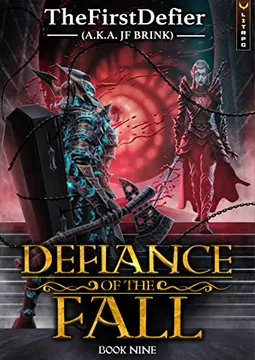
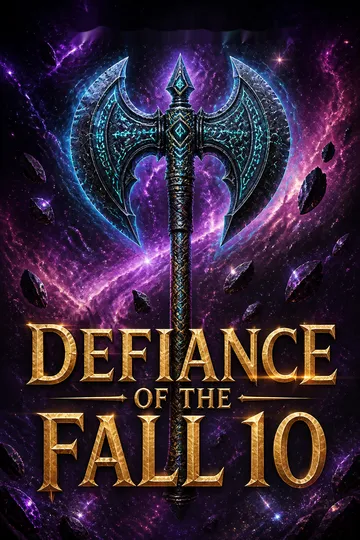
Defiance of the Fall Series

About the Author
Other books by TheFirstDefier


Download PDF
Download EPUB
.epub digital book format is ideal for reading ebooks on phones, tablets, and e-readers.








