

Plot Summary
Ogras Returns at Ultom
Zac1 had entered the Void Star seeking the last item needed for a Cosmic Vessel and followed an old prophecy toward the Mystic Realm, hoping to find his friend Ogras.2 Instead, he finds the demon2 beside a pillar of corrupted light, an apparent consequence of Zac1’s own new inheritance. Their reunion turns to urgent accounting: Ogras2 has survived ten years in the realm, while Zac1 has spent those years searching for his missing people.
His mother, Leandra, killed Thea9 and took Kenzie;16 Zac1 is still too weak to reach the distant Six Profundity Empire. Ogras2 immediately commits to helping him recover Kenzie.16 Their old teasing returns, but the reunion also restores Zac1’s belief that the people he has lost may not be beyond retrieval.
The reunion makes companionship a practical force, not merely comfort. Zac has been treating absence as evidence that his other bonds are irrecoverable; Ogras’s return interrupts that conclusion. Yet the news about Kenzie and Thea prevents the reunion from becoming an escape from grief. Instead, affection becomes obligation: Ogras chooses to share a danger he does not fully understand because Zac once mattered to him. The chapter’s emotional turn is from lonely persistence to renewed, if precarious, hope.
The Army Feeds Its Leader
Before they can leave the mountain range, Zac1 and Ogras2 use Vai,11 a Void Gate researcher, to track a large Kan’Tanu force. Ogras2 hides Zac1 among the soldiers, and the two attack before the seven Hegemons can organize. Zac1 kills several leaders with his axe and Dao-powered techniques while Ogras2’s shadows turn the army against itself.
Their apparent advantage ends when the lipless commander consumes the fallen soldiers, transforming into a stronger, curse-armored Hegemon. Zac1 answers with his undead form and a new chain-based skill that restrains the enemy long enough for a final strike. The commander dies, but the battle leaves Zac1 injured and reveals the invaders’ heart curses can turn whole armies into fuel.
The battle establishes the difference between Zac’s controlled violence and the Kan’Tanu’s extractive one. Zac’s power depends on technique, timing, and cooperation with Ogras; the commander’s strength comes from treating his own troops as disposable material. That contrast gives the victory moral weight without making it easy. Zac survives because he understands his skills and adapts, but the corpse-fed transformation warns that the war will punish any assumption that strength follows familiar rules.
Gemmy Starts to Fail
As Zac,1 Ogras,2 and Vai11 head toward Billy,8 the Mystic Realm’s energy begins to sour. Vai11 suspects the World Core is being corrupted, which could eventually let the Void consume the whole pocket world. Meanwhile, Billy8 struggles to help Gemmy, the sapient Realm Spirit he has befriended.
In a dream, the statue-like mentor who has guided Billy8 explains that Gemmy swallowed a dangerous dimensional fragment and offers a cure: an array that will turn her world into a portable realm. The price is that Billy8 must leave with Gemmy and travel toward the mentor’s true body. Billy8 accepts, then sets about recruiting prisoners to help build the array, choosing Gemmy’s survival over the home he has made.
Billy’s choice reverses the usual fantasy bargain. He accepts a future obligation not for power or status, but because his companion is sick and cannot be abandoned. His simple way of thinking hides a firm ethical center: loyalty is not negotiable even when the cost is exile. At the same time, the mentor’s help is transactional, foreshadowing the larger world’s habit of attaching obligations to every gift. Gemmy’s illness turns the realm itself into a vulnerable character.
Billy Holds the Fortress
The group reaches Billy8’s fortified settlement to find an army surrounding its spatial barrier. Billy,8 empowered by his awakened Titanic heritage, has held the attackers back with help from Gemmy and the Void Gate members trapped inside. A controlled spatial blast opens a narrow corridor through the siege, and Zac,1 Ogras,2 and Vai11 fight their way toward the gate.
They join Billy,8 then reunite Vai11 with her niece Leyara Lioress12 and the warrior Pretty Peak.13 Leyara12 explains that the corrupted region of the realm is draining Gemmy’s strength, so the portable-realm array will fail unless someone closes the source. Their rescue therefore becomes a race against the invaders and the failing world.
The fortress converts Zac’s private search into a collective emergency. He arrives expecting to retrieve a friend, then learns that survival depends on a fragile alliance among Billy, a Realm Spirit, Void Gate researchers, and fighters from rival backgrounds. The corridor through the siege matters because it is improvised rather than invincible. Everyone survives by combining distinct capacities, while the barrier’s weakness makes clear that courage alone cannot preserve a world whose underlying structure is collapsing.
The Firebearer Finds Zac
During a raid on the besieging army, Zac1 destroys a siege tower and escapes with Ogras2 through a spatial storm. A vast eruption of fire interrupts their flight. Iz Tayn,7 a powerful cultivator from beyond the frontier, has tracked Zac1 and recognizes him as a rival candidate for the inheritance.
She reveals that her family has watched his earlier battles and knows about his undead form and the ancient energies he carries. Zac1 and Ogras2 are too injured to fight her, so they persuade her to postpone their contest until the crisis is handled. Iz7 agrees to join them, but first demands that Zac1 endure one of her flames in exchange for information. He survives, gaining a reluctant ally whose power dwarfs theirs.
Iz’s arrival introduces a different scale of power and a different psychology of cultivation. Zac sees an adversary who is not driven by immediate scarcity; she can afford to treat combat as a way to test compatibility and fate. His choice to negotiate instead of attack is therefore a form of self-knowledge. He recognizes that pride would kill him. Their uneasy alliance also replaces simple rivalry with a more demanding question: can two candidates cooperate while knowing their paths may eventually collide?
The Ra’Lashar Ruins
The map taken from the dead Kan’Tanu commander points toward the ruined Ra’Lashar Kingdom, where Ogras2 once fought corrupted goblins. Zac,1 Ogras,2 and Iz7 reach the ruined capital and discover the invaders gathered around a lake of tainted water. Ogras2’s spectral guide, K’Rav, identifies the lake as a breach into the Lost Plane, the same alien dimension whose energy is poisoning Gemmy’s realm.
The Kan’Tanu are not simply searching for a local treasure; they are reopening a route to something far more dangerous. Zac1 realizes his own bloodline can purify and absorb the corruption, while Ogras2 and Iz7 cannot safely enter the lake. He therefore takes the mission alone.
The lake changes the story’s threat from military occupation to metaphysical contamination. The invaders are not merely stronger opponents; they are opening a door whose influence can rewrite bodies, minds, and worlds. Zac’s immunity is an advantage, but it also isolates him, forcing him to enter a danger his companions cannot share. Ogras’s history with the Ra’Lashar supplies essential knowledge, while the scene makes the costs of curiosity visible: the old goblin kingdom sought the Lost Plane’s gifts and was destroyed by them.
The King Guards the Breach
Zac1 swims through buried tunnels to the lake’s bottom and finds a shifting crystal structure surrounding a dark portal. He plants a spatial bomb designed by the Void Gate, but a vast Qriz’Ul reaches through the breach and contains much of the blast. The resulting shockwave tears apart the lake and throws Zac1 into the air, while the enormous creature emerges with the broken gateway embedded in its forehead.
The monster feeds on the tainted water and resists Zac1’s strongest attacks. Ogras2 and Iz7 fight the corrupted Kan’Tanu on the surface, but the portal remains open. Zac1 must hold the creature away from the gateway while his allies find another way to finish the job.
The failed bomb is the book’s central escalation: preparation is necessary, but no plan survives contact with an intelligence older and larger than expected. Zac’s knowledge of the Lost Plane helps him identify the danger, yet it cannot substitute for strength. The Qriz’Ul’s dependence on the breach creates a tactical weakness, while its ability to regenerate turns time into the enemy. The action narrows into a brutal bargain: Zac must endure long enough for others to act.
Death Chains the Monster
Zac1’s skills and energy begin to fail under the Qriz’Ul’s corruption. He calls on Alea21’s coffin, and her new chains bind the creature in a prison of repeated death, freezing its body and the tainted water around it. With the monster immobilized, Ogras2 reaches the gateway and detonates a modified star seed supplied by Iz.7
Zac1 then combines the remnants of his Oblivion and Creation powers in a desperate strike that destroys most of the breach and kills the Qriz’Ul. The blast nearly destroys Zac1’s body, leaving him unconscious with his arms gone and his foundations shattered. When he wakes, Ogras2 confirms the gate is closed and the invading force has been defeated.
The climax succeeds through accumulated relationships and previously established tools. Alea’s chains are not merely weapons but the result of Zac’s enduring bond with a damaged companion; Ogras supplies the final action; Iz’s gift gives the team another chance. Yet Zac’s improvised fusion nearly destroys him. The victory is therefore not a clean affirmation of limitless power. It demonstrates that his willingness to sacrifice himself can save others, while warning that courage without a reliable structure becomes self-annihilation.
A Realm Becomes Portable
As the realm collapses, Ogras2 gathers the remaining tainted water while Iz7 gives Zac1 a rare life-restoring drop that begins repairing his depleted body. Gemmy activates Billy8’s array, sacrificing most of the Mystic Realm to become a portable world contained in a crystal.
The survivors reach the Void, where the view opens onto countless shifting realms, then use Leyara12’s spatial anchor to return to the Void Gate. Billy8 chooses to honor his bargain with the statue mentor and travel toward the Southern Mountain rather than return to Earth. Zac1 is grateful that his friend will have a chance to grow, but the farewell adds another absence to a life already shaped by separation.
The escape resolves the immediate crisis without restoring what was lost. Gemmy survives by surrendering most of her world, and Billy’s promise separates him from Zac just as their reunion had repaired an earlier separation. The scene’s emotional force comes from exchange: survival is possible, but never free of consequence. The portable realm also literalizes the book’s recurring desire to carry home through catastrophe, while reminding Zac that people he loves may choose paths beyond his protection.
The Priestess Names the Stakes
At the Void Gate, Zac1 meets Perala Janodrok,18 the Void Priestess,18 who explains that the Gate is a branch of the Vigil, an ancient faction tasked with watching the return of the System’s pillars. Ultom is an Eternal Heritage tied to the creation of the System, and its appearance has drawn powerful candidates into Zecia.
The Priestess18 warns that the coming sector-wide war has been fused with the inheritance. Candidates will be young, the final seal will be controlled by the System, and the war begins in four years. She cannot protect Zac1 or hand him the remaining seals, but she urges him to grow strong enough to influence Zecia’s fate.
Perala reframes the book’s dangers as part of a structure larger than any single faction. The System is not a neutral backdrop; it is arranging competition and controlling access while the Vigil claims to observe rather than intervene. That distinction is psychologically unstable, since observation already shapes outcomes. Zac receives enough information to understand the stakes but not enough to feel secure. Knowledge becomes another burden: he now knows the war is also a selection mechanism.
Earth Faces Two Futures
Back on Earth, Zac1 tells his closest advisers that the war is coming sooner and will require far more soldiers than the Atwood Empire can currently field. He also confirms that the planet’s Life and Death energies are permanent and that the undead citizens of Elysium must be integrated with the living population.
Zac1 announces that recruitment will be voluntary at first but that conscription will follow if cities refuse to contribute. He reveals Revenants and Raun Spectrals to the public, insisting they are not the invading Undead Empire, and promises new districts and shared work. Henry Marshall17 warns that resentment could become rebellion, while Zac1 accepts that his decision will cost political trust.
Zac’s rule becomes more explicit here. He no longer believes protection can mean shielding people from every hard choice; the coming war makes participation a condition of survival. But his justification does not erase the ethical cost of coercion or the living population’s memory of the earlier undead invasion. The public announcement is an attempt to replace rumor with a shared account of reality. Henry’s warning recognizes that political legitimacy cannot be maintained by strength alone, even when strength is necessary.
Ensolus Opens Its Trial
Zac1 takes Ogras,2 Joanna,4 Vilari,5 and Rhuger into the Ensolus Ruins, where the architecture resembles the ancient empire in his visions. At a sealed temple, he senses another piece of his inheritance and receives a quest to assemble a full cycle of nine sealbearers. The others find no seals, but Vilari5 discovers a black crystal that seems to call to her.
Zac1 then installs the Gates of Rebirth nearby. The trial sends challengers through six levels of Life and Death, erases their memories, and rewards those who endure with titles and bursts of Dao insight. Its danger is real, yet it offers Zac1’s people a structured route to strength before the war.
The Ensolus Ruins turn the inheritance from Zac’s private burden into a possible collective project. His invitation is generous, but it also exposes a limit: proximity to the same opportunity does not guarantee equal access. Vilari’s attraction to the crystal and the trial’s differing outcomes make compatibility as important as effort. The Gates of Rebirth embody this tension in a concrete system, rewarding risk while withholding memory. Progress can be shared, but it cannot be made predictable.
Emerald Eye Answers Back
On the new moon Emerald Eye,20 Zac1 and Ogras2 find no obvious beasts or treasures, only a planet-wide carpet of moss.20 The moss20 speaks through overwhelming impressions, explaining that Earth’s changing energies are harming it. Zac1 promises to return within five years with a way to filter the harmful part of the energy, and the entity20 implants a Moss Crystal in his Soul Aperture to ensure he keeps that promise.
The crystal rapidly feeds his soul, accelerating the cultivation of his avatar, but it also makes the promise dangerous to break. Zac1 and Ogras2 escape after spending ten days on the moon, carrying both a new advantage and an obligation they did not choose freely.
Mossy’s bargain unsettles the usual boundary between resource and person. Zac first approaches the moon as a place to survey, then discovers its dominant life-form has its own needs and power. The Moss Crystal is simultaneously nourishment and coercion, a gift that changes the recipient’s future behavior. Zac’s instinct to make a promise buys immediate safety, but it creates an ethical debt. The episode asks whether a powerful being’s survival claim is legitimate when it is enforced through the body of its visitor.
The Void Learns to Yield
Using the reformed Void Vajra Sublimation, Zac1 begins tempering his human body with Life while maintaining his Void-centered heart cultivation. During the first sessions, he unexpectedly manages to quiet his Hidden Node, Void Heart, showing that the method can give him some control over his bloodline.
He eventually completes the first layer, gaining a Life-attuned constitution that begins balancing his Draugr body. Meanwhile, he studies the Book of Duality, cultivates his soul with the Moss Crystal, and drafts increasingly complex core blueprints. Each draft fails, but the failures sharpen his understanding of why Life and Death resist fusion.
Zac’s cultivation is framed as an attempt to gain control without erasing difference. Rather than simply strengthening his human side or surrendering to his Draugr inheritance, he builds a method that lets opposing states coexist. His breakthrough with Void Heart is especially important because it alters the relation between self and bloodline: the node is no longer entirely autonomous. Yet the failed blueprints prevent easy triumph. Control is partial, and understanding must be earned through repeated, precise failure.
Thea Breaks the Experiment
Far from Zecia, Thea9 survives for years in the Shatterstone Valleys after the Hallowed Mother captures her and forces her to consume an addictive elixir. The drug accelerates cultivation while eroding will and humanity. When Thea9 refuses to kill a group of refugee children, her commander Onandar threatens her, and she answers with a perfected Sword Intent that cuts him down.
The Hallowed Mother appears, revealing that Thea9’s resistance has been part of an experiment. Before the Monarch can claim her, Three Virtues19 and two companions intervene, destroy the Hallowed Mother, and restore her as a blank, reborn woman. The monks then recruit Thea9 to guide their young followers beyond the continent.
Thea’s resistance is not a rejection of power but a refusal to accept the terms on which power is being offered. The elixir promises rapid advancement by consuming the self, and her refusal to sacrifice children gives her a purpose strong enough to interrupt its influence. Her strike against Onandar is both a combat breakthrough and an ethical decision. Yet rescue does not return her to an uncomplicated freedom: the monks enlist her, and her path remains entangled with other people’s plans.
Dreams Yield Their Seal
Janos10 has spent years inside an artificial world where he built a life with Um’ha, believing its town and people were real. As the illusion begins to decay, he completes the Realmkeeper Orb he has been constructing and accepts that leaving will cost him the life he loves.
He wakes in the ruined Ensolus region with the orb, which contains the seed of a world he hopes to restore someday, and receives the seal of the Mercurial Court. His return gives Zac1’s inheritance quest another bearer, while his experience leaves him carrying both a powerful new ability and the grief of a farewell no one else witnessed.
Janos’s episode makes the cost of illusion more complex than simple deception. The life he leaves was false in its material conditions but emotionally real in its attachments, routines, and shared labor. His choice to wake does not invalidate the years he spent there; it makes their loss sharper. The Realmkeeper Orb transforms grief into a project, suggesting that memory can become a form of creation. His new seal is therefore tied not just to escape, but to the desire to make a lost world real.
The Empire Claims Eoz
Zac1 meets Catheya6 through a remote puppet to keep the Undead Empire’s Monarchs at a distance. Their negotiations secure support for Earth’s undead citizens and valuable cultivation resources, but Catheya6’s elders react sharply when Zac1 reveals that his Draugr bloodline is Eoz, the lost Vanguard branch.
They offer him status and treasures because his lineage may help restore the Draugr, yet their gifts include a cursed Essence of the Abyss intended to turn his human side toward Death. Zac1 refuses to abandon his other half, has the taint removed by Iz,7 and negotiates an agreement that protects his independence while still cooperating with the Empire.
The revelation converts Zac from a useful outsider into a possible instrument of institutional restoration. The Undead Empire’s generosity is genuine in part, but it is also strategic, and the poisoned gift exposes how quickly care becomes control. Zac’s refusal to surrender his human side is a defense of the self he has built, not merely a tactical preference. His negotiations show growing political intelligence: he accepts useful ties while demanding limits on what others may claim from him.
A Fleet Leaves Earth
Zac1 invests heavily in a shipyard and launches the Creator-built vessels needed for exploration and war. He then sends Ogras,2 Vilari,5 Joanna,4 Rhubat,14 Ibtep, Emily3’s allies, and a small support crew into the Million Gates Territory, where they search for seals, recruits, and useful resources.
The mission encounters dangerous realms and pirate forces, while Emily3 herself survives a shipwreck, repairs an escape pod, and captures a Kan’Tanu vessel to get home. Ogras2 returns with more sealbearers, including the Technocrat navigator Jaol. The expedition’s casualties are real, but its gains expand Zac1’s alliance and show that his people can find opportunities without him at their head.
Delegation is Zac’s most important change in leadership. He cannot personally protect every ally or claim every opportunity, so he gives others resources and accepts the risk that they will act beyond his reach. Emily’s survival and Ogras’s discoveries validate that choice, but the deaths prevent it from becoming a triumphalist mission. The group gains capacity through initiative and cooperation, not through Zac’s constant intervention. Their progress begins to answer his fear that responsibility must mean carrying everything alone.
Seven Gates, One Answer
After returning from the expedition, Zac1 finds Joanna4 devastated that she has no seal and worries she has reached her limit. He encourages her to keep pursuing the Indomitable Court rather than measure herself against others. Then he enters the Gates of Rebirth, completes all seven layers of both the Life and Death trials, and receives a powerful title.
The paired challenges push his Branch of the Kalpataru and Branch of the Pale Seal to Middle Mastery, joining his already elevated War Axe branch. The experience also gives him the final insight needed to design a viable core: neither Life nor Death can dominate, and both must operate through the Void.
The double trial resolves a long cultivation arc while preserving the difference between Zac’s path and Joanna’s. He earns a breakthrough through compatibility and accumulated work, not by proving that everyone can follow his route. His counsel to Joanna therefore matters as much as his own success: he refuses to turn his advancement into a measure of her worth. The new core insight is paradoxical but precise. Balance does not mean blending away the opposites; it means creating a structure in which each can remain itself.
Three Thousand Failed Cores
Zac1 spends six years testing more than three thousand blueprints, repeatedly failing to combine Life, Death, and Conflict without creating an unstable core. Ultom’s final insight gives him a way forward: instead of fusing the opposites or forming two separate cores, he designs a Quantum Core with two states, one for each body, linked through his Void Emperor nature.
Ogras2 returns from the Umbra inheritance, and Zac1 brings Emily3 home, but the war is now close and Catheya6’s latest message hints at trouble within the Undead Empire. With his foundations prepared and a Perennial Vastness token ready, Zac1 and Ogras2 choose to leave for the realm where they will attempt their breakthroughs.
The book ends not with a completed transformation but with a workable risk. The thousands of failed designs matter because they make the final idea credible: Zac does not receive a perfect answer so much as learn which assumptions must be discarded. The Quantum Core reflects the structure of his own divided identity, turning what seemed like incompatibility into a conditional form of unity. Yet the Undead Empire’s warning and the approaching war keep the solution provisional. Zac leaves with direction, not safety.
Analysis
Defiance of the Fall 11 turns cultivation into a problem of responsibility. Zac1’s strength grows through individual risk, but his ambitions increasingly concern people who cannot match him: a damaged Realm Spirit, an empire divided between living and undead citizens, and companions who must find their own paths. The book repeatedly shows that protection can become control. Zac1’s conscription plan may preserve Earth, while the cursed gift from the Undead Empire offers power by trying to erase part of him. Neither choice is morally clean.
The novel’s most distinctive structural idea is its insistence that opposites remain difficult to reconcile. Life and Death are not simple elemental decorations; they determine Zac1’s body, political choices, and theory of a core. His eventual Quantum design does not erase the contradiction but gives it two coordinated states. The same principle appears in relationships: Ogras2 can be both a schemer and a loyal friend, Iz7 both a rival and an ally, and Thea9’s refusal of corruption both a source of danger and a source of strength. Identity remains plural without becoming incoherent.
The repeated trials also distinguish compatibility from effort. Joanna4 works hard but does not receive the same inheritance as Vilari5 or Rhubat.14 Their difference is not a moral ranking, and Zac1’s attempt to reassure her matters because he refuses to make his own rapid progress the universal standard. The book presents fate as real enough to shape opportunity, yet not so absolute that action becomes meaningless. People can still choose what they do with the paths they are given.
Finally, the story’s scale expands without dissolving its emotional center. A dying Mystic Realm, an ancient System, and an approaching war all matter because they threaten particular bonds: Kenzie16’s absence, Billy8’s departure, Alea21’s condition, and the people Zac1 has chosen to lead. His unfinished core and imminent journey preserve uncertainty, but the novel’s resolution is a change in posture. Zac1 has stopped assuming he must carry every person himself. He is building a structure in which others can act, fail, and grow beside him.
Review Summary
Defiance of the Fall 11 receives mixed reviews, with an overall rating of 4.54/5. Many readers praise the series' continued growth and character development, while some criticize pacing issues and excessive cultivation details. Fans appreciate the return of beloved characters and expanded world-building. Critics note the book feels like filler, with slow plot progression and lengthy internal monologues. Despite these concerns, most readers remain invested in the series and eagerly anticipate future installments.
Characters
Zac Atwood
The Void-Bound LeaderZac is a human and Draugr cultivator whose strength has made him the central protector and ruler of the Atwood Empire. He is practical, fiercely responsible, and more comfortable solving danger with action than with political language. His instinct is to absorb risk himself, especially when friends or citizens are threatened, but the scale of his faction increasingly forces him to delegate and trust others. His path combines Life, Death, Conflict, and the Void, making his cultivation as paradoxical as his identity. Zac is driven not by a desire to rule for its own sake but by the fear that people he loves will pay for his failures.
Ogras
The Shadowed StrategistOgras is Zac1’s old demon companion, a shrewd survivor whose humor often masks careful calculation. He prefers ambushes, misdirection, and opportunism to direct confrontation, and his time trapped in the Mystic Realm gives him deep knowledge of its dangers. He is willing to use questionable tools, including a soul-binding flag, but remains fiercely loyal to Zac1 and accepts responsibility for the risks he takes. Ogras often sees political and tactical consequences before Zac1 does. Their friendship is built on blunt honesty, shared danger, and a willingness to rescue each other without demanding that either become more respectable.
Emily
The Axe-Array SurvivorEmily is Zac1’s former student, an axe cultivator shaped by the Big Axe Coliseum and years of independent struggle. She is bold, competitive, inventive, and impatient with being treated as someone who needs protection. Her years stranded in the Million Gates Territory force her to rely on mechanical improvisation as well as combat skill. Emily’s interest in arrays and her willingness to take risks make her more than a conventional fighter, while her bond with Zac1 remains affectionate and teasing. She wants to earn her place through her own achievements, not simply inherit status from her teacher.
Joanna Thompson
The Relentless SpearJoanna is one of Zac1’s earliest allies and a disciplined warrior whose spear work reflects persistence more than showmanship. She has spent years trying to rise beyond the limits imposed by her former life and by a world that rewards exceptional talent. Her ambition is serious, but so is her self-doubt when others around her gain opportunities she cannot reach. Joanna needs to define progress on her own terms rather than measure herself against Zac1 or the sealbearers. She is a capable leader whose emotional honesty, especially in moments of disappointment, makes her one of the clearest measures of what Zac1’s rapid ascent costs those beside him.
Vilari
The Soul-Minded CommanderVilari is a trusted commander of the Atwood Empire and a deliberate, perceptive cultivator whose focus lies in the soul. She is less impulsive than Ogras2 and less personally forceful than Zac1, but she often understands people and institutions with unusual clarity. Her research in the Ensolus Ruins and her attraction to a hidden artifact show a mind drawn to difficult, inward forms of knowledge. Vilari supports Zac1 while maintaining her own direction, and she does not confuse loyalty with passivity. Her calm authority helps hold the empire together when Zac1 is absent or occupied with threats beyond its borders.
Catheya
The Draugr EnvoyCatheya is a Draugr cultivator connected to the powerful Undead Empire and one of Zac1’s closest links to the Multiverse’s older factions. She is warm, teasing, and emotionally perceptive, but she also understands how quickly institutional loyalty can turn a person into a bargaining piece. Her role as an intermediary leaves her balancing personal affection with political duties she did not design. Catheya values Zac1’s independence, even when she wishes he would trust her more openly. She is neither a simple guide to the Undead Empire nor merely a romantic possibility; she is a capable cultivator negotiating a narrow space between friendship and factional pressure.
Iz Tayn
The Primordial FlameIz is a prodigiously powerful young cultivator from an ancient family, steeped in Fire and guided by elders whose knowledge reaches far beyond Zecia. Her upbringing has given her immense resources and incomplete social experience. She can be direct to the point of alarming others, yet she is genuinely curious about ordinary life, friendship, and the choices that shape a person. Iz treats battle as a way to test fate and understand character, though she gradually recognizes that decisions carry consequences beyond her own trajectory. Her relationship with Zac1 combines rivalry, fascination, and mutual respect, while her power makes every encounter with her consequential.
Billy
The Unyielding TitanBilly is Zac1’s old human ally, a massive fighter whose apparent simplicity conceals stubborn loyalty and an unusual capacity for growth. He befriends the sapient Realm Spirit Gemmy and builds a kingdom around their shared survival. Billy trusts his instincts, often arriving at important decisions through sleep or direct feeling rather than analysis. He is not interested in status or the larger political game, but he will accept a difficult bargain to protect someone he loves. His relationship with Zac1 is direct and affectionate, grounded in shared history rather than cultivation hierarchy.
Thea
The Captive SwordThea is Zac1’s former partner and a skilled swordswoman whose path is defined by discipline, moral clarity, and resilience under coercion. Separated from Earth, she faces a violent continent where survival demands choices that repeatedly test her values. Her refusal to surrender her judgment gives her strength, but it also leaves her vulnerable to those who treat people as experimental material. Thea’s story runs parallel to Zac1’s, showing what happens when a capable cultivator is cut off from familiar allies and forced to construct a future alone. She remains compassionate without being naïve about danger.
Janos
The Dreaming IllusionistJanos is an illusionist whose survival depends on patience, imagination, and an instinct for finding exits others miss. His experiences blur the boundary between fabricated worlds and genuine attachment. Rather than treating illusion as mere deception, he uses it to explore what a world might become and what a person is willing to leave behind. His connection to Zac1 is one of uneasy trust: Zac1 sees him as a useful ally, while Janos keeps much of his inner life private.
Vai
The Void Gate ResearcherVai is a researcher and relative of Leyara12, more comfortable with instruments, arrays, and analysis than direct combat. Her curiosity can overtake caution, but she is resourceful under pressure and proves valuable in reading threats others cannot detect. Vai’s time traveling with Zac1 forces her to reconcile the quiet world of scholarship with the violence of the frontier. She does not become a fighter simply because danger surrounds her; instead, she contributes by understanding systems and making informed choices.
Leyara Lioress
The Void Gate DiscipleLeyara is Vai11’s niece and a chosen disciple of a powerful Void Gate master. She combines technical knowledge, spatial skill, and political caution, serving as a bridge between Zac1 and the Vigil’s larger interests. Leyara is affectionate toward Vai11 but wary of Zac1, whose reputation and secrets make him difficult to assess. Her approach is practical: she supports a solution when it protects the people in her care, while withholding knowledge when she believes fate or factional security requires it.
Pretty Peak
The Battle-Hardened ScionPretty Peak is a fighter from a powerful family whose graceful appearance contrasts with a predatory, adaptable combat style. She values practical skill and can switch between weapons and close-quarters techniques without relying on a single idealized method. Her experience in the Allbright Empire’s conflicts makes her alert to the broader political stakes of Zac1’s discoveries. She is direct, capable, and willing to risk herself when a mission demands it.
Rhubat
The Zhix ChainbreakerRhubat is a leader of the Zhix who seeks a cultivation path that can serve an entire species, not just a handful of exceptional individuals. He is cautious because his people’s survival depends on collective stability, but he is willing to question old assumptions when their existing system stops working. Rhubat’s relationship with Zac1 is respectful yet independent. He accepts help without surrendering the Zhix’s right to judge whether the Atwood Empire’s choices serve them.
Calrin
The Ambitious BrokerCalrin is a merchant and negotiator whose appetite for opportunity is matched by a talent for turning obscure resources into influence. He understands that wealth is not merely a private reward but a means of building institutions and securing alliances. Calrin is loyal to Zac1, though he is never content to let a commercial opportunity pass without calculation. His dealings help translate Zac1’s adventures into long-term resources for the Atwood Empire.
Kenzie
The Missing SisterKenzie is Zac1’s younger sister, a talented cultivator whose fate remains one of his strongest personal motivations. Her choices and abilities matter even when she is absent from the immediate action. Zac1’s hope of rescuing her gives the larger inheritance struggle an intimate stake, reminding him that the Multiverse’s political conflicts affect the people closest to him.
Henry Marshall
The Political ElderHenry is an older Earth leader who has adapted to cultivation without discarding his knowledge of politics and human behavior. He understands that social resentment does not disappear simply because a ruler has good intentions. Henry serves as a candid adviser to Zac1, warning him that the integration of the undead and the demands of war could destabilize the society he is trying to protect.
Perala Janodrok
The Watching PriestessPerala, known as the Void Priestess18, leads the local branch of the Vigil and understands more of the System’s ancient history than she is willing to disclose. Her role is that of a constrained observer: she can explain the rules and warn Zac1 about looming conflicts, but she cannot simply remove obstacles for him. She balances institutional duty with a limited desire to correct an imbalance, revealing how even powerful figures may be bound by the systems they serve.
Three Virtues
The Shifting MonkThree Virtues is a Buddhist monk whose apparent gentleness conceals formidable power and a talent for appearing wherever fate becomes complicated. He intervenes when Thea9 is in danger, but his help carries its own agenda, as he asks her to guide young monks beyond their familiar world. His behavior combines sincere religious conviction with practical opportunism, leaving others uncertain where compassion ends and strategy begins.
Mossy
The Living MoonMossy is the vast moss intelligence covering Emerald Eye, a life-form whose consciousness emerged as planetary energies changed. It thinks through an enormous network rather than a single body, making communication overwhelming for ordinary minds. Mossy is neither conventionally benevolent nor malicious; it acts to preserve its own existence and seeks help understanding forces it cannot control. Its encounter with Zac1 exposes the moral uncertainty of dealing with an intelligence whose needs are real but whose methods can be coercive.
Alea
The Coffin-Bound SpiritAlea is Zac1’s damaged companion, whose consciousness is bound to a coffin and whose chains can restrain powers that would overwhelm Zac1 alone. Their relationship is intimate but not simple: Zac1 carries grief and responsibility for her condition, while Alea remains an active participant in his path. Her abilities make her indispensable in moments of crisis, yet her limited communication reminds Zac1 that protecting someone does not mean restoring them quickly.
Plot Devices
Ultom Seals and Courts
Inheritance through affinityThe seals of the Left Imperial Palace and its Outer Courts grant bursts of insight and identify candidates for an inheritance tied to the System’s creation. Different people are drawn to different courts according to their nature and path. Zac1’s quest to assemble a cycle of sealbearers turns individual cultivation into a collective problem, while the war’s integration with the inheritance makes seals politically valuable. The device links private breakthroughs to a contest among ancient factions, but its rules remain incomplete, forcing Zac1 to infer them through experience.
Life and Death Duality
Two bodies, one pathZac1’s human and Draugr aspects embody Life and Death, while his Void-centered bloodline keeps them connected without simply blending them. The conflict shapes his techniques, constitutions, and eventual core design. The [Void Vajra Sublimation] lets him temper his human body with Life while deepening control over his Void Nodes; the Essence of the Abyss strengthens his Draugr side. The same duality informs Earth’s changing environment and the tension between Zac1’s personal identity and the empire he rules.
The Lost Plane
Corruption with knowledgeThe Lost Plane is an alien realm whose taint can distort bodies, minds, and entire worlds while also yielding insights into the nature of reality. The Kan’Tanu try to reopen a gateway in the Ra’Lashar ruins, poisoning Gemmy’s Mystic Realm. Zac1’s bloodline can refine some of the corruption, making it a source of knowledge as well as danger. The Qriz’Ul King and the decaying remnants of the Ra’Lashar show what happens when a civilization treats the realm’s gifts as harmless nourishment.
The System’s War
Conflict as qualificationThe Kan’Tanu invasion and the coming war are shaped by the System, which turns military contribution into a route toward resources and access to Ultom. Zac1 must prepare Earth and Ensolus for a conflict that cannot simply be refused. Recruitment, conscription, Contribution Points, and the war’s hidden inheritance rules connect political decisions to personal advancement. The mechanism makes survival and ambition difficult to separate: victories can strengthen a faction, but the System’s structure also turns soldiers into potential sacrifices.
The Gates of Rebirth
Trials of paired oppositesThe Gates of Rebirth are a System-awarded trial with paired entrances associated with Life and Death. Challengers face six public layers that test attributes, Dao, resolve, and judgment; they emerge without memories of the trials but retain titles and insights. Zac1 discovers a hidden seventh layer that requires the opposite attunement from the gate’s name and leads to deeper revelations. The trial gives the Atwood Empire a dangerous way to strengthen its people while reflecting the book’s central question about whether opposites must be reconciled, balanced, or kept distinct.
FAQ
Synopsis & Basic Details
What is Defiance of the Fall 11 about?
- Reunion and Realm Crisis: Zac reunites with his long-lost ally Ogras in a mysterious Mystic Realm connected to the Dimensional Seed, only to discover the realm is unstable due to corruption from a place called the Lost Plane and is on the brink of collapse.
- Facing Invasion and Destiny: Simultaneously, the realm has been infiltrated by the Kan'Tanu, an unorthodox faction seeking to exploit its secrets, forcing Zac and Ogras to ally with unexpected figures like the Realm Spirit Billy and Void Gate members like Leyara to survive and prevent the realm's destruction.
- Unveiling Ancient Heritages: The narrative delves into the mysteries of Eternal Heritages, specifically Ultom and the Left Imperial Palace, revealing Zac's candidacy for a powerful title and the looming threat of a Sector-wide war tied to this ancient power struggle, forcing Zac to balance personal goals with cosmic responsibilities.
Why should I read Defiance of the Fall 11?
- Deep Character Development: The book offers significant growth for Zac, pushing his physical and mental limits through intense trials and forcing him to confront the complexities of leadership, fate, and his own identity, including the integration of his dual nature.
- Cosmic Scale Worldbuilding: It expands the Defiance of the Fall universe dramatically, introducing concepts like Eternal Heritages, the Lost Plane, the Gates of Rebirth, and the intricacies of Multiverse politics and power structures beyond the frontier Sector.
- Action-Packed Trials and Battles: Featuring high-stakes combat against formidable foes like the Kan'Tanu Hegemons and the Qriz'Ul King, alongside unique System-based trials like the Gates of Rebirth, the book provides thrilling action sequences and showcases Zac's evolving combat prowess and unique abilities.
What is the background of Defiance of the Fall 11?
- Post-Integration Earth: The story takes place years after Earth's integration into the System and the subsequent chaos, with Zac having established the Atwood Empire and navigated numerous threats, including incursions from the Undead Empire and the rise of other native factions.
- Looming Sector War: A major backdrop is the impending Sector-wide war in Zecia, triggered partly by the appearance of a Space Gate and the infiltration efforts of the Kan'Tanu, creating a sense of urgency and forcing factions to prepare for large-scale conflict.
- Ancient Cosmic Conflicts: The narrative ties into ancient history predating the System, involving the Limitless Empire, Eternal Heritages, and powerful factions like the Vigil and the Black Heart Sect, revealing that the current events are echoes of much older struggles for power and control over reality itself.
What are the most memorable quotes in Defiance of the Fall 11?
- "I choose death?" Zac said as his body started to grow. "You have no idea.": This quote encapsulates Zac's defiance and willingness to embrace his terrifying Draugr form, highlighting his transformation from a human cultivator to a monstrous force capable of challenging even the most unorthodox enemies.
- "To progress is to cause ripples. If others can neither rise above the waves nor adapt to them, then they simply aren't fated.": Iz Tayn's words reflect a core theme of the series and the Multiverse – the brutal reality of cultivation where only those who can adapt and push forward survive, framing Zac's disruptive path as a natural consequence of his destiny.
- "Fate is malleable. If it doesn't suit you, you change it.": Zac's assertion to Iz challenges the deterministic view of destiny held by ancient factions, embodying his proactive approach to shaping his own future and defying predetermined outcomes, a central tenet of his character arc.
What writing style, narrative choices, and literary techniques does TheFirstDefier use?
- Detailed System Mechanics: The author heavily incorporates the LitRPG System, detailing skill upgrades, attribute gains, quest mechanics, and their tangible impact on character power and world interactions, grounding the fantasy elements in quantifiable progression.
- First-Person Perspective (Zac): The primary narrative is from Zac's point of view, providing immediate access to his thoughts, feelings, and strategic decisions, enhancing reader immersion and emphasizing his personal journey and internal conflicts.
- Alternating Perspectives (Limited): While Zac is central, brief shifts or reports from other characters (like Ogras, Billy, Thea, Emily, Calrin, Catheya, Jaol, Carl) offer broader context, reveal events happening elsewhere, and provide external perspectives on Zac's actions and reputation, often highlighting the gap between his self-perception and how others see him (e.g., "Deviant Asura").
Hidden Details & Subtle Connections
What are some minor details that add significant meaning?
- Mossy's Growing Intelligence: The seemingly simple moss entity on Emerald Eye, initially described as barely F-grade, demonstrates rapid learning and complex strategic thinking (implanting Zac with a crystal, bartering for resources), hinting at the terrifying potential of non-conventional lifeforms and foreshadowing its future significance as a powerful, evolving entity.
- The Qriz'Ul King's Void Affinity: The Qriz'Ul King's hunger for Zac's Void Energy and its connection to the gateway suggests a deeper, unexplained link between the Void Emperor bloodline, the Lost Plane, and potentially Ultom, hinting at Zac's unique position beyond just being a candidate.
- The Gates of Rebirth's Inverted Elements: The unexpected inversion of Life and Death elements in the Gates of Rebirth trials (Death in the Gate of Life, Life in the Gate of Death) subtly foreshadows the secret seventh layer and its specific requirements, while also reinforcing the theme of duality and the interconnectedness of opposing forces.
What are some subtle foreshadowing and callbacks?
- Thea's Hallowed Elixir: The Hallowed Mother's experiment on Thea with the elixir, which stimulates the heart and nurtures intent at a terrible cost, subtly mirrors Zac's own path of pushing limits through dangerous means and the potential for unintended consequences or corruption, highlighting parallel struggles with unorthodox power.
- Janos's Illusionary World: Janos's ability to create and draw from an imaginary world, gained from being trapped in an ancient illusion, foreshadows the potential for cultivating reality-bending abilities through unique trials and hints at the Limitless Empire's mastery over such concepts.
- The Orom's Search for Ultom: The revelation that the Orom World Primordial Beast was searching for Ultom for millions of years connects Zac's past ordeal directly to the current inheritance struggle, highlighting the deep history of the search and the lengths powerful entities will go to claim Eternal Heritages.
What are some unexpected character connections?
- Billy's Titanic Master: Billy's cultivation breakthroughs and plan to save Gemmy are revealed to be guided by a powerful "Statue-man" in a dream world, who is implied to be a Titan and part of a "Southern Mountain" faction, unexpectedly linking Billy's simple nature to an ancient, powerful lineage and future destination.
- Iz Tayn's Family & Grandpa: Iz's casual references to her "uncle" (a Supremacy who helped her bypass the shroud) and "grandpa" (who crafted her Temporal Chamber and sentience-detecting crow) reveal her incredibly high-tier backing and the vast resources available to her, contrasting sharply with Zac's self-made path and highlighting the different starting lines for candidates.
- Jaol's Technocrat Bounty: The reveal that Jaol has a massive bounty on his head, linked to Zac flashing Leandra's command token, unexpectedly connects the Technocrat plotline directly to Zac's actions and the wider Multiverse, suggesting Zac's mother's faction and their enemies are also aware of his existence and potentially his unique nature.
Who are the most significant supporting characters?
- Ogras Azh'Rezak: More than just an ally, Ogras acts as Zac's confidante, strategic advisor, and foil, providing comic relief while also pushing Zac's boundaries and offering crucial insights into the Multiverse's darker aspects and the nature of survival. His own quest for a seal and evolving path mirror Zac's journey.
- Iz Tayn: As a fellow Ultom candidate from a peak faction, Iz serves as a benchmark for Zac's progress, a source of invaluable information (Eternal Heritages, Multiverse politics), and a complex potential ally/rival, forcing Zac to navigate high-stakes interactions and revealing the different approaches to cultivation and destiny.
- Vilari: Vilari evolves from a faction leader to a key member of Zac's inner circle and a potential sealbearer. Her dedication to her people, her unique soul cultivation path, and her growing connection to the inheritance make her a significant figure in the Atwood Empire's future and Zac's quest.
- Catheya Sharva'Zi: Catheya acts as Zac's primary link to the Undead Empire, a major power player in Zecia. Her personal connection to Zac, her own cultivation journey (including awakening her bloodline), and her role in navigating the complex political landscape of the Empire make her crucial for Zac's long-term plans and safety.
Psychological, Emotional, & Relational Analysis
What are some unspoken motivations of the characters?
- Iz Tayn's Search for Purpose/Connection: Beyond her stated mission to test fate and claim the inheritance, Iz's interactions with Zac (her curiosity about his path, her enjoyment of sparring, her desire for conversation) suggest an underlying motivation stemming from loneliness and a desire for genuine connection and understanding outside the rigid structure of her powerful family and predetermined path.
- The Undead Empire's Bloodline Obsession: The Empire's intense interest in Zac's Eoz bloodline, even over his status as a potential sealbearer, reveals an unspoken desperation to recover lost heritage and strengthen their race, highlighting the deep-seated trauma from the Dark Ages and their willingness to make unprecedented accommodations for a chance at recovery.
- Henry Marshall's Lingering Grief/Responsibility: Henry's continued presence and advice to Zac, despite stepping back from direct leadership, are subtly motivated by his grief over Thea's death and a sense of responsibility for Earth's future, seeing Zac as the best hope but also worrying about the cost of his path.
What psychological complexities do the characters exhibit?
- Zac's Duality and Integration: Zac grapples with the psychological complexity of integrating his human and Draugr identities, constantly balancing the needs and instincts of both sides while striving for a unified path, a struggle reflected in his core formation blueprint and his interactions with others who see him as both human and monster.
- Thea's Trauma and Resilience: Thea's experiences on the Goldblade Continent, particularly her torture and forced addiction to the Hallowed Elixir, showcase immense psychological resilience as she fights to maintain her humanity and intent despite overwhelming suffering, highlighting the deep scars left by her ordeal.
- Ogras's Adaptation and Cynicism: Ogras's decade of isolation and survival in the Mystic Realm, followed by his reintegration into Zac's chaotic life, reveals a complex mix of cynicism born from hardship and a surprising loyalty and adaptability, using humor and pragmatism to cope with the absurdity and danger of their situation.
What are the major emotional turning points?
- Zac's Reunion with Ogras: The emotional weight of reuniting with Ogras after years of loss significantly bolsters Zac's conviction that he can retrieve Kenzie and restore Alea, transforming his personal quest from a desperate hope into a renewed determination fueled by the return of a trusted friend.
- Thea's Defiance Against Onandar: Thea's emotional breaking point, fueled by fury and the realization her suffering was entertainment, leads to a surge of intent that allows her to strike down Onandar, marking a pivotal moment of reclaiming agency and unleashing her true potential despite the Hallowed Elixir's influence.
- Joanna's Confrontation with Failure: Joanna's emotional breakdown after failing to gain a seal, despite her relentless efforts, is a major turning point that forces her to confront her limitations and redefine her path, leading to a deeper understanding of herself and her potential on the battlefield rather than through inherited opportunities.
How do relationship dynamics evolve?
- Zac and Ogras's Renewed Partnership: Their relationship quickly reverts to its familiar dynamic of banter and mutual reliance, but with added depth from their individual growth and shared trauma, becoming a core of stability amidst the cosmic chaos and high-stakes missions.
- Zac and Iz Tayn's Complex Connection: Their initial adversarial dynamic evolves into a strange mix of sparring partners, intellectual equals (in certain areas), and potential allies, navigating mutual suspicion and respect while hinting at a deeper, fated connection that transcends their factional differences.
- Zac and Catheya's Strategic Alliance: Their relationship transforms from a simple debt/favor dynamic into a complex political and personal alliance, navigating the demands of the Undead Empire, mutual trust issues, and Catheya's personal feelings for Zac, highlighting the blurred lines between personal bonds and factional interests at higher levels of power.
- Zac and His Followers' Growing Reliance: As Zac prepares for his departure to the Perennial Vastness, his relationship with key followers like Vilari, Joanna, Rhuger, Ibtep, and Jaol shifts from leader/subordinate to one of mutual reliance and shared destiny, entrusting them with significant responsibilities and opportunities, fostering their growth as independent agents within the Atwood Empire.
Interpretation & Debate
Which parts of the story remain ambiguous or open-ended?
- The Nature of Ultom and the Left Imperial Palace: Despite numerous clues and insights from various characters, the true purpose, origin, and mechanics of Ultom and the Left Imperial Palace remain largely ambiguous, with conflicting information (e.g., nine vs. seven Imperial Clans, the role of the Void) leaving their ultimate significance and the nature of the inheritance open to interpretation.
- The Moss Entity's Intentions: While Mossy appears to act out of self-preservation and a desire for growth, its level of sapience, long-term goals, and the full extent of its abilities (like implanting the crystal) remain unclear, leaving its future interactions with Zac and Earth open to debate – is it a potential ally, a ticking time bomb, or something else entirely?
- The Fate of Thea and the Buddhist Monks: Thea's encounter with Three Virtues and her subsequent departure with the monks leaves her fate uncertain. While she is seemingly safe for now, the monks' true motives and destination remain unknown, raising questions about whether she is truly free or merely traded one form of captivity for another.
What are some debatable, controversial scenes or moments in Defiance of the Fall 11?
- Zac's Integration of the Undead: Zac's decision to fully integrate the undead populations (Revenants, Spectrals) into the Atwood Empire, including conscription and forcing living citizens to adapt to Miasma-filled districts, is presented as necessary for survival but is inherently controversial, raising ethical questions about forced assimilation and potentially alienating a significant portion of his human population.
- The Gates of Rebirth's Memory Purge: The trial's mechanism of wiping participants' memories of the challenges, while providing enlightenment, is debatable. It raises questions about the value of experience versus raw insight and whether the System's method is a benevolent aid to progression or a form of control that prevents true understanding.
- Zac's Use of Creation Energy for Healing: Zac's ability to use Creation Energy to heal grievous wounds and regrow limbs, while showcasing his unique power, is controversial due to its cost (lifespan) and the potential for unforeseen consequences, highlighting the dangerous nature of dabbling with fundamental cosmic forces outside the established System paths.
Defiance of the Fall 11 Ending Explained: How It Ends & What It Means
- Preparation for the Perennial Vastness: The book ends with Zac and Ogras preparing to use their Perennial Vastness tokens to travel to this mysterious realm. This signifies the culmination of Zac's E-grade journey, having shored up his foundations, perfected his core blueprint, and gathered key allies (Ogras, potentially Catheya) for the next stage of cultivation – breaking through to Hegemony.
- Looming Trials and Alliances: The ending highlights the numerous challenges ahead: the impending war (now just over a year away), the Ultom inheritance trial (starting in ~3 years), the complex and potentially dangerous alliances Zac has forged (Undead Empire, Iz Tayn), and the personal struggles of his followers (Joanna's quest for a seal, Jaol's body issues, Emily's growth). It means Zac's path is far from over and will involve navigating high-stakes conflicts on multiple fronts.
- Uncertainty and Growth: Despite the preparations, the future remains highly uncertain. The nature of the Perennial Vastness, the rules of the Ultom trial, the true motives of powerful factions, and the fate of missing allies (Catheya, Vilari's group) are all open questions. The ending emphasizes that Zac's journey is one of continuous adaptation, learning, and pushing boundaries, stepping into the unknown to seize greater power and protect his growing empire.
Defiance of the Fall Series

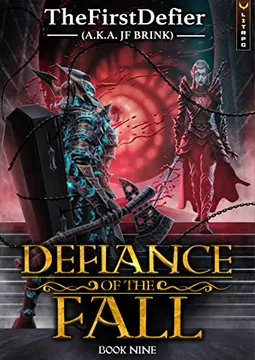
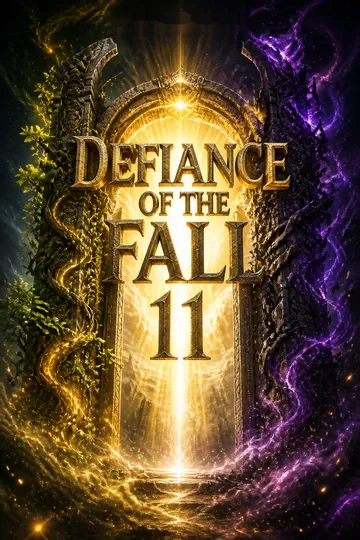
About the Author
Other books by TheFirstDefier


Download PDF
Download EPUB
.epub digital book format is ideal for reading ebooks on phones, tablets, and e-readers.








