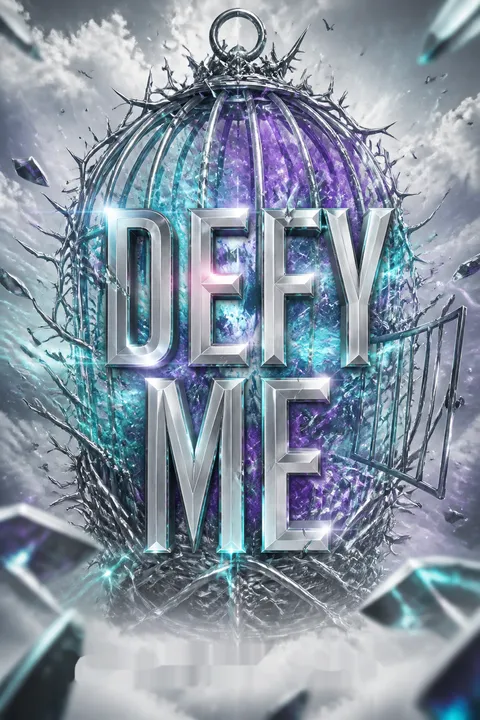


Plot Summary
Chandeliers Over the Symposium
During a public ceremony, Juliette screams and the building shakes apart around her. Kenji sees spectators with torn clothes and bloody chests, while Brendan and others lie injured; he reaches Juliette, but she is unresponsive. Warner has vanished. Then Juliette disappears from Kenji's arms, and the apparently dead audience begins to stir.
Kenji's group escapes under an invisibility screen and returns to Sector 45 without Juliette or Warner. The survivors cannot tell whether the spectacle was an attack, a power beyond Juliette's control, or a massacre staged to make her look dangerous. Their new headquarters suddenly feels less like a home than a trap with its doors left open.
The scene makes public spectacle a weapon before anyone knows who is wielding it. Juliette's apparent violence threatens the political authority she has just claimed, while Kenji's fragmented view turns uncertainty into the story's immediate crisis. The spectators' revival is crucial: the event has the form of mass murder but the function of a manufactured image. Kenji's instinct to save Juliette rather than explain the spectacle also establishes the emotional cost of leadership. His loyalty is immediate, but without evidence he can offer the group only fear and a missing person.
The Girl in Nazeera's Photos
At Sector 45, Nazeera produces childhood photographs that identify Juliette as Ella Sommers, daughter of Oceania's Supreme Commander Evie Sommers and sister to Emmaline. Nazeera says their families were once close, but their memories were taken; hers have begun returning. She believes the symposium's apparent deaths were staged to discredit Ella and seize her, and warns the resistance that soldiers will soon turn against them.
Her revelation unsettles Adam, who remembers Juliette as a frightened, gentle girl, and Kenji, who had suspected Nazeera of setting them up. As planning stretches on, Kenji and Nazeera share a kiss, but she refuses the certainty of a relationship. Their private tenderness cannot quiet the approaching threat.
Nazeera's photographs turn a political crisis into a question of ownership: Juliette's name, history, and loyalties have all been assigned by powerful adults. Adam's resistance to the revelation is psychologically legible, because his memory of Juliette is real even if incomplete; he mistakes a survivor's changed behavior for corruption. Kenji's attraction complicates his judgment without erasing his suspicion. Nazeera offers evidence and urgency, not comfort, and her refusal of a relationship mirrors her broader position: she wants connection, but has learned that trust can be used against her.
Memories They Could Not Bury
The photographs unlock a buried history. As children, Ella and Aaron Warner first met in a government office where Ella was frightened of her new placement; Warner, then a lonely boy under his father Anderson's control, noticed and comforted her.
Their families later kept them close, then repeatedly erased their shared memories. Warner continued to gravitate toward Ella each time they met, while Anderson manipulated events to set Warner against Adam, whom he steered into becoming Ella's cellmate.
At the resistance headquarters, Warner's grandfather, Delalieu, confirms the scheme and admits he knew Ella as a child while failing to stop her abuse. Before he can explain the regime's larger plan, Anderson appears, kills him, and takes the group into custody.
The recurring bond is not presented as proof that the characters are fated, but as evidence of how memory shapes consent. Anderson repeatedly engineers the conditions of intimacy, then removes the characters' ability to understand their own history. Delalieu's guilt complicates the familiar distinction between perpetrator and bystander: he opposed abuse, yet his knowledge and inaction helped it continue. His confession offers the group a map of the conspiracy, but Anderson's arrival demonstrates how little truth can protect anyone when the state controls the room, the records, and the bodies inside it.
Home Becomes a Laboratory
Ella wakes in a childhood bedroom wearing glowing restraints, with Evie and Max claiming her as their daughter. Evie drugs and confines her, then cuts and examines her body while attempting to alter her mind and strengthen her physically. Ella cannot speak or move reliably, but memories begin breaking through the drugs: her sister, her earlier life, and the fact that the supposed family reunion is another experiment.
Evie treats Ella's feelings for Warner and her friends as defects that must be removed. Elsewhere, Warner is held in a poisoned cell, where he rationes food to preserve a clear mind. His captivity brings back fragments of a childhood relationship with Ella that Anderson had repeatedly erased.
The domestic setting sharpens the horror because the room's claim of safety contradicts what is done inside it. Evie describes control as care, converting a parent's authority into a laboratory license; Ella's body becomes the site where that false logic is enforced. Meanwhile, Warner's refusal of poisoned food is not glamorous resilience but a costly attempt to retain judgment under coercion. Both captives are fighting for authorship of their own minds, though Ella's memories return through emotion and Warner's through disciplined observation. Their parallel ordeals expose two forms of resistance to the same regime.
Warner's Father Returns
Warner pieces together his captors' identity and recognizes that he is in Oceania, where Ella grew up. Anderson visits and reveals that Juliette was an alias, that Ella and Warner knew each other for years, and that he repeatedly erased Warner's memories to control their attachment.
He also admits placing Adam in Ella's life to provoke conflict. When Anderson shows Warner footage of Ella being tortured, Warner stabs him in the throat and leaves him apparently dead.
The act breaks Warner's lifelong fear of his father, but not the larger machinery around him. Max later treats Warner's injuries and explains that Anderson survived because he had acquired an imperfect healing ability from the twins' blood. Warner is still a prisoner, and Anderson is alive.
Warner's attack is both a revolt and a test of what freedom costs him. He has been trained to understand violence as his father's language, yet the killing is prompted by witnessing Ella's suffering, not by a wish to inherit power. Anderson's survival prevents the moment from functioning as clean catharsis: removing an abuser does not automatically dismantle the system that made him powerful. The memory revelation also changes Warner's sense of love. It has been manipulated, but not fabricated; his feelings remain his own even when the context around them was engineered.
Emmaline Behind the Glass
A voice inside Ella's mind directs her through the compound and into a sealed laboratory. There she finds Emmaline, their sister, imprisoned in a water-filled cylinder and physically devastated by years of experiments. Emmaline explains through shared memories that she has been restoring Ella's stolen memories and reaching other children of the commanders.
The Sommerses have tried to turn Emmaline's mind into a tool, but she is dying and asks Ella to end her suffering. Before Ella can decide what to do, Emmaline releases her restraints. Evie enters with a weapon and tries to reassert control; Ella kills her. Ella leaves the laboratory carrying the knowledge that her family made her for a purpose she has never chosen.
Emmaline's communication makes memory a reciprocal act: she gives Ella back a past while using her remaining strength to connect the people the regime isolated. Her request that Ella end her life refuses the comforting fiction that every victim can be rescued intact. Ella's hesitation honors the difference between loving someone and accepting their decision, though the choice remains unbearable. Killing Evie is a rupture in the family structure, not a cure for its injuries. Ella has reclaimed agency, but she now faces the knowledge that her own power may be central to the regime's design.
Two Rescues, One Plane
After Anderson recovers, Nazeera helps Warner escape the Sommerses' compound, while she has already taken the captured Kenji aboard a plane. Kenji reaches Ella as she flees the laboratory and leads her to the aircraft, where they wait for Warner rather than leave without him. Warner escapes again from a meeting with the commanders, taking a bullet in the leg.
He draws on the healing ability that Anderson acquired to keep moving, and Nazeera carries him the final distance to the jet. Ella and Warner reunite in flight. They apologize for the mistrust and hurt of their last separation, and Ella tells him that she remembers their shared past. For a brief stretch of air, the three friends are together and no longer prisoners.
Nazeera's double extraction resolves the suspicion surrounding her without making trust effortless. She risks herself to save people who had reason to doubt her, while Kenji's insistence on waiting for Warner defines friendship as a choice made under pressure, not simply affection. Warner's borrowed healing power is an uneasy inheritance from the regime, useful precisely because it comes from the same system that harmed him. The reunion gives Ella and Warner a chance to repair their relationship, but it cannot restore the time stolen from them. Their intimacy begins again with knowledge, not innocence.
The Sanctuary's Hidden Sky
Attackers disable two engines, forcing the group to jump from the failing plane. Ella, Warner, and Nazeera use their powers to slow the fall, and Nouria's resistance catches them in a protected field.
Castle is there, reunited with his daughter Nouria, and the group learns that Nazeera helped free Omega Point members from prison. Nouria explains that Emmaline's mind has been connected to turbines, allowing the regime to project a false picture of worldwide environmental collapse.
The planet is damaged, but not beyond repair; despair has been manufactured to make citizens accept authoritarian rule. Ella reveals that Evie is dead and that Emmaline wants release from her suffering. The Sanctuary gives the resistance shelter, but their larger conflict remains unresolved.
The engineered apocalypse gives the regime control over not only information but the emotional range in which citizens can imagine a future. If people believe repair is impossible, obedience can masquerade as realism. Nouria's light-based concealment offers a counter-image: safety created through collective ingenuity rather than imposed fear. Yet the revelation does not make the environmental damage imaginary; it distinguishes real harm from the lie that harm cannot be addressed. Ella's promise to Emmaline now carries political weight, but the conflict between rescue and release remains painfully personal.
A Birthday Reclaimed
At the Sanctuary, Ella and Warner begin imagining a future together instead of merely surviving the next attack. Warner asks Ella to marry him, and she accepts. Their private commitment is followed by a gathering of friends and resistance members for Warner's twentieth birthday. Ella has kept track of the date because Anderson made his birthdays a source of fear, and she wants him to have a different memory.
A simple cake and candles leave Warner overwhelmed; he has never had a birthday cake of his own. Kenji and Nazeera remain close but undefined, while the group prepares for the struggle ahead. The celebration does not end the war or solve Emmaline's fate. It gives them a concrete reason to keep fighting.
The ending makes happiness an action rather than a reward deferred until after victory. Ella does not pretend the danger has passed; she creates a counter-memory inside it, offering Warner an experience his father had denied him. His proposal likewise shifts love from an intense private bond toward an imagined shared life, though the surrounding danger makes that future fragile. The cake matters because it is modest and communal, not because it repairs the past. The resistance's political goal becomes legible in this small scene: a world where people can mark time without fear.
Analysis
Defy Me treats authoritarian power as an assault on the conditions that let people know themselves. The commanders do not rely on force alone. They rewrite memories, manipulate relationships, shape public perception, and turn gifted bodies into infrastructure. Their most effective weapon is the claim that every violation serves a necessary future. By making the world's apparent collapse partly an engineered illusion, the regime shows how control over information can narrow political imagination: people accept domination when they believe no alternative future remains.
Against that machinery, memory is not a simple route back to innocence. Ella and Warner recover genuine attachment, but they must also confront the fact that adults arranged the circumstances around it. The novel insists that manipulation does not automatically invalidate feeling; it instead makes agency harder to locate. Trust requires more than declaring love. It requires telling the truth, accepting another person's account of harm, and allowing them to choose what happens next.
The book's treatment of power is similarly ethical rather than purely spectacular. Invisibility, healing, flight, and mental influence matter most when characters decide whether to use them for escape, control, or care. Emmaline's suffering exposes the most extreme version of instrumental thinking, while the Sanctuary offers a modest countermodel: protection assembled through cooperation and shared risk.
The ending does not confuse private happiness with political victory. Ella and Warner become engaged, and Warner receives a birthday celebration that gives him a new memory, but Anderson remains alive and the resistance still faces war. The celebration is therefore not an escape from the story's danger. It is evidence of what the struggle is meant to preserve: ordinary joy, freely chosen relationships, and a future not dictated by those who claim to own other people's lives.
Review Summary
Defy Me receives mixed reviews from readers. Many praise the character development, particularly for Juliette and Warner, and enjoy the plot twists and revelations about their pasts. The romance between the main characters is a highlight for fans. However, some critics feel the series has gone on too long and that this book lacks substance compared to earlier installments. Kenji's perspective is widely appreciated. Overall, readers find the book engaging and emotional, though opinions vary on whether it lives up to expectations set by previous books in the series.
People Also Read







Characters
Ella Sommers, known as Juliette
The defiant survivorA young woman whose lethal touch and immense physical power have made her both feared and exploited. She wants connection, yet years of isolation and violence have taught her to distrust her own needs. Her courage is not a lack of fear: it is the repeated decision to act while frightened, especially when others are being harmed. Her story turns on reclaiming the right to define her name, her relationships, and what her abilities are for.
Aaron Warner
The guarded commander's sonA disciplined young commander shaped by an abusive father and trained to hide emotion as a survival skill. His ability to sense other people's feelings gives him unusual insight but little protection from his own. He is drawn to Ella because she sees more than his polished authority, while his guilt and self-loathing make tenderness difficult to accept. Beneath his precision is a person trying to separate the strength he chose from the cruelty imposed on him.
Kenji Kishimoto
The loyal comic shieldElla's closest friend and a resistance fighter whose invisibility makes him valuable in the field. Kenji uses humor to steady people, but comedy also gives him somewhere to put fear and grief when the group is under pressure. He is fiercely loyal without being solemn about it, and he often says what others avoid. His attraction to Nazeera unsettles his confidence, especially because he wants both emotional honesty and a dependable place in her life.
Nazeera
The unreadable strategistThe daughter of a supreme commander, Nazeera is intelligent, observant, and practiced at concealing what she knows. Her invisibility and access to the regime's records let her move between worlds that others cannot reach. She distrusts the violent system that raised her, but turning against it requires risking the only family and history she has known. Her connection with Kenji draws out a less guarded side without erasing her caution or independence.
Emmaline Sommers
The absent gifted girlA gifted young woman whose unusual mind is entangled with the commanders' scientific ambitions. Her history is marked by a struggle to retain agency when others treat her abilities as public property. Even when she cannot act openly, she remains intellectually forceful and deeply connected to those she loves. Emmaline embodies the danger of defining a person by what their body or mind can produce, rather than by what they want.
Anderson
The brutal commanderWarner's father and a powerful architect of the regime. Anderson treats affection as leverage and discipline as permission to harm, especially when his son shows vulnerability. His political skill lies in arranging situations so that other people mistake manipulation for their own choice. He is not simply a distant tyrant: his intimate knowledge of Warner makes his cruelty unusually precise.
Evie Sommers
The precise scientistA supreme commander and scientist who measures human beings by their usefulness to her work. Evie can speak in the language of care while reducing other people's feelings to flaws in an experiment. Her confidence comes from believing that extraordinary results justify almost any method. That conviction makes her especially dangerous to the people she claims to protect.
Maximillian Sommers
The calculating commanderEvie's husband and a senior figure in Oceania's ruling circle. Max helps maintain the scientific and political machinery surrounding the Sommers family. He is controlled and pragmatic, with a willingness to treat bodies and abilities as resources. His calm manner makes it harder to see where calculation ends and complicity begins.
Adam Kent
The protective ex-soldierA former Sector 45 soldier and James's older brother. Adam is protective by instinct, particularly toward the people he believes are vulnerable, but that instinct can make him resistant to facts that challenge his understanding of them. His history with Ella carries real tenderness, even as the regime's manipulations distort the circumstances around it.
Castle
The resistance mentorA leader and organizer who helped build the resistance around Omega Point. Castle believes that people survive more readily when they are given both truth and community. His warmth is genuine, but his trust in others can expose him to manipulation. He carries old losses without using them to diminish the grief of the people around him.
Nouria
The guarded light-benderA resourceful woman whose unusual control of light allows her to protect people in ways conventional defenses cannot. Nouria is careful about what she reveals and willing to make dangerous choices for a larger cause. Her leadership is practical: she builds a place where resistance can continue, not merely a symbol around which people can gather.
Delalieu
The guilty adjutantA senior aide who has spent years working close to Anderson. Delalieu understands more of the regime's history than he has been willing to admit, and his conscience arrives entangled with fear, grief, and regret. He is a study in the moral cost of delayed opposition: knowing the truth is not the same as acting on it.
James Kent
The observant childAdam's ten-year-old brother, bright and attentive to details adults dismiss. James notices that the apparent massacre could be a distraction rather than a real attack. His curiosity gives him a way to participate in a frightening world without pretending to be an adult, and his uncomplicated affection helps Kenji stay connected to ordinary life.
Haider
The uncertain heirNazeera's brother and the son of a supreme commander. Haider is caught between the inherited expectations of his family and the troubling memories returning to him. He is cautious about choosing a side, but he is not untouched by the past or incapable of questioning what he has been taught.
Ibrahim
The hardline commanderA senior commander in the regime, Ibrahim approaches uncertainty as a problem to be contained by force. His authority depends on discipline and suspicion, making him a threat to anyone whose loyalties cannot be neatly classified.
Sonya and Sara
The healer twinsTwo gifted healers who support the resistance and tend to its injured members. Their abilities make them indispensable, but their value to the group does not erase their right to make choices about their own bodies. They represent a form of power used to repair rather than command.
Plot Devices
Erased and returning memories
A history rewritten repeatedlyThe commanders use memory alteration to conceal childhood relationships, soften resistance, and make people doubt their own histories. Nazeera's memories begin returning, and Emmaline helps restore memories to Ella and other children. The device turns recollection into evidence, but it does not make every remembered feeling simple or pure. Characters must distinguish their authentic attachments from the manipulated circumstances in which those attachments grew.
Inherited and borrowed abilities
Power with a human costAbilities such as invisibility, flight, healing, and Ella's lethal touch shape both escape tactics and political danger. The regime studies these powers as resources, while the resistance uses them cooperatively. Warner's effort to draw on a borrowed healing ability shows that power can save a life while remaining tied to the harm that produced it. Each ability changes what a character can do, but not what they must choose.
Emmaline's mind network
A prison becomes a signalEmmaline's expanding mental abilities let her reach Ella and other children despite physical confinement. The regime's effort to amplify her mind becomes the very channel through which she can return memories and expose the larger deception. Her connection is not merely a convenient message system: it carries the subjective memories of someone whose body has been used as infrastructure.
Nouria's light barrier
Safety hidden in plain sightNouria manipulates light to shield the Sanctuary, making its inhabitants difficult to see and its activity difficult to detect. The device turns concealment into a collective defense rather than a solitary escape trick. It also introduces a resistance strategy built around protection and coordination, in contrast with the regime's dependence on surveillance and public fear.
FAQ
Synopsis & Basic Details
What is Defy Me about?
- Uncontrollable power unleashes chaos: Juliette/Ella, now known as Ella, struggles with her immense abilities, causing a devastating event that forces her and her allies to flee.
- Hidden pasts and resurfacing memories: Warner grapples with suppressed memories revealing a deep connection to Ella and his father's manipulations, while Ella discovers her true origins and the dark intentions of her parents.
- A fight for freedom and identity: The story follows Ella and her friends as they navigate a world of secrets, betrayal, and oppression, fighting to reclaim their identities and forge a new path against The Reestablishment.
Why should I read Defy Me?
- Intense emotional journey: The book delves into complex relationships, exploring themes of love, loyalty, and betrayal, creating a deeply emotional experience for the reader.
- High-stakes action and suspense: The narrative is filled with thrilling action sequences, unexpected twists, and high-stakes battles, keeping readers on the edge of their seats.
- Exploration of power and identity: Defy Me examines the nature of power, the struggle for autonomy, and the importance of self-discovery, offering a thought-provoking and engaging read.
What is the background of Defy Me?
- Dystopian society: The story is set in a post-apocalyptic world controlled by The Reestablishment, a totalitarian regime that suppresses individual freedoms and manipulates information.
- Supernatural abilities: The existence of individuals with unique powers, known as Unnaturals, is a key element, with these supernatural abilities often used as tools for control or rebellion.
- Political and social unrest: The narrative is driven by the characters' fight against oppression, highlighting themes of resistance and rebellion, and the struggle for justice in a world marked by political and social unrest.
What are the most memorable quotes in Defy Me?
- "I'm going to kill him," she says, her small hands forming fists. "I'm going to kill him—": This quote from Ella as a child foreshadows her future defiance and the depth of her protective feelings for Warner.
- "You're growing up quickly," he says. "Fourteen years old. Such a complicated age for a young girl. It always breaks my heart to break beautiful things.": This quote from Anderson reveals his manipulative nature and his twisted view of Ella as a tool.
- "I have loved you my entire life. And after everything we've been through—after all the lies and the secrets and the misunderstandings—I feel like we've been given a chance to start fresh.": This quote from Warner encapsulates the core theme of love and second chances, highlighting the depth of his feelings for Ella.
What writing style, narrative choices, and literary techniques does Tahereh Mafi use?
- Multiple perspectives: The story is told from the alternating viewpoints of Kenji, Warner, and Juliette/Ella, providing a multifaceted understanding of the events and characters' inner thoughts.
- Intense emotional prose: Mafi's writing style is characterized by its evocative language, which captures the characters' raw emotions and inner turmoil, creating a deeply immersive reading experience.
- Foreshadowing and callbacks: The narrative is rich with subtle foreshadowing and callbacks, creating a sense of interconnectedness and adding layers of meaning to the plot and character development.
Hidden Details & Subtle Connections
What are some minor details that add significant meaning?
- The recurring mention of the lake: The lake, initially a place of childhood innocence for Ella and Emmaline, becomes a symbol of their shared past and the tragic events that separated them, later becoming a place of refuge.
- The color yellow: The color yellow, associated with Ella's dress and her mother's manipulation, symbolizes the forced identity and control imposed upon her, contrasting with her true self.
- The use of mirrors: Mirrors are used to reflect the characters' internal struggles and fractured identities, highlighting their search for self-understanding and the distorted realities they face.
What are some subtle foreshadowing and callbacks?
- Ella's childhood drawings: Ella's childhood drawings, mentioned briefly, foreshadow her connection to Warner and the shared history they were forced to forget, hinting at a deeper bond beyond their current circumstances.
- The mention of the "Architect and Executioner": The terms "Architect and Executioner," initially used to describe Ella and Emmaline's roles, foreshadow the true nature of their powers and the dark purpose for which they were created.
- Warner's recurring nightmares: Warner's recurring nightmares, often dismissed as mere anxiety, subtly foreshadow the resurfacing of his suppressed memories and the true extent of his father's manipulations.
What are some unexpected character connections?
- Delalieu as Warner's grandfather: The revelation that Delalieu is Warner's grandfather adds a layer of complexity to their relationship, highlighting the hidden connections and betrayals within The Reestablishment.
- Adam as Anderson's illegitimate son: The reveal that Adam is Anderson's illegitimate son creates a parallel between his and Warner's experiences, highlighting the manipulative nature of their father and the shared trauma they endure.
- Nazeera's childhood friendship with Ella and Emmaline: Nazeera's childhood friendship with Ella and Emmaline adds a personal dimension to her motivations, revealing her deep-seated desire to protect them and fight against the system that wronged them.
Who are the most significant supporting characters?
- Nouria: As Castle's daughter and a leader of the resistance, Nouria provides a safe haven and strategic guidance, playing a crucial role in the characters' fight against The Reestablishment.
- Delalieu: As Warner's grandfather and a high-ranking official within The Reestablishment, Delalieu's internal conflict and eventual betrayal provide crucial information and support to the resistance.
- Haider and Stephan: As children of other supreme commanders, Haider and Stephan's alliance with Nazeera and their shared experiences highlight the widespread rebellion against the oppressive regime.
Psychological, Emotional, & Relational Analysis
What are some unspoken motivations of the characters?
- Warner's need for redemption: Warner's actions are driven by a deep-seated need for redemption, stemming from his past as an instrument of torture and his desire to atone for his father's sins.
- Ella's fear of her own power: Ella's actions are often motivated by her fear of her own power and the potential for destruction it holds, leading her to seek control and understanding of her abilities.
- Kenji's desire for belonging: Kenji's loyalty and humor mask a deep-seated desire for belonging and acceptance, driving him to protect his friends and fight for a cause he believes in.
What psychological complexities do the characters exhibit?
- Warner's internal conflict: Warner struggles with his identity, torn between his loyalty to his father and his love for Ella, leading to a complex internal battle against his own darkness.
- Ella's trauma and resilience: Ella's psychological complexities stem from the trauma she has endured, including abuse, memory manipulation, and the burden of her powers, yet she demonstrates remarkable resilience and strength.
- Nazeera's moral ambiguity: Nazeera's actions are often driven by a complex mix of loyalty, ambition, and a desire for justice, making her a morally ambiguous character whose true motivations are not always clear.
What are the major emotional turning points?
- Ella's reunion with Emmaline: Ella's reunion with Emmaline, though tragic, is a major emotional turning point, solidifying her resolve to fight against The Reestablishment and embrace her true identity.
- Warner's confrontation with his father: Warner's confrontation with his father, Anderson, and the subsequent revelation of his manipulations, marks a turning point in his emotional journey, freeing him from his past and solidifying his commitment to Ella.
- Kenji's vulnerability: Kenji's moments of vulnerability, particularly when he expresses his fears and insecurities, reveal the depth of his emotional investment in his friendships and the cause he fights for.
How do relationship dynamics evolve?
- Ella and Warner's bond deepens: Ella and Warner's relationship evolves from a connection based on shared trauma to a deep, unwavering love, strengthened by their shared experiences and mutual understanding.
- Kenji and Nazeera's complex dynamic: Kenji and Nazeera's relationship evolves from initial distrust to a complex dynamic of mutual respect and attraction, highlighting the challenges of forming alliances in a world of secrets and betrayals.
- The group's reliance on each other: The group's reliance on each other grows stronger as they face numerous challenges, highlighting the importance of loyalty, trust, and friendship in their fight against oppression.
Interpretation & Debate
Which parts of the story remain ambiguous or open-ended?
- The full extent of Emmaline's powers: The full extent of Emmaline's powers and her ability to manipulate reality remain somewhat ambiguous, leaving room for speculation about her true potential and the impact of her actions.
- The future of The Reestablishment: The future of The Reestablishment and the long-term consequences of the characters' actions remain open-ended, leaving readers to ponder the potential for lasting change and the challenges that lie ahead.
- The nature of the connection between Ella and Warner: The nature of the connection between Ella and Warner, particularly the recurring theme of their shared history and the way they are drawn to each other, remains somewhat ambiguous, leaving room for interpretation about the nature of their bond.
What are some debatable, controversial scenes or moments in Defy Me?
- Ella's use of her powers: Ella's use of her powers, particularly the devastating event at the symposium, raises questions about the morality of her actions and the extent to which she is responsible for the consequences.
- Nazeera's betrayal and redemption: Nazeera's initial betrayal and subsequent redemption arc are open to debate, with some readers questioning the sincerity of her motives and the extent to which she can be trusted.
- Warner's relationship with his father: Warner's complex relationship with his father, Anderson, and his struggle to reconcile his love for Ella with his desire for revenge, raises questions about the nature of forgiveness and the impact of trauma on personal relationships.
Defy Me Ending Explained: How It Ends & What It Means
- A temporary victory: The ending of Defy Me provides a temporary victory for the characters, as they escape The Reestablishment and find refuge with Nouria's resistance group, but the larger conflict remains unresolved.
- A focus on hope and love: The ending emphasizes the importance of hope, love, and unity in the face of adversity, highlighting the characters' determination to fight for a better future despite the challenges they face.
- A setup for future conflicts: The ending sets the stage for future conflicts, with the characters now aware of the full extent of their powers and the dark intentions of The Reestablishment, leaving readers anticipating the next chapter in their fight for freedom.
Shatter Me Series





About the Author
Other books by Tahereh Mafi










Download PDF
Download EPUB
.epub digital book format is ideal for reading ebooks on phones, tablets, and e-readers.








