

Key Takeaways
Measure democracy by policy influence, not simply by election day
Votes are only the start. The book defines democracy as ordinary citizens having an equal opportunity to shape public policy. Elections cannot guarantee that outcome if many people do not vote, candidates are filtered by wealthy donors, or elected officials listen more closely to lobbyists than to constituents. A ballot can offer a choice while leaving the most consequential choices already made: which candidates can run viable campaigns, and which policies lawmakers will consider.
Follow the whole chain. The authors compare this donor filter to an unelected gatekeeper over the ballot. In 2012, a tiny group of the wealthiest Americans supplied more than 40 percent of campaign spending. The democratic test, then, is not merely whether citizens can vote, but whether their preferences can affect what government does.
The shift from election procedures to policy responsiveness is important because formal participation can coexist with weak influence. Political science often distinguishes input legitimacy, who gets to participate, from output legitimacy, whether institutions respond to public needs. The authors insist that both matter, while giving priority to equal political voice. That standard also raises a hard question: majority preferences should guide policy, but they cannot be the sole measure of justice. A majority can be wrong about minority rights. The book acknowledges that tension and treats political equality as a foundation, not a license to ignore constitutional protections.
Millions of imperfect opinions can still form a stable public signal
Individuals are not the whole public. Many people know little about politics, have no settled view on most issues, or change their answers from one survey to another. The authors argue that this does not make collective public opinion meaningless. Personal experience supplies useful knowledge about wages, jobs, health care, and daily services. Experts and public debate help people reason about more complicated issues, while friends and family pass along information and judgments.
Aggregation reduces noise. When answers from many people are combined, random uncertainty tends to cancel out. Over decades, public preferences have generally been stable and coherent, changing gradually or in response to major events. Polls can still mislead when questions are poorly worded or misinformation reaches many people at once, so collective opinion deserves attention, not blind obedience.
This is a useful distinction between an uninformed individual and an informed collective. In statistics, aggregating a large sample can reduce random measurement error, but it cannot correct a biased sample or a shared false premise. The authors make a similar qualification: public opinion can be distorted when misinformation is systematic rather than random. Their argument therefore depends on healthy channels of debate and credible information, not on the public possessing expert knowledge. It also suggests a practical standard for reading polls: ask whether the question measures a considered preference, and who is missing from the sample.
Even 80% support wins policy change only about one-third of the time
A striking policy test. The authors examine nearly 1,800 proposed federal policy changes from 1981 to 2002. They compare public preferences with the preferences of affluent Americans and the positions of organized interest groups, then track whether policy changed within four years. Once affluent preferences and group alignments are included, the influence of average citizens is nearly flat: an overwhelming majority supporting change does little to raise its odds.
The system favors staying put. When about 80 percent of average Americans favored a proposal, it was adopted only about one-third of the time. Proposals supported by only about 20 percent had a similar chance. Popular policies were not always defeated, but the findings suggest that citizens often got what they wanted only when influential groups wanted the same thing.
The study's most valuable move is separating correlation from influence. Public preferences and policy can move together because powerful actors sometimes share the public's position, not because citizens caused the change. That distinction is central to evaluating representation. The evidence also has boundaries: it covers proposed policies that appeared on the public agenda, a particular period, and measures of broad income groups and selected organizations. It cannot describe every political decision or every route by which citizens influence officials. Even with those limits, the near-flat relationship is a sharp warning against treating election results as proof of popular control.
When wealth concentrates, political voice concentrates with it
Inequality changes political capacity. The authors trace a recurring pattern: economic inequality and political inequality tend to rise together. In 1810, estimates put the wealth share of the top 1 percent of free Americans below 15 percent. By 1910, the top 1 percent held about 45 percent of national wealth. After the New Deal and World War II, the share fell to around 30 percent in 1950. In recent decades, wealth concentration rose again, while typical wages stagnated.
Rules shape the market. The book argues that policy helps determine who receives economic gains. Labor protections, taxes, regulation, and public benefits can spread them more widely; other choices can weaken workers and increase top incomes. The result can become self-reinforcing: wealth buys influence, and influence protects wealth.
The historical pattern gives the argument more depth than a simple claim that rich donors buy favors. Economic resources also buy time, expertise, organizational capacity, and access, all of which shape who can participate consistently. The authors connect that political imbalance to the rules governing markets, challenging the idea that market outcomes are wholly separate from government. Still, history does not establish that equality automatically produces democracy. The early republic was politically unequal by race and gender, despite relative economic equality among many white men. Economic distribution matters, but inclusion and rights require deliberate political choices too.
Donor money filters candidates before voters ever see the ballot
The money primary. Candidates need funds to staff campaigns, reach voters, and remain viable. Donors can therefore influence politics before election day, by helping some candidates enter races and leaving others unable to compete. This screening process affects both parties, even though wealthy Republicans and wealthy Democrats often differ on social issues. On economic questions, donors across both parties can be less supportive than the wider public of higher taxes on the rich, stronger regulation, and expanded social programs.
Early cash carries extra weight. In the first half of 2015, 158 wealthy families and their companies supplied nearly half of the money backing major presidential candidates. The book treats small-donor campaigns such as Bernie Sanders's as evidence that the filter can sometimes be challenged, not that it has disappeared.
This account clarifies why campaign finance is more than an argument about bribery. A donor need not purchase a vote to influence which candidates can afford to run, whose calls get returned, or what concerns dominate a politician's schedule. This resembles a market-entry barrier: competition may exist, but only certain contenders can afford to enter. Small donations broaden the pool of supporters, yet they do not automatically represent everyone. Any reform should therefore be judged by whether it changes candidate access and accountability, not merely by whether a campaign can advertise a large donor count.
Corporate lobbying wins when technical decisions stay out of public view
Access is built into the process. Businesses employ lobbyists to contact lawmakers, advise committees, and engage with regulatory agencies. Much of this work concerns narrow, technical decisions that draw little public attention. Lobbyists may provide research, draft legislation, or suggest amendments, while ordinary citizens rarely have comparable time or expertise. Large spending bills assembled quickly can make this imbalance worse: in 2015, lawmakers had only days to review thousands of pages of spending and tax provisions.
Groups are not a public proxy. In the book's analysis, organized interest groups substantially influenced policy, but their positions generally did not match average citizens' preferences. Business organizations were far more numerous and influential than groups representing poor people. Some citizen groups win important reforms, but the organized system as a whole does not reliably speak for the public.
The chapter's insight is institutional, not merely moral: complexity and low visibility create opportunities for groups with specialized staff to shape decisions. This resembles information asymmetry in economics, where one party knows far more about a transaction than another. Expertise can improve policy, so excluding lobbyists would be a mistake; the danger is that officials may depend on one-sided expertise without independent capacity to test it. Public access to meeting records and policy documents, along with stronger government research offices, could make technical rulemaking more contestable without silencing advocacy.
Polarization turns America's many veto points into machinery for inaction
Disagreement meets obstruction. The Constitution divides authority among branches, and lawmakers have added procedures that let a minority delay or block action. In a polarized Congress, these veto points become tools of party conflict. A Senate minority of 41 can prevent most legislation from reaching a vote, while House leaders can use rules and committee control to stop proposals favored by most representatives. The result is a system strongly tilted toward preserving existing policy, even when public needs change.
Reform the order of operations. The authors favor curbing routine filibusters and ending one-party minority rule in the House, while retaining meaningful protection for intense minorities. They also point to deeper imbalances: a Wyoming resident has far more Senate representation per person than a Californian, and the Electoral College can select a president who lost the popular vote.
Veto points can protect liberties by slowing rash decisions, but they also distribute power unevenly because blocking a change is easier than assembling agreement to make one. This is a familiar institutional tradeoff between stability and responsiveness. The authors' emphasis on polarization helps explain why the same constitutional structure can function cooperatively in one period and become paralyzing in another. Their proposed sequence matters: faster lawmaking without more representative elections could empower an unrepresentative majority. The challenge is not to eliminate friction, but to ensure that obstruction protects rights rather than simply preserving the advantages of organized minorities.
Replace private campaign fortunes with equal public funding for every voter
Give citizens equal spending power. Publicly financed elections can reduce candidates' dependence on large donors. The authors favor Democracy Vouchers, which give every eligible voter an equal amount of public money to direct to candidates who accept the system's rules. Seattle adopted a local version, distributing four $25 vouchers to each registered voter. Unlike matching programs, vouchers do not require people to have spare cash before their political support counts.
Close the escape routes. Public funding can be overwhelmed by unrestricted spending from outside groups, so disclosure of political spending remains essential. The authors also recommend transparency about lobbying and stronger public research capacity. These measures do not make politics money-free by themselves. They aim to stop private wealth from being the only reliable way to finance a competitive campaign or shape public debate.
Vouchers are appealing because they treat political influence as a civic entitlement rather than a reward for private purchasing power. The design also makes participation visible: citizens decide which candidates receive the public funds. Yet the system's effectiveness depends on adequate funding, broad candidate participation, and rules addressing outside expenditures. A further question is whether voters have useful information about candidates and can easily distribute their vouchers. Equal resources create a fairer starting point, but institutions still need transparency and accessible public discussion to convert that equality into informed choice.
Make voting representative before you make government faster
Participation has a class bias. Presidential turnout is far from universal, and turnout in congressional primaries is often lower still. Voters tend to be older and more affluent than nonvoters, while lower-income citizens and many racial minorities participate less. The authors therefore prioritize automatic, universal registration, easier access to polling places, and ending barriers that disproportionately burden disadvantaged voters. More ballots alone are not enough if the people newly voting resemble those already well represented.
Redesign the choices too. The book proposes ranked-choice instant runoffs, which let voters rank candidates and transfer support as lower-ranked candidates are eliminated. It also considers multi-member districts and American-style proportional representation, which could give minority viewpoints seats in proportion to their support. The authors argue that broader choices can reduce the power of low-turnout primaries and winner-take-all contests.
The distinction between turnout and representation is a valuable corrective to reform by headline statistic. A policy can raise participation while leaving the electorate's social imbalance largely intact. That is why registration, convenient voting, and ballot design need to be assessed together. Ranked choices can reduce the fear of wasting a vote on a less-established candidate, while proportional systems can translate dispersed minority support into representation. Neither guarantees moderation or wise policy, however. The design question is which forms of representation best combine fair access, accountability, minority inclusion, and the ability to govern.
Tie democracy reform to daily harms and organize for the long haul
Make the connection tangible. Campaign finance rules can sound remote until they are linked to problems people recognize: low wages, expensive medicines, weak schools, or unsafe workplaces. The authors draw lessons from Populists, Progressives, labor organizers, and the civil rights movement. Durable reform grew through alliances, volunteers, clear goals, local organizing, and pressure both inside and outside political parties. It took years, not a single election.
Small wins can change expectations. In Connecticut, a publicly funded election system helped elect candidates who supported paid sick leave. The state passed its first such law in 2011, alongside other measures benefiting workers. This example does not prove every financing reform works everywhere. It shows how changing political rules can help convert widely shared demands into policy, and how state and local victories can offer models for wider action.
The movement strategy answers a coordination problem: people affected by different policies may not recognize that their grievances share a political cause. Connecting those experiences can build a coalition broader than any single issue group. The historical examples also warn that coalitions need more than shared anger; they need durable organizations, specific reforms, and alliances that do not erase the concerns of less powerful members. The Connecticut case gives the strategy a concrete test, while its limits matter: one state's outcome cannot establish a universal effect. Reformers need repeated local experiments and a willingness to adjust when rules produce unintended results.
Analysis
The book's central contribution is to shift the democratic question from whether people vote to whether their preferences can independently affect policy. Its empirical argument is most compelling where it separates public opinion from affluent preferences and organized interests. Without that separation, overlapping preferences can make elite influence look like popular control. The historical argument then explains why this imbalance is not fixed: economic rules distribute both resources and political capacity, while organized citizens have previously changed those rules.
The strongest conceptual thread is a feedback loop. Wealth concentration enables campaign spending, lobbying, and agenda setting. Political influence can then preserve economic advantages, which further concentrates wealth. Gridlock compounds the problem by making policy change difficult even when preferences align. The book's reforms address different points in that loop: public financing and disclosure target political money; voting reforms broaden representation; procedural changes reduce strategic obstruction; and social movements supply the pressure that formal institutions otherwise lack.
The argument also carries real tensions. Majority responsiveness is a clear democratic standard, but public preferences can be poorly informed, manipulated, or hostile to minorities. The authors recognize those risks, yet their confidence in aggregate opinion depends on open debate and trustworthy information. Likewise, reducing veto points may increase responsiveness while also making it easier for a temporarily dominant coalition to impose policy. Reform sequencing is therefore not a technical detail. It is the book's answer to the danger that institutional efficiency, detached from equal representation, could deepen rather than cure democratic failure.
The quantitative findings deserve attention without being mistaken for a complete map of politics. The policy cases cover a defined period and a public agenda, and the categories of citizen, affluent, and organized interest group simplify a varied political landscape. Still, the core warning survives those limits: elections can coexist with unequal influence, and policy outcomes that happen to please majorities are not the same as popular control. The book's practical challenge is to make equal voice tangible through funding rules, voting access, institutional design, and organized civic pressure.
Review Summary
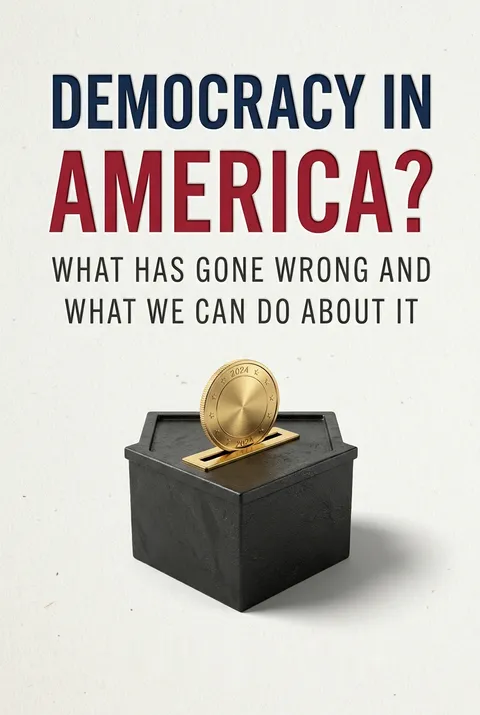
Democracy in America? argues that the U.S. is a plutocracy where wealthy donors control policy, causing gridlock and unresponsiveness to majority preferences. Authors Page and Gilens advocate for democratic reforms including limiting money in politics, improving voting access, and ranked voting. Reviews are mixed: supporters praise its factual arguments and reform proposals, while critics find it repetitive, poorly written, and overly leftist. The book concludes that meaningful change requires a broad social movement similar to historical Progressive and New Deal movements.
People Also Read



Glossary
Democracy by coincidence
Public and elite preferences alignA condition in which government sometimes adopts policies favored by ordinary citizens, not because citizens exert independent influence, but because their preferences happen to align with those of more powerful affluent people or interest groups. The authors regard this as fragile: when preferences diverge, the better-organized or wealthier actors are more likely to prevail.
Rational ignorance
Limited incentive to learn politicsThe idea that citizens often have little reason to invest substantial time learning political details, because an individual vote rarely determines an outcome and most people have more immediate demands on their attention. The authors accept that individual political knowledge is limited, but argue that social discussion and aggregation can still produce meaningful collective preferences.
Veto points
Places where policy can be blockedInstitutional positions or procedures that allow political actors to prevent a proposed change. In the United States, these include separate branches of government, Senate procedures such as the filibuster, and House leaders' control over committee action and floor rules. Multiple veto points can protect against hasty decisions, but they also make policy change unusually difficult.
Policy drift
Policy fails to meet changing needsA mismatch that develops when social or economic conditions change but government policy remains largely unchanged. The book links drift to institutional barriers and gridlock: existing rules may become poorly suited to new problems, while the political system cannot adapt even when many citizens favor action.
Democracy Vouchers
Public campaign funds allocated by votersA campaign-finance proposal in which every eligible voter receives an equal amount of publicly funded credit to direct to political candidates. Candidates who accept the system's conditions can use the funds to compete without depending on private donors. The authors favor vouchers because citizens need not have disposable income to influence campaign financing.
American-style PR
Ranked, multi-member representationThe authors' proposed adaptation of proportional representation for American elections. Voters would rank candidates in statewide or large multi-member districts, and an instant-runoff process would select several representatives. The aim is to give parties and viewpoints seats closer to their share of public support, reduce winner-take-all distortions, and make representation less dependent on single-member districts.
Survey of Economically Successful Americans (SESA)
Survey of multimillionaire preferencesA Chicago-area study used by the authors to compare multimillionaires' political preferences and activities with those of the general public. The survey found large differences on economic policies, including jobs programs, public education, health insurance, Social Security, regulation, and taxes. The authors note that a national survey would be needed to establish whether the sample exactly reflects multimillionaires across the country.
Interest group alignment
Groups' combined policy positionA measure used in the authors' policy analysis to estimate whether organized groups collectively favor or oppose a proposed policy change. Their index counted positions from a set of 43 prominent groups and industries. It is not a complete census of lobbying activity, but the authors argue that its limitations are more likely to understate than exaggerate group influence.
About the Author
Other books by Benjamin I. Page
Download PDF
Download EPUB
.epub digital book format is ideal for reading ebooks on phones, tablets, and e-readers.








