


Plot Summary
Gray Takes the Hunter
Jonathan has imprisoned Gray, a witch, and Asher, the incubus she loves, in an underground complex. After Gray restores Asher’s strength through their intimacy, she attacks Jonathan and tears out his soul. The act saves Asher, but carries Gray and Jonathan bodily into the Shadowrealm, where she will face the punishment Liam, the being who guides souls, once warned her about.
Asher wakes alone in his cell, newly immune to the hunter’s devil’s-trap weapons. He tricks two guards into entering, kills them, steals their gear and maps, then disguises himself in a hunter’s uniform. Gray’s sacrifice has bought him a chance to find the other captives, but left her alone with the man she meant to stop.
The rescue is also a self-sentencing. Gray’s choice is not a failure of judgment so much as an urgent refusal to let Jonathan continue hurting people while she waits for a cleaner option. Asher’s sudden strength makes their intimacy materially consequential, but it cannot undo the cost Gray accepts. The opening therefore binds love to action, not safety: she saves someone by taking herself out of reach.
Lost in the Firelands
Gray wakes in a scorched wilderness with no clear memory of how she arrived. Blood on her clothes and a thirst she cannot explain unsettle her until a cut hand touches the ground and draws her magic back. Memory returns: she has taken Jonathan’s soul, and she is trapped in the Shadowrealm. A flicker of her dead friend Sophie’s presence warns her toward shelter.
Red fire demons attack, and Gray learns that her magic can shape the terrain, though her flames barely injure them. She escapes by collapsing a rock barrier and follows Sophie’s apparition to a lake that first heals her, then begins to dissolve her. When Gray reaches the black forest linked to her own magical realm, Jonathan catches her and insists his plans are not finished.
Gray’s first trial makes memory a survival tool, but not a reliable map. The realm offers healing and danger through the same lake, forcing her to judge experience rather than trust appearances. Sophie’s brief guidance gives grief a practical form: the dead remain emotionally present, yet Gray must still act for herself. Hope appears as a direction, not a guarantee.
The Bay Closes Ranks
Elsewhere, Darius senses Gray through their blood bond, then finds himself ambushed by hunters carrying runes associated with murdered witches. He kills them, but the violence triggers a dangerous hunger; he drains their blood, loses control, and later collapses after exposure to daylight.
Meanwhile, shifter detectives capture Emilio Alvarez and Ronan while they investigate Raven’s Cape. The chief, Elena, is Emilio’s estranged sister, and she has withheld information about hunters and dark fae operating in town.
Emilio persuades her to share evidence rather than let their old grievances obstruct the search. Her team confirms the visiting fae belong to the feared Darkwinter line, linking Raven’s Cape to the disappearances and killings in Blackmoon Bay. The siblings agree to work together, though their trust remains tentative.
The investigation’s first alliance is built from accountability, not reconciliation. Elena’s secrecy has a protective rationale, but it repeats the family pattern that estranged her from Emilio: deciding what another person can handle. Emilio, in turn, has to admit that his own stubbornness helped keep them apart. Their partnership matters because the threat crosses local boundaries, while their shared history makes cooperation emotionally costly.
Cages Beneath the Cape
Searching the cave prison, Asher finds shifters trapped in animal bodies, starving vampires, and human prisoners. Fiona Brentwood, a vampire who once helped Jonathan, approaches him and claims she is imprisoned too.
Asher distrusts her, but accepts her help when she identifies the cages’ fae enchantments and explains that Jonathan has created vampire-shifter hybrids. Using keycards stolen from the guards, they disable the cage wards and release several captives, though the battered prisoners are too weak to flee.
Fiona directs Asher to C-block, where the missing witches are held. He reaches their cell and sees Haley, Reva, and twenty-five other women, many carved with runes. The prisoners’ condition confirms that Jonathan’s work is not just murder: he is testing ways to alter supernatural bodies and powers.
Fiona’s usefulness does not erase her complicity; Asher grants her a chance to act without mistaking it for restored trust. The prison turns Jonathan’s ideology into physical infrastructure, with bodies treated as raw material and even cages engineered to suppress resistance. Asher’s task shifts from personal rescue to triage: opening a lock is only the first step when the people inside can barely stand.
A Passage Through Hell
Liam reaches the material world and tells the others that Gray is physically manifested in the Shadowrealm, where Jonathan is hunting her. He also explains that Gray believes a gate to her own magical realm may offer a way home.
Ronan and Darius refuse to wait for her to find it alone. Because Emilio has a human soul and may not survive the crossing, he stays in Raven’s Cape to help locate Asher and the prisoners. The two supernatural men travel to Las Vegas and bargain with Sebastian, the Prince of Hell, for access to his portal.
Sebastian reveals that Gray is bound to him by an old demon-sworn contract and treats her soul as property, but permits the journey after demanding a further concession from Ronan. They enter the portal without knowing its full price.
The rescue plan exposes competing definitions of consent. Gray’s sacrifice is her own choice, but Sebastian describes her future as an asset already claimed. Ronan’s willingness to bargain for passage is loving and dangerous at once, since his devotion gives the Prince leverage. Emilio’s decision to remain is not lesser courage; it keeps a necessary rescue effort alive on the material side.
Orendiel’s Name Returns
In Raven’s Cape, Reva projects her consciousness from the prison to Emilio, reaching him while he runs in wolf form. Her broken message includes the location of the hidden prison, the captive witches, and the name Orendiel, a banished fae linked to Darkwinter.
Emilio presses Elena’s team to search the isolated coast and reports the threat to Talia, a representative of the Fae Council. Talia dismisses the witches’ persecution as a problem of their own making and urges Emilio to keep quiet, making him suspect the Council is compromised.
Later, the Seelie prince Jael arrives at Elena’s home, saying that some fae oppose a war and that Emilio’s investigation has drawn dangerous attention. The prison search now points toward political conflict beyond Jonathan’s operation.
Reva’s projection makes a captive teenager an active source of intelligence, not merely someone waiting to be rescued. Emilio’s refusal to obey Talia shows the difference between lawful authority and moral legitimacy: her title cannot make her account of the violence credible. Jael’s warning broadens the danger, but does not solve it. The evidence suggests factions and ambition, while leaving the Council’s full role uncertain.
Liam Finds Gray
After Jonathan attacks her near the black forest, Gray is forced to fight him across the shifting landscape. She refuses his offer to join forces and rejects his claim that they can escape together. An earthquake separates them, leaving Gray pursued by a two-headed beast until Liam pulls her from a pit.
Back in human form, he explains that the Shadowrealm contains many worlds and that Gray’s unnatural arrival has left her without a dependable path. Jonathan is trapped there with her, and may pursue her repeatedly.
Liam admits he cannot take her home, but Gray refuses to surrender to an eternity of punishment. She asks him to find her friends and tell them how to free the prisoners. When Liam departs, Gray holds to the possibility that her magic realm’s gate may reappear.
Liam’s explanation makes the realm’s instability more than scenery: Gray cannot rely on ordinary distance, time, or bodily limits. Yet his certainty that her fate is closed collides with her lived evidence that she has already broken expected rules. Their disagreement marks a change in Gray’s agency. She stops asking whether the situation is fair and begins deciding what she will attempt next.
The Orchard of Echoes
The Shadowrealm turns Gray’s grief into an orchard where imagined versions of Ronan, Darius, Asher, her mother Calla, Bean, Sophie, and Emilio accuse her of causing their deaths. Each apparition disappears after she reaches for it, and the scene repeats until she recognizes that guilt is keeping her inside the illusion.
Gray finally leaves the orchard instead of demanding forgiveness from its phantoms. On a beach, she reunites with Liam, who confirms that Ronan and Darius have crossed into the Shadowrealm while Emilio remains behind.
He explains that Gray cannot safely use the hell portal because Sebastian could seize her soul during the crossing. Gray and Liam share a kiss, then agree to search for another route. The brief tenderness does not remove the danger, but gives Gray companionship again.
The orchard does not absolve Gray or erase the harm she remembers; it tests whether remorse will become a substitute for living. Her escape comes through relinquishing the impossible task of securing forgiveness from imagined versions of the dead. Liam’s presence offers intimacy without solving the practical problem, and the portal warning keeps that intimacy grounded in constraint. She can love and hope without mistaking either for a guarantee.
Jonathan Dies on the Summit
Driven up a frozen mountain by an unexplained summons, Gray finds Sophie’s silver dagger at the summit. Jonathan appears in a grotesque hybrid form, part human and part animal, and attacks her. Gray uses the dagger to wound him, then refuses to prolong the fight for revenge.
When Jonathan again declares his intention to eradicate witches, she kills him. His body vanishes, but the mountain immediately breaks into an avalanche that sweeps Gray downhill. Darius finds her buried in the snow and carries her to a cabin, where warmth and his blood heal her injuries.
As Gray recovers, Darius shares how his brother turned him into a vampire without consent, separating him from his human family. Gray responds with understanding rather than pity, and their bond deepens.
Jonathan’s death is a decisive act, but not a neat emotional release. Gray kills him because his continued commitment to violence leaves no basis for reconciliation, then faces another consequence she cannot control in the avalanche. Darius’s history makes the intimacy between them more than attraction: both know what it means to have a life redirected by someone else’s choice. Their disclosure creates trust without pretending that the past can be repaired.
The Pool Calls Home
At the cabin, Liam arrives while Gray and Darius are together, then reports that Ronan has entered the Shadowrealm. The group follows Gray’s magic to the Pool of Unknowing, where her rune gate lies beneath the water. Ronan reaches them, and his reunion with Gray turns their long-standing devotion into an openly shared intimacy.
Before they can leave, Gray dreams of four swords and three waiting witches, a vision that echoes Sophie’s earlier reading and hints at a purpose beyond escape. The pool’s gate responds to Gray’s magic at sunset, then freezes over before they can use it. Liam warns them to leave at sunrise, because memory-eating creatures feed nearby. They camp beside the pool, preparing to open both routes at once.
The pool gathers the story’s competing forms of attachment: Gray’s homecoming, her bond with Ronan, and the presence of Darius and Liam. The gate offers an actual route rather than a metaphor, but its dependence on shifting conditions prevents certainty. The four-sword dream widens Gray’s sense of purpose just as she approaches a personal escape. The narrative lets reunion feel real while withholding the comfort of a guaranteed ending.
The Gateways Collapse
At dawn, Ronan opens Sebastian’s hell portal while Gray awakens her rune gate in the pool. Liam crosses first, followed by Darius, while Gray and Ronan prepare to use the remaining route. Then Jonathan, now a misshapen vampire-shifter, rushes toward the pool and plunges through the gate.
Memory eaters descend as Gray channels Darius’s blood and power to drive them away. The creatures break through her magic; one strips Darius of his memories, and their attack destroys the pool and its gateway.
With the herd closing in, Ronan grabs Gray and the blank, disoriented Darius, and all three leap into the hell portal. They escape the immediate attack, but Gray’s way home is gone, Jonathan’s destination is unknown, and Darius no longer recognizes them.
The climax makes memory the price of passage. The memory eaters are not simply predators: their feeding removes the histories that make relationships intelligible, and Darius’s blankness shows the cost in intimate rather than abstract terms. Gray succeeds in keeping Ronan and Darius moving, but the gate’s destruction denies her the clean return she had earned. The ending resolves Jonathan’s immediate pursuit only provisionally and leaves the rescue effort, the contract, and the damaged bonds unsettled.
Analysis
Demon Sworn treats love as a force that motivates action, but refuses to make love a guarantee of safety. Gray’s intimacy with Asher restores his strength, yet her decision to remove Jonathan from the prison sends her into a realm where she can be tortured and separated from everyone she protects. Ronan and Darius answer that separation by risking their own passage, while Emilio stays behind to defend the captives and investigate the conspiracy. Each form of devotion has a different cost. The book’s supernatural systems repeatedly turn questions of consent into plot. Darius was made a vampire against his will. Ronan is bound to Sebastian by a demonic contract. Jonathan’s experiments reduce witches and other supernaturals to material for weapons. Gray’s own sacrifice is distinct because she chooses it, but that choice does not make its consequences fair or easy. Sebastian’s claim over her soul shows how institutions and contracts can convert a person’s vulnerability into property.
The Shadowrealm makes psychological struggle concrete. A lake can offer relief and then threaten to erase Gray; the Orchard of Echoes gives guilt the faces of the dead. Gray survives not by proving that she never failed anyone, but by refusing to let remorse become her only identity. Her persistent hope is therefore neither innocence nor optimism. It is a decision to keep seeking a route forward even when she cannot know what it will cost. The ending withholds a conventional reunion. Jonathan’s immediate pursuit is interrupted, but the rune gate is destroyed, Darius loses his memories, and Gray, Ronan, and Darius flee into the very hell portal she could not safely use. Meanwhile, Asher’s attempt to free the witches and Emilio’s investigation remain unresolved. The cliffhanger preserves the novel’s central tension: survival is possible, but getting home intact is another matter.
Review Summary
Demon Sworn receives mixed reviews, with an average rating of 4.08/5. Many praise the action-packed plot, world-building, and character development. Readers enjoy the multiple POVs and steamy romance scenes. However, some criticize Gray's decision-making and find parts of the story repetitive or slow. The cliffhanger ending leaves readers eager for the next book. Common themes in reviews include the Shadow Realm, character growth, and the evolving relationships between Gray and her men. Some readers express frustration with unresolved plot points and mounting challenges for the characters.
People Also Read

Characters
Gray Desario
The rule-breaking witchGray is a powerful witch whose instinct to protect others often outruns caution. She carries grief over her mother, Calla, and her friend Sophie, along with uncertainty about the full reach of her Shadowborn magic. Her relationships with Asher, Darius, Ronan, Emilio, and Liam give her different kinds of trust and affection, none reducible to a single role. What drives her is not a wish to be exceptional, but the conviction that she must act when someone is in danger. Her challenge is learning to distinguish responsibility from self-punishment, and to accept that loving people does not mean she can control every harm that comes to them.
Asher
Gray’s fierce incubusAsher is an incubus with a sharp tongue, a quick appetite for danger, and a fierce loyalty to Gray. His humor often masks how seriously he takes threats to people he considers his own. When Gray’s magic restores his strength, he uses it to fight through Jonathan’s prison and help the captives, even though he has no clear plan for freeing them all. Asher resists treating Fiona’s regret as proof of redemption, but gives her a chance to be useful. His bond with Gray rests on desire, friendship, and the promise to protect the people she loves.
Darius Beaumont
The guarded vampireDarius is an old vampire shaped by a human life he did not choose to leave behind. He prizes restraint, courtesy, and self-command, but his response to Gray’s danger exposes how thin those defenses can become. His blood bond with Gray lets him sense her presence and magic, while also making her peril immediate to him. Darius’s reserve is not a lack of feeling; it is a discipline formed around loss and the fear of becoming dangerous to others. He offers Gray protection and affection, while carrying a history of family love, betrayal, and unwanted immortality.
Ronan Vacarro
The devoted demonRonan is a demon and Gray’s fierce, long-standing protector. His loyalty is direct and physical: he acts before he can make peace with the risks, especially when Gray is threatened. He is willing to bargain with forces he distrusts if doing so gives him a chance to reach her. Beneath his bluntness is a deep fear that his demonic obligations will eventually take from him what he loves. Ronan’s connection with Gray is affectionate, passionate, and rooted in years of shared danger, but it does not make him immune to the compromises demanded by Sebastian.
Emilio Alvarez
The stubborn wolf detectiveEmilio is a shifter and detective whose instincts for evidence and justice are matched by a stubborn streak. His estrangement from his sister Elena is tied to old family wounds, but the hunt for Gray forces him to work with her again. He is protective of Gray and the Blackmoon Bay community, yet learns that protecting people cannot mean withholding difficult truths or acting alone. Emilio remains on the material plane when the others pursue Gray, where his investigation, his partnership with Elena, and his willingness to challenge the Fae Council become essential.
Liam
The guide between worldsLiam is a human-presenting vessel for Death, responsible for guiding souls through the Shadowrealm. His ancient knowledge gives him authority, but Gray’s predicament reveals the limits of what he understands and can control. He is protective of her and increasingly attached to ordinary human contact, even as he struggles to speak plainly about his feelings. Liam’s connection with Gray is shaped by tenderness, guidance, and an unresolved truth about his identity. He represents neither an all-powerful rescuer nor a detached judge, but someone learning that care can complicate even the oldest duties.
Jonathan Reese
The obsessive hunterJonathan is a hunter whose pursuit of Gray is driven by a mixture of personal obsession, inherited prejudice, and hunger for power. He believes his experiments can restore hunters’ influence by combining supernatural abilities and using witches as their source. His history with Gray began when they were young, which makes his violence more intimate but does not excuse it. He frames domination as a righteous cause and mistakes possession for connection. The gap between his grand ambitions and his increasingly unstable methods exposes how thoroughly his identity has been formed by his father’s expectations.
Fiona Brentwood
The compromised vampireFiona is a vampire and an old acquaintance of Gray’s who helped Jonathan before becoming a prisoner herself. She approaches Asher with information, but her history makes his suspicion reasonable. Regret and vengeance coexist in her, and she must demonstrate change through practical risks rather than ask for instant trust. Her knowledge of the prison and its fae wards makes her a crucial, uneasy ally.
Elena Alvarez
The guarded chiefElena is Emilio’s sister and the shifter chief of police in Raven’s Cape. She is capable, protective of her community, and reluctant to trust her brother after their long estrangement. Her secrecy is partly a response to genuine danger, but it also keeps old family conflict alive. As the investigation escalates, she has to balance local authority with the need to share information across communities.
Reva
The hidden shadowmancerReva is a young witch with the ability to project her awareness through shadows. Captivity has not stopped her from observing the prison or trying to reach allies. She uses her unusual power to send information to Gray and Emilio, making her a quiet but consequential participant in the resistance. Her alertness and courage stand alongside the vulnerability of a teenager surrounded by adults who have failed to protect her.
Haley
The captive survivorHaley is a witch and Asher’s friend, held with the other women in Jonathan’s prison. Despite starvation and abuse, she retains her humor and helps orient Asher when he reaches the cell. She offers steadiness to the other captives and gives the rescue effort essential information about their condition.
Talia
The wary fae officialTalia represents the Fae Council and approaches Emilio’s investigation through political calculation. She warns him about the danger of Darkwinter, yet her contempt for the witches and demand for silence make her difficult to trust. Her presence shows how institutional language can dress exclusion as balance, even while real people remain imprisoned and harmed.
Jael
The Seelie warningJael is a Seelie prince who once crossed paths with Emilio during the Blackmoon Bay investigation. He comes to Raven’s Cape claiming to oppose an all-out war and warns that Emilio’s actions have drawn dangerous attention. His visit suggests that the fae world is divided, though his full position and reliability remain uncertain.
Sophie
Gray’s guiding friendSophie was Gray’s best friend, a witch whose death remains central to Gray’s grief and resolve. Her tarot practice and remembered presence continue to shape how Gray interprets danger. In the Shadowrealm, brief impressions of Sophie guide Gray at crucial moments, while the Orchard of Echoes twists Gray’s memories of her into accusations.
Calla
Gray’s lost motherCalla raised Gray and taught her what she could about witchcraft before hunters killed her. Gray’s love for her is tangled with guilt over failing to save her as a child. The amulet Calla wore becomes evidence linking past violence to Jonathan’s present campaign.
Bean
The girl Gray failedBean is a young woman Gray once brought back from death, an act that left her soul in danger. Gray’s regret over Bean’s suffering is one of the burdens the Orchard of Echoes exploits, revealing how even well-intentioned magic can carry consequences beyond its caster’s control.
Sebastian
The Prince of HellSebastian is Ronan’s powerful master and the holder of Gray’s demon-sworn contract. He sees souls in terms of ownership, influence, and advantage, and he treats the rescue as another negotiation. His willingness to open a route into the Shadowrealm comes with conditions that Ronan cannot safely ignore.
Plot Devices
The Shadowrealm
A shifting test of willThe Shadowrealm is a collection of changing worlds through which souls travel after death. Its landscapes can heal, mislead, or attack, and time passes differently there than on the material plane. Gray and Jonathan arrive physically rather than as ordinary souls, leaving Gray vulnerable to bodily pain and unpredictable magic. Because she entered unnaturally, she cannot follow a stable path to a final destination. The setting externalizes the danger of her choice while forcing her to navigate grief, memory, and hope as practical survival problems.
The Rune Gate
A route to Gray’s realmA rune-marked archway connects the Shadowrealm to Gray’s own magical realm. It can appear beneath the Pool of Unknowing, but its location and accessibility depend on the shifting environment. Gray senses it through her magic rather than through ordinary sight, so finding it requires her to trust an intuition that the realm repeatedly tests. The gate offers a possible path home that differs from Sebastian’s hell portal, whose passage poses a special danger to Gray because of her contract.
The Blood Bond
A supernatural lifelineDarius and Gray’s blood bond allows him to sense her presence, magic, and peril across a distance. It gives the group its first evidence that Gray is alive, though not a precise location. Darius’s blood also affects Gray in unusual ways, helping heal her after the avalanche and later lending power to her magic against the memory eaters. The bond functions as both a practical connection and an intimate tie, making care between them tangible while raising questions about what they share.
Fae Wards and Hybrids
A prison built to suppressJonathan’s cave complex uses fae technology to hide entrances, electrify cages, and restrain captives with magic resistant to ordinary force. Keycards and a hidden access panel control several containment areas, while a retina scanner protects the witches’ cell. Jonathan’s experiments attempt to combine supernatural traits, including vampire and shifter abilities, while his devil’s-trap devices can suppress demons. The prison’s machinery reveals that his plan depends on more than old hunter weapons: it draws on fae expertise and the bodies of the people he captures.
Tarot and the Orchard
Memory made into warningSophie’s tarot imagery gives Gray a vocabulary for interpreting danger and purpose, including a vision of four swords and three witches awaiting another. In the Shadowrealm, the Orchard of Echoes turns Gray’s guilt and fear into vivid encounters with people she has lost. Its accusations are not trustworthy testimony, but they expose the difference between remembering harm and allowing imagined punishment to consume the present. The cards and orchard connect prophecy, memory, and emotional endurance without providing Gray with a simple answer.
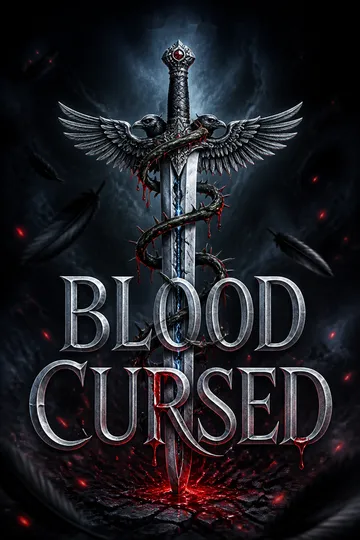
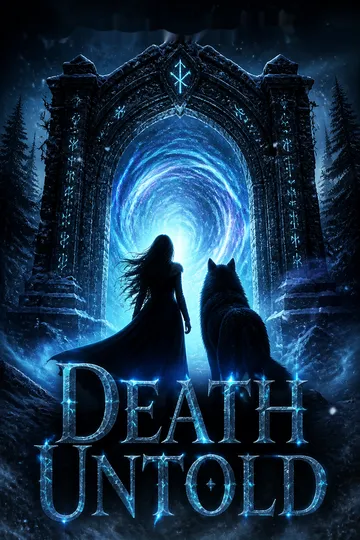
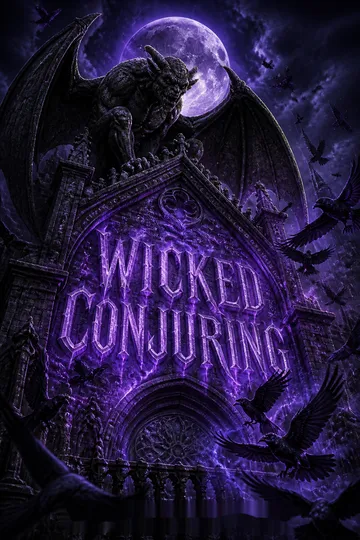
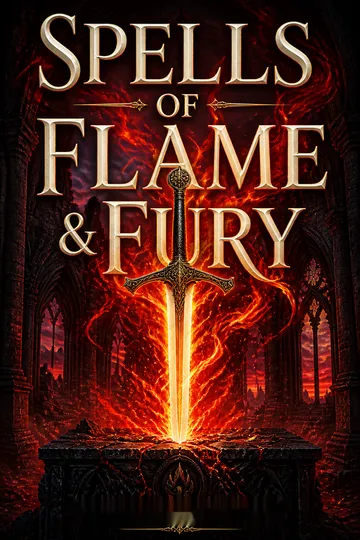
The Witch's Rebels Series

About the Author

Download PDF
Download EPUB
.epub digital book format is ideal for reading ebooks on phones, tablets, and e-readers.








