

Plot Summary
The Girl on the Tracks
Ten years before the present crisis, Westlyn Avery is a magicless student mocked by her classmates and ignored by her gambling father. After three boys corner and assault her, they bind her on the rails of an abandoned subway station, cut the word wicked into her back, and flee when a train approaches.
Westlyn tears free with help from the ravens who have become her companions, then reaches home alone. She avoids the police and school, certain the boys' ties to the magical establishment would make reporting them dangerous. Her father never asks why she stops attending classes. The attack leaves scars, but its deeper injury is the lesson that no adult will reliably intervene when she is in danger.
The attack establishes the emotional logic behind Westlyn's later insistence on choosing danger for herself. Her lack of magic is treated by classmates and adults as evidence that she deserves less protection, while her father's neglect turns a single crime into a continuing condition of abandonment. The ravens provide the first counterexample: they act when human beings do not. Their rescue does not erase Westlyn's terror, but it gives her a relationship built on reciprocal care, a bond she can trust more than institutions.
The Codex Burns, Then Vanishes
In the present, Westlyn is sheltering with Draegan Caldwell and his three gargoyle companions after escaping an arranged marriage to Hunter Forsythe. Draegan has been questioned by Detective Reedsy about a fire at the Forsythes' home, where Draegan and his associates had recently been seen.
To protect their plans, he pretends to be concerned about the fire and calls Archmage Lennon Forsythe, who confirms that the ancient Cerridwen Codex was stolen before the blaze. Lennon suspects the thief also took Westlyn, whose whereabouts he cannot discover. Draegan conceals that she is with him and insists the Codex belongs to the fae, not the mages who acquired it. The theft, fire, and hunt for Westlyn now converge around the same powerful family.
The fire works as both cover and pressure: it destroys evidence while drawing law enforcement toward Draegan and forcing Lennon to admit the Codex is missing. Draegan's performance depends on the alliance he pretends still exists, but his argument over cultural ownership reveals a deeper conflict than simple competition for a magical artifact. The Codex is a fragment of a fading fae inheritance. Its disappearance therefore threatens the gargoyles' history as well as their immediate security, even as the false alliance buys Westlyn time.
The Story She Never Told
After becoming intimate with Jude Hendrix and Augustine Lamont, Westlyn tells them what happened on the tracks and how years of bullying followed. She has kept the story from everyone, including the gargoyles, because she expects people to treat her as damaged. Instead, Jude and Augustine listen, comfort her, and help her wash away the blood and old shame attached to the memory.
Their response makes Blackmoor feel less like a guarded refuge and more like a home she can help define. Once Westlyn is asleep, the two gargoyles decide to find the men who hurt her. Augustine also recalls a painful, unnatural spark when he kissed the back of her neck, strengthening his suspicion that something fae may be connected to Westlyn herself.
Westlyn's disclosure changes the meaning of protection inside the manor. The gargoyles cannot undo the assault, but they can refuse the familiar social response of looking away or treating her as ruined. Their tenderness gives her a new experience of safety without taking control of her story from her. Jude and Augustine's revenge plan also exposes a tension in their care: their fierce loyalty can become another form of agency exercised on Westlyn's behalf. Augustine's unexplained sensation adds a second track to the plot, linking emotional intimacy to the supernatural mystery.
Faces in the Wedding Row
Rook Van Doren searches public records and social media for the men Westlyn remembers. He identifies Jacob Pomeroy and Alonzo Florentine, then matches both to guests seated together at the Forsythe wedding. Their records show repeated arrests that somehow never lead to lasting consequences.
Rook also recognizes Pomeroy's mother, Dr. Belinda Eckhardt, in footage of a woman visiting Hunter's apartment with medical supplies. Eckhardt works at Garrison Medical, the hospital connected to Hunter's unexplained treatments and Westlyn's birth.
The wedding guest list appears tied throughout to the shadow magic society, whose members watched Westlyn's wedding plans unfold without helping her. Rook prepares the information for Jude and Augustine, while the group sees the old assault as part of a much wider conspiracy.
Rook's databases turn private trauma into evidence, but the pattern they reveal is institutional rather than merely personal. Pomeroy and Florentine have escaped consequences, their families and associates appear in the wedding party, and medical care links the same circle to both Westlyn and Hunter. The result is not yet proof of a single master plan. It is a map of overlapping access and protection. Rook's methodical attention counters Jude's impulse to act immediately, giving the group a way to pursue vengeance without losing sight of the larger danger.
Flowers That Muffle Fae
While researching the demon Zorakkov and the missing Codex, Rook studies Westlyn's account of the flowers in her wedding bouquet. Eloise had insisted she carry it despite the sneezing, headache, and mental fog it caused. When Westlyn's ravens knocked candles onto the bouquet and the flowers burned, her confusion lifted and she recognized that Hunter was possessed by a demon.
Rook identifies the tiny silver flowers as Midnight's Lullaby, a rare plant from Faerie that suppresses fae magic. Westlyn's reaction suggests she has fae ancestry, although she has always believed she was simply born without witch magic. She realizes Eloise may have known the flowers would keep her from detecting Zorakkov before the ceremony.
The bouquet transforms a seemingly domestic wedding detail into a mechanism of magical deception. Its effect explains why Westlyn's perceptions failed at precisely the moment she needed them, while its destruction gives her an active role in uncovering the demon. The discovery of fae ancestry revises her understanding of herself without giving her an easy answer about her identity or power. Rook's careful distinction between inheritance and moral character matters here: Westlyn's lineage does not determine what kind of person she is, even as it may explain why the conspirators targeted her.
Three Cards Point Downtown
Jude and Augustine capture Pomeroy and Florentine after Westlyn initially agrees to stay behind. Then her Tarot cards produce an unusually vivid warning: the Ace of Swords, the Tower, and Death, accompanied by a vision of blood and a verse she cannot explain. The Tower resembles the abandoned Ryker meat plant where the captives are being held.
Westlyn believes her presence there matters, not because she wants to watch revenge, but because she refuses to keep surrendering decisions to other people. She tells Draegan that avoiding danger has not protected her from the forces shaping her life. He argues that she will be safer at Blackmoor, then reluctantly agrees to drive her to the plant under strict conditions.
The Tarot reading makes Westlyn's intuition a source of information rather than a substitute for reason. The cards do not give her a complete forecast, but they sharpen a choice she has already been making: whether protection means keeping still or taking part in her own survival. Her argument with Draegan exposes the cost of treating safety as obedience. His reluctance is not indifference; he fears losing her. Yet allowing her to go marks a small change in their relationship, from guardian issuing rules to companion accepting that she has a vote.
Eloise Paid Five Thousand
At the plant, Jude and Augustine have already beaten and restrained Pomeroy and Florentine, who deny remembering Westlyn or the assault. Jude's interrogation makes Pomeroy reveal the third attacker, Conrad Nesterman, known to them as Full Metal Jacket. Under further pressure, Pomeroy admits that Eloise hired the boys and paid each of them five thousand dollars to terrorize Westlyn.
The goal was to break her confidence and make her docile for a future demon-binding ceremony. Westlyn confronts the two men, shows them the scars they left, and waits for them to acknowledge what they did. Pomeroy instead mocks her again. His contempt shifts something in Westlyn, and she reaches for a ritual dagger.
The confession converts Westlyn's childhood torment from an apparently chaotic series of abuses into a deliberate strategy. Eloise's aim was not simply to hurt her, but to shape her into someone less likely to resist a later magical use. That history complicates the meaning of Westlyn's silence: it was not consent or passivity, but survival under prolonged coercion. Pomeroy's final taunt destroys the possibility of a reparative encounter. Westlyn's decision to take the blade is therefore both a confrontation with the past and the beginning of a dangerous change in the present.
Moonlight Written in Blood
The dagger triggers a cold, purposeful state in Westlyn. She carves the bound mages while silver-white light surrounds her, but afterward she remembers almost nothing. When she returns to herself, Pomeroy and Florentine are still alive; Jude kills them while Westlyn watches, and Augustine helps her through the inexplicable hunger that follows.
The men’s wounds then begin glowing with dark fae runes, and the gargoyles realize Westlyn carved them during her blackout. On the drive home, she tells Draegan that violence seemed to return something rather than take it away. Her desire for touch and her claim of feeling newly awakened unsettle the gargoyles, who cannot yet tell whether the change is temporary or part of a larger power.
The scene refuses to make vengeance emotionally clean. Westlyn chooses to confront her attackers, but the supernatural force that takes over her body blurs the boundary between chosen action and compulsion. The runes make her violence materially consequential, while her memory loss prevents her from fully owning or understanding what she has done. Her report that the act restored something is not presented as proof that violence heals her. It is a warning that power can arrive mixed with pleasure, relief, and estrangement from oneself.
Shoot the Messenger
After falling asleep in Draegan's room, Westlyn dreams of New York destroyed, Rook turned to stone, and Zorakkov blaming her for the devastation. She wakes shaken, then joins Rook and Augustine, who explain that Eloise arranged the assault to keep her isolated and pliable.
Westlyn wonders whether Eloise also caused her mother's death, but Rook has found no proof. Thinking of her father, Westlyn remembers that he repeatedly bet on a losing racehorse named Shoot the Messenger.
A photograph from that day, recovered among her belongings, contains a hidden key and a note referring to Renni, the witch who taught Westlyn Tarot. Westlyn recalls her father repeatedly mentioning a nearby bank, and suspects the key leads to something he left for her.
The dream gives Westlyn's fears a catastrophic scale, but the chapter grounds her next move in an ordinary object and a specific childhood memory. That contrast is important: visions may warn her, yet careful recollection produces the usable clue. Her questions about her mother and father remain unresolved, keeping family grief distinct from established evidence. The photograph offers a more complicated image of her father than neglect alone, suggesting he tried to communicate something even as he failed to protect her. Westlyn's curiosity becomes an investigative skill rather than a plea for someone else to explain her past.
The Mark in the Photographs
Before they can follow the bank clue, Augustine develops the photographs he took at the plant. A dark fae rune appears on the back of Westlyn's neck in image after image, though none of the gargoyles saw it on her skin. Rook recognizes it as a likely binding rune, a device that can contain or redirect power.
The discovery makes Westlyn question whether she was truly born without magic, or whether someone bound whatever she possessed. The others refuse to accuse Eloise without proof, since the rune's maker, purpose, and age remain unknown. Westlyn fears the dark fae may have claimed her, while Draegan promises the gargoyles will not let any enemy take her away.
The photographs make technology a witness to what supernatural senses and ordinary eyesight missed. The mark is visible only through repeated images, so evidence arrives indirectly and resists instant interpretation. Rook's restraint matters: a binding rune could explain Westlyn's supposed lack of magic, but the group cannot yet identify who placed it or why. That uncertainty protects the story from turning a revelation into a complete answer. Westlyn's fear of being claimed also exposes the central conflict of the investigation: every new explanation of her identity risks making her seem like an object in someone else's design.
The Bank's Locked Inheritance
Westlyn connects the key in her photograph to a safe deposit box at the Bank of New Amsterdam. Draegan uses leverage over bank vice president Kevin Klaiburn to clear the branch and obtain access. Before they go, he and Westlyn give in to their long-suppressed attraction, but he avoids discussing what their intimacy means afterward.
At the bank, the key and the bank's own passkey open her father's box. Inside are two envelopes: one contains a fae protection amulet that pulses in time with Westlyn's heartbeat, and the other holds a small SSD card. Draegan believes the amulet was made specifically for Westlyn, but neither of them knows who commissioned it or what the card contains. Rook may be able to unlock its files.
The box gives Westlyn tangible evidence that her father prepared something for her, but not the explanatory letter she hoped to find. Its contents sharpen the mystery instead of resolving it: the amulet confirms a personal magical connection, while the SSD points toward information still inaccessible. Draegan's intimacy with Westlyn offers care in the moment but not emotional clarity, repeating the book's pattern of affection constrained by fear and duty. The discovery leaves Westlyn with more agency and more questions, a meaningful inheritance that is neither simple redemption nor a complete account of her past.
The Road Breaks Open
On the drive back from the bank, Westlyn weighs what she wants from Draegan and the other gargoyles. Protection and revenge no longer feel sufficient; she wants a shared future, though she fears Draegan does not want the same thing. He notices her distress and reaches toward her, but she turns back to face him, ready to speak honestly rather than hide her feelings again.
Before she can begin, a blinding light and metallic screech announce an oncoming collision. The car spins amid shattered glass, gasoline, and fire. Westlyn tastes blood and hears the same uncanny assurance that has followed her visions, that events are unfolding as they should. The book ends with her fate, the amulet, the SSD, and the source of the warning unresolved.
The collision interrupts not only the journey home but Westlyn's attempt to claim emotional agency. Across the book she has learned to disclose trauma, challenge protective control, and investigate her own history; now she is about to ask for a future rather than merely accept shelter. The crash turns that private decision into immediate physical peril. Its echo of the dream's ruined city and the recurring voice suggests that the supernatural plot is converging with her personal choices, but the ending withholds whether the warning is guidance, manipulation, or threat.
Analysis
Wicked Awakening ties a conspiracy plot to the intimate mechanics of trauma: who gets believed, who is protected, and who is permitted to choose what happens to their body. Westlyn's childhood assault is not an isolated wound in the narrative. It is eventually connected to a deliberate effort to make her compliant, which reframes years of fear as part of a plan while still honoring the confusion and shame she lived with before she knew that. Her choice to confront her attackers matters, but the supernatural blackout complicates any simple story of revenge as empowerment. She acts, yet cannot remember the full act or explain the runes it leaves behind.
The four gargoyles offer distinct models of care. Draegan relies on planning and control, Jude on retaliation, Augustine on attentive physical and emotional comfort, and Rook on research. Their differences make Westlyn's place among them more than a romantic reward: she becomes the person whose needs force their methods into conversation. The book repeatedly asks whether protection can preserve another person's agency, especially when danger is real and the protector has immense power. Westlyn's insistence on going to the plant is not proof that risk is wise; it is a refusal to let safety mean permanent confinement.
Objects carry the story's memory. The bouquet suppresses perception, the photographs expose what eyes miss, the Tarot cards give shape to intuition, and the hidden key shows that a father may have left evidence without providing emotional repair. Each clue adds knowledge but fails to settle the meaning of Westlyn's identity. The final crash extends that pattern: just as she prepares to state what she wants, outside danger interrupts her. The ending leaves the emotional and magical questions open together, suggesting that her future depends not only on discovering what was done to her, but on gaining room to decide what she will do next.
Review Summary
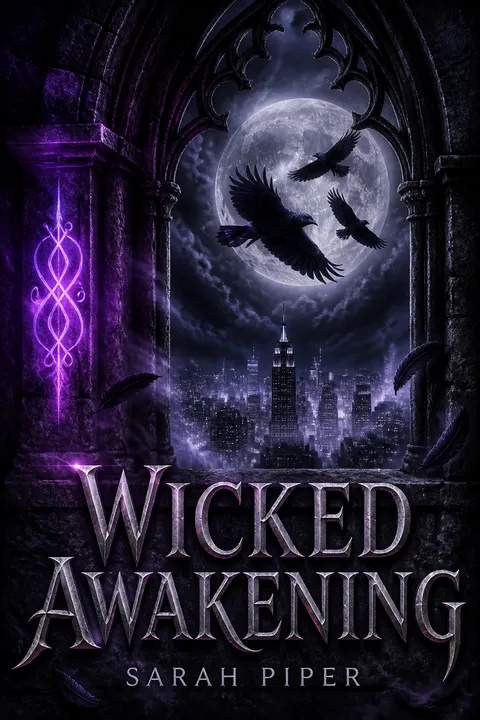
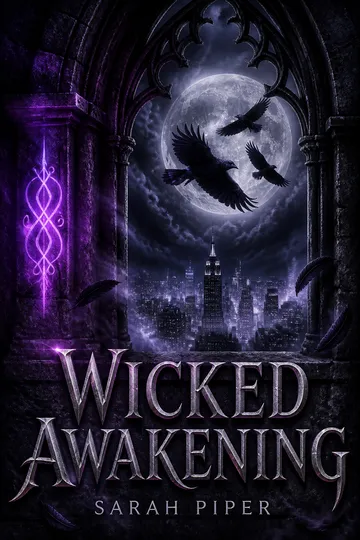
Wicked Awakening receives mostly positive reviews, with readers praising its suspenseful plot, character development, and steamy romance. Many enjoy the growing relationships between Westlyn and the gargoyles, particularly Jude, Augustine, Rook, and Draegan. Some readers find the book slower-paced than the first, with less plot development. The audiobook narration is highly praised. Critics note the abundance of spicy scenes and slow plot progression. Overall, fans eagerly anticipate the next installment to unravel the mysteries surrounding Westlyn's past and the gargoyles' curse.
People Also Read

Characters
Westlyn Avery
The defiant witchWestlyn is a young witch who believes she was born without magic and has spent much of her life being treated as a burden. Her quick humor and sharp curiosity often cover a history of neglect and bullying, but they also help her resist other people's definitions of her. She is loyal to her ravens, drawn to Tarot, and unwilling to confuse protection with surrendering control. As she grows close to four gargoyles, she learns to share her history without accepting shame for it. Her central drive is not simply to survive danger, but to decide for herself what safety, justice, and belonging should mean.
Draegan Caldwell
The guarded protectorDraegan is the polished, controlling leader of the gargoyles, a centuries-old creature who manages their public life through Blackmoor Capital and careful bargains. He prefers plans, discretion, and leverage to improvisation, partly because a single public mistake could expose the gargoyles. Westlyn's defiance frustrates him because it makes his protective instincts harder to manage, yet he increasingly treats her as a partner whose judgment matters. Beneath his formality is a fierce loyalty to his brothers and a deep fear of losing those he loves. His struggle is to protect without making care another form of control.
Jude Hendrix
The ferocious enforcerJude is the gargoyles' volatile enforcer, a fighter who turns fear and loyalty into action before he has fully considered the consequences. His humor is outrageous, his affection demonstrative, and his willingness to use violence has repeatedly put the group at risk. With Westlyn, his protectiveness is personal and intense, but he is also capable of listening when her needs differ from his instincts. He wants to make the guilty answer for what they have done, partly because he cannot bear that Westlyn faced danger alone. Beneath his brutality lies a strong capacity for tenderness and an effort to control impulses that once served him better than they do now.
Augustine Lamont
The tender observerAugustine is a gargoyle with an artist's eye, a photographer's patience, and a gift for making others feel cared for. His work documenting gargoyles and restoring their historic places reflects his reverence for the past, while cooking for Westlyn gives his attention a practical, intimate form. He often balances Jude's impulsiveness, but Westlyn's history makes him willing to join the pursuit of vengeance. Augustine is also highly perceptive, registering uncanny changes around her before he can explain them. His warmth is not softness without limits; it is a deliberate way of offering safety to someone accustomed to being overlooked.
Rook Van Doren
The methodical investigatorRook is the gargoyles' researcher and technical strategist, devoted to databases, cameras, magical texts, and conclusions supported by evidence. His rational habits give the group a counterweight to Jude's appetite for action and Draegan's reliance on political control. He is shy and prone to overthinking, yet his curiosity makes him a patient teacher for Westlyn, who shares his fascination with lore. Rook's attention is not detached: he cares deeply about his brothers and is increasingly drawn to Westlyn. His challenge is to remain analytical without using reason as a shield against vulnerability or difficult moral choices.
Lucinda, Huxley, and Jean-Pierre
Westlyn's raven companionsThese ravens have stayed close to Westlyn since they helped her escape the subway tracks as a child. Lucinda and Huxley are frequent companions at Blackmoor, while Jean-Pierre appears more discreetly. They communicate through behavior rather than speech, bringing Westlyn comfort, companionship, and practical help. Their loyalty gives her an early experience of being protected without being controlled. They also act as alert presences around the gargoyles, often drawing attention to what Westlyn notices or needs.
Brian Avery
Westlyn's absent fatherBrian is Westlyn's mage father, a compulsive gambler whose neglect leaves her to manage school, fear, and grief largely alone. His failures are consequential, but Westlyn cannot reduce him to a simple villain because she remembers moments when he tried to include her in his life. The uncertainty around his choices keeps her emotionally tied to him even as she recognizes the harm he caused. His history matters because Westlyn is searching not only for information about her origins, but also for an explanation of why a father who kept her close so often failed to care for her.
Eloise
The controlling stepmotherEloise is Westlyn's stepmother, a socially adept mage who values control and the appearance of respectability. Her authority in the Avery household leaves Westlyn with little room to challenge adult decisions, while her place in the magical community connects the family to powerful interests. She presents herself as a figure who knows what is proper and expects others to comply. That confidence makes her an important source of pressure in Westlyn's history and raises questions about how much of the girl's life was shaped by someone else's plans.
Lennon Forsythe
The ambitious ArchmageLennon is the Archmage and patriarch of the Forsythe family. He is interested in rare magical knowledge and expects his standing to command cooperation from allies and rivals alike. His relationship with Draegan is transactional, held together by the possibility of mutual advantage rather than genuine trust. Lennon is also a father concerned about his son, though his family's political and magical ambitions repeatedly complicate that concern. He represents the concentration of authority in the shadow magic society and the difficulty of separating personal motives from institutional power.
Celine Forsythe
The Archmage's partnerCeline is Lennon's partner and Hunter's mother. She shares her husband's interest in magical artifacts and has a place within the family and society organizing Westlyn's marriage. Her role helps establish that the planned union is a family enterprise, not merely a private romance. She is part of the polished circle whose influence makes the Forsythes difficult to challenge openly.
Hunter Forsythe
The intended groomHunter is Lennon's and Celine's son and the man Westlyn was expected to marry. His connection to Westlyn is arranged through the powerful families around them, leaving little space for a relationship formed by mutual trust. He has received mysterious medical treatment, a fact that draws Rook's attention to Garrison Medical and the Forsythe circle. Hunter's role in the marriage plot makes him a focal point of the family's ambitions, even as his own condition and motives remain difficult to read.
Zorakkov
The demon princeZorakkov is a powerful demon prince whose presence is tied to the Forsythes' plans and Westlyn's disrupted wedding. He can affect human perception and seeks a path to greater influence in the earthly realm. His threat is not only physical: he intrudes into dreams and minds, making private thought feel vulnerable. The gargoyles study demon lore to understand the limits of his power and the human network that might help him remain in the world.
Detective Reedsy
The crooked investigatorReedsy is a detective who has pursued Draegan and the gargoyles for years. His questions about the Forsythe fire place legal pressure on the group, while his personal hostility makes him less a neutral investigator than a persistent threat. Draegan manages him through practiced evasion and counterthreats, but Reedsy's attention forces the gargoyles to consider how much evidence they leave behind.
Jacob Pomeroy
The paid tormentorJacob is a shadow mage who bullied Westlyn as a teenager and took part in the attack that nearly killed her. As an adult, he remains contemptuous and assumes that status and connections will protect him from consequences. His actions make him a direct link between Westlyn's childhood trauma and the powerful magical families around the Forsythes. He is defined by entitlement: even under threat, he treats another person's suffering as something to dismiss.
Alonzo Florentine
The complicit classmateAlonzo is one of Westlyn's former schoolmates and a participant in the attack on her. He crowds her with Jacob and their other companion, using humiliation and coercion to reinforce her isolation. His later criminal record and place in the Forsythe wedding party show that his behavior belongs to a wider network of magical privilege. He is a reminder that cruelty can be both personal and protected by a community that chooses not to intervene.
Conrad Nesterman
The missing third attackerConrad, known to his peers by the alias Full Metal Jacket, was the third boy involved in Westlyn's assault. He is difficult to identify at first because Westlyn never knew his real name. His connection to Jacob and Alonzo makes him part of the same history of violence and gives Jude and Draegan another lead to investigate.
Belinda Eckhardt
The doctor in the networkBelinda is Jacob Pomeroy's mother and a doctor at Garrison Medical. Rook identifies her as a visitor to Hunter's apartment, linking her medical access to the Forsythe family's private affairs. Her professional role and family connections make her a useful lead in the mystery around Hunter's treatment and Westlyn's early history.
Renni
Westlyn's Tarot mentorRenni is an older witch who once treated Westlyn and became the only healer the child trusted. Rather than subjecting her to painful remedies, Renni spent time talking with her and introduced her to Tarot. The memory of Renni becomes important because it reconnects Westlyn with a gentler part of her childhood and helps her interpret a clue left by her father.
Kevin Klaiburn
The compromised bankerKlaiburn is a bank vice president with ties to the gargoyles and a compromised financial life of his own. Draegan knows enough about his dealings to persuade him to make an unusual bank visit possible. He represents the kind of leverage the gargoyles use to navigate human institutions without exposing their supernatural identities.
Mrs. Larkum
Westlyn's old teacherMrs. Larkum taught Westlyn potions and tried to encourage her despite repeated magical failures. Her advice reflects the limited future imagined for a witch without power: learn enough to support a magical spouse. She is not cruel, but her assumptions show how even well-meaning adults can narrow a young person's sense of possibility.
Plot Devices
The Cerridwen Codex
The stolen fae inheritanceThe Codex is an ancient fae text that the Forsythes had acquired and Draegan believes should never have belonged to them. Its disappearance during the fire at the Forsythe home gives Draegan a reason to maintain a false alliance with Lennon while searching for the book. Rook and Westlyn study it for clues about demon lore and the larger magical plot, but it resists opening and produces strange electrical and perceptual effects. The Codex connects the gargoyles' fading cultural memory to the immediate threat around Westlyn, making it both an object of political conflict and a possible source of answers.
Westlyn's Tarot deck
A warning in three cardsWestlyn uses Tarot as a practice she learned from Renni, not as a guaranteed way to control events. Before going to the meat plant, the Ace of Swords, the Tower, and Death produce unusually physical sensations and a verse she cannot explain. The Tower resembles the building where Jude and Augustine hold the captives, convincing Westlyn that the reading is relevant to the coming night. Later, the appearance of a ruined city in her nightmare echoes the danger suggested by the cards. Tarot serves as both an intuitive warning system and a structure through which Westlyn tries to interpret experiences that exceed her understanding.
The ravens
Lifelong guardians and guidesLucinda, Huxley, and Jean-Pierre are Westlyn's raven companions. They help her escape the subway tracks as a child and remain close to her in the present, offering companionship in a life marked by human neglect. Their intervention at the wedding also helps disrupt the bouquet's magical effect, allowing Westlyn to recognize that Hunter is not what he appears to be. They do not explain the larger mystery, but their loyalty repeatedly places them at turning points where Westlyn's perception or survival is at stake. Their bond with her is reciprocal: she protects and cherishes them as they watch over her.
The fae runes
A mark concealing powerSilver-white fae runes appear on the mages Westlyn wounds at the plant, then in photographs as a mark on the back of her neck. Rook identifies the mark as a likely binding rune, which can contain or redirect power. The images reveal something that the gargoyles could not see directly, turning Augustine's photography into evidence. The rune offers a possible explanation for Westlyn's lifelong belief that she has no magic, but the group cannot determine who placed it, when it appeared, or what it is meant to bind. It is the clearest physical sign that her personal history and the dark fae mystery are connected.
The hidden bank key
A father's encrypted legacyA key taped behind a childhood photograph points Westlyn toward a safe deposit box at the Bank of New Amsterdam. The picture's reference to Renni and Westlyn's memories of her father's repeated bank visits help her interpret the clue. Draegan uses his connection to Kevin Klaiburn to gain access, where Westlyn finds a fae protection amulet and an SSD card. The amulet responds to her heartbeat, while the card's contents remain unknown. The device gives Westlyn a concrete lead into her father's choices without offering the explanation she wants, preserving both emotional uncertainty and forward momentum.
Claimed by Gargoyles Series
About the Author
Download PDF
Download EPUB
.epub digital book format is ideal for reading ebooks on phones, tablets, and e-readers.








