

Plot Summary
The King Behind the Summoning
Westlyn Avery regains consciousness in a cathedral, bound before King Verrick of Wintermoon. He reveals that he is her biological father, the dark-fae ruler who cursed the four gargoyles she loves, and claims she is destined to inherit his crown. Westlyn rejects him and reaches for the magic that summoned him, but finds herself powerless.
Her former stepmother, Eloise, arrives and Verrick exposes how she helped prepare Westlyn for a demonic marriage. As he presses a sword to Eloise’s throat, Westlyn recognizes her own appetite for revenge and fears that she shares Verrick’s cruelty. He drugs Westlyn and moves her to a locked room, where she discovers another prisoner: Brian Avery, the man who raised her.
The opening makes inheritance feel less like a gift than a hostile claim. Verrick offers Westlyn the crown and power, but his first act as a father is to imprison and drug her. His taunting also forces her to confront an uncomfortable distinction: feeling violent anger is not the same as surrendering control to it. Brian’s sudden appearance complicates the simple story of a biological father replacing an adoptive one. Westlyn is surrounded by men who claim some authority over her, and her first meaningful resistance is refusing to let their claims define her.
The Library Burns Blue
At sunset, Draegan and the other gargoyles awaken to find Blackmoor’s library burning with strange blue flames. Westlyn is missing, and Rook’s security recording shows her entering the library in a trance, speaking a spell, then setting the shelves alight without being touched by the fire.
Rook refuses to assume she died. He traces the smartwatch he gave her and follows its final signal from Blackmoor to Thornwood Cathedral in Manhattan. The group finds her alive on the altar, surrounded by shadow mages and Verrick.
The cathedral’s cameras reveal that her captors intend to bind her to Zorakkov, the demon prince whose earlier marriage ceremony Westlyn escaped. Rook calls the vampire-witch Tatiana for help, and she brings two trusted witches.
The burning library makes Westlyn’s apparent betrayal visible before anyone understands its cause. For Rook, the destroyed books are a profound personal loss, yet his first practical response is to use the watch he gave her to locate her. That choice establishes the story’s hierarchy of value: knowledge matters, but the living person matters more. The footage also separates Westlyn’s actions from her intentions. Her blank expression and unnatural obedience make the fire a sign of coercion rather than a sudden moral transformation, while the route to Thornwood turns grief into a rescue mission.
A Father’s Long Deception
In the cathedral’s sacristy, Brian admits that he failed to protect Westlyn, then explains the history he hid. Her mother, Madison, disappeared into Faerie and returned pregnant after losing months there.
She and Brian married so he could raise Westlyn and shield her from Verrick, whose prophecy promised a child of light and darkness would unite demonic and dark-fae power. Brian’s apparent gambling debts were a cover for his research and infiltration of the shadow-mage society.
He says Eloise, a half-demon witch hungry for status, drew close to the family and helped the society target Westlyn. Brian cannot prove who caused Madison’s death during childbirth. Before he can repair their relationship, Eloise returns, drugs Westlyn, and announces that the wedding to Zorakkov will proceed.
Brian’s history reframes care as both genuine and damaging. He loved Madison and chose to raise her child, but secrecy meant Westlyn grew up believing she was unwanted and powerless. His protective strategy resembles the manipulation he hoped to defeat: he controlled what she knew, leaving her unable to recognize the danger around her. The account of Madison’s death remains uncertain, preventing grief from resolving into a neat accusation. Westlyn can understand why Brian acted as he did without treating the harm as imaginary. Eloise’s interruption makes that distinction urgent: remorse has emotional weight, but it cannot stop the next violence.
The Demons Bow to Westlyn
At Thornwood, Verrick restores enough of Westlyn’s magic to bind her to Zorakkov. The Archmage Lennon Forsythe and his wife, Celine, attend, expecting the ritual to transfer the Cerridwen Codex’s power to them. The priest joins Westlyn’s blood with Zorakkov’s and completes the wedding oath. Zorakkov then uses her blood to draw a summoning mark on the altar.
Demonic souls rise from the floor and enter the shadow mages, who had volunteered as vessels. Instead of obeying Zorakkov or Lennon, the newly possessed mages turn toward Westlyn and bow. Their allegiance reveals that the blood bond has made her their authority, while Verrick has used the ritual to betray his allies and put the demon host within his daughter’s reach.
The ceremony’s ritual logic is built around consent stolen and repurposed. Westlyn’s blood makes the binding effective, but the demons’ allegiance does not follow the men who arranged the rite. The scene turns a wedding meant to reduce her to property into evidence of her unrecognized power. Yet this is not a clean liberation: the army’s obedience carries the same danger as Verrick’s crown, because command can tempt its holder to confuse possession with agency. The Codex, altar, and blood all function as competing claims over Westlyn. The demons’ bow marks a shift in leverage, not a final answer about how she will use it.
Thornwood Shatters Open
Outside the cathedral, the gargoyles and Tatiana’s witches discover that a magical barrier blocks the entrance. Before they can break it, Westlyn’s awakened power tears through the building from within, blasting out stained glass and timber and destroying the barrier. Augustine reaches her first and shields her from falling debris.
Westlyn refuses to leave while Verrick and Zorakkov remain, so the gargoyles fight beside her as the cathedral collapses into a clash of demons, mages, and magic. She takes the Codex away from Verrick and Lennon, but its power surges through her. The entire group is pulled through a portal into Wintermoon, the dark-fae realm that has become a frozen, abandoned town.
The rescue is not a simple extraction: Westlyn’s own magic creates the opening, and she chooses to remain in the fight rather than be carried away from it. Augustine’s protective embrace reconnects her to herself after the demonic bond makes her power feel alien. The collapsing cathedral literalizes the breakdown of the old arrangement, but it also scatters the rescuers into a realm they do not understand. Taking the Codex preserves it from her enemies while triggering the next crisis. Westlyn has gained the ability to act, yet every act of agency now has consequences she cannot fully predict.
Wintermoon’s Empty Inn
The group finds Wintermoon nearly lifeless: its town square holds a guillotine, its buildings are abandoned, and the witches sense a recent magical catastrophe. At an inn, they learn the summoned demons are present but still lack physical vessels.
Westlyn recounts the events at Thornwood, while the group tries to understand why Verrick wanted her to rule a court with no visible subjects. He suddenly appears, demands her and the Codex, and vanishes during their attack. In the confusion, Rook is transformed into stone.
Westlyn mourns beside him, and Draegan admits he intends to hunt Verrick alone. Westlyn challenges him to stop treating the others as people he must protect by excluding them. Jude backs her up, insisting that the gargoyles need to face the danger together.
Wintermoon’s emptiness gives Verrick’s promise of a throne an eerie shape: rule without a living community looks less like political responsibility than solitary possession. The sudden loss of Rook turns that abstraction into immediate bodily fear. Draegan’s instinct to leave alone comes from long-standing guilt, but it repeats the isolation that has kept the gargoyles from sharing burdens. Westlyn’s challenge makes love practical rather than merely comforting: it requires allowing others to participate in risk. Jude’s support reinforces that their brotherhood is not a chain of command. The inn offers temporary shelter, but not the security any of them want.
Stone Takes Jude Too
As the group keeps watch beside Rook’s stone form, Westlyn stays awake with Jude, seeking comfort in his touch and humor. Verrick appears inside the inn and turns Jude to stone before anyone can stop him. He then opens a portal and seizes Westlyn, drawing on her magic. Draegan pursues her through the portal, leaving Augustine, Tatiana, and the other witches behind with two petrified gargoyles.
The abduction exposes Verrick’s strategy: he is using Westlyn’s connection to his magic to isolate her from the people who can help her resist him. In the Wintermoon mountains, Draegan finds shelter with her in a cave, but Verrick follows them there before they can plan a safe return.
Jude’s transformation makes the curse feel contagious in its emotional effect, even when the source is Verrick’s direct magic. Westlyn has just used intimacy to endure the terror of Rook’s stillness; now she must watch Jude become equally unreachable. The portal separates the group at the precise moment their collective strength matters most. Draegan’s pursuit is an act of devotion, but also a risky departure from the shared strategy Westlyn had insisted upon. The scene sharpens the book’s central tension between protection and partnership: love can motivate rescue, yet solitary rescue leaves everyone more exposed.
The Tether Has a Price
In the cave, Verrick pins Draegan against the wall and tells Westlyn that the gargoyles’ curse draws power from his immortal bloodline. Because Verrick’s death passed its tether to Westlyn, breaking it now would require both of them to die. Westlyn refuses the trap and lunges for Verrick’s sword, but he disarms her and stabs her. Her Wintermoon blood heals the wound.
After Verrick leaves, Draegan and Westlyn shelter from the storm in a cabin. Draegan finally admits his love and acknowledges how his silence and fear have hurt her; they share their first true kiss. When the storm clears, they return to the inn, where the witches have found a way to reverse the separate spell that turned Rook and Jude to stone.
Verrick weaponizes hope by offering a loophole that appears to demand the very sacrifice Westlyn wants to avoid. The revelation also clarifies the difference between a curse’s enduring structure and an attack that can be reversed with a specific counterspell. Westlyn’s self-healing shows that her inherited power can preserve her, though it cannot yet free the others. In the cabin, Draegan’s confession matters because it replaces protective silence with accountable vulnerability. Their intimacy is not a distraction from danger; it gives both of them a reason to choose collaboration over the solitary endurance that has defined their past.
The Gargoyles Rise Again
Tatiana, Fleur, and Laney determine that Westlyn can use the Spell of Unmaking against the direct fae magic holding Rook and Jude in stone, though it cannot dismantle the deeper curse. The ritual requires Westlyn’s blood.
As she chants from the Codex, Draegan warns that demons are attacking the inn. Westlyn continues until the spell releases both gargoyles. They rejoin the fight outside, where Zorakkov commands an elite force of hell’s demons. The gargoyles and witches attack together, weakening the demons and disrupting Zorakkov’s control.
Draegan tries to reach the demon prince but is struck unconscious. Westlyn spots Brian moving toward the gallows, where Zorakkov is still casting, and runs toward him before the battle can swallow him too.
The rescue of Rook and Jude is a concrete victory with a carefully limited scope. Westlyn can undo Verrick’s immediate petrification, but the ancient curse remains, so the spell restores comrades without erasing the larger danger. Her decision to continue while the demons attack shows how care and action converge: she spends her strength to bring the gargoyles back into the fight. Their return changes the battle’s balance, but not enough to make victory easy. Brian’s appearance at the gallows introduces another kind of risk, one that comes from a father’s unresolved attempt to make amends rather than from an enemy’s direct attack.
Brian’s Last Containment Spell
Brian uses his own blood in a containment spell that destroys Zorakkov’s failing vessel and traps the demon prince inside Brian. As Brian dies, the summoned demon army collapses into ash. Westlyn tries to reach him, but Eloise tackles her and pins her in the snow.
Augustine restrains Eloise, leaving Westlyn to confront the woman who helped manipulate her childhood and the plot against her. Westlyn kills Eloise with a dagger. Eloise’s final magic destroys Westlyn’s protective amulet, and Verrick immediately arrives through a portal.
He drains Westlyn’s power, blasts the witches aside, turns all four gargoyles to stone, and takes her. Westlyn wakes strapped to the town’s guillotine, with Lennon beside Verrick and her allies motionless in the square.
Brian’s final act turns his long history of concealment into a direct, costly choice. He cannot undo his failures as a father, but he uses the magic he has guarded to prevent Zorakkov from continuing the attack. Westlyn’s killing of Eloise is neither presented as a tidy triumph nor detached from consequence: it removes a long-standing abuser, but destroys the amulet that had protected her from Verrick. The sequence makes vengeance costly without pretending the victim owes mercy. Verrick exploits the opening immediately, restoring the familiar pattern of capture just as Westlyn seemed to have won freedom.
Westlyn Claims the Crown
Verrick forces Westlyn to experience the dark souls he has collected, including the souls of mages she killed and the people of Wintermoon he sacrificed. He crowns her and demands that she destroy the stone gargoyles. Westlyn realizes he needs her because his own power is failing, and summons the demon legions that had once bowed to her.
She uses them to destroy Lennon, the bodies of her enemies, and the ruined town, protecting the witches and gargoyles from the fire. Then she turns the legion on Verrick. His death transfers the curse’s tether to her, and his magic releases the gargoyles from his direct petrification spell. Westlyn removes the crown, has the demons destroy it, and orders the legion back to hell, opening a path home.
Westlyn’s victory depends on accepting power without accepting the identity Verrick assigns to it. She does not defeat him by proving herself untouched by darkness; she recognizes that her magic contains both lineages and chooses its targets. The demons’ obedience is dangerous, but she directs their force toward the regime that created their present use. The crown makes authority physically intimate, so removing it is an act of self-definition as much as a political decision. Yet Verrick’s death transfers rather than ends the curse. The triumph therefore carries a new burden, preventing the scene from pretending that defeating a tyrant automatically repairs what he built.
Home, With One Curse Left
Westlyn refuses to remain Queen of Wintermoon, destroys the crown, and sends the demon legion permanently back to hell. A portal opens, carrying her, the gargoyles, and the surviving witches to Blackmoor. Time has moved differently between realms: what felt like days to them has been a month at home. The group learns that authorities have blamed Thornwood’s destruction on a cult and explosives.
Westlyn apologizes to Rook for the burned library, but Rook tells her he feared losing her more than losing his books. Once home, she uses the inheritance Brian secretly saved for her to begin planning a school for unsupported young witches and other supernaturals. The gargoyles’ original curse remains, now tethered to Westlyn instead of Verrick.
Returning home does not restore the world to its earlier condition. The missing month, the demolished cathedral, and the surviving curse all insist that victory has a cost and an afterlife. Westlyn’s conversation with Rook resolves the guilt she carried over the library by putting material loss beside the fear of losing a person. The school project gives Brian’s hidden savings a purpose tied to the care he tried, imperfectly, to provide. Westlyn also rejects the crown rather than letting power turn home into a place she must govern. Her choice anchors her identity in relationships and community, not royal inheritance.
The Tether Changes Hands
After a night of celebration at Blackmoor, Westlyn recognizes that Verrick’s curse may be broken by changing its tether rather than killing her. If the curse can be bound to a mortal bloodline, the mortal’s death could sever its power source without ending Westlyn’s immortal line.
Draegan reveals that Detective Grant Reedsy, an enemy who has harmed the group, is being held in the workshop. Westlyn performs a ritual using both her blood and Reedsy’s, transferring the tether to him. Jude kills Reedsy when the spell takes hold.
At first, the gargoyles feel no change, and Jude collapses in despair. Westlyn then guides them through a second spell that reveals the deepest wishes of their hearts, offering them the choice to remain immortal gargoyles or return to mortal lives.
The solution turns Verrick’s own language of bloodline and tether against the curse’s design. Westlyn’s insight is not a sudden discovery of greater force but a change in the question: instead of asking how to destroy herself, she asks whether the curse’s anchor can be relocated. The plan remains ethically severe, because Reedsy must die, and the story makes that cost explicit rather than hiding it behind abstract spellcraft. The second ritual matters just as much: freedom does not mean Westlyn decides what the gargoyles should become. They must be allowed to choose, even when she fears the answer.
The Monsters Choose Life
When the final spell ends, the gargoyles remain alive, immortal, and still in their monstrous forms. The curse is gone, and they choose to stay gargoyles rather than return to mortal lives that might end without Westlyn.
Two weeks later, Draegan and Westlyn watch the Manhattan sunrise from Blackmoor Capital, free to experience daylight without turning to stone. They remember the families and comrades they lost, while Westlyn’s school project takes shape with Tatiana, Fleur, and Laney.
At her birthday celebration, the gargoyles give her gifts, including a carved stone heart from Draegan, and share the home life they once feared they would never have. Westlyn promises to return from her work with the witches, and Blackmoor becomes a home she chooses rather than a refuge she must escape.
The ending resolves the curse without converting the gargoyles into ordinary men. Their choice preserves the identities shaped by centuries of survival while ending the coercion that made those identities a prison. The sunrise ritual gives that freedom a bodily measure: the same light that once forced them into stone is now something they can share with Westlyn. Grief remains present in their morning remembrance, but it no longer dictates their only purpose. The school, birthday, and shared meals make the future deliberately domestic. After a plot driven by crowns, prophecies, and ancient bargains, belonging is expressed through ordinary acts of care.
Analysis
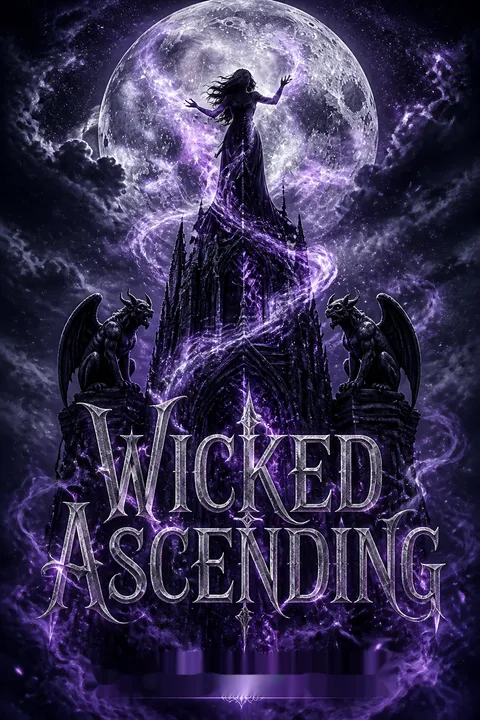
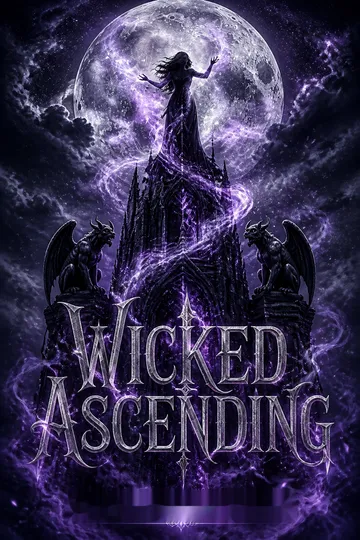
Wicked Ascending makes control the central problem of both its fantasy plot and its intimate relationships. Westlyn’s enemies treat her as a vessel: for prophecy, royal succession, demonic power, or a political alliance. Even Brian’s sincere effort to protect her reproduces that pattern when he withholds the truth and makes decisions on her behalf. The story therefore distinguishes care from control not by motive alone, but by whether the cared-for person is allowed knowledge and choice.
Westlyn’s inherited darkness is not framed as a moral verdict. Verrick insists that violence proves their kinship; Westlyn’s answer is not to deny that she can feel rage, but to decide what she will do with it. Her use of demonic power against the forces that would enslave her is ethically severe, and the story keeps that severity visible through the bodies and losses left behind. Agency here is neither purity nor innocence. It is the capacity to choose, accept consequences, and refuse another person’s interpretation of one’s nature.
The gargoyles’ curse gives these questions a long historical reach. Draegan’s guilt and the others’ grief show how survival can harden into self-punishment, while Westlyn’s insistence on acting with them challenges the idea that love must mean unilateral protection. The final choice ritual matters because it restores autonomy at the point where the gargoyles’ lives have long been governed by an imposed fate. They choose to remain gargoyles, but no longer because a king has forced that identity upon them.
The book also locates repair in concrete forms of shared life. Rook’s library can be rebuilt, Brian’s money can fund a school, and a meal prepared together can matter after battles against demons and kings. These acts do not erase loss. They give the characters something to make with the time and freedom they have recovered. The ending’s deepest victory is not that Westlyn becomes powerful enough to rule, but that she can reject the crown, return home, and help build a community where young supernaturals are not valued only for their usefulness.
Review Summary
Wicked Ascending concludes the Claimed by Gargoyles series with overwhelmingly positive reviews. Readers praise the action-packed plot, character development, and steamy romance. Many highlight the emotional journey and satisfying ending. The audiobook narration receives particular acclaim. Some critiques mention pacing issues and overuse of tropes. Overall, fans appreciate the series' complex world-building, engaging characters, and blend of suspense and romance. Most reviewers express sadness at the series ending but satisfaction with the resolution.
People Also Read
Characters
Westlyn Avery
The defiant witch-heirWestlyn is a Brooklyn witch who has spent much of her life believing she has no magic and little worth. Her sharp humor and guarded anger help her survive manipulation by family members and supernatural enemies, but beneath them is a strong need to be chosen and trusted. She loves four gargoyles who treat her as a partner rather than a burden, and she is drawn to learning, Tarot, and the practical work of witchcraft. Her deepest conflict is not simply whether she can wield darkness, but whether other people’s expectations can define what that darkness means. She is stubborn, emotionally perceptive, and capable of questioning her own motives without surrendering her right to act.
Draegan Caldwell
The burdened commanderDraegan is the leader of the four gargoyles, a disciplined warrior whose long history of loss has hardened into guilt and a habit of deciding what risks others should take. He carries responsibility for the old war and for the curse that trapped his men, even when that responsibility isolates him from them. Westlyn unsettles his defenses because she asks for honesty and partnership, not simply protection. His reserve conceals tenderness, grief, and a longing to be forgiven for surviving. Draegan’s authority is useful in danger, but his emotional growth depends on recognizing that leadership is not the same as bearing every burden alone.
Rook Van Doren
The keeper of knowledgeRook is the group’s scholar and technological problem-solver, a patient observer who trusts research, records, and careful reasoning. His library is both a workspace and a refuge built over centuries, so the books he collects represent memory as much as information. Rook’s affection tends to appear through practical acts: he equips Westlyn with tools, follows evidence when panic threatens to overtake the others, and helps her investigate the Codex. His measured manner does not make him emotionally distant. He is deeply loyal to his brothers and attentive to Westlyn’s curiosity, and he finds meaning in making complicated histories understandable.
Jude Hendrix
The fierce provocateurJude is the most openly volatile of the gargoyles, quick with violent humor, threats, and irreverence. His appetite for danger can make him seem reckless, but his bravado hides fierce attachment to his brothers and a keen sensitivity to abandonment. He uses jokes to puncture fear and to test whether the people he loves will remain close when he is at his most alarming. With Westlyn, he is playful and attentive, able to offer comfort without pretending that their situation is safe. Jude’s loyalty is physical and immediate, but it is also emotional: he wants the group to face danger together.
Augustine Lamont
The artist and caretakerAugustine is a warm, observant gargoyle who finds expression in cooking, drawing, and photography. He often cares for the group through food and gentle attention, noticing distress before it is spoken aloud. His artistic eye reflects a desire to preserve what violence and time threaten to erase. Like the other gargoyles, he has lived with grief long enough to mistake emotional numbness for endurance. Westlyn’s presence draws him back toward ordinary pleasures and creative work. His kindness is not passivity: he can fight fiercely when she is threatened, while remaining the one most likely to offer shelter, nourishment, and a reminder that life is more than survival.
Verrick
The Wintermoon kingVerrick is the powerful dark-fae ruler of Wintermoon and Westlyn’s biological father. He sees kinship as a source of authority and treats prophecy as a plan he is entitled to complete. His charm and careful gentleness can quickly turn into coercion, making even apparent kindness feel like another means of control. Verrick is strategic, proud, and fascinated by the capacity for violence he believes he sees in Westlyn. His worldview turns people into instruments of a royal project, including his daughter and the enemies he blames for his losses. He is frightening not only because of his magic, but because he can make domination sound like belonging.
Eloise Avery
The status-hungry stepmotherEloise is Westlyn’s stepmother, a shadow witch whose ambition is sharpened by insecurity about her mixed human and demonic heritage. She pursues magical power and social standing as proof that she deserves recognition. Eloise presents herself as polished and reasonable, but her composure depends on having leverage over others. Her relationship with Brian combines calculated intimacy with contempt, while her treatment of Westlyn turns family life into a system of punishment and control. Eloise understands how shame can make someone easier to direct, and she uses that knowledge without much concern for the damage it causes.
Brian Avery
The imperfect adoptive fatherBrian raised Westlyn as his daughter after marrying Madison, the woman he loved, despite knowing Westlyn was fathered by a fae king. He is a light mage and investigator who tries to protect Westlyn by concealing the dangers around her. His devotion is real, but so is the cost of his secrecy: she grows up without the truth or the trust that might have helped them become close. Brian’s guilt is complicated by years of surveillance, compromise, and an attempt to infiltrate the society threatening his family. He is neither a flawless guardian nor a simple betrayer, but a man whose care repeatedly fails to include Westlyn in decisions about her own life.
Madison Avery
Westlyn’s lost motherMadison was a powerful witch drawn to Faerie and its dangerous magic. Her relationship with Brian was rooted in deep friendship and trust, while her encounter with Verrick left her facing a threat to the child she carried. She loved Westlyn fiercely and worked with Brian to keep her safe, though her death during childbirth leaves much of her story uncertain. Madison matters to Westlyn as both a missing parent and a source of inherited magic. The diaries and memories she leaves behind offer fragments rather than a complete answer, preserving the ache of a relationship Westlyn never had the chance to experience.
Tatiana
The elder witch allyTatiana is an ancient vampire-witch whose long experience makes her a valuable guide to Westlyn and the gargoyles. She recognizes that supernatural power does not dictate a person’s moral choices, and she teaches Westlyn to approach magic as a craft shaped by intention. Tatiana is pragmatic about danger, able to organize allies and explain the limits of spells without offering false certainty. Her authority comes from knowledge and earned trust rather than royal lineage. She serves as a mentor, but leaves Westlyn responsible for deciding what kind of witch she wants to become.
Fleur Archer
The trusted witch sisterFleur is one of the two human witches Tatiana trusts with her life. She joins the gargoyles’ rescue effort and helps interpret the magic surrounding Westlyn, the Codex, and the Wintermoon curse. Fleur’s steady manner makes her a reliable partner in high-pressure rituals, and she treats Westlyn as a capable witch still learning her craft. Alongside Laney, she offers practical solidarity rather than taking over Westlyn’s choices. Her presence helps turn a desperate alliance into a supportive community.
Laney Archer
The grounded spellworkerLaney is Fleur’s sister and one of Tatiana’s most trusted witches. She contributes clear judgment during the rescue and helps distinguish the gargoyles’ immediate transformations from the older, more complex curse. Laney emphasizes that Westlyn’s power requires practice and self-trust, not simply access to a spellbook. She is direct without being dismissive, and she encourages Westlyn to define her own values rather than follow prophecy or family expectations. Her grounded approach makes difficult magic feel like work the group can undertake together.
Lennon Forsythe
The ambitious ArchmageLennon Forsythe leads the shadow-mage society and seeks the power contained in the Cerridwen Codex. He treats Westlyn’s birth and magic as pieces in a larger political design, and he is willing to sacrifice others to reach the society’s goals. His public authority rests on status and ritual, but his plans depend on alliances with forces he cannot fully control. Lennon represents the institutional face of the conspiracy that has shaped Westlyn’s life, using respectable titles to disguise an appetite for power.
Celine Forsythe
The Archmage’s calculating wifeCeline is Lennon Forsythe’s wife and a participant in the shadow-mage plans surrounding Westlyn. She presents herself as polished and conciliatory, using the language of family and concern when it serves her. Her manner contrasts with her willingness to help control Westlyn’s fate. Celine’s role shows how coercive schemes can be maintained not only by overt threats, but also by social charm and carefully staged intimacy.
Zorakkov
The demon prince in a vesselZorakkov is a demon prince whose power depends on a human vessel, Hunter Forsythe. He seeks to bind Westlyn to himself and use her blood to bring demonic forces into the human realm. His failing physical body makes him grotesque and unstable, but he remains dangerous through magic and the loyalty of his followers. Zorakkov treats marriage as a mechanism of ownership and views Westlyn’s magic as a resource to command.
Hunter Forsythe
The demon’s human vesselHunter is Lennon and Celine Forsythe’s son, whose body serves as the vessel for Zorakkov. His failing condition reflects the physical cost of housing the demon prince. Though he has little independent presence in the events, his role connects the Forsythes’ family power to the demonic plan.
Grant Reedsy
The captured detectiveGrant Reedsy is a detective connected to the human enemies who have pursued the gargoyles and Westlyn. Draegan brings him back to Blackmoor, where his history of harming people makes him relevant to Westlyn’s desperate plan for the curse. Reedsy is a reminder that supernatural cruelty is not confined to fae kings or demons; human institutions can also be used to target the vulnerable.
Lucinda, Huxley, and Jean-Pierre
Westlyn’s raven companionsLucinda, Huxley, and Jean-Pierre are the three ravens who accompany Westlyn. They alert the gargoyles when danger surrounds Blackmoor and remain closely attached to her during the upheaval. Their watchful presence offers a quieter form of loyalty beside the gargoyles’ physical protection. The birds also connect Westlyn’s life at the manor to the magical and natural world beyond it.
Plot Devices
The Moon Blessed prophecy
A future contested by factionsThe prophecy describes a child born from darkness and light who will inherit a crown and bring the world down. Verrick, the demon prince, and the shadow-mage society each interpret it as a promise of political or supernatural domination. Westlyn’s struggle is to separate the prophecy’s wording from the plans others build around it. The prophecy supplies the story’s central threat, but it does not dictate a single moral outcome. Its meaning changes as Westlyn claims the right to decide how her mixed heritage and power will be used.
The Cerridwen Codex
A key to inherited magicThe ancient Codex contains spells that neither Rook nor the other characters can fully access. Westlyn’s connection to Cerridwen’s witches allows her to read it, though its magic initially resists the dark-fae power in her blood. The book enables Verrick’s summoning and helps Westlyn understand and use unfamiliar magic. It also becomes the object several factions want to control, making its preservation and interpretation part of the struggle over who gets to shape Westlyn’s future.
Westlyn’s fae amulet
A ward against dominationThe amulet Brian arranged for Westlyn protects her from the worst of Verrick’s influence and helps her access fae magic without being wholly overtaken by it. Rook’s smartwatch helps locate her when she is taken, but the amulet has a deeper magical role: it offers a measure of protection against the king’s claim. Its destruction leaves Westlyn more exposed to Verrick, while its return in Wintermoon helps her regain a sense of control.
The gargoyle curse and tether
A curse sustained by bloodlineVerrick’s ancient curse condemns Draegan, Rook, Jude, and Augustine to life as gargoyles, with stone sleep and eventual spiritual destruction hanging over them. The curse draws power from an immortal bloodline, first Verrick’s and then Westlyn’s. Separate spells can turn individual gargoyles to stone, but reversing those attacks does not undo the original curse. The distinction forces Westlyn to investigate the curse’s underlying tether rather than assume one counterspell can erase every form of its magic.
The blood-binding ritual
A bond that summons hellThe shadow mages complete Westlyn’s forced marriage to Zorakkov by joining their blood and sealing an oath that had been left unfinished during her earlier escape. Zorakkov then uses Westlyn’s blood to summon demonic souls into the shadow mages. The ritual is meant to empower the demon prince and his allies, but the demons recognize Westlyn as their authority instead. The device turns a ceremony of ownership into the means by which Westlyn gains leverage, while leaving her vulnerable to the bond’s pull.
Claimed by Gargoyles Series
About the Author
Download PDF
Download EPUB
.epub digital book format is ideal for reading ebooks on phones, tablets, and e-readers.








