

Key Takeaways
Treat disability as ordinary human variation, not a tragedy or defect
A broader definition. More than one billion people worldwide are disabled, yet disability is often framed as a personal failure or a life reduced to limitation. Ladau instead describes it as a natural part of human experience, which can shape identity, relationships, and daily life without defining a person’s entire worth. Her own family makes the point: she and her mother share Larsen syndrome, but their bodies and support needs differ. A shared diagnosis does not create a shared script.
Complex, not uniform. Some people take pride in disability identity, some do not, and some experience disability as both community and pain. Recognizing that range makes room for honest accounts of impairment and barriers without assuming that every disabled person feels the same way.
This framing resists two common errors at once: treating disability as only a medical problem, and romanticizing it as automatically empowering. That balance matters because identity can be a source of belonging while pain, fatigue, or exclusion remain real. A useful parallel comes from cultural approaches to illness, which distinguish a person’s condition from the meanings and institutions surrounding it. The risk is that calling disability ordinary could be misheard as minimizing material hardship. The book avoids that trap by pairing dignity with concrete accounts of pain and discrimination.
Use the words people choose, and stop treating disability as unspeakable
Language follows identity. Person-first language places the person before the disability, as in person with a disability. Identity-first language names disability as part of identity, as in disabled person. Neither is universally correct. Ladau prefers identity-first language, while noting that many people, including some with intellectual and developmental disabilities, prefer person-first language. When a preference is known, use it. When it is not, person-first wording is a reasonable default, then adjust if asked.
Be direct and specific. Euphemisms such as special needs can imply that disability is shameful, while labels like high functioning and low functioning flatten people into a ranking and can distort their support needs. Describe what is actually relevant, such as a person’s access requirements. Avoid slurs and do not reduce someone to their mobility equipment. If a mistake happens, apologize briefly, then do better.
Language is not cosmetic here. It signals who gets authority to define an identity, and it can quietly shape what listeners regard as normal or worthy. The practical rule is not to memorize a universal vocabulary list, but to treat naming as a matter of respect and context. That approach also avoids making disabled people responsible for enforcing one community-wide standard. A caveat: asking preferences can itself become intrusive when the label is irrelevant. Respectful language includes knowing when not to label someone at all.
Read disability through the whole person, not one diagnosis
Identity intersects. Disability experience changes with race, gender, class, culture, communication, and other parts of a person’s life. Intersectionality, a term developed by Kimberlé Crenshaw to explain how identities overlap, helps reveal why disability cannot be understood in isolation. A Black wheelchair user may face racial stereotypes that a white wheelchair user does not, while a person who communicates verbally may have advantages over someone who does not.
The gaps are measurable. In 2019, the employment-to-population ratio cited in the book was 19.3 percent for disabled people, compared with 66.3 percent for nondisabled people. Those figures show a systemic disparity, but they do not describe everyone’s circumstances. The useful habit is to notice both shared barriers and unequal power within the disability community, rather than treating one person’s account as universal.
Intersectionality improves analysis by preventing a single visible identity from standing in for an entire population. It also sharpens practical questions: whose experience is being counted, and who is missing from the data or decision-making room? The employment figures demonstrate a broad structural gap, but averages cannot identify its causes or reveal differences among disability groups. That is not a flaw in the framework; it is a reason to pair aggregate measures with first-person accounts and disaggregated evidence.
Separate bodily limits from barriers society has chosen not to remove
Two useful lenses. The medical model treats disability primarily as an individual impairment or diagnosis. It can help explain pain, treatment, or a person’s physical needs, but can imply that the person is the problem to be fixed. The social model shifts attention to barriers created by buildings, attitudes, and systems. A wheelchair user struggling with stairs is not facing only a bodily limitation; the building’s design is also part of the problem.
Ableism operates at both levels. Ladau defines ableism as attitudes, actions, and circumstances that devalue people because they are disabled or presumed disabled. Fewer than one quarter of New York City subway stations had elevators, according to the book. Limited access keeps wheelchair users less visible, and that invisibility can reinforce the assumption that accessibility is unnecessary.
The value of these models is diagnostic: they direct attention to different causes and therefore different remedies. Medical care can address pain or support a person’s chosen goals, while policy and design can remove avoidable exclusion. Treating the models as competing explanations would be too simple. A social barrier does not make pain unreal, and a diagnosis does not explain why a public service is inaccessible. The subway example shows how infrastructure and social expectations can reinforce each other rather than operating as separate problems.
Build access before someone has to ask for entry
Access is participation. Accessibility means that disabled people can use a place, product, or service, with accommodations where needed. It includes ramps and elevators, but also captions, interpreters, readable documents, quiet spaces, flexible schedules, and materials shared in advance. These are not special favors. They remove obstacles that prevent people from participating on equal terms.
Design beyond the imagined user. Ladau describes calling a coffee shop about its inaccessible entrance. Months later, the owner obtained a portable ramp and contacted her to say it was ready. That was a welcome change, though access should not depend on a customer having to request it. The curb-cut effect captures how design initially created for disabled people can help others too, including travelers with luggage, parents with strollers, and people pushing carts.
Planning access in advance is a form of risk reduction: it prevents predictable exclusion instead of asking individuals to improvise around it. The curb-cut effect makes a persuasive case that accessible design can serve many users, although its wider benefits should not become the reason disabled people deserve access. Equal participation is sufficient justification. There is also a useful distinction between universal design and individual accommodation. Broadly accessible defaults reduce friction, but no single design will meet every person’s needs, so flexibility remains essential.
Disability rights advanced when disabled people organized and demanded power
Progress was contested. Disability history includes coercive eugenics laws and institutions where disabled people were segregated and abused, as well as campaigns for education, employment, and civil rights. In 1977, activists occupied a federal building in San Francisco for nearly thirty days to demand enforcement rules for Section 504 of the Rehabilitation Act. The protest helped secure regulations that barred disability discrimination in federally funded programs.
Visibility came through action. In 1990, disabled activists crawled up the steps of the U.S. Capitol to dramatize physical exclusion as Congress considered the Americans with Disabilities Act. The law passed that year. In 1999, the Olmstead decision affirmed that unnecessary institutionalization can violate the ADA. These victories did not end exclusion. They show that rights often become real through sustained organizing, legal pressure, and disabled people leading the effort.
The historical arc complicates a familiar story in which reform arrives because institutions gradually become more enlightened. Here, protest is not a colorful side note; it is a mechanism for making ignored barriers politically costly. The examples also connect disability activism to broader civil-rights traditions of occupation and public witness. Legal victories matter, but a statute cannot guarantee accessible implementation or adequate funding. Remembering both the law and the organizing behind it keeps the story from turning into a simple tale of inevitable progress.
Ask before helping, touching, or turning a disabled person into a lesson
Respect means agency. A wheelchair, cane, or other mobility aid is part of how a person moves through the world. Do not lean on it, push someone without permission, or assume help is wanted. The same principle applies to touch, service animals, and personal questions. If assistance might be useful, ask once, listen to the answer, and accept a no.
Communicate directly. Speak to the disabled person rather than a companion or interpreter, and allow time for different communication styles. Do not infantilize adults or assume someone cannot understand or decide because of a disability. This connects to presuming competence: starting from the expectation that disabled people have thoughts, feelings, and agency, while recognizing that support may be needed to express them. Good etiquette is not a secret code. It is ordinary respect without assumptions.
These practices are grounded in a simple but often neglected distinction: offering support is different from taking control. That distinction aligns with autonomy-based ethics, where assistance is valuable when it expands a person’s choices rather than replacing them. Presuming competence is especially important when communication is unfamiliar, since fluency and speed are easily mistaken for intelligence. The advice to ask is not an invitation to interrogate. It works best when the question is relevant, concise, and followed by genuine acceptance of the person’s answer.
Question stories that praise disabled people for merely existing
Sentiment can stereotype. Inspiration porn is media that uses disabled people’s lives to create uplifting feelings for nondisabled audiences, often presenting ordinary milestones as heroic triumphs. Its companion, pity-based storytelling, treats disability as tragedy. Both depend on the assumption that a disabled life is inherently lesser or exceptional. A meme praising a wheelchair user for exercising may seem encouraging, yet its implied comparison can shame people who do not perform an approved version of resilience.
Representation is scarce. The book cites a television report in which people with disabilities made up just 3.1 percent of 879 broadcast series regulars. When representation is limited, a narrow image can stand in for a diverse community. More authentic portrayals put disabled people in control of their stories, include varied identities, and show ordinary complexity, including relationships, work, humor, and difficulty.
This critique offers a strong media-literacy test: does a story give a disabled person interiority, or use that person as an emotional instrument for someone else? The distinction matters because positive tone alone does not guarantee respectful representation. At the same time, audiences should avoid policing every celebration of an individual achievement. The key question is whether the story honors that person’s own meaning or converts their body into a lesson about gratitude, courage, or inspiration for outsiders.
Trade ally identity for shared power, access, and accountability
Support is demonstrated. Ladau distinguishes being an ally, who may help someone navigate an existing system, from being an accomplice, who works alongside marginalized people to change that system. Either label matters less than the actions behind it. Disabled people should lead decisions that affect their lives, summed up by the principle Nothing about us without us. Supporters can make that real by inviting disabled expertise, paying people for their work, and making meetings or services accessible.
Accountability continues. Disability simulations, such as trying a wheelchair obstacle course for an afternoon, cannot reproduce a life shaped by access barriers and stigma. Better learning comes from disabled people’s writing, expertise, and lived experience. When a mistake is named, avoid defensiveness, apologize without demanding reassurance, and change the practice that caused harm. Allyship is not a badge earned by good intentions. It is repeated work that shares power and repairs exclusion.
This account shifts solidarity from self-image to observable conduct. That is useful because people can sincerely value inclusion while still controlling budgets, platforms, and decisions in ways that exclude disabled participants. Compensation and leadership are concrete tests of whether inclusion is substantive. A further challenge is institutional: individual allies cannot substitute for enforceable access standards, stable funding, or accountability structures. The strongest practice combines personal responsiveness with changes that do not depend on one unusually conscientious person being present.
Analysis
The book’s central move is to relocate disability from the private body alone into the relationship between bodies, environments, and social judgment. This is more than a change in vocabulary. If exclusion is partly designed into buildings, policies, media, and assumptions, then responsibility cannot rest solely on disabled people adapting themselves. The distinction makes the subject actionable: a stairway, an inaccessible website, or a conversation conducted through a companion becomes a point where power can be changed.
Ladau’s personal stories give the argument emotional specificity, while testimony from other disabled people prevents one memoir from pretending to represent a whole community. That structure models an important method of public explanation: lived experience is evidence, but no single account is exhaustive. The sections on intersectionality and disability movements deepen that method by showing that even a community organized around shared exclusion contains unequal access to visibility and influence.
The book is strongest when it joins everyday conduct to institutions. Asking before helping matters, but so does accessible transit, fair employment, and disabled leadership in policy. These scales should not be confused. Courtesy cannot repair structural exclusion, and legislation cannot guarantee respectful interaction. Each addresses a different mechanism of harm.
There is a productive tension in the invitation to educate others. Making disability experience understandable can loosen fear and stereotypes, yet repeated explanation imposes emotional labor on people already navigating barriers. The book recognizes that burden and argues for education as one route to progress, not an obligation owed by every disabled person. A mature application of its argument therefore includes listening to those who choose to teach, while building institutions that do not require constant personal advocacy for basic access. Its practical standard is not perfect terminology or moral self-congratulation. It is whether disabled people can participate, define themselves, and exercise choice without having to earn those rights through exceptional effort.
Review Summary
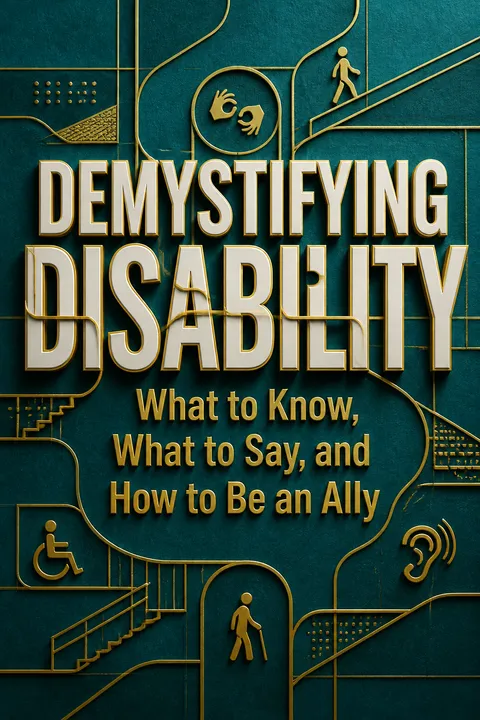
Demystifying Disability receives mostly positive reviews for its accessible introduction to disability issues. Readers appreciate the author's friendly tone, practical advice on etiquette, and discussions of media representation. Some criticize the book's US-centric focus and occasional oversimplification. Many find it eye-opening and valuable for both disabled and non-disabled readers. The book is praised for its inclusivity and intersectional approach. Some reviewers note it's best suited for those new to disability topics, while others appreciate its comprehensive overview. Overall, it's considered a useful resource for understanding and advocating for disability rights.
People Also Read

Glossary
Ableism
Disability-based devaluationAbleism is prejudice, discrimination, and exclusion directed at disabled people or people presumed to be disabled. It can appear in personal attitudes and language, but also in laws, services, buildings, workplaces, and media. Because ableist assumptions often pass as ordinary expectations, recognizing them requires attention to both direct mistreatment and systems that restrict participation.
Person-first language (PFL)
Person named before disabilityPerson-first language refers to someone as a person before mentioning disability, as in person with a disability or person who uses a wheelchair. It is intended to foreground personhood and avoid reducing someone to a diagnosis. Some people and communities prefer this wording, while others regard disability as an integral identity and choose identity-first language.
Identity-first language (IFL)
Disability named as identityIdentity-first language places disability before the word person or uses it as an identity description, as in disabled person or Autistic person. Many people choose it because disability connects them to culture, community, and shared history. Preferences differ among individuals and disability groups, so the person’s own terminology should guide how others refer to them.
Intersectionality
Overlapping identities shape experienceIntersectionality describes how multiple identities and systems of power overlap, shaping a person’s experiences in ways that cannot be understood by considering each identity separately. In disability contexts, race, gender, class, culture, and disability can affect how someone is treated and what barriers they face. The framework directs attention to people whose combined identities are often overlooked.
Medical model
Disability as individual impairmentThe medical model understands disability mainly through an individual’s diagnosis or impairment and its effects on functioning. It can be useful for discussing health needs, treatment, or physical experiences. Its limitation is that it can frame disability as a defect belonging solely to the person, obscuring social barriers and encouraging the assumption that the person needs fixing.
Social model
Disability as socially created barriersThe social model locates disability in barriers produced by environments, attitudes, and systems, rather than solely in an individual’s body or mind. A building with only stairs, for example, restricts access for some wheelchair users. The model shifts attention toward removing exclusion, while not denying that pain, impairment, or medical needs can also shape a person’s experience.
Disability Justice
Justice centered on marginalized disabled peopleDisability Justice is a framework that builds on disability rights activism while centering disabled people who are often excluded from mainstream advocacy. It emphasizes how disability intersects with other forms of marginalization, including racism, anti-immigrant prejudice, and discrimination based on gender or sexuality. The framework challenges narrow ideas of normality and calls for more inclusive movement leadership.
inspiration porn
Disability used for uplifting effectInspiration porn describes media that uses disabled people or their ordinary activities to produce uplifting feelings for nondisabled audiences. It often casts disabled people as heroic for routine milestones or uses their lives to motivate others. The term critiques the objectification beneath such praise, especially when a person’s own perspective disappears and disability is framed as inherently tragic or exceptional.
curb-cut effect
Access design benefits many peopleThe curb-cut effect refers to the broader usefulness of accessibility features originally developed to meet disabled people’s needs. Curb cuts support wheelchair users, but they also help people with strollers, carts, and wheeled luggage. The concept illustrates how accessible design can benefit a wider public, while the rights and needs of disabled people remain sufficient reasons to provide access.
presuming competence
Assume agency and capacityPresuming competence means treating people with developmental or intellectual disabilities as full human beings with thoughts, feelings, and the capacity to learn and make choices, even when their abilities are not immediately apparent. It does not mean assuming everyone needs no support. It means providing appropriate support without using communication differences or support needs as grounds to deny agency.
Nothing about us without us
Disabled people lead decisionsNothing about us without us is a disability-rights principle asserting that disabled people must participate in decisions that affect their lives. It challenges practices in which professionals, caregivers, or policymakers speak for disabled people without consulting them. The principle applies both to individual choices and to public policy, advocacy, media, and service design.
FAQ
What is "Demystifying Disability" by Emily Ladau about?
- Comprehensive Disability 101: The book serves as an accessible introduction to disability, aiming to answer common questions, dispel myths, and provide practical guidance for being a better ally.
- Personal and Community Perspectives: Emily Ladau shares her lived experience as a disabled woman, while also including insights and quotes from a diverse range of disabled people.
- Focus on Language, History, and Etiquette: The book covers how to talk about disability, the history of disability rights, ableism, accessibility, and everyday etiquette.
- Resource for Allies and the Curious: It’s designed for anyone—disabled or nondisabled—who wants to deepen their understanding and support the disability community.
Why should I read "Demystifying Disability" by Emily Ladau?
- Breaks Down Barriers: The book helps readers confront their own biases and misconceptions about disability, making it easier to engage in respectful, informed conversations.
- Practical Guidance: It offers actionable advice on language, etiquette, and allyship, making it a useful resource for workplaces, schools, and social settings.
- Intersectional Approach: Ladau emphasizes the diversity within the disability community, including intersections with race, gender, and other identities.
- Empowering and Nonjudgmental: The tone is welcoming and nonjudgmental, encouraging readers to learn without fear of making mistakes.
What are the key takeaways from "Demystifying Disability" by Emily Ladau?
- Disability Is Diverse: There is no single disability experience; disability is a natural, varied part of the human condition.
- Language Matters: The words we use shape perceptions—person-first and identity-first language both have value, and preferences should be respected.
- Ableism Is Pervasive: Ableism is deeply embedded in society, from systemic barriers to everyday language, and everyone has a role in challenging it.
- Allyship Is Ongoing: Being an ally is a continuous process of learning, listening, and supporting disabled people, not a one-time achievement.
How does Emily Ladau define disability in "Demystifying Disability"?
- Beyond Medical Definitions: While legal and medical definitions focus on impairments, Ladau defines disability as a state of being and a natural part of the human experience.
- Evolving Identity: Disability is not static; it can change over time and is influenced by personal, social, and cultural factors.
- Social and Cultural Dimensions: Disability is also an identity, a community, and a culture, not just a diagnosis or limitation.
- Individual Experience: Each person’s experience of disability is unique, even among those with the same diagnosis.
What is ableism, according to "Demystifying Disability" by Emily Ladau?
- Definition of Ableism: Ableism is the attitudes, actions, and circumstances that devalue people because they are disabled or perceived as having a disability.
- Systemic and Everyday: Ableism exists both in large-scale systems (like inaccessible transportation) and in daily interactions (like patronizing comments).
- Self-Perpetuating Cycle: Ableist assumptions lead to systemic barriers, which in turn reinforce those assumptions.
- Internalized Ableism: Disabled people themselves can internalize ableist beliefs, making self-acceptance and advocacy challenging.
How does "Demystifying Disability" by Emily Ladau recommend talking about disability and choosing the right language?
- Respect Individual Preferences: Always ask people how they prefer to be described—some prefer person-first language (“person with a disability”), others identity-first (“disabled person”).
- Avoid Outdated and Offensive Terms: Terms like “handicapped,” “wheelchair-bound,” and euphemisms like “differently abled” are generally discouraged unless specifically preferred by the individual.
- Be Direct, Not Euphemistic: Using “disabled” is not offensive; avoiding the word can reinforce stigma.
- Language Evolves: Be open to learning and adjusting language as the disability community’s preferences and standards change.
What are the main models of understanding disability discussed in "Demystifying Disability" by Emily Ladau?
- Medical Model: Focuses on disability as an individual’s impairment or diagnosis, often seeing it as something to be fixed.
- Social Model: Emphasizes that people are disabled by societal barriers and inaccessible environments, not just by their bodies or minds.
- Other Models: The book also covers the charity, cultural, economic, human rights, and religious models, each offering different perspectives on disability.
- No One-Size-Fits-All: Ladau encourages readers to recognize the limitations of each model and to see disability as a complex, multifaceted experience.
How does "Demystifying Disability" by Emily Ladau address intersectionality and privilege within the disability community?
- Intersectionality Defined: Disability intersects with other identities like race, gender, sexuality, and class, affecting how people experience discrimination and privilege.
- Privilege Within Disability: Not all disabled people experience the same barriers; factors like race, communication style, and visibility of disability can confer privilege or additional marginalization.
- Centering Marginalized Voices: The book highlights the importance of centering disabled people with multiple marginalized identities in advocacy and conversations.
- Ongoing Self-Examination: Both disabled and nondisabled people are encouraged to examine their own privileges and biases.
What is disability etiquette, and what practical advice does "Demystifying Disability" by Emily Ladau offer?
- Golden Rule Approach: Treat disabled people as you would want to be treated, with respect and without condescension.
- Ask, Don’t Assume: Don’t offer help, ask intrusive questions, or touch mobility aids without permission; always ask first.
- Communicate Directly: Speak to disabled people, not just to their companions or interpreters, and use clear, respectful language.
- Accessible Spaces: Don’t use accessible amenities (like parking or restrooms) unless you need them, and don’t assume someone’s disability status based on appearance.
How does "Demystifying Disability" by Emily Ladau explain ableism and accessibility in society?
- Ableism Is Widespread: It’s present in laws, workplaces, media, and daily interactions, often going unnoticed by nondisabled people.
- Accessibility Is Essential: Accessibility means creating environments, products, and services that everyone can use, not just adding ramps or elevators.
- Barriers Are Socially Created: Many challenges faced by disabled people are due to societal choices, not inherent limitations.
- Everyone Benefits: Accessibility improvements (like curb cuts) often help everyone, not just disabled people.
How does "Demystifying Disability" by Emily Ladau critique disability representation in the media?
- Stereotypes and Tropes: The book identifies common harmful tropes like “inspiration porn,” “pity porn,” and the “tragedy” narrative.
- Lack of Authentic Representation: Disabled people are underrepresented and often portrayed by nondisabled actors, reinforcing stereotypes.
- Positive Representation Matters: Authentic, diverse, and multidimensional portrayals by disabled creators and actors are essential for changing perceptions.
- Media’s Impact: Media shapes how society views disability and how disabled people see themselves, making accurate representation crucial.
What are the best quotes from "Demystifying Disability" by Emily Ladau and what do they mean?
- “If the disability community wants a world that’s accessible to us, then we must make ideas and experiences of disability accessible to the world.”
- This quote highlights the importance of sharing stories and educating others to foster understanding and inclusion.
- “There is no singular disability experience, and this book is in no way intended to be representative of every single person with a disability.”
- Ladau emphasizes the diversity within the disability community and cautions against generalizations.
- “Ableism is attitudes, actions, and circumstances that devalue people because they are disabled or perceived as having a disability.”
- This succinct definition clarifies the broad and pervasive nature of ableism.
- “Nothing about us without us.”
- A rallying cry for disability rights, this phrase insists that disabled people must be included in decisions that affect their lives.
- “Being an ally is really more of a ‘show, don’t tell’ kind of thing.”
- Ladau reminds readers that allyship is demonstrated through ongoing action, not just words.
Download PDF
Download EPUB
.epub digital book format is ideal for reading ebooks on phones, tablets, and e-readers.








