

Key Takeaways
Read human life through bodies and minds, not either alone.
Two mental lenses. Bloom’s central claim is that people instinctively understand reality in two ways: as physical bodies governed by material rules, and as minds with feelings, intentions, and desires. This everyday split resembles the philosophy of Descartes, who treated the body as machinery and the self as an immaterial soul. Bloom argues that the intuition is natural, even though science links mental life to the brain.
An unsettling image. A legend about Descartes describes him carrying a lifelike mechanical doll. The tale horrifies its witnesses because the doll appears human but seems to lack a self. The story captures the book’s puzzle: we resist seeing ourselves as merely physical, even when our actions depend on our bodies.
The distinction is useful without requiring belief in supernatural souls. A person can be described both as a biological organism and as an agent with reasons, just as a city can be described through buildings or through its institutions. These descriptions answer different questions. The tension arises when intuition turns a practical distinction into a claim about two separate substances. Bloom’s argument is strongest as an account of how people think, not as proof that the mind exists independently of the brain.
Treat babies as weak performers, not empty minds.
Knowledge before control. Babies cannot reliably show what they understand through speech or coordinated action, so researchers often measure how long they look at surprising events. Infants expect hidden parts of objects to remain connected, objects to persist out of sight, and solid things not to pass through one another. In a famous experiment, five-month-olds tracked objects hidden behind a screen and appeared surprised when the revealed count violated simple addition.
People are different. Babies also respond to faces, follow attention, and interpret reaching as goal-directed. By 18 months, children can give an adult food that the adult prefers, even when the child dislikes it. Understanding false beliefs, such as where someone will search for a moved object, develops more slowly and is typically demonstrated around age four.
The contrast between what a child knows and what a child can do is a powerful corrective to judging intelligence by performance alone. It also matters beyond infancy: limited movement, language, or communication does not establish an absence of understanding. At the same time, looking-time studies are indirect. Longer attention suggests surprise, but researchers must infer the expectation behind it. The method opens a window into early thought, not a transcript of a baby’s private reasoning.
Classify by hidden structure, but distrust essentialism about people.
Look beneath appearance. Essentialism is the intuition that members of a category share an underlying nature, even when its details are unknown. Children often assume that an animal’s identity depends more on its internal constitution than on its appearance. Artifact categories work differently: a chair is understood through the maker’s intention, which explains why an unusual object can still count as a chair.
A dangerous shortcut. This way of thinking helps people generalize about natural kinds, but it can mislead when applied to human groups. Bloom argues that racial categories do not mark deep biological divisions, although people often treat them as if they did. The boundaries of race depend heavily on social rules and history, yet essentialist beliefs can make those boundaries seem fixed and natural.
The account explains why hidden causes matter: appearance is often an imperfect guide to what something is or how it will behave. But the same mental habit can turn a useful shortcut into a false theory of human difference. Categories shape expectations, and expectations can influence how people are treated, making social divisions appear more natural than they are. The practical challenge is not to abandon categorization, which is unavoidable, but to ask whether a category tracks a real structure or merely repeats a convention.
Purpose feels obvious when minds project agency onto nature.
Agency travels easily. Bloom argues that the capacity to read human intentions spills into how people interpret the natural world. Children commonly assume that plants, animals, and even clouds exist for a purpose. Psychologist Deborah Kelemen calls this tendency “promiscuous teleology,” meaning that purpose-based explanations are applied too broadly. Children may readily accept that nature was designed, even when their parents endorse evolution.
A by-product, not a separate gift. Seeing intention in nature makes creation stories intuitive and the argument from design emotionally persuasive. Bloom’s evolutionary explanation is that minds adapted for understanding agents can generate beliefs beyond their original use. This is an example of exaptation: a capacity shaped for one function is put to another. Natural selection can produce complex design without a conscious designer, though that explanation often feels counterintuitive.
Purpose-based thinking is efficient when an object really was made by someone, so it is unsurprising that the mind reaches for the same explanation elsewhere. The habit can be intellectually productive when it prompts questions about function, but misleading when function is mistaken for evidence of intention. This distinction also helps explain why scientific explanations can feel less satisfying than stories about a designer. Intuitive appeal and explanatory accuracy are separate measures, even when the first feels like proof of the second.
Judge art by its making and history, not surface alone.
Intention changes meaning. Children can identify a drawing by what its maker meant to depict, even when the marks do not resemble the subject. Bloom extends this insight to art: an object’s history and the artist’s intention help determine how it should be understood. A snow shovel displayed as art is not simply a useful shovel in a gallery; the choice to present it as art changes its category.
Origins affect appreciation. When a painting once attributed to Vermeer was exposed as a modern forgery, its reputation and value collapsed. That response is not only financial snobbery. Viewers care about whether they are encountering an artist’s own achievement or a copy. Status and expertise also influence taste, especially for unfamiliar modern works, but they do not exhaust the reasons people value art.
Art makes visible a broader feature of human judgment: objects carry histories, not just sensory properties. An indistinguishable copy can therefore differ in meaning from its original, much as an authentic signature differs from a replica. This does not prove that every change in valuation is aesthetically justified. Reputation can bias judgment, as the forgery episode shows. But dismissing provenance as irrelevant misses how creation, skill, and cultural context form part of what an artwork communicates.
Make distant strangers vivid enough to enter your moral circle.
Concern starts close. The moral circle is the set of beings people treat as deserving moral consideration. Evolution favors strong care for children and relatives, and social exchange can support cooperation among people who recognize and remember one another. Those instincts are real, but they do not naturally extend equally to strangers.
Expansion has mechanisms. Bloom describes moral growth as a combination of impartial reasoning, perspective-taking, and cultural change. Contact under cooperative conditions can soften prejudice; stories and images can make unfamiliar people emotionally legible; and ideas such as opposition to slavery can accumulate across generations. Economic interdependence also gives people reasons to cooperate. None guarantees progress. Threat and fear can narrow concern, and a wider circle still requires judgments about what kinds of beings deserve what protections.
The moral circle is not simply a measure of kindness. It asks who counts, which interests matter, and how competing obligations should be balanced. The book’s account is compelling because it combines emotional imagination with social conditions: abstract fairness alone may not move people, while empathy alone can remain partial. A useful caution is that greater inclusion does not settle every conflict. Moral progress involves both widening concern and deciding how to distribute limited attention, resources, and rights.
Treat moral emotions as evolved guides, not noise to suppress.
Feeling helps choose. Bloom argues that moral emotions such as empathy, guilt, and compassion motivate actions that bare reasoning does not initiate by itself. Kin selection can favor care for relatives, while reciprocal altruism supports cooperation when individuals can recognize and respond to one another. Empathy can begin with emotional contagion: people imitate another’s expressions and partly share the resulting feeling. Babies react to other babies’ distress, and young children increasingly try to comfort someone who is hurt.
Reason still matters. Empathy can be narrow, and moral rules sometimes require acting against immediate sympathy. The book contrasts ordinary moral concern with psychopathy, where harmful consequences may be understood without the usual emotional restraint. It also discusses brain injuries associated with weakened emotion and impaired decision-making. Emotions are not infallible moral verdicts, but they help give choices weight and direction.
This view avoids the old picture of morality as reason fighting an unruly body. Motivation is part of practical intelligence: a person who can list every consequence but cannot rank them may be unable to choose. Yet emotional force is not the same as moral correctness. The vivid suffering of one person can outweigh less visible suffering among many, and group loyalty can intensify both care and hostility. Moral judgment needs emotion to make concerns matter, and reflection to test where those concerns lead.
Use disgust as a safety alarm, never a verdict on human worth.
A bodily defense. Disgust likely began as protection against risky food and contamination. People may reject milk touched by a sterilized cockroach or food served in a clean bedpan, even when they know it is safe. Such reactions can be overcautious, but caution is useful when spoiled food or disease may be involved. Disgust develops in childhood, as children move from broad food curiosity toward more selective preferences.
A weapon against people. Disgust also attaches to corpses, bodily fluids, and some sexual situations. It can be projected onto social groups, portraying people as dirty, diseased, or less than human. Bloom connects this dehumanization to the treatment of targeted groups in genocides. In slapstick, a related shift makes a person’s bodily failure funny: the viewer sees a thinking, dignified person suddenly reduced to an awkward body.
Disgust is unusually potent because it presents a judgment as if it were a sensory fact: the target seems not merely disliked but contaminating. That makes the emotion useful for avoiding genuine hazards and dangerous when attached to people. The distinction between an alarm and a verdict is crucial. A feeling may signal that something deserves attention, but it cannot establish that a person is morally inferior. Compassion and careful reasoning provide better guides when disgust targets a human being.
Religious beings feel plausible when one feature breaks ordinary expectations.
Familiar minds, strange powers. Anthropologist Pascal Boyer’s account of supernatural concepts proposes that memorable beings usually violate one ordinary expectation while preserving many others. A ghost cannot be touched, for example, but is still imagined as having familiar thoughts and intentions. A tree may be credited with hearing, while remaining recognizably a tree. Bloom argues that many religious ideas draw on our tendency to attribute minds and goals.
Belief has layers. People may formally describe God as unlimited and nonphysical, yet imagine God in stories with human-like limits, such as attending to one event before another. The book calls the gap between official religious teaching and intuitive assumptions “theological correctness.” Children readily imagine God as person-like, but the account does not require a special inborn religion faculty. A general readiness to understand agents helps make religious ideas imaginable.
The one-violation pattern explains why supernatural concepts can be both surprising and easy to remember. Too little novelty is ordinary; too much makes a concept difficult to picture. This is a theory of how beliefs become cognitively available, not a test of whether any religious claim is true. Keeping those questions separate allows psychological analysis to be rigorous without treating believers as irrational or assuming that an explanation of belief settles its object.
Your mind feels detachable, but brain damage can alter love and judgment.
The self seems to outlast the body. Children often understand that a dead animal no longer needs food or uses its senses, yet still say it can think or want to go home. This separation of bodily and mental life makes survival after death easy to imagine. Children’s ideas develop, but the intuition that the self is more than its body remains powerful in adults too.
Science changes the picture. Brain injury can alter judgment, motivation, and emotional life, linking mental capacities to physical processes. Bloom rejects the idea that the mind must float free of the brain, while also resisting the claim that only physics is real. Bodies, beliefs, and emotions are valid subjects of explanation at different levels. Science can describe capacities relevant to moral decisions, but it cannot decide by itself which capacities deserve rights.
The book’s final tension is not between science and the existence of meaningful human experience. It is between the intuition that the self is separable and evidence that mental life depends on a living brain. Treating minds as physical does not make love or pain unreal, just as explaining a melody through sound waves does not erase the music. The harder implication is ethical: biology can clarify what a being experiences, but societies must still decide what those experiences obligate them to protect.
Analysis
Descartes’ Baby is best read as a theory of intuitive interpretation, not as a defense of immaterial souls. Bloom’s organizing claim is that human cognition separates the physical world from the intentional world, then continually lets each framework spill into the other. That single proposal connects infant cognition, artifact categories, aesthetics, moral judgment, disgust, and religion. Its explanatory power comes from showing how apparently unrelated human habits can emerge from ordinary capacities for understanding objects and agents.
The book’s most useful distinction is between an evolved capacity and its later uses. Mindreading may help people coordinate, teach, and anticipate others, while also making readers see intentions in clouds, artworks, and gods. Such by-products need not be useless or biologically selected for their current role. This gives Bloom a stronger account of human distinctiveness than simply declaring art, religion, or morality adaptations in their own right.
The argument also has limits. A shared cognitive tendency does not explain every cultural difference, and identifying a plausible by-product is not the same as establishing its developmental or evolutionary history. Infant looking behavior offers compelling evidence of early expectations, but it remains an indirect measure. Similarly, the account of moral progress is a framework for how concern can expand, not a guarantee that societies move steadily toward justice. Contact and interdependence can encourage cooperation, yet they can also sharpen group boundaries when people feel threatened.
The book’s most enduring contribution is therefore methodological: it treats intuitions as causes to explain rather than truths to obey. People’s reactions to a forgery, a corpse, a stranger, or a divine being reveal how the mind organizes experience. Those reactions matter, but they are not self-validating. Understanding their origins can make human nature less mysterious and moral reflection more deliberate.
Review Summary
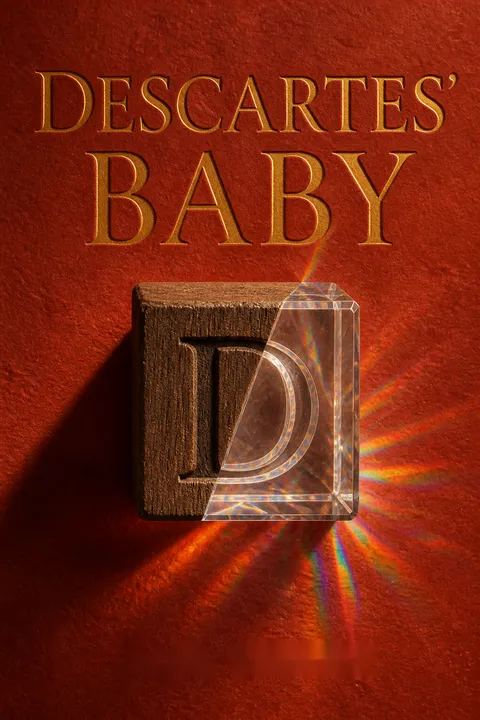
Descartes' Baby explores human cognition and development, examining how children perceive the world as bodies and souls. Readers found the book engaging, praising Bloom's accessible writing style and interesting research. Many appreciated the insights into child psychology and its implications for understanding human nature. Some felt the book lacked coherence or depth in certain areas. While not all agreed with Bloom's conclusions, most found the content thought-provoking. The book covers topics like morality, art, disgust, and religion, offering a unique perspective on human consciousness.
People Also Read




Glossary
body/soul duality
two ways of seeing beingsThe intuitive division between physical bodies, which occupy space and follow material rules, and minds or souls, which have thoughts, feelings, goals, and intentions. Bloom uses this distinction to explain why people can think of the self as separate from the body, and why bodily events and mental states are often interpreted differently.
essentialism lite
belief in hidden category natureBloom’s term for the everyday intuition that members of a category share some underlying nature that explains their observable traits. The hidden basis may be unknown, and categories need not have fixed or perfectly sharp boundaries. This modest form of essentialism differs from the stronger claim that every kind has an eternal, unchanging essence.
promiscuous teleology
overapplying purpose explanationsA tendency, especially visible in children, to assume that natural objects and living things exist for a purpose. Children may readily accept purpose-based explanations for animals, plants, or nonliving features of nature. Bloom links this bias to the human capacity for understanding intentions, which is useful for interpreting people and artifacts but can be overextended.
exaptation
a trait reused for another purposeA term for a feature that evolved in one context and is later used for a different function, whether or not it changes further. Bloom applies the idea to mental capacities: abilities shaped by natural selection for ordinary social or physical problems can also support art, religious thought, or moral reasoning without having evolved specifically for those uses.
anxious objects
artworks that unsettle categoriesA term associated with art critic Harold Rosenberg for provocative works that challenge familiar expectations about what art is. Examples discussed by Bloom include ordinary objects presented as artworks, minimalist pieces, and works made from unusual materials or actions. Their uncertain status can provoke debate because viewers must consider the artist’s intention and the work’s history.
moral circle
beings granted moral considerationThe range of individuals or kinds of beings that a person or society treats as deserving moral concern. The circle often begins with close kin and allies, but can expand through empathy, impartial reasoning, social contact, interdependence, and inherited moral ideas. Its boundaries are not simply all-or-nothing, since different beings may be owed different protections.
emotional contagion
sharing emotion through mimicryA process in which people imitate another person’s expressions or actions and, through that bodily response, come to experience a related emotion. Bloom presents it as one possible foundation for empathy: another person’s distress can be mirrored, felt, and then motivate concern. Emotional contagion can prompt compassion, though it does not guarantee fair or helpful action.
sympathetic magic
similarity or contact implies transferA pattern of intuitive reasoning described through two principles: things that resemble one another are treated as connected, and things that touch are treated as sharing properties. Bloom uses these principles to explain why people may reject safe food after it touches a repellent object, or feel aversion toward an imitation of something disgusting.
theological correctness
official belief versus intuitionA distinction between religious doctrines people can state explicitly and the intuitive assumptions that guide their spontaneous thinking. Someone may endorse a formal account of God as unlimited and nonphysical, yet remember or imagine God as a person with ordinary constraints. The gap concerns how beliefs are represented in thought, not whether a religion is true.
FAQ
What's Descartes' Baby about?
- Exploration of Human Nature: Descartes' Baby by Paul Bloom explores how child development science explains human nature, focusing on our dualistic perception of bodies and souls.
- Childhood Insights: The book argues that infants have a rich understanding of the physical and social worlds, expecting objects to follow physical laws and interpreting emotions.
- Interdisciplinary Approach: Bloom integrates psychology, philosophy, neuroscience, and evolutionary biology to provide a comprehensive view of human nature and moral development.
Why should I read Descartes' Baby?
- Understanding Human Behavior: The book offers insights into fundamental aspects of human behavior, including morality and social interactions, relevant for psychology enthusiasts.
- Engaging Questions: Bloom poses thought-provoking questions about human traits, encouraging readers to reflect on their beliefs and assumptions.
- Rich Research Base: Grounded in extensive research, the book appeals to both academic and general audiences with well-supported arguments.
What are the key takeaways of Descartes' Baby?
- Dualistic Thinking: Humans naturally perceive the world in terms of bodies and souls, influencing our understanding of morality and art.
- Moral Development: Moral sentiments emerge in children, with empathy and compassion foundational to our moral framework.
- Cultural and Biological Influences: The interplay between biological evolution and cultural development shapes our moral beliefs and behaviors.
What are the best quotes from Descartes' Baby and what do they mean?
- "The child is father to the man.": Early experiences shape who we become as adults, emphasizing the importance of childhood development.
- "We are Descartes’ babies.": Our dualistic perception of the world is innate, influencing thoughts and actions throughout life.
- "The great secret of morals is love.": Empathy and compassion are at the heart of moral behavior, driving ethical decisions.
How does Paul Bloom explain the concept of dualism in Descartes' Baby?
- Two Modes of Perception: Dualism is the innate tendency to view the world through physical and immaterial lenses, shaping our understanding of reality.
- Influence on Morality: This perspective helps develop complex moral frameworks, explaining moral sentiments and beliefs about justice.
- Cultural Reflections: Dualism is reflected in cultural beliefs and practices, including religion and art, demonstrating its pervasive influence.
What role do emotions play in moral development according to Descartes' Baby?
- Foundation of Morality: Emotions, particularly empathy and compassion, are crucial for moral development, enabling connection and understanding.
- Empathy as a Driver: Empathetic responses to others' pain lead to compassionate actions, reinforcing social bonds and moral behavior.
- Moral Emotions: Specific moral emotions like guilt and shame guide behavior and decision-making, enhancing social cooperation.
How does Paul Bloom address the concept of morality in Descartes' Baby?
- Innate Moral Sentiments: Humans are born with a basic moral sense, developing through interactions with others, evident even in young children.
- Cultural Influences: While moral instincts are biological, culture significantly shapes moral beliefs and practices, reflecting unique societal values.
- Moral Progress: As societies evolve, moral circles expand to include a broader range of beings, including animals and distant strangers.
How does Descartes' Baby explain the evolution of moral beliefs?
- Biological Basis: Moral beliefs evolved as adaptations enhancing social cooperation and group survival, rooted in emotional responses and cognitive abilities.
- Cultural Evolution: Culture shapes moral beliefs, with societies expanding moral frameworks to include wider ethical considerations.
- Moral Complexity: Moral beliefs are dynamic, influenced by ongoing societal debates and discussions, reflecting the evolving nature of human morality.
How does Paul Bloom connect art appreciation to child development in Descartes' Baby?
- Art as Representation: Children develop the ability to appreciate visual representations, recognizing pictures as depictions of real objects.
- Intentionality in Art: Understanding an artist's intent is linked to moral reasoning and social understanding, influencing art interpretation.
- Cultural Context: Art appreciation is shaped by cultural influences, reflecting societal values and beliefs about creativity and expression.
What is the significance of empathy in Descartes' Baby?
- Empathy as a Moral Foundation: Empathy drives moral behavior, allowing individuals to connect with others' experiences and respond compassionately.
- Developmental Insights: Empathy emerges in early childhood, with babies showing empathetic responses, laying the groundwork for complex moral reasoning.
- Broader Implications: Empathy extends beyond immediate circles, influencing moral obligations to distant others and prompting altruistic behavior.
How does Descartes' Baby relate to modern issues in society?
- Relevance to Ethical Debates: Themes are pertinent to modern ethical debates, such as abortion and animal rights, informed by empathy and moral reasoning.
- Cultural Sensitivity and Empathy: Emphasizes cultural sensitivity in fostering empathy and understanding across diverse groups, relevant in a globalized society.
- Moral Education: Advocates for moral education nurturing empathy and critical thinking, leading to a more just and compassionate society.
What methods does Paul Bloom use to support his arguments in Descartes' Baby?
- Interdisciplinary Approach: Bloom draws on psychology, philosophy, and child development research for a comprehensive exploration of human nature.
- Anecdotal Evidence: Includes anecdotes and case studies illustrating key concepts, making material relatable and engaging.
- Empirical Research: References empirical research findings to bolster claims about empathy, disgust, and moral reasoning, enhancing credibility.
About the Author

Download PDF
Download EPUB
.epub digital book format is ideal for reading ebooks on phones, tablets, and e-readers.








