


Plot Summary
The Outpost Falls
Raven wakes amid the ruins of Shadowmoor’s outpost, surrounded by smoke, wounded students, and bodies. Finn is dead. Brax lies bloodied and unresponsive after a blade strikes his back, while Creed, Zane, and Eldon continue fighting the faceless attackers, known as Amayans. As the enemy presses in, Ari, the griffin Raven encountered during the Gauntlet, arrives and saves the survivors.
Raven reaches Brax and, overwhelmed by grief, puts her hands on him. His eyes open. The attack has cost twelve first-year students their lives, but Brax has returned to hers. In the wreckage, Raven senses something has changed inside her, though she cannot yet name it or understand what her grief has done.
The attack turns the academy’s abstract preparation for war into immediate bodily loss. Raven’s response to Brax is not a calculated spell but an act born from attachment and terror, which makes the rescue emotionally legible before its magical cost is understood. Ari’s arrival also shifts the story’s scale: the creatures students treat as obstacles in a trial can intervene as agents in a real crisis. The scene binds survival to intimacy, but refuses an easy victory. Brax lives, while Finn and eleven other students do not, leaving Raven’s awakening inseparable from grief.
Life Returned
Back at the Bishops’ home, Brax demands an explanation for the strange reaction of everyone around him. Raven admits that his sword and his life had disappeared, and that her new magic brought him back. The word necromancy lands heavily: resurrection is forbidden by the Monarchy, and Raven has no idea how to control what she did.
Brax retreats to process the news, unable to accept that he died, while Raven worries that the men she trusts will see her as dangerous. Later, Brax comes to her bed. Their closeness returns, but so does his guardedness; he acknowledges that he wants to resent her and cannot. Raven’s power has saved him, yet it has made their future harder to speak about.
The revelation makes intimacy ethically complicated. Raven’s act is loving, but it also crossed a boundary that Brax cannot simply accept on her behalf; his disbelief protects his sense of control after an experience he cannot remember. Her fear of rejection is equally grounded, because the law has already categorized her power as unacceptable. Their physical reunion does not resolve the question of what happened. Instead, it shows how desire can reopen connection before language catches up, while leaving both characters to negotiate the consequences of a life saved without consent or precedent.
Names Among the Dead
Leila, Raven’s friend and Professor Fitch’s daughter, finds Raven and brings her to the academy gathering called to announce the dead. Professor Burton names twelve first-year casualties, including Finn, while offering no useful account of who sent the Amayans or why. The students are told that classes will resume as usual.
At home, Brax pushes Raven to try ordinary magic rather than treating her new power as an isolated miracle. With Zane’s guidance and the others watching, she focuses on food and conjures chicken Alfredo, though she forgets to create a dish. The small, imperfect success changes the truth from something Raven did once in a crisis into a power she can consciously reach. Her parents are then summoned to Silvercrest.
The casualty gathering exposes the institution’s central contradiction: Silvercrest trains students for danger but answers their questions with procedure and silence. Raven’s first deliberate spell offers a different kind of knowledge, intimate and testable rather than controlled by officials. Its comic imperfection matters because magic becomes ordinary through use, not merely through spectacular violence. Yet the school’s return to classes and the call for parents show how quickly institutions normalize catastrophe. Raven is beginning to claim agency, but the adults around her still decide when information is released and which risks she must face.
A Family of Secrets
At the family dinner, Raven overhears her brother Sebastian reminding their father, Abel, that he had been told to make something drastic happen to awaken her powers. The comment turns the outpost attack into a possible part of a plan, though Raven cannot prove how far Abel or Sebastian were involved. Abel focuses on whether her magic has appeared, while Raven resists his attempts to direct her.
Her mother, Evangeline, embraces her privately and signals that she knows Raven is concealing a change. Rather than expose her, Evangeline urges her to survive and keep the secret safe. At another table, Eldon’s mother welcomes Raven and recognizes her from childhood. The Bishops then tell Raven they value her, not the power she carries.
The dinner replaces Raven’s fear of being rejected for her magic with a more unsettling possibility: that her awakening may have been desired and perhaps manipulated by people who claim parental authority. Abel’s attention to her abilities makes affection feel conditional, while Evangeline’s restraint offers protection without full disclosure. Eldon’s mother provides a counter-memory of Raven as a person known before Silvercrest’s crisis. Together, these encounters distinguish care from possession. The Bishops’ reassurance matters because it refuses to value Raven according to her usefulness, even as the mystery around her family makes that distinction harder to trust.
The Shadows Answer
As Raven and the Bishops try to understand her abilities, they test how emotion affects her magic. When Brax’s teasing and withdrawal leave Raven hurt, she senses a purple flare within herself; Creed identifies sadness as the emotion that feeds her power.
That night, moving shadows fill Raven’s room and leave her panicked. She slips outside and finds Ari, who can now project thoughts into her mind because she has accessed her magic. Meanwhile, Eldon’s visions grow more persistent: ravens, a fallen bishop, and a dark chamber with names carved into its walls.
The group connects their sleeplessness, the unexplained visions, and the attack’s aftermath, then decides they must investigate Shadowmoor rather than wait for the academy to explain what is happening.
Power here is not a neutral instrument. Raven discovers that emotional pain can activate it, making self-knowledge both a form of control and a potential cost. The shadows turn an internal disturbance into a sensory event, while Ari’s new communication makes her isolation less absolute. Eldon’s visions supply a competing kind of evidence, suggestive rather than explanatory. The group’s decision to investigate marks a shift from waiting for institutional permission to building knowledge among themselves. Their bond becomes not only romantic or protective but epistemic: they need one another to interpret what no single person can yet see.
Blood in Shadowmoor
The group follows Eldon’s clues into Shadowmoor, where Raven leads them through the dark woods to the fighting pits and other blood-marked places. They do not find the chamber from his vision. On the way back, Raven encounters Wyatt, a man who had previously attacked her and now threatens her again.
Before he can touch her, Creed uses his magic to kill him. Raven is startled by how readily Creed acts, but her companions close ranks around her and destroy the body’s remains. Their return to Silvercrest triggers a ward, and Professor Burton is waiting for them.
Instead of simply punishing the unauthorized trip, he offers them membership in the Nightmares Guild, a secret society meant to confront dangers beyond the academy. The invitation gives their search a new route, and a price they do not yet know.
The Shadowmoor excursion makes Raven’s former environment more than a place of origin: its violence remains active in her present, embodied in Wyatt’s renewed threat. Creed’s response is protective but morally consequential, exposing how quickly care can become lethal force. The group’s failed search still produces a result, because their unauthorized movement reveals their willingness to act for themselves. Burton’s offer converts that disobedience into institutional recruitment. The Guild appears to promise access to hidden knowledge, but its secrecy echoes the same information control that has already damaged Raven’s trust.
The Guild’s Price
The four Bishops and Raven weigh Burton’s offer while Eldon’s visions continue to point toward the Guild. Zane contacts his father, Rhys Denver, a powerful member of the Monarchy, and learns that Rhys was once a Guild member himself.
Rhys explains that Silvercrest’s realm has long faced threats from lands beyond its borders, including the Basilica Realm, and admits that the Monarchy has detected a new necromancer without knowing who it is. He warns Zane that the Guild is dangerous and that outsiders cannot be trusted.
The warning confirms that the adults possess information the students have been denied, but it does not remove the need to join. Eldon’s vision and the prospect of answers outweigh their fear, and the group decides to accept the invitation.
Rhys’s disclosure complicates the simple opposition between secrecy and truth. He withholds information partly from fear for his son, yet that protective choice has left Zane less prepared for the world he is expected to defend. The Guild becomes both a threat and a necessary instrument, a structure that may expose the very dangers it conceals. Raven’s newly awakened power has already entered Monarchy awareness, even though its identity remains private. The decision to join is therefore not uncomplicated courage. It is a choice made under unequal access to knowledge, with the students accepting risk because remaining uninformed feels more dangerous.
Leila Removes Her Mask
Black-cloaked Guild members seize Raven and Brax, then bring the five friends to a hidden chamber beneath the academy. The room matches Eldon’s vision, with black marble, carved names, and a golden table.
The group agrees to join after hearing that the Guild claims to protect people across the realm, including those from Shadowmoor. Leila then removes her mask. She is a Guild member because of her father, Professor Fitch, and says she kept the secret because Guild rules forbid disclosure.
Raven struggles to separate that explanation from the hurt of being excluded. Leila identifies Sebastian and Genie as members too. Soon after, Brax confronts Sebastian and strikes him when he approaches Raven, making clear that the Guild’s secrecy has not erased the danger within the family.
The initiation makes belonging conditional on secrecy, so Raven’s new membership immediately strains her friendship with Leila. Leila’s concealment is not presented as simple malice, but the distinction does not cancel the emotional impact of discovering that a friend withheld a whole social world. The Guild’s stated commitment to Shadowmoor resonates with Raven’s history, giving her a reason to stay despite suspicion. Sebastian and Genie’s membership further unsettles any assumption that shared organization means shared ethics. Brax’s violence protects Raven in the moment, but it also shows how easily the group’s loyalty can become a claim of authority over her relationships.
Beyond the Wall
The Nightmares Guild gathers at Shadowmoor’s damaged outpost to retrace the attack and look for clues. Professor Burton leads the masked students to the enormous wall surrounding the settlement. From its narrow upper steps, Raven and the Bishops see a landscape of scorched ground, molten rock, and distant figures.
Leila identifies it as the Basilica Realm, the territory beyond their border and the source of their enemy. Burton admits that the attackers used magic to direct fireballs, contradicting the belief that their powers were weak or nonexistent.
No one can explain the attack’s purpose or how much the academy has misunderstood. The discovery turns an unknown enemy into a place visible beyond the wall, but the students return with more questions than answers.
The wall gives political ignorance a physical shape. Silvercrest’s students have been trained to defend a boundary without being told what exists on the other side, and the view does not make that knowledge safer or simpler. The Basilica landscape appears almost like a different world, but Burton’s admission about enemy magic collapses the comforting distance between rumor and capability. The Guild expedition produces evidence while withholding a coherent account of it. This partial disclosure keeps the students dependent on their own interpretation, sharpening the book’s concern with who is allowed to define danger.
Ari’s Captive Pride
Ari eventually explains that he and other magical creatures are held inside a protected compound on academy grounds. Raven visits with the Bishops and sees griffins, minotaurs, and pixies confined behind a barrier.
Gia, another griffin, recognizes Raven through her bond with Ari and asks for help. The sight reframes the Gauntlet: the students’ trial was simulated for them, but the creatures faced real danger. Ari was released because he became Raven’s familiar, while Gia and the rest remain trapped.
Raven promises to try to change their treatment and begins to see the academy’s polished grounds as part of the same system of exploitation that trained her to fight. The creatures’ captivity turns her private grief for Ari into a larger cause.
The compound makes the institution’s violence visible not as battlefield necessity but as routine containment. The simulation’s asymmetry is especially stark: danger was staged for students while real creatures were made expendable. Raven’s bond with Ari gives her access to a suffering that policy has kept out of view, and Gia’s request converts sympathy into obligation. Her response is not to frame herself as a savior with an easy solution; she recognizes that the problem requires structural change. This moment broadens the story’s moral field beyond the five lovers and the human realm.
Rhys Blocks the Test
Abel and Evangeline remove Raven from class and take her to Haven Court, where they intend to have her magic assessed. Raven is frightened that the examination will expose her necromancy. Rhys Denver intervenes before it begins, recognizes her fear, and prevents the procedure.
He sends her back to Silvercrest through a private gateway after keeping her away long enough to stop her father following immediately. On campus, Raven overhears Burton pressing Sebastian about the earlier parental visit.
Sebastian denies knowing why their parents came, then speaks privately about continuing a plan. Raven cannot determine what he is arranging, but the conversation deepens her suspicion that her family and the academy are concealing a coordinated purpose. Rhys promises protection, not certainty.
The attempted assessment makes Raven’s body the site where family authority and institutional power meet. Abel treats consent as secondary to his parental status, while Evangeline’s hesitation suggests divided loyalty rather than clear opposition. Rhys’s intervention matters because he asks about Raven’s fear before demanding details, offering protection without forcing disclosure. Yet his rescue does not solve the wider problem: Sebastian’s unexplained plan and Burton’s questions keep suspicion alive. The scene models a more ethical form of authority, but it also emphasizes that Raven remains vulnerable within systems controlled by adults.
The Power of Reflection
Genie circulates photographs of Raven in intimate moments with the Bishops and labels her a disgrace. Raven answers by punching Genie, then keeps her focus on training rather than retreating from public scrutiny.
In a later class, Genie and her friends use magic to pin Raven while Sebastian knocks her down with wind. Eldon and the other Bishops intervene, and Raven touches a rock before hurling it back at Genie with borrowed force. Creed recognizes the pattern as mirror magic, an ability that may let Raven copy or redirect nearby powers.
Professor Fitch later warns the five that a war is approaching because their realm has ignored neighboring powers for too long. Raven’s new ability offers defense, but it also makes her usefulness to others more dangerous.
Genie’s attack uses sexual shame as a bid to control Raven’s social identity, but Raven refuses the expected performance of denial. Her response is physical and public, though it does not prevent further harassment. Mirror magic emerges in the same environment of coercion: Raven’s power answers an attack by reflecting force back toward its source. That capacity can protect her, yet it blurs the boundary between defense and appropriation. Fitch’s warning widens the stakes again. Raven is learning to act, but every newly discovered ability increases the chance that others will treat her as an asset rather than a person.
Erikel’s False Welcome
Raven and the Bishops overhear Sebastian speaking with Erikel, ruler of the Basilica Realm, in Lyra’s office. Sebastian appears to have helped arrange the visit and wants to keep the plan from Abel.
The next day, Erikel arrives openly with students from Shadowgrim Institute, claiming that old academy agreements entitle them to visit Silvercrest. Professor Burton presents the delegation as friendly guests, though Guild members recognize the danger and remain watchful. The visitors are allowed into classes, and the academy schedules a farewell ball for their final evening.
Raven has no proof of what Sebastian intends, but the private conversation and the public welcome do not fit together. The students prepare to attend an event that looks ceremonial while suspicion gathers around its guests.
The public visit turns political betrayal into a performance of hospitality. Erikel’s claim rests on rules and formal welcome, while Sebastian’s secret cooperation suggests that procedure may be serving a hidden agenda. The contrast makes the academy’s openness feel less like confidence than vulnerability. Raven’s inability to prove the plan matters: she is forced to act under uncertainty, as she has been throughout the book. The Guild’s private knowledge has not prepared them to stop the visitors from entering. Its secrecy may have trained them to notice danger, but it cannot yet give them control over events.
The Ball Becomes a Battlefield
At the farewell ball, Raven sits with her mother, Abel, and Sebastian while the Bishops remain close. Abel unexpectedly tells her that his love for her exceeds her hatred of him, but offers no explanation for his earlier actions.
Professor Burton begins the evening’s address, then Erikel steps forward and drives a sword into him. As Burton falls, Erikel drops the pretense of friendship and declares that the Basilica delegation came to seize power, not exchange courtesies. He calls in his battalions, and armed soldiers flood the hall.
Magic holds Raven immobile until the invasion is underway. Among the soldiers, Creed recognizes their towering leader as his supposedly dead father. The story ends before the group can react, turning the celebration into the opening strike of war.
The climax fuses private betrayal with public invasion. Abel’s declaration of love arrives just before the violence, complicating Raven’s judgment without repairing the damage between them. Erikel’s attack exposes the ceremonial ball as a cover for conquest, and Burton’s death removes the official figure who had managed the academy’s information. Raven is physically immobilized at the moment she most needs agency, while Creed’s recognition introduces an intimate impossibility into the political crisis. The ending refuses resolution because the characters have only just understood the scale of the threat. Personal secrets and realm-wide conflict now collide in the same room.
Analysis
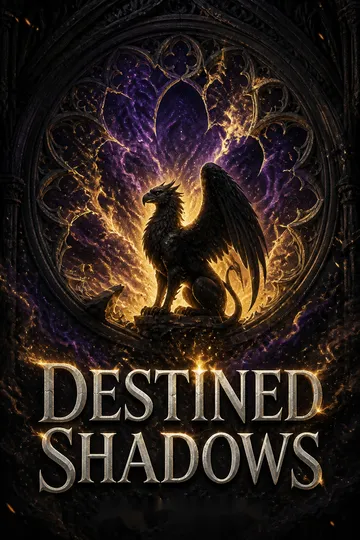
Destined Shadows makes the discovery of power inseparable from the discovery of how institutions use people. Raven moves from believing herself a Void to awakening necromancy, then learns that this is not the only ability she may possess. Each revelation increases her agency while making her more valuable to authorities who have not earned her trust. Her father’s interest in her magic, the Monarchy’s search for a necromancer, and the academy’s use of captive creatures all expose a common logic: living beings are treated as resources when power is at stake.
The novel counters that logic through chosen bonds. The Bishop brothers offer Raven support without demanding that she become useful to them, while Ari’s bond brings her into contact with the captive creatures’ grief. These relationships are not free of conflict. Brax’s protectiveness can become controlling, Creed’s magic can violate another mind, and Raven’s self-reliance makes it hard for her to accept care. The story treats intimacy as an ongoing negotiation of consent, trust, and responsibility rather than a cure for trauma.
Secrecy is the book’s central political instrument. Parents conceal motives, the academy withholds the enemy’s identity, the Guild hides its membership, and even allies reveal the truth in fragments. Some concealment is protective, but it also leaves young people to face danger without informed choice. The students’ investigations are therefore acts of self-defense as much as curiosity. They seek knowledge because the adults who expect them to fight have not told them what the fight is.
The ending brings the private and political plots into one room. Erikel’s invasion exposes the failure of ceremonial welcome, while Creed’s recognition of the invading commander turns a public war into a family wound. The abrupt stop denies the comfort of a settled victory. Raven and the Bishops have gained powers, allies, and fragments of truth, but none yet guarantees safety. Their next task is not merely to survive the coming conflict. It is to decide what kind of realm they are willing to defend.
People Also Read






Characters
Raven
Shadowmoor-born survivorRaven is a sharp, self-reliant young woman raised in Shadowmoor, where survival taught her to distrust easy promises and keep her defenses close. At Silvercrest Academy, she is drawn into the lives of the Bishop brothers and into conflicts larger than the narrow world she has known. Her wit protects her from pity, but it also makes vulnerability difficult: she wants closeness while fearing that dependence will become another form of control. Raven notices who is being ignored, whether that is a friend, a familiar, or a captive creature. Her strongest instinct is to act when someone she loves is threatened, even before she understands the cost.
Brax
Guarded gargoyleBrax is a physically formidable gargoyle whose bluntness and need for control protect an older wound: the fear of losing people he loves. He is one of the Bishop brothers and is drawn to Raven with a fierce, often possessive intensity. His first response to emotional uncertainty is usually silence or anger, which can make care difficult to distinguish from command. Yet he is attentive to danger and quick to place himself between Raven and a threat. Brax’s guarded nature is not indifference. It is a strategy built around keeping pain manageable, even when that strategy prevents him from saying what he feels.
Zane
Invisible-hearted protectorZane is one of the Bishop brothers, known for warmth, humor, and an instinct for making people feel less alone. His magic lets him become invisible, but emotionally he tends to do the opposite: he checks in, reaches out, and makes his affection clear. Zane’s confidence can turn playful, especially with Raven, yet beneath it is a serious commitment to protecting the people he considers family. He is also the son of Rhys Denver, a powerful Monarchy figure, a connection that places him between private loyalty and public duty. Zane tries to keep those roles from eclipsing the person he is.
Creed
Onyx-eyed mind readerCreed is a quiet, observant Bishop whose ability to enter or influence minds gives him unusual power over other people’s inner lives. He is careful with what he notices and often speaks only after he has weighed the situation. That restraint can make him seem distant, but his attention is persistent, especially where Raven is concerned. Creed values loyalty and protection, though his willingness to use force reveals the danger of treating those values as permission. His calm exterior conceals intensity rather than a lack of feeling. He is drawn to Raven’s fierce independence and to the vulnerability she rarely allows others to see.
Eldon
Vision-led firestarterEldon is a Bishop brother whose magic includes fire and visions that arrive in fragments rather than convenient explanations. He is affectionate, physically expressive, and more willing than Brax to put his feelings into words. Eldon often uses humor and touch to steady a tense room, but his visions can leave him frustrated when he cannot interpret them. He is attentive to Raven’s moods and quick to make space for her among the brothers. His warmth is not passivity: when danger appears, he can act decisively. Eldon’s instinct is to connect people, even when the information he receives threatens to pull them into uncertainty.
Ari
Griffin familiarAri is a powerful griffin whose bond with Raven gives her an uncommon source of comfort and communication. Proud and protective, he is devoted to his pride and carries their suffering as his own. Ari is not a pet or a decorative companion; he has loyalties, judgment, and loved ones beyond Raven. His presence challenges the academy’s habit of treating magical creatures as tools. Through him, Raven encounters a world of captivity and kinship that human institutions would rather keep out of sight.
Leila
Raven’s candid friendLeila is Raven’s friend and the daughter of Professor Fitch. She is sociable, direct, and more resilient than her awkwardness sometimes suggests. Her loyalties are complicated by her father’s position and by the secrets surrounding the academy, but she does not want Raven reduced to a problem that others manage. Leila is willing to challenge the Bishop brothers and to offer practical help, even when she cannot promise complete openness. She wants friendship without pretending that trust is effortless, and her social ease gives Raven a connection beyond the intense circle of the five housemates.
Evangeline
Protective motherEvangeline is Raven’s mother, a woman whose affection survives a long separation from her daughter. She is gentler than Abel but carries secrets of her own, making her care difficult to read as wholly safe or wholly transparent. Evangeline tries to protect Raven through quiet warnings and private reassurance rather than open confrontation. Her restraint may come from fear, strategy, or both. She represents a maternal bond that offers genuine tenderness while remaining entangled in the choices that shaped Raven’s life.
Abel
Ambitious fatherAbel is Raven and Sebastian’s father, a powerful man who approaches family life with the same appetite for influence he brings to public affairs. He is focused on Raven’s potential and tends to regard her choices as matters he can direct. His composure makes his motives difficult to read, while his concern can feel inseparable from ambition. Abel is not simply cold; he claims to love Raven, but the gap between that claim and his treatment of her is central to their strained relationship.
Sebastian
Raven’s calculating brotherSebastian is Raven’s older brother, polished and socially confident, with a strong sense of entitlement to influence events around him. He knows how to appear composed when others are suspicious, and his relationship with Raven is marked by resentment and uneven power. Sebastian moves comfortably through elite circles, but his confidence does not make him trustworthy. He is motivated by status and control, and he often treats other people’s choices as obstacles to be managed.
Genie
Silvercrest social rivalGenie is a student who uses social standing and public attention to pressure those she dislikes. Her rivalry with Raven is sharpened by jealousy and a desire to control how others see them. She prefers humiliation and spectacle to honest confrontation, turning gossip into a weapon. Genie’s confidence is real, but it depends on an audience willing to reward cruelty. Her presence shows how academy politics can make social punishment feel as threatening as physical conflict.
Rhys Denver
Monarchy father and allyRhys is Zane’s father and a senior member of the Monarchy. He balances public authority with a strong commitment to his family, though he has sometimes tried to protect his son by withholding dangerous information. Rhys is practical and decisive when someone is at risk. He listens for the fear beneath a person’s words rather than demanding every detail, a quality that sets him apart from Raven’s father. His position gives him access to information and power, but it also forces him to choose when to act against other authorities.
Professor Burton
Academy’s guarded leaderProfessor Burton is one of Silvercrest Academy’s senior authorities and the public face of its announcements. He is practiced at managing a crowd, but his measured presentations often leave important questions unanswered. Burton has connections to the academy’s secret structures and sees potential in students willing to take risks. He is neither fully transparent nor simply indifferent; he operates within a system whose secrets may be intended as protection, control, or both.
Professor Fitch
Leila’s wary fatherProfessor Fitch is Leila’s father and a teacher responsible for students’ physical preparation. He is stern, observant, and increasingly alert to dangers approaching Silvercrest. His protectiveness toward Leila can make him seem guarded, especially when he believes information might place her at risk. Fitch understands that the academy’s students are being asked to face threats they have not been fully taught to understand, and he tries to strengthen them before those threats arrive.
Erikel
Basilica realm rulerErikel is the ruler of the neighboring Basilica Realm and presents himself as a proud, theatrical leader. He is conscious of titles and ceremony, and he knows how to turn formal language into a tool of persuasion. His arrival at Silvercrest carries political weight because the two realms have been separated by hostility and mistrust. Erikel’s manner is designed to command attention, leaving others to decide whether his confidence signals diplomacy or danger.
Gia
Griffin of Ari’s prideGia is a griffin confined with other magical creatures on academy grounds. She is perceptive and hopeful enough to approach Raven, despite the danger and uncertainty of their situation. Her bond with Ari makes the compound’s conditions personal, while her appeal asks Raven to consider what solidarity might require.
Finn
First-year casualtyFinn is a first-year student caught in the assault on Shadowmoor’s outpost. He is not one of Raven’s closest companions, but his death gives the attack a human cost beyond the people she loves. His name is among those read aloud at the academy’s casualty gathering.
Lyra
Academy administratorLyra is a senior academy administrator who manages communication and institutional procedure. She is brisk and capable, with a more complicated personality than her official manner initially suggests. Raven’s presence challenges Lyra’s guarded habits, and their exchanges reveal how authority can be softened without disappearing.
Grave Richardson
Guild swordsmanGrave is a fourth-year student and a skilled swordsman with a family connection to the Monarchy. He is reserved and dislikes being reduced to his lineage. His discipline in combat makes him a useful partner for Zane, while his independence suggests that he values ability over inherited status.
Florentine
Guild combat mentorFlorentine is a former Silvercrest student who works at the uniform shop and remains committed to the Nightmares Guild. She is direct, confident, and serious about training. Her decision to dedicate herself to the Guild reflects how strongly she believes in its cause.
Professor Figgins
Creature compound custodianProfessor Figgins teaches physical training and oversees the compound where magical creatures are kept. She is strict about discipline and expects students to develop strength as well as magical skill. Her role links the academy’s training system to the treatment of creatures it uses.
Plot Devices
Necromancy
Life at a forbidden costRaven’s necromancy first appears in the crisis at Shadowmoor, when she brings Brax back after he has died. The act is both miraculous and illegal, immediately making her power a private source of fear and a possible public threat. It changes her relationship with Brax because he must confront a death he cannot remember, and it draws the attention of the Monarchy, which knows a necromancer has appeared but does not yet know Raven’s identity. The device makes love consequential rather than purely emotional: Raven’s choice saves someone, but it also exposes her to law, politics, and the possibility that others will try to use her.
The Nightmares Guild
A door into hidden knowledgeThe Guild offers Raven and the Bishops access to dangers and histories that Silvercrest’s public authorities conceal. Its members meet in a chamber beneath the academy, wear masks, train for combat, and conduct missions beyond the school. The Guild’s stated mission is to defend the realm, including people outside its elite center, but its strict secrecy complicates trust. Leila’s membership, along with Sebastian’s and Genie’s, proves that shared affiliation does not guarantee shared loyalties. The Guild advances the plot by revealing the Basilica Realm, the creature compound, and the looming threat, while preserving uncertainty about who controls its information.
Eldon’s visions
Clues before explanationsEldon’s visions arrive in striking but incomplete images: ravens, a fallen bishop, a storm, and a dark chamber with carved names and a golden table. Because they do not provide a clear map or prediction, they create pressure to interpret rather than simply obey. The vision of the chamber leads the group toward the Nightmares Guild, while other images echo Raven’s changing place in the story. Eldon’s gift makes him useful but also frustrated, since his closest companions must help test what each image could mean. The visions turn intuition into a plot engine without granting anyone certainty.
Emotional magic
Feeling becomes magical fuelRaven and the Bishops discover that emotion is tied to the way her magic manifests. Sadness produces a visible purple flare, while trust and other feelings become part of their attempts to understand her abilities. This link makes emotional openness practical as well as intimate: the group cannot train her effectively without asking what she feels. It also creates risk, because trauma and grief are not simply internal experiences when they can activate power. The device joins psychology to magical mechanics, asking Raven to interpret her own responses rather than accept other people’s labels for what she is.
Mirror magic
An enemy’s force reflectedDuring a Guild training session, Raven appears to reproduce or redirect magic after touching a rock while under attack. Creed identifies the ability as mirror magic, though its full limits remain unknown. The discovery follows another sign that Raven can project an image into Brax’s mind, suggesting her powers may interact with other people’s magic in unusual ways. Mirror magic gives Raven a possible means of defense against stronger opponents, but it also intensifies the danger that powerful groups will regard her as a weapon. Its arrival shifts her from learning one forbidden ability to facing a much larger and less understood magical identity.
Silvercrest Academy Series






Download PDF
Download EPUB
.epub digital book format is ideal for reading ebooks on phones, tablets, and e-readers.








