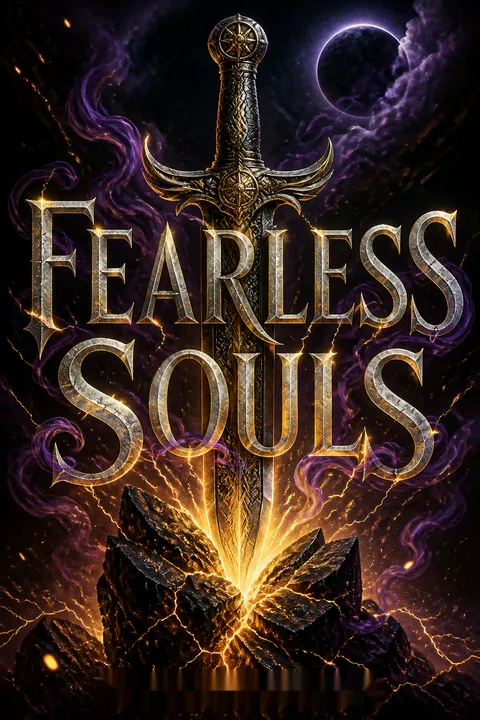


Plot Summary
Prologue
After Cassandra is healed, Alexi carries Harmonia to the house where she once knew him and his companions. The familiar red door and welcoming home have become a prison.
Alexi, Malik, and Talon reveal themselves as Furies, and Harmonia realizes that the price for Cassandra’s cure is not a favor she can simply repay and leave behind. Her old friends have taken her into their power, while Rhea and the others are left without her.
Placed after the main story, this prologue turns a victory into a new captivity. Cassandra’s cure appears to be a clean answer to a frightening problem, but the Furies make clear that healing can carry a cost no one else is entitled to choose. Harmonia’s recognition of Alexi complicates the threat: she is not facing strangers, but people tied to her earliest attachments and old wounds. The transformed house makes that emotional reversal concrete. A place that once promised safety now encloses her, suggesting that familiarity can become coercive when affection and power are unevenly shared.
Adonis Enters Hell
At a staged trial arranged by Dean Zellus, Selene, Hector, and Khaos’s mother, Rhea faces a pit of blue Hellfire while her friends watch helplessly. Adonis recognizes the flames as a trap: Rhea would burn there forever, but he is Hades’ son and may survive.
He uses a new glamour to take Rhea’s appearance, sends the real Rhea into hiding with the seeker, then lets Khaos’s mother shove him into the fire. The trick buys Rhea time, but the spectators believe she has died. When she steps out and exposes the substitution, Zellus’s attempt to erase Nyx’s bloodline is laid bare, and the crisis draws Nyx into the open.
Adonis’s decision is a strategic act of love, not a display of invulnerability. He accepts the danger because his supernatural inheritance gives the plan a chance, while Rhea’s survival depends on trusting him and remaining hidden when her instincts would normally drive her toward the fight. The deception also alters the group’s public position: the enemy controls the spectacle until Rhea returns to name what actually happened. The scene therefore makes appearance itself a weapon. Zellus’s plot relies on the crowd believing what it sees, and Adonis and Rhea interrupt that manufactured certainty from opposite sides of the flames.
Nyx's Dagger
Rhea’s return brings her face to face with Nyx, the supposedly dead goddess who is also her mother. Nyx kills Khaos’s mother during the confrontation, then Hades arrives with Adonis, who has escaped Hell and reunited with Rhea. Zeus appears to protect Zellus and removes Nyx from the scene.
Rhea reaches her mother telepathically and finds her in Zellus’s office, where Nyx reveals that Zeus’s gift from Pandora’s Box has been taken back. When Rhea copies Nyx’s finger snap, Zeus’s golden Dagger of Victory appears in her hand. The weapon once belonged to Zeus, cannot be wielded by another, and promises victory rather than protection from every consequence.
The dagger gives Rhea more than a weapon: it makes inheritance visible and unsettles the hierarchy that has governed the supernatural world. Zeus once used the gift as proof of unquestionable authority, but the weapon now answers Rhea instead. That transfer does not make her safe or omnipotent; its promise is narrower than the political claims built around it. Nyx’s return likewise refuses a simple mother-daughter reunion. Rhea gains a living connection to her origin while still lacking a history she can trust. Power arrives here as evidence of belonging, but not as a substitute for explanation or intimacy.
Saints Academy Declares War
At an emergency assembly, Zellus declares war on Nyx and anyone connected to her, naming Rhea as an enemy. Hector attacks the group before they can leave, throwing them outside with a blast of wind. Zen answers with earth magic, and the struggle becomes a battle among students and faculty.
Harmonia and the twins join Rhea’s side; Zen manifests black wings and, in the fight, unexpectedly drains Hector’s magic. Khaos kills the disarmed angel, while Rhea faces Selene. Nyx opens a way out before Zellus can trap the group, and Rhea chooses to leave the Academy with her Elites. As they depart, Nyx gives Rhea her birth name, Rheatora, and takes them to Hell.
Zellus turns institutional authority into a weapon: the assembly does not inform students neutrally, it tells them whom they are permitted to hate and invites them to enforce that verdict. Rhea’s response is not to win the Academy’s approval but to protect her chosen family and leave a place that has become unsafe. The battle also reveals that the Elites’ powers are still developing. Zen’s wings and his ability to remove Hector’s magic emerge under pressure, with consequences he does not yet understand. Rhea’s departure is both tactical retreat and refusal to accept the role of villain assigned to her.
Hell's Rules Run Deeper
Nyx brings Rhea and the Elites to her secluded home in Hell, where they try to recover from the attack and make sense of their new position. She explains that she once loved Zeus, but would not submit to the lesser role he wanted for her. When he turned against her, he used the Dagger of Victory to stab her repeatedly; its gift ensured his victory, not her death.
The distinction explains how Nyx could survive the war and why Rhea’s dagger cannot be treated as a simple death sentence. Adonis later returns from his parents with a Coin of Charon, a charm that allows its holders to travel between Hell and the Academy despite the barrier around the school.
Nyx’s account reframes the old war as a struggle over who gets to define a powerful woman’s place, but it does not excuse her present secrecy or Rhea’s anger. The dagger’s limits are especially important: a magical promise can be exploited by those who mistake winning for total control. Nyx survived Zeus’s attack, yet survival did not undo what he did to her or restore the children he took from her. The Coin of Charon offers a practical counterweight to this history. Where the dagger carries a grand claim of victory, the coin solves a humble but decisive problem: how to return and help people left behind.
Agion's Locked Rooms
Rhea and the Elites return to Agion to collect their belongings and check on Harmonia, Thalia, and Cassandra. Xander’s portal takes them in, but Harmonia reveals that Zellus has confined students who refuse to pledge loyalty, using cuffs that suppress their magic and restrict their movement. She is among those trapped.
When Rhea tries to leave, Skye appears strangely flat and insists that they stay; Xander cannot reopen a portal through the Academy’s magical dome. Nyx intervenes and takes the group back to Hell, calling Skye one of Zellus’s obedient third years. Rhea is left with a new question: whether the older students are simply following orders or have been altered into something more controlled.
The cuff converts political dissent into bodily confinement. Its force is not merely that it suppresses magic, but that it makes a student’s ability to choose where to go dependent on the person demanding allegiance. Skye’s unnatural manner adds a second layer of uncertainty: the Academy’s danger may not end with the people openly attacking Rhea. The failed portal also makes escape a matter of access and infrastructure, not courage alone. Rhea’s concern for her friends keeps her returning to a hostile institution, while each return teaches her that rescue requires understanding the system that has made them vulnerable.
The Third Years Answer
Using the Coin of Charon, the group slips back into the Academy and overhears a third-year wolf named Bobby arguing with his younger sister, Tammy. Bobby cannot explain why he must obey a summons, but Tammy refuses to accept that their only choice is to join Zellus or be confined. The Elites follow the third years upstairs and see a crowd of students moving with the same vacant obedience Rhea noticed in Skye.
Nyx later confirms that Zellus has been draining their magic and assigning them roles as guards and enforcers. During this period, Zen learns from his mother that his black wings and rare power come from the Gauntlet of Purity; practice with his shield also releases a protective lion.
Tammy’s refusal gives the third-year crisis a human scale. Zellus’s system is not an abstract conspiracy when a younger sister can see her brother becoming unable to act on his own judgment. The students are both potential aggressors and people being coerced, a distinction that complicates Rhea’s wish to defend herself without harming the frightened or controlled. Zen’s discoveries offer a parallel model of power: his abilities become clearer through family knowledge and practice, not through someone else extracting them. Against Zellus’s forced harvesting, the story sets forms of strength that depend on recognition, consent, and learning.
Selene Pays in Blood
When Rhea and her Elites return to Agion, they find Harmonia’s room wrecked and the cuff gone. Harmonia explains that she broke her own arm to remove it, then Selene attacked before she could escape. The group finds her restrained in Xander’s room, injured and pinned by living vines. Rhea fights Selene and kills her with the dagger, which wounds but does not finish the job.
Khaos removes Selene’s heart, and the Elites take the unconscious Harmonia back to Hell before Zellus can seize her again. Zen heals her injuries. The rescue succeeds, but Rhea’s relief is shadowed by the certainty that Zellus has turned the Academy into a place where even a freed student remains in immediate danger.
Harmonia’s self-injury is an act of agency under coercion, but the fact that escape requires bodily harm shows how thoroughly Zellus has narrowed her choices. Rhea’s rescue does not restore the old safety of Agion; it simply removes Harmonia from the immediate reach of her attackers. Selene’s death marks a shift in Rhea’s relationship to violence. She is no longer only the target of other people’s plans, yet her action is framed as protection rather than triumph. The scene forces her to accept that ethical restraint cannot mean passivity when a friend is being tortured.
A Fury's Price
Cassandra’s red-eyed vampire frenzy remains a danger despite her family’s efforts, so Rhea asks Nyx to summon a Fury who might help. At a gym, the group meets Alexi, Malik, and Talon, who heal Cassandra but demand Harmonia as payment. Harmonia accepts the bargain, and the Furies take her away while Rhea and the others are unable to cross the barrier they create.
Rhea collapses under the loss, recognizing the cry she heard earlier as her own grief. Afterward, Xander tells her that he has found a way to reverse the angel dust that prevents her from having children, leaving the choice with her. Rhea grieves Harmonia but cannot allow that loss to define every possibility ahead.
The cure exposes the danger of transactional care. Cassandra receives what she needs, but the price is imposed on Harmonia and accepted under conditions that leave Rhea no meaningful control. Harmonia’s choice is not easy consent, and Rhea’s helplessness makes the distinction painfully clear. Xander’s discovery offers a contrasting kind of knowledge: he gives Rhea an option without demanding that she use it. The difference matters. One exchange treats a person as payment; the other returns a choice to someone whose body was altered without permission. Rhea’s grief does not erase her capacity to keep planning.
Nyx Names Lake Tora
Dante arrives with a list of potential allies, then admits he spent years working for Nyx to keep Rhea hidden from the Hex and prevent her from being tested. His past relationship with Rhea makes the revelation harder to absorb. Nyx kills him after he explains that he broke her trust, and the group must reckon with another death inside their own circle.
Meanwhile, Nyx gathers supporters, including members of the Hex who reject Zellus’s lies. She confronts Zellus publicly and announces that her forces will meet his at Lake Tora in three days. Her prophecy hints that the war depends on more than strength: the people on her side must stand together and recover what has been taken from them.
Dante’s disclosure contaminates the meaning of protection. He was assigned to keep Rhea safe, but his role does not erase the intimate betrayal she experienced, and his death does not resolve that history. Nyx’s decision to kill him shows how readily she treats loyalty as a matter of survival, while Rhea’s response remains complicated rather than neatly forgiving or condemning. The public challenge shifts the conflict from hidden manipulation to an announced confrontation. Naming a place and time gives both sides a shared point of accountability, while Nyx’s prophecy insists that unity, not mere numerical force, will determine whether her coalition can withstand Zellus.
Lake Tora's Broken Dawn
At Lake Tora, Zellus’s controlled third years meet Nyx’s gathered allies in open combat. Rhea kills Skye when the former student attacks and shows no sign of acting freely. Zen uses his developing powers, while Xander, Khaos, and Adonis fight beside him. Nyx confronts Zeus and tears him apart with her magic.
When Aphrodite then attacks her, Rhea intervenes and discovers the force of her own power: her touch decays Aphrodite’s body until she dies. The battle does not end with the gods’ deaths. Zellus’s fallen soldiers begin rising again as magically controlled dead, and the fighters realize that killing them on the field will not solve the threat. Rhea follows Professor Riva’s clue toward Zellus’s office.
The battle forces Rhea to act before she can settle what family means to her. She kills Skye in a fight shaped by Zellus’s control, then uses an unfamiliar power against Aphrodite, her sister. Neither death can be made emotionally simple by calling it necessary. Nyx’s attack on Zeus likewise collapses the old myth of invulnerability, but the returning dead show that the enemy’s system persists beyond its individual soldiers. The climax therefore refuses the comfort of a clean battlefield victory. Rhea must move from reaction to investigation, seeking the machinery that keeps Zellus’s army functioning rather than treating each revived fighter as a separate enemy.
The Chamber Beneath Zellus
Below Zellus’s office, Rhea and the Elites find chambers containing Nyx’s living children, connected by tubes to a machine feeding their magic into Zellus. He has been using their stolen power to enlarge his own strength. Zellus throws the group aside and destroys Khaos’s blood-filled chalice, but Rhea’s dagger and newly awakened decay magic give her a way to fight back.
Adonis disconnects the tubes while Rhea wounds Zellus and drains the life from him with her touch. His death ends the magical control holding the soldiers together, and the undead army falls. Nyx reaches the chamber and sees that the children she believed lost are alive, while Rhea stands with her Elites after bringing the conflict to its source.
The hidden chamber makes Zellus’s political project literal: his authority is sustained by bodies kept out of sight and stripped of their power. The siblings are not simply a secret revelation; they expose the material cost behind his claim to rule. Rhea’s victory draws on both inheritance and chosen bonds. The dagger provides a route to triumph, but her own power and Adonis’s decision to sever the tubes end the system sustaining Zellus. Importantly, the army’s collapse follows the destruction of its controlling mechanism, not a final slaughter of every controlled student. The resolution distinguishes defeating coercion from punishing those it has commandeered.
A Future Beyond Hex
After the battle, the Hex offers Rhea and her Elites positions in its ranks, and Hades proposes that they instead reshape Saints Academy into a place where supernatural students can learn without Zellus’s control. Rhea rejects an immediate role in the Hex but does not dismiss the possibility of rebuilding the school; she asks to consider it after her group has time to recover.
In the epilogue, the families gather for a rare celebration at Zen’s parents’ home. Ana’s pregnancy ends the evening’s uneasy peace when her labor begins, sending everyone into motion. Rhea watches the chaos around the table and imagines a future with her four soulmates, one no longer organized solely around survival.
The offer of institutional power tests whether Rhea’s victory will reproduce the structure she fought against. She refuses to confuse a seat in the Hex with freedom, while leaving open the harder work of rebuilding a school that has shaped so much of the conflict. Her choice is provisional, which suits a character who has repeatedly been forced to act before she has enough information. The epilogue returns the story to a family gathering, but its new labor begins amid the mess rather than outside it. Intimacy here is not an escape from public responsibility. It is the future Rhea wants to protect and make possible.
Epilogue
At Zen’s family home, Rhea sits among the people who have become her family: her four Elites, Nyx, Hades, Persephone, and Xander’s parents. The gathering feels fragile after the battle, but it gives everyone a brief chance to breathe.
Ana’s labor begins before the evening can settle, and the family rushes to help. Rhea sees the scene as a glimpse of the life she wants with her soulmates, one built around shared care rather than constant danger.
The epilogue deliberately trades the scale of gods and armies for an ordinary emergency: a baby is coming, and everyone must help. That change in scale does not make the danger of the earlier story irrelevant. It gives Rhea a concrete image of what survival is for. Her imagined future is not a throne or a victory parade, but shared domestic life that can absorb surprise without becoming a battlefield. The presence of multiple generations also quietly answers the story’s concern with stolen futures. A new child arrives into a room where care is collective, not something imposed by one powerful person.
Analysis
Fearless Souls makes political power personal by showing how it reaches the body. Zellus does not merely announce a war: he classifies students as enemies, suppresses dissent with cuffs, controls the third years, and drains Nyx’s children to enlarge his own strength. His regime depends on turning coercion into something that resembles order. Rhea’s resistance answers that system through relationships rather than an individual claim to rule. Her four Elites bring different forms of care and ability, while friends such as Harmonia and the twins make clear that chosen family extends beyond romance.
The novel also questions inherited stories. Nyx is feared as a villain, Zeus is treated as a ruler, and Rhea enters the supernatural world with almost no reliable account of her own origins. Each revelation revises what seemed settled, but truth alone does not heal the injuries behind it. Nyx’s secrecy leaves Rhea angry; Dante’s protection does not undo his betrayal; and Cassandra’s cure costs Harmonia her freedom. Care is therefore measured not by good intentions alone, but by whether it preserves another person’s ability to choose.
The supernatural objects sharpen this argument. Zeus’s dagger promises victory but not death, and its transfer to Rhea exposes the gap between possessing power and deserving authority. The Coin of Charon, by contrast, grants no dominion; it simply lets the group return for people who need help. Rhea’s emerging magic is most effective when it serves that same relational purpose. Her victory does not make her a new unquestioned ruler. She declines an immediate place in the Hex and considers remaking the Academy instead. The ending imagines leadership as repair: not conquering the world, but changing the structures that made students expendable and building a future in which care can be ordinary.
People Also Read


Characters
Rhea
The stubborn centerRhea is a young woman raised as a human in Phoenix Valley who discovers that her birth ties her to the gods and to a world that would rather define her than know her. She is direct, protective, and quickest to act when someone she loves is in danger. Her independence is not indifference: she forms intense bonds while refusing to treat dependence as weakness. Rhea’s central struggle is learning how to wield power without accepting the roles other people assign her, whether villain, weapon, or heir. She is especially motivated by the safety of her chosen family and by the chance to make decisions about her own life.
Xander
The watchful wolfXander is Rhea’s wolf-shifter soulmate, recognizable by his amber eyes and black wolf form. Protective and physically decisive, he often notices danger before the others and places himself between Rhea and whatever threatens her. His instincts can make him possessive, but his care is also practical: he helps Rhea recover, looks for information she needs, and tries to give her options rather than dictate them. Xander’s loyalty is rooted in a deep bodily bond with Rhea, yet he works to make room for her agency. His steadiness gives the group an anchor when fear or conflict threatens to scatter them.
Adonis
The devoted incubusAdonis is Rhea’s incubus soulmate, marked by lilac eyes, a playful manner, and an instinct for improvisation. His humor can puncture tension, but it does not make him careless about danger. He studies supernatural lore, creates useful glamours, and often spots a solution when the others are focused on the immediate threat. Adonis’s devotion is expressed through action: he is willing to place himself in danger for Rhea and is quick to comfort her afterward. He also carries a complicated family inheritance through Hades and Persephone, which makes his ability to move between ordinary affection and the terrors of Hell especially significant.
Zen
The measured angelZen is Rhea’s angel soulmate, a thoughtful planner whose calm presence helps the group make decisions under pressure. His blue eyes and black wings reflect a rare source of angelic power, though he initially has little understanding of what that means. Zen is a healer as well as a fighter, and he often notices when someone needs reassurance before they can act. His patience is not passivity: when Rhea or the others are threatened, he can unleash formidable magic. He is motivated by loyalty and care, and his growth involves accepting that his abilities are not evidence of corruption but part of who he is.
Khaos
The guarded vampireKhaos is Rhea’s vampire soulmate, a sharp-edged presence with black eyes that can flash green. He is cautious, proud, and often the first to question an uncertain plan, but his loyalty to Rhea and the rest of the unit runs deeper than his guarded manner suggests. His family history is painful, and his relationship with his mother complicates the way he understands trust and protection. Khaos’s humor is dry and his affection can be unexpectedly gentle. He approaches danger with a vampire’s speed and appetite for action, while gradually allowing himself to show how much he fears losing the people he has chosen.
Nyx
The returning goddessNyx is the Goddess of Night, a powerful and feared figure whose return overturns the history the supernatural world thought it knew. She is Rhea’s mother, though their relationship is strained by years of absence, secrecy, and unspoken grief. Nyx is commanding, strategic, and capable of frightening violence, yet her feelings about her children reveal a more vulnerable center than her public reputation suggests. She tends to withhold information until she believes the moment is right, a habit that protects her plans but alienates Rhea. Her presence forces the people around her to reconsider who gets called a monster and who has the authority to tell the story.
Zellus
The academy's schemerZellus is the dean of Saints Academy and a skilled political manipulator who uses the institution’s authority to shape what students believe. He is ambitious, theatrical, and especially dangerous because he understands how to make coercion look like public duty. His plans draw on magic, hierarchy, and the fear people feel when the supernatural world becomes unstable. Zellus sees power as something to accumulate and command, not something to share. His conflict with Rhea and Nyx is therefore more than a personal feud: he wants a world in which no one can challenge the order he has built.
Harmonia
Rhea's fearless friendHarmonia is Rhea’s closest friend, an angel with white hair, pink eyes, and a fierce sense of loyalty. She is outspoken, funny, and willing to challenge people far more powerful than herself when she believes they are wrong. Her bond with Rhea is built on candor: she offers support without flattering her and expects the same honesty in return. Harmonia’s courage is not an absence of fear; she can recognize the cost of a choice and still make it for someone she loves. Her family ties and old history give her a life beyond the Elite unit, making her own desires and relationships important in their own right.
Cassandra
The vulnerable vampireCassandra is Thalia’s twin sister and Khaos’s cousin. Newly given vampire powers, she struggles with a dangerous frenzy that changes her eyes and threatens to overwhelm her judgment. Her vulnerability does not make her a passive figure: she is loved by her sister and supported by friends who take her condition seriously. Cassandra represents the costs of supernatural power when no one has yet learned how to live safely with it. Her situation motivates Rhea to seek help beyond the Academy, even when the available solution carries risks.
Thalia
Cassandra's fierce twinThalia is Cassandra’s twin and one of the friends who stands beside Rhea. She is loyal, quick to act, and deeply protective of her sister. Thalia often expresses what others are trying to suppress, particularly when Cassandra’s safety is at stake. Her attachment to family does not prevent her from supporting Rhea’s wider circle, and she readily joins the effort to defend people she cares about. She brings both emotional immediacy and practical courage to a group facing threats far beyond the Academy’s usual rules.
Zeus
The threatened rulerZeus is a member of the Hex and Rhea’s biological father. His power and reputation shape the supernatural world’s account of the old war, but his history with Nyx is more intimate and conflicted than public legend allows. He is accustomed to command and to being treated as the source of authority. His relationship with Zellus shows that family loyalty can survive even when it supports destructive choices. Zeus’s presence raises questions about what rulers owe the people affected by their decisions, and whether affection can coexist with domination.
Aphrodite
Rhea's godly sisterAphrodite is one of Rhea’s biological sisters and a daughter of Nyx and Zeus. Her presence connects Rhea to the family history that has been concealed from her, while her choices place her within the dangerous politics of the gods. She appears composed and purposeful, with the confidence of someone accustomed to standing beside powerful figures. Aphrodite’s role complicates Rhea’s understanding of kinship: shared blood does not automatically create trust, safety, or loyalty.
Hades
Adonis's powerful fatherHades is Adonis’s father and a powerful figure in Hell. His manner is dry and composed, and he often offers help without disguising the cost or uncertainty of what he can do. He understands the dangers of supernatural politics and sees how quickly events can spread beyond one family or institution. His relationship with Adonis is imperfect but capable of warmth, especially when Adonis needs practical help. Hades is also a reminder that living in Hell does not by itself make someone cruel or untrustworthy.
Persephone
Adonis's resourceful motherPersephone is Adonis’s mother and a resourceful presence in the supernatural world. She provides Adonis with a Coin of Charon, a practical tool that helps the group move between Hell and the Academy. Her assistance shows that she is alert to the danger facing her son and willing to help him act independently. Persephone’s role is brief but consequential, linking family support to the logistics that make resistance possible.
Selene
Zellus's eager accompliceSelene is an Academy student who aligns herself with Zellus and uses her magic against Rhea and her friends. She is confident, cruel, and quick to treat fear as evidence that she is winning. Her hostility grows from a desire to protect the order that benefits her, even when that order harms others. Selene serves as a personal antagonist for Rhea, turning the wider conflict into direct confrontations where Rhea must decide how far she will go to protect the people she loves.
Hector
The attacking angelHector is an angel aligned with Zellus and an aggressive defender of the Academy’s hierarchy. He attacks Rhea’s group during the first open clash, using his wind magic and wings to try to overwhelm them. His confidence depends on the belief that his power is greater than theirs, making him a clear example of how Zellus turns institutional loyalty into violence.
Dante
Rhea's compromised protectorDante is a man from Rhea’s past whose relationship with her is entangled with secrecy and divided loyalties. He has worked within Nyx’s plans for years, and the gap between his stated role and his personal choices makes him difficult to trust. Dante’s presence forces Rhea to confront how protection can become manipulation when the person being protected is denied the truth. His connection to both Rhea and Nyx gives him a place at the intersection of family history and political conflict.
Professor Riva
The unexpected informantProfessor Riva is a member of the Academy faculty who understands more about its hidden structures than he initially reveals. He offers Rhea a clue that points toward the route beneath Zellus’s office, helping her locate the source of the conflict. His willingness to share information distinguishes him from the officials who follow Zellus without question.
The Furies
The dangerous healersAlexi, Malik, and Talon are Furies who possess the power to help Cassandra with her vampire frenzy. They are imposing, self-assured, and explicit that assistance comes with a price. Their history with Harmonia gives their presence an intimate charge, even as their supernatural role makes them difficult to negotiate with. They embody a world in which healing and coercion can arrive in the same bargain.
Skye
The unsettling third yearSkye is a third-year student whose behavior becomes strangely rigid as Zellus’s influence spreads through the Academy. Her flat manner and obedience make Rhea question how much freedom the older students retain. Skye embodies the uncertainty surrounding the third years: they can appear to be willing agents while showing signs that their choices have been narrowed or overridden.
Ana and Ben Elias
Zen's devoted parentsAna and Ben are Zen’s parents, offering him an affectionate family connection beyond the Elite unit. Ana is protective and outspoken, while Ben is a steady presence beside her. They care about Rhea as well as Zen and respond to danger with concern rather than suspicion. Their home becomes a rare gathering place where the group can imagine a future not dictated by conflict.
Gabriel
The questioning Hex memberGabriel is a member of the Hex and one of the rare angels connected to the Gauntlet of Purity. He is measured, observant, and willing to reassess the stories told by those in power. His attention to evidence makes him important in a political world where reputation often outruns truth.
Artemis
The candid Hex memberArtemis is a member of the Hex who speaks plainly and is willing to act when the old leadership has failed. She approaches political decisions with impatience for ceremony and concern for what comes next. Her presence offers Rhea a glimpse of a governing structure that may be changed, though not automatically trusted.
Plot Devices
Blue Hellfire and Glamour
The dangerous substitutionThe blue flames at the staged trial are not ordinary fire. Adonis recognizes them as a trap that would hold Rhea in endless torment, but his nature as Hades’ son gives him a chance of surviving. His newly developed glamour lets him appear as Rhea, allowing the real Rhea to hide while he takes her place in the spectacle. The device creates the opening crisis and establishes that appearances can be manipulated by either side. It also makes Adonis’s love concrete: he uses a supernatural skill he has only just learned to put himself between Rhea and a threat designed specifically for her.
Pandora's Box Gifts
Power with narrow rulesThe supernatural gifts linked to Pandora’s Box give the Elites specialized tools: Rhea’s golden Dagger of Victory, Zen’s shield, Xander’s bow, Adonis’s trident, and Khaos’s blood chalice. Their powers are not interchangeable. The dagger promises victory but does not guarantee death, while the shield can produce a protective lion and the chalice supplies Khaos with blood. The gifts shape both combat and strategy, but their limitations matter as much as their strength. Rhea’s dagger once belonged to Zeus and cannot be used by someone else, making its transfer a visible challenge to his authority.
Coin of Charon
A route through the barrierPersephone gives Adonis a Coin of Charon that lets its holders travel between Hell and the Academy. The group needs it because Xander’s wolf-made portals cannot freely cross the magical barrier surrounding Saints Academy. By placing their thumbs on the coin and naming a destination, the Elites can return to places they would otherwise be cut off from. The coin changes the story’s practical possibilities: it lets Rhea check on Harmonia, investigate the third years, recover supplies, and come back to Hell without relying on Nyx for every journey. Its modest function becomes essential in a conflict built around controlling access and movement.
Zellus's Cuffs and Chambers
Control disguised as orderZellus uses cuffs to suppress the magic of students who refuse to pledge loyalty, keeping them confined to their rooms. The cuffs are only the visible part of a larger system: the third years are summoned and controlled, while Nyx’s children are hidden beneath Zellus’s office and connected to machinery that drains their power. These devices show how his authority works at both a personal and a political level. Students lose freedom in their own bodies, while the stolen magic strengthens the ruler who claims to protect them. Understanding the system, rather than simply defeating individual soldiers, becomes necessary to end his control.
Rhea's Emerging Magic
A power that unmakesRhea’s magic first appears as a painful, difficult-to-control force that swells through her body before she understands what it can do. In battle, she discovers that her touch can decay another person, a power that helps her overcome opponents the dagger alone cannot kill. Its connection to her divine heritage is not a simple gift of strength: it frightens her, arrives at moments of extreme danger, and can make survival depend on using it decisively. Rhea must learn to distinguish her own choices from the expectations attached to her parentage. The power becomes most meaningful when joined to her commitment to protect people she has chosen as family.
Saints Academy Series




Download PDF
Download EPUB
.epub digital book format is ideal for reading ebooks on phones, tablets, and e-readers.








