


Plot Summary
Prologue
After agreeing to become the price of Alexi’s help healing Cassandra, Harmonia is carried away from her friends and taken to the Furies’ home. Alexi, Malik, and Talon, the boys she loved as a child and lost six years earlier, now greet her as supernatural enforcers with powers she barely understands.
Instead of reunion, they place her behind bars in the house’s basement. Harmonia refuses to mistake captivity for belonging, even as the old attachment between them pulls at her.
The opening makes the central contradiction immediate: Harmonia has chosen to surrender herself for a friend, yet the men who once represented safety turn that choice into imprisonment. Her captivity is not simply physical. It repeats the abandonment she felt when the three boys left years earlier, while forcing her to confront the difference between being claimed by destiny and being treated as a person with agency. The prologue establishes both the romance’s injury and the plot’s moral pressure: protection can resemble control when the protected person is denied a voice.
Daisies Before Destiny
As a little girl, Harmonia notices Malik coming from a home filled with shouting and blood, then helps him make daisy chains until he can relax beside her. Alexi and Talon join them, forming the childhood bond she carries into adolescence. Years later, the three boys touch Pandora’s Box at age twenty-two and learn they have been chosen to replace the Furies.
The Box identifies Harmonia as their sealed soul, and the boys arrive at her door expecting her to accept the bond. At sixteen, she refuses: she wants to be loved by choice, not needed as a magical requirement. The next morning she goes to Alexi’s house intending to explain that she believes they belong together, but they have already left.
The daisy chain is more than a childhood keepsake: it shows Harmonia responding to Malik’s pain through shared attention rather than rescue or interrogation. That early intimacy gives the later destiny revelation emotional credibility, but her refusal insists that fate cannot substitute for consent. At sixteen, she cannot separate the boys’ supernatural need from their desire, and their blunt approach confirms her fear. Her regret the next morning does not erase her boundary; it reveals the cost of a decision made without enough time or trust. The six-year separation grows from mutual misreading, not from a lack of attachment.
Bars Cannot Hold Her
Down in the basement, Harmonia uses her recently restored fire magic to melt the bars and leave the cell. Her powers had been suppressed at Saints Academy, where Dean Zellus wanted her fighting on his side; now she can also move objects with her mind and hold them still.
Malik catches her in the kitchen, and their tense exchange reveals how little the Furies know about the turmoil at the Academy. He gives her clean clothes and his bed, but continues to guard her movements. Harmonia refuses to accept a life without purpose or contact with her friends. She is still angry about the bars, yet she starts testing what freedom she can claim inside the house.
The escape establishes that Harmonia’s agency is not granted by the Furies. She makes room for herself with the very power others once suppressed, turning a prison designed to contain her into evidence of its limits. Her refusal to accept passive protection also challenges the group’s assumptions about strength: she is not helpless simply because their magic exceeds hers. Malik’s gesture of giving her his bed complicates his earlier role as guard. Care and control coexist, and the story makes Harmonia insist that affection must be accountable to her right to act.
A Suit, Then Bad News
Alexi takes Harmonia into Hollow Pier to buy clothes, a practical kindness that offers little comfort when he tells her that Zeus and Zellus are dead and the war at Saints Academy is over. Harmonia collapses at the news, fearing Rhea has been lost, but Alexi confirms that her best friend survived and won.
He gives no easy consolation, leaving Harmonia to absorb both relief and the ache of having been absent. Later, Malik brings her to the Furies’ office, where its polished reception and hidden supernatural operations expose how different their lives have become. Harmonia asks what they do, and the three agree to explain their work together rather than leave her guessing.
Harmonia receives the outcome she wanted for Rhea only after the fighting is finished, so relief arrives fused with exclusion. Her collapse registers not just fear of loss but the cost of being kept away from the people she chose to defend. Alexi’s practical care, clothes and information, remains emotionally limited; he gives her facts without the warmth she needs. The office tour marks a shift from the domestic conflict of confinement to the larger world the Furies inhabit. Harmonia’s questions are an attempt to regain orientation, not merely curiosity about their powers.
The Furies Explain
Talon explains that the Furies enforce supernatural balance: Alexi governs anger, Talon avenges murder, and Malik confronts destructive jealousy. Their work requires proof before they kill, and the Keres, death spirits tied to Hades, receive the souls they send onward.
The Redvellions, a dangerous faction, are their central threat. Their leader, Noose, arrives demanding that the Furies avenge his brother, presenting a severed piece of skin bearing what appears to be the Furies’ mark.
Talon identifies the emblem as false. When Noose’s visit triggers danger in the office, Malik transports Harmonia home rather than risk leaving her exposed. She is unsettled by the violence surrounding their work, but no longer ignorant of what her partners carry.
The Furies’ duties turn abstract moral language into an occupational burden: each man must judge whether anger, murder, or jealousy has crossed a threshold deserving death. Their power is therefore inseparable from restraint and evidence. Noose’s counterfeit emblem attacks that system at its most vulnerable point, manufacturing a demand for vengeance while obscuring who deserves it. Harmonia’s removal from the office shows the Furies’ instinct to protect her, but also their habit of deciding for her. Learning their roles is a first step toward being treated as a participant rather than a liability.
Malik Stops Hiding
Back at the house, Malik admits that he fears Harmonia will see the Furies as monsters and leave them again. Harmonia tells him she has never stopped loving them, but explains why she rejected the bond at sixteen: she needed to know they wanted her beyond the requirements of prophecy. Malik answers with a kiss instead of another demand.
Their intimacy becomes Harmonia’s first sexual experience, and the two seal their souls. The bond gives Malik a sense of wholeness, while Harmonia finally experiences the closeness she has wanted since childhood. The past is not repaired in one night, but the first of the three old separations gives way to a choice they make together.
Malik’s confession exposes the vulnerability beneath the guarded silence that once made him difficult to read. He fears abandonment, while Harmonia fears being reduced to a destiny-shaped function. Their connection advances because each names the fear the other might otherwise mistake for rejection. The soul sealing matters emotionally because it follows a freely chosen intimacy, reversing the original approach in which the boys presented fate as an obligation. The scene does not erase the years of hurt. It establishes a different method for moving forward: candor first, commitment after.
A Necklace, Then Rhea
Before taking Harmonia out, Alexi leaves a pink gemstone necklace for her, chosen to match her eyes. She recognizes the care in the gift even though he still struggles to speak openly. Talon and Malik then take her to dinner, where Talon has arranged a reunion with Rhea and the Elites.
Rhea checks that Harmonia is safe and offers to help her leave, but Harmonia chooses to stay. She explains that, after rejecting the boys at sixteen, she had returned the next morning to tell them they deserved her, only to find them gone. The reunion gives Harmonia room to confirm that she can love her friends and still choose a future with the Furies.
The necklace is Alexi’s first communication that does not rely on anger or command. Its personal detail suggests attention he has concealed, though the gift cannot substitute for direct speech. Talon’s arrangement of the reunion meets a need Alexi’s gift cannot: Harmonia can see that Rhea survived and decide, in person, where she belongs. Her account of the missed visit reframes the six-year silence as a chain of unspoken intentions. Staying with the Furies is meaningful because she now makes the choice with a clearer understanding of what she is choosing.
The Mark Appears
The next day, Redvellions attack the Furies outside their office. Their driver dies, Talon and Malik fight the assailants, and Harmonia refuses to retreat when Talon orders her inside. One attacker knocks her down and threatens her; she answers with fire, burning him alive.
The violence leaves a black mark on her arm, which Alexi identifies as the Mark of Death, the sign that the Furies’ own system may now target her. At home, Harmonia’s mother explains the danger while Alexi insists the emblem is counterfeit. The men begin investigating, but Harmonia is frightened less by death than by the possibility that they might be forced to kill her themselves.
Harmonia’s decision to stay and fight rejects the role of protected bystander, but the victory carries an immediate cost: her self-defense appears to place her inside the Furies’ machinery of judgment. The mark makes a moral system visible on the body, converting an abstract duty into an intimate threat. Her fear is relational rather than simply survival-based; she cannot bear the thought of her partners being made executioners in her case. The counterfeit detail preserves uncertainty and makes the mark both a physical wound and an instrument of psychological manipulation.
Green Ash, False Marks
While Harmonia stays with her mother, the Furies follow the false marks to a Redvellion hideout. They defeat the fighters waiting there and find another piece of marked skin alongside green ash associated with the deepest regions of Hell. Hades studies the evidence but cannot explain how the marks are being made.
At home, Harmonia learns her mother had quietly kept contact with the Furies’ families, preserving a connection during the years apart. Alexi later approaches Harmonia with the necklace’s meaning finally visible in his actions, and the two acknowledge the love he has buried under anger. Their renewed intimacy does not solve the investigation, but it changes the emotional ground on which they face it.
The evidence points toward Hell without explaining the mechanism, creating a meaningful distinction between location and cause. Hades’s uncertainty prevents authority from functioning as a convenient answer machine; the Furies must continue investigating rather than outsource judgment. At the same time, Harmonia’s mother reveals a quieter form of loyalty that survived the separation without overriding her daughter’s choices. Alexi’s intimacy follows Harmonia’s earlier account of the missed reunion, suggesting that hearing her history has altered how he understands his own resentment. The mystery and the romance advance through different kinds of evidence.
Harmonia Claims Fury Magic
As the investigation stalls, Harmonia bakes cookies to steady herself, a familiar comfort the Furies once shared with her as children. When she trains with Talon, her magic suddenly expands beyond fire: she produces ice, black smoke, and destructive force like the Furies’ own abilities. The men recognize the mark of a Fury on her face and understand that she has become more than their sealed soul.
Hades’s warning about the power of their united bond now makes sense, and the four share an intimate encounter that joins their previously separate connections. Harmonia welcomes the closeness, but the new power unsettles her. It brings her nearer to the men while placing a greater burden on her choices.
The cookies connect present-day intimacy to the earliest shared ritual of care, making domestic action a form of emotional regulation rather than quaint decoration. Harmonia’s new abilities arrive through practice and bodily experience, not an official pronouncement, so power becomes something she discovers and directs. Yet the transformation also risks collapsing her identity into her usefulness to the Furies. Their shared intimacy affirms her belonging, while the emerging magic raises questions about responsibility and control. The scene’s central tension is not whether she can wield power, but whether she can remain a full person while becoming part of a supernatural office.
Greta Opens the Way
At the office, receptionist Greta resents Harmonia’s necklace and tears it from her neck. Harmonia freezes Greta with magic and steps outside for air, where Noose confronts her. He reveals that he has taken Harmonia’s mother and offers her safety only if Harmonia comes with him. Harmonia goes, finding her mother imprisoned in a warehouse crowded with Redvellions.
A guard named Basil explains that the faction means to feed the imprisoned Styx, a force connected to Zellus, until she can challenge the Keres. Harmonia uses the Medusa pendant from Pandora’s Box to turn Basil to stone, then secretly calls the Furies. When Noose catches them, he transports Harmonia and her mother into Hell.
Greta’s jealousy becomes operational rather than merely interpersonal: her resentment creates the opening Noose needs to isolate Harmonia. The kidnapping exploits Harmonia’s strongest attachment, her mother, and makes her willingness to enter danger a choice shaped by love rather than recklessness alone. The warehouse revelation widens the plot from counterfeit marks to a scheme aimed at overturning the supernatural order. Harmonia’s pendant, previously an unexplained gift, now functions as an instrument she chooses to use. The covert call preserves a line to her allies, showing that even under coercion she plans for rescue rather than surrender.
Noose Falls in Hell
Noose moves Harmonia and her mother to a barren region of Hell, hoping to kill Harmonia before the Furies arrive. Harmonia fights beside her mother, whose angel wings and magic help resist him. As Noose presses her, Harmonia’s Fury abilities surge beyond her conscious control; she rises into the air and crashes down with enough force to kill him.
The power leaves her unconscious. Alexi, Malik, Talon, Rhea, and the Elites reach her through the connection of her sealed soul and carry her back from the brink. Hades confirms that her mark was counterfeit, but the danger remains: the false emblem and green ash point to a deeper operation in Hell, where Styx is still hidden.
The confrontation turns the story’s central fear inside out. Harmonia worries that her mark will force her partners to kill her, but her own power instead becomes the means by which she defeats Noose. The victory is not effortless or wholly chosen: her magic takes control, leaving her unconscious and exposing the danger of power without mastery. Her mother’s presence prevents the rescue from being exclusively romantic; Harmonia’s original family bond remains active at the climax. The soul connection helps the others find her, transforming destiny from an imposed claim into a channel of mutual care.
Styx Meets Medusa
Hades leads the group into Hell’s deepest region, where Styx’s hounds attack. The Furies and Elites hold them off while Harmonia and Rhea enter a cave system to reach Styx. There, Styx reveals that she arranged the false mark and allied with Noose after Zellus freed her from Medusa’s curse.
Harmonia’s mother had already helped expose her location, and Harmonia now carries the very talisman that can petrify her. Rather than wait for Styx to escape or regain power, Harmonia speaks her name and turns her to stone, then shatters the statue. The mark burns away, leaving a scar. The immediate threat ends, though the scar remains as proof of what she survived.
The climax makes Harmonia’s earlier refusal of imposed destiny newly consequential: she defeats Styx through an object whose power depends on her deliberate choice, not through a role passively assigned to her. The talisman’s link to Medusa also closes a thematic loop between petrification and agency. Styx’s confinement and manipulation had made others into instruments; Harmonia refuses to become one and ends the threat directly. The scar prevents the resolution from pretending that survival is erasure. Her body retains the history, but the mark no longer dictates her future.
Epilogue
Two months later, Harmonia meets Rhea, Thalia, and Cassandra for a girls’ afternoon. The friends laugh over lunch, and Harmonia is glad that her bond with Rhea has survived their separate battles. When she returns home, Talon brings her to a newly prepared shared bedroom, a private promise of the future the four have chosen.
A fresh mark interrupts their reunion, but none of them mistake work for a threat to their bond. Harmonia heads back to the Furies with her partners, certain that their life together is larger than any single interruption.
The epilogue gives Harmonia two kinds of belonging instead of making romance replace friendship. Her time with Rhea and the other women confirms that the relationship she fought to preserve still has room in her life, while the shared bedroom makes the Furies’ commitment concrete and domestic. The new alert does not undo the ending; it places their chosen future inside the work that will continue to claim their attention. Harmonia’s confidence comes not from believing danger is over, but from knowing she is no longer isolated from the people who will face it with her.
Analysis
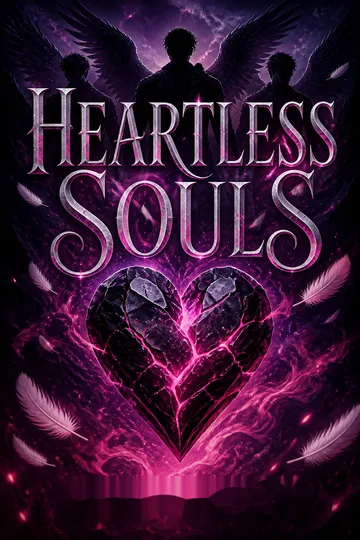
Heartless Souls builds its romance around a conflict between destiny and consent. The Furies learn that Harmonia is their sealed soul before they know how to approach her, and their first effort treats a profound relationship as a requirement attached to power. Harmonia’s refusal is therefore not a rejection of love but a demand that love be distinguishable from need. Her later choices matter because the men must become more honest and less controlling before she can trust what the bond promises.
The book links intimacy to forms of care that are specific and ordinary: Malik’s childhood daisy chains, shared baking, a chosen necklace, a meal, and the effort to reunite Harmonia with Rhea. These gestures counterbalance the Furies’ institutional role as judges and executioners. Their work requires them to decide when anger, murder, or jealousy has crossed into a fatal offense, but their private lives ask them to notice when protection becomes confinement. Harmonia’s insistence on fighting alongside them forces that distinction into the open.
Her expanding magic intensifies the question. Becoming a Fury gives her access to power that can defend her and destroy threats, but it also exposes her to the danger of being valued primarily for what she can do. The false mark turns that danger into a literal symbol: an authority meant to identify the condemned is forged and used to frighten both Harmonia and the Furies. The eventual defeat of Styx depends not on accepting the mark’s logic but on Harmonia acting deliberately with the talisman she was given.
The ending does not erase violence or grief. Harmonia keeps a scar, and the Furies’ work continues. What changes is her position within it. She is no longer a distant figure claimed by prophecy or a vulnerable guest guarded without consent. She has chosen her partners, recovered her friendship with Rhea, and entered the supernatural struggle as an agent with power of her own.
People Also Read
Characters
Harmonia
The self-choosing angelHarmonia is a young angel whose white hair and unusual magic make her conspicuous, but her defining trait is her refusal to let others decide what her life means. She loves Alexi, Malik, and Talon from childhood, yet rejects their first claim because she wants to be desired as a person rather than needed as a magical solution. Her loyalty to Rhea and her mother coexists with her attachment to the Furies. She is funny, stubborn, and emotionally candid, often using humor or domestic rituals to steady herself. As her abilities expand, she must learn to inhabit greater power without surrendering the ordinary self she has spent years protecting.
Alexi
The guarded FuryAlexi is one of the three Furies and carries authority over anger. He is controlled in public, sharp with those closest to him, and drawn to machines and practical tasks that offer a clear problem to solve. Harmonia’s return exposes how much of his hard exterior is fear of vulnerability, especially fear that loving her leaves him unable to protect her. His care tends to appear through concrete acts rather than easy comfort. He shares a long history with Malik and Talon, whose trust allows them to challenge his isolation, and he is learning that responsibility does not require emotional distance.
Malik
The watchful FuryMalik is a Fury whose domain is jealousy, and he is the quietest of the three men. His childhood home was marked by conflict, leaving him practiced at hiding emotion and slow to trust what he wants. Harmonia’s kindness once offered him a rare moment of calm, and that bond remains central to how he understands safety. He can be protective to the point of control, but his reserve softens when he speaks honestly about fear and longing. His deep loyalty to Alexi and Talon is matched by an intense need for connection, even when he struggles to express it.
Talon
The teasing avengerTalon is the Fury who avenges murder, a role that places him close to violence even as his manner is playful and sociable. He often uses humor to ease tension, but beneath it is a caretaker who remembers what others love and looks for ways to make them feel included. His friendship with Alexi and Malik is built on years of shared loyalty, and he often mediates when their tempers or silences take over. With Harmonia, his flirtation can conceal serious feeling. He is most fully himself when he lets both sides show: the charming tease and the man willing to offer tenderness.
Rhea
Harmonia’s chosen sisterRhea is Harmonia’s closest friend, a forceful young woman whose loyalty is active rather than ceremonial. She has survived upheaval at Saints Academy and is surrounded by the Elites, her romantic partners and allies. Even while facing her own conflicts, she worries about Harmonia and offers a way out when they reunite. Rhea respects Harmonia’s decisions once she understands them, balancing fierce protectiveness with the capacity to let her friend choose. Their relationship gives Harmonia a bond outside the Furies, keeping her life from narrowing into destiny and romance alone.
Harmonia’s mother
The steady-hearted angelHarmonia’s mother is an angel and a dependable source of warmth, perspective, and practical help. She has raised Harmonia to trust her own worth, and she respects her daughter’s need to make choices even when she can see how painful those choices may become. She maintains quiet ties with the families connected to the Furies and stands by Rhea during the Academy conflict. Her affectionate humor makes her feel approachable, but her loyalty is fierce when those she loves are threatened.
Noose
The Redvellion leaderNoose leads the Redvellions, a faction whose history of violence puts it in direct conflict with the Furies. He is calculating enough to use counterfeit evidence and personal threats, but his anger can make him reckless. His pursuit of leverage reveals how readily he treats other people as pieces in a larger contest. He regards the Furies as obstacles to his ambitions and Harmonia as a way to pressure them.
Hades
The underworld authorityHades is a powerful supernatural authority who oversees the Underworld and explains the Furies’ appointment. He is confident, theatrical, and fond of controlling the terms of an encounter, yet he does not pretend to know everything. His connection to the Keres places him near the supernatural system the Furies serve. He offers guidance when their investigation reaches questions beyond their experience, while leaving them to act on the evidence they can gather.
Nyx
The formidable goddessNyx is a powerful goddess and Rhea’s mother, formidable enough to command attention without raising her voice. Her history with the supernatural order gives her access to places and knowledge others cannot reach. She is blunt, self-assured, and willing to help when Rhea’s loved ones are in danger, though she expects others to acknowledge the cost of her assistance. Her relationship with Rhea combines maternal concern with the complications of a daughter who has built her own loyalties.
Adonis
Rhea’s demon partnerAdonis is one of Rhea’s sealed partners and a member of the Elites. He is confident and quick with humor, but he becomes practical when danger requires action. His connection to Hades gives him a route into parts of the supernatural world the others cannot easily reach. He stands by Rhea and helps her support Harmonia without confusing protection with ownership.
Khaos
An Elite allyKhaos is one of the Elites and one of Rhea’s partners. He contributes to the group’s strength and acts decisively when the others need to move through danger. His presence reinforces the Elites’ role as a close-knit team rather than a collection of isolated fighters.
Xander
An Elite allyXander is one of Rhea’s partners and a member of the Elites. He is capable of opening portals and helps the group move quickly when ordinary routes are impossible. His loyalty to Rhea is clear, and he works with the others as part of a coordinated unit.
Zen
An Elite allyZen is one of the Elites, Rhea’s partners, and a steady presence among the group. He contributes to their collective defense and shares their concern for Harmonia. His role is less about standing apart than strengthening the trust and coordination that make the Elites effective.
Thalia
Harmonia’s old friendThalia is one of Harmonia’s friends from the supernatural community and appears among the women who reconnect with her after the conflict. Her easy teasing helps restore the lively social world Harmonia misses.
Cassandra
The friend Harmonia savesCassandra is Harmonia’s friend, afflicted by a dangerous supernatural frenzy. Her condition is the reason Harmonia accepts the bargain that takes her to the Furies. She is also connected to Thalia, her twin, and her crisis gives Harmonia’s loyalty a concrete cost.
Zellus
The fallen academy deanZellus is the dean of Saints Academy, an authority figure who tries to control young supernaturals and their magic. His ambitions and methods place Harmonia in opposition to him. He represents institutional power that expects obedience, even when those under its control have their own moral judgment.
Styx
The imprisoned powerStyx is a powerful figure associated with the deeper workings of death and the Underworld. Her history is entangled with supernatural curses and the ambitions of others, making her a force whose influence extends beyond her immediate presence. She is guarded, formidable, and difficult to separate from the larger struggle over who controls the balance of power.
Greta
The jealous receptionistGreta works at the Furies’ office and becomes openly resentful of Harmonia’s closeness to the men. She is polished and socially observant, but her envy shapes how she treats the newcomer. Her role shows how private rivalries can become dangerous when they intersect with supernatural power.
Plot Devices
Pandora’s Box
Destiny’s selection enginePandora’s Box identifies supernatural potential and assigns a path to those who touch it. When Alexi, Malik, and Talon approach it, the Box selects them as replacements for the Furies and reveals Harmonia as their sealed soul. Harmonia also receives a talisman connected to Medusa. The Box sets the story’s central conflict in motion: it can reveal a destiny, but it cannot decide whether the people involved will embrace that destiny freely.
The sealed soul bond
Fate tested by consentA sealed soul is a supernatural bond that joins a destined partner to the Furies and strengthens their magic. The bond is revealed to the three men before they understand how to approach Harmonia, and their first attempt makes her feel like a means to an end. Later, she chooses intimacy with them on her own terms, changing the emotional meaning of the bond. It provides both a romance framework and a practical connection that can draw the Furies toward Harmonia when she is in danger.
The false Mark of Death
A forged trail of dangerThe mark resembles the emblem that identifies souls the Furies are tasked to kill, but its details reveal that it is counterfeit. Noose uses fake marks on pieces of skin to provoke the Furies and obscure a wider Redvellion scheme. When a similar mark appears on Harmonia after she defends herself, the threat becomes intimate and immediate. The mismatch, the repeated pieces of marked flesh, and the green ash eventually direct the Furies toward the deeper plot.
Medusa’s talisman
A name turns bodies stoneHarmonia’s pendant, received after touching Pandora’s Box, can petrify a person when she rubs its surface and speaks their name. At first she does not know what the gift can do. She discovers its power while trying to protect her mother, then carries it into the final confrontation. Its use depends on Harmonia’s decision and her ability to identify the target, turning a mysterious gift into a concrete tool of agency.
Green ash
A trail into deep HellGreen ash appears alongside false marks and traces the Redvellions’ activity to the deepest regions of Hell. Its presence is unusual enough that the Furies take the evidence to Hades, who recognizes its association with that territory but cannot immediately explain the plot. The ash functions as a physical clue that links Noose’s faction to the larger threat surrounding Styx and gives the investigation a destination when the false marks alone offer no clear answer.
Saints Academy Series




Download PDF
Download EPUB
.epub digital book format is ideal for reading ebooks on phones, tablets, and e-readers.








