

Key Takeaways
Treat every choice as the endpoint of causes nobody chose
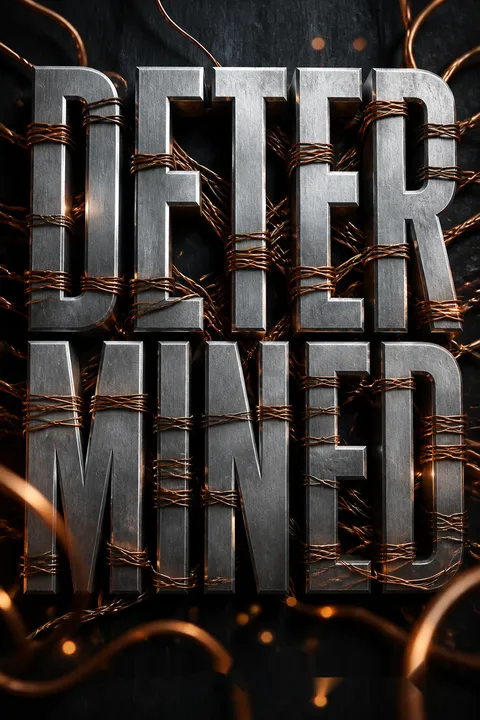
The chain behind action. Sapolsky’s central claim is that behavior arises from prior causes, not from a self that begins the process independently. A choice can be shaped by brain activity seconds earlier, hormones that morning, childhood experience, prenatal conditions, inherited genes, culture, and evolutionary history. Those influences interact rather than taking turns, and the person making the choice is their cumulative result. His position, called hard incompatibilism, holds that a determined world leaves no free will in the sense needed for people to deserve praise or punishment.
A thought experiment. Imagine exchanging the life histories of a university graduate and a campus worker collecting rubbish. Sapolsky argues that their roles would likely change too. The point is not that outcomes are perfectly predictable, but that neither person authored the conditions that shaped them.
The argument’s moral force comes from shifting attention from a person’s final act to the long chain that produced it. That shift can make contempt harder to sustain and social conditions harder to ignore. Yet the conclusion depends on what counts as free will. A person can be caused and still deliberate, respond to reasons, and regulate behavior. The book challenges whether those capacities justify desert, not whether they exist.
Ask where an intention came from, not only when it appeared
The timing debate. In Benjamin Libet’s experiments, people reported deciding to move shortly before their finger moved, while a brain signal associated with preparation began earlier. Later studies found predictive brain activity as much as ten seconds before a reported choice. But the predictions were imperfect: one fMRI approach identified the future button choice only about 60 percent of the time. Critics also question whether button pressing represents meaningful decisions.
The deeper question. Sapolsky treats these experiments as suggestive, not decisive. Even if conscious intention precedes action, he asks what shaped that intention: the person’s memories, physical state, past experience, and wider history. Timing a decision may illuminate a few seconds of a much longer causal story, like judging a film from its final scene.
This distinction helps separate two questions that are often tangled together: whether conscious awareness initiates an action, and whether the person is ultimately responsible for the desires and values behind it. The second question reaches beyond neuroscience into theories of moral agency. Still, a causal account of intention does not automatically settle responsibility. It clarifies what a theory of responsibility must explain, especially when reflection and self-control are themselves part of the causal process.
Treat childhood and circumstance as causes, not footnotes to character
History shapes the present. Sensory cues, stress, hunger, hormones, brain development, genes, and culture can all tilt judgment without entering conscious awareness. The Adverse Childhood Experience, or ACE, score counts serious childhood hardships such as abuse, neglect, and household dysfunction. The book reports that each additional ACE is associated with roughly a 35 percent rise in the likelihood of outcomes including adult antisocial behavior, substance problems, and depression. These are shifts in risk, not guarantees about any individual.
Luck can accumulate. Early adversity can shape brain development and make later opportunities harder to use; poverty can also restrict which opportunities appear in the first place. A child’s relative age in a school cohort can help determine who gets early praise and extra attention, widening an initial advantage. Sapolsky argues that good and bad fortune often compound rather than neatly cancel out.
The emphasis on interacting causes is more useful than a simple genes-versus-environment debate. A person’s traits can alter which experiences they encounter, while those experiences reshape later traits. This feedback makes responsibility judgments especially vulnerable to hindsight: success looks self-made, and failure looks like a personal defect. The ACE statistic should not be treated as a verdict on a child or adult. Its value lies in revealing population-level patterns that policy can address.
Stop treating grit as a supernatural layer of the brain
Self-control has biology. The prefrontal cortex helps people plan, resist impulses, change strategies, and regulate emotion. It does not operate outside the rest of the brain. Stress, fatigue, hunger, hormones, earlier adversity, and brain development all affect how well it functions. Sapolsky uses the cortex’s demanding work to explain why resisting temptation can become harder after sustained mental effort, though he notes that research on self-control depletion is contested and effects may be smaller than early studies suggested.
Character is not separate. The same neural systems underlie both a person’s natural advantages and their efforts to make good use of them. In one study of cheating, people who refrained without an apparent struggle showed little prefrontal activation. Their restraint seemed automatic, not evidence of a heroic inner commander overpowering biology.
This account challenges the familiar habit of excusing an impulse as biological while treating resistance as proof of pure character. It invites a more consistent question: which conditions make self-regulation available, and to whom? The distinction between effortful control and an ingrained habit matters for practical support, since the same person may need very different help in different situations. Biological explanation can broaden compassion without implying that harmful actions should go unchecked.
Unpredictable behavior can still have causes all the way through
Chaos is not freedom. Chaos theory studies deterministic systems whose outcomes can be extremely hard to predict. Meteorologist Edward Lorenz discovered that rounding a weather-model value from 0.506127 to 0.506 eventually produced a dramatically different forecast. Tiny differences in starting conditions can grow large, a feature known as sensitive dependence on initial conditions. The system remains rule-governed even when accurate prediction fails.
Knowledge has limits. A complex pattern may also be hard to trace backward because different starting conditions can converge on the same outcome. That loss of information does not show that the outcome had no cause. Sapolsky’s distinction is between determinism, what produced the event, and predictability, whether an observer can foresee it. Not knowing which route led to a result is not evidence that the result was uncaused.
The distinction between what happens and what can be known prevents uncertainty from being mistaken for magic. It also matters beyond physics: incomplete records, noisy measurements, and complicated systems can limit prediction without making explanation pointless. A caution is warranted, however. Demonstrating that a model is deterministic does not prove that every real-world system behaves like that model. The book’s broader case relies on converging evidence across fields, not chaos theory alone.
Complexity does not turn simple brain parts into free agents
Order without a planner. Emergent complexity describes large-scale patterns that arise when many simple components follow local rules. Ant colonies can coordinate foraging without an ant comparing every option; slime molds can form efficient routes through a maze. Similar principles help explain how neurons find connections as brains develop. No single component needs a blueprint for the larger organization to take shape.
The parts still matter. Emergent properties, such as the collective behavior of a colony, may be difficult to infer from one ant alone. But the ants remain ants, and the system remains constrained by what its components can do. Sapolsky rejects the idea that a complex whole somehow frees its parts from their causal histories. He distinguishes weak emergence, where higher-level patterns remain constrained by their components, from strong emergence, which would require more than the book finds evidence for.
Emergence offers a powerful alternative to the idea that complicated order requires a central controller. It explains how coordination and adaptation can arise without a miniature decision-maker hidden inside the system. That insight is compatible with meaningful higher-level descriptions: a brain, a person, and a society can each be studied at their own scale. The harder question is whether higher-level agency can be real without being independent of lower-level causes. The book argues against independence, while leaving the usefulness of those higher-level descriptions intact.
Randomness cannot supply the stable character moral freedom requires
Quantum uncertainty is real. At the subatomic scale, quantum mechanics describes events that are not fully determined in the ordinary classical sense. Sapolsky reviews possibilities such as wave-particle duality and entanglement, then asks whether such effects can influence behavior. He argues that quantum events are unlikely to coordinate across the enormous number of molecules, synapses, and neurons involved in a decision. The brain’s warm, wet complexity tends to wash out such tiny effects.
Chance is not choice. Even if quantum randomness reached behavior, it would add unpredictability, not a stable ability to act according to values. A proposed filter that sorts random options would itself need an explanation: where did its preferences and standards come from? The book also notes that spontaneous neural events are regulated by biological processes, rather than serving as independent sparks of agency.
This section resists a tempting but weak escape route: when causal explanation feels incomplete, randomness can look like freedom. But a random impulse is not obviously more attributable to a person than a caused one. The strongest challenge to the author is empirical: the precise reach of quantum effects in living systems remains difficult to map. Even so, evidence for microscopic indeterminacy would not by itself establish the kind of reason-guided control that moral judgment usually assumes.
Change people through causes, because causes are how change happens
Learning alters circuits. In experiments on the sea slug Aplysia, a shock to the tail makes the animal withdraw its gill more strongly when the siphon is touched. Repeated shocks trigger increasingly durable changes in a sensory neuron, from temporarily increasing neurotransmitter to building an additional synapse. Related cellular mechanisms appear in human learning, including conditioning an eye blink to a tone.
Change remains possible. The animal does not freely decide to become more vigilant; experience changes the circuitry that produces its response. Human learning is vastly more complex, but Sapolsky argues that it uses the same kinds of biological mechanisms. That means a deterministic view need not imply immobility. Teaching, relationships, treatment, and social experience can alter the conditions that shape later behavior, including what a person learns to notice or seek.
The Aplysia example gives the book’s causal argument a constructive turn. If behavior changes through learning, then influence and intervention matter precisely because they become part of the person’s history. This view can support education and rehabilitation without imagining that a person must first choose to become changeable. It also cautions against promises of simple fixes. The same learning mechanisms operate in a human world of layered memories, social pressures, and unequal access to help.
Rejecting blame need not mean abandoning safety or social order
The amok worry. Some early experiments suggested that weakening belief in free will made people more likely to cheat or behave aggressively. But a 2022 meta-analysis covering 145 experiments, including 95 unpublished studies, found no consistent effect on ethical behavior. In a separate study described in the book, people who had long rejected free will behaved about as ethically as strong believers. The author suggests that brief doubts may unsettle people who are unsure of their convictions, rather than turning committed skeptics into nihilists.
Belief is not the only restraint. The comparison with atheism complicates the claim that morality depends on belief in a supernatural judge. Observable behavior, social ties, and reminders of secular values all matter. Religious prosocial behavior can also be directed mainly toward an in-group. Sapolsky’s point is not that everyone behaves alike, but that moral conduct has multiple supports.
The distinction between a temporary prime and a settled worldview is essential. A short reading passage cannot stand in for a person’s lifelong identity, relationships, or moral commitments. The evidence described here weakens a simple claim that free-will skepticism causes antisocial behavior, but it does not prove that broad cultural change would have no effects. It does show why policy debates should test actual conduct rather than treat a philosophical label as a reliable measure of character.
Replace retribution with proportionate protection and attention to causes
Quarantine, not vengeance. The quarantine model treats a dangerous person as someone who may need limits to protect others, without claiming that the person deserves suffering. Its proposed rule is to use the least restriction that adequately reduces danger, while pursuing rehabilitation when possible. It also directs attention to social conditions that contribute to harmful behavior, much as public health addresses causes of illness rather than only its symptoms.
Trade-offs remain serious. The approach raises difficult questions about indefinite detention, predicting future danger, and fair treatment. The book points to Norway’s more humane prisons and lower recidivism rates as evidence that restraint need not mean degradation. That comparison cannot establish which policies caused the difference, but it challenges the assumption that harsh punishment is the only way to maintain safety.
This proposal separates two aims that often get bundled together: preventing future harm and making offenders suffer because they deserve it. That separation can encourage rehabilitation and prevention while still taking victims’ safety seriously. Yet risk-based confinement carries its own dangers, including biased predictions and restrictions that last without meaningful review. A humane alternative would need transparent standards, appeal rights, and regular reassessment, not simply kinder language for detention.
Extend the compassion learned from disease to poverty and crime
Blame can change. For centuries, many people treated epileptic seizures as evidence of demonic possession or moral failing. Better understanding of the disease helped shift judgment toward care and practical safeguards, such as restricting driving after seizures. A different shift came when research and family advocacy helped discredit the claim that cold or rejecting mothers caused schizophrenia. Those changes did not erase suffering, but they reduced blame directed at patients and families.
Turn that lens outward. Sapolsky asks readers to apply similar causal attention to poverty, addiction, disability, and harmful behavior. A person’s biology and circumstances may help explain how they arrived at a moment without making the harm unreal. The ethical conclusion is that people do not earn greater human worth through luck, talent, appearance, or self-control. The book presents this as a basis for less self-hatred and less entitlement, not as a promise that meaning or love will disappear.
The historical examples make the proposed moral shift imaginable: beliefs once treated as obvious can become untenable when evidence and public understanding change. The analogy has limits, since criminal behavior involves victims, safety, and deliberate-seeming actions in ways that illness alone may not. Still, explaining causes and recognizing harm are not mutually exclusive. The challenge is to hold both in view, building responses that protect people while refusing to turn disadvantage into proof of lesser worth.
Analysis
Determined is both a scientific argument and a moral campaign. Its first half builds a long causal account of behavior, moving from neural activity through hormones, development, genes, culture, and evolution. Its second half asks what follows if no person is the ultimate author of the traits and intentions that guide action. The book’s most useful organizing move is to distinguish causal determination from prediction: a choice can have causes even when no observer can foresee it. Its account of chaos, emergence, and quantum mechanics prevents uncertainty from becoming an easy substitute for agency.
The central argumentative pressure point is definitional. Sapolsky treats free will as requiring an action to be independent of prior causes. Many compatibilists use the term for capacities such as acting on reasons, considering alternatives, and regulating impulses, even when those capacities have causes. The biological evidence strongly challenges a self-created chooser, but it does not alone prove that reason-responsive agency is unreal. The dispute partly concerns which kind of freedom is morally relevant.
The ethical contribution is more robust than a simple call to excuse wrongdoing. Sapolsky separates retribution from protection, and argues that understanding causes can redirect effort toward prevention, rehabilitation, and fairer social conditions. That transition requires safeguards: institutions can turn risk assessments into biased or indefinite confinement, and victims’ needs cannot be treated as abstractions. The book’s historical cases show that public moral intuitions can shift, but they do not guarantee that a proposed replacement system will be just. Its deepest practical demand is consistency. If biology explains an impairment, it should also inform judgments about resilience, discipline, and success. That principle can reduce shame and entitlement alike. Readers need not accept every metaphysical conclusion to use the book’s central test: before judging a person, ask what shaped the capacities and circumstances behind the act, and what conditions might reduce future harm.
Review Summary
Determined explores the concept of free will, arguing that human behavior is predetermined by biology, environment, and experiences. Sapolsky's writing is engaging and thought-provoking, though some readers find his arguments unconvincing or overly deterministic. The book challenges conventional notions of personal responsibility and moral accountability, suggesting a more compassionate approach to criminal justice. While many praise Sapolsky's insights and scientific explanations, others criticize his dismissal of free will as semantics or find his conclusions unsettling. Overall, the book sparks intense debate about human agency and its implications for society.
Glossary
Hard incompatibilism
Determinism excludes free willThe position that free will, in the sense required for basic moral desert, cannot exist whether the world is deterministic or indeterministic. Sapolsky emphasizes its deterministic side: behavior results from prior biological and environmental causes, leaving no uncaused chooser who deserves praise or punishment simply for being the person they are.
Readiness potential
Brain signal before movementA measurable pattern of electrical activity associated with preparing to move, observed in studies of voluntary action. In Libet-style experiments, it appeared before participants reported consciously deciding to move. The finding has been influential but disputed, partly because the tasks are simple and researchers disagree about what the signal represents.
Constitutive luck
Luck that shapes a personThe uncontrollable genetic, developmental, social, and environmental history that helps make someone the person they are at a particular moment. The term highlights that a person’s values, abilities, habits, and capacity for self-control are not chosen from outside that history. It contrasts with luck affecting a particular outcome in a specific event.
Adverse Childhood Experience (ACE) score
Count of childhood adversitiesA measure that counts specified hardships during childhood, including abuse, neglect, and household dysfunction. In the book, higher scores are associated with elevated risks of later difficulties, including antisocial behavior, substance problems, and mental health challenges. The score describes population-level risk; it does not predict an individual’s fate or explain every outcome.
Chaoticism
Deterministic, unpredictable dynamicsSapolsky’s term for the study of complex systems in which small differences in starting conditions can produce large, difficult-to-predict differences in outcomes. Such systems may defeat accurate prediction without being uncaused. The term is used to distinguish the structured unpredictability of chaos theory from randomness or freedom of will.
Emergent complexity
Large patterns from simple interactionsComplex, sometimes adaptive patterns that arise when many simple components interact according to local rules. Ant colonies, slime molds, and developing neural networks illustrate how organized behavior can appear without a central planner. In Sapolsky’s account, these higher-level patterns remain constrained by the capacities and history of their constituent parts.
Quantum indeterminacy
Uncertainty at quantum scalesThe view, accepted by most physicists as described in the book, that some events at subatomic scales are not determined in the classical way. Sapolsky argues that such indeterminacy is unlikely to scale into coherent human agency. Even if it influenced behavior, randomness would not by itself produce stable character or reason-guided choice.
Quarantine model
Restrict danger without retributionA proposed approach to public safety that treats dangerous behavior as a reason for protective limits, not as proof that a person deserves suffering. Restrictions should be only as extensive as needed to reduce danger, with rehabilitation pursued where possible. The model also calls for addressing social conditions that contribute to harmful behavior.
Macbeth effect
Moral guilt prompts cleansingA label for studies in which recalling an unethical act increased participants’ desire to wash or use cleansing products. Related experiments connected bodily cleanliness with judgments of moral purity. Sapolsky uses the findings to illustrate how physical sensations and metaphors can influence moral judgment without entering conscious explanation.
FAQ
What's Determined: A Science of Life without Free Will about?
- Exploration of Free Will: The book argues that free will is an illusion, presenting scientific evidence that our actions are determined by biological and environmental factors.
- Determinism Explained: Sapolsky emphasizes that every thought and action results from a chain of antecedent causes, challenging the notion of personal agency.
- Interconnectedness of Influences: The author illustrates how genetics, upbringing, and cultural background interact to shape behavior, questioning traditional views on responsibility.
Why should I read Determined: A Science of Life without Free Will?
- Insightful Perspective: The book offers a scientifically grounded view on human behavior, encouraging readers to reconsider beliefs about choice and responsibility.
- Engaging Writing Style: Sapolsky combines humor, anecdotes, and research to make complex topics accessible and engaging.
- Relevance to Society: Understanding the lack of free will can lead to more compassionate views on crime and punishment, prompting societal discussions.
What are the key takeaways of Determined: A Science of Life without Free Will?
- No Free Will: The central thesis is that free will does not exist; our actions are determined by various factors.
- Biological and Environmental Influences: Genetics, upbringing, and social context play crucial roles in shaping behavior.
- Implications for Morality: Traditional notions of blame and punishment need reevaluation, focusing on rehabilitation over retribution.
What are the best quotes from Determined: A Science of Life without Free Will and what do they mean?
- "Nothing comes from nothing, nothing ever could.": Highlights the importance of understanding the factors leading to actions rather than attributing them to free will.
- "We are nothing more or less than the cumulative biological and environmental luck.": Encourages reflection on the randomness of life and its impact on individual choices.
- "It’s turtles all the way down.": Serves as a metaphor for the complexity of human behavior and the futility of seeking a singular source of free will.
How does Robert M. Sapolsky define free will in Determined?
- Complex Definition: Free will is defined as the ability to act independently of prior causes, which Sapolsky challenges.
- Neuroscientific Perspective: Brain activity precedes conscious decision-making, suggesting our sense of agency is an illusion.
- Causeless Causes: Sapolsky asserts that no action can occur without prior influences, reinforcing his argument against free will.
What role does determinism play in Determined: A Science of Life without Free Will?
- Foundation of the Argument: Determinism is the backbone of Sapolsky's thesis, asserting that all behavior results from prior causes.
- Biological and Environmental Interactions: The interplay of genetics and environment is crucial for understanding behavior.
- Moral Implications: Accepting determinism encourages reconsideration of blame and punishment, leading to more compassionate societal responses.
How does Determined address the concept of moral responsibility?
- Reevaluation of Blame: If free will does not exist, traditional notions of moral responsibility must be reconsidered.
- Compassionate Approach: The book advocates for rehabilitation over retribution, emphasizing understanding causes of behavior.
- Contextual Understanding: Encourages considering an individual's biological and environmental history, fostering empathy over judgment.
What scientific evidence does Robert M. Sapolsky provide in Determined?
- Neuroscience Studies: References studies showing brain activity precedes conscious decision-making, supporting the illusion of free will.
- Hormonal Influences: Discusses how hormones like testosterone and cortisol affect behavior, highlighting biological underpinnings.
- Cultural and Environmental Factors: Examines how cultural background and experiences shape behavior, challenging the notion of free will.
How does Determined relate to chaos theory?
- Introduction to Chaos Theory: Used to understand complex systems where small changes lead to unpredictable outcomes, paralleling human behavior.
- Determinism vs. Predictability: Chaotic systems can be deterministic despite unpredictability, reinforcing the absence of free will.
- Emergent Complexity: Complex behaviors emerge from simple rules, illustrating the deterministic nature of behavior.
How does Determined challenge traditional views of free will?
- Scientific Basis for Determinism: Presents a strong argument against free will, emphasizing biological and environmental determinants.
- Critique of Compatibilism: Argues that free will cannot coexist with determinism, as true autonomy is biologically impossible.
- Call for Compassion: Encourages reconsidering moral responsibility and justice, advocating for understanding underlying causes over blame.
What is the significance of the title Determined?
- Emphasis on Determinism: Reflects the theme that behavior is determined by factors beyond control, challenging free will.
- Dual Meaning: Suggests resolution, as understanding determinants can lead to compassionate views on morality.
- Provocative Nature: Challenges readers to confront beliefs about free will, prompting reflection on human behavior.
How does Determined relate to mental health?
- Understanding Mental Illness: Recognizing the lack of free will can change perceptions of mental illness, fostering compassion.
- Impact of Stress and Environment: Discusses how stress and childhood experiences affect mental health, highlighting environmental factors.
- Rehabilitation Focus: Advocates for mental health interventions prioritizing support and understanding over blame.
About the Author
Other books by Robert M. Sapolsky


Download PDF
Download EPUB
.epub digital book format is ideal for reading ebooks on phones, tablets, and e-readers.








