

Key Takeaways
Trump supplied the force; Bannon supplied the worldview and campaign machinery
An unlikely partnership. On Election Night, Trump’s advisers were bracing for defeat. Bannon, newly installed as campaign chief, saw a possible route through states where older, rural, working-class voters might turn out more heavily than public polls suggested. As the results arrived, that route became real. The book’s central claim is not that Bannon single-handedly made Trump president, but that Trump’s instinct for commanding attention joined Bannon’s nationalist politics and years of political organizing at a decisive moment.
A bargain with a mismatch. Bannon had searched for a candidate who could carry his ideas into power. Trump offered the raw political force; Bannon offered a coherent enemy, message, and operation. Their partnership rested on an unstated exchange: Bannon would help Trump win, and the presidency would be used to advance Bannon’s nationalist agenda. The alliance worked electorally, though the two men did not share the same depth of ideological commitment.
What's striking is how the book replaces the familiar story of a strategist secretly controlling a candidate with a story of complementary strengths. Bannon could shape the political environment, but Trump remained unusually resistant to control. Their alliance resembles a merger in which each side supplies a missing asset: one has a powerful brand, the other a political thesis and infrastructure. That distinction matters because it makes the outcome less mysterious, but also less transferable. A strategist can help organize an opening; the candidate still has to possess the public force to exploit it.
Treat the political fringe as a laboratory, not a permanent boundary
A career in unlikely worlds. Bannon’s route ran from a working-class Catholic upbringing and Navy service to Harvard Business School, Goldman Sachs, Hollywood, and an online gaming company. The book traces how he repeatedly entered systems others overlooked, then studied how they worked. At Goldman, he learned the mechanics of corporate power. In gaming, he encountered large online communities whose coordinated actions could disrupt a business. In right-wing media, he saw a similar pool of overlooked energy among people alienated from political and cultural institutions.
Beliefs with deep roots. Bannon’s politics grew from more than opportunism. He linked military strength, religious tradition, working-class identity, and fear of cultural decline. His experience of the Iran hostage crisis helped move him away from his family’s Democratic politics toward Reagan’s hawkish conservatism. These experiences gave his later political work a sense of historical emergency, even when his methods were highly tactical.
Bannon’s unusual range helps explain his ability to connect worlds that established political operators treated separately: online communities, conservative donors, media outlets, and candidates. The larger lesson is organizational. Groups dismissed as peripheral can contain skills, networks, and grievances that the mainstream does not know how to interpret. Yet fringe status is not proof of insight. Bannon’s habit of reading opponents as civilizational threats could turn careful observation into confirmation of a predetermined story. A useful analysis distinguishes the ability to spot neglected forces from the accuracy of the ideology used to explain them.
Trump exchanged broad celebrity appeal for a narrower, angrier political base
The Apprentice built a different Trump. The show drew more than 20 million viewers a week at its height and presented a diverse cast of ambitious contestants. By 2010, Trump’s positive Q Score, a measure of celebrity familiarity and appeal, was 27 among Black audiences and 18 among English-speaking Hispanic audiences, compared with 8 among non-Black audiences. He had become an unlikely mainstream celebrity with significant minority appeal.
Then came the political trade. In 2011, Trump made the false claim that Barack Obama had not been born in the United States. His attacks helped him connect with Republican activists, but his favorability among Black audiences fell sharply, reaching 6 by 2014, while negative ratings rose. After criticizing Mitt Romney’s harsh immigration stance in 2012, Trump himself adopted an anti-immigration message. The book presents these choices as a turn away from a broad, multicultural audience toward a more confrontational political constituency.
The contrast between Trump’s television audience and his later political coalition shows that public identity is not fixed by a person’s past popularity. Audiences interpret a celebrity through the roles and signals they encounter. The Apprentice offered a business fantasy in which people from different backgrounds competed on equal terms; birtherism recast Trump as a combatant in a racialized political conflict. The shift was strategically effective with Republican voters, but it also demonstrates a basic cost of political targeting: strengthening one bond can sever another. The numbers illuminate the trade, though they cannot establish that any single message caused every change in opinion.
Build connected institutions, not just a loud campaign
A political machine took shape. Before Trump entered the presidential race, Bannon and conservative donor Robert Mercer backed a network with several distinct parts. Breitbart News gathered and mobilized a right-wing audience. The Government Accountability Institute researched political and financial controversies. Glittering Steel produced films and political material. Cambridge Analytica offered data analysis and campaign services. Mercer’s family supported these efforts with substantial funding, while Bannon helped connect their work and ambitions.
The pieces served different audiences. Breitbart could energize conservatives, while GAI could produce research that mainstream reporters might investigate. Cambridge Analytica aimed to support campaign targeting, and film projects could turn political material into a more accessible story. The Mercers initially backed Ted Cruz, not Trump, but the system they financed later aided Trump’s campaign. This is why the book treats their influence as an ecosystem, not simply a donation to one candidate.
The network’s significance lies in its division of labor. Political influence can grow when research, distribution, fundraising, and audience-building reinforce one another rather than operating as isolated projects. The model also complicates the idea that a wealthy donor simply chooses a candidate and writes a check. Here, an adviser’s vision shaped how donor resources were assembled and deployed. But coordination should not be mistaken for omnipotence. A funded institution can create opportunities and amplify narratives; it cannot guarantee that voters accept them, or that the preferred candidate will follow the funders’ intentions.
Use verifiable research to move stories beyond partisan audiences
Research as a route into the news. Bannon believed that conservative attacks on Bill Clinton in the 1990s had lost credibility because they leaned on rumor, exaggerated conclusions, and dubious investigations. For Hillary Clinton, he and researcher Peter Schweizer focused on a narrower period and on money connected to the Clinton Foundation. Bannon called this choice of a bounded time period periodicity. GAI searched records, tax filings, flight logs, and less accessible online databases for material that reporters could verify independently.
Then let other outlets carry it. Schweizer’s book, Clinton Cash, described possible conflicts of interest involving donors and the Clintons. The New York Times and other mainstream outlets pursued some of its leads. Bannon’s strategy, known as anchor left, pivot right, was to get a story into outlets read beyond the conservative base, then let partisan media amplify the resulting coverage. The method depended on facts attracting reporters, not merely on partisan repetition.
This strategy identifies a real asymmetry in political communication: a claim gains a different status when an outlet outside its original partisan home investigates it. The editorial value is not that mainstream publication automatically makes a story true, but that independent scrutiny can widen its audience and subject it to additional verification. The danger is also clear. Research selected to damage a target can frame ambiguous evidence as a larger indictment, and a chain of citations can make an allegation appear more settled than it is. Readers should separate the documents, the inferences drawn from them, and the political use made of the resulting coverage.
Attention can defeat decorum, but it cannot certify truth
Transgression generated coverage. Trump’s campaign launch in June 2015 brought an unscripted attack on Mexican immigrants and a promise to build a border wall. The remarks triggered condemnation, but also delivered the attention his team feared he might not receive. Bannon and Breitbart amplified the message, and a staged trip to the border made the candidate’s position into visual theater. Trump’s battles with Fox News, especially over moderator Megyn Kelly, likewise gave supporters a story of an outsider fighting hostile gatekeepers.
Online audiences mattered. Bannon had seen gamers organize against his company’s gold-farming business and concluded that online communities could exert real pressure. At Breitbart, he tried to draw some of those young men into politics through provocative coverage and figures such as Milo Yiannopoulos. The approach mobilized attention, but it also rewarded misleading stories and inflammatory content. Breitbart published errors, including a false satirical report, and at times prioritized a compelling narrative over factual accuracy.
The book captures an attention economy in which controversy can function as both distribution and identity. A supporter does not merely hear a message; the act of defending a transgressive candidate can signal resistance to institutions seen as contemptuous or censorious. That helps explain why criticism sometimes strengthened Trump rather than weakening him. Yet attention is a poor measure of credibility. A story’s reach says little about its accuracy, and the outrage that builds community can also make correction look like an attack. The strategic achievement and the informational cost belong in the same account.
Translate neglected economic grievances into a vivid political identity
A split inside the party. Immigration reform divided business-oriented Republicans, who worried about alienating Hispanic voters, from law-and-order conservatives who opposed legalization. Bannon’s Breitbart helped intensify opposition to the 2013 Gang of Eight bill, while Trump increasingly made immigration central to his politics. The wall became a simple, memorable symbol for a broader promise: restore control and prioritize citizens who felt ignored.
The message reached beyond one issue. Trump also criticized free trade, promised to protect Social Security and Medicare, opposed foreign entanglements, and attacked political leaders as self-serving. These positions often departed from Republican orthodoxy. Senator Jeff Sessions recognized the appeal as a form of working-class populism and endorsed Trump before the Southern primaries. Trump’s victories across several Southern states showed that immigration, trade, national identity, and distrust of party leaders could be bundled into a political identity rather than presented as separate policy debates.
A political message often succeeds by making diffuse frustrations legible. Trade anxiety, distrust of Washington, and fear of losing cultural control are different experiences, but a shared story can make them feel like one problem with one responsible elite. That is a powerful form of coalition-building, especially when established parties offer technical explanations without emotional recognition. The limitation is that a vivid diagnosis can conceal policy trade-offs. A slogan can identify who belongs and who is blamed while leaving unanswered whether the proposed solution works, or who bears its costs.
Model the electorate you may get, not only the one polls expect
Turnout assumptions changed the map. Trump’s campaign models began with bleak odds. On October 18, its internal simulator gave him a 7.8 percent chance of reaching 270 electoral votes. Analysts then reweighted their model toward an electorate that was older, whiter, more rural, and more populist than many expected. That adjustment made states such as Florida, Michigan, Pennsylvania, and Wisconsin newly competitive. The campaign also watched county returns and turnout patterns that public polling did not fully capture.
Late events mattered, but did not explain everything. The FBI’s October 28 announcement that it was reviewing newly discovered Clinton emails revived a controversy already linked to doubts about her trustworthiness. Trump’s team saw movement among double haters, voters who disliked both candidates, and believed the news gave some a reason to reject Clinton or stay home. The election was still uncertain on Election Day, and the eventual result depended on a narrow electoral path, not a national landslide.
The episode is a useful warning against treating a poll as a transparent photograph of the electorate. Polls depend on assumptions about who will vote, and unusual turnout can make a plausible model look badly wrong. But modeling is not prophecy: changing demographic weights can reveal a possibility while also encouraging a campaign to see the electorate it hopes for. The sound practice is to compare multiple indicators, state assumptions openly, and test whether the model fits observed behavior. The book shows how a campaign’s alternative model sharpened its focus, not that data science alone predicted or produced the result.
A victory coalition cannot govern on improvisation and grievance alone
Campaign skills did not transfer cleanly. Bannon’s attacks, media instincts, and focus on Clinton helped shape the final campaign. In the White House, the same impulse to shock institutions ran into courts, Congress, federal agencies, and the administration’s own inexperience. Trump often treated politics like a business in which personal dominance could settle disputes. The book argues that governing instead requires durable coalitions and negotiation with actors who have their own authority.
The ideological bargain frayed. Trump had campaigned on protecting working-class voters and challenging Republican orthodoxy, yet his first major legislative push supported a health-care bill that threatened Medicaid and was widely unpopular. The author also describes Trump as fundamentally opportunistic, not a committed nationalist thinker. Bannon’s influence diminished as Trump bristled at the idea that an adviser rivaled him for credit or control. The partnership that joined Trump’s celebrity and Bannon’s ideology could win power without agreeing on what power was for.
The campaign-to-government transition exposes a distinction between disruption and institutional capacity. A candidate can win by making established rules look illegitimate, but governing requires working through institutions that cannot be reduced to an audience or a personal brand. The book’s early account of the administration should be read as a snapshot, not a complete verdict on a presidency. Still, its core tension is durable: populist promises require policy choices, and those choices reveal whether a movement is a governing project or mainly an effective language of opposition.
Analysis
Green’s account is strongest when it treats Trump’s victory as a convergence rather than a master plan. Bannon supplied a political interpretation of discontent, a network of organizations, and a method for getting selected stories into wider circulation. Trump supplied celebrity, improvisational confidence, and a willingness to violate norms that other Republican candidates treated as fixed. Mercer money, the long anti-Clinton campaign, immigration politics, the late email controversy, turnout patterns, and errors by the Clinton campaign all helped create the opening. Bannon mattered because he connected these elements, not because he controlled them.
The book’s most revealing mechanism is the movement of information across institutional boundaries. Conservative outlets could mobilize a committed audience, while investigative research gave mainstream journalists material they could pursue under their own standards. That passage amplified coverage, but it also blurred the difference between discovery and political framing. The claims in Clinton Cash were allegations and interpretations, not all settled findings; their political impact depended partly on the press’s willingness to investigate and the public’s existing doubts.
The narrative also shows why electoral success is not equivalent to popular consensus. Trump won the presidency through the Electoral College while losing the national popular vote. His coalition was real, but its breadth and durability were uncertain. The book’s final contrast between campaign and governing is therefore more than an epilogue: attention, grievance, and personal dominance can be powerful electoral instruments, yet institutions demand negotiation, implementation, and consistency. Green wrote in 2017, when the administration’s trajectory was still developing, so his judgments about its failure are necessarily early. The larger insight remains useful: political entrepreneurs can build a winning alliance without resolving whether its members share a common program.
Review Summary
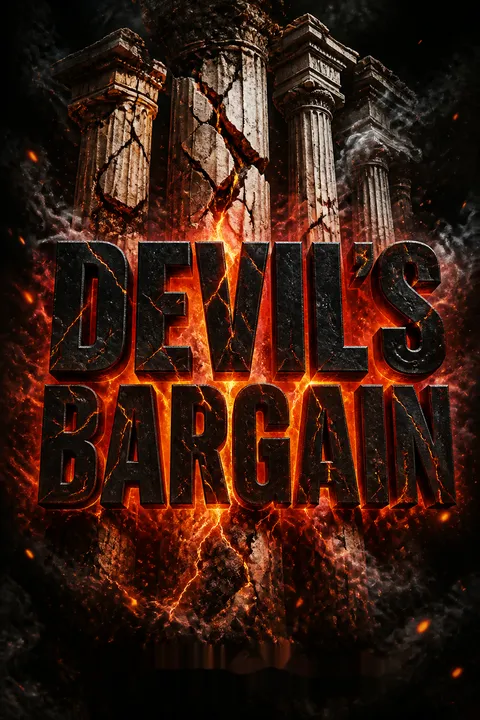
Devil's Bargain offers insights into Steve Bannon's influence on Trump's 2016 campaign and presidency. Readers found it informative but sometimes biased, praising Green's accessible writing and research. The book details Bannon's background, his strategic genius in mobilizing the alt-right, and his role in Trump's victory. Some reviewers appreciated the behind-the-scenes look at the campaign, while others felt it was rushed or one-sided. Overall, it's seen as an important, if unsettling, account of recent political history, though some wished for more depth on secondary players.
People Also Read


Glossary
periodicity
Narrow historical focusBannon’s term for limiting an investigation to a specific period rather than attempting to cover a subject’s entire history. For the Clinton Foundation project, the researchers emphasized the preceding decade, which they considered less familiar to reporters and voters. The narrower scope made it easier to organize records and develop a focused public narrative.
Anchor left, pivot right
Cross-partisan story placementA media strategy described by the Government Accountability Institute. Researchers sought to place document-based findings in mainstream outlets whose audiences extended beyond conservative media. Once those outlets investigated or reported on the material, conservative outlets could amplify the coverage and connect it to an established partisan narrative.
Trump Effect
Modeled turnout increaseThe Trump campaign’s label for a modeled increase in turnout among voters with a low likelihood of voting. Analysts used the assumption to explore whether undercounted Trump supporters could alter the electoral map. It described a scenario in the campaign’s models, not a guaranteed or independently verified law of voter behavior.
double haters
Voters who disliked bothThe Trump campaign’s label for voters who held negative views of both major presidential candidates. They were difficult to identify through polling because many were undecided or reluctant to disclose a preference. The campaigns believed that news events could shift these voters toward one candidate or persuade them not to vote.
Traditionalism
Antimodern spiritual philosophyA philosophical and religious outlook associated in the book with René Guénon. It holds that ancient religious traditions preserve shared spiritual truths that modern secular society has lost. Bannon adapted elements of this outlook into a political story of cultural decline, national sovereignty, and resistance to global institutions.
Kali Yuga
Traditionalist age of declineIn Hindu cosmology, the Kali Yuga is the final age in a cycle of time, associated with spiritual decline and the forgetting of tradition. Guénon’s Traditionalist interpretation drew on this idea to describe modernity as a dark period. Bannon used similar language to frame perceived threats to Western culture and national identity.
Download PDF
Download EPUB
.epub digital book format is ideal for reading ebooks on phones, tablets, and e-readers.








