


Plot Summary
Prologue
Meddelin Chan grows up believing a family curse drives the men in her Chinese-Indonesian family away. When she secretly wins admission to Columbia, she tears up the letter rather than leave her mother, Ma, and her aunts.
She stays in California, convinced that loyalty means remaining close and that distance invites abandonment. Years later, she is still living near the women who raised her, working in their wedding business, and wondering whether being the one who stayed has become a life sentence.
The curse gives Meddy a story that makes her fear seem inherited rather than chosen. By treating departures as proof of a family pattern, she turns love into a duty to stay and mistakes self-denial for protection. Her discarded Columbia letter is the first concrete cost of that belief. The prologue also establishes the women as a genuine refuge, not merely an obstacle: their closeness has helped Meddy survive, even as its expectations narrow her sense of what a life of her own might be.
A Date Arranged by Ma
At a family dim sum lunch before a lavish island wedding, Meddy prepares to photograph the event while her mother and three aunts review their cake, flowers, hair, and music. They also reveal that Ma has spent weeks posing online as Meddy and arranging a date with a wealthy hotelier.
Meddy is embarrassed, but agrees to meet him rather than risk offending him or jeopardizing the family’s biggest job. She has spent years being the reliable daughter in their wedding business, although photography is beginning to feel less like a choice than another family obligation. Her date’s online attention sounds promising, but Meddy knows nothing about him beyond Ma’s enthusiastic account.
The matchmaking scheme turns the family’s care into a comic breach of boundaries: Ma wants to secure Meddy’s future, but does so by speaking in her daughter’s name. Meddy’s consent is real yet compromised by the habits that surround it. She measures refusal against the risk of disappointing elders and damaging a business the family built together. That tension makes the date more than a romantic setup. It tests whether Meddy can distinguish affection from obedience, even before the danger of the evening makes the distinction urgent.
Nathan, Before the Break
At UCLA, Meddy falls for Nathan Chan, first her friend and then the boyfriend whose warmth makes her feel freer than she does at home. She brings him to meet his parents in England, but still keeps him from Ma and her aunts, afraid that home will swallow the separate self she has built at college. During their junior year, the women announce a family wedding business and invite Meddy to photograph it.
She agrees, partly because the venture could improve their crowded circumstances. Near graduation, Nathan receives a job offer in New York and asks her to come. Meddy loves him, but fears leaving Ma and refuses to make him sacrifice his opportunity. Instead of admitting that fear, she ends their relationship abruptly.
Meddy’s breakup is not a failure of love but a failure to speak plainly about the cost of choosing. She tries to protect Nathan’s ambition and her family’s feelings at once, then pays for that impossible balance by withholding her actual motive. Her decision to join the business likewise contains both genuine enthusiasm and filial pressure. The important distinction is that Meddy does love photography; what stifles her is the assumption that loving her family requires surrendering control of how she practices it.
The Date Turns Dangerous
The handsome date arrives and talks easily about money, hotels, and Meddy’s photography. After dinner, Meddy accepts his offer to drive her home because she has been drinking and needs her car for the wedding. When he puts a hand on her knee, she moves it away and asks him to stop. He ignores her, turns onto an isolated road, and makes his intentions unmistakable.
Meddy reaches for the Taser she carries for protection and fires it into his neck. The car swerves into a tree. When Meddy wakes, injured but alive, her date is slumped over the dashboard with blood at his ear. Believing him dead, she panics, puts him in her trunk, and drives home instead of calling for help.
The scene sharply changes the meaning of the family’s matchmaking: a social obligation has placed Meddy in immediate danger, but the narrative is careful to locate responsibility in the man who ignores her refusal. Her Taser is a practical means of self-defense, not a secret talent or a plan. The cover-up begins only after the crash, when fear outruns judgment. Meddy’s choice to conceal the body will generate the novel’s farce, but its origin is recognizably human: panic, isolation, and the terror of being disbelieved.
Four Aunties, One Trunk
In the garage, Meddy finally tells Ma that the man in her trunk is dead. Ma calls her sisters, and the four women arrive with fruit and tea before discussing what to do. They accept that Meddy acted to protect herself, but reject going to the police because they fear the body will make her look guilty.
The family checks Ma’s dating messages and realizes the supposed hotelier had been using her daughter’s profile to flirt, though they do not yet understand the full deception. Big Aunt takes charge, and Meddy suggests burying the body in the desert after the wedding. Since they must work at the island resort the next morning, the women wrap the man in blankets and hide him in a bakery cooler.
The aunties’ response is funny because practical hospitality survives even in catastrophe, but it is also ethically consequential. Their loyalty gives Meddy immediate emotional shelter; their distrust of authorities converts that shelter into a conspiracy. The women do not debate whether Meddy deserves protection. They debate how to provide it, using the same collective competence that runs their wedding business. This makes family solidarity both the story’s rescue mechanism and the engine that magnifies a frightened mistake into a far larger danger.
The Wrong Cooler Sails
Exhausted, Big Aunt sleeps through her alarm, and the bakery assistant sends the coolers to the island with the wedding supplies. At the resort, the family meets its owner: Nathan, Meddy’s former boyfriend, now running the ambitious hotel he once dreamed of building. Their reunion is tender and painful, but Meddy calls him only a college friend.
In the kitchen refrigerator, the women open the cooler and discover the supposed victim is Ma’s flower supplier, Ah Guan, not the hotelier she expected. Ma recognizes him and explains that he had encouraged her to try online matchmaking. The women realize the man who posed as the wealthy date was Ah Guan, while the real hotel owner is Nathan.
The mistaken identity is the story’s hinge: it converts a personal emergency into a collision between Meddy’s concealed romantic past and her family’s present business. The cooler’s journey also gives the comedy material consequences. A private act of panic now sits inside a public wedding operation, where staff, clients, and Nathan can stumble upon it. Ma’s recognition of Ah Guan exposes how little any of them understood the online encounter, while Meddy’s evasive reunion shows that her old habit of hiding difficult truths remains intact.
A Body Among the Guests
The cooler reveals that Ah Guan survived the crash and died after the family shut him inside it. Meddy and Fourth Aunt try to move him off the island, but a rocky path and Nathan’s sudden appearance force them back toward the hotel kitchen. Meddy kisses Nathan to keep him from opening the cooler; the familiar intimacy revives feelings neither has outgrown.
As the wedding continues, the family eventually moves Ah Guan into Meddy’s room and tries to disguise him as a guest. Meddy also finds Ah Guan’s phone and learns that he was involved with Maureen, Jacqueline’s maid of honor, in a plan connected to the valuable tea ceremony gifts. Maureen’s messages make clear that the missing gifts are becoming an immediate problem.
The physical concealment and romantic concealment now mirror each other. Meddy hides a body from Nathan while hiding her history with him from her family, and both deceptions become harder to maintain as other people enter the room. The accidental death inside the cooler complicates Meddy’s sense of responsibility: she acted in self-defense, yet her family’s effort to help has caused another death. The revelation about Maureen introduces a second crime plot, ensuring Meddy is no longer managing one secret but several that can expose one another.
The Maid of Honor's Bag
Meddy finds the tea ceremony gifts in a duffel bag left in Jacqueline’s suite and learns that Maureen expects Ah Guan to collect them. Rather than help the theft, Meddy hides the bag in Maureen’s room. Maureen then claims Meddy stole the gifts, prompting Jacqueline’s family and hotel security to search Meddy’s room.
Nathan objects to the accusation but permits the search under hotel procedure. The room contains no gifts, because Meddy’s plan has moved them to the true culprit’s suite. When Meddy suggests searching Maureen’s room instead, the duffel is found above the closet. Jacqueline recovers the gifts and, though betrayed, refuses to press charges; Maureen is sent away from the island.
Meddy’s choice to redirect the evidence is a small but consequential departure from her usual passivity. She neither protects Maureen nor leaves the accusation unanswered; she acts on what she knows, despite the risk that the search will uncover the body in her own room. The episode also gives Jacqueline a moral choice distinct from the wedding’s demands for appearances. Recovering the gifts does not restore her friendship, but she declines to turn a painful betrayal into a prosecution simply because powerful relatives expect punishment.
A Groomsman at the Altar
While the women try to move Ah Guan, their rival plans and poor coordination leave him in the groom’s suite. Fourth Aunt gives the groomsmen absinthe, and Ma secretly adds cannabis to champagne. The disoriented men dress in confusion and mistake Ah Guan, now in borrowed formalwear, for one of their own.
They carry him to the ceremony. Meddy spots the body as the wedding party gathers at the altar and persuades Jacqueline to send the stumbling groomsmen away. Tom resists, then grabs one of them, triggering a fall into the infinity pool.
Meddy tries to move Ah Guan before anyone sees him, but Jacqueline touches the body and Meddy shoves her aside. Jacqueline falls into the pool; Meddy jumps in after her, and another attendant discovers Ah Guan is dead.
The farce reaches its most public form because each improvised fix creates a new hazard: the women’s rivalry delays a disguise, the drugs impair the groomsmen, and Tom’s pride prevents a quiet exit. Meddy’s instinct to save Jacqueline is a real act of courage, but her attempt to protect the secret first makes Jacqueline a casualty of the cover-up. The discovery of Ah Guan ends the possibility of controlling the story privately. Now the women must face not only the death but the consequences of having made their collective panic visible.
Meddy Takes the Stand
Sheriff McConnell arrives on the storm-threatened island and mishandles the scene, but still arrests Nathan for Ah Guan’s murder. Meddy, furious that everyone has spent the day managing her crisis for her, tells Ma and her aunts she feels smothered by their protection and uncertain about the wedding career they chose together.
She then goes to Nathan’s office, pretends to be his lawyer, and challenges the sheriff’s lack of evidence. The bluff fails to free Nathan, but it gives them privacy. Meddy admits she Tased the man who attacked her and that he later died in the cooler. Nathan says he has already worked out the truth and refuses to expose her, even though the accusation could damage his hotel.
Meddy’s outburst is not a rejection of her family so much as a demand to be treated as an adult whose choices have consequences. Her amateur legal performance is comic, yet its emotional function is serious: for once she takes the room rather than waiting for an elder to direct it. Nathan’s refusal to blame her offers love without absolution. He understands the danger she faced, but his willingness to risk his own future makes Meddy confront the cost of allowing other people to keep paying for decisions she has not owned.
The Final Family Rescue
Back in her room, Meddy finds Ma and her aunts tied up and Maureen holding them at gunpoint. Maureen demands the gifts, threatening to release a recording of Meddy’s confession. Meddy visits Jacqueline and realizes that Maureen’s theft was driven by her love for her best friend and her hope of stopping the marriage.
She returns with the duffel, claims Jacqueline willingly surrendered it, and pushes Maureen to explain herself. Jacqueline arrives, admits she loves Maureen too, and takes the unloaded gun from her.
The women embrace, and the family is untied. Together, they give the sheriff a fabricated account in which Ah Guan stole the gifts and died after hiding in a cooler. The confused groomsmen support enough of the tale for the sheriff to release Nathan and accept the explanation.
This resolution turns on recognition rather than force. Meddy sees that the stolen gifts conceal a desperate attempt to interrupt a marriage, and risks trusting Jacqueline with that interpretation. The mutual confession allows Jacqueline and Maureen to choose each other openly, while Meddy finally acts without asking her family to take over. Their cover story remains ethically compromised, but it also reflects the novel’s comic moral universe: institutions prove less reliable than the people who know the tangled truth, and loyalty becomes meaningful only when it does not erase another person’s agency.
Epilogue
Later, Meddy has moved into her own apartment and built a photography career around engagements, families, and the intimate moments she missed while shooting enormous weddings. At dim sum, Nathan joins her mother and aunts, who still feed him and fret over Meddy.
The family admires a magazine spread of the wedding photographs, and Meddy explains that her business now works alongside theirs rather than inside it. Nathan then proposes over a bamboo steamer. Ma answers before Meddy can, but Meddy gives her own yes, this time in front of the family she once feared leaving.
The proposal answers the prologue without simply reversing it. Meddy does not prove her love by staying under her family’s roof or by choosing Nathan over them. She has made room for an independent career and a separate home while keeping daily ties with the women who raised her. The dim sum table remains crowded, but its meaning has changed: belonging no longer requires self-erasure. Nathan’s proposal is public, and Meddy’s answer is her own, so intimacy and autonomy finally occupy the same scene.
Analysis
The novel builds its farce from a serious conflict about care: when does protection become control, and when does loyalty become concealment? Meddy’s family is genuinely loving. The women feed one another, build a business together, and arrive in the night when Meddy is frightened. Their solidarity is not a sham. But because Meddy has learned to equate being good with being useful, that same solidarity can leave her without room to choose a different career, a different home, or even a different way of loving.
The body comedy makes this emotional pattern material. A frightened decision becomes a corpse in a cooler, then a traveling object passed through the family’s workspaces and the resort. Each attempt to keep trouble private requires more people to participate, turning intimacy into complicity. The wedding’s public rituals sharpen the contrast: its polished promises of perfect romance are surrounded by exhausted vendors, family pressure, a distressed bride, and a groom who treats people as pieces of an event. The novel’s jokes do not erase these costs; they make the characters’ flawed methods visible without stripping them of affection.
Meddy’s growth is measured less by escaping her family than by changing the terms of belonging. She eventually challenges the women’s habit of taking over, speaks honestly about her work, and chooses a career outside their business while remaining connected to them. Her relationship with Nathan also changes from a secret she fears will be absorbed into family life to a love she can acknowledge in front of the family. The ending therefore refuses the simple choice between independence and intimacy. It imagines adulthood as the capacity to love others without letting them make every decision on one’s behalf.
Review Summary
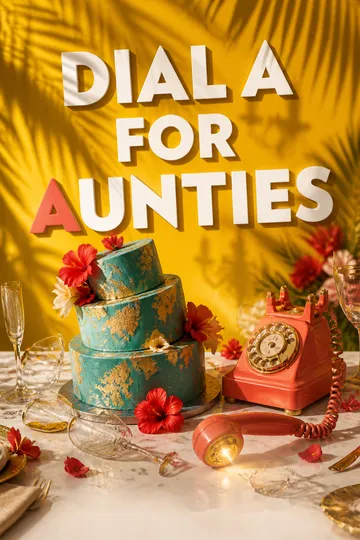
Dial A for Aunties receives mixed but generally positive reviews, averaging 3.68 stars. Many readers praise its hilarious family dynamics, rich Indo-Chinese cultural representation, and chaotic comedic energy, often comparing it to Crazy Rich Asians and Weekend at Bernie's. The audiobook format is frequently recommended. Common criticisms include underdeveloped romance, one-dimensional characters, plot holes, and an inconsistent genre blend. Readers who embrace its intentional absurdity tend to love it, while those seeking realistic fiction or cohesive storytelling find it frustrating. The aunties are almost universally celebrated as the story's greatest strength.
People Also Read









Characters
Meddelin Chan
Dutiful family photographerMeddy is a twenty-six-year-old photographer shaped by a close, outspoken Chinese-Indonesian family. She is observant, self-deprecating, and more capable than her anxious self-image allows. Her habit of anticipating what Ma and her aunts need makes her dependable, but it also leaves her unsure where family loyalty ends and personal choice begins. Photography genuinely matters to her, even as the family wedding business turns it into a constant obligation. Her cautious romantic life and the breakup she has never resolved reflect the same fear of making a choice that might hurt someone. Meddy’s central struggle is not whether she loves her family, but whether she can remain connected to them without surrendering authorship of her own life.
Ma (Natasya Chan)
Protective matchmaking motherMeddy’s mother is affectionate, resourceful, and deeply invested in her daughter’s safety and future. She expresses care through food, advice, matchmaking, and practical help, often moving before Meddy has asked. Her protective instincts are sincere, but she can mistake closeness for permission and loyalty for agreement. As an immigrant mother who has built a life around family and work, Ma values security and togetherness more than abstract independence. Her bond with Meddy is warm but complicated by the daughter’s fear of disappointing her. Ma’s humor, stubbornness, and ability to rally her sisters make her both a source of comfort and a powerful presence in Meddy’s decisions.
Nathan Chan
Meddy's first great loveNathan is Meddy’s former UCLA boyfriend and the ambitious hotelier behind the island resort. Warm, charming, and emotionally perceptive, he has a natural ease with both people and responsibility. His professional confidence grows from a long-held dream of building a hotel, while his romantic patience comes from taking Meddy seriously rather than trying to manage her. Their relationship once offered Meddy a glimpse of a self less constrained by family expectations. The history between them remains important because both remember what they shared, even when years and silence make it difficult to speak plainly. Nathan’s steadiness contrasts with the chaos around him, but it does not make him passive about the people he cares for.
Big Aunt
Commanding family bakerThe eldest sister, Big Aunt is an accomplished pastry chef and the family’s de facto leader. She is decisive, proud of her craft, and accustomed to being trusted when a crisis needs structure. Her authority comes not only from seniority but from the years she spent caring for her younger sisters. She can be tender with Meddy while also reinforcing the family’s expectations of her. Big Aunt’s professional standards and confidence often steady the group, though her certainty can make it difficult for others to challenge her plans. Beneath the imposing presence is a woman whose identity is closely tied to competence, responsibility, and the family she helped hold together.
Second Aunt
Tai Chi salon stylistSecond Aunt runs a beauty salon and brings years of hair and makeup skill to the family’s wedding work. She is sharp-tongued, competitive with Big Aunt, and quick to defend her own judgment. Tai Chi gives her a routine for managing stress, though it does not always prevent her from joining an argument. Her rivalry with her eldest sister is long-standing, but her practical competence and care for Meddy are unmistakable. She values being useful and respected, and often hides affection behind criticism.
Fourth Aunt (Mimi Chan)
Flamboyant family singerThe youngest sister, Fourth Aunt performs at weddings and takes pride in her voice, style, and ability to command attention. Her confidence and fluent English sometimes sharpen her teasing of Ma, with whom she shares a particularly lively rivalry. She is playful, vain, and more observant than her theatrical manner suggests. Fourth Aunt often treats tension as an opportunity for a joke, but she is also quick to show up when family needs her. Her different ambitions make her a useful contrast to Meddy’s more cautious temperament.
Maureen Halim
Jacqueline's closest friendMaureen is Jacqueline’s maid of honor and long-time confidante, attentive to her friend’s moods and practical needs. She is resourceful and decisive, with a capacity for bold action that contrasts with Meddy’s tendency to hesitate. Maureen’s fierce loyalty can blur into control, especially when she believes she knows what would protect someone she loves. Her wit and competence make her a formidable presence in a wedding full of competing expectations. The bond between the two women is central to how Maureen understands intimacy, friendship, and the risks of revealing what she wants.
Jacqueline Wijaya
Bride under pressureJacqueline is the bride at the island wedding, born into a wealthy Indonesian family whose expectations shape the scale of the celebration. She is gracious, emotionally perceptive, and accustomed to presenting a composed face in public. Her close friendship with Maureen offers a more intimate source of understanding than the elaborate wedding machinery around her. Jacqueline wants to honor her family, but she also notices when a relationship asks too much of her gentleness. She is not simply a symbol of privilege or a beautiful bride; she is a person trying to decide what kind of future she can live with.
Tom Cruise Sutopo
Powerful groomTom is Jacqueline’s wealthy groom, whose family’s influence helps finance the island wedding. He is accustomed to having people accommodate his plans and can mistake control for leadership. His choices place pressure on Jacqueline and on the hired staff around him. The wedding offers a public stage for his status, but the people he treats as accessories have their own limits and loyalties.
Ah Guan
Ma's flower supplierAh Guan supplies flowers to Ma and is part of the extended network of vendors who support the Chan family’s wedding business. He knows the family’s daily life and is aware of Ma’s concern about Meddy’s dating life. His connections place him close to the wedding’s logistics as well as its personal tensions. He is a quiet presence in the family’s working world, where business favors and personal relationships often overlap.
Selena
Meddy's candid college friendSelena is Meddy’s close college friend, blunt about romance and willing to push Meddy toward experiences she would otherwise avoid. She offers a counterpoint to the family’s influence, encouraging Meddy to notice what she wants for herself. Her humor makes difficult subjects easier to approach.
Seb
Meddy's second photographerSeb works alongside Meddy as a second photographer at the wedding. He is competent, irreverent, and useful when the groom’s party becomes difficult to manage. His professional presence helps show the scale and demands of Meddy’s work.
Sheriff McConnell
Island lawmanThe island sheriff is territorial, self-important, and eager to assert authority when a major resort scandal lands in his jurisdiction. His suspicion of mainland visitors shapes how he treats Nathan and the resort staff. He is more comfortable with confidence than careful procedure, making him an unpredictable obstacle.
Plot Devices
The Family Curse
A story of abandonmentMeddy interprets the departures of husbands, fathers, uncles, and male cousins as a curse that will eventually take everyone she loves. The belief helps explain why she remains close to Ma and her aunts and why she fears building a life far from them. It also gives her a misleading framework for understanding her parents’ separation and her own romantic choices. The story gradually reframes the curse as a family explanation rather than a force governing Meddy’s future. It functions as an emotional device: a superstition that gives shape to genuine fear, even when it cannot predict what will happen.
The False Dating Profile
A matchmaking misdirectionMa creates a dating profile in Meddy’s name and chats with a supposed hotelier, believing she is helping her daughter find a partner. Because she speaks as Meddy, the date begins with mismatched expectations and intimate messages that Meddy never sent. The online exchange also allows the man behind the profile to approach the family through its ordinary network of vendors. This device produces the inciting date, exposes Ma’s protective overreach, and creates confusion about the date’s identity. It turns a familiar family matchmaking impulse into the mechanism that connects romance, danger, and the wedding business.
The Bakery Cooler
A moving concealmentThe bakery cooler begins as a hurried hiding place after Meddy believes she has killed her date. When it is shipped with the wedding supplies, the family must keep shifting it through kitchens, hotel rooms, and crowded corridors. Each relocation gives them a brief sense of control while increasing the chance that staff or guests will discover what is inside. The cooler’s journey links the domestic chaos of the aunties to the public spectacle of the wedding. It is a physical object that makes the family’s evasions visible, heavy, and increasingly impossible to manage.
Wedding Rituals
A clock for escalating chaosThe wedding’s tightly scheduled ceremonies give Meddy’s family little time to contain the crises they create. The tea ceremony places valuable gifts in circulation, while the bridal pickup and the public ceremony gather relatives, staff, and guests in predictable places. Those rituals also provide a world Meddy understands professionally: she knows where to stand, what to photograph, and what guests expect. Their formal order contrasts with the disorder behind the scenes. As each event approaches, the family has fewer chances to hide the body or repair the theft, until the ceremony becomes the site where concealment collapses.
Aunties Series
About the Author
Other books by Jesse Q. Sutanto




Download PDF
Download EPUB
.epub digital book format is ideal for reading ebooks on phones, tablets, and e-readers.








