

Plot Summary
Gunfire at Opal
Opal University has become a battleground after religion instructor Jamal Washington and emeritus professor William Peterson defend the historical Jesus, drawing angry confrontations and threats.
Brett Wilson, an agnostic premed student, is heading to meet Peterson when students flee the religion building. He finds a wounded young woman on the lawn, calls emergency services, and carries her to safety. Police rush inside, but the violence has already taken Jamal, student Nick Ridley, and others.
The shooter, a student who had attended atheist-club meetings, kills himself. Brett had argued with him after he used atheism to justify eliminating people he considered inferior. What Brett had dismissed as a campus provocation has become a massacre.
The shooting makes an argument about belief arrive through bodily cost rather than abstract debate. Brett acts before he has settled what he believes, carrying an injured student while the campus’s rival camps become inseparable from real loss. The shooter’s attendance at atheist meetings is not presented as proof that atheism causes violence; instead, his absolutist reasoning exposes how a worldview can be twisted into permission for cruelty. Jamal and Nick’s deaths also turn the resurrection question into something the survivors cannot treat as merely academic.
A Place Beyond Grief
In the weeks after the shooting, Peterson watches the news with his wife, Susan, and blames himself for not preventing the attack, though Susan reminds him that he reported the threatening notes. Brett explains on television that the shooter had argued for removing religious people and supposedly inferior groups.
Nearly three months later, Jessica, Nick’s girlfriend, struggles through Valentine’s Day with friends from campus ministry. Andrea comforts her with the hope of reunion after death, but Lauren, an agnostic medical student, wonders what makes Christian claims about heaven more credible than other faiths.
At their next coffeehouse gathering, Jessica and Mina describe heaven through Jesus’ teachings and biblical passages. Lauren remains unconvinced until Mina identifies the resurrection as the claim that distinguishes Jesus’ promise from other afterlife teachings.
The story lets grief set the terms of the inquiry. Jessica’s loneliness is not cured by the group’s certainty, and Lauren’s question is not a detached challenge: she is asking what the others mean when they promise to see Nick again. The contrast between comfort and truth becomes central when Lauren worries that heaven may be only one tradition’s consoling story. By grounding the debate in the friends’ specific losses, the novel gives its theological claim emotional stakes without suggesting that mourning disappears once someone believes.
Why the Cross Matters
At the next discussion, Lauren asks why a loving God would require Jesus to die. Jessica explains the Christian account of sin, divine justice, and Jesus as the perfect sacrifice, while Andrea argues that forgiveness cannot mean God simply abandoning justice.
Brett presses the question further: why should an all-powerful God not forgive without a death? Mina answers from personal loss, describing how Jamal’s death interrupted her studies and how belief in resurrection gives her reason to hope for reunion.
Jessica admits that losing Nick still leaves her sad and sometimes depressed, but her faith helps her get out of bed. Lauren treats this comfort as distinct from evidence. Her response forces the group to clarify that, for them, resurrection is not merely a useful belief but a claim about what happened.
This exchange separates two questions that the characters repeatedly risk blending: whether a belief helps someone endure loss, and whether its account of reality is true. Jessica’s grief remains active, which keeps her hope from seeming like emotional denial. The explanation of sacrifice also reveals the novel’s governing theological logic: divine love does not cancel divine justice but is expressed through a costly act. Brett’s challenge gives the Christian characters room to articulate that logic, while Lauren’s skepticism prevents consolation alone from settling the argument.
The Resurrection's Central Claim
Lauren asks whether she could become a Christian while rejecting Jesus’ bodily resurrection. Jessica points to Acts, where the apostles’ witness to the resurrection shapes the selection of a new apostle and Peter’s early preaching; she also notes Paul’s repeated emphasis on it.
Andrea brings scholarly arguments that the resurrection was woven into Christian belief from the beginning. When Brett asks whether Jesus predicted his death and return to life, Mina directs the group to Gospel passages in which Jesus foretells both.
She argues that the disciples’ confusion and failures make the accounts less like polished self-promotion. Brett remains unconvinced, but proposes a historical investigation rather than another circular debate. Lauren agrees, provided the group considers non-Christian sources and objections, and Scott joins them.
The discussion changes the group’s task from defending identity to testing a historical claim. Jessica’s answer makes clear that, within the novel’s Christian framework, resurrection is not an optional ornament attached to Jesus’ ethics. Mina’s appeal to the disciples’ embarrassing failures uses an unusual standard of credibility: a narrative may gain force by preserving details its authors would prefer to hide. Brett’s proposal matters because it gives skepticism a constructive form. The characters do not resolve their disagreement; they agree on a method that can carry it forward.
Evidence in the Library
Scott begins researching the crucifixion and burial while Brett examines medical accounts. Their reading presents Roman crucifixion and severe scourging as the likely cause of Jesus’ death, and Brett finds a medical argument that the wound described in John would have followed death rather than preceded it.
Scott investigates the burial and concludes that Joseph of Arimathea, a prominent council member, could plausibly have placed Jesus in his own tomb. He also discovers that an ancient Greek translation and a copy of Isaiah among the Dead Sea Scrolls predate Christianity, complicating the claim that the relevant prophecy was written afterward.
Peterson encounters the two in the library, explains the Isaiah scroll’s importance, and invites them to a barbecue where they can continue questioning him.
The library scenes show skepticism becoming labor rather than posture. Brett and Scott do not begin by accepting the Christian interpretation; they pursue separate lines of inquiry and find that several easy dismissals require closer examination. The book presents medical reports, burial customs, and manuscript dating as a cumulative case, while leaving the central question of resurrection unresolved. Peterson’s invitation shifts research into relationship: evidence will be considered in a home where the seekers can challenge a professor who has himself wrestled with belief.
Peterson Opens His Study
At Peterson’s barbecue, Jessica, Lauren, and the others remember Nick and Jamal, then Susan recounts how Nick’s questions once exposed Peterson’s weak answers about Scripture. Nick’s later visit to Peterson at his sister’s funeral helped prompt the professor to reconsider the resurrection.
Brett wonders whether people turn to faith mainly because tragedy makes it comforting. In the library, Peterson admits that his own skepticism was not purely intellectual: he had pursued status, feared appearing narrow-minded to colleagues, and used biblical study to avoid confronting his choices.
He says that Jamal and Nick pressed him to examine what he had ignored. When Scott asks about theft from Jesus’ tomb, Peterson introduces the guard and the sealing of the stone, giving the next debate a concrete problem to test.
Peterson’s confession complicates the simple division between rational skeptic and emotional believer. He does not deny that grief influenced his return to faith; he argues that emotion also shaped his earlier resistance, alongside ambition and fear of professional judgment. This symmetry challenges the idea that only religious commitment has psychological motives. The barbecue creates a setting where arguments are carried by remembered relationships, especially Nick’s influence on both Jessica and Peterson. The guard’s introduction then turns personal testimony back toward the historical question.
The Tomb Under Guard
Peterson describes the tomb as sealed and watched, citing the Gospel account in which religious authorities seek to prevent a body theft. He contrasts trained guards with the disciples, who had fled when Jesus was arrested, and points out that the account says the guards later reported an extraordinary event to the authorities.
The authorities, in turn, pay them to say the disciples stole the body while they slept. Lauren asks whether the disciples might have invented the resurrection, but Peterson argues that they had little to gain from a message that brought persecution.
The group then considers whether the tomb was actually empty. Peterson presents the early preaching in Jerusalem as evidence that the dispute concerned why the tomb was empty, not whether it was.
The empty tomb functions here as a contested piece of evidence, not a self-explanatory miracle. The theft account creates a competing explanation, but it also carries a practical burden: the disciples must have overcome the guard and then sustained their claim under pressure. The novel uses the disciples’ earlier fear to make their later public confidence psychologically striking. At the same time, its reasoning depends on accepting particular Gospel reports and interpreting silence in early preaching as meaningful. The scene shows how historical arguments rely not only on facts but on judgments about what people would likely do.
Witnesses and Changed Bodies
Brett asks what supports resurrection beyond an empty tomb. Peterson points to reports of Jesus appearing to Mary Magdalene, the disciples, Peter, James, and a gathering of more than five hundred people, along with later appearances to Paul.
He argues that omissions across accounts do not necessarily mean contradiction and that the reports describe encounters rather than a surviving soul. Lauren asks whether the resurrected body might instead be an intangible spiritual form. Peterson answers that the Christian claim is a transformed but physical body, drawing a distinction between being directed by the spirit and being immaterial.
Jessica connects the discussion to Nick and Jamal, asking whether the dead are already with God and whether their bodies will be raised. Peterson offers the promise of present spiritual life and future bodily transformation.
The conversation moves from the question of where Jesus’ body went to what resurrection means. The novel resists reducing hope to the immortality of an invisible self; its characters insist that bodily identity matters because the body is where suffering and death occurred. The list of appearances also broadens the evidentiary claim from a single private vision to varied encounters, though the characters disagree over how much that proves. Jessica’s question brings doctrinal precision back to grief: the promised future concerns particular people she misses, not a vague escape from physical existence.
The Lost Tomb Film
Scott invites the group to watch a documentary arguing that a tomb containing several familiar names belonged to Jesus’ family. He hopes the film offers a natural explanation for the resurrection, and Brett finds it initially plausible.
Mina, however, brings objections from scholars, including the frequency of names such as Jesus and Mary, weaknesses in the statistical claims, and the lack of evidence that Jesus married or had children. The group also notes that the proposed tomb does not explain the reported appearances after Jesus’ death.
Dr. Clayton Ingraham, an atheist scholar invited to the gathering, declines to defend the film as decisive. The documentary gives Scott a new possibility to examine, but it does not persuade the room that Jesus’ body was found.
The film stages the appeal of a vivid alternative: bones in a named tomb seem more tangible than competing interpretations of ancient testimony. Mina counters by shifting attention from spectacle to inference, asking whether names, statistics, and family claims actually identify the dead. Ingraham’s reluctance to endorse the film is important because disagreement crosses the Christian and atheist divide; the Christians are not the only ones skeptical of a dramatic claim. The scene also illustrates the book’s preferred method, which judges alternatives by whether they account for the full range of evidence.
Myths and Mistaken Graves
As the group considers alternatives, Andrea rejects the claim that Christianity borrowed its resurrection story from pagan gods, arguing that the alleged parallels are overstated and that the events are placed in a particular historical setting.
Brett raises the possibility that the women visited the wrong tomb, while Charles dismisses the resurrection as a legend that grew with retelling. Mina counters that the burial place was known and that early Christian testimony circulated while witnesses could still challenge it.
She points to a formula in Paul’s letter describing Jesus’ death, burial, resurrection, and appearances, which she says had been shared before the letter was written. The competing theories widen the debate, but none satisfies Scott’s demand for an explanation that accounts for all the claims.
This section makes the debate cumulative: a theory must explain not just an empty grave but the timing, setting, and early circulation of resurrection belief. Andrea’s response to pagan parallels also reflects her own former skepticism, giving her position the texture of reconsidered conviction rather than inherited certainty. Mina’s appeal to an early creed treats memory and transmission as historical evidence, while the wrong-tomb theory tests whether a simple mistake could generate a movement. The book’s argumentative momentum comes from making each explanation answer to the same cluster of facts.
Visions or Conspiracy
Ingraham favors hallucination as an explanation, suggesting that grief and expectation made the disciples believe they saw Jesus. Andrea and Mina object that the reported appearances involve different people and groups, not only isolated individuals.
Ingraham then shifts to the possibility that followers stole the body and invented the story. Mina argues that a conspiracy would be difficult to sustain through persecution, and Jessica asks why thieves would leave the burial cloths behind.
The discussion also touches on the Muslim substitution account, which holds that someone else died in Jesus’ place; Mina rejects it as unsupported by the early historical record presented in the book. The argument grows heated when Ingraham accuses Christians of intolerance, but Mina redirects the group to the question of what happened.
The argument’s emotional temperature rises as historical disagreement slides toward moral accusation. Ingraham’s concern about religious exclusivity is not answered in full; Mina explicitly keeps it separate from the immediate question of Jesus’ death and the empty tomb. That boundary matters because the group must decide whether to debate evidence or condemn one another’s convictions. Hallucination and conspiracy theories also expose different psychological assumptions: one treats the witnesses as mistaken, the other as knowingly deceptive. By asking what the disciples risked and what a thief would leave behind, the book tests both accounts against behavior.
An Easter Decision
The Petersons reserve seats at a packed Easter service, where Lauren and Scott join Brett, the other students, and Ingraham’s family. The guest speaker, Gary Habermas, presents a case built around points many historians accept, including Jesus’ crucifixion, the disciples’ changed convictions, and their reports of encounters with him.
He then describes his wife’s cancer and death, explaining how belief in resurrection sustained him through bereavement. Jessica and Andrea cry as they remember Nick and Jamal.
When the service invites listeners to commit themselves to Christ, Lauren asks Jessica and Andrea to accompany her forward. Scott asks Peterson to walk with him as well. Their choices bring the long dispute to a personal conclusion, though Brett’s response remains unstated.
The resolution does not come through a final proof that silences every skeptic. Instead, Habermas’s testimony joins the historical case to a particular experience of loss, echoing the book’s opening tragedy without pretending grief has vanished. Lauren and Scott make their decisions in public and with companions, turning intellectual inquiry into commitment and relationship. Brett’s unreported response preserves a note of incompletion: the story’s aim is conversion, but not every listener is shown reaching the same conclusion. Easter answers the survivors’ longing with hope while leaving the process of persuasion visibly personal.
Analysis
The book builds its narrative around a collision between public argument and private bereavement. The Opal shooting is not merely a dramatic opening; it changes what the resurrection question means to Jessica, Mina, and Peterson. They are not debating an abstract doctrine of life after death. They are trying to decide whether their memories of Nick and Jamal can be joined to a credible account of what happens after death. Lauren and Brett insist that emotional usefulness cannot substitute for truth, and the story repeatedly places that challenge beside testimonies of grief rather than dismissing it.
Its method is cumulative and dialogic. Medical descriptions of crucifixion, burial customs, ancient manuscripts, guarded-tomb accounts, reported appearances, and rival theories each become material for a shared inquiry. No single piece of evidence is treated as enough to end the discussion. The characters instead ask which explanation best fits the collection of claims presented. This structure gives skepticism a role in the plot: Brett and Scott’s questions propel the investigation, while Lauren’s resistance forces the believers to distinguish historical argument from comfort. The book also acknowledges that motives complicate both belief and disbelief. Peterson’s account of ambition and fear undermines the easy assumption that skepticism is purely intellectual, just as the friends’ grief prevents faith from appearing emotionally neutral.
The conclusion resolves the characters’ choices without resolving every possible objection. Lauren and Scott respond to the Easter service, but Brett’s position remains open. That uneven ending suits the book’s central tension between evidence and commitment. Arguments can organize what a person thinks happened, but the story portrays faith as a decision that also involves trust, relationships, and the willingness to live according to a conclusion. Its strongest emotional claim is not that believers cease grieving. Jessica continues to mourn. Rather, resurrection supplies a framework in which grief and hope can coexist, and in which the dead remain particular loved ones rather than disappearing into abstraction.
Review Summary
Did the Resurrection Happen . . . Really? receives mixed reviews, with an average rating of 4 out of 5. Readers appreciate the book's accessible approach to apologetics and evidence for the resurrection. Many find the conversational style engaging, though some feel it's distracting. The book is praised for its simplified explanations and logical arguments, making it suitable for beginners. However, some critics note that it lacks depth and relies heavily on previous works. Overall, it's considered a quick, informative read for those interested in exploring the historical evidence for Christ's resurrection.
People Also Read

Characters
Brett Wilson
Skeptical premed investigatorA senior premed student and former atheist-club leader, Brett is quick to act in a crisis and cautious about accepting religious claims. His interest in the resurrection grows from conversations with friends and his own questions about death, not from an easy conversion. He presses the group to distinguish comfort from truth and asks for a historical rather than purely devotional case. His scientific training makes him attentive to medical evidence, while his social ties keep the inquiry from becoming a solitary exercise. Brett is also capable of revising an argument when he sees that it does not hold, even when he remains uncertain about what should replace it.
Lauren
Agnostic medical studentLauren is a bright, skeptical medical student who values open inquiry and resists being told that emotional comfort proves religious truth. Her friendship with Andrea and Brett brings her into the campus Christian circle, where she asks pointed questions about heaven, Jesus’ death, and whether someone can be Christian without believing in resurrection. She is careful about appearing disrespectful toward grieving friends, yet impatience sometimes sharpens her objections. Lauren’s central tension is between intellectual independence and a growing willingness to consider that her assumptions may be incomplete. She wants reasons, not simply reassurance, and expects her companions to take opposing views seriously.
Scott
Historian testing the evidenceScott is a doctoral student in history who approaches the resurrection as a question of evidence and explanation. Initially, he is drawn into research partly through Brett’s challenge and his own desire to know what he believes. He examines crucifixion, burial customs, ancient texts, and competing theories, often catching himself when professional curiosity gives way to personal investment. Scott is wary of accepting a source simply because it supports a conclusion, but he is also unwilling to dismiss a claim merely because it appears in religious writing. His insistence on hearing both sides makes him a bridge between the Christian students and the skeptics.
Mina
Faithful law studentMina is a law student whose Christian faith is joined to disciplined study. She knows the biblical material, gathers scholarly arguments, and tries to keep conversations focused when they drift into unrelated accusations. Her friendship with Jamal and the other students makes her arguments personal, especially when she describes the grief that disrupted her studies. Mina is confident without being untouched by loss; she sees careful reasoning and devotion as responsibilities that belong together. She often supplies the structure that turns scattered objections into a sustained inquiry, while her willingness to answer skeptics reflects her belief that faith should withstand serious questioning.
Jessica Friesen
Grieving new believerJessica is a young Christian who is still learning Scripture and still grieving the loss of Nick, the man she hoped to marry. She speaks from experience rather than academic authority, explaining what resurrection means to her when sadness makes ordinary life difficult. Her friendship with Andrea and Mina gives her support, but she does not pretend that belief removes pain. Jessica is earnest and sometimes blunt, especially when she insists that the bodily resurrection is central to Christianity. Her combination of vulnerability and conviction makes her the group’s clearest example of faith lived under grief rather than beyond it.
Dr. William Peterson
Professor revisiting beliefPeterson is an emeritus religion professor whose scholarly reputation sits uneasily beside a history of skepticism. He is generous with students, welcomes difficult questions, and uses his library to support extended conversations about Jesus and the resurrection. His past views were shaped not only by intellectual objections but also by ambition, guilt, and concern about how colleagues would judge him. The students see in him an example of how belief and disbelief can both be entangled with personal motives. Peterson’s role is not simply to provide answers; he models what it looks like to examine one’s own assumptions as rigorously as one examines a text.
Andrea
Former skeptic, close friendAndrea is Jessica’s close friend and a former member of the atheist club who now belongs to the campus ministry. She helps Jessica through grief and readily challenges Lauren when she feels Christian hope is being treated as mere wishful thinking. Andrea’s own past makes her alert to familiar skeptical arguments, especially claims about pagan myths and the origins of resurrection belief. She can be quick-tempered, but Mina’s reminders help her return to respectful discussion. Her friendship provides emotional steadiness, while her changed outlook gives the group a voice shaped by previous skepticism.
Nick Ridley
Jessica's courageous partnerNick is Jessica’s boyfriend and a friend to Jamal and Peterson. He is remembered as courageous, curious about the reliability of Scripture, and willing to travel to support someone in grief. His questions once unsettled Peterson’s confidence, but Nick continued investigating rather than accepting easy answers. Through Jessica’s memories and Peterson’s account, Nick remains present in the conversations about death, faith, and hope. His actions connect the campus community’s personal losses to the intellectual questions that shape the story.
Jamal Washington
Christian instructor and friendJamal is a doctoral student who teaches religion and publicly argues for the historical Jesus. A close friend of Mina and Nick, he is remembered as intellectually serious and personally committed to helping others investigate their beliefs. His influence reaches Brett and Peterson, and his presence in the campus community helps explain why religious and atheist groups are already in conflict before the story’s central discussions begin. Jamal represents the link between scholarly argument and lived friendship.
Dr. Clayton Ingraham
Skeptical visiting scholarIngraham is an atheist scholar invited to Scott’s gathering to present alternatives to the resurrection. He is willing to discuss the lost-tomb film, hallucination, and conspiracy theories, and he pushes the Christian students on religious exclusivity. His irritation grows when Mina redirects the conversation toward historical explanations, revealing how quickly a dispute about evidence can become a dispute about moral judgment. Ingraham gives the skeptical position a public voice distinct from Lauren and Brett’s more personal questioning.
Susan Peterson
Professor's steady companionSusan is Peterson’s wife and his closest source of comfort after the shooting. She challenges his self-blame by reminding him that he reported the threats, then welcomes students into their home and helps preserve a warm setting for difficult discussions. Susan also remembers Nick’s influence on Peterson and recognizes the role that thoughtful, active faith can play in the campus community. Her practical kindness steadies her husband and gives the students a place where disagreement does not immediately become hostility.
Amy
Curious agnostic friendAmy is Lauren’s agnostic friend and a member of the wider campus circle. She asks whether deceased friends are already in heaven and later listens as the group weighs competing explanations for the resurrection. Amy is less combative than Lauren and often voices the questions that quieter observers may share. Her presence keeps the conversations from narrowing to a contest between the most confident speakers.
The shooter
Campus violence's hidden sourceA student and loner who attended atheist-club meetings, the shooter expresses angry, dehumanizing ideas and is dismissed by others as an awkward provocateur. His threats against religious figures go unheeded as a serious warning. The story uses him to expose the danger of turning abstract claims about morality into permission to harm people.
Dr. Gary Habermas
Easter guest speakerHabermas is a Christian scholar who addresses the congregation on Easter, organizing his case around historical claims about Jesus and his followers. He also recounts his wife’s cancer and death, describing how belief in resurrection helped him endure bereavement. His testimony joins the book’s intellectual argument to the emotional experiences that have shaped Jessica and her friends.
Charles
Atheist-club skepticCharles is one of Brett’s atheist-club friends. He voices the view that resurrection stories can grow into legends through repetition, giving Mina an opportunity to discuss the early circulation of Christian testimony.
Jared
Body-theft advocateJared is another atheist-club member who sees the disciples as possible thieves of Jesus’ body. His confident reaction to the conspiracy theory gives Jessica and Mina a concrete claim to examine.
Plot Devices
The Coffeehouse Gatherings
Questions become shared inquiryThe students’ recurring coffeehouse conversations provide the story’s central structure. Each meeting begins with a question raised by a friend, then moves through personal testimony, biblical interpretation, and historical objections. The setting brings people with different commitments into repeated contact without requiring them to settle their differences at once. It also lets grief and academic argument occupy the same table: Jessica can speak about Nick, while Lauren can ask whether heaven is credible. The gatherings turn a series of theological topics into a continuing relationship-driven narrative.
The Campus Shooting
Grief gives belief stakesThe shooting is the story’s inciting tragedy and the reason questions about death and hope become urgent. It takes Jamal and Nick from their friends, leaves Peterson struggling with guilt, and places Brett inside the crisis as a rescuer. It also drives campus factions into a more volatile conflict. The event does not settle whether Christian claims are true; instead, it gives the characters personal reasons to ask what resurrection would mean and whether their hope rests on evidence or need.
The Historical Case
Evidence tests beliefMedical reports, burial customs, ancient manuscripts, Gospel accounts, and proposed alternative explanations form the recurring framework for the group’s investigation. Scott and Brett pursue research, while Mina and Peterson introduce historical arguments and Lauren and Ingraham challenge them. The case accumulates across discussions rather than arriving as one decisive discovery. Its dramatic function is to make the students test individual explanations against a larger set of claims, especially Jesus’ death, the empty tomb, and the reported appearances.
The Easter Invitation
Inquiry reaches personal choicePeterson’s invitation to church gives the students a shared destination after weeks of debate. The Easter service brings together the historical argument, Habermas’s story of bereavement, and the losses that have shaped the group since the shooting. The invitation does not force a single response: Lauren and Scott choose to step forward, while Brett’s response is left unstated. As a structural device, the service turns discussion into action and makes the novel’s conclusion depend on personal commitment rather than another round of argument.
FAQ
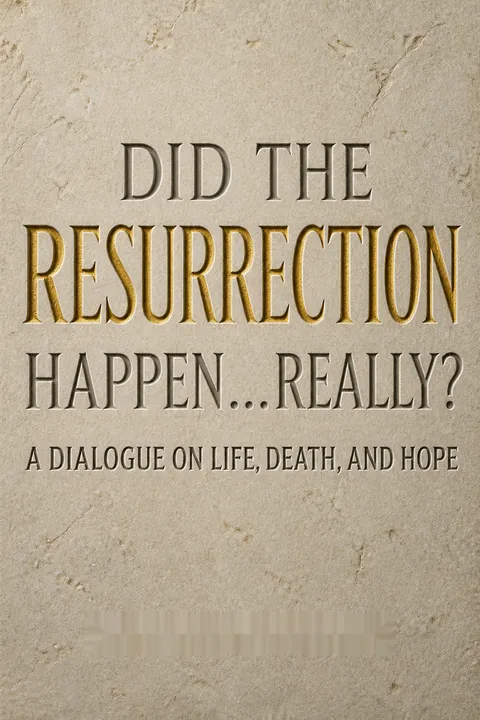
What is "Did the Resurrection Happen . . . Really?" by Josh McDowell and Dave Sterrett about?
- Fictional Dialogue on Resurrection: The book is a work of fiction that uses a dialogue-driven narrative among university students and professors to explore the historical and theological evidence for the resurrection of Jesus Christ.
- Apologetics Through Storytelling: It presents Christian apologetics in the form of conversations, debates, and personal struggles, making complex arguments accessible and relatable.
- Investigation of Evidence: The characters investigate historical, medical, and philosophical evidence for and against the resurrection, considering alternative theories and objections.
- Themes of Grief and Hope: The story is set against the backdrop of a campus tragedy, allowing the exploration of grief, hope, and the meaning of life and death through the lens of the resurrection.
Why should I read "Did the Resurrection Happen . . . Really?" by Josh McDowell and Dave Sterrett?
- Accessible Apologetics: The book makes scholarly arguments about the resurrection understandable for readers without a theological background.
- Engaging Narrative Format: By using fictional characters and real-life scenarios, it brings abstract debates to life and shows their relevance to personal struggles.
- Balanced Exploration: It presents both skeptical and believing perspectives, allowing readers to see how objections are addressed and why the resurrection matters to Christians.
- Practical Application: The book connects theological concepts to real emotional needs, such as coping with loss and finding hope.
What are the key takeaways from "Did the Resurrection Happen . . . Really?" by Josh McDowell and Dave Sterrett?
- Centrality of the Resurrection: The resurrection is presented as the foundation of Christian faith; without it, Christianity loses its meaning and power.
- Historical and Medical Evidence: The book details historical documentation, eyewitness accounts, and medical analysis supporting the death and resurrection of Jesus.
- Addressing Alternative Theories: It systematically examines and critiques alternative explanations, such as the hallucination, conspiracy, and wrong-tomb theories.
- Personal Transformation: The narrative shows how belief in the resurrection can transform grief into hope and skepticism into faith.
How does "Did the Resurrection Happen . . . Really?" by Josh McDowell and Dave Sterrett use fiction to explore apologetics?
- Campus Setting: The story unfolds on a university campus, with students and professors representing a spectrum of beliefs, from atheism to devout Christianity.
- Character-Driven Dialogue: Characters ask tough questions, challenge each other, and share personal stories, making the apologetic arguments more engaging and relatable.
- Realistic Objections: Skeptical characters raise common objections, which are then addressed thoughtfully by others, modeling respectful and reasoned debate.
- Emotional Resonance: The fictional tragedy (a campus shooting) provides a context for exploring the existential stakes of the resurrection question.
What is the "minimum facts" approach to the resurrection, as presented in "Did the Resurrection Happen . . . Really?" by Josh McDowell and Dave Sterrett?
- Core Agreed-Upon Facts: The "minimum facts" approach focuses on historical facts about Jesus that are widely accepted by scholars, regardless of their religious beliefs.
- Key Points Include: Jesus’ death by crucifixion, his burial, the empty tomb, post-crucifixion appearances, and the transformation of the disciples.
- Argument for Resurrection: The book argues that the resurrection is the best explanation for these facts, as alternative theories fail to account for all the evidence.
- Scholarly Consensus: The approach is based on the work of scholars like Dr. Gary Habermas, who is featured in the book’s climax.
How does "Did the Resurrection Happen . . . Really?" by Josh McDowell and Dave Sterrett address alternative explanations for the resurrection?
- Hallucination Theory: The book critiques the idea that the disciples hallucinated Jesus’ appearances, citing psychological evidence that group hallucinations are virtually impossible.
- Conspiracy Theory: It challenges the notion that the disciples stole Jesus’ body, arguing that the risk, lack of motive, and willingness to die for their claims make this unlikely.
- Wrong-Tomb Theory: The narrative points out that all parties (disciples, women, authorities) would have had to make the same mistake, which is implausible.
- Pagan Myth Theory: The book refutes the claim that the resurrection story was borrowed from pagan myths, emphasizing the historical context and Jewish background of the early Christians.
What historical and medical evidence for the resurrection is discussed in "Did the Resurrection Happen . . . Really?" by Josh McDowell and Dave Sterrett?
- Crucifixion Details: The book describes Roman crucifixion practices, referencing historical sources and medical studies (e.g., Journal of the American Medical Association) to confirm Jesus’ death.
- Burial Practices: It examines Jewish burial customs and the role of Joseph of Arimathea, arguing for the historical reliability of the burial account.
- Eyewitness Testimony: The narrative highlights the early and multiple eyewitness claims, including appearances to individuals and groups.
- Prophetic Fulfillment: The book discusses Old Testament prophecies (especially Isaiah 53) and their fulfillment in Jesus’ death and burial.
How does "Did the Resurrection Happen . . . Really?" by Josh McDowell and Dave Sterrett explain the importance of the resurrection to Christian faith?
- Foundation of Christianity: The resurrection is portrayed as the central event that validates Jesus’ identity and message.
- Apostolic Preaching: The book shows that the earliest Christian preaching focused on the resurrection as proof of Jesus’ divinity and the basis for forgiveness.
- Hope in Suffering: The resurrection provides hope for life after death and comfort in the face of tragedy, as seen in the characters’ personal losses.
- Transformation of Disciples: The radical change in the disciples’ behavior—from fear to bold proclamation—is presented as evidence of the resurrection’s reality.
What role do the Dead Sea Scrolls and Old Testament prophecy play in "Did the Resurrection Happen . . . Really?" by Josh McDowell and Dave Sterrett?
- Dead Sea Scrolls Discovery: The book recounts the discovery of the Dead Sea Scrolls, emphasizing the ancient copy of Isaiah that predates Jesus.
- Isaiah 53 Prophecy: It highlights Isaiah 53 as a detailed prophecy about the suffering, death, and burial of the Messiah, fulfilled in Jesus.
- Historical Reliability: The existence of these ancient texts is used to argue that the prophecies were not written after the fact.
- Impact on Skeptics: The fulfillment of prophecy is presented as a significant factor in convincing some characters of the truth of Christianity.
How does "Did the Resurrection Happen . . . Really?" by Josh McDowell and Dave Sterrett address the relationship between faith and evidence?
- Faith Not Blind: The book argues that Christian faith is not a leap in the dark but is grounded in historical evidence and reason.
- Open Investigation: Characters are encouraged to investigate the evidence honestly, regardless of their starting beliefs.
- Emotional and Rational Aspects: The narrative acknowledges both the emotional and intellectual dimensions of belief, showing how evidence can lead to faith and how faith can provide comfort.
- Transformation Through Evidence: Several characters move from skepticism to belief as they engage with the evidence for the resurrection.
What are the best quotes from "Did the Resurrection Happen . . . Really?" by Josh McDowell and Dave Sterrett, and what do they mean?
- "If Christ has not been raised, your faith is futile; you are still in your sins." (1 Corinthians 15:17) – Emphasizes the centrality of the resurrection to Christian faith.
- "People may die for a lie they think is true, but they won’t die for a lie they know to be false." – Highlights the sincerity and conviction of the disciples as evidence for the resurrection.
- "The resurrection turned catastrophe into victory." – Shows how the resurrection transformed the disciples’ despair into hope and boldness.
- "The resurrection of Jesus gives us assurance of heaven." – Connects the historical event to personal hope and comfort in the face of death.
What is the overall message and impact of "Did the Resurrection Happen . . . Really?" by Josh McDowell and Dave Sterrett?
- Invitation to Investigate: The book encourages readers to honestly examine the evidence for the resurrection, regardless of their current beliefs.
- Faith and Reason United: It demonstrates that faith in Jesus is compatible with intellectual integrity and historical inquiry.
- Hope in Tragedy: Through its narrative, the book offers hope and meaning in the midst of suffering and loss, grounded in the resurrection.
- Call to Decision: The story culminates in characters making personal decisions about faith, inviting readers to consider their own response to the evidence presented.

Download PDF
Download EPUB
.epub digital book format is ideal for reading ebooks on phones, tablets, and e-readers.








