

Key Takeaways
Escape the race to improve by giving people a genuinely different experience
Competition can imitate itself. Moon argues that firms can become so attentive to rivals that they unconsciously copy them. She calls this organic collusion: independent companies react to one another until the market moves like a coordinated herd. Computer scientist Craig Reynolds illustrated a similar pattern by programming virtual birds to avoid collisions, match nearby birds, and move toward their neighbors. Those simple rules produced a flock without a leader. In business, positioning maps and competitor tracking can serve as the birds’ cues. A rival adds a feature, others follow, and brands converge. The alternative is not to ignore competition, but to stop treating it as the only source of direction. Differentiate by creating an experience that escapes the comparison.
What's striking is that imitation can arise without anyone choosing to imitate. The same coordination that helps companies respond quickly can also narrow what they consider possible. Shared standards are valuable when customers need compatibility, reliability, or safety. They are less useful as a blueprint for the whole offering. A practical distinction is between matching the category's necessary baseline and copying its discretionary flourishes. Moon's argument is strongest when it asks managers to notice which comparisons protect customers and which merely keep the firm in formation.
When choices blur, shoppers retreat from brands into category coping modes
More options can mean less meaning. Category blur describes what happens when a crowded market makes individual brands hard to distinguish, so consumers respond to the category as a whole. A cereal expert may spot fine differences among boxes, while a novice sees a wall of near-identical choices. Moon describes five common ways people cope with mature categories: connoisseurs explore the category, opportunists hunt for deals, pragmatics rely on habit or convenience, reluctants want to leave quickly, and loyalists cling to a favorite brand. The mix can reveal a category's condition. A growing share of indifferent or deal-driven shoppers suggests that advertised distinctions may no longer persuade. More products do not automatically create more meaningful choice.
This framework shifts attention from what people buy to how much mental effort and affection the category still earns. That can help explain why sales alone may conceal erosion: a purchase can reflect loyalty, habit, or simply lack of alternatives. The categories are useful as diagnostic portraits, not permanent personality types. One person may be a connoisseur of shoes and a reluctant shopper for phones. A firm's challenge is to understand the context of each purchase, rather than reducing customers to a single segment.
Treat endless product upgrades as a warning, not proof of progress
Improvement raises the baseline. Moon distinguishes augmentation by addition, such as adding stain protection to detergent, from augmentation by multiplication, such as releasing more specialized versions of a product. Both can help customers, but they also invite competitors to match the change. The new benefit becomes ordinary, customers adjust their expectations, and the next upgrade costs more just to keep the category in place. Westin's Heavenly Bed, reportedly developed with a $30 million investment, prompted other hotel chains to introduce branded beds of their own. Westin's internal comfort score rose from 8.96 to 9.19 out of 10. The example captures the paradox: products can improve while the competitive advantage and customer delight fade.
The cycle resembles diminishing returns: each added feature may matter less once the market catches up. It also clarifies why customer satisfaction and competitive differentiation are separate questions. A better bed can genuinely improve a stay, even if rival hotels soon offer comparable bedding. The caution is not to stop improving, but to ask whether an upgrade solves a consequential problem or simply resets the minimum expected offer. Without that distinction, innovation becomes an expensive maintenance routine.
Double down on what makes you lopsided, not what makes you incomplete
Strengths create separation. Moon describes how feedback can push people and brands toward an unremarkable middle. After she gave students comparative evaluations, creative students focused on analysis and analytical students on creativity. Their class discussions lost some of their spark because everyone was trying to repair a weakness instead of extending a strength. Companies face the same pull when positioning research highlights what rivals do better. The result can be a brand that resembles its competitors. Moon argues that sustainable difference often depends on a deliberate trade-off. A Ferrari emphasizing family practicality could weaken its performance identity; a Hummer promising refinement could blur its rugged one. A distinctive offer is often uneven by design.
The insight challenges the assumption that well-roundedness is always a virtue. In strategy, a clear specialty can be more memorable than a bundle of competent attributes, and constraints can make that specialty credible. Still, lopsidedness is not permission to neglect basic quality. A weakness that makes the core experience unreliable can destroy trust rather than sharpen identity. The useful question is whether a trade-off reinforces the promise customers value, or merely reflects a blind spot the organization has learned to romanticize.
Remove expected extras, then make the remaining experience feel unusually rich
Reversal pairs restraint with delight. A reverse-positioned brand deliberately withholds benefits customers have come to expect, then offers an unexpected form of value in their place. Google's early homepage had little beyond a search box, unlike the busy portals surrounding it, but its speed and uncluttered design felt distinctive. JetBlue omitted first-class seating and free meals while offering leather seats and personal entertainment screens. IKEA asked customers to find, transport, and assemble furniture themselves, while offering distinctive design, a lively store, childcare, and a café. These brands were not simply cheaper or barer. Their contrast of less and more gave customers a clear reason to notice them amid crowded alternatives.
Reversal works when the omissions remove burdens customers no longer value and the added pleasures matter enough to compensate. That is a more demanding calculation than simply cutting service or cost. IKEA's do-it-yourself model suits shoppers who value price, participation, or discovery, but it would frustrate customers who need delivery and assembly. The broader lesson is that restraint has no universal appeal. Its value depends on the surrounding category, the customers being served, and whether the remaining experience feels considered rather than stingy.
Reframe a product so its old flaws become new advantages
A new category changes expectations. Breakaway brands invite customers to interpret a familiar product through a different category. Sony's AIBO was a costly, imperfect robot, but the company presented it as a robotic pet. When it ignored commands, owners could read the behavior as an animal's personality rather than a machine failure. Kimberly-Clark's Pull-Ups similarly resembled underwear more than diapers, helping parents and children accept continued use beyond the age associated with diapers. Swatch recast the Swiss watch as a fashion accessory, encouraging people to collect and coordinate watches rather than treat one as a formal timepiece. The product did not need to become something else physically; a new frame changed how people related to it.
This is a powerful reminder that consumers do not encounter products as raw objects. They bring expectations, habits, and social meanings that shape what counts as a benefit or a defect. Reframing can make an unfamiliar use feel intuitive by borrowing a familiar script. But the frame must fit the product well enough to be believable. Calling an unreliable appliance a companion would not automatically make its failures charming. The idea succeeds when the new category genuinely changes what customers consider a good experience.
Use friction and refusal to make brand choice meaningful
Not every brand should welcome everyone. Hostile brands deliberately resist conventional persuasion. They may emphasize a drawback, limit access, or speak in a way that repels some people while attracting others. MINI's launch campaign foregrounded the car's tiny size instead of reassuring buyers that it was spacious. Red Bull kept its unusual taste and edgy image rather than smoothing them into a universally pleasant beverage. Birkenstock retained the plain appearance that some shoppers considered ugly. Choosing such a brand can become a visible statement of affiliation. The customer accepts a cost, whether inconvenience, social judgment, or an acquired taste, and that effort can make belonging feel more consequential.
Selective appeal can create loyalty because a clear boundary gives customers something to identify with. It also carries ethical and commercial risks. A brand that excludes people through taste or inconvenience is different from one that humiliates or discriminates against them. Hollister's deliberate appeal to a narrow image, described in the book, illustrates how hostility can cross from confident positioning into harmful exclusion. Friction is most defensible when it expresses a coherent product choice, not when it makes customers' dignity the price of admission.
Make difference matter to someone, not merely visible to everyone
Novelty alone is cheap. Moon distinguishes memorable difference from attention-seeking spectacle. In a school assignment about nonconformity, most students wore strange outfits or performed silly stunts. One quiet student instead stood when answering questions and addressed teachers and classmates with unusual sincerity. His behavior felt meaningful because it revealed a considered way of being, not just a bid for attention. Brands face the same test. Dove's Real Beauty campaign challenged the beauty industry's familiar ideal by showing ordinary women. Harley-Davidson moved in the opposite direction, sustaining an outlaw fantasy for riders whose everyday lives were often conventional. These strategies differed sharply, but each gave its audience a recognizable idea to respond to.
Difference is relational: a departure matters only against a local norm, and it resonates only with people who care about the departure. That makes imitation of another brand's distinctive move especially risky. A campaign that feels liberating in one category may seem irrelevant or opportunistic in another. The standard is not universal approval. It is whether the choice carries a coherent meaning for a particular audience, without confusing spectacle, provocation, or novelty with durable value.
Let imagination lead where customer surveys can only extrapolate
Make room for the unproven. Research can identify what customers dislike about existing products, but it cannot reliably tell a company what radically different experience people might embrace. Moon describes asking students to invent a new kind of loyalty program. At first, classmates criticized the unusual proposals as impractical. When the group temporarily agreed to build on ideas instead of dismissing them, the room grew more inventive and began finding ways to make promising concepts workable. This is not a rejection of evidence. It is a sequence: first create room for possibility, then test feasibility. The marketer's role, in Moon's view, is to notice human needs that numbers alone miss, including the desire for quiet, time, fantasy, or relief from too much choice.
The distinction between generative and evaluative thinking is crucial. Early critique can kill a fragile idea before anyone has made it specific enough to assess; unlimited enthusiasm, on the other hand, can waste resources on fantasies. A disciplined process gives exploration a protected first stage and subjects proposals to evidence afterward. This also makes customer focus more than asking people to rank existing options. It asks organizations to observe how people live, what they avoid, and what forms of abundance have become exhausting.
Analysis
Different is a critique of competitive routines more than a formula for branding. Its central claim is that companies can become less distinctive precisely because they are so competent at tracking rivals, measuring performance, and reacting to customers. Metrics make organizations legible to one another, but the shared legibility can encourage shared behavior. Product extensions then compound the problem: each firm's sensible local response helps produce a category that feels globally redundant.
The book's strength is its attention to interpretation. A robot can be judged as a failed machine or received as a pet with a temper. A small car can be a liability or a declaration against oversized vehicles. The object alone does not determine the experience. Category expectations, identity, and context help determine what customers notice and forgive. Moon's brand types make these shifts easier to discuss, especially the pairing of subtraction with indulgence, category reframing, and deliberate polarization.
The examples also demand caution. Memorable outliers are selected because they succeeded or attracted attention, so their stories cannot establish that unusual positioning reliably produces durable advantage. A brand's apparent contradictions may be a source of appeal, but they may also create operational strain as the company grows. Nor does the argument imply that customer research or competitive analysis is useless. The problem is treating either as a substitute for judgment and imagination.
The most useful reading is therefore neither a recipe to be different nor a celebration of contrarianism for its own sake. It is a method of questioning: Which category expectations have become clutter? Which differences matter outside the firm's internal vocabulary? Which strengths deserve more emphasis than a competitor comparison would suggest? And what would a customer experience if familiar labels changed? Difference becomes strategically valuable when it changes the relationship between a product and its audience, not when it merely looks unusual on a slide.
Review Summary
Different receives mixed reviews, with praise for its insights on brand differentiation and criticism of its length and structure. Readers appreciate Moon's analysis of successful brands that stand out through reverse positioning, breakaway strategies, or hostile approaches. Many find the examples and writing style engaging. However, some feel the book could be condensed and lacks concrete guidance. Overall, it's seen as thought-provoking for marketers and business leaders, offering a fresh perspective on competitive differentiation, though not without flaws.
People Also Read









Glossary
organic collusion
Unplanned competitive imitationA pattern in which independent firms react to nearby competitors and gradually converge without making any explicit agreement. Each company may be acting rationally in response to market signals, yet the collective result resembles coordinated movement. Moon uses the term to explain how vigilant competition can reduce, rather than increase, meaningful distinction.
heterogeneous homogeneity
Many trivial differencesA condition in which products contain real differences, but those differences are so small or inconsequential that many consumers experience the category as basically uniform. The range of options expands while meaningful variety shrinks. The term captures how numerous, technically distinct products can become indistinguishable to anyone who is not a category specialist.
hyper-maturity
A category blurred by excessA stage of category development in which intense competition, repeated product augmentation, and fine-grained segmentation make the market feel crowded and indistinct. Change continues, but much of it produces little lasting separation. Moon associates this stage with heightened competitive activity, low growth, and consumers who are increasingly skeptical of advertised distinctions.
augmentation-by-addition
Adding product benefitsA form of product improvement that expands an existing offer by strengthening a current benefit or adding another one. Examples include improving detergent's stain removal or adding fabric softener. The approach can create real customer value, but competitors may copy the improvement until it becomes a category expectation and raises the cost of competing.
augmentation-by-multiplication
Multiplying product versionsA form of product expansion in which a company creates specialized versions for different consumer segments. A basic product may acquire variants for different tastes, needs, or uses. This can help serve real differences among customers, but repeated segmentation can also create a profusion of options whose distinctions are difficult for ordinary shoppers to perceive.
reverse-positioned brand
Less expected, more distinctiveA brand that deliberately withholds benefits customers have come to expect in its category, then pairs that restraint with an unexpected form of quality or pleasure. Google's early, uncluttered search page and IKEA's do-it-yourself retail model illustrate the approach. The aim is not mere austerity, but a distinctive combination of omission and indulgence.
breakaway brand
A product recast through categoriesA brand that encourages consumers to understand a product through an alternative category rather than its obvious or conventional one. Sony's AIBO was framed as a pet rather than simply a robot, changing how owners interpreted its unpredictable behavior. The new frame can activate familiar expectations and habits while making the product feel novel.
hostile brand
A brand that repels someA brand that refuses the usual effort to welcome and persuade everyone. It may foreground a drawback, restrict access, or communicate in a polarizing way. By attracting some customers and turning away others, it can make affiliation feel expressive and consequential. The approach can also become exclusionary or alienating if its barriers target people rather than articulate a meaningful offer.
idea brands
Brands built from conceptsBrands whose distinction begins with a conceptual decision to approach a category in an unusual way, rather than with incremental adjustments to familiar offerings. Moon uses the term for outliers that challenge category routines through reversal, reframing, hostility, or other forms of difference. The concept is broader than any single brand type or fixed formula.
category blur
Brand distinctions fadeThe consumer experience in which a crowded, highly active market becomes difficult to parse at the level of individual brands. People may remember broad impressions of the category while failing to connect particular claims or promotions to particular companies. Their behavior then reflects their overall attitude toward the category more than loyalty to one brand.
FAQ
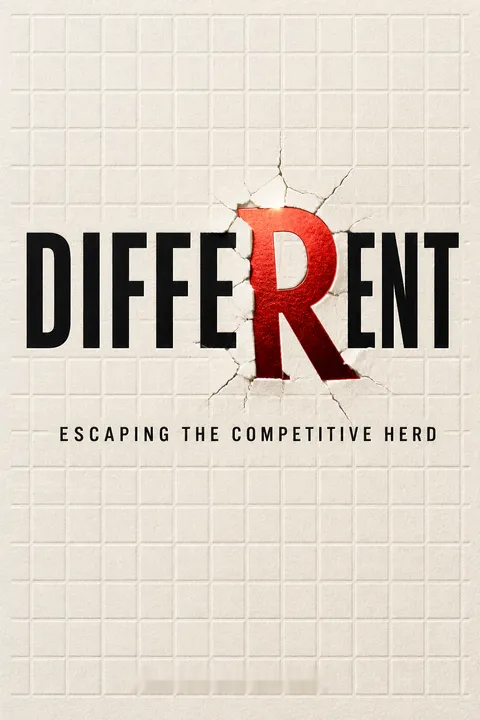
What's "Different: Escaping the Competitive Herd" about?
- Exploration of Differentiation: The book explores how businesses can differentiate themselves in a crowded market by breaking away from conventional competitive strategies.
- Critique of Competition: It critiques the current state of competition, where companies often end up offering similar products and services, leading to a lack of true differentiation.
- Focus on Idea Brands: Youngme Moon highlights brands that have successfully stood out by being different, such as Google and IKEA, and examines their strategies.
- Conceptual Innovation: The book emphasizes the importance of conceptual innovation over mere product augmentation to achieve meaningful differentiation.
Why should I read "Different: Escaping the Competitive Herd"?
- Insightful Analysis: The book provides a deep analysis of how businesses can escape the trap of competitive conformity and truly stand out.
- Practical Examples: It offers real-world examples of brands that have successfully differentiated themselves, providing practical insights for business leaders.
- Challenging Conventional Wisdom: Youngme Moon challenges traditional business practices and encourages readers to think differently about competition and differentiation.
- Engaging Writing Style: The book is written in an engaging and thought-provoking manner, making complex business concepts accessible and interesting.
What are the key takeaways of "Different: Escaping the Competitive Herd"?
- Avoid Competitive Herding: Businesses should avoid following the herd and instead focus on creating unique value propositions.
- Embrace Conceptual Innovation: Differentiation should come from innovative ideas rather than just adding more features to products.
- Understand Consumer Behavior: Recognizing the changing dynamics of consumer behavior is crucial for creating brands that resonate with people.
- Value of Simplicity: Sometimes, offering less can be more effective, as seen with brands like Google that focus on simplicity and clarity.
How does Youngme Moon define "Reverse-Positioned Brands"?
- Defy Augmentation Trends: Reverse-positioned brands deliberately defy the trend of adding more features and benefits, focusing instead on simplicity.
- Unexpected Extravagance: These brands offer unexpected forms of extravagance, creating a unique value proposition that stands out.
- Example of Google: Google is highlighted as a reverse-positioned brand with its simple, uncluttered homepage that contrasts with feature-heavy competitors.
- Consumer Appeal: By stripping down to essentials and adding unique touches, these brands appeal to consumers looking for something different.
What is a "Breakaway Brand" according to Youngme Moon?
- Redefine Categories: Breakaway brands redefine existing product categories by offering a new frame of reference, challenging traditional definitions.
- Example of AIBO: Sony's AIBO is presented as a breakaway brand, marketed as a pet rather than a robot, altering consumer expectations.
- Transformative Devices: These brands act as transformative devices, encouraging consumers to engage with products in new ways.
- Challenge Stereotypes: Breakaway brands challenge category stereotypes, forcing consumers to reconsider their preconceived notions.
How does "Different: Escaping the Competitive Herd" address "Hostile Brands"?
- Play Hard to Get: Hostile brands create barriers to consumption, making it a challenge for consumers to engage with them.
- Polarizing Nature: These brands are polarizing, attracting passionate followers while also repelling others, creating a strong brand identity.
- Example of MINI Cooper: The MINI Cooper is cited as a hostile brand that embraces its small size, challenging the big-car culture.
- Cultural Relevance: Hostile brands thrive on cultural relevance, using their divisive nature to create a strong, loyal customer base.
What role does "Consumer Behavior" play in "Different: Escaping the Competitive Herd"?
- Understanding Dynamics: The book emphasizes the importance of understanding the changing dynamics of consumer behavior for effective differentiation.
- Category Stereotypes: It discusses how entrenched category stereotypes influence consumer perceptions and how brands can challenge these.
- Consumer Engagement: Successful brands engage consumers by offering something unexpected, breaking away from traditional expectations.
- Emotional Resonance: Creating emotional resonance with consumers is key to building strong, differentiated brands.
What are some of the best quotes from "Different: Escaping the Competitive Herd" and what do they mean?
- "Jaded is the new stoned." This quote highlights the modern consumer's tendency to be unimpressed by traditional marketing tactics, emphasizing the need for brands to offer something truly different.
- "Innovation can operate through a process of subtraction." It suggests that sometimes, removing features or simplifying a product can lead to greater differentiation and consumer appeal.
- "Difference is deviance." This quote underscores the idea that true differentiation often involves breaking away from norms and embracing unconventional strategies.
- "Differentiation is a way of thinking." It emphasizes that differentiation is not just a tactic but a mindset that should permeate all aspects of a business.
How does Youngme Moon suggest businesses can achieve "Conceptual Innovation"?
- Think Beyond Augmentation: Businesses should move beyond simply adding features and focus on creating fundamentally new ideas.
- Challenge Assumptions: Questioning existing assumptions and norms can lead to breakthrough innovations that redefine categories.
- Embrace Uncertainty: Being open to uncertainty and willing to experiment with unconventional ideas is crucial for conceptual innovation.
- Focus on Consumer Experience: Understanding and enhancing the consumer experience can lead to innovative solutions that resonate with people.
What is the "Paradox of Progress" as discussed in "Different: Escaping the Competitive Herd"?
- Progress vs. Familiarity: The paradox lies in the tension between the desire for progress and the comfort of familiarity, which can lead to consumer disillusionment.
- Over-Saturation: As products become more feature-rich, consumers may become overwhelmed, leading to a desire for simplicity and clarity.
- Innovation Fatigue: Continuous innovation can lead to fatigue, where consumers become indifferent to new features and crave stability.
- Balancing Act: Businesses must balance the need for progress with the need to maintain a sense of familiarity and comfort for consumers.
How does "Different: Escaping the Competitive Herd" redefine "Marketing Myopia"?
- Beyond Product Focus: The book redefines marketing myopia by emphasizing the need to look beyond product features and focus on consumer experiences.
- Consumer-Centric Approach: It advocates for a consumer-centric approach that prioritizes understanding and meeting consumer needs in innovative ways.
- Avoiding Conformity: Businesses should avoid conforming to industry norms and instead focus on creating unique value propositions that stand out.
- Long-Term Vision: A long-term vision that prioritizes differentiation and innovation is essential for overcoming marketing myopia.
What are the implications of "Different: Escaping the Competitive Herd" for future business strategies?
- Embrace Difference: Future business strategies should embrace difference and focus on creating unique, meaningful value propositions.
- Innovative Thinking: Encouraging innovative thinking and challenging conventional wisdom will be crucial for staying competitive.
- Consumer Engagement: Engaging consumers in new and unexpected ways will be key to building strong, differentiated brands.
- Adaptability: Businesses must remain adaptable and open to change, continuously seeking new ways to stand out in a crowded market.
Download PDF
Download EPUB
.epub digital book format is ideal for reading ebooks on phones, tablets, and e-readers.








