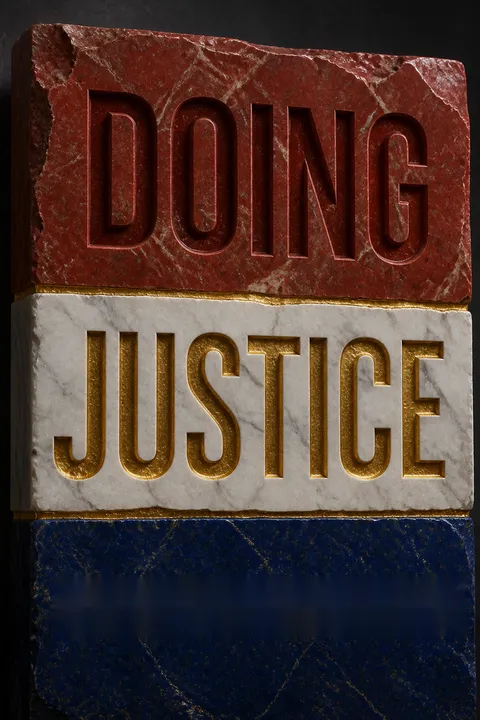


Key Takeaways
Treat justice as a human practice, not a machine that runs itself.
Rules need judgment. Preet Bharara argues that laws and procedures do not deliver justice on their own. People interpret evidence, decide whom to charge, treat victims and defendants, and choose punishments. Their character can correct the system or distort it. A recipe cannot guarantee a good meal; likewise, even sound laws cannot guarantee a fair result when the people applying them act carelessly or with bias.
Fairness must be visible. Bharara's model is not a grand theory of justice, but a practical test: people are more likely to regard an outcome as just when the process seems fair and the decision makers seem fair-minded. The approach applies beyond courtrooms, wherever people make consequential decisions at work, at home, or in public life.
What's striking is the shift from justice as a verdict to justice as a chain of human choices. That connects legal fairness to fields such as medicine and engineering, where a reliable outcome depends on both sound procedures and people willing to question them. A fair process cannot promise a correct answer, but it can make error easier to detect and less likely to harden into authority. The tension is that fairness can be difficult to observe from outside. Institutions therefore need not only ethical decision makers, but also procedures that let others inspect how decisions were reached.
Investigate without choosing a culprit in advance.
Belief can blind. Bharara recounts how his friend Jessica was certain the Menendez brothers could not have killed their parents. The brothers later confessed. Her misplaced trust taught him that affection, wealth, and a polished public image are not proof of innocence. The reverse is equally important: appearance, identity, or reputation should not make someone seem guilty before the evidence is tested.
Stay open to both possibilities. At the investigative stage, the goal is to discover whether a person may be guilty, not to apply the trial's presumption of innocence as a reason to stop asking questions. Bharara warns against forming a theory first and fitting facts to it afterward. In the case of financier Hassan Nemazee, charm and social standing nearly discouraged scrutiny, while basic checks revealed a vast bank fraud.
The Menendez story makes skepticism emotionally difficult: it asks people to hold uncertainty even when trust feels more humane. That is a useful distinction between judging a person and testing a claim. It also applies in organizations, where credentials and likability can function as informal shields from scrutiny. Skepticism, however, should be proportionate. Treating everyone as a likely deceiver would make ordinary cooperation impossible. The practical goal is not suspicion as a personality, but verification when stakes are high and warning signs justify it.
Reopen conclusions when facts resist the story you already believe.
First errors compound. After the 2004 Madrid train bombings killed 191 people, three FBI fingerprint examiners matched a print to Oregon lawyer Brandon Mayfield. His Muslim faith and family seemed to support the identification, but investigators found no meaningful evidence connecting him to Spain. Spanish experts identified the print as belonging to another man. Mayfield was wrongly detained, then exonerated. An unusually similar print helped mislead the examiners, while their confidence made it harder to reconsider.
Correction takes work. Seventeen years into Eric Glisson's wrongful imprisonment for murder, investigator John O'Malley recognized details in Glisson's letter that matched a confession from the actual killers. O'Malley followed up, checked the scene, and helped free Glisson and five others. Both cases show why every conclusion should remain revisable when new evidence, or the absence of expected evidence, challenges it.
These cases distinguish honest error from the institutional habit of defending an error. That distinction matters because adding another expert or review step will not help if everyone is rewarded for agreement. Independent assessment, documented reasons, and explicit permission to dissent can make reconsideration real rather than ceremonial. The challenge is avoiding endless doubt: decisions still have to be made under time pressure. A sound system needs both a threshold for action and a clear route for reopening the decision when contrary evidence appears.
Ask basic questions, then adapt old tools to new problems.
Curiosity finds the gap. Bharara praises investigator Kenny McCabe, who patiently recorded Mafia connections over years, building knowledge one observation at a time. The same ethic begins with asking basic questions, especially when experts rely on jargon or habit. At SDNY, investigator Kurt Hafer manually reviewed suspicious activity reports after keyword searches were missing possible insider-trading leads. Broader searches and human review doubled or tripled the office's credible leads.
Expertise stays alert. Innovation did not always mean inventing something new. Prosecutors applied wiretaps to insider-trading investigations, and investigators built an undercover online marketplace to identify criminals trading stolen credit-card data. Both required asking why familiar methods were not being used in a different setting. McCabe's patient expertise and Hafer's fresh eyes point to the same practice: learn the work deeply, then question how it is done.
The pairing of deep expertise and beginner's questions is more powerful than either alone. Expertise detects patterns; curiosity notices when the pattern itself is misleading. Hafer's manual review also exposes a common risk in data-driven work: a search tool can quietly encode the assumptions of whoever designed its filters. Human review is not automatically superior, but it can reveal what automated categories exclude. Institutions benefit when frontline workers can challenge both established practice and the technology meant to improve it.
Earn information through preparation and humane rapport, not cruelty.
Preparation earns trust. During World War II, German interrogator Hanns Scharff questioned captured American pilots through research, respect, and conversation rather than beatings. He studied each prisoner's background and used what he knew to build rapport. Bharara sees a similar approach in the questioning of Times Square bomber Faisal Shahzad: agents treated him humanely, developed a connection, and gave him his legal rights. Shahzad continued talking, describing his plot and possible future attacks.
Cruelty can mislead. FBI agent Ali Soufan obtained useful intelligence from Abu Zubaydah through rapport before CIA torture began. By contrast, Ibn al-Sheikh al-Libi gave false claims about Iraq under torture, then recanted. The lesson is not that conversation guarantees truth, but that pain can produce compliance without accuracy. Skilled questioning requires preparation, attention, and the ability to read a person rather than simply overpower him.
This account treats humane conduct as both an ethical constraint and an information strategy. That is important because institutions often frame dignity as a luxury to be weighed against effectiveness. The examples suggest a deeper point: coercion can damage the quality of information by making the questioner's desired answer obvious. Rapport is not a guarantee of honesty, however. A cooperative subject may still manipulate the interviewer, so humane treatment must be paired with verification and corroboration.
Use cooperators carefully: their access is valuable, their incentives dangerous.
Insiders know the hidden story. A cooperating witness, often called a cooperator, is a person accused of a crime who provides information or testimony in exchange for possible leniency. Such witnesses helped expose organized crime, corporate fraud, and insider trading. In SDNY, people seeking cooperation had to admit crimes beyond those prosecutors already knew about. The practice could reveal unknown offenses and even expose wrongful convictions, as O'Malley's earlier debriefings helped him recognize the real killers of Eric Glisson.
The bargain distorts. Cooperators may lie, seek a lighter sentence, or turn on former allies for self-preservation. Their testimony therefore needs close corroboration. The practice can also create moral problems: a serious offender may receive leniency for helping convict another person, while a less connected defendant has little to trade. Bharara's examples include a politician kept in office while secretly cooperating, leaving constituents represented by someone they believed honest.
Cooperation is a form of inside access, but also a market in which information and leniency are exchanged. That makes corroboration and transparency essential safeguards, not administrative niceties. The full-confession policy described here can improve credibility and uncover crimes, yet it does not eliminate the underlying bargain. The public question is not simply whether a cooperator is likable or distasteful, but whether independent evidence supports the account and whether the benefit given is proportionate to the value of the help.
Charge only when evidence and judgment justify it, not public pressure.
Momentum is not proof. Investigations consume time, staff, and public attention, creating pressure to produce a charge. Bharara urges prosecutors to resist that sunk-cost pull. They need both an accelerator, to pursue genuine wrongdoing, and brakes, to pause when evidence is weak or the law does not support a charge. The Long Island Rail Road disability investigation began with striking evidence of abuse. Prosecutors charged individual pensioners, gained cooperating witnesses, and ultimately charged 32 people who pleaded guilty or were convicted.
Restraint is also action. Some cases should not be prosecuted, even when conduct seems offensive. Bharara distinguishes believing a person guilty from believing a case can be proved, and argues both must be considered. At the same time, he warns that fear of confrontation can become an excuse for delay. Threat cases raise a harder question: when does expressed intent and preparation justify action before anyone is harmed?
The useful contribution is to make restraint an active prosecutorial skill rather than a synonym for weakness. The same logic applies to regulators and managers: after investing heavily in an investigation, decision makers need a deliberate way to separate evidence from their desire for a result. Yet discretion can conceal inconsistent values, especially when the public cannot see why one case proceeds and another does not. Clear internal standards and careful explanations, within fair limits, help distinguish principled restraint from favoritism.
Build cultures where integrity outranks institutional wins.
Signals shape behavior. Bharara describes SAC Capital hiring portfolio manager Richard Lee despite a warning from his former employer that he belonged to an insider-trading group. The decision fit a culture that prized profit over compliance. Rules and ethics officers cannot compensate for leaders who reward results while treating integrity as a nuisance.
Leaders set the standard. During investigations of New York legislative leaders, Bharara realized his frequent questions might make prosecutors fear disappointing him by declining to charge. He called the teams together and made clear that a decision not to prosecute could be just as worthy as a charge. His wider point is that institutions need leaders who protect independent judgment, take misconduct seriously, and reward ethical conduct, not merely visible victories.
Culture is not an abstract mood; it is the accumulated lesson employees infer from hiring, promotion, compensation, and leadership behavior. A formal code says little if a celebrated performer is protected after crossing a line. Conversely, a leader's explicit permission to report an unwelcome conclusion can reduce pressure to conform. The limitation is that ethical messages can become slogans too. They gain credibility only when institutional decisions, especially costly ones, show that integrity matters more than short-term success.
Give imperfect victims a fair hearing, not a credibility penalty.
Baggage is not disproof. SueAnn, a sex worker and drug user with a criminal record, was severely beaten and robbed. A local prosecutor declined the case partly because she was a difficult witness and had misidentified a supposed accomplice. SDNY investigators pursued other evidence, including phone-location data and photographs of SueAnn's cash. They matched four marked bills from her pre-robbery photos to money found in the suspect's wallet.
Being heard mattered. SueAnn wanted to testify, despite the defense attacking her character. The jury believed her and convicted Lamont Rolle. The case was not only about proof of guilt; it also showed how vulnerable victims can be dismissed because they seem unlikable or unreliable. Bharara argues that prosecutors should care about the person harmed while still testing the evidence carefully.
The case shows how credibility judgments can smuggle social prejudice into apparently neutral decisions. A witness's work, addiction, or past mistakes may be relevant to specific questions, but those facts do not settle whether a particular account is true. The matched bills helped transform a disputed story into corroborated evidence. The broader challenge is balancing care for victims with the accused person's right to test testimony. Compassion should motivate careful investigation, not replace it.
Let trial adversaries test claims before ordinary citizens decide.
Structure limits distortion. Bharara presents the criminal trial as a public method for testing claims: both sides offer evidence, challenge one another, and address a jury under a judge's supervision. Rules exclude irrelevant or prejudicial information, while jurors are told to keep an open mind. A verdict is not guaranteed, which can make the process more credible than a debate in which one side controls the rules.
Stories must survive challenge. In the case against New York senator Dean Skelos, the defense framed his conduct as a father helping his adult son. Prosecutors anticipated that emotional appeal through mock-jury sessions, then presented evidence of political pressure and unearned payments. Bharara argues that lawyers must understand the opposing story, concede real weaknesses, and communicate in language jurors can follow.
The trial's strongest lesson is not that lawyers are naturally more civil, but that enforceable rules can make disagreement productive. Structured challenge forces a claim to encounter evidence it would otherwise ignore. This resembles good scientific review, where scrutiny is a method for finding weaknesses rather than an insult to the researcher. Still, trials are not perfect truth machines: jurors can misunderstand, and storytelling can overpower complexity. Fair procedures improve judgment without making it infallible.
Calibrate punishment to people, and inspect what confinement does to them.
Sentencing is not arithmetic. The kidnapping of baby Carlina White devastated her birth parents, but Carlina, reunited with them after 23 years, did not want the woman who raised her to face a forced trial and a 20-year mandatory minimum. Prosecutors allowed a plea that left the judge discretion. He sentenced Ann Pettway to 12 years. The decision balanced competing victims' needs, the risk of retraumatizing Carlina, and the seriousness of the crime.
Prison remains part of justice. Bharara describes Rikers Island as a violent jail where people awaiting trial, many with mental illness, faced neglect and abuse. A teenager, Kalief Browder, spent years there, including time in solitary, before charges were dropped. Prosecuting abuse and improving confinement are not separate from justice. A sentence can be lawful while the conditions of confinement remain morally unacceptable.
The sentencing dilemma shows why proportionality cannot be reduced to matching a harm with a fixed number of years. Victims may have conflicting needs, while mandatory penalties can remove the room for a humane resolution. But individualized judgment carries its own danger: similar cases may receive unequal outcomes. Transparent reasons and consistent principles are necessary when discretion is broad. The attention to prison conditions also closes a common moral blind spot: punishment does not end at the courtroom door.
Leave room for mercy that law cannot command.
Mercy exceeds procedure. Rais Bhuiyan survived a racist attack by Mark Anthony Stroman, who shot him in the face after 9/11 and killed two other men. Years later, Bhuiyan tried to spare Stroman from execution, appealing to forgiveness and concern for his family. Stroman was nevertheless executed in 2011. The legal process imposed punishment; it could not create or require Bhuiyan's act of mercy.
Human dignity is larger than a verdict. Bharara closes by distinguishing legal justice from forgiveness, redemption, and love. Law can define offenses, protect rights, and impose consequences. It cannot make people compassionate or erase hatred. That work belongs to individuals and communities. The story does not excuse Stroman's crimes; it shows that a victim can choose a response beyond what the state can demand.
The ending refuses two easy conclusions: that mercy cancels accountability, or that accountability exhausts justice. Bhuiyan's choice does not erase the victims who died or settle the public question of punishment. It does reveal a form of moral agency that legal institutions cannot manufacture. That distinction matters in civic life: law can set boundaries, but a society's treatment of one another also depends on habits of empathy, restraint, and forgiveness that remain voluntary.
Analysis
Doing Justice is a prosecutor's memoir organized around the stages of legal action: inquiry, accusation, judgment, and punishment. Its central argument is that law supplies constraints and procedures, but people determine whether those safeguards become justice in practice. The recurring cases make this claim concrete. Mayfield and Glisson show how ordinary institutional errors become injustice when no one revisits an initial conclusion. SueAnn's case shows how a victim's social standing can shape whether evidence is pursued. Rikers shows that a lawful sentence does not settle whether punishment is humane.
The book's greatest strength is its willingness to treat prosecutorial discretion as a moral burden rather than a license for certainty. Bharara describes both the need to act and the need to decline, while showing how public pressure, sunk costs, ambition, and institutional culture can bias either choice. His most persuasive examples are not victories alone. They include investigations that required reconsideration, an awkward decision about a cooperating politician, and a sentence that left him unsure whether the result was right. These admissions give the book's defense of the rule of law credibility.
There is also a structural tension. The prosecutor's office is both a guardian of fairness and an institution with immense power, much of it exercised in secret. Bharara recognizes the difficulty of explaining decisions not to charge, but the resulting accountability gap remains real: the public may have to trust decisions it cannot inspect. His answer is primarily ethical leadership, professional culture, and rigorous self-questioning. Those are indispensable, but they depend on the very people and institutions whose judgment is under scrutiny. Independent review, transparency where possible, and meaningful avenues for correction are therefore important complements to individual integrity.
The book's lasting insight is not that fair-minded officials can eliminate error. It is that justice depends on whether they keep error contestable, power limited, and the people affected by decisions visible. That principle applies well beyond criminal law, wherever institutions make high-stakes judgments about people they may be tempted to reduce to cases, numbers, or reputations.
Review Summary
Doing Justice: A Prosecutor's Thoughts on Crime, Punishment, and the Rule of Law receives mostly positive reviews, praised for its insightful look into the justice system and Bharara's compelling storytelling. Readers appreciate the author's integrity, intelligence, and principled approach to law. The book offers a mix of case studies, personal reflections, and ethical considerations. Some criticize its preachy tone or slow pacing, but many find it informative and engaging. Bharara's experiences as a federal prosecutor provide a unique perspective on the complexities of the legal system.
People Also Read



Glossary
Confirmation bias
Favoring confirming evidenceA tendency to favor information that supports an existing belief and discount information that challenges it. Bharara uses the term to explain how investigators can accept details that seem to confirm an early suspect identification while overlooking contrary evidence. The danger is not limited to deliberate prejudice: confidence, hierarchy, and pressure can make an initial mistake harder to correct.
Proffer session
Cooperator debriefing meetingAn interview in which prosecutors and investigators question a potential cooperating witness about criminal conduct and information the person may provide. In Bharara's office, debriefing could require a prospective cooperator to disclose crimes beyond those already known to the government. Such sessions can uncover evidence, test credibility, and expose crimes for which other people may have been wrongly convicted.
Cooperating witness
Accused person assisting prosecutorsA person involved in criminal conduct who provides information or testimony to the government, often in the hope of receiving a more lenient sentence. Cooperators can reveal hidden conversations, relationships, and crimes that outsiders cannot readily prove. Their incentives also create risks of exaggeration or lies, so their accounts require careful questioning and independent corroboration.
Public safety exception to Miranda
Urgent questioning before rights warningA legal exception that permits officers to ask certain questions before giving a suspect the usual Miranda warning when immediate public safety concerns are at stake. Bharara describes using the exception to question Times Square bomber Faisal Shahzad about possible accomplices, plans, and threats. The exception does not remove the need for judgment about timing, scope, and later admissibility.
Mandatory minimum
Statutory minimum sentenceA law requiring a judge to impose at least a specified prison term for a qualifying offense, regardless of the judge's view of what a lower sentence might warrant. In the Carlina White kidnapping case, the charged statute carried a 20-year minimum. Prosecutors chose a plea route that allowed the judge more discretion, partly to avoid forcing Carlina through a trial.
Stanford prison experiment
Study of assigned prison rolesA 1971 study led by psychologist Philip Zimbardo in which male Stanford students were assigned roles as guards or prisoners in a simulated prison. It was planned to last two weeks but ended after six days amid abusive conduct by some guards. Bharara notes that later criticism questioned whether participants were coached, while the study remains a cautionary illustration of how roles and settings can shape behavior.
Obedience to Authority
Milgram's obedience studiesThe title of Stanley Milgram's book about experiments conducted in the 1960s on obedience to authority. Participants were led to believe they were administering painful electric shocks to another person when instructed by an experimenter. Bharara invokes the work to show how ordinary people may contribute to harm while following institutional roles or commands, even without personal hostility.
FAQ
What's Doing Justice about?
- Exploration of Justice: Doing Justice by Preet Bharara examines the complexities of the American justice system, focusing on moral and ethical dimensions in law enforcement and prosecution.
- Personal Insights: Bharara shares his experiences as the U.S. Attorney for the Southern District of New York, offering a behind-the-scenes look at high-profile cases.
- Current Relevance: The book addresses contemporary issues like the erosion of trust in the legal system and the importance of truth and integrity in justice.
Why should I read Doing Justice?
- Real-Life Cases: The book is filled with compelling narratives from Bharara's career, making it engaging for readers interested in true crime and legal drama.
- Moral Framework: It offers a thoughtful examination of ethical dilemmas faced by prosecutors, encouraging reflection on justice and accountability.
- Guidance for Practitioners: Bharara provides valuable lessons on integrity, decision-making, and maintaining a fair process for those in the legal field.
What are the key takeaways of Doing Justice?
- Importance of Truth: Bharara emphasizes the need for rigorous inquiry in investigations, highlighting the law's role in teaching truth, dignity, and justice.
- Human Element: Justice is often served or thwarted by human beings, reminding readers that it can spring from both the heart and the head.
- Need for Rigor: The book discusses maintaining objectivity and rigor in investigations, warning against confirmation bias and rushing to judgment.
What are the best quotes from Doing Justice and what do they mean?
- "Barbarism is not necessary": This quote underscores the principle that humane interrogation techniques yield better results than coercive methods.
- "You judge an office not just by the cases it brings but also by the cases it doesn’t bring": Highlights the ethical responsibility of prosecutors to exercise discretion and avoid unjust charges.
- "Think that ye may be mistaken": Inspired by Judge Learned Hand, this quote reminds legal practitioners to remain open-minded and willing to reconsider conclusions.
How does Doing Justice address the issue of confirmation bias?
- Psychological Momentum: Bharara explains that once an investigator forms a conclusion, it can be difficult to reconsider, leading to potential miscarriages of justice.
- Case Study of Brandon Mayfield: The book recounts the wrongful arrest of Mayfield based on a flawed fingerprint match, illustrating how biases can cloud judgment.
- Call for Objectivity: Bharara advocates for a commitment to objectivity and continuous questioning of assumptions to avoid confirmation bias.
What role does integrity play in Doing Justice?
- Foundation of Justice: Bharara asserts that integrity is essential for prosecutors, emphasizing that "the law is not a political weapon."
- Personal Responsibility: The book emphasizes individual character and ethical decision-making as vital in the pursuit of justice.
- Cultural Impact: Bharara discusses how the culture within a prosecutorial office can influence the integrity of its members.
How does Bharara suggest handling the pressure to prosecute in Doing Justice?
- Balancing Act: Bharara likens the role of a prosecutor to driving a car with both an accelerator and brakes, emphasizing the need to push for justice while knowing when to pause.
- Avoiding Rush to Judgment: He warns against external pressures from the public and media that can lead to hasty decisions.
- Crisis of Confidence: The book discusses the broader implications of prosecutorial decisions on public trust in the legal system.
What is the significance of the "cooperating witness" concept in Doing Justice?
- Moral Quicksand: Bharara describes cooperating witnesses as essential to criminal investigations but acknowledges the moral complexities involved.
- Risk and Reward: Informants risk their lives and relationships, yet they can provide invaluable information leading to convictions.
- Credibility Challenges: Bharara emphasizes the need for prosecutors to rigorously vet the testimony of cooperators due to their motivations and past actions.
How does Doing Justice explore the concept of justice?
- Justice as a Process: Bharara presents justice as a complex process involving legal, moral, and ethical considerations.
- Public Perception: The book discusses how media coverage and sensationalism can influence public perception of justice.
- Justice Beyond the Courtroom: Bharara suggests that justice extends beyond legal outcomes, encompassing societal values and treatment of individuals.
What challenges do prosecutors face according to Doing Justice?
- Moral Dilemmas: Bharara discusses the moral dilemmas prosecutors encounter when deciding whether to pursue charges.
- Public Scrutiny: The book highlights the intense public scrutiny that prosecutors face, particularly in high-profile cases.
- Balancing Interests: Prosecutors must balance the interests of victims, defendants, and the public while adhering to legal standards.
How does Doing Justice address the issue of public corruption?
- Corruption in Politics: Bharara discusses the pervasive issue of public corruption, particularly in New York State.
- Prosecutorial Action: The book details Bharara's efforts to combat public corruption through aggressive prosecutions.
- Civic Responsibility: Bharara calls for greater civic engagement and awareness to combat corruption.
What lessons can be learned from Doing Justice?
- Importance of Empathy: Empathy is crucial for understanding the human experience and achieving true justice.
- Complexity of Justice: Justice requires careful consideration of individual circumstances and moral implications.
- Role of Prosecutors: Prosecutors play a vital role in shaping justice and must prioritize fairness, transparency, and accountability.
Download PDF
Download EPUB
.epub digital book format is ideal for reading ebooks on phones, tablets, and e-readers.








