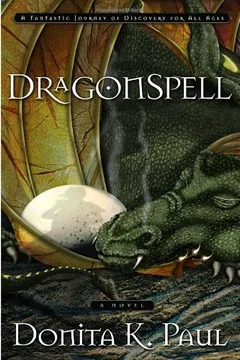


Plot Summary
The Egg Sends Kale West
At fourteen, Kale has spent her life as a slave in River Away. After she finds a mysterious egg in a stream, the village council frees her and sends her toward Vendela to serve at The Hall. Farmer Brigg offers to take her into the city, but Kale chooses to walk at her own pace, wary of the crush of other people’s thoughts she can sense.
A dragon’s appearance draws her up a rocky slope, where grawligs seize her, toss her between them, and knock her unconscious. Her new freedom has begun with no familiar protection, only the egg hidden against her chest.
Kale’s first act of freedom is not a bold escape but a measured refusal to be hurried. Her years of obedience have taught her to follow instructions, yet she is beginning to notice that choosing how to proceed matters. The egg gives her a purpose she cannot explain, while her fear of Vendela’s crowds makes independence feel less like a gift than an exposed road. The grawligs’ casual violence abruptly shows how little protection her new status provides.
A Mountain's Blue Secret
Kale wakes bound beside the grawligs’ camp, loosens their clumsy knots, and crawls away while the ogres feast. A fall drops her into a cave, where she resists the urge to explore a warm tunnel until the pull of dragon eggs overwhelms her caution. The tunnel leads to a blue-lit cavern holding seven eggs.
Her own egg heals her bruises and cuts, confirming that its warmth is more than comfort. Kale ties the seven new eggs into her scarf and climbs back toward the surface. Outside, fighting has erupted: a marione warrior and two dragon riders are attacking the grawligs. A voice in her mind directs her to safety, and Kale obeys, then meets Dar, the doneel whose dragon sensed her distress.
The cavern turns Kale’s unexplained attraction into a concrete gift, but it also introduces the danger of instinct without understanding. She survives because she observes, tests the grawligs’ poor bindings, and uses what she knows, even while the egg supplies help she cannot yet account for. Finding seven eggs changes her from a courier into a guardian. Her first meeting with Dar begins a pattern that will matter throughout the journey: others may know more than she does, but she must still decide whether to trust them.
Orders Become a Quest
Dar explains that Merlander, his dragon companion, sensed Kale’s danger through the embryo in her egg. He then surprises Kale by admitting that he has been sent to keep her from going to The Hall. Leetu Bends, an emerlindian warrior, arrives and explains that Paladin needs Kale’s talent for finding eggs: evil wizard Risto has stolen a rare meech egg and intends to use its power.
Kale resists the sudden change of destination, but the group sets out to find Wizard Fenworth, who is meant to safeguard the recovered egg. When a dozen grawligs surround them, Leetu sends Kale into a tree, Dar fights beneath a protective shell, and Kale pelts the attackers with heavy pine cones.
The mission unsettles Kale because it replaces one imposed destination with another, and the distinction between service and slavery remains unclear to her. Dar’s teasing and Leetu’s authority offer security, but neither immediately gives her the explanations she needs. The grawlig fight makes the new role bodily real: Kale can contribute, yet she is frightened by blood and unsure whether she belongs in battle. Her hesitation is not cowardice so much as an ethical instinct she has not learned how to interpret.
Granny Noon Opens the Gateway
Granny Noon welcomes the exhausted travelers into her hidden underground home, feeds them, and prepares Kale for the road ahead. She explains that Kale can hear and send thoughts, teaches her how to protect her mind, and gives her a moonbeam cape with hidden pockets for the eggs and supplies.
Kale also learns that her gift draws her toward dragon eggs, though she cannot yet control it. Before the party enters a magical gateway, Granny names her Kale Allerion and warns her that the journey will bring real danger. Kale steps through despite fear, emerging in Fairren Forest with Dar and Leetu, far from Vendela and the life she expected.
Granny’s lessons provide something Kale has rarely received: instruction without humiliation. The rules for mindspeaking turn a vague sensitivity into a responsibility toward other people’s privacy. Her new name suggests a history she does not know, but Granny does not make identity a prerequisite for action. The gateway is a literal passage from a life where others assign her tasks to a wider world where she must learn judgment. She crosses it frightened, not because fear has vanished, but because it no longer decides for her.
The Bog Keeps Fenworth
On the way through Fairren Forest, Kale accidentally reads an image from Leetu’s mind and sees the legendary Battle of Ordray. Leetu takes the intrusion as a breach of trust, then recognizes that her failure to train Kale helped cause it and begins teaching her proper boundaries. In Bedderman’s Bog, the travelers search for Fenworth, but Kale mistakes the tall wizard’s disguised presence for a tree and then a bird.
Fenworth refuses to reveal himself. That night, while Dar mends Kale’s torn skirt and she reads about dragon hatching, several mordakleeps rise through the cygnot branches. Kale fights them with Dar’s sword, but one takes Leetu. When Kale reaches toward her friend, a terrifying emptiness drives her back.
Kale’s mind is both a bridge and a boundary violation. Her first glimpse of Leetu’s memory gives her knowledge without consent, and the resulting apology marks an important shift: talent does not excuse carelessness. Fenworth’s concealment adds a different frustration, since Kale cannot make the world explain itself on demand. The mordakleeps turn that uncertainty into trauma. Their void attacks her most intimate sense of connection, making the rescue mission a test of whether she can act without demanding certainty or easy access.
Gymn Breaks Free
After the mordakleeps vanish with Leetu, Kale cannot reach her mind without falling into the same horrifying void. She instead notices that the original egg, kept warm against her body for weeks, has begun to crack. Dar stays beside her as the green hatchling emerges, and Kale names him Gymn.
The baby dragon bonds with her and can heal, but he is frightened by the void and faints when Kale tries to reach Leetu again. The new responsibility does not erase the old one. When Kale later senses Leetu’s faint call, she overcomes her fear of the mental darkness and identifies the direction from which it comes.
Gymn’s birth places new life beside the threat of disappearance. Kale cannot rescue Leetu by forcing her way through the void, but she can learn to approach carefully and persist. Gymn’s fainting mirrors Kale’s own fear, making their bond a shared vulnerability rather than a simple source of power. Their connection gives her practical healing ability, yet the episode refuses the fantasy that a gift removes distress. Kale’s progress lies in returning to the task after fear has shown her its cost.
Celisse Turns Back
Kale’s strange waking vision leads her and Dar to Celisse, a large riding dragon held in a barn and weakened by repeated poison arrows. Four bisonbeck guards are keeping her for Risto. Kale slips inside under her concealing cape, uses Granny Noon’s medicines to remove the arrows, and joins Gymn in a healing circle that restores Celisse.
During their escape, Celisse flies back to the farm and kills the guards who murdered the family she loved. Dar condemns the uncontrolled vengeance and refuses to trust her, though Kale sees Celisse’s grief and offers friendship. Celisse follows them at a distance, leaving Dar’s judgment unresolved and Kale caught between loyalty and discipline.
Celisse’s rescue complicates the distinction between righteous resistance and revenge. Kale understands the dragon’s grief because she has felt it through their mental connection, but understanding does not make Celisse’s violence harmless. Dar focuses on the danger of acting from rage; Kale focuses on the people Celisse loved and lost. Neither view fully cancels the other. The disagreement forces Kale to practice moral judgment rather than simply obey a friend or condemn an enemy, while her offer of friendship recognizes that accountability and compassion can coexist.
Risto's Prison Opens
Kale and Dar enter Risto’s fortress with the help of Shimeran and other kimens, who distract the guards and guide them into the dungeons. The prison appears empty until Dar’s music breaks an enchantment concealing dozens of starving captives. Kale finds Leetu feverish and near death, then uses Gymn and her own strength to begin healing her while the kimens organize an escape for the prisoners.
When Risto returns, the rescuers carry Leetu through underground passages, evade soldiers, and flee by way of a well and river cavern. Paladin’s forces meet them in the air. As twelve fire dragons attack, Paladin withstands their flames and commands them to withdraw, ending the assault without destroying them.
The hidden prisoners reveal that Risto’s power depends partly on making suffering unseen. The rescue begins when the group stops trusting appearances and listens for evidence beneath them. Kale’s care for Leetu is intimate and physically demanding, while the wider escape requires coordination among many races and abilities. Paladin’s response to the fire dragons models a power different from revenge: he ends the immediate threat without annihilation. The episode expands Kale’s understanding of service from protecting one companion to recognizing people whom a system has rendered invisible.
Paladin Offers a Choice
After the battle, Kale wakes in a marione home and meets Paladin, who explains that her role is hers to choose, not merely an order passed down by River Away’s council. He also explains that growth requires time and difficulty, using images of a child and an unripe tree to show why he does not simply erase every danger.
Kale chooses to continue serving him. At a gathering hosted by General Lee Ark, Paladin assigns Brunstetter to lead the next stage and gives Kale responsibility for helping Leetu recover. The party returns to Bedderman’s Bog, where Fenworth finally appears, accompanied by the librarian Librettowit.
Paladin’s offer changes the moral terms of Kale’s journey. Until now, she has often treated service as another name for being commanded; a genuine choice lets her distinguish obedience from coercion. His explanation does not make suffering pleasant or fair, but it asks her to understand development as something that cannot be delivered ready-made. Her decision is modest and active: she does not claim certainty, only consent to continue. The assignment to care for Leetu makes that consent practical rather than merely emotional.
The Blimmet Night
Fenworth explains that Risto plans to use the meech egg to create a new race and challenge the order established by Wulder. The wizard eventually transports the party to his living tree-castle, where he heals Leetu and prepares for the next stage. As the group travels toward Mount Tourbanaut, hundreds of blimmets erupt from the ground and attack in darkness.
Fenworth and Librettowit flood the camp to drown the creatures, while Kale and Gymn move among the wounded to stop bleeding and ease pain. They save Leetu, Dar, Lee Ark, and others, but Glim, one of the Trio family kimens, dies. At sunrise, the local people bury the blimmets and gather to mourn Glim, whose family carries him away in a procession.
The blimmet attack makes the cost of the quest irreversible. Kale’s healing can preserve lives, but it cannot restore every loss, and Glim’s death prevents the aftermath from becoming a clean victory parade. The villagers’ shared mourning also contrasts with the captive solitude Kale has known: grief is witnessed and carried by a community. Fenworth’s flood, Kale’s healing, and the kimens’ rites show different forms of service working together. None cancels death, but each gives the survivors a way to respond rather than turn away.
A Monster in the Egg
The travelers reach Dael, where Librettowit’s family welcomes them before guiding them into old mining tunnels beneath Mount Tourbanaut. On a narrow mountain path, an old woman presents an egg she claims was stolen from Risto. Kale senses that it is evil and urges the others away, but the woman hurls it to the ground.
A three-headed monster bursts out and attacks. Leetu’s arrows wound it, Dar distracts it, and Brunstetter cuts off one head while Fenworth slowly turns its body to stone. The party escapes as the statue crumbles into rubble. Deeper in the mountain, they find Crim Copper’s black barrier blocking the route to Risto’s territory.
The false egg tests Kale’s developing discernment: she senses danger before she can prove it, and the group must decide whether to heed an intuition that sounds unreasonable. The monster’s cramped birth from an egg turns Risto’s ambitions into grotesque physical comedy and real danger at once. Fenworth’s slow spell and the others’ tactical interventions expose the limits of any single hero. The black barrier then shifts the challenge from defeating a creature to confronting an obstacle that may require patience, knowledge, or power the party does not yet possess.
The Barrier Breaks
For days, Fenworth studies Crim Copper’s barrier without finding a way through. Frustrated by the waiting, Kale silently demands that it move. The black mass immediately collapses, throwing her down the slope and injuring the others. Separated in the dust and newly opened tunnels, Kale reaches Leetu by mindspeaking and learns that Fenworth is unconscious, Librettowit is hurt, and Dar and the rest are battered.
Bisonbeck soldiers soon capture the group. Leetu orders Kale to stay hidden and continue toward the meech egg rather than risk another attempt to help. Kale watches the prisoners taken away and blames her untrained power for the destruction, but follows the order.
Kale’s impatience produces the disaster she fears most: her gift acts beyond her control and harms the people she wants to protect. The causal link is unmistakable, but her guilt expands it into a total verdict on her worth. Leetu’s command forces a painful distinction between responsibility and self-punishment. Kale cannot undo the landslide or save everyone by rushing after them; she must obey a strategy that feels like abandonment. Her next choice will show whether she can use discipline without mistaking it for helplessness.
The Egg in Risto's Hall
Kale follows the bisonbecks into Risto’s underground stronghold while hiding beneath her cape. When the prisoners are taken toward the dungeons, she turns toward an unexplained pull instead and enters Risto’s hall. There she finds the enormous meech egg in a cabinet.
It initially traps her hand, and Risto reaches into her mind, but Kale uses Granny Noon’s protection to shut him out. The egg is too large for her cape’s ordinary pockets, so she uses the blue scarf to sling the cape around it and carry it on her back. While Metta distracts the guards with her song, Kale leaves the hall and searches for the captured party.
The meech egg converts Kale’s lifelong attraction to dragon eggs into a concrete test of agency. She cannot simply pick it up and walk away; she must improvise a way to carry it and defend her mind from Risto’s influence. The scarf that once marked her humble life becomes practical equipment, linking her past to the task rather than requiring her to erase it. Her success is not mastery but resourcefulness: she uses familiar objects, remembered instruction, and the help of her small companions.
The Dungeon Door Opens
Using Gymn’s mending power, Kale restores the broken belongings the bisonbecks left behind, then follows the captives to their dungeon. She finds Shimeran and Seezle imprisoned inside a sphere of compressed air and pushes the sphere through a tunnel until it bursts, releasing them.
The reunited group locates the others, unlocks the cell, and fights off the guards who hear the meech egg’s steady thrum. Librettowit guides them toward an abandoned mine exit. At the narrow gate, Kale crawls back inside and moves the hidden lever, opening the mechanism for her friends. The passage begins to shake as they escape, and the mountain starts splitting around them.
Kale’s rescue is built from accumulated knowledge rather than a sudden display of strength. She understands the cape’s mending effect, relies on the dragons’ scouting, and accepts help from Shimeran and Seezle. Her actions also repair more than objects: returning Dar’s instruments and Leetu’s bow restores pieces of the group’s shared identity. Yet the gate’s opening releases a danger she cannot control. The achievement and the catastrophe arrive together, showing that competent action does not guarantee command over consequences.
The Mountain Breaks Apart
Kale crawls out of the mine as the mechanism shifts, but a violent rupture splits the mountainside. Her cape, Gymn, Metta, and the dragon eggs slide toward a widening chasm. Kale cannot reach them before the ground gives way. Her companions survive the collapse, though injured, and o’rant rescuers carry Kale to Ornopy Halls.
Paladin explains that she is not responsible for controlling life and death, then gives her the choice to remain among the o’rants or continue toward The Hall. Kale spends the winter recovering and experiencing the warmth of a household that welcomes her without demanding that she earn her place. In spring, she decides to return to the mountain for the lost eggs.
The collapse strips Kale of the tools and companions that have made her feel capable, and her grief initially turns loss into self-condemnation. Paladin refuses to let her mistake influence for omnipotence: she made choices, but she did not become the author of every consequence. The winter at Ornopy offers an alternative to the hard, conditional belonging of her childhood. Its comfort does not erase her calling; it gives her room to choose. Returning in spring is therefore not another command but a decision made after rest.
Kale Faces Risto Again
Kale climbs back to the ravine and follows the eggs’ pull to a cave, where she finds Gymn and Metta alive beside the meech egg. Fenworth has survived there too, and the rest of the party arrives after fighting grawligs. Risto appears and tries to convince Kale that her friends are illusions and that he alone can protect her.
Kale recognizes the lie and stands under Wulder’s authority; her companions reappear, revealing that they had been shielding her from Risto’s mental assault. As Risto attacks, Fenworth transports the group away, with Paladin’s forces driving off the dark creatures that pursue them. Kale leaves the mountain with her friends and the meech egg, ready to continue toward The Hall.
Risto’s final strategy targets Kale’s deepest vulnerability: the fear that she is alone, unwanted, and too ignorant to judge whom to trust. He offers belonging as a form of possession, making his counterfeit affection more dangerous than open force. Kale resists not through a clever argument but by remembering the practices and relationships that have taught her how to discern. The party’s reappearance confirms that trust can be communal rather than blind. Her return to the quest now rests on chosen allegiance, not on the need to prove she deserves a place.
Epilogue
Kale and Dar reach Vendela with Merlander and Celisse, bringing the surviving eggs and their two young dragons. This time, the city’s crowded thoughts do not overwhelm Kale; she can guard her own mind while remaining open to others.
Dar explains that she will enter The Hall at its lowest rank, a beginning rather than a reward. Kale accepts the uniform and the lessons ahead with enthusiasm. The girl who once delayed at the city’s edge is finally ready to cross its gates.
The opening and ending mirror each other through Kale’s approach to Vendela, but the changed response matters more than the repeated view. At first, the city’s many minds seem likely to swallow her identity; now she can set a boundary without withdrawing from the people around her. The low rank of leecent keeps the ending grounded. Kale has not arrived as a finished hero, and her journey has not made her all-knowing. She enters The Hall prepared to learn, choosing a beginning she once feared.
Analysis
DragonSpell builds a fantasy quest around a young woman learning the difference between being commanded and choosing to serve. Kale begins with a life in which authority is external and questions are discouraged. Her initial idea of freedom is simply to reach a respectable position at The Hall. The journey complicates that hope: she receives gifts and responsibilities before she feels prepared, and repeatedly mistakes inexperience for incapacity. Her development is not a straight ascent into confidence. She misuses her mindspeaking, freezes before danger, loses control of a power, and must live with real consequences. The story treats correction and repair as essential forms of growth.
The novel also distinguishes care from possession. Dragons are companions rather than property, and Kale’s friendships deepen when she attends to what others need without assuming she owns their choices. Celisse’s retaliation makes this distinction difficult: grief deserves compassion, but it does not make uncontrolled violence harmless. Dar’s judgment and Kale’s empathy each reveal a partial truth. Their disagreement allows the book to explore moral discernment as a practice, not a slogan.
Appearance and knowledge are equally unstable. The dungeons seem empty until music reveals their prisoners; Fenworth appears as a tree; Risto’s manipulation resembles sincere concern. Kale learns that observation, memory, and spiritual trust must work together. Yet she does not become all-knowing. She is repeatedly asked to act with incomplete understanding, then accept guidance and revise her judgment.
The conclusion refuses both despair and easy triumph. Kale loses the eggs and believes her companions may be gone, but survival and recovery remain possible. Her eventual choice of The Hall is meaningful because it follows a season of welcome in which she could have chosen another life. The story’s central claim is that belonging cannot be earned by flawless performance. It becomes credible through relationships that permit fear, failure, accountability, and renewed choice.
Review Summary
DragonSpell received mixed reviews, with many praising its imaginative world-building, charming characters, and Christian themes. Readers appreciated the dragons, adventure elements, and allegorical aspects. Some found the writing style and pacing inconsistent, while others felt the religious elements were heavy-handed. Many younger readers and fans of Christian fantasy particularly enjoyed the book. Critics noted similarities to other fantasy works but acknowledged the author's unique take on the genre. Overall, it was frequently recommended for its wholesome content and appealing fantasy elements.
People Also Read


Characters
Kale Allerion
Reluctant dragon finderKale is a young o’rant raised as a slave in a marione village, where she learned to work hard, obey orders, and keep her questions to herself. Her unusual sensitivity to other minds and attraction to dragon eggs make her valuable, but they do not make her confident. She often mistakes uncertainty for stupidity and responsibility for blame. What distinguishes her is her willingness to reconsider: after misusing her gift or judging too quickly, she listens, apologizes, and tries again. Kale’s central psychological struggle is learning that autonomy does not require perfect knowledge. She must become able to choose a course, accept help, and remain morally attentive even when frightened.
Dar
Music-making companionDar is a doneel and a close companion to Merlander, his dragon friend. He is a fastidious dresser, gifted musician, skilled cook, capable fighter, and inveterate teaser. His humor often eases Kale’s fear, though it can also frustrate her when she needs a plain answer. Dar’s wanderlust and desire to serve Paladin coexist with a painful awareness that others may dismiss doneels as too delicate for battle. He models care through ordinary acts, mending clothes, sharing food, and keeping watch, rather than through grand speeches. His friendship gives Kale a first experience of being treated as a peer, even when he challenges her decisions.
Leetu Bends
Emerlindian field mentorLeetu is a young emerlindian warrior serving Paladin. Disciplined, observant, and highly competent, she initially approaches Kale as a responsibility she has accepted without much enthusiasm. Her reserve can seem like impatience, but she is capable of examining her own failures and apologizing when she has neglected her duty as a teacher. Leetu values training, restraint, and clear thinking under pressure. She helps Kale understand that a gift needs boundaries as well as practice. Her relationship with Kale develops through instruction, conflict, and mutual regard, allowing the younger girl to see authority as something that can be accountable rather than merely obeyed.
Paladin
Leader of the faithfulPaladin is the commanding figure whom Kale is asked to serve, a leader whose authority combines formidable power with patient attention to individuals. He protects people without treating them as possessions, and he expects service to be chosen rather than extracted. His explanations emphasize growth, proportion, and the limits of what any one person can understand. To Kale, he is at once a distant ruler and a reassuring presence who sees her worth before she can see it herself. Paladin does not remove every hardship from his followers’ path. Instead, he offers guidance, then leaves room for them to make consequential choices and learn from what follows.
Wizard Fenworth
Absent-minded ancient wizardFenworth is a very old wizard whose attention wanders among animals, plants, spells, and forgotten details. He can appear so distracted that his companions doubt whether he understands the danger around them. Beneath that disorder lies deep knowledge and a powerful, if unpredictable, command of magic. Fenworth dislikes the discomfort of quests and complains freely, yet he continues to serve Paladin when needed. His eccentricity challenges Kale’s assumption that wisdom must look orderly or answer questions directly. He is also capable of recognizing talent in others, though his methods of explaining what he sees are rarely straightforward.
Risto
Ambitious evil wizardRisto is a powerful wizard whose ambition is tied to the belief that existing limits should not apply to him. He treats other beings as resources for his plans and seeks influence through both force and persuasion. His mental voice can make self-interest sound like concern, especially when he addresses someone who feels isolated or unsure of her worth. Risto is not merely a distant threat: he is skilled at identifying emotional vulnerabilities and presenting control as protection. His opposition to Paladin and Wulder exposes a desire to define good according to personal ambition, rather than accept any authority beyond himself.
Granny Noon
Wise emerlindian guideGranny Noon is an old emerlindian who welcomes Kale into her home and gives her practical teaching before the quest begins. Warm but firm, she explains mindspeaking, mental protection, and the responsibilities that accompany Kale’s gifts. Her care is concrete: she provides a bath, clothing, food, medicine, and tools suited to the journey. She refuses to let reassurance become false comfort, telling Kale that danger is real while insisting she will not face it alone.
Celisse
Grieving riding dragonCelisse is a large riding dragon who has lived closely among people and developed deep attachments to them. She is gentle and capable of carrying riders, yet grief can overwhelm her judgment. Her bond with Kale is largely emotional and mental, allowing the girl to feel both Celisse’s sorrow and her determination. Celisse’s story asks whether compassion can acknowledge someone’s pain without excusing every action that pain inspires.
Gymn
Healing minor dragonGymn is the green minor dragon who hatches from the egg Kale has carried close to her body. He is affectionate, curious, and gifted in healing, but he is also easily frightened and sometimes faints when confronted with overwhelming danger. His connection with Kale makes their feelings mutually legible, so his fear and courage affect her as directly as her own. Gymn represents the care that accompanies power: he can help others, but he remains young and needs protection too.
Metta
Song-bearing minor dragonMetta is a purple minor dragon whose singing can soothe and encourage those around her. She is newly hatched, yet her mindspeaking lets her draw on songs held in others’ memories. Metta’s presence complements Gymn’s healing gift, offering emotional steadiness when fear or grief makes action difficult. Her songs do not solve the group’s problems, but they help its members endure them.
Lee Ark
Marione general and leaderLee Ark is a marione general serving Paladin, a practiced leader who thinks first about the safety and cohesion of his group. He is a capable fighter and a devoted family man, comfortable moving between military command and the noisy life of a crowded household. His direct manner gives structure to the expedition, while his willingness to listen keeps authority from becoming inflexible.
Brunstetter
Gentle urohm commanderBrunstetter is a urohm lord and dragon rider, physically imposing but notably gentle in temperament. He brings steadiness to a party whose other members are often distracted, anxious, or argumentative. His size makes him useful in dangerous situations, but his role is not simply strength: he is careful with others and accepts responsibility without seeking attention.
Trevithick Librettowit
Historian and librarianLibrettowit is a tumanhofer librarian whose knowledge of history and old mines proves valuable to the expedition. He is scholarly, precise, and often exasperated by Fenworth’s habits, yet he remains loyal to his friend. His careful research offers a counterweight to improvisation, while his reluctance to adventure gives him a dry perspective on the dangers everyone else accepts.
Shimeran
Kimen rescue guideShimeran is a kimen leader who guides Kale and Dar through Risto’s fortress. Alert and disciplined, he coordinates his people’s stealth and knows when to ask Kale to use her mindspeaking. He believes the kimens have a particular role as observers and helpers, though he can act decisively when a rescue requires it.
Seezle
Quick-witted kimen scoutSeezle is Shimeran’s sister, a fast-moving kimen whose cheerfulness survives even in dangerous places. She helps carry Leetu and scouts routes through the fortress, combining practical courage with a light touch. Her buoyancy is not ignorance of risk; it is a way of keeping fear from governing every decision.
Glim
Member of the Trio familyGlim is one of the orphaned kimens who formed the Trio family with Zayvion, Veazey, and D’Shay. He joins the rescue effort with energy and pride in the family he has chosen.
Zayvion
Blunt kimen storytellerZayvion is a member of the Trio family, direct in speech and fond of correcting details others would let pass. His insistence on accuracy gives the group’s playful songs and stories a comic counterpoint.
Veazey
Eager kimen companionVeazey is one of the Trio family kimens. Enthusiastic about joining important work, she is quick to celebrate a chance to help and takes pride in her family’s place among Paladin’s servants.
D'Shay
Diplomatic kimen mediatorD’Shay belongs to the Trio family and often smooths over disagreements among its members. Her warmth and musical manner help turn a quarrel into cooperation without making anyone feel dismissed.
Mistress Meiger
Kale's former village mistressMistress Meiger is one of Kale’s former employers in River Away. Stern and practical, she teaches Kale to focus on what lies ahead while drawing useful lessons from the past.
Farmer Brigg
Kind road companionFarmer Brigg gives Kale a ride toward Vendela and shares food and local knowledge. His gruff manner conceals a generosity that helps the newly freed girl face an unfamiliar road.
Mistress Sanci Moorp
O'rant household keeperSanci Moorp is the head housekeeper at Ornopy Halls. She cares for Kale with practical kindness, offering food, warmth, and rest without making the girl prove she deserves them.
Plot Devices
Dragon eggs
Call and carry the questKale’s ability to find dragon eggs sets the story in motion. The first egg warms against her body, heals her injuries, and eventually hatches into Gymn. Her discovery of a clutch gives her a responsibility beyond the assignment to serve at The Hall. The rare meech egg, stolen by Risto, becomes the object of the larger quest. Eggs are not ordinary cargo: they draw Kale toward them, require warmth to quicken, and connect dragons emotionally to people nearby. They turn the question of power into a question of care, because each egg contains a life that can be nurtured or exploited.
Mindspeaking
Connect and expose mindsMindspeaking allows Kale to sense thoughts, send images, and locate people through an emotional impression of their presence. The ability helps the party detect guards, communicate with dragons, and find Leetu when she is imprisoned. It also creates ethical and psychological risks: Kale can intrude on a friend’s privacy or encounter a hostile emptiness that overwhelms her. Granny Noon teaches her mental protections, including a way to place her thoughts under Wulder’s authority. The talent becomes useful only as Kale learns restraint, consent, and the difference between reaching for truth and forcing entry into another person’s mind.
Minor dragons
Heal and steady the partyThe minor dragons carry specialized abilities. Gymn heals physical injury, while Metta’s song can soothe and encourage. Kale’s bond with them lets her participate in healing circles, combining her own presence with a dragon’s gift and the support of Wulder. Their usefulness does not make them invulnerable: Gymn is young and easily frightened, and Metta’s singing cannot substitute for judgment or action. The dragons therefore function as companions rather than convenient tools. Their small size and dependence repeatedly ask Kale to care for someone even while she is frightened and in need of care herself.
Moonbeam cape
Hide, carry, and restoreGranny Noon gives Kale a cape woven from moonbeam plant fibers. When Kale stands still with its hood raised, it helps her blend into her surroundings; its hidden pockets carry eggs and provisions, while its hollows hold medicines and tools. The cape also protects Kale from heat and cold. Later, when Kale wears Fenworth’s hat and uses her own talents, items placed in its hollow are restored from damage. The garment gathers the practical and the uncanny into one object: it makes survival possible, but it never guarantees safety or replaces careful choices.
Wulder's authority
Ground moral resistanceGranny Noon teaches Kale phrases that help her guard her thoughts and seek truth under Wulder’s authority. They do not work as mechanical passwords; the story emphasizes the intention and trust behind them. Kale uses this teaching to resist Risto’s persuasive mental intrusions, and the rest of the party later joins in protecting her. The device gives the fantasy’s spiritual framework practical consequences: it shapes how characters understand power, justice, patience, and responsibility. It does not promise that faithful people will avoid danger, but it gives them a shared basis for resisting manipulation and choosing how to act within danger.
Download PDF
Download EPUB
.epub digital book format is ideal for reading ebooks on phones, tablets, and e-readers.








