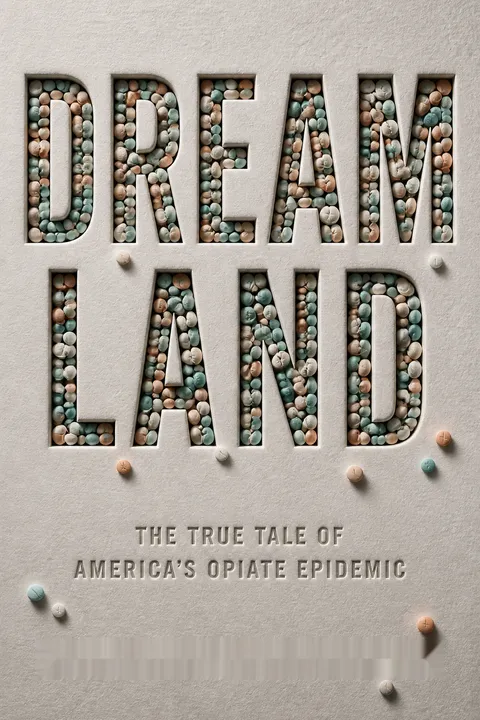


Key Takeaways
Treat the epidemic as a collision of medical policy and retail ingenuity
One tragedy, many causes. Matt Schoonover grew up in a comfortable Columbus family. He became dependent on prescription painkillers, shifted to black tar heroin when pills became unaffordable, and died at twenty-one, the day after leaving rehab. His story was not an isolated failure of character. It sat where several forces met: aggressive prescribing, a new supply of potent heroin, and a delivery system designed to make buying easy.
A chain, not a culprit. Quinones traces the crisis from pain specialists and pharmaceutical marketing to pill mills, Mexican trafficking networks, and communities struggling with economic decline. Each link made the next more effective. The book’s central claim is that the epidemic grew through this convergence, not through one mastermind or one careless decision.
The systems view is useful because it shifts attention from blaming individuals to identifying the conditions that made harmful choices common and profitable. In complex systems, small changes can amplify when they reinforce one another: more prescribing creates more dependence, while easier heroin access makes dependence cheaper to sustain. That does not erase personal responsibility, nor does it make every patient’s path identical. It does show why focusing on a single villain or intervention misses the feedback loops that keep a crisis alive.
A weak statistic became permission to prescribe at national scale
A narrow finding grew broad. In 1980, Hershel Jick and Jane Porter reported that only four of nearly twelve thousand hospitalized patients treated with opiates had developed addiction. Their brief letter did not describe dose, duration, or diagnosis, and it concerned supervised hospital care, not years of outpatient treatment for chronic pain.
The context disappeared. The letter, later called Porter and Jick, was repeatedly cited as evidence that addiction affected fewer than 1 percent of pain patients. It was invoked in education and marketing, despite not establishing that claim. Jick later emphasized that his data did not address people sent home with long-term prescriptions. A tiny finding became a reassuring headline, and that reassurance helped lower resistance to prescribing powerful drugs more widely.
This episode illustrates how evidence can acquire authority through repetition rather than strength. A prestigious publication, a memorable percentage, and professional consensus can turn a limited observation into a practical rule. The same pattern appears whenever a metric escapes its original setting: context falls away, uncertainty becomes invisible, and institutions act as if a threshold were settled science. The corrective is not to distrust statistics, but to preserve the population, conditions, and limits that make a result meaningful.
Make pain care humane without pretending every pain has a pill solution
A necessary correction overshot. For much of the twentieth century, fear of addiction led doctors to withhold opiates even from dying patients. Hospice pioneers and pain specialists challenged that cruelty and showed that carefully managed morphine could relieve severe cancer pain. Their work helped establish pain treatment as a serious medical responsibility.
Chronic pain is harder. Clinicians such as John Bonica argued for a multidisciplinary approach, combining medicine with physical therapy, psychological care, and help with social problems. But insurance often reimbursed pills more readily than this slower work. As pain became a routine measure in hospitals, busy primary-care doctors faced pressure to respond quickly, often with prescriptions. The University of Washington’s pioneering pain program was among more than a thousand multidisciplinary clinics in 1998, but only eighty-five remained seven years later.
The history resists an easy verdict. Restricting pain medicine can abandon people to needless suffering, while treating every pain score as a problem a prescription can solve invites overconfidence. The deeper issue is institutional design: a clinic cannot deliver careful, individualized care if its payment system rewards brief visits and reimburses medication more reliably than rehabilitation. The book’s account also cautions against replacing one absolute doctrine with another. Effective pain care requires matching treatment to the person, the condition, and the available evidence.
When oversight vanishes, pill mills turn economic distress into a drug market
A clinic became a cash machine. In Portsmouth, Ohio, doctor David Procter prescribed powerful painkillers in a region losing factories and jobs. By the late 1990s, his clinic drew crowds; patients paid cash for brief visits and prescriptions. The term pill mill describes a clinic that issues controlled-drug prescriptions with little meaningful diagnosis or follow-up.
The model spread. Procter hired doctors, some with serious professional problems, and several went on to open clinics of their own. In Portsmouth and nearby towns, patients could obtain large prescriptions for OxyContin and other drugs. Medicaid cards could cover pills that were then sold on the street. Portsmouth eventually had roughly one pill mill per eighteen hundred residents. The clinics were not the whole explanation, but they turned a broad prescribing trend into a local supply business.
The pill-mill story makes regulation concrete: a legal medical setting can become a distribution network when incentives, licensing, and oversight fail together. It also shows why economic decline matters without implying that poverty automatically produces addiction. In Portsmouth, cash clinics offered a business opportunity where conventional employers had disappeared, while the drugs themselves created dependable repeat demand. A sound response must distinguish legitimate pain treatment from exploitative practice, rather than stigmatizing patients or assuming every clinic is fraudulent.
Convenience and customer service made small heroin cells nationally formidable
A new retail design. The Xalisco Boys were traffickers from Xalisco County in Mexico’s Nayarit state. Their heroin business operated through small, loosely connected cells called tienditas, or little stores. A manager coordinated phone operators and salaried drivers, who delivered small balloons of black tar heroin to customers in cars. The crews generally avoided guns, kept little product on hand, and replaced arrested drivers quickly.
Retail beat spectacle. Customers could call for a delivery, receive discounts, or get free samples. Drivers were expected to be reliable, and the heroin was often stronger and cheaper than what customers had known. The cells competed but did not need a single kingpin directing them all. Operation Tar Pit, a nationwide investigation in 2000, revealed the network’s reach: 182 arrests across a dozen cities, yet the system soon re-formed.
The striking innovation is organizational, not technological. The crews borrowed ordinary retail advantages, low overhead, repeat customers, and fast replacement of workers, then applied them to a product that created urgent daily demand. This resembles a resilient network more than a hierarchy: removing one node does not necessarily disable the whole system. The comparison to legitimate business should not obscure the violence done to customers, but it helps explain why arresting visible drivers alone had limited effect.
Track the handoff: prescription dependence created customers for cheaper heroin
Pills opened the path. In central and southern Ohio, potent black tar heroin arrived as OxyContin addiction was spreading. The Man, a veteran trafficker, recognized that people dependent on prescription opioids might switch when pills became too costly. Heroin could be much cheaper, and the Xalisco delivery system brought it to customers who did not have to visit a street market.
The shift carried a deadly cost. Tolerance could rise, making larger quantities necessary. Some users moved from swallowing or snorting pills to injecting them, then found heroin less expensive and easier to obtain. A 2011 government survey found that 80 percent of people reporting heroin use had used a prescription painkiller first. In 2008, drug overdose deaths surpassed car-crash deaths nationally. The sequence was not inevitable for every patient, but the supply made the transition easier.
The handoff is best understood as a change in price and access, not a simple progression in which every prescription leads to heroin. The book’s account connects physiological dependence with market substitution: when one source becomes expensive or unavailable, another can fill the demand. That is a useful lens for public health because it shows why restricting one product without addressing treatment and alternative supply may displace risk rather than remove it. Individual paths still vary, and the reported 80 percent describes heroin users, not all patients prescribed painkillers.
Protect communal ties; isolation made the overdose wave harder to see
A pool once held a town together. Portsmouth’s Dreamland was a public swimming pool where generations met across class lines. Its closure in 1993 followed industrial decline and the loss of population. Later, abandoned factories and storefronts gave way to pill clinics, while many young people used drugs alone in bedrooms and cars.
Silence concealed the scale. Families often hid addiction or described overdoses in more acceptable terms. The crisis first hit places that attracted little national attention, and inconsistent death records made its growth harder to measure. Quinones does not claim that losing a pool caused addiction. Rather, the contrast suggests what had weakened: shared places, ordinary supervision, and the relationships through which neighbors might notice trouble and respond together.
The contrast between Dreamland and the private bedroom captures a social change that statistics alone cannot show. Shared spaces create informal contact: people notice absences, exchange information, and develop obligations beyond the household. That resembles the idea of collective efficacy, a community’s capacity to act because residents trust and know one another. Still, nostalgia can overstate the past. Dreamland was segregated for years, and communal life did not eliminate hardship. Its value lies less in romanticizing the pool than in recognizing what public gathering places can make possible.
Measure deaths, connect agencies, and treat addiction as a public-health emergency
The warning was in the records. In Portland, public-health officer Gary Oxman found that heroin overdose deaths had risen from ten in 1991 to 111 in 1999. Different medical examiners used inconsistent descriptions, hiding the trend until researchers reviewed the reports carefully. In Washington, pharmacist Jaymie Mai and medical director Gary Franklin identified workers dying after opioid prescriptions for non-life-threatening injuries.
Better information changed responses. State and local officials began tracking overdose deaths, setting prescribing guidance, and coordinating across agencies. In Portland, investigators used fatal-overdose cases to trace supply chains, while public-health campaigns urged people not to use alone and to call emergency services. These approaches addressed different parts of the crisis. Enforcement could disrupt networks, but it could not replace treatment, prevention, or accurate death data.
The book shows that measurement is not a neutral administrative task; it determines which suffering becomes visible and actionable. In epidemiology, inconsistent classification can create a false impression that a problem is rare or sudden when it is persistent and growing. The response also benefits from combining perspectives: coroners identify patterns, clinicians interpret treatment, and law enforcement maps supply. Yet enforcement carries risks of punishing low-level workers without reducing demand. Data should guide a portfolio of responses, not merely make arrests more efficient.
Build recovery around people and time, not a single discharge date
Rehab is a beginning. Matt’s family thought three weeks of treatment meant he was ready to return to normal life. He died the day after leaving. His parents later worked to tell other families that recovery requires ongoing support, not a declaration that someone is fixed. Quinones describes addiction as a chronic condition that can impair judgment and make relapse dangerous, especially after tolerance changes.
Portsmouth built more than a clinic. After pill mills closed, the Counseling Center expanded treatment and employment for people in recovery. Residents organized peer support, needle exchange, naloxone distribution, and drug-free social spaces. The city’s experience did not end the epidemic, but overdose deaths fell and the town became a refuge for people seeking help. The practical lesson is collective: families, treatment providers, schools, churches, and public agencies must stay involved.
Recovery is framed here as infrastructure, not a test of willpower. Housing, work, peer relationships, and continuing care can reduce the number of crises a person must navigate alone. Portsmouth’s response also suggests that communities can turn local knowledge into capacity: people who have lived through addiction may be credible guides for others. The caution is that no single model fits every person, and supportive networks cannot substitute for adequate clinical care. But discharge without continuity is a dangerously thin definition of treatment.
Analysis
Dreamland’s deepest argument is about how a public-health disaster can be assembled without a single architect. A flawed research claim is repeated until it functions as institutional permission. Pharmaceutical promotion amplifies it. Time-pressed medical systems favor prescriptions over sustained care. A local clinic converts prescribing into a cash business. Meanwhile, a decentralized heroin network uses convenience and customer service to reach people whose dependence has made them reliable customers. These forces are distinct, but their interaction produces something greater than any one of them.
The book is especially strong at making that interaction legible through people and places. Matt’s death gives the consequences a human scale; Enrique’s rise shows how trafficking could look like economic mobility from one side of the border; Portsmouth reveals how industrial decline and lost civic institutions shaped vulnerability without making residents responsible for the system imposed on them. The recurring contrast between public gathering and private isolation is an interpretive thread, not a claim that community decline alone caused addiction.
Its most important methodological lesson is that evidence needs context and institutions need feedback. Porter and Jick’s hospital data could not establish the long-term safety of outpatient treatment, yet its limitation was lost in transmission. Later, death records obscured trends because agencies classified cases differently. In both episodes, the failure was not simply a shortage of information. It was a failure to preserve what the information could and could not support.
The narrative also benefits from a qualification. Its account of the crisis is strongest when it identifies mechanisms, such as prescribing incentives, trafficking logistics, and the economics of pill mills. Broader claims about consumer comfort, weakened communities, or national character are more interpretive and less directly demonstrated. That distinction matters. The evidence supports a layered account of the epidemic, not a single moral diagnosis of American prosperity. The book’s durable contribution is to show how policy, markets, medicine, and social life can combine to turn a drug’s availability into a national disaster, and how recovery requires coordination across those same domains.
Review Summary
Dreamland is a meticulously researched exposé of America's opioid epidemic, blending investigative journalism with personal stories. Quinones explores the convergence of pharmaceutical marketing, economic decline, and Mexican heroin trafficking that fueled the crisis. While praised for its depth and importance, some readers found the book repetitive. It reveals how prescription painkillers and cheap heroin devastated communities, particularly in the Midwest. The author's compelling narrative style and extensive research make this a powerful, eye-opening account of a national tragedy that continues to unfold.
People Also Read

Glossary
Xalisco Boys
Nayarit heroin retail networksA label coined by Denver police officer Dennis Chavez for heroin traffickers linked to Xalisco County, Nayarit, Mexico. The networks operated through small, loosely connected U.S. cells that used phone dispatch and car delivery to sell black tar heroin in small quantities. Their decentralized structure, rotating workers, and low-violence approach made them difficult to dismantle through local arrests alone.
tiendita
Small heroin retail cellSpanish for little store, used in the book for a Xalisco heroin operation. A tiendita typically had a local manager, a phone operator who took customer orders, and drivers who delivered heroin by car. The cell depended on regular supplies from Mexico, small retail sales, and a customer list. Different cells competed, but remained connected through personal and family ties.
Porter and Jick
Often-misread opioid letterA one-paragraph letter published in the New England Journal of Medicine in 1980 by Jane Porter and Hershel Jick. It reported that four of nearly twelve thousand hospitalized patients treated with opiates had developed addiction. The records did not establish the risks of long-term outpatient opioid treatment, but the letter was widely cited as evidence that addiction among pain patients was below 1 percent.
WHO Ladder
Stepwise cancer pain treatmentA World Health Organization approach to treating cancer pain with progressively stronger medicines when less powerful options do not provide relief. Developed from work by pain specialists, it helped establish morphine as an essential treatment for severe cancer pain. In the book, its humane principles were later used in broader arguments for opioid prescribing, including for chronic noncancer pain.
Pain: The Fifth Vital Sign
Routine pain assessment campaignA slogan promoted by the American Pain Society that encouraged clinicians to assess pain alongside pulse, blood pressure, temperature, and respiration. The idea aimed to correct the neglect of patients in pain and was adopted by major health-care organizations. Because pain ratings are subjective and treatment settings were often rushed, routine assessment could also encourage prescribing without adequate diagnosis or follow-up.
pseudoaddiction
Pain behavior mistaken for addictionA term coined by physicians to describe drug-seeking behavior that they believed resulted from inadequately treated pain rather than addiction. The proposed remedy was to relieve pain, sometimes by increasing opioid doses. The concept became influential despite limited evidence and could make escalating medication appear to be proof of undertreatment rather than a reason to reassess a patient’s safety and response.
Len Bias case
Overdose-linked supply prosecutionA federal prosecution strategy allowing authorities to charge a drug supplier when supplied drugs cause a person’s fatal overdose. Investigators establish the connection between the victim’s death and the drug source, then use the threat of a long sentence to encourage lower-level suppliers to identify people higher in the distribution chain. The approach can expose networks, but depends on close coordination among agencies and raises questions about proportional punishment.
pill mill
High-volume prescription clinicA clinic that issues controlled-drug prescriptions with little meaningful diagnosis, monitoring, or alternative treatment. In Portsmouth and nearby towns, some clinics charged cash for brief visits and supplied large amounts of OxyContin and other drugs. The term does not describe every pain clinic. The book uses it for clinics whose prescribing practices functioned more like a drug-distribution business than careful medical care.
FAQ
What is Dreamland: The True Tale of America's Opiate Epidemic by Sam Quinones about?
- Comprehensive epidemic history: The book traces the origins, spread, and impact of America’s opiate epidemic, focusing on the intersection of prescription painkiller abuse and the rise of black tar heroin from Xalisco, Mexico.
- Interwoven narratives: It combines personal stories from addicts, families, law enforcement, and traffickers, showing how small-town America and a Mexican village became linked by the drug trade.
- Systemic analysis: Quinones explores medical, social, and economic factors, including changes in pain treatment, pharmaceutical marketing, and the decline of industrial towns.
Why should I read Dreamland by Sam Quinones?
- Deep understanding of the crisis: The book offers a nuanced, well-researched account of how prescription opioids and heroin combined to create a national epidemic.
- Humanizes addiction: Through vivid personal stories, it brings to life the struggles of addicts, families, and communities, making the crisis relatable and urgent.
- Hopeful perspective: Beyond devastation, Dreamland highlights recovery efforts, community resilience, and policy changes, offering hope for solutions.
What are the key takeaways from Dreamland by Sam Quinones?
- Interconnected causes: The epidemic resulted from aggressive pharmaceutical marketing, shifts in medical practice, economic decline, and innovative drug trafficking.
- Prescription opioids as gateway: Most heroin addicts started with prescription painkillers, which led to heroin use as pills became scarce or expensive.
- Community and systemic change: Recovery requires community engagement, honest dialogue, and reforms in healthcare, law enforcement, and social support systems.
Who are the Xalisco Boys in Dreamland and why are they important?
- Origin and identity: The Xalisco Boys are heroin traffickers from Xalisco, Nayarit, Mexico, often young men from ranchero families seeking better lives.
- Innovative distribution model: They pioneered a pizza-delivery style system for black tar heroin, emphasizing customer service, reliability, and nonviolence.
- Nationwide impact: Their decentralized, franchise-like network expanded heroin markets into new areas, especially white, middle-class communities, fueling the epidemic’s growth.
How did Purdue Pharma and OxyContin contribute to the opiate epidemic according to Dreamland?
- Aggressive marketing: Purdue Pharma promoted OxyContin as a safe, nonaddictive painkiller, using misleading data and targeting high-prescribing doctors.
- Normalization of opioid use: Their campaign led to widespread, liberal opioid prescribing for chronic pain, making high-dose opioids easily accessible.
- Gateway to heroin: OxyContin’s abuse potential and cost drove many users to heroin, intensifying the epidemic as black tar heroin became more available.
What was the "pain revolution" described in Dreamland by Sam Quinones?
- Shift in medical attitudes: The pain revolution was a movement to treat pain aggressively with opioids, based on the belief that addiction was rare among pain patients.
- Influence of flawed research: A misinterpreted 1980 letter by Dr. Hershel Jick and advocacy by pain specialists promoted opioid use despite limited evidence.
- Consequences: This led to widespread opioid prescribing, inadequate monitoring, and a surge in addiction and overdose deaths.
What is the significance of the Porter and Jick letter in Dreamland by Sam Quinones?
- Original context: The 1980 letter reported low addiction rates among hospitalized patients given narcotics, but was brief and limited in scope.
- Widespread misinterpretation: It was cited as proof that opioids were safe for chronic pain, fueling overprescribing and destigmatizing opioid use.
- Lasting impact: The letter’s misuse became a cornerstone of the pain treatment revolution, contributing significantly to the epidemic.
How did the pill mill phenomenon develop in Dreamland and what was its impact?
- Definition and origin: Pill mills were cash-only pain clinics prescribing large quantities of opioids with minimal oversight, pioneered by doctors like David Procter in Ohio.
- Business model: These clinics operated with high patient volumes, short visits, and aggressive prescribing, attracting addicts from wide areas.
- Devastating consequences: Pill mills fueled widespread addiction, overdose deaths, and community destabilization, especially in the Rust Belt and Appalachia.
How does Dreamland by Sam Quinones describe the connection between prescription opioid abuse and heroin addiction?
- Prescription opioids as gateway: Most heroin users began with painkillers like OxyContin, developing tolerance and seeking heroin as a cheaper, more accessible alternative.
- Market “tenderizing”: The spread of prescription opioids made new communities vulnerable, paving the way for heroin’s arrival.
- Demographic shift: Heroin addiction spread into white, suburban, and rural areas previously untouched by the drug.
What role do parents and families play in the narrative of Dreamland by Sam Quinones?
- Silent suffering: Many families hid their children’s addiction due to stigma, contributing to the epidemic’s invisibility.
- Activism and advocacy: Some parents became vocal advocates, forming groups to raise awareness and support recovery efforts.
- Emotional toll and resilience: The book highlights both the profound grief and the hope that comes from community and openness.
What law enforcement and legal strategies are discussed in Dreamland by Sam Quinones to combat the epidemic?
- Federal investigations: Operations like Tar Pit and Black Gold Rush targeted the Xalisco Boys’ networks, leading to mass arrests but limited long-term disruption.
- Len Bias prosecutions: Prosecutors used laws holding dealers responsible for overdose deaths to build cases and encourage cooperation.
- Adapting strategies: Law enforcement had to rethink traditional approaches, focusing on collaboration and understanding new trafficking models.
What is the significance of the “Holy Grail” in the context of pain treatment in Dreamland by Sam Quinones?
- Quest for nonaddictive painkillers: Researchers long sought a painkiller that relieved suffering without causing addiction, influencing drug development and policy.
- Timed-release formulations: Drugs like MS Contin and OxyContin were seen as breakthroughs, promising steady pain relief with less risk.
- Irony and outcome: Despite these advances, addiction risk remained high, and the search for a truly nonaddictive painkiller remains unfulfilled.
Download PDF
Download EPUB
.epub digital book format is ideal for reading ebooks on phones, tablets, and e-readers.








