

Key Takeaways
Treat alcohol as a drug, not a harmless social accessory.
Pleasure and danger share chemistry. Alcohol affects several brain messenger systems at once. It strengthens GABA, which calms brain activity, and weakens glutamate, which helps keep the brain alert. It also influences dopamine, serotonin, and endorphins, contributing to energy, sociability, and pleasure. At high levels, the same brain-wide effects can suppress consciousness and breathing.
A student’s first warning. On his first day at Cambridge, Nutt watched a fellow student become intensely distressed after drinking. The student remembered nothing the next morning. Another member of that group later died from liver failure. These stories do not show that every drinker will suffer the same fate, but they frame the book’s central point: ordinary social drinking involves a psychoactive drug with real power over behavior and health.
The useful distinction is not between enjoyable and dangerous substances, but between desired effects and their costs. Alcohol’s appeal is inseparable from the mechanisms that lower inhibition, strengthen reward, and sometimes undermine judgment. That makes informed drinking harder than simply deciding to be sensible: the substance can weaken the very control used to set limits. Treating alcohol as a drug can reduce stigma around dependence while also making its ordinary use easier to assess honestly. The label alone, however, does not settle whether a particular person should drink; it clarifies what kind of decision is being made.
Call 14 units low-risk, not safe: alcohol-related risk begins below it.
Guidelines describe a trade-off. The UK limit discussed in the book is 14 units a week for men and women, spread over several days, with drink-free days. It is called low-risk, not risk-free. The author reports that people drinking at this level face roughly a 1 per cent risk of dying from an alcohol-related condition. Regular drinking can raise the risk of some cancers even at low levels, while claims of cardiovascular benefit remain contested and do not cancel other harms.
The burden is broad. Alcohol is linked to more than 200 diseases and conditions. The World Health Organization estimated that harmful alcohol use contributed to more than three million deaths worldwide in 2016. Those population figures cannot predict an individual outcome, but they show why reassuring anecdotes about a long-lived drinker are not a reliable guide to personal risk.
Risk communication often fails when it turns a graded probability into a binary verdict: safe or unsafe. The book’s distinction between low-risk guidance and zero risk helps avoid that trap. It also leaves a difficult question in view: what level of preventable harm does a person consider acceptable in exchange for pleasure or sociability? Population estimates can guide that choice, but they cannot provide a personalized forecast. The strongest reading is neither alarmist nor reassuring: lower consumption generally means lower risk, and uncertainty about an individual’s outcome is not evidence that the risk is absent.
Cut heavy drinking first, because alcohol-related harm rises faster than intake.
Risk does not rise evenly. Nutt uses the term microlife for an estimated 30 minutes of life expectancy. For a 30-year-old man, the book equates about seven units of alcohol a week with one microlife. Its estimates suggest that drinking 14 units weekly for 40 years shortens life by about 0.4 years, while 35 units a week corresponds to about two years and 70 units to about seven. These are averages, not individual predictions.
Reducing a high intake matters. The relationship between drinking and several harms is nonlinear: as consumption climbs, risk can increase disproportionately. That means a substantial reduction from a high level may prevent more harm than the same reduction from a low level. Cutting down is worthwhile even when abstinence is not the chosen goal.
The nonlinear model makes harm reduction more than a consolation prize. It identifies where an intervention can have the greatest effect: the heaviest consumption often carries a disproportionate share of risk. This is a useful corrective to all-or-nothing thinking, which can make people abandon change after missing a target. Microlives also translate a statistical pattern into an intuitive scale, but the conversion should not be mistaken for a precise personal countdown. Individual risk varies with health, age, sex, genetics, and drinking pattern, so the estimate is best used to motivate direction, not predict a lifespan.
Treat rising tolerance and lost control as warning signs, not moral failures.
Dependence develops through adaptation. A person may begin drinking for pleasure or relief, then need more to feel the same effect. That change is tolerance. Drinking can become more central to daily life, and some people develop withdrawal symptoms such as shaking, anxiety, nausea, or low mood when alcohol wears off. Others experience compulsive drinking without physical withdrawal. The book estimates that around 10 to 15 per cent of drinkers become addicted.
Notice behavior, not stereotypes. Dependence is not limited to people who have lost a job or home. Warning signs include regularly drinking more than intended, hiding alcohol, morning drinking, blackouts, and continued use despite harm. A GP can assess the problem and arrange support. For people who are physically dependent, stopping suddenly can be dangerous, so withdrawal may require medical supervision.
Describing addiction as a disorder involving brain adaptation counters the idea that dependence is simply weak character. That shift can make people more willing to seek help, especially before a crisis. It should not erase personal agency, though: recognizing triggers, changing routines, and accepting treatment remain meaningful forms of action. The book’s continuum is particularly helpful because physical withdrawal is not the only measure of a problem. Someone can face serious harm while still appearing outwardly functional. A practical assessment therefore asks what alcohol is doing to health, relationships, and choice, not whether a person fits a familiar stereotype.
Do not use alcohol to treat anxiety or insomnia; relief can feed the problem.
Short relief can create rebound distress. Alcohol may quiet anxiety or help someone fall asleep, but as its effects fade, brain activity can swing toward alertness and unease. Sleep may become fragmented, with less restorative dreaming sleep. Repeatedly drinking to manage anxiety, stress, or difficult memories can build tolerance and strengthen the habit of reaching for alcohol whenever those feelings return.
Treat both sides of the loop. Nutt describes patients who used alcohol to cope with social anxiety, then found withdrawal made the anxiety worse. He argues that mental health problems and drinking problems should be addressed together rather than passed between separate services. If someone drinks heavily or has withdrawal symptoms, they should seek medical advice before stopping; supervised treatment can reduce the risk of severe withdrawal.
This is a classic negative-reinforcement loop: a behavior becomes compelling because it briefly removes discomfort, even if it worsens the conditions that produce discomfort. The mechanism helps explain why a habit can persist without giving much pleasure. It also suggests that replacing alcohol requires more than removing a drink; the anxiety, sleep difficulty, or distress still needs care. At the same time, the relationship is not always one-way. Anxiety can precede heavy drinking, follow it, or coexist for other reasons. A careful assessment should trace the sequence rather than assume that alcohol alone explains a mental health problem.
Keep the social ritual, but choose deliberately how much alcohol it includes.
Alcohol has real social rewards. People often drink to relax, feel more confident, and connect with others. In one app-based study described in the book, participants rated themselves an average of four points happier while drinking. A separate experiment gave everyone tonic in glasses that smelled of vodka; some participants believed they were drinking alcohol and behaved as if they were tipsy. This suggests that expectation and setting contribute to the experience, though it does not mean alcohol’s chemical effects are imaginary.
The ritual can outlive the dose. Group drinking can help people feel included, but copying others, keeping up with rounds, and wanting to fit in can push consumption beyond intention. Asking what a drink is meant to provide, pleasure, confidence, belonging, or relief, can reveal whether another part of the occasion matters more than the alcohol itself.
The distinction between alcohol’s pharmacology and its social meaning is especially valuable. A shared ritual can create belonging through timing, attention, and mutual participation, while alcohol may amplify those signals. The placebo experiment hints that expectations help shape behavior, but it should not be stretched into a claim that drinking is merely psychological. For someone cutting down, preserving the gathering while changing the drink can test which part of the experience matters most. This also reframes social pressure: a group can keep its connection without requiring every member to consume the same substance or amount.
A legal blood-alcohol limit marks enforcement, not a safe point to drive.
Impairment starts before the threshold. The book explains that alcohol can slow coordination and reaction time while making people feel more confident in their judgment. Even after about two units, research discussed by Nutt found people could feel more in control than they were. The legal blood-alcohol limit in England, Wales, and Northern Ireland is 80 milligrams per 100 millilitres; Scotland lowered its limit to 50. Neither figure means that driving below it is risk-free.
The morning after still counts. Alcohol takes time to leave the body, and a night’s sleep does not guarantee sobriety. A hangover can also impair attention, memory, and coordination. Nutt’s practical advice is simple: if driving, do not drink, and do not assume that feeling normal means driving is safe.
Legal thresholds are useful for consistent enforcement, but they can create a misleading psychological boundary: below the line feels permissible, above it feels dangerous. Actual impairment is gradual, not switched on by legislation. The same problem appears in other safety rules, where a standard is mistaken for a guarantee. A zero-alcohol driving rule is easier to apply than estimating units, metabolism, food, and elapsed time after drinking. The book’s argument is strongest when it separates legality from safety and recognizes that the consequences of a misjudgment extend beyond the driver to passengers, pedestrians, and other road users.
Set your drinking plan before the first drink weakens your judgment.
Measure what you actually pour. In the UK, one unit is 8 grams of alcohol. Units can be estimated by multiplying a drink’s alcohol percentage by its volume in millilitres, then dividing by 1,000. A 175-millilitre glass of 13.5 per cent wine is about 2.4 units, not one. Keeping a diary of what, when, where, and why you drink can reveal patterns and overlooked drinks.
Build friction into the evening. Choose a limit and specific drinks in advance, order smaller measures, alternate with water or alcohol-free drinks, and avoid rounds that make it harder to control pace. UK guidance recommends no more than 14 units weekly, spread across at least three days, with several drink-free days. Anyone who may be dependent should get medical advice before attempting a sudden stop.
Planning before drinking is a form of precommitment: a decision made while judgment is intact protects against choices made when inhibition is lower. The book’s diary and unit-counting approach also turns a vague impression, such as drinking moderately, into observable behavior. That measurement can be uncomfortable, but it makes adjustment possible. A limit should be realistic and specific enough to guide action, not so ambitious that one lapse becomes an excuse to give up. These tools support lower-risk drinking for some people; they are not a substitute for clinical care when dependence or withdrawal is present.
During pregnancy, avoid alcohol; for teenagers, prioritize supervision and clear education.
Pregnancy leaves no established safe amount. Alcohol crosses the placenta and can contribute to foetal alcohol spectrum disorders, a range of lifelong developmental and physical problems. The book’s advice follows the UK health guidance it cites: the safest choice during pregnancy is not to drink. Someone who discovers a pregnancy after drinking should stop and seek appropriate advice, without assuming harm has occurred.
Young people face distinct risks. The guidance described in the book says children should not drink before 15, and that 15 to 17-year-olds should drink no more than once a week. Teenagers may not recognize how quickly strong drinks or shots can cause poisoning. Parents are advised to discuss risks, make sure parties are supervised, and treat an unconscious, unrousable young person as an emergency.
This advice reflects a precautionary approach where potential harm can be lasting and the person exposed cannot choose for themselves. In pregnancy, uncertainty about a precise threshold is not proof that low exposure is harmless; avoiding alcohol is the clearest protective option. At the same time, communication matters. Shame can make people hide drinking or avoid care, while calm guidance makes disclosure more likely. With teenagers, supervision and practical safety education are more useful than relying on warnings alone. The aim is to reduce immediate danger while helping young people understand why alcohol is not an ordinary food or beverage.
Reduce alcohol harm through price and access, not advice alone.
The drinking environment shapes choices. Nutt calls the surrounding culture alcogenic: alcohol is cheap, visible, widely available, and built into many social occasions. His analysis ranks alcohol as especially harmful overall because widespread use creates substantial harm to other people, not only to drinkers. He argues for measures such as taxing drinks according to alcohol content, limiting marketing, and restricting sales of very cheap, strong products.
Minimum pricing is one proposed lever. Scotland introduced a minimum price of 50 pence per unit in 2018. Early research cited in the book found that purchases fell by about 1.2 units per person per week compared with the estimated level without the policy, with larger reductions among the heaviest fifth of drinkers. Other policy changes occurred around the same time, so the early result should not be treated as proof that pricing alone caused the change.
Personal choices are made inside commercial environments designed to make products available and desirable. Public health policy can change those defaults, much as restrictions on tobacco advertising changed the social visibility of smoking. Price measures may be efficient because they affect the cheapest, strongest alcohol most, but they also raise fairness questions for people with low incomes and alcohol dependence. A complete policy therefore pairs prevention with treatment access and support, rather than assuming a higher price solves addiction. The book’s strongest contribution is to insist that responsibility belongs partly to institutions that shape exposure, not solely to individual drinkers.
Analysis
Drink? is a science-led public health argument told through the career of a clinician who has also witnessed alcohol’s social appeal firsthand. Its central tension is not whether alcohol feels good or causes harm. It does both. The book’s distinctive move is to connect those outcomes to the same broad effects on brain systems: calming, reward, sociability, impaired inhibition, and, at high doses, dangerous suppression of vital functions. That makes the familiar separation between harmless social drinking and destructive addiction less reassuring than it first appears.
The book also moves between three scales that are often kept apart. At the individual level, readers are asked to understand units, patterns, risk, and warning signs. At the interpersonal level, alcohol contributes to accidents, aggression, family distress, and impaired driving. At the policy level, price, availability, and marketing help determine how often people encounter the drug. This structure explains why exhorting individuals to drink responsibly is presented as inadequate when the surrounding environment encourages easy, habitual consumption.
Its most useful nuance is the distinction between low risk and no risk. That distinction avoids the false comfort of a safe threshold without pretending that every drink produces the same outcome for every person. The evidence is necessarily uneven: much of the health literature is observational, individual susceptibility varies, and claimed cardiovascular benefits remain debated. The book sometimes states broad conclusions forcefully, so readers should distinguish a population-level association from a personal prediction. That caution strengthens rather than weakens its practical message: uncertainty is a reason to make choices consciously, not a reason to assume alcohol is benign.
The result is both a personal guide and an argument about public responsibility. Its advice is most actionable when it translates awareness into advance planning, accurate measurement, and medical help where dependence is possible. Its broader challenge is political: people can reduce their own intake, but society can also make lower-harm choices easier to make.
Review Summary
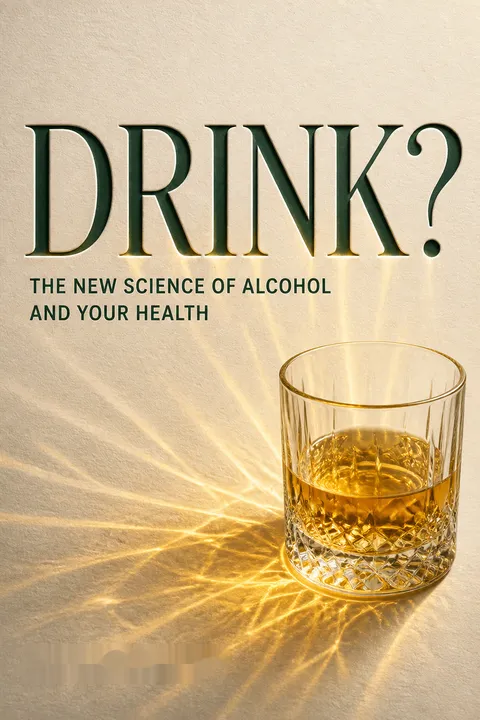
Drink?: The New Science of Alcohol and Your Health receives mostly positive reviews for its balanced, evidence-based approach to alcohol's effects. Readers appreciate Nutt's non-judgmental tone and practical advice for reducing consumption. The book is praised for its comprehensive coverage of alcohol's impact on health, society, and personal life. Some criticize the writing style or find certain sections less engaging. Overall, reviewers find the book informative and potentially life-changing, with many reconsidering their relationship with alcohol after reading.
People Also Read
Glossary
GABA
Calming brain messengerGamma-aminobutyric acid, abbreviated GABA, is a neurotransmitter that generally reduces activity in the brain. Nutt describes alcohol as strengthening GABA’s calming effects, which can contribute to relaxation and reduced inhibition. At high alcohol levels, excessive suppression of brain activity can impair consciousness and breathing.
Glutamate
Activating brain messengerGlutamate is a neurotransmitter that generally increases activity between brain cells. In the book’s account, alcohol blocks some glutamate activity as it strengthens GABA, helping explain sedation, impaired memory, and the danger of severe intoxication. The brain’s response to repeated alcohol exposure can also contribute to rebound alertness and withdrawal symptoms.
microlife
Thirty minutes of life expectancyA microlife is a unit used to express an estimated change in life expectancy. In the book, it represents 30 minutes, allowing the author to compare alcohol consumption with other risks. The figures are based on population averages and do not predict exactly how much time any individual will lose.
alcogenic environment
Environment encouraging alcohol useNutt’s term for a social and commercial setting in which alcohol is easy to find, affordable, heavily promoted, and woven into everyday rituals. The concept shifts attention from individual decisions alone to the conditions that make drinking frequent and habitual, including retail availability, advertising, and social expectations.
FAST
Brief alcohol screening questionnaireFAST is a short questionnaire a GP can use to screen for risky drinking. The book presents it as an initial assessment, with a positive result indicating that further discussion or a longer questionnaire may be useful. A screening result is not, by itself, a diagnosis of alcohol dependence.
AUDIT
Longer alcohol screening questionnaireAUDIT is a more extensive alcohol screening questionnaire referenced in the book as a follow-up to brief screening. It helps a healthcare professional assess patterns and consequences of drinking. Its role is to identify people who may need advice, further assessment, or specialist support, rather than to replace clinical judgment.
minimum unit pricing
Price floor per alcohol unitMinimum unit pricing sets a legal minimum price for each unit of alcohol in a drink. It is designed to make very cheap, high-strength products less affordable while leaving higher-priced drinks less affected. Scotland introduced a 50 pence minimum price per unit in 2018, according to the book.
Project MATCH
Trial comparing addiction therapiesProject MATCH was a US study comparing several psychological approaches to alcohol treatment, including cognitive-behavioral therapy, motivational enhancement, and a program based on the twelve-step model. As summarized in the book, the treatments had similar results, and researchers could not reliably predict which approach would work best for a particular participant.
FAQ
What is "Drink?: The New Science of Alcohol and Your Health" by David J. Nutt about?
- Comprehensive science-based guide: The book explores the latest scientific understanding of alcohol’s effects on the body, brain, and society, written by leading neuropsychopharmacologist Professor David Nutt.
- Evidence-based approach: It challenges myths and misconceptions about alcohol, focusing on evidence rather than cultural or political biases.
- Practical advice: The book offers practical strategies for safer drinking, understanding addiction, and making informed choices about alcohol consumption.
- Societal and policy context: It also examines the broader societal, economic, and policy issues surrounding alcohol, including government guidelines and industry influence.
Why should I read "Drink?: The New Science of Alcohol and Your Health" by David J. Nutt?
- Authoritative expertise: David Nutt is a renowned expert in psychopharmacology, offering credible, research-backed insights.
- Clear, accessible language: The book is written for the general public, making complex science understandable and actionable.
- Personal and societal relevance: Whether you drink or not, the book addresses how alcohol impacts health, relationships, and society at large.
- Empowerment through knowledge: It helps readers make conscious, informed decisions about their drinking habits, rather than relying on cultural norms or misinformation.
What are the key takeaways from "Drink?: The New Science of Alcohol and Your Health"?
- Alcohol is a drug: The book emphasizes that alcohol is a powerful, addictive drug with significant health risks, often underestimated due to its legal and cultural status.
- No safe level: Scientific evidence shows that no level of alcohol consumption is completely safe, especially regarding cancer risk.
- Individual risk varies: Genetics, sex, age, and drinking patterns all influence how alcohol affects each person’s health and risk of addiction.
- Societal harms: Alcohol’s impact extends beyond the individual, causing significant harm to families, communities, and public health systems.
- Informed choices: The book provides tools and strategies for monitoring and reducing alcohol intake, advocating for conscious, mindful drinking.
How does "Drink?: The New Science of Alcohol and Your Health" by David J. Nutt explain the effects of alcohol on the body and brain?
- Neurotransmitter disruption: Alcohol affects multiple neurotransmitter systems (GABA, glutamate, dopamine, serotonin, endorphins), leading to relaxation, disinhibition, and, at higher doses, memory loss and unconsciousness.
- Rapid absorption: Alcohol is quickly absorbed into the bloodstream, affecting the brain within minutes and leading to a range of effects from mild relaxation to coma and death at high doses.
- Tolerance and dependence: Regular drinking leads to tolerance (needing more to feel the same effects) and can progress to physical and psychological dependence.
- Hangover science: Hangovers are a form of withdrawal, involving dehydration, inflammation, neurotransmitter imbalances, and toxic byproducts like acetaldehyde.
What health risks and diseases are associated with alcohol according to "Drink?: The New Science of Alcohol and Your Health"?
- Increased mortality: Alcohol is linked to over 200 diseases, including liver cirrhosis, cardiovascular disease, and multiple cancers (especially breast, mouth, and liver).
- Exponential risk: The more you drink, the greater the risk—harms increase exponentially, not linearly, with higher consumption.
- Brain damage and dementia: Alcohol is a leading preventable cause of dementia and brain damage, even at moderate levels.
- No health benefits: The book debunks the myth that moderate drinking (e.g., red wine) is good for health, showing that any potential cardiovascular benefit is outweighed by other risks.
How does "Drink?: The New Science of Alcohol and Your Health" by David J. Nutt address alcohol addiction and dependence?
- Addiction as brain disorder: Addiction is described as a behavioral disorder underpinned by changes in brain circuits, not a moral failing.
- Stages of addiction: The book outlines the progression from pleasure-seeking to tolerance, preoccupation, and finally dependence, where withdrawal symptoms and compulsion dominate.
- Risk factors: Genetics, mental health conditions, stress, and life events all increase vulnerability to addiction.
- Treatment options: Evidence-based treatments include medications (acamprosate, nalmefene, naltrexone, etc.), psychological therapies (CBT, motivational interviewing), and support groups like AA.
What practical strategies does "Drink?: The New Science of Alcohol and Your Health" by David J. Nutt recommend for drinking less or more safely?
- Self-monitoring: Keep a drink diary to track when, where, and why you drink, and identify triggers.
- Set limits: Decide on a personal threshold for units per week and stick to it, aiming for no more than 14 units spread over several days.
- Drink-free days: Take at least two alcohol-free days per week to allow your body to recover and reset tolerance.
- Mindful drinking: Use smaller glasses, avoid rounds and shots, alternate with non-alcoholic drinks, and avoid drinking on an empty stomach.
- Social support: Surround yourself with non-drinkers or supportive friends, and seek professional help if you struggle to cut down.
How does "Drink?: The New Science of Alcohol and Your Health" by David J. Nutt discuss the social and cultural role of alcohol?
- Social bonding: Alcohol is deeply embedded in social rituals, celebrations, and bonding, providing short-term pleasure and sociability.
- Double-edged sword: While alcohol can enhance social experiences, it also increases the risk of accidents, aggression, and regretful behavior.
- Cultural myths: The book challenges the glamorization of alcohol in media and culture, highlighting the disconnect between perception and scientific reality.
- Peer pressure: Social and conformity motives are major drivers of drinking, especially among young people.
What does "Drink?: The New Science of Alcohol and Your Health" by David J. Nutt say about alcohol’s impact on mental health?
- Short-term mood boost: Alcohol can temporarily reduce anxiety and negative emotions, which is why many use it to self-medicate.
- Long-term harm: Repeated use destabilizes brain chemistry, increasing the risk of depression, anxiety, and other mental health disorders.
- Vicious cycles: Drinking to cope with mental health issues often leads to dependence, worsening both the addiction and the underlying condition.
- Co-occurring disorders: The book discusses the complex interplay between alcohol and conditions like PTSD, bipolar disorder, ADHD, and eating disorders.
How does "Drink?: The New Science of Alcohol and Your Health" by David J. Nutt address alcohol’s effects on hormones, fertility, and pregnancy?
- Hormonal disruption: Alcohol affects stress hormones (cortisol), sex hormones (testosterone, oestrogen, prolactin), and growth hormones, leading to a range of health issues.
- Reduced fertility: Both male and female fertility can be impaired by alcohol, with effects on sperm quality, ovulation, and menstrual cycles.
- Pregnancy risks: No level of alcohol is considered safe during pregnancy; drinking increases the risk of miscarriage, stillbirth, and fetal alcohol spectrum disorders (FASD).
- Breastfeeding: Alcohol passes into breast milk in small amounts; guidelines recommend limiting intake and timing feeds to minimize exposure.
What policy and societal solutions does "Drink?: The New Science of Alcohol and Your Health" by David J. Nutt propose for reducing alcohol-related harm?
- Price and availability: The book advocates for higher taxes, minimum unit pricing, and restricted sales hours to reduce consumption, especially of cheap, strong alcohol.
- Advertising and labeling: Bans on alcohol advertising, health warnings on labels, and factual rather than aspirational marketing are recommended.
- Drink-driving laws: Lowering legal blood alcohol limits and stricter enforcement are shown to reduce accidents and deaths.
- State control models: Examples like Sweden’s Systembolaget and France’s comprehensive policies demonstrate the effectiveness of government intervention in reducing harm.
What are the best quotes from "Drink?: The New Science of Alcohol and Your Health" by David J. Nutt and what do they mean?
- "Alcohol is a drug and one that shouldn’t be taken lightly." — Emphasizes the need to treat alcohol with the same caution as any other psychoactive substance.
- "No level of alcohol consumption is safe." — Summarizes the scientific consensus that even small amounts carry health risks, especially for cancer.
- "The only difference between alcohol and any other drugs... is that alcohol is legal." — Highlights the arbitrary distinction between legal and illegal substances, urging evidence-based policy.
- "What drinking alcohol needs to be, above all, is a conscious act." — Encourages readers to make informed, mindful choices about drinking, rather than acting out of habit or social pressure.
- "If it were discovered today, it would be illegal as a foodstuff." — Underlines the toxicity of alcohol and how its cultural acceptance masks its dangers.
About the Author
Other books by David J. Nutt
Download PDF
Download EPUB
.epub digital book format is ideal for reading ebooks on phones, tablets, and e-readers.








