

Key Takeaways
Treat adult drug use as a liberty question, not a character test
A scientist changes course. Hart began as a Columbia researcher who expected to document cannabis harms. In a study, regular users completed demanding cognitive tests and followed strict schedules while high. He had been so primed to look for impairment that he overlooked the responsibility his participants displayed and the largely intact performance his data showed. Over decades, research and personal experience led him to challenge the assumption that drug use automatically signals dysfunction.
Freedom has conditions. Hart argues that competent adults should be free to alter their consciousness in pursuit of happiness, provided they do not infringe on others’ rights. This is not a how-to book or a recommendation for everyone: he specifically cautions that people facing acute crises or certain mental illnesses may face greater risks.
The argument recasts drug policy as a question of adult agency rather than moral character. That shift matters because stigma often treats an act as evidence of a defective person, making fair assessment difficult. A useful parallel is informed consent in medicine: autonomy carries weight when people understand risks and can make decisions. Yet personal choice does not settle every policy question. Intoxication can affect other people, and competence varies by circumstance. The strongest version of Hart’s position therefore requires both respect for autonomy and credible safeguards against harms to others.
Drug prohibition spends billions without eliminating supply, while concentrating punishment
A costly failure with beneficiaries. Hart contrasts an annual U.S. drug-control budget of about $35 billion with roughly $1.5 billion in 1981. Despite that major increase, banned drugs remained readily available. He argues that the drug war persists partly because enforcement and incarceration sustain agencies, jobs, and local economies, while communities targeted for arrests lose resources that could address education, employment, or health.
The burden is unequal. Hart traces racialized enforcement from early fears about Chinese opium smokers and Black cocaine users to crack-era penalties. Federal crack and powder-cocaine sentences once differed by a ratio of 100 to 1, despite the drugs being chemically the same. Black people were arrested and sentenced at disproportionate rates, although drug use crossed racial and economic lines.
The book’s institutional critique is stronger than a claim that individual officers or lawmakers must harbor explicit prejudice. Budgets, deployment patterns, and sentencing rules can produce unequal outcomes without requiring a coordinated conspiracy. That distinction directs attention toward measurable practices and incentives. It also suggests a demanding test for reform: count not only arrests and seizures, but who bears the costs and whether communities gain safety or services. The budget comparison alone cannot prove why prohibition persists, but it makes the failure to reduce supply an important question for public accountability.
Separate regular use from addiction: impairment, not frequency, is the crucial line
Use is not a diagnosis. Hart uses addiction interchangeably with the DSM-5 category Substance Use Disorder. In his account, the defining issue is not simply whether someone uses a substance regularly. The use must cause distress and interfere with important parts of life, such as work, parenting, or relationships, and persist despite attempts to reduce or stop. Tolerance and withdrawal may be features, but use alone does not establish a disorder.
Most users do not meet that threshold. Hart cites research suggesting that more than 70 percent of people who use drugs do not develop addiction, including users of highly stigmatized substances. He also emphasizes that vulnerability is shaped by factors such as psychiatric disorders, unemployment, and resource-poor environments, not just by a drug’s chemistry.
This distinction resists a common category error: treating exposure as pathology. It resembles the difference between a risk factor and a clinical condition in medicine. Frequency can matter, but impairment and distress give the diagnosis its practical meaning. The framework also discourages policies that assume every user needs treatment. At the same time, self-reported functioning can miss harms that accumulate gradually, and a person’s responsibilities may be affected before they recognize a problem. The useful lesson is not to dismiss addiction, but to assess it rather than infer it from a label or a urine test.
Interrogate brain claims before turning a scan into a diagnosis
An image is not a timeline. Hart argues that brain-imaging research is often described more confidently than its methods allow. A scan taken once can show a difference between groups, but it cannot show whether drug use caused that difference. A study he discusses compared 20 cannabis users with 20 nonusers and found small average differences in one brain region. With no earlier scans, researchers could not establish that the differences developed after cannabis use.
Function needs measurement too. Hart points to research on long-term methamphetamine users in which some imaging measures differed, but the groups overlapped substantially and users performed within normal ranges on most cognitive tests. His broader claim is that responsible use has not been shown to cause brain abnormalities in healthy people. He warns against treating speculation as evidence of damage.
Hart’s methodological warning is valuable beyond drug research: a brain image can make an uncertain claim look concrete. Causal inference requires more than a visual contrast, and a structural difference does not by itself establish impaired function. But methodological restraint cuts both ways. The limitations he identifies do not prove that repeated exposure never changes the brain or causes harm. They show that particular studies may not support the conclusions drawn from them. Readers should ask what was measured, when it was measured, and whether any observed difference affects real-world functioning.
Make drug safety practical, not a disguised campaign for abstinence
Name the real goal. Hart objects to using harm reduction as though drug use were defined only by damage. He proposes health and happiness as a broader frame: prevention and care should reduce risks while recognizing that people may seek pleasure, connection, or relief. At a festival, the organization The Loop tested drug samples and shared information about their contents. One pill sold as MDMA contained about 250 milligrams, more than twice the typical dose Hart cites, prompting a warning about its unusual strength.
Information can prevent harm. Testing can reveal unexpected ingredients or potency in an unregulated market. Hart argues that naloxone, an overdose-reversal medication, is useful but acts after an overdose begins and may depend on someone else being present. His preferred public-health response is to provide accurate, practical information without treating every user as an addict.
This approach separates helping people from endorsing every choice they make. In public health, information is most useful when it is trusted enough to be heard, and moral condemnation can drive people away from services. Drug checking also addresses a specific information problem: consumers often cannot reliably know what an illicit product contains. Testing is not a guarantee of safety, however. It cannot remove every risk, and warnings may be ignored. Its value lies in improving decisions while other supports remain available, not in promising risk-free use.
Stop ranking drugs by respectability; ask what evidence says each does
Reputation distorts comparison. Hart challenges the habit of treating cannabis, psychedelics, stimulants, and opioids as moral categories rather than substances with different effects and risks. In his research with regular cannabis users, the drug produced pleasure and did not broadly disrupt complex test performance. His work comparing methamphetamine and d-amphetamine found similar effects on energy and concentration, while a separate comparison found meaningful differences between methamphetamine and MDMA. He argues that the setting of a lab can also miss experiences users value, such as intimacy or empathy.
Benefits are part of the account. Hart describes adults using substances for enjoyment, sociability, focus, calm, or emotional connection. He disputes the idea that spiritual or medical motives make drug use respectable while seeking pleasure makes it shameful. These examples are not proof that every person benefits or that every substance is safe.
The book’s insistence on taking users’ reported experiences seriously corrects a research imbalance: studies designed mainly to detect damage may fail to ask what people find valuable. Yet personal testimony and laboratory measures answer different questions. A user can accurately describe a meaningful experience without establishing its frequency, long-term effects, or safety for others. The most informative account combines both forms of evidence and attends to variation between people. The same standard should apply across drug classes, rather than granting a halo to substances favored by socially powerful groups.
Assess dose, route, person, and setting before predicting drug effects
Effects depend on context. Hart explains that dose is the amount taken, while route of administration affects how quickly a substance reaches the brain and how immediate its effects feel. He uses set and setting to describe two further influences. Set means the user’s characteristics, including mood, expectations, health, and tolerance. Setting means the physical and social environment in which use occurs.
Pharmacology is not the whole experience. The same substance may feel different to a rested person in a supportive environment than to someone who is unwell or anxious in an unfamiliar one. Hart contrasts festivalgoers who can access education and medical help with people in unstable housing who may use drugs in unsafe, isolated places. His framework is meant to explain variability, not to provide a guarantee that any particular experience will be safe.
This framework connects pharmacology to psychology and environment instead of pretending the chemical alone determines the outcome. Expectation and setting can shape both subjective experience and willingness to seek help. That makes context a practical part of risk assessment, not a decorative detail. It also cautions against sweeping claims based on a single dose or a single user. Still, a contextual model should not become a way to blame individuals for adverse outcomes. Product quality, access to care, and social conditions are also part of the setting.
Treat opioid deaths as preventable market failures, not proof of evil chemistry
The supply can be unpredictable. Hart argues that many opioid deaths involve more than one substance or drugs whose contents are unknown. Death certificates and testing practices vary across jurisdictions, complicating claims that one substance caused every recorded death. He stresses the danger of opioids mixed unknowingly with other sedating drugs, and of fentanyl added to heroin or counterfeit pills without the buyer’s knowledge.
A treatment model challenges fatalism. In Geneva, Hart observed a program that supplied heroin to some people with severe addiction alongside medical care, mental-health support, housing, and social services. Participants became more stable, and the program reduced harms such as infections associated with contaminated needles. Hart presents this as treatment, not a cure or a general guarantee of safety. He argues that regulated supply and broader services would address risks that punishment alone cannot.
The strongest part of this account is its attention to the drug market as a source of risk. Uncertainty about potency and combinations can turn a familiar substance into an unpredictable one. That supports interventions aimed at quality information and access to care. But it would be a mistake to infer that opioids are harmless or that every overdose reflects contamination. Respiratory depression is a real pharmacological danger, and treatment results in a specialized clinic do not establish safety for all users. Better policy needs accurate cause-of-death data and a range of prevention and treatment options.
Replace prohibition with accountable adult regulation, not merely softer punishment
Different reforms mean different things. Decriminalization removes criminal penalties for personal possession or use, while sale may remain illegal. Legalization permits lawful possession and sale within a regulated system. Hart describes Portugal as decriminalizing personal possession up to a limited amount, not as legalizing all drugs. He contrasts this with Brazil, where vague rules about personal use gave police substantial discretion and contributed to unequal enforcement.
Regulation is his destination. Hart argues that adults should have legal access to drugs under rules that can support quality control, accurate labeling, age limits, and public education. He compares this with the regulation of alcohol and points to Prohibition as a warning about contaminated products in illegal markets. His proposal is not that every person should use drugs; he defines responsible use around meeting obligations and avoiding harm to others.
The distinction between decriminalization and legalization is essential because removing penalties does not automatically create safer products or fair enforcement. A legal market can improve quality control, but its design matters: commercial incentives may reward heavy consumption, while weak oversight can reproduce harms in a new form. Regulation therefore needs to be judged by outcomes, including product safety, access to treatment, and unequal policing. Hart’s liberty argument gives reform a clear ethical foundation, while public-health and consumer-protection principles help specify what responsible implementation would require.
Analysis
Hart’s book is a memoir, a scientific argument, and a challenge to the moral assumptions built into drug policy. Its narrative strength comes from the author’s change of mind: a researcher who expected to find damage encounters responsible participants, questions his own interpretations, and eventually makes his private drug use public. The personal disclosure supplies a human counterexample to the image of the inevitably dysfunctional user. It does not, by itself, establish how common such use is, or how safe it is across populations.
The book’s most durable contribution is its insistence on separating three questions that public debate often collapses: what a substance does, what circumstances shape its effects, and what the law should permit. Hart is particularly persuasive when he shows how a single brain scan cannot demonstrate causation, how illicit supply obscures product contents, and how enforcement can impose unequal costs. His examples also expose a recurring political convenience: labeling social distress a drug problem can redirect attention from poverty, housing, employment, or discrimination.
The central tension is that a liberty claim and a safety claim are not interchangeable. Showing that many users function well weakens the case for treating all use as pathology; it does not establish that each substance is low-risk or that every adult can make an informed choice under every condition. Likewise, criticism of prohibition supports reconsidering policy, but it does not settle the ideal design of legal markets. Commercial incentives, impaired driving, dependence, and unequal access to care still demand attention.
The most useful reading is therefore neither a conversion to Hart’s personal conclusions nor a return to abstinence slogans. It is a demand for better distinctions and better evidence. Public policy should measure harms caused by substances, harms created by prohibition, and harms produced by unequal enforcement separately. That standard makes room for autonomy without confusing freedom with invulnerability, and for public health without turning care into punishment.
Review Summary
Drug Use for Grown-Ups presents a controversial argument for drug legalization and responsible adult use. Reviews praise Hart's scientific approach and personal experiences, finding the book eye-opening and thought-provoking. Many readers agree with Hart's stance on decriminalization and racial disparities in drug enforcement. However, some criticize Hart for downplaying addiction risks and making false equivalencies. The book's informal tone and repetitive arguments are noted as weaknesses. Overall, readers find the book important and brave, even if they don't fully agree with all of Hart's conclusions.
People Also Read




Glossary
Set and setting
Person and environmentSet refers to the individual taking a drug, including mood, physiology, expectations, and tolerance. Setting refers to the physical and social environment in which use occurs. Hart uses the terms to explain why the same substance and dose can produce different experiences for different people, or for the same person in different circumstances.
Health and happiness
Safety plus valued experienceHart’s proposed broader framing for practices often called harm reduction. It treats drug use as capable of producing positive, negative, or neutral effects, and describes prevention and education as ways to protect health while recognizing that users may seek pleasure or other benefits. The phrase is intended to avoid defining drug use only by its harms.
Novel psychoactive substance
New drug-like compoundA broad category for relatively new or little-known mood-altering compounds that resemble established drugs in chemical structure or psychological effects. It includes synthetic stimulants and synthetic cannabinoids. Hart notes that some have been sold as substitutes for banned drugs, while limited knowledge about their contents, potency, or effects can increase risks for consumers.
Drug-safety testing
Testing a drug sampleA service that analyzes a submitted drug sample to identify its chemical contents and, where possible, its potency. Results can help users decide whether to consume a substance and can support warnings about unexpected ingredients or unusually strong products. Hart presents testing as a practical safety measure, while acknowledging that the services available in some settings may be limited.
Heroin-assisted treatment
Clinical heroin treatmentA treatment program in which people with severe heroin addiction receive pharmaceutical heroin under medical supervision, often alongside housing, mental-health care, and social support. Hart describes the Geneva program as an option for patients who have not succeeded with other treatments. He emphasizes that it can improve stability and reduce harms without being a cure for addiction.
Brain-disease model of drug addiction
Addiction as brain diseaseThe view that addiction is fundamentally a disease involving changes in brain structure or function. Hart criticizes claims that recreational drug use inevitably damages the brain, arguing that some studies infer causation from one-time brain scans or interpret differences without showing impaired behavior. His critique targets overstatement, rather than proving that addiction has no biological dimensions.
Addiction
Distressing, impairing drug useHart uses addiction interchangeably with Substance Use Disorder as defined by the DSM-5. In his account, regular use alone is insufficient: drug use must cause distress and interfere with important areas of functioning, such as work, parenting, or relationships, and persist despite attempts to reduce or stop. Tolerance and withdrawal may occur but do not alone establish addiction.
Decriminalization
No criminal penalty for possessionA policy that removes criminal penalties for specified personal possession or use while leaving the sale of drugs illegal. Hart distinguishes this from legalization, which permits legal possession and sale under regulation. He emphasizes that implementation matters: vague definitions and broad police discretion can preserve unequal enforcement even when possession is formally decriminalized.
FAQ
What's Drug Use for Grown-Ups about?
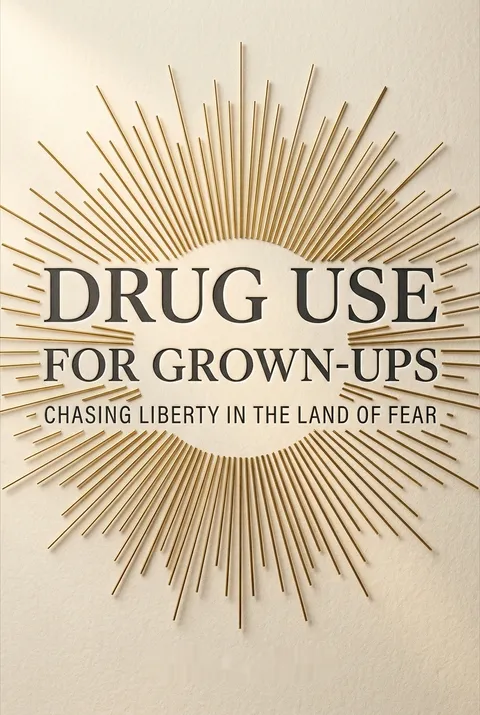
- Challenging Drug Myths: The book argues that many drug users are responsible adults who use substances to enhance their happiness, advocating for understanding drug use within the context of personal freedom.
- Critique of Prohibition: Carl L. Hart critiques the War on Drugs, highlighting its disproportionate impact on marginalized communities and advocating for drug legalization as a means to improve societal outcomes.
- Personal Experience and Research: Hart combines personal anecdotes with scientific research to illustrate the potential benefits of responsible drug use, aiming to shift the narrative from fear to understanding.
Why should I read Drug Use for Grown-Ups?
- New Perspective on Drug Use: The book offers a fresh perspective, challenging the stigma associated with drug use and encouraging readers to reconsider their views on recreational drug use.
- Informed Decision-Making: By presenting scientific evidence alongside personal stories, Hart equips readers with the knowledge to make informed decisions about drug use.
- Empathy for Drug Users: The narrative fosters empathy for drug users, highlighting that many are responsible individuals and aiming to dismantle harmful stereotypes.
What are the key takeaways of Drug Use for Grown-Ups?
- Drug Use is Common: Hart notes that millions of Americans use illegal drugs regularly, challenging the notion that drug use is solely a problem of addiction.
- Addiction Misconceptions: He argues that addiction is often a result of social and environmental factors, not just a brain disease, encouraging a nuanced understanding.
- Legalization Benefits: Hart advocates for drug legalization, believing it would lead to better health outcomes and reduced stigma for responsible adults.
What are the best quotes from Drug Use for Grown-Ups and what do they mean?
- “If you want to get to the heart of the dope problem, legalize it.” This quote suggests that prohibition exacerbates drug issues and that legalization could lead to better regulation and safety.
- “The war on drugs is not a war on drugs; it’s a war on us.” Hart argues that the drug war targets marginalized communities, perpetuating cycles of poverty and incarceration.
- “If the words ‘life, liberty, and the pursuit of happiness’ don’t include the right to experiment with your own consciousness, then the Declaration of Independence isn’t worth the hemp it was written on.” This underscores the importance of personal freedom in drug use, linking it to foundational American values.
How does Carl L. Hart define addiction in Drug Use for Grown-Ups?
- Addiction as Distress: Hart defines addiction as problematic use that interferes with functioning, not just regular substance ingestion.
- Social and Environmental Factors: He emphasizes that addiction is influenced by psychiatric disorders and socioeconomic factors, shifting focus from a purely medical model.
- Misconceptions of Drug Use: Hart notes that most drug users do not meet the criteria for addiction, challenging the stereotype that drug use inevitably leads to addiction.
What is Hart's stance on the War on Drugs in Drug Use for Grown-Ups?
- Critique of Ineffectiveness: Hart states that the War on Drugs has failed to reduce drug use and related harms, leading to increased incarceration and social injustice.
- Racial Disparities: He highlights that the drug war disproportionately affects minority communities, perpetuating systemic racism.
- Call for Legalization: Hart advocates for drug legalization, suggesting it would lead to better health outcomes and reduced stigma.
How does Drug Use for Grown-Ups address the concept of harm reduction?
- Redefining Harm Reduction: Hart suggests shifting towards strategies focused on health and happiness, rather than solely on harm.
- Practical Strategies: The book discusses harm-reduction strategies like drug-testing services to ensure user safety.
- Empowerment of Users: Hart advocates for empowering drug users with knowledge and resources to use drugs safely, respecting individual autonomy.
How does Hart's personal experience influence his views in Drug Use for Grown-Ups?
- Personal Anecdotes: Hart shares his own drug use experiences to illustrate the potential benefits of responsible consumption.
- Professional Background: As a scientist, Hart uses his expertise to inform his arguments about drug use and addiction.
- Advocacy for Openness: He encourages transparency about drug use to dismantle stigma and foster understanding.
What is the significance of cannabis in Drug Use for Grown-Ups?
- Symbol of Freedom: Cannabis is used to argue for personal freedom and highlight issues of racial and social justice.
- Positive Experiences Shared: Hart shares positive experiences with cannabis, countering negative stereotypes.
- Call for Legalization: The book advocates for cannabis legalization and regulation to reduce harm and promote responsible use.
How does Hart address the issue of racial discrimination in drug laws?
- Disproportionate Impact: Hart discusses how drug laws disproportionately affect black and Latino communities, leading to higher arrest and incarceration rates.
- Historical Context: He provides a historical overview of drug policies as tools of oppression against marginalized groups.
- Advocacy for Change: Hart calls for reevaluating drug laws to promote equity and justice, addressing systemic inequalities.
What role do psychedelics play in Drug Use for Grown-Ups?
- Growing Acceptance: Hart notes the increasing acceptance of psychedelics and their potential therapeutic benefits.
- Personal Exploration: He discusses psychedelics as tools for personal growth, enhancing empathy and connectedness.
- Cultural Shift: The book reflects a shift towards understanding psychedelics as valuable for mental health and well-being.
What are the implications of Hart's arguments for drug policy?
- Shift Towards Regulation: Hart argues for moving from prohibition to regulation, reducing harm and improving public health outcomes.
- Focus on Personal Responsibility: He emphasizes informed decision-making over fear-based narratives.
- Racial and Social Justice: Hart highlights the intersection of drug policy with racial and social justice, advocating for reforms to address systemic inequalities.
Download PDF
Download EPUB
.epub digital book format is ideal for reading ebooks on phones, tablets, and e-readers.








