

Key Takeaways
Read economics like a menu: one school cannot explain a whole society
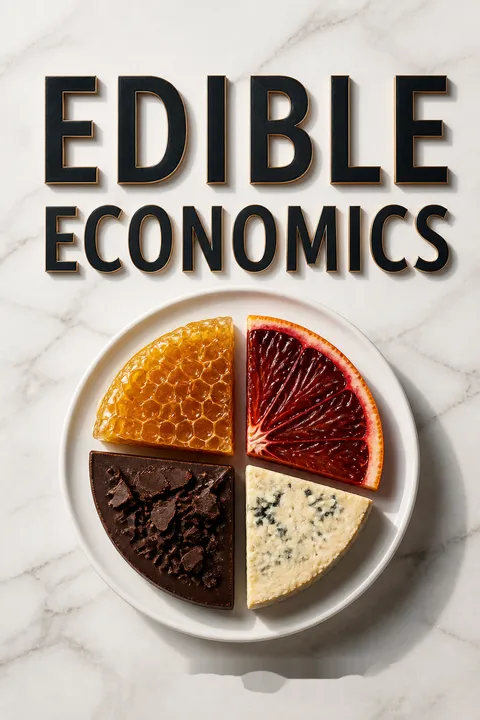
A wider intellectual diet. Chang opens with garlic, a familiar taste in Korea but once treated as alien in Britain. He uses the contrast to introduce a larger argument: economics, like food, loses something when one tradition crowds out all others. Since the 1980s, Neoclassical economics, a school that models people largely through choices and incentives, has dominated much of the profession. Other traditions ask different questions about institutions, power, uncertainty, and development.
The stakes reach beyond campus. Economic theories guide policy on jobs, taxes, trade, and welfare. They also shape beliefs about human nature. If self-interest is treated as the only motive, cooperation can look naïve, and policy can be designed around that assumption. A plural approach does not mean every theory is equally useful. It means testing different lenses against the problem at hand.
The food analogy makes intellectual diversity feel practical rather than ceremonial: different theories reveal different ingredients in the same economic problem. This resembles the value of multiple models in science, where a map suited to one scale can mislead at another. Pluralism, however, needs standards. A theory should be judged by how well it explains evidence, identifies trade-offs, and survives comparison with alternatives, not simply by its political appeal. The strongest case for variety is therefore not that every school is right, but that a monopoly of ideas makes errors harder to detect.
Explain poverty through productivity and power, not a tropical work-ethic myth
Hard work is not enough. The book challenges the stereotype that people in poorer, hotter countries are poor because they lack diligence. In 2019, labor-force participation was higher in Tanzania and Vietnam than in Germany or the United States. People in poorer countries also often work longer hours, and many children work instead of attending school. Those facts sit awkwardly beside the claim that tropical abundance makes people lazy.
The tools shape the output. A worker’s productivity depends not only on individual skill, but also on machinery, infrastructure, management, and institutions. Chang compares migration to a skilled rider moving from a struggling donkey to a thoroughbred: the rider has not suddenly changed, but the conditions of production have. Colonial history, political choices, and international power help explain why those conditions differ.
The argument usefully shifts attention from moral judgments about individuals to the systems that organize their work. That move is central to labor economics and development studies: identical effort can yield very different output when workers have different equipment, training, transport, or bargaining power. It also cautions against confusing measured productivity with human worth. Structural explanations should not erase local agency or cultural variation, but they prevent culture from becoming a convenient catch-all explanation for outcomes created by policy and history.
Build technologies that outlast the commodities nature gives you
Resources can lose their value. In nineteenth-century Peru, seabirds ate anchovies, and their droppings became prized fertilizer. The guano trade enriched the country, but extraction depleted the resource. Later, chemical fertilizer made through the Haber-Bosch process supplied a substitute, and the market for natural nitrates collapsed. Guatemala’s natural dyes and Brazil’s rubber faced similar challenges when industrial substitutes or new producers appeared.
Capabilities travel further. Chang argues that industrialization matters because it builds the know-how to make new products and work around natural limits. The Netherlands, with little land, became a major agricultural exporter through greenhouse production, stacked growing systems, and precise inputs. Such productive capabilities are renewable in a way a deposit of minerals or a crop monopoly is not. A country should use resource wealth to build skills, technologies, and industries that can adapt.
The guano story shows why resource abundance is not the same as durable prosperity. A commodity can generate income while leaving a country exposed to depletion, price swings, or technological substitution. The broader idea resembles resilience planning: a robust economy has options when one source of revenue fails. Industrial policy is not automatically wise, since protected sectors can waste resources, but the relevant comparison is not intervention versus an ideal market. It is whether a strategy builds capabilities that remain useful under changing conditions.
Protect young industries long enough to learn, then demand they compete
New producers need room. An infant industry is a young sector that may need temporary protection from stronger foreign competitors while it learns to produce efficiently. Alexander Hamilton used this reasoning for early American manufacturing. Japan later protected carmakers and other industries that could not initially match foreign firms. Hyundai began as a small assembler and produced just over 10,000 cars in its first full year of making its own model in 1976.
Protection needs a purpose. The aim is not to shelter firms forever, but to give them time to invest in machinery, workers, and technical knowledge. Chang notes that protection without pressure can make companies complacent. Japan and Korea combined support with demands to improve and export. The policy question is not simply whether trade is open, but whether domestic producers have a plausible path to become capable competitors.
The infant-industry argument takes learning seriously: firms do not begin with the same skills, technology, or scale, and competition can eliminate a newcomer before it has a chance to improve. That is a dynamic argument, not a defense of every tariff. The difficult part is designing an exit test. Governments need measurable performance goals and the willingness to withdraw support when firms fail them. Without that discipline, temporary protection can become a permanent transfer from consumers to politically connected businesses.
Treat entrepreneurship as a national team sport, not a solo act
Hyundai needed more than vision. The company’s rise depended on the Chung brothers’ ambition, but also on workers, engineers, managers, and public policy. The Korean government restricted car imports, directed credit toward strategic industries, and pressed firms to develop domestic models and suppliers. Consumers paid a price by using less competitive cars while the industry learned.
Innovation has a supply chain. Chang also points to American technologies such as the computer, semiconductor, internet, and GPS, whose foundations received public research funding. In modern industries, leaders cannot turn an idea into a global company alone. They need skilled labor, research, finance, infrastructure, suppliers, and customers. The heroic-founder story can be inspiring, but it hides the institutions and collective work that make the founder’s plans possible.
The collective view corrects a common attribution error: visible executives receive credit for successes produced by large systems of expertise and public investment. This does not make leadership irrelevant. Strategic choices can coordinate resources and keep organizations focused, but they work only when others can carry them out. A fuller account of entrepreneurship also raises a distribution question: if public institutions help create commercial breakthroughs, how should their gains be shared with workers, taxpayers, and communities?
Audit who writes trade rules and who captures foreign investment's gains
Formal equality can conceal leverage. In the nineteenth century, powerful countries imposed unequal treaties that limited weaker nations’ ability to set tariffs. Today’s trade rules are formally shared, but Chang argues that powerful countries helped shape rules in areas such as agriculture and investment. Financial pressure and policy advice can also discourage developing countries from using protections that the rules technically allow.
Foreign firms need local links. Multinational companies can bring technology and training, but they can also operate as an enclave economy: a business zone that imports most inputs, hires mainly for low-level tasks, and transfers little expertise to local firms. Banana companies once held enormous economic and political power in Central America. By contrast, requirements for local suppliers, worker training, and technology transfer can help investment strengthen the host economy.
The key distinction is between access to trade and the ability to shape its terms. A shared rulebook does not create equal bargaining power, just as a formally open market does not guarantee that every participant can compete. At the same time, regulation can deter investment or impose costs on local consumers. The useful test is concrete: does a policy generate learning, better jobs, and domestic supplier capacity, or does it mainly protect incumbents and enrich intermediaries?
Count care work even when markets fail to put a price on it
GDP leaves essential work out. Gross domestic product counts goods and services exchanged in markets, so much unpaid care is invisible: raising children, caring for older relatives, cooking, cleaning, and managing a household. Chang cites estimates that valuing this work at market prices could add 30 to 40 percent to GDP. Because women do much of it, excluding it also understates their contribution and can leave them with lower pensions.
Market price is not social importance. During the Covid-19 pandemic, nurses, care workers, teachers, delivery workers, and food workers were called essential, yet many remained poorly paid. A market price reflects purchasing power and supply, not simply how necessary a service is. Chang argues for better pay and conditions, care leave, affordable childcare, and pension credits for time spent providing care.
The discussion highlights a basic measurement problem: what is easy to count is not always what matters most. National accounts are useful for tracking market activity, but they are not a complete ledger of welfare or social contribution. Adding a monetary estimate for unpaid care can make its scale visible, though any single price risks flattening different kinds of relationships and work. Better measurement should complement, not replace, political recognition and public provision.
Make fairness equal in needs, capabilities, and access, not just rules
Identical treatment can be unfair. The book’s chicken story starts with an airline serving the same meal to everyone, including a vegetarian. Equal portions do not meet unequal needs. The same problem appears in economic debates: equal opportunity is not meaningful if some children lack adequate nutrition, healthcare, or education before they enter the competition for jobs.
Security can be shared insurance. Chang presents the welfare state as a set of protections against risks such as illness, unemployment, and old age, funded collectively rather than as free gifts to the poor. Bismarck, a conservative German leader, introduced early worker insurance partly to reduce support for socialism. The US spends far more of its national income on healthcare than peer countries while covering people through a fragmented system. Collective provision can lower costs and give people more security to change jobs or adopt new technologies.
This framework connects equality of opportunity to the capabilities people need to use an opportunity. A starting line is not fair if some participants arrive underfed or poorly educated. Yet equality of outcome is not a single, self-explanatory target: societies must decide which differences reflect choice, need, or unjust deprivation. Social insurance offers a practical bridge, pooling risks that individuals cannot easily manage alone while leaving room for disagreement about the proper scope and design of benefits.
Keep innovation's rewards from becoming tollbooths on future invention
Patents can block follow-on work. A patent grants an inventor temporary exclusive rights in exchange for revealing an invention. The incentive can encourage research, but many technologies depend on earlier knowledge. Chang calls the resulting bottleneck interlocking patents: a thicket of overlapping rights that makes it difficult or costly to build something new. Golden Rice, developed to provide vitamin A, involved dozens of patented technologies and required complex licensing negotiations.
Rules can be redesigned. In the nineteenth-century sewing-machine industry, companies resolved patent disputes by sharing key rights through a patent pool. Other options include shorter patent terms, prizes for useful inventions, or affordable licenses for technologies needed for public purposes. The broader point is institutional: a rule that once encouraged innovation can become an obstacle when industries and research practices change.
The trade-off is real. Weak protection can reduce the expected return to costly research, while strong, fragmented protection can make cumulative innovation harder. The patent-pool example suggests that intellectual property need not be treated as an all-or-nothing choice between monopoly and free access. Policy can vary by field, public need, and the pace of follow-on research. The most defensible system is one that rewards creation without allowing control of prior knowledge to choke off the next generation of work.
Automation reshapes tasks, but policy decides whether displaced workers land safely
The strawberry is a hard case. Picking it requires workers to find hidden fruit, judge ripeness, and avoid bruising it. Robots are being developed to do this work, threatening jobs that have often been low-paid and physically painful. But automation can also create work making, maintaining, and programming machines. Cheaper production may expand demand, and higher productivity can create demand for new services.
Workers still bear the shock. These effects unfold unevenly, so a technology’s impact on total employment is hard to predict. Even when new jobs appear, a displaced worker may lack the training, income, or time to reach them. Unemployment support, accessible retraining, job-search help, and public investment can make the transition less punishing. Automation changes what work is needed; it does not decide how society supports people whose skills lose value.
The history of automation cautions against assuming that every labor-saving machine produces permanent mass unemployment. It also offers little comfort to a worker whose specific job disappears now. Aggregate employment and individual security are different measures of success. The central policy challenge is to share the gains from productivity while cushioning concentrated losses. Retraining can help, but it is not a universal remedy when new jobs are scarce, geographically distant, or less secure than the work they replace.
Do not confuse fewer factory workers with a post-industrial economy
Manufacturing can grow with fewer people. Chang argues that factory employment has fallen partly because machines allow each worker to produce much more, not because society has stopped needing manufactured goods. Switzerland, often portrayed as a services-led economy, has the world’s highest manufacturing output per person in the data he cites. Its industry specializes in producer goods, including machinery and precision equipment, which consumers may not recognize as everyday brands.
Services still lean on industry. Finance, transport, design, and consulting often serve manufacturers. Some work that was once performed inside factories is now counted as output from a separate service firm. Manufacturing also remains a major source of research and development. A falling share of factory jobs therefore does not prove that a country can prosper by abandoning industrial capabilities.
A sector’s share of employment is a poor stand-alone measure of its strategic importance. Productivity growth can shrink the workforce needed to produce a good while leaving the good central to the economy. This distinction matters for public policy: deindustrialization may reflect successful efficiency gains, but it can also signal lost skills and supplier networks. The task is not to preserve every factory job indefinitely. It is to understand what capabilities production supports and whether the economy can replace them.
Fight climate change with coordinated public action, not shopping choices alone
The lime required a system. Citrus helped prevent scurvy among sailors, but the British Navy made the remedy effective by adding it to rations and mixing it into sailors’ rum. Chang uses the episode to argue that climate solutions also need institutions that make collective action routine. Cleaner energy, more efficient buildings, public transport, and less resource-intensive food systems all require investment and coordination.
Markets will not build every solution. Private companies may avoid technologies whose benefits arrive over decades, while poorer communities may lack the money to signal demand for adaptation tools. Governments can fund research, support insulation and transit, set environmental rules, and help transfer useful technologies across borders. Individual choices matter, but relying on shoppers to interpret product information cannot substitute for standards and infrastructure.
Climate change is a coordination problem: benefits from reducing emissions are widely shared, while costs often fall on particular firms, households, or regions. That makes voluntary consumer action an incomplete tool, especially when lower-carbon options are unavailable or unaffordable. Public investment and regulation can change the available choices rather than merely asking people to choose differently. Still, state action is not automatically effective. Credible targets, transparent evaluation, and attention to who pays are essential to prevent climate policy from reproducing existing inequalities.
Analysis
Edible Economics is a public-facing argument for treating economics as a contested study of society, not a neutral manual for maximizing market efficiency. Food provides the book’s memorable organizing device: a familiar ingredient opens a route into a less familiar history of power, production, or policy. Garlic links culinary openness to intellectual diversity; guano reveals the fragility of commodity dependence; strawberries bring labor automation down to a worker bent over a field. The method helps readers remember concepts because each is attached to an image and a human story.
The book’s strongest through-line is that economic outcomes are made, not simply inherited from nature or dictated by individual character. Productivity depends on technology and institutions. Corporate success is collective. Trade rules distribute power. Markets reward purchasing capacity, not social need. These claims challenge explanations that treat existing arrangements as inevitable, and they expand economic debate to include care, fairness, and climate risk.
Its advocacy for industrial policy and economic pluralism is persuasive as a corrective to one-size-fits-all prescriptions, but it should not be mistaken for a universal recipe. The same tools that built capabilities can create protected interests, waste, or political favoritism. The book acknowledges failures of protection, yet readers should hold that implementation problem alongside its historical case for intervention. Similarly, showing that a policy worked in one setting does not prove it will work under different institutions or constraints.
The deeper lesson is methodological: ask what a statistic leaves out, who sets the rules, and whether an institution still serves its stated purpose. A healthy economic analysis needs more than competing schools; it needs transparent evidence, attention to distribution, and explicit values. The book does not provide a single replacement system. It equips readers to question tidy stories and judge economic proposals by the capabilities, security, and costs they produce in actual societies.
Review Summary
Edible Economics receives mostly positive reviews for its unique approach of explaining economic concepts through food anecdotes. Readers appreciate Chang's engaging writing style, accessible explanations, and diverse global perspectives. Many find the book informative and entertaining, praising its ability to make economics digestible for beginners. Some critics note that the food-economics connections can feel forced or superficial at times. Overall, reviewers recommend it as an enjoyable introduction to economics, particularly for those interested in food or looking for a non-traditional approach to the subject.
People Also Read






Glossary
Neoclassical economics
Choice-and-incentive economicsA major economic tradition that analyzes how individuals and firms make choices, often using models of preferences, incentives, and markets. Chang argues that its dominance has narrowed economics when other traditions, including institutional, behavioral, and developmental approaches, are treated as marginal. Its assumptions can be useful, but they do not capture every motive or social condition.
infant industry
A developing domestic sectorAn industry that is too new or inexperienced to compete immediately with established foreign producers. The infant-industry argument supports temporary assistance, such as tariffs or directed credit, while firms develop skills, technology, and scale. The protection is meant to enable future competitiveness, not to shelter firms indefinitely; without pressure to improve, support can preserve inefficiency.
enclave economy
Foreign production with few local linksAn economic arrangement in which foreign-owned firms operate largely apart from domestic businesses and workers. They may import most components, employ local people mainly in low-skill assembly, and transfer little technology or management knowledge. Such investment can raise exports while generating limited learning or broader productive capacity in the host country.
interlocking patents
Overlapping rights blocking innovationA situation in which a new technology depends on many pieces of knowledge covered by different patents. Developers must identify rights holders and negotiate licenses before proceeding, making research slow or costly. The problem is especially acute when innovation builds cumulatively on earlier work. Patent pools, licensing rules, or different reward systems can reduce the bottleneck.
welfare state
Collective social insuranceA system of public programs that protects people against risks such as illness, unemployment, old age, and poverty. Chang emphasizes that benefits are financed collectively through taxes and contributions, rather than simply being free goods for recipients. Depending on its design, the welfare state can pool costs, reduce insecurity, and support access to essential services.
limited liability
Investor losses capped at investmentA legal arrangement that generally limits an investor’s financial responsibility for a company’s debts to the amount invested. It allows firms to attract capital from many investors without exposing each person’s entire personal wealth to business failure. Chang argues that this institution helped finance large enterprises, while modern financial incentives can encourage short-term returns at the expense of long-term investment.
FAQ
What's "Edible Economics: A Hungry Economist Explains the World" about?
- Unique Blend of Topics: "Edible Economics" by Ha-Joon Chang combines food stories with economic insights to make complex economic concepts more accessible and engaging.
- Food as a Metaphor: The book uses various food items as metaphors to explore and explain different economic theories and issues.
- Global Perspective: It provides a global perspective on economics, drawing examples from different cultures and historical contexts.
- Educational and Entertaining: The book aims to educate readers about economics while entertaining them with intriguing food-related anecdotes.
Why should I read "Edible Economics"?
- Engaging Approach: The book offers a unique and engaging approach to understanding economics through the lens of food, making it accessible to a broader audience.
- Broadened Perspective: It broadens the reader's perspective by linking everyday food items to complex economic theories and global issues.
- Insightful Analysis: Ha-Joon Chang provides insightful analysis and critiques of current economic practices and ideologies.
- Practical Relevance: The book discusses the practical relevance of economic theories in everyday life, making it useful for both students and general readers.
What are the key takeaways of "Edible Economics"?
- Diverse Economic Theories: The book emphasizes the importance of understanding diverse economic theories beyond the dominant Neoclassical school.
- Cultural and Economic Interplay: It highlights how cultural practices and economic outcomes are interconnected, using food as a central theme.
- Critique of Free-Market Ideology: Chang critiques the limitations of free-market ideology and advocates for a more nuanced understanding of economic freedom.
- Role of Government and Policy: The book underscores the role of government and policy in shaping economic development and addressing inequalities.
How does Ha-Joon Chang use food to explain economics in "Edible Economics"?
- Metaphorical Use of Food: Chang uses food items like garlic, anchovy, and chocolate as metaphors to explain economic concepts and historical developments.
- Cultural Contexts: He explores the cultural contexts of these foods to draw parallels with economic theories and practices.
- Storytelling Technique: The storytelling technique makes complex economic ideas more relatable and easier to understand.
- Illustrative Examples: Each food story is paired with illustrative examples that connect the food item to broader economic themes.
What are some of the best quotes from "Edible Economics" and what do they mean?
- "We are garlic." This quote emphasizes the deep cultural integration of garlic in Korean society, paralleling how certain economic practices are deeply embedded in cultures.
- "The planet of cows." This phrase critiques the environmental impact of the beef industry, highlighting the need for sustainable economic practices.
- "Free trade doesn’t mean freedom for all." It challenges the notion that free trade benefits everyone equally, pointing out the power imbalances in global trade.
- "Economics affects who we are." This underscores the profound impact of economic theories on societal norms and individual behaviors.
How does "Edible Economics" critique the free-market ideology?
- Narrow Definition of Freedom: Chang argues that free-market ideology often prioritizes economic freedom for property owners over other forms of freedom.
- Historical Context: The book provides historical examples where free-market policies have led to negative outcomes, challenging the notion of their universal benefit.
- Complex Relationship: It highlights the complex relationship between capitalism and freedom, suggesting that unregulated markets can lead to inequality and exploitation.
- Alternative Perspectives: Chang advocates for considering alternative economic theories that emphasize cooperation and collective well-being.
What is the significance of the "Garlic" chapter in "Edible Economics"?
- Cultural Foundation: The chapter uses garlic to illustrate how cultural practices can shape economic behaviors and outcomes.
- Korean Identity: It explores the role of garlic in Korean identity and cuisine, drawing parallels to how economic policies are culturally influenced.
- Economic Lessons: The chapter provides economic lessons on how cultural preferences can impact market dynamics and consumer behavior.
- Broader Themes: It sets the stage for the book's broader themes of cultural and economic interplay.
How does Ha-Joon Chang address the concept of inequality in "Edible Economics"?
- Beyond Income Inequality: Chang discusses inequality in terms of opportunities, capabilities, and outcomes, not just income.
- Role of Policy: He emphasizes the role of government policies in addressing inequality and ensuring fair competition.
- Critique of Meritocracy: The book critiques the notion of meritocracy, highlighting systemic barriers that prevent true equality of opportunity.
- Holistic Approach: Chang advocates for a holistic approach to inequality that considers social, economic, and cultural factors.
What does "Edible Economics" say about the role of government in economic development?
- Active Role: The book argues for an active role of government in shaping economic development and addressing market failures.
- Historical Examples: It provides historical examples where government intervention has led to successful economic outcomes.
- Policy Recommendations: Chang offers policy recommendations for governments to support industrialization and innovation.
- Balancing Act: The book discusses the need for a balance between market forces and government regulation to achieve sustainable development.
How does "Edible Economics" explore the relationship between culture and economics?
- Cultural Influences: The book examines how cultural practices and values influence economic behaviors and policies.
- Food as a Lens: Food is used as a lens to explore the cultural dimensions of economic issues, making the analysis more relatable.
- Interconnectedness: Chang highlights the interconnectedness of cultural and economic systems, challenging the notion of purely rational economic actors.
- Case Studies: The book includes case studies from different cultures to illustrate the diverse ways in which culture and economics interact.
What insights does "Edible Economics" offer on globalization?
- Power Imbalances: The book discusses the power imbalances in global trade and the impact of multinational corporations on developing economies.
- Cultural Exchange: It highlights the role of cultural exchange in globalization, using food as a metaphor for the blending of cultures.
- Critique of Neoliberalism: Chang critiques neoliberal globalization, advocating for policies that prioritize local development and sustainability.
- Global Cooperation: The book emphasizes the need for global cooperation to address shared challenges like climate change and economic inequality.
How does "Edible Economics" address the future of work and automation?
- Impact of Automation: The book discusses the impact of automation on jobs and the need for policies to support displaced workers.
- Role of Education: Chang emphasizes the importance of education and retraining in preparing workers for the future economy.
- Collective Action: The book advocates for collective action to ensure that technological advancements benefit society as a whole.
- Balanced Perspective: It provides a balanced perspective on automation, acknowledging both its potential benefits and challenges.
About the Author

Download PDF
Download EPUB
.epub digital book format is ideal for reading ebooks on phones, tablets, and e-readers.








