Key Takeaways
1. Developed Nations Used Protectionist Policies to Grow
The short answer to this question is that the developed countries did not get where they are now through the policies and the institutions that they recommend to developing countries today.
Historical paradox. Contrary to popular belief and current recommendations, virtually all now-developed countries (NDCs) actively employed interventionist industrial, trade, and technology (ITT) policies during their catch-up phases. These policies, often frowned upon or banned by today's international agreements, were crucial for fostering nascent industries. This historical reality directly contradicts the "Washington Consensus" which advocates for restrictive macroeconomic policies, trade liberalization, privatization, and deregulation.
Beyond tariffs. While tariff protection was a significant tool, it was by no means the only or necessarily the most important one. NDCs utilized a diverse toolkit of policies to nurture their infant industries and acquire advanced technologies. These included:
- Export subsidies and duty drawbacks on inputs for exported goods.
- Industrial subsidies and public investment programs (especially in infrastructure and manufacturing).
- Support for foreign technology acquisition (legal means like study tours, illegal means like industrial espionage and refusal to acknowledge foreign patents).
- Financial support for R&D, education, and training.
- Measures to raise awareness of advanced technologies (model factories, exhibitions, free imported machinery).
- Institutional mechanisms for public-private cooperation.
Shifting stances. Once NDCs reached the technological frontier, their policies often shifted dramatically. They moved from protecting their own infant industries to advocating free trade and preventing technology outflow to potential competitors. This pattern suggests a strategic use of policy based on a country's relative economic position, rather than adherence to universal economic principles.
2. Britain's Industrial Rise Was Fueled by Intervention, Not Laissez-Faire
Contrary to popular myth, Britain had been an aggressive user, and in certain areas a pioneer, of activist ITT policies intended to promote infant industries until it established its industrial hegemony so clearly in the mid-nineteenth century and adopted free trade.
Early protectionism. Britain, often seen as the birthplace of laissez-faire, was in fact a pioneer of infant industry promotion from the 14th century. Monarchs like Edward III and Henry VII deliberately fostered the wool manufacturing industry, transforming England from a raw wool exporter to a dominant manufacturing nation. This involved banning raw wool exports, poaching skilled Flemish weavers, and restricting imports of finished wool cloth.
Walpole's reforms. The 1721 reforms under Prime Minister Robert Walpole marked a dramatic shift towards promoting manufacturing industries. Policies included:
- Lowering or abolishing import duties on raw materials for manufactures.
- Increasing duty drawbacks on imported raw materials for exported goods.
- Abolishing export duties on most manufactures.
- Significantly raising duties on imported foreign manufactured goods.
- Extending export subsidies to new products and increasing existing ones.
- Introducing quality control regulations for British products in foreign markets.
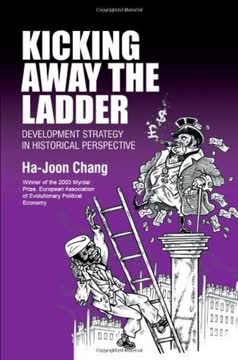
Strategic free trade. Britain's eventual shift to free trade in the mid-19th century, symbolized by the repeal of the Corn Laws in 1846, was not a pure embrace of liberal doctrine. It was a calculated move by an industrial superpower to open up markets for its superior manufactured goods and discourage industrialization in competitor nations. This "free trade imperialism" aimed to solidify Britain's economic dominance, effectively "kicking away the ladder" for others.
3. The USA Was a Bastion of Protectionism During Its Catch-Up Phase
It was the USA, and not Germany as is commonly believed, which first systematized the logic of infant industry promotion that Britain had used so effectively in order to engineer its industrial ascent.
Hamilton's vision. Alexander Hamilton, the first US Secretary of the Treasury, systematically articulated the infant industry argument in his 1791 Reports on Manufactures. He argued that new industries needed government aid, such as import duties or prohibitions, to overcome foreign competition and "forces of habit." This predated Friedrich List's famous work and significantly influenced his thinking.
High tariffs. From 1816 until after World War II, the USA maintained some of the highest average tariff rates on manufacturing imports in the world. The 1816 tariff, enacted after the War of 1812, kept wartime protection levels for cotton, wool, and iron goods. The Civil War (1861-1865), often seen as solely about slavery, also had tariffs as a crucial underlying issue, with Lincoln's protectionist stance securing key industrial states.
Beyond tariffs. US government intervention extended beyond tariffs to include:
- Extensive agricultural research and land grants for agricultural colleges (Morrill Act of 1862).
- Expansion of public educational investments, raising literacy rates.
- Critical support for transportation infrastructure, especially railways, through land grants and subsidies.
- Significant defense-related procurements and R&D spending in the postwar era, fostering industries like computers, aerospace, and the internet.
Growth under protection. Throughout the 19th century and up to the 1920s, the USA was the fastest-growing economy globally, despite being highly protectionist. This strong correlation between protectionism and growth challenges the orthodox view that tariffs hinder development. The two best 20-year GDP per capita growth periods (1870-1890 and 1890-1910) were both times of particularly high protectionism.
4. Germany and Other European Nations Employed Strategic State Intervention
Therefore, while Germany can hardly be described as the same kind of laissez-faire state as France in the nineteenth and early twentieth centuries, state intervention in Germany’s main catching-up period was not as extensive as some people think, particularly in relation to tariff protection.
Prussian leadership. While Germany's tariff protection was generally milder than that of the UK or USA, the Prussian state, which unified Germany, actively promoted industries from the 18th century. Frederick William I and Frederick the Great used monopoly grants, export subsidies, capital investments, and skilled foreign workers to develop textiles, metals, and armaments. Key figures like Graf von Reden and Peter Beuth pioneered state-supported industrial espionage and technology transfer.
Focused intervention. After the 1840s, German state involvement shifted from direct control to a guiding role, supporting R&D, education, and public-private cooperation. Bismarck's 1879 tariffs, while increasing protection for agriculture and heavy industries like iron and steel, maintained generally lower industrial protection. However, these tariffs made cartels more effective, enabling aggressive investment and innovation in heavy industries.
Diverse European approaches. Other European nations also adopted varied interventionist strategies:
- Sweden: Initially protectionist (1816 tariff), then liberal, but reintroduced tariffs and subsidies for engineering in the late 19th century, combined with unique public-private cooperation in infrastructure and industry.
- Belgium: Second to industrialize after Britain, it was protected by the Austrian government in the 18th century and later by the United Kingdom of the Netherlands, with high tariffs on key sectors until the mid-19th century.
- Netherlands: Despite a period of laissez-faire, King William I (1815-1840) established industrial financing agencies and promoted the cotton textile industry. Its refusal to adopt patent law until 1912 also served as a strategic industrial policy.
- France: While often portrayed as dirigiste, France was largely laissez-faire from the Revolution until WWII, a period associated with relative industrial stagnation. Pre-revolutionary Colbertism and post-WWII indicative planning were highly interventionist.
5. East Asian Miracles Replicated Historical Interventionist Strategies
Despite some lingering disagreements, there is now a broad consensus that the spectacular growth of these countries, with the exception of Hong Kong, is fundamentally due to activist industrial, trade and technology (ITT) policies by the state.
Japan's early efforts. Japan, forced open in 1854 and constrained by "unequal treaties" limiting tariffs to 5% until 1911, had to find alternative means for industrial promotion. The Meiji state established model factories (shipbuilding, mining, textiles), provided subsidies, and invested heavily in infrastructure (railways, telegraphs) and education. It also actively imported and adapted foreign institutions and technologies.
Post-WWII sophistication. The postwar economic miracles of Japan, Korea, and Taiwan were driven by highly sophisticated and fine-tuned ITT policies, echoing but advancing historical precedents. These included:
- Export subsidies: More substantial and better-designed than historical equivalents.
- Tariff rebates: For imported raw materials and machinery used in export industries.
- Managed competition: Regulations on firm entry, exit, investment, and pricing to reduce "wasteful competition" and encourage scale economies.
- Coordinated investments: Systematized through indicative planning and government investment programs.
- Human capital development: Integrated manpower planning, subsidies for education, training, and R&D.
- Technology transfer regulation: Licensing and foreign direct investment regulated to maximize technology spillover.
Policy effectiveness. While some critics attribute recent economic troubles in Japan and Korea to these policies, the consensus remains that they were fundamental to their "miracle" growth. Taiwan, which also used activist ITT policies, avoided financial crisis, suggesting that effective implementation and broader macroeconomic management are key. These examples demonstrate that interventionist policies, when well-designed and executed, can be highly effective for catch-up development.
6. Developed Nations "Kicked Away the Ladder" by Imposing Free Trade
In other words, are the developed countries ‘kicking away the ladder’ by which they climbed up to the top beyond the reach of the developing countries? The answer to all these questions, unfortunately, is yes.
Double standards. The historical evidence strongly suggests that NDCs are advocating policies for developing countries that they themselves did not follow during their own development. They insist on free trade and laissez-faire ITT policies, which were largely absent during their own industrialization. This constitutes a clear case of "kicking away the ladder," preventing today's developing nations from utilizing the same proven strategies.
Historical parallels. This behavior mirrors 19th-century Britain's push for free trade against the protectionist policies of the USA and other catching-up NDCs. Britain, having achieved industrial supremacy behind high tariff barriers, then sought to open up foreign markets for its goods, often through force or "unequal treaties." These treaties, which imposed low tariff ceilings, are strikingly similar to modern multilateral agreements like those of the WTO, which restrict developing countries' policy space.
The failure of "good policies." The argument that "times have changed" and past interventionist policies are no longer beneficial is undermined by recent evidence. Over the last two decades, most developing countries adopted Neo-Liberal "policy reforms" but experienced a marked deceleration in growth compared to the 1960-1980 period when "bad" interventionist policies prevailed. This suggests that the supposedly "good" policies are not delivering their central promise of economic growth.
The paradox of growth. Countries that used "bad" policies (interventionist ITT) grew much faster (e.g., 3.1% p.a. GDP per capita in Latin America, 1960-1980) than when they adopted "good" policies (e.g., 0.3% p.a. in Latin America, 1980-1998). This paradox implies that the "bad" policies, effectively implemented, are actually beneficial for developing countries, and are precisely those that NDCs used to become rich.
7. Institutions Evolved Slowly and Unevenly in Developed Countries
The first thing that emerges from the detailed discussion in section 3.2, and the overview provided by section 3.3.1, is that it took the NDCs decades, if not centuries, to develop institutions from the time when the need for them began to be perceived.
Gradual development. The institutions now considered essential for "good governance" in developing countries were not pre-existing conditions for growth in NDCs. Instead, they were largely the outcomes of long, often turbulent, processes of economic and political development. This evolution was slow, uneven, and frequently marked by reversals and setbacks.
Delayed adoption. Many fundamental institutions took generations to become widespread and effective:
- Universal male suffrage: Not common until the early 20th century in most NDCs.
- Modern professional bureaucracy: Instituted in many NDCs only in the early 19th century, despite being perceived as needed earlier.
- Generalized limited liability: Recognized in the 16th century for large ventures, but not in general use until the mid-19th century.
- Central banking: The first "real" central bank (Bank of England) was not fully instituted until 1844, despite earlier attempts. The USA's Federal Reserve System only began in 1913 and was initially limited.
Reasons for delay. The slow pace of institutional development in NDCs stemmed from various factors:
- Unaffordability: Many institutions were too costly in early stages (e.g., social welfare, effective enforcement).
- Resistance: Powerful groups opposed institutions that threatened their interests (e.g., propertied classes resisting democracy or income tax).
- Lack of understanding: Economic logic behind some institutions (e.g., limited liability, central banking) was not immediately grasped.
- Epochal prejudices: Cultural or ideological biases delayed adoption (e.g., Jacksonian prejudice against professional bureaucracy in the USA).
- Interdependence: Institutions often needed related ones to develop simultaneously (e.g., modern bureaucracy and fiscal capacity).
8. Early Developed Nations Had "Deficient" Institutions by Today's Standards
From these examples we can conclude that, in the early days of their economic development, the NDCs were operating with much less developed institutional structures than those which exist in today’s developing countries at comparable levels of development.
Lower standards. At comparable stages of economic development (measured by per capita income), NDCs in the past operated with institutional structures far less developed than those found in today's developing countries. For instance, in 1820, the UK, at a higher development level than modern India, lacked universal suffrage, a central bank, income tax, generalized limited liability, and professional bureaucracy.
Widespread deficiencies. Even by 1875, when industrialization was in full swing for many NDCs, institutional quality remained low:
- Democracy: No universal suffrage, widespread electoral fraud, and lack of secret ballots.
- Bureaucracy: Meritocratic recruitment was nascent, spoils systems common, and professionalism lacking in many countries.
- Property Rights: Patent laws were poor, with lax originality checks and inadequate protection for foreign intellectual property. Switzerland and the Netherlands notably lacked patent laws until the early 20th century.
- Corporate Governance: Limited liability was not universal, and regulations for auditing and information disclosure were absent or weak. Bankruptcy laws were deficient, and competition laws were virtually non-existent.
- Finance: Many NDCs lacked central banks or had ineffective ones. Banking regulation was rare, and securities markets were poorly regulated, leading to insider trading and price manipulation.
- Public Finance: Permanent income tax was a novelty, and tax collection capabilities were limited, often relying on tax farming.
The "global standard" gap. The institutional "global standards" demanded of today's developing countries are far higher than what NDCs possessed at similar or even more advanced stages of their own development. This implies a significant double standard, as NDCs impose requirements they themselves did not meet.
9. Democracy and Social Welfare Institutions Developed Late and Imperfectly
It was not until 1946 that the majority of the 19 NDCs featured in table 3.1 attained universal suffrage.
Limited suffrage. Democracy, as we understand it today, was a very late arrival in NDCs. When voting was first introduced, it was restricted to a tiny minority of property-owning males, often with unequal voting power. Even after the introduction of universal male suffrage (mostly between the mid-19th and early 20th centuries), reversals occurred, such as the disenfranchisement of black males in the US South from 1890 to 1965.
Imperfect practice. Even formal democracy was often of poor quality:
- Secret balloting: Not common until the 20th century (e.g., Norway 1884, France 1913, Germany after 1919).
- Electoral fraud: Vote buying, bribery, and intimidation were widespread in British elections until the late 19th century and in the USA well into the 20th.
- Legislative corruption: Common in the US in the late 19th century, with open selling of votes.
Late welfare states. Social welfare institutions were also late developments, emerging primarily in the late 19th century, spurred by popular class activism and extended suffrage. Germany pioneered industrial accident insurance (1871), health insurance (1883), and state pensions (1889). By 1925, most NDCs had some form of these, but unemployment insurance was still a novelty.
Child and adult labor. Child labor was widespread and brutal in early industrial NDCs, with children working 12-16 hours daily. Regulations were minimal, poorly enforced, and often resisted. Serious child labor bans (under 12) only became effective in the late 19th or early 20th centuries. Adult working hours were also extremely long (70-75 hours/week in Germany, 16 hours/day for bakers in Norway) with minimal regulation until the mid-19th century for women, and much later for men.
10. Imposing "Global Standard" Institutions is Unrealistic and Costly
By demanding from developing countries institutional standards that they themselves had never attained at comparable levels of development, the NDCs are effectively adopting double standards, and hurting the developing countries by imposing on them many institutions that they neither need nor can afford.
Unrealistic demands. The current push for developing countries to adopt "world standard" institutions immediately, or within a minimal transition period (5-10 years), is fundamentally at odds with the historical experience of NDCs. These demands ignore the decades, if not centuries, it took for NDCs to develop their own institutions, and the fact that NDCs were institutionally less advanced at comparable stages of development.
Costs and trade-offs. Imposing advanced institutional standards on developing countries creates significant costs and opportunity costs. For example, maintaining "global standard" property rights and corporate governance institutions requires a large cadre of world-class lawyers and accountants. This diverts scarce financial and human resources from other potentially more critical areas, such as:
- Training schoolteachers.
- Educating industrial engineers.
- Investing in basic infrastructure.
Ineffective transplantation. Institutions imposed from outside without "local ownership" or without the necessary enforcement capacity often fail to function as intended. Formal adoption of "global standard" institutions on paper does not guarantee their effective operation or the expected benefits, such as increased foreign investment. Clever investors recognize this discrepancy, limiting the actual impact of such imposed reforms.
"Ladder-kicking" in institutions. This approach to institutional development constitutes another form of "kicking away the ladder." It burdens developing countries with institutions they may not need, cannot afford, or are not ready for, thereby hindering their ability to allocate resources to more appropriate developmental priorities. A more nuanced approach, recognizing historical context and national specificities, is essential.
11. "Good Policies" of the Past Outperformed Today's Neo-Liberal Reforms
All countries, but especially developing countries, grew much faster when they used ‘bad’ policies during the 1960—1980 period than when they used ‘good’ ones during the following two decades.
The growth paradox. The last two decades of Neo-Liberal "policy reforms" have been marked by disappointing growth rates in developing countries, despite continuous institutional improvements. This contrasts sharply with the 1960-1980 period, when many developing countries, using "bad" interventionist policies, achieved significantly higher growth rates than NDCs did at comparable stages of their own development.
Evidence of deceleration. Global GDP per capita growth fell from 3.1% p.a. (1960-1980) to 1.4% p.a. (1980-2000).
- Latin America: 2.8% p.a. (1960-1980) to 0.3% p.a. (1980-1998).
- Sub-Saharan Africa: 1.6% p.a. (1960-1980) to -0.8% p.a. (1980-1998).
- Transition economies: Most saw GDP per capita below 1989 levels by 1997, except Poland.
Institutions and policies synergy. While institutional quality is important, it is not sufficient for growth without appropriate policies. The superior institutional foundations of today's developing countries (compared to NDCs in their early stages) allowed them to grow faster in the 1960s-1970s when they pursued interventionist policies. However, when these policies were abandoned in the 1980s, even improving institutions could not sustain high growth.
Rethinking development. The current development agenda, driven by NDCs and the IDPE, is based on a flawed understanding of history and has yielded poor results. A radical shift is needed towards:
- Historical awareness: Recognizing and allowing the "bad policies" that NDCs effectively used.
- Flexible conditionalities: Tailoring policy and institutional demands to specific country contexts and stages of development.
- WTO reform: Rewriting rules to permit greater use of infant industry promotion tools.
- Patience and realism: Acknowledging that institutional development is a lengthy process.
Last updated:
Review Summary
Kicking Away the Ladder by Ha-Joon Chang examines how developed countries achieved prosperity through protectionist policies—tariffs, subsidies, infant industry protection—yet now prescribe free trade and institutional reforms to developing nations. Reviewers praise Chang's historical analysis showing this hypocrisy, revealing how Britain, America, and others used "bad policies" before promoting liberalization. The book challenges neoclassical economics and IMF/World Bank orthodoxy. While some note thin historical coverage and correlation-causation issues, most find it essential, well-documented reading that exposes how wealthy nations "kick away the ladder" they climbed, preventing others from following their actual development path.
Similar Books